

Zinc Male Fertility: What the Research Actually Shows
A 2018 review of randomized trials found that zinc supplementation was associated with an increase of 1.48 × 10^6 spermatozoa per milliliter in total sperm concentration and a 7.03 percentage-point improvement in total motility when studies used 66 to 500 mg per day for three to six months (Advances in Nutrition). That sounds like a straightforward reason to add zinc. It isn't.
The more accurate interpretation is narrower. Zinc may support semen quality, particularly when zinc status is low, but better semen measurements don't automatically mean a higher chance of pregnancy or live birth. The useful question is whether zinc works. It's which men may benefit, which sperm endpoints may change, and where the evidence stops.
Table of Contents
- Why Men Are Looking at Zinc Right Now
- What Zinc Does Inside Male Reproductive Biology
- What the Semen Parameter Research Shows
- Dosage Ranges, Study Protocols, and the Upper Limit Trap
- Where the Evidence Stops Short
- How Zinc Compares With Other Male Fertility Nutrients
- Practical Takeaways for Anyone Considering Zinc
- Common Questions About Zinc for Male Fertility
Why Men Are Looking at Zinc Right Now
A 2016 meta-analysis found a measurable difference in seminal plasma zinc between infertile men and men with normal fertility. It also linked zinc supplementation with changes in some semen measures, while leaving other measures unaffected (Scientific Reports). That finding helps explain the interest in zinc, but it is not a universal fertility promise.
The patient journey often starts with a semen analysis showing a less-than-ideal result. A man searches for explanations, reads fertility forums, and reaches the supplement aisle, where zinc appears on labels for men's wellness, reproductive support, and sperm health. The appeal is understandable. Zinc is familiar, inexpensive, and connected to reproductive biology.
Is zinc a meaningful lever for sperm quality, or just another overpromised mineral?
The answer depends on the man and the outcome being measured. Zinc may provide support when dietary intake or zinc status is low. In that situation, supplementation could help correct a shortfall. A man who already has adequate zinc may see little benefit from taking more.
That distinction prevents a common misunderstanding. Sperm count, motility, morphology, semen volume, conception, and live birth describe different points in the fertility process. Improving one laboratory result does not guarantee that a couple will conceive more easily or achieve a live birth. Semen analysis is more like checking several dashboard gauges than measuring the final journey.
Interest in male preconception health has made this question more visible. Men increasingly want to understand their own reproductive contribution instead of treating fertility as solely a female health issue. Zinc deserves attention as a support nutrient for the male reproductive environment, not as a universal switch. Its value depends on the nutritional starting point, the specific problem under investigation, and whether a change in semen quality translates into an outcome that matters to the couple.
What Zinc Does Inside Male Reproductive Biology
Zinc participates in male reproductive biology in several connected ways. The easiest way to understand them is to picture sperm production as a workshop.
Zinc as a workshop tool
Developing sperm need enzymes, structural proteins, and carefully packaged genetic material. Zinc acts as a cofactor for more than 300 enzymes, including enzymes involved in DNA synthesis. It also supports sperm structure, including the proteins that help stabilize the tail and the condensation of chromatin in the sperm head.
That packaging matters. The sperm head carries genetic material in a compact form, while the tail must produce coordinated movement. Zinc doesn't build a sperm cell by itself, but inadequate zinc can leave parts of the production line without an important tool.
The relationship between zinc and testosterone is also conditional. Zinc contributes to testicular steroidogenesis and has been discussed in relation to aromatase, the enzyme that converts testosterone into oestrogen. Severe deficiency can impair hormone production, while restoring adequate status may help deficient men. Men who already have sufficient zinc shouldn't assume that extra supplementation will keep increasing testosterone.
Zinc as a protective shield
Sperm membranes contain delicate fats, and sperm DNA can be vulnerable to reactive oxygen species. Seminal plasma provides a protective environment that includes antioxidant defenses. Zinc contributes to that defense directly and through copper-zinc superoxide dismutase, commonly known as SOD, an antioxidant enzyme.
A useful analogy is a shield around a fragile delivery vehicle. The shield doesn't guarantee that every sperm will reach its destination, but it may help limit oxidative damage in the reproductive environment.
Seminal zinc is also present at a relatively high concentration compared with many other body fluids, which supports the idea that zinc has a functional role rather than being an incidental dietary mineral. A plain-language discussion of zinc's role in the body can help readers connect these biological functions with broader nutrition.
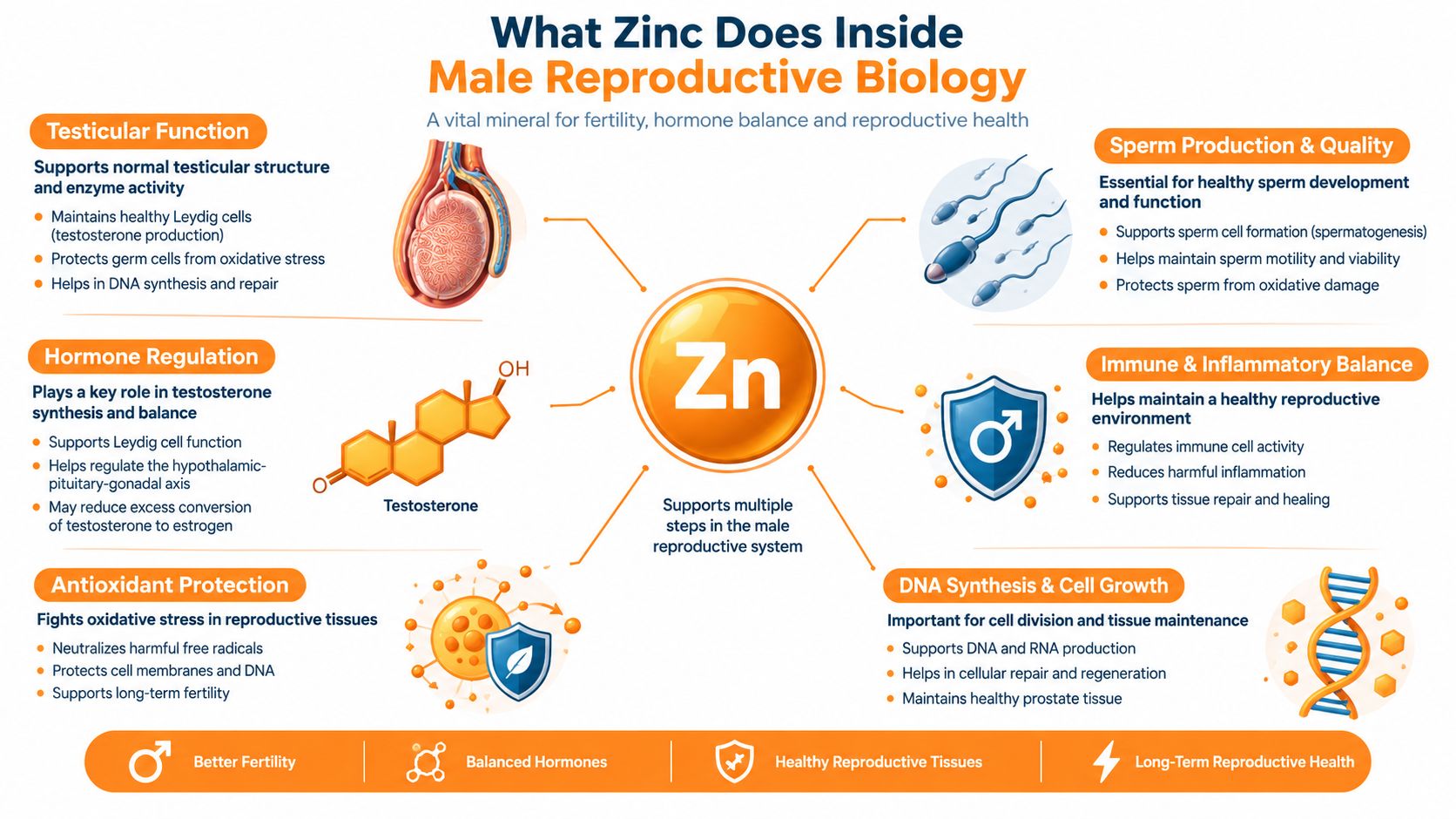
Practical rule: Zinc makes the most biological sense when the question is whether a nutritional shortfall is limiting normal reproductive function. It isn't a guarantee of improved fertility for every man.
What the Semen Parameter Research Shows
A semen analysis measures several separate outcomes, so “better semen quality” is not one single result. Zinc research has produced the clearest signals for some parameters, especially motility, while findings for concentration and count are less consistent. The strongest evidence concerns semen measurements, not whether couples conceive.
Together, the trials show more consistent signals for motility than for concentration. That is why each endpoint needs to be read separately rather than compressed into a claim that zinc universally improves fertility. The 2018 review reported improvements in total sperm concentration and total motility, while an earlier meta-analysis found benefits for semen volume, motility, and normal morphology but not for concentration, count, or viability (Advances in Nutrition).
The differing results are not necessarily contradictory. Trials may enroll different groups of men, use different zinc formulations, measure different outcomes, and begin with different zinc status. Zinc may help one limiting factor without correcting every factor that affects sperm production or conception.
Reading the outcome instead of the headline
| Evidence area | Population or design | Zinc exposure | Main finding |
|---|---|---|---|
| Seminal zinc status | Infertile men compared with normal controls | Observational comparison | Seminal plasma zinc was lower in infertile men, with a standardized mean difference of −0.64 |
| Randomized clinical trials | Men studied for semen outcomes | Supplementation over several months | Improvements were reported for total sperm concentration and total motility (Advances in Nutrition) |
| Earlier meta-analysis | Infertility-focused studies | Zinc supplementation | Improvements were reported for semen volume, motility, and normal morphology, but not concentration, count, or viability |
| Zinc plus folic acid trial | Men attempting conception | Zinc and folic acid compared with placebo | The NIH reported no improvement in pregnancy rates, sperm counts, sperm function, movement, shape, or total count. Sperm DNA fragmentation was higher in the supplement group, 29.7% versus 27.2% (NICHD) |
The table explains the key distinction: zinc can change a laboratory marker without producing a proven improvement in pregnancy outcomes. A careful conclusion is that zinc may support selected semen-quality measures, particularly in a context where nutritional status is limiting, but it is not a universal fertility booster.
Dosage Ranges, Study Protocols, and the Upper Limit Trap
Zinc studies often test amounts far above ordinary dietary intake. As noted in the research summary above, trials used 66 to 500 mg per day for three to six months. These protocols describe experimental conditions, not routine self-care instructions.
Supplement labels can make comparison difficult. Zinc may appear in a multivitamin, a standalone capsule, or a lozenge, but the relevant figure is elemental zinc. The compound's full weight can be much larger than the amount of zinc it provides. Terms such as “high potency” and “ionic” do not show how much elemental zinc reaches the serving.
Why more can work against the goal
The adult tolerable upper intake level is 40 mg per day. Some research protocols exceed that threshold, yet higher intake does not automatically produce greater reproductive benefit. Benefits may plateau near adequacy, while excess zinc raises the chance of nausea and gastrointestinal discomfort. Prolonged high intake can also interfere with copper status and may affect immune function.
Total exposure is easy to underestimate. A man who combines a multivitamin, a zinc capsule, and zinc lozenges may consume far more than the amount shown on any single product.
A safer review starts with the label:
- Read elemental zinc: Use the Supplement Facts panel, not only the compound name.
- Add every source: Count multivitamins, standalone supplements, lozenges, and fortified foods.
- Avoid automatic escalation: A larger dose is not evidence of better semen parameters.
- Review long-term use: Higher intake may call for clinician guidance and attention to copper status.
- Start with food: Oysters, meat, seeds, legumes, and other zinc-containing foods can supply zinc without concentrated supplementation.
This zinc dosage guide for sperm production can help distinguish study protocols from everyday supplement choices. Cycling does not replace calculating total intake, and adding copper should not be improvised without professional advice.
Where the Evidence Stops Short
The 2025 systematic review and meta-analysis found no evidence of an effect on pregnancy or live birth from zinc and folic acid, based on the limited pregnancy data available (Nutrients). That finding marks the main evidence gap: many studies measure semen after supplementation, while far fewer follow couples through conception or birth.
Semen analysis remains useful, but it is a set of intermediate measurements rather than a complete fertility test. Concentration and motility can reflect changes in sperm production or movement, while conception also depends on timing, female reproductive factors, anatomy, sperm DNA integrity, embryo development, and causes of infertility that zinc cannot address.
The NIH summary of the zinc plus folic acid trial found no pregnancy benefit and higher DNA fragmentation in the supplement group. That result makes a broader point: a favorable laboratory endpoint does not automatically translate into a successful pregnancy.
Why the gap persists
Several limitations make the findings difficult to interpret:
- Small studies: Modest trials can produce unstable estimates.
- Mixed populations: Infertile men may differ in underlying causes and nutritional status.
- Different endpoints: Count, motility, morphology, and DNA fragmentation measure separate aspects of sperm health.
- Limited pregnancy follow-up: Many studies end after semen analysis, leaving outcomes that matter to couples unmeasured.
- Selective publication: Positive laboratory findings may be more likely to appear than neutral results.
Zinc may support normal reproductive biology and selected semen measures, especially when intake or status is inadequate. Its role is context-dependent, not a universal fertility boost. It should not be presented as a guaranteed treatment.
How Zinc Compares With Other Male Fertility Nutrients
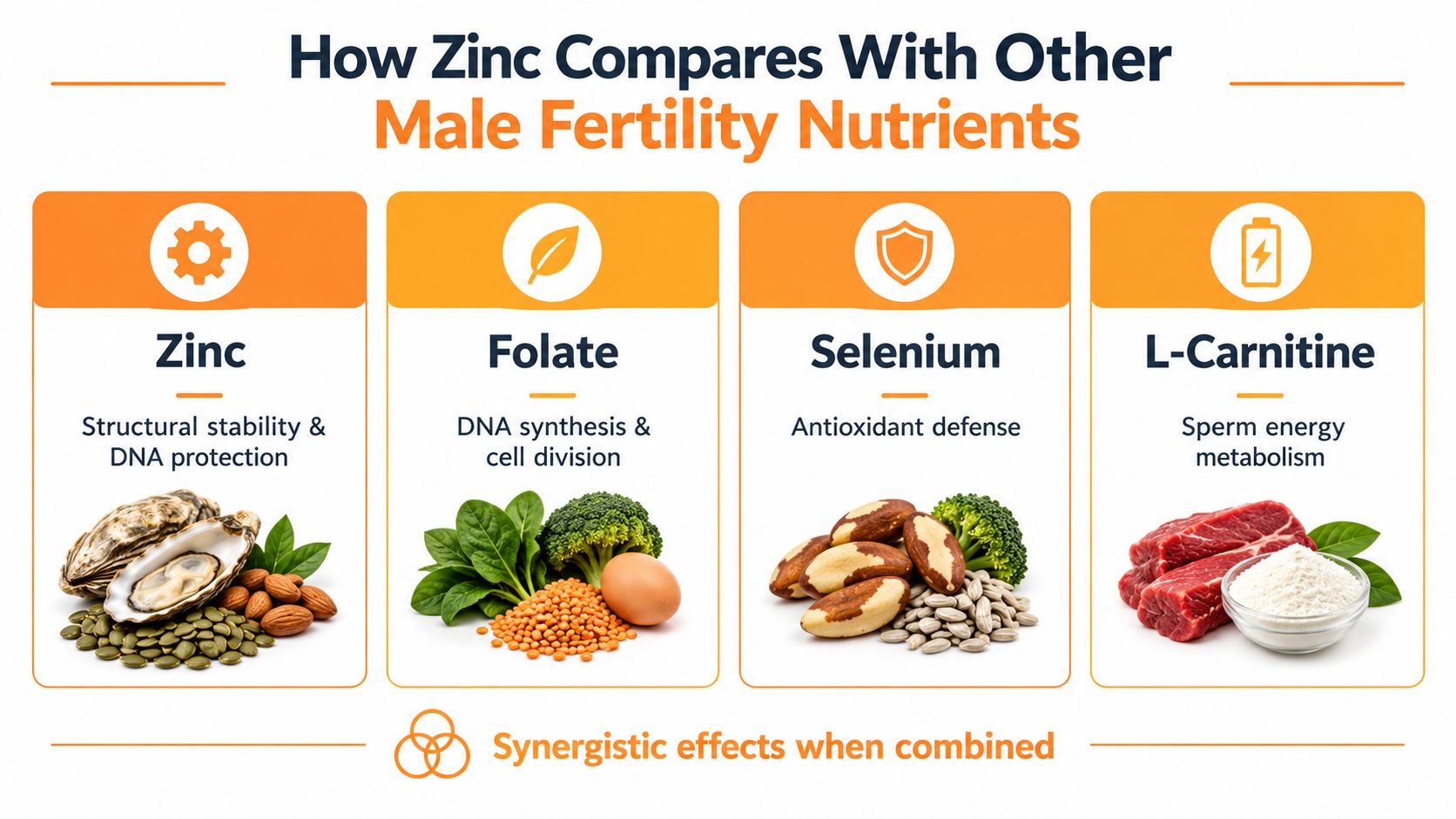
Zinc belongs in a comparison, not a competition. Its value depends on the biological gap being addressed, the man's baseline nutrient status, and the outcome under review. Folate, selenium, and L-carnitine affect different parts of sperm development and function, so a nutrient that improves a semen measure may not improve pregnancy rates.
| Nutrient | Primary mechanism | Strength of pregnancy evidence |
|---|---|---|
| Zinc | Supports zinc-dependent enzymes, cellular stability, and antioxidant protection | Limited, with stronger findings for selected semen endpoints |
| Folate | Contributes to DNA synthesis and cell division during sperm development | Combination evidence does not establish a pregnancy benefit |
| Selenium | Supports selenoprotein-based antioxidant defense | Dependent on baseline status, dose, and the outcome measured |
| L-carnitine | Helps transport fatty acids for cellular energy production | Limited and not interchangeable with evidence for zinc |
This table also explains why combination formulas can sound more persuasive than the evidence warrants. Sperm production requires energy, genetic packaging, structure, and protection from oxidative stress, but covering several pathways does not guarantee a better reproductive outcome.
Zinc is most relevant when zinc status, seminal zinc, or zinc-dependent reproductive processes are part of the question. Folate relates more directly to DNA synthesis and cell division. Selenium addresses another antioxidant pathway, while L-carnitine is more closely tied to energy metabolism and sperm movement. These roles overlap biologically without being interchangeable clinically.
As summarized in Where the Evidence Stops Short, the randomized zinc plus folic acid trial showed no pregnancy improvement. That finding is a useful warning against treating a combined supplement as proof of improved conception. A review reported improved progressive motility with carnitines, while zinc effects differed across semen endpoints (PMC review).
A longer ingredient list is not automatically a more intelligent nutritional strategy. Combined studies may make biological sense, yet baseline deficiencies, interactions, and dosing quality complicate interpretation. Food quality, targeted assessment, and a clearly defined semen endpoint provide a more grounded basis for choosing among nutrients than a high-dose formula alone.
Practical Takeaways for Anyone Considering Zinc
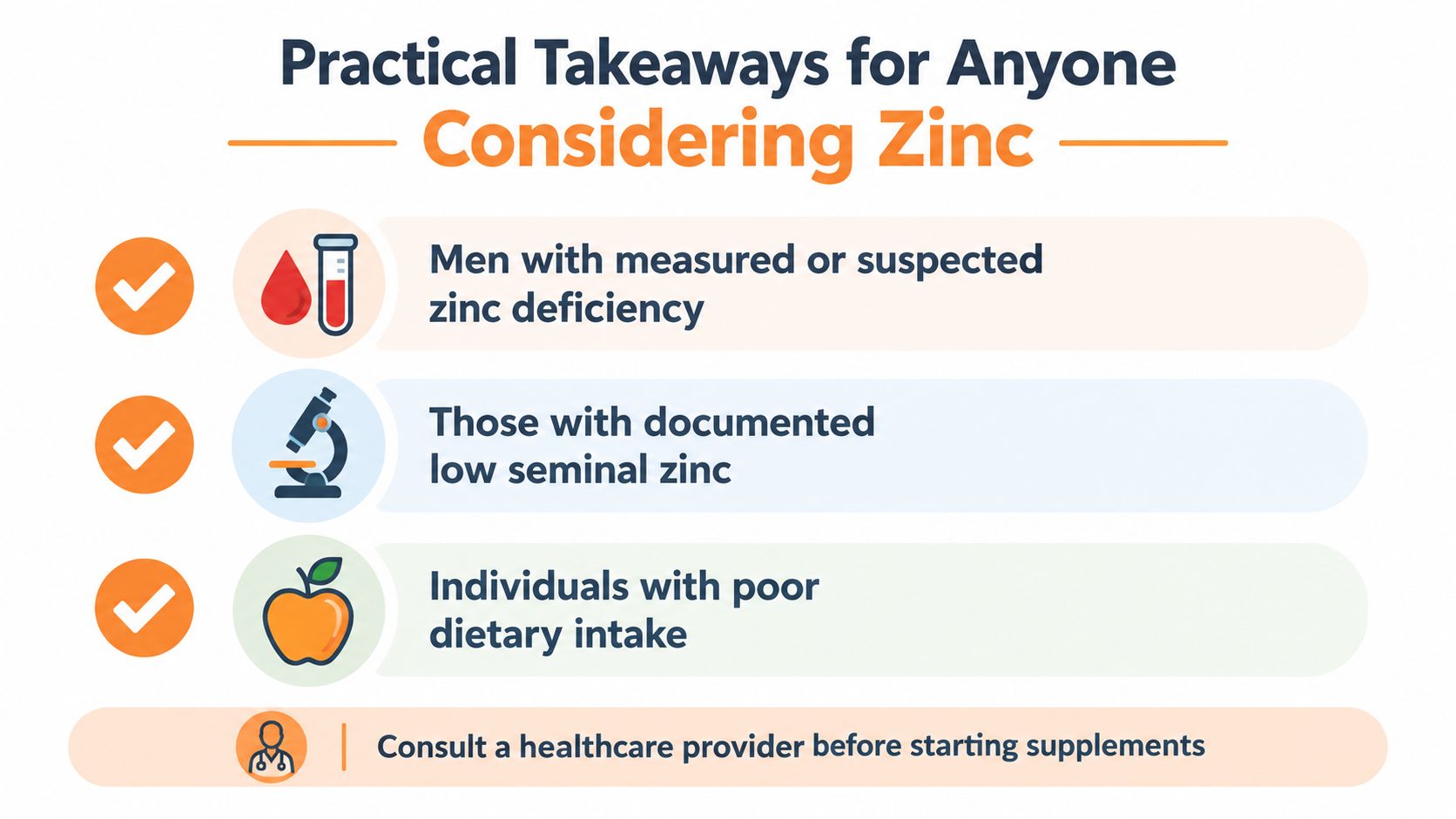
Zinc deserves the most consideration when a man has measured or suspected deficiency, documented low seminal zinc, or a diet that regularly lacks zinc-rich foods. The 2018 NIH-hosted review states that zinc deficiency can impede spermatogenesis, contribute to sperm abnormalities, and negatively affect serum testosterone concentration, while low seminal zinc has been linked with reduced fertility potential (PMC review).
That doesn't mean a low-quality diet proves zinc deficiency. It means diet can help determine whether testing or professional assessment is sensible. Food records, medical history, medication review, and laboratory results are more informative than a supplement label alone.
A practical evaluation sequence
- Start with the semen analysis. Count, motility, morphology, and volume provide a baseline for the question being asked.
- Assess context. A clinician may consider diet, health conditions, medications, and relevant nutrition tests.
- Match the intervention to the gap. A man with low intake has a different starting point from a man with adequate intake and an unexplained abnormal result.
- Allow biological time. Research protocols commonly last three to six months, so a short trial may not reveal much.
- Recheck rather than assume. A follow-up semen analysis is more useful than relying on perceived changes.
Lifestyle still matters. Alcohol intake, heat exposure, smoking, sleep, body composition, exercise, and overall dietary quality can all influence the reproductive environment. Zinc can support normal function, but it can't compensate for every biological or medical factor.
Readers should also examine new studies critically. The most useful questions are whether researchers measured baseline zinc status, used a meaningful comparator, reported the actual dose, and followed pregnancy or live birth outcomes rather than stopping at a laboratory marker.
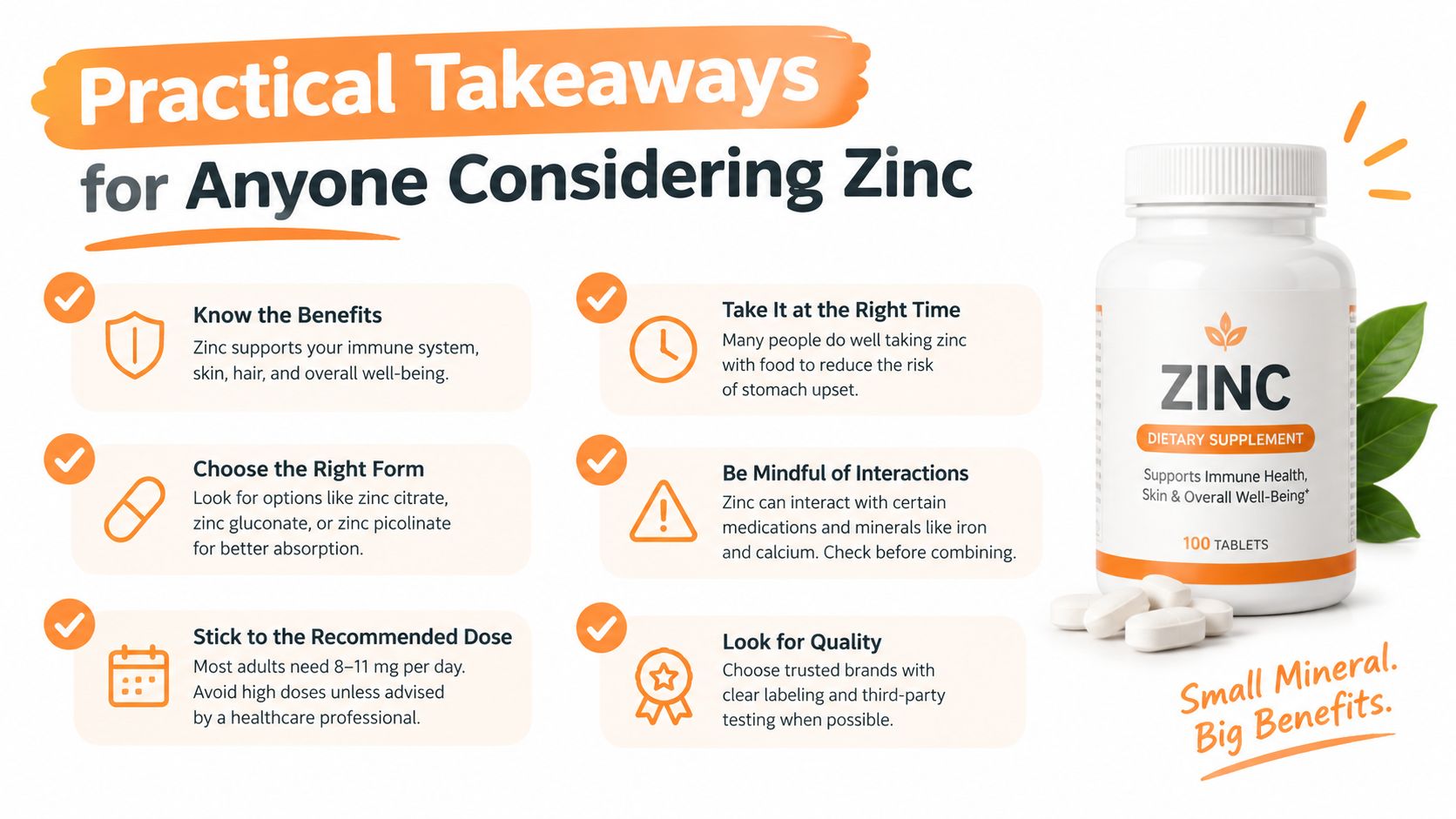
For readers comparing product use with broader nutrition planning, zinc supplement side effects deserve attention before a long-term regimen begins.
Common Questions About Zinc for Male Fertility
How long might zinc take to influence semen parameters?
Semen changes are gradual. Sperm development and maturation take time, so judging zinc after only a few days can mislead. Rather than assessing changes week by week, schedule a repeat semen analysis after about three months of consistent intake, then compare the results with the baseline. As noted earlier, research protocols commonly allow several months for a nutritional intervention to show its possible effect (Advances in Nutrition).
Is food-based zinc different from supplemental zinc?
Food sources include oysters, red meat, pumpkin seeds, and legumes. Zinc from animal foods may be easier to absorb, while phytates in some plant foods can limit absorption. Soaking, sprouting, or fermenting grains and legumes may improve mineral availability. Food also makes it easier to consider zinc within the person's overall diet, rather than treating one nutrient as a universal fertility booster.
Should zinc be combined with folate or selenium?
Combining nutrients does not automatically improve results. Folate and selenium have separate biological roles, but the zinc plus folic acid trial discussed earlier did not improve pregnancy rates or sperm outcomes compared with placebo (NICHD). Long-term high-dose zinc may reduce copper absorption, so review the full labels before stacking products.
What helps with nausea?
Taking zinc with food may reduce nausea. If stomach symptoms appear, stop increasing the dose and review the product with a healthcare professional. Zinc can also interact with medicines, including quinolone antibiotics, so a pharmacist or prescriber should check the timing.
Zinc cannot correct varicocele, obstructive azoospermia, or other structural causes of infertility. Persistent concerns, repeated abnormal semen analyses, or difficulty conceiving call for fertility evaluation rather than indefinite supplement experimentation.
SEMEX is a daily men's supplement containing zinc, L-arginine, sunflower lecithin, bromelain, and other ingredients. Review SEMEX and its ingredient information with personal nutrition needs and professional guidance in mind.
These statements have not been evaluated by the Food and Drug Administration. This product is not intended to diagnose, treat, cure, or prevent any disease.