

Zinc Supplement Side Effects: What to Know
Taking more than 40 mg of zinc per day puts an adult above the widely cited upper intake level, and most zinc supplement side effects cluster above that line or after prolonged use. A person who doubles a zinc dose after seeing it praised online may notice nausea, stomach upset, or vomiting before any longer-term problem appears.
A common version of that experience starts with a podcast clip about zinc lozenges. The listener begins taking two pills daily, expecting extra support, then feels queasy within a week. Because zinc is sold over the counter, the supplement can seem harmless in any amount, but the body still has to process every milligram from food, fortified products, multivitamins, lozenges, and standalone tablets.
The useful question isn't whether zinc is “safe.” It's how much was taken, in what form, and for how long. Short-term digestive symptoms can appear quickly, while copper depletion, changes in immunity, and other mineral effects may develop after sustained high intake. Readers comparing zinc with other supplements can also review this practical guide to supplement side effects.
Table of Contents
- Why Zinc Side Effects Are Worth Understanding
- How Zinc Works in the Body
- Short-Term Zinc Side Effects You May Notice First
- Long-Term Risks From Excess Zinc Intake
- Drug and Nutrient Interactions to Watch For
- Practical Ways to Minimize Zinc Side Effects
- Key Takeaways for Safer Zinc Use
Why Zinc Side Effects Are Worth Understanding
A zinc supplement can seem harmless until several products are added together. Someone might use a lozenge, a multivitamin, and a separate tablet, then blame the latest pill for feeling unwell. The body responds to their combined elemental zinc intake, not to each label in isolation.
For adults, the tolerable upper intake level is 40 mg per day from food and supplements combined, according to the NIH Office of Dietary Supplements. This is a safety boundary, not a daily target. Risk also depends on the form taken, the size of each dose, and how long the pattern continues.
The dose changes the story
A single unusually large dose may cause a stomach reaction relatively soon. Repeated high intake creates a different concern, because effects on copper balance and other nutrients can develop gradually. The same symptom therefore needs context: what was taken, how much elemental zinc it supplied, and whether the exposure happened once or continued for weeks or longer.
Practical rule: Add zinc from every supplement, lozenge, fortified product, and multivitamin before judging the latest tablet.
Excess intake can cause nausea, dizziness, headaches, upset stomach, vomiting, and loss of appetite. Longer exposure may affect immunity, HDL cholesterol, and copper status. The detailed copper thresholds and toxicology figures belong in the long-term discussion below, rather than being repeated here.
This approach makes side effects easier to interpret. A queasy stomach soon after a large dose points to a different pattern from a slower nutritional imbalance. For a broader overview of common supplement side effects, compare the symptom, dose, and timeline instead of treating every reaction as evidence that zinc itself is unsuitable.
How Zinc Works in the Body
Zinc works less like fuel and more like a key. It fits into particular enzyme and protein “locks,” allowing reactions involved in immune signaling, wound healing, DNA expression, and taste perception to proceed normally. A shortage leaves some locks without a key, while an excess can interfere with other mineral systems and cellular processes.
That balance explains why the same nutrient can support normal immune function at an appropriate intake yet contribute to impaired immunity when taken excessively. Zinc isn't stored in one dedicated reservoir that can safely hold large extra amounts. Regular dietary intake supplies the mineral, and unused zinc must be handled and excreted by the body.
Elemental zinc is the number that matters
Supplement labels may name the zinc compound rather than making the dose immediately obvious. Common forms include zinc gluconate, zinc citrate, zinc picolinate, and zinc sulfate. These compounds carry different amounts of elemental zinc, the portion used when calculating total intake.
A tablet labeled by its salt name shouldn't be judged only by the size of the compound. The Supplement Facts panel's elemental zinc amount is the relevant figure, especially when several products are combined. A zinc sulfate tablet and a zinc gluconate tablet may look different, but the body's exposure is determined by the elemental amount supplied.
Zinc also participates in taste perception, which helps explain why some lozenges produce an unpleasant metallic sensation. The mineral's useful functions are precise, not a reason to keep increasing the dose. More keys don't improve every lock, and excess keys can clutter the system.
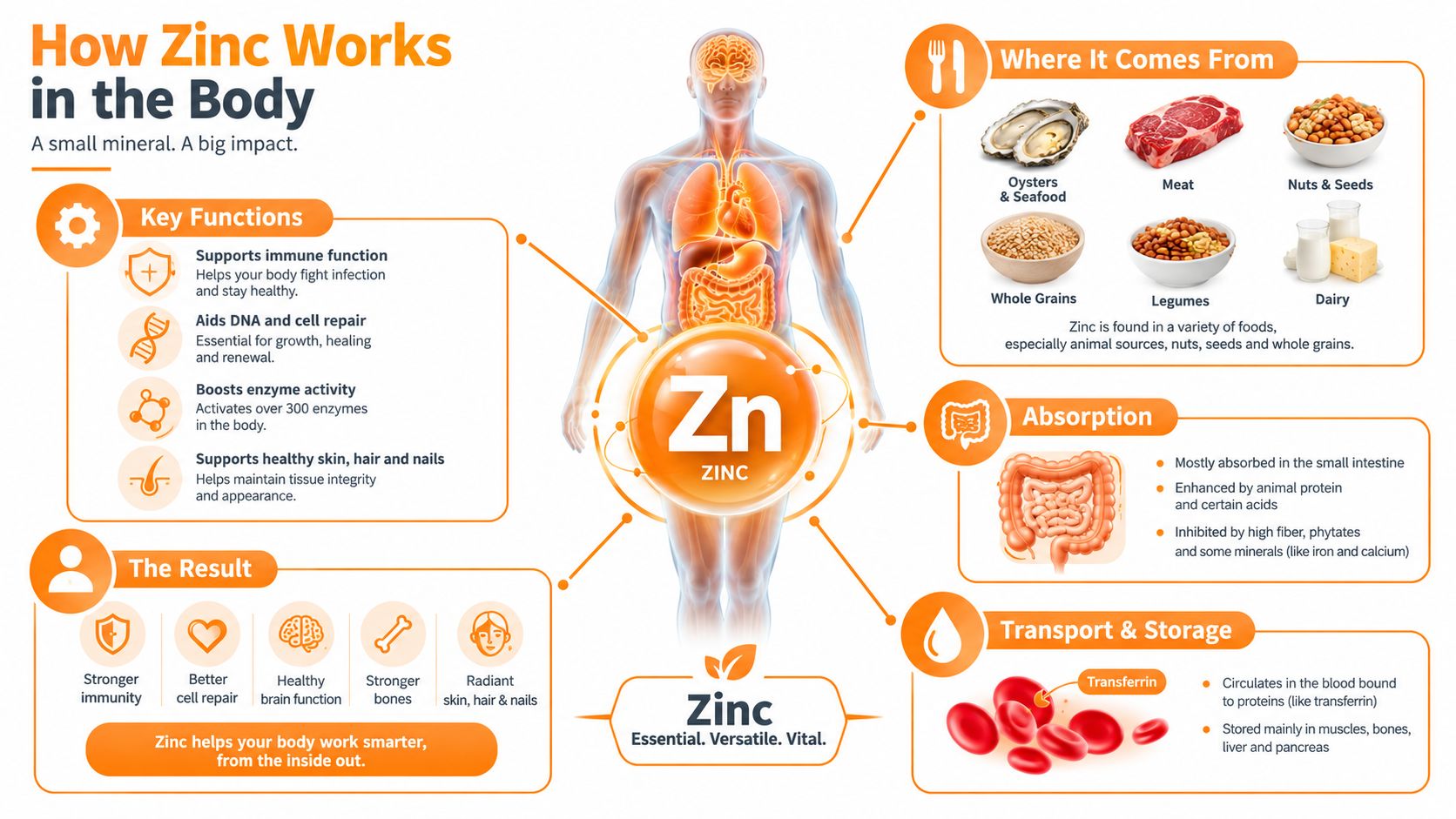
The practical connection is straightforward. When intake outpaces the body's ability to manage it, gastrointestinal upset often appears first. With continued excess, zinc can reduce copper absorption and disturb other nutrient relationships. Readers seeking broader context on zinc's biological role can review zinc's role in the body.
Short-Term Zinc Side Effects You May Notice First
You take a zinc tablet with little food, then nausea starts before the day is over. That timing points more toward stomach irritation from a concentrated dose than toward a problem that developed after weeks of use. Short-term reactions are easier to interpret when you match the symptom with both the amount taken and the time it began.
A review of zinc adverse effects found higher risks of taste aversion, mouth soreness, and gastrointestinal discomfort or nausea in adults taking zinc for acute viral respiratory infections (review of zinc adverse effects). It also reported more vomiting among children. These findings do not mean every user will react, but they show that mouth and digestive symptoms are recognized effects, especially when supplemental exposure is high or repeated.
Symptom timing provides useful clues
Nausea, abdominal cramping, vomiting, and diarrhea can begin after a large one-time dose or during the first days of taking a higher daily amount. Large amounts may cause diarrhea, abdominal cramps, and vomiting within 3 to 10 hours of ingestion. This window helps distinguish an immediate dose reaction from effects associated with prolonged excess.
A full stomach often makes zinc easier to tolerate. Food may reduce nausea, although anyone taking zinc for a specific medical reason should follow the product directions or a clinician's advice before changing the schedule.
| Symptom | Typical Onset | Dose Range Where It Appears | Notes |
|---|---|---|---|
| Nausea or upset stomach | Within hours or during the first days of higher intake | More likely with excessive intake, especially above the adult upper level | Food may improve tolerance |
| Vomiting | Within hours after a large ingestion | Reported with very high intake | Persistent vomiting requires medical attention |
| Abdominal cramps or diarrhea | Within the same day or early in use | More likely after large amounts | Can occur alongside nausea |
| Metallic taste or taste aversion | During lozenge use or early supplementation | Documented with supplemental zinc | Slow-dissolving lozenges can make the taste more noticeable |
| Headache or dizziness | Early in use | Associated with excessive intake | Stop and assess the total dose if symptoms begin |
Zinc lozenges can make local symptoms easier to notice because they dissolve slowly in the mouth. Repeated use at the full label amount keeps zinc against the mouth and throat for longer, which may contribute to taste aversion, mouth soreness, throat irritation, or nausea.
Symptoms often settle after excessive intake stops. Seek medical advice promptly for severe vomiting, persistent diarrhea, marked weakness, numbness, or confusion instead of waiting for the reaction to pass.
Long-Term Risks From Excess Zinc Intake
Long-term excess zinc can look different from the stomach upset that appears after one large dose. The main concern is copper depletion. Repeated high intake can reduce copper absorption in the intestine, gradually affecting blood formation, nervous-system function, and copper-dependent enzymes. Fatigue, weakness, or abnormal blood counts may appear before a person connects the symptoms with zinc.
The Agency for Toxic Substances and Disease Registry toxicology profile describes copper-deficiency manifestations after chronic exposure of roughly 0.5 to 2 mg of zinc per kilogram of body weight per day. The dose is therefore only part of the picture. A repeated daily amount can matter even when there was no dramatic overdose event.
Copper balance can deteriorate gradually
Prolonged intake in the 100 to 150 mg per day range has been associated with disrupted copper metabolism, low blood copper, microcytosis, neutropenia, and impaired immunity. The Merck Manual zinc toxicity information also describes anorexia, vomiting, and diarrhea at 200 to 800 mg per day. These figures describe high-exposure toxicity, not a target for self-testing.
Excess zinc may also contribute to low copper levels, reduced immune function, and low HDL cholesterol. With very high supplemental intake, reduced magnesium absorption and copper deficiency can be followed by neurological symptoms, including numbness, weakness, or loss of coordination, as outlined in the NIH consumer zinc fact sheet.
| Risk | Typical Daily Intake | Typical Timeline | Main Sign to Watch |
|---|---|---|---|
| Copper depletion | Sustained intake above dietary needs, especially high supplemental intake | Gradual, over ongoing use | Fatigue, weakness, abnormal blood counts |
| Reduced immunity | Excessive ongoing intake | Develops with prolonged exposure | More difficulty maintaining normal immune function |
| Low HDL cholesterol | Associated with excess zinc intake | Longer-term use | Usually requires laboratory testing |
| Neurological effects | Very high intake with copper deficiency | After mineral depletion develops | Numbness, weakness, or loss of coordination |
| Gastrointestinal toxicity | Very high intake | May occur quickly or continue with exposure | Appetite loss, vomiting, or diarrhea |
The timeline helps separate these risks from short-term nausea or diarrhea. Gastrointestinal symptoms can begin quickly at very high intake, while copper-related effects may take sustained exposure and may require blood tests to identify.
Extra care is needed when a standalone zinc product is combined with fortified foods, a multivitamin, and zinc lozenges. Older adults and people using several supplement products may have difficulty estimating total exposure. Review every label, add the daily zinc amounts together, and seek clinical advice if weakness, numbness, or persistent digestive symptoms develop.
Drug and Nutrient Interactions to Watch For
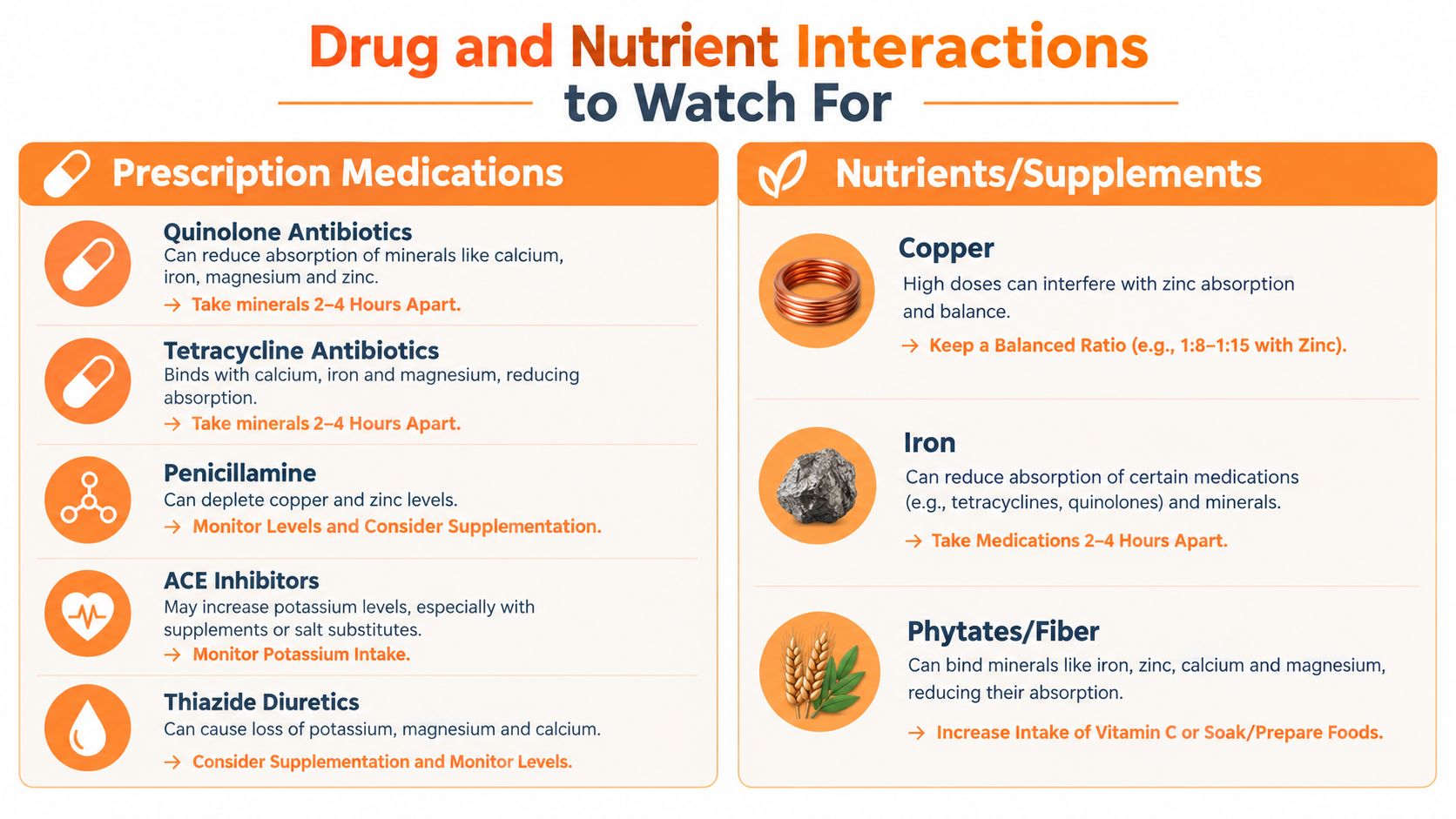
Zinc can compete with other minerals for absorption and can bind some medicines in the digestive tract. That doesn't mean every combination is unsafe, but it does mean timing and clinical context matter. A person taking prescription medication shouldn't use a zinc supplement to adjust a suspected deficiency without discussing the combination with a pharmacist or clinician.
Prescription medicines need a timing check
Quinolone and tetracycline antibiotics can bind with minerals, potentially reducing how much medicine the digestive tract absorbs. Zinc may also interfere with penicillamine absorption. A common practical approach is to separate zinc from these medicines by at least two hours, but the exact interval should follow the prescription label or pharmacist's directions.
ACE inhibitors and thiazide or loop diuretics raise a different question. These medicines can influence mineral balance or kidney handling, so a clinician may need to review symptoms, diet, laboratory results, and the full medication list before recommending zinc. Fatigue, weakness, or a change in treatment response shouldn't automatically be blamed on zinc, but it warrants a professional review.
Minerals can compete too
Iron, calcium, magnesium, and copper may compete with zinc during absorption when taken together in concentrated supplement doses. Separating products can reduce that overlap, although the right schedule depends on the specific formulation and medical purpose.
Copper deserves special attention because the interaction runs in both directions over time. Excess zinc can reduce copper absorption, and copper depletion can produce fatigue, weakness, anemia, neutropenia, or neurological symptoms. Multivitamins often already contain both zinc and copper, so a second zinc product can raise total exposure without appearing unusual on either individual label.
A medication list should include over-the-counter products, protein powders, mineral drinks, and lozenges. That fuller inventory helps a pharmacist identify whether the problem is a direct drug interaction, overlapping minerals, or an unnecessarily high total zinc intake.
Practical Ways to Minimize Zinc Side Effects
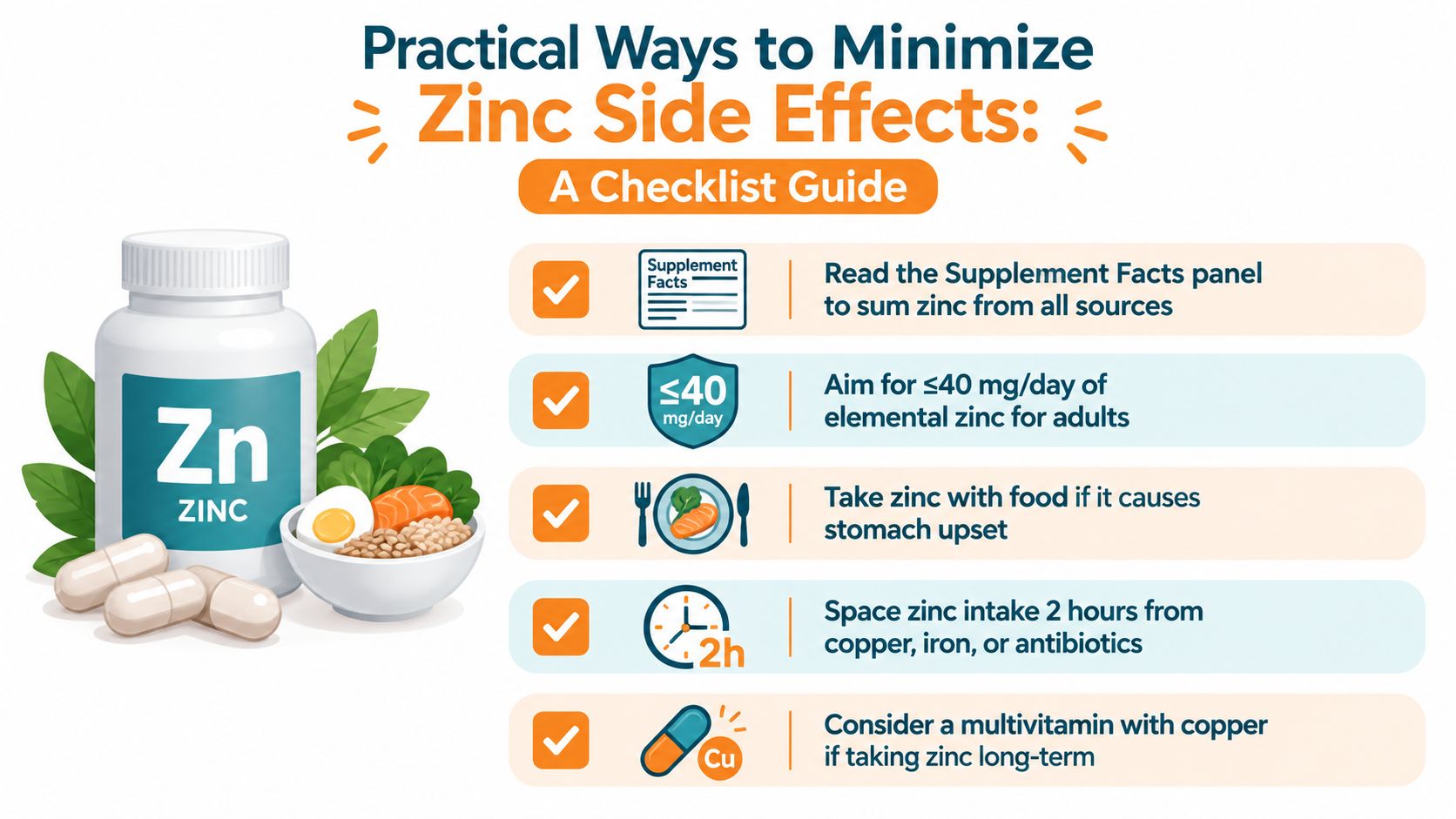
A zinc routine becomes easier to troubleshoot when you start with what you swallowed. Check the Supplement Facts panel for elemental zinc, then total the amount from every product before adding another one. The label is the map; the front-of-bottle wording is not.
A simple safety checklist
- Add every source: Count food, fortified products, multivitamins, lozenges, and standalone tablets. Overlap can turn several ordinary-looking products into a higher daily intake.
- Respect the adult limit: Keep total zinc from food and supplements at or below 40 mg per day for adults, unless a qualified clinician has given you a specific reason and monitoring plan. Treat this as a ceiling for review, not a target.
- Use food for tolerance: If nausea appears soon after a dose, taking zinc with a meal may be easier on the stomach than taking it while fasting. A symptom that follows one dose points toward short-term intolerance, while symptoms that persist after repeated use deserve a broader review.
- Review the form: Gluconate, citrate, picolinate, and sulfate are common forms. The elemental amount and your response matter more than marketing claims about the compound.
- Avoid casual copper pairing: High-dose zinc used over time may affect copper status, but adding copper without a clear reason can create a second problem. A clinician can decide whether testing or supplementation fits your situation.
- Separate medicines and minerals: Ask a pharmacist how to schedule zinc around antibiotics, iron, calcium, magnesium, or other products that may interfere with absorption or treatment.
If nausea begins after starting zinc, inspect the full routine before switching between zinc salts. Removing an unnecessary overlapping product may address the cause more directly than adding another supplement.
Better troubleshooting: Change one variable at a time. A complete label review gives a clearer answer than adding a product to counter an unexplained symptom.
High intake that continues beyond a short period may justify laboratory review of copper status and blood counts, especially if fatigue, weakness, numbness, reduced coordination, or repeated infections appear. The appropriate tests depend on diet, medicines, symptoms, and medical history.
Readers assessing intake for men's wellness can also review this guide to zinc dosage for men. The same dose-based check still applies: identify the elemental amount, add all sources, and consider how long the exposure has continued.
Key Takeaways for Safer Zinc Use
Zinc supplement side effects make more sense when viewed on two timelines. Nausea, stomach upset, vomiting, diarrhea, metallic taste, headache, and dizziness can signal that a recent dose was too large or poorly tolerated. Copper depletion and related blood, immune, and neurological effects develop more gradually with repeated excess.
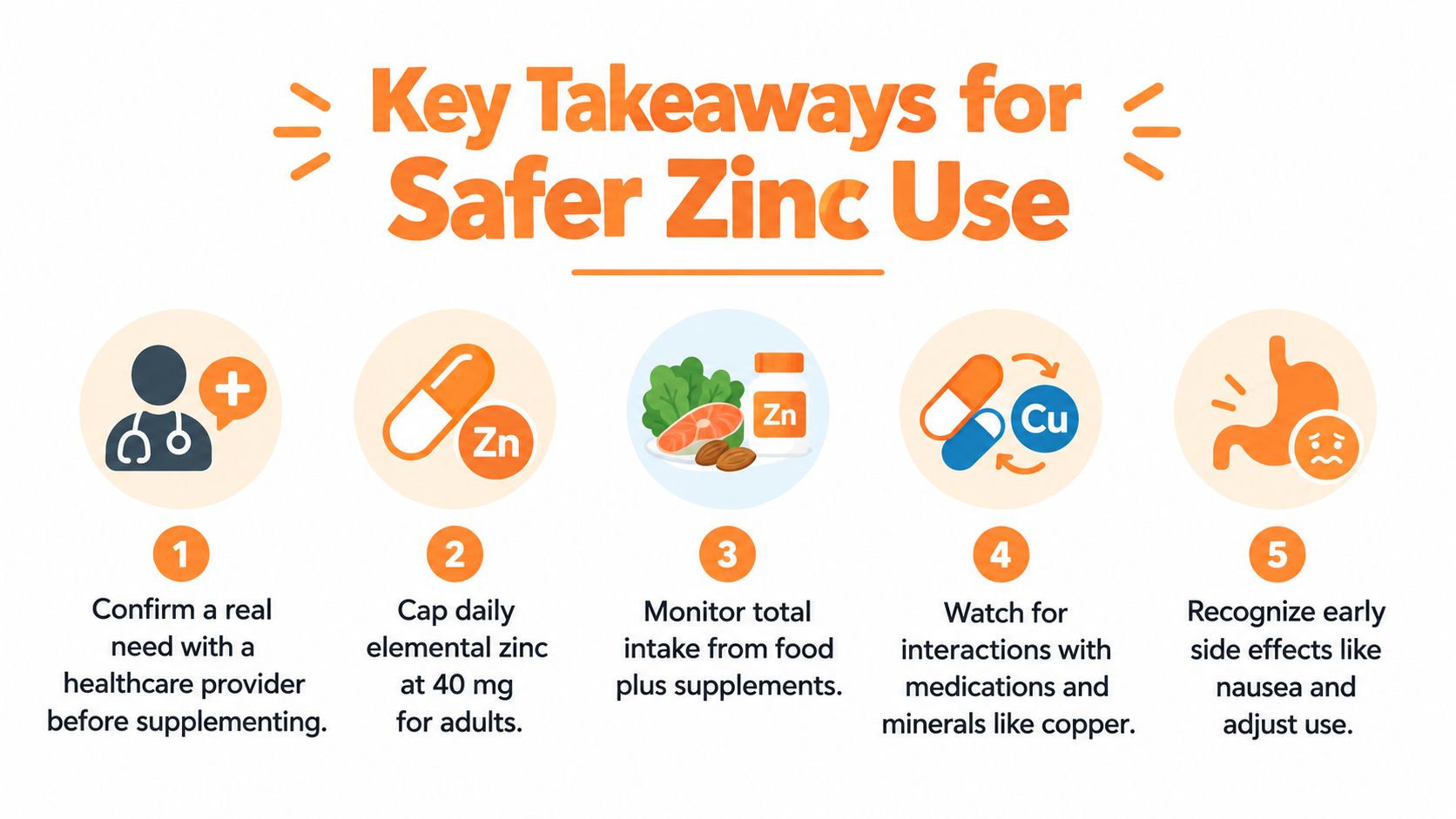
The adult upper intake level is 40 mg of zinc per day from food and supplements combined. That figure should prompt a total-intake review, not a race toward the limit. A standalone product may be reasonable for a documented need, but stacking products can move the total higher than expected.
Actions worth taking today
- Read the elemental amount: Use the Supplement Facts panel rather than the name of the zinc compound.
- Log all sources: Include fortified foods, multivitamins, lozenges, and mineral blends.
- Adjust for nausea: Take zinc with food if an empty stomach causes discomfort, and reassess whether the dose is necessary.
- Check medication timing: Ask a pharmacist about separating zinc from quinolone or tetracycline antibiotics, penicillamine, diuretics, and iron regimens.
- Monitor prolonged use: Discuss copper status and relevant blood testing with a clinician when intake is high or symptoms persist.
A short-term stomach reaction may improve after reducing unnecessary zinc, but ongoing fatigue, weakness, numbness, loss of coordination, or repeated gastrointestinal symptoms deserves medical attention. The most reliable safety decision comes from matching the product label, the timeline, the symptoms, and the person's complete medication and supplement routine.
SEMEX offers a daily men's wellness supplement that combines zinc with L-Arginine, Sunflower Lecithin, Bromelain, and additional plant-based ingredients, with a formula designed to support semen volume and taste. Visit SEMEX to review the ingredient details, quality information, and recommended use before deciding whether it fits a carefully planned supplement routine.
These statements have not been evaluated by the Food and Drug Administration. This product is not intended to diagnose, treat, cure, or prevent any disease.