

Zinc and Male Health: The Complete Evidence-Based Guide
In a randomized trial involving 2,370 men, daily zinc plus folic acid didn't significantly improve semen measurements or live-birth outcomes compared with placebo, according to the American Academy of Family Physicians' trial summary. That finding reframes the conversation about zinc and male health: an essential nutrient isn't automatically an effective supplement for every goal.
Zinc belongs in the male-wellness picture because your body needs it, not because more necessarily produces better results. The useful questions are whether you're getting enough, what outcome you're hoping to support, and whether the evidence measures that outcome.
Table of Contents
- Why Zinc Matters for Men's Health
- Three Jobs Zinc Performs in the Male Body
- What the Clinical Evidence Actually Shows
- Food Sources That Actually Deliver Zinc
- Recognizing Zinc Deficiency and Excess
- How to Supplement Zinc Safely
- Zinc in a Broader Men's Wellness Stack
- Common Zinc Myths Worth Correcting
Why Zinc Matters for Men's Health
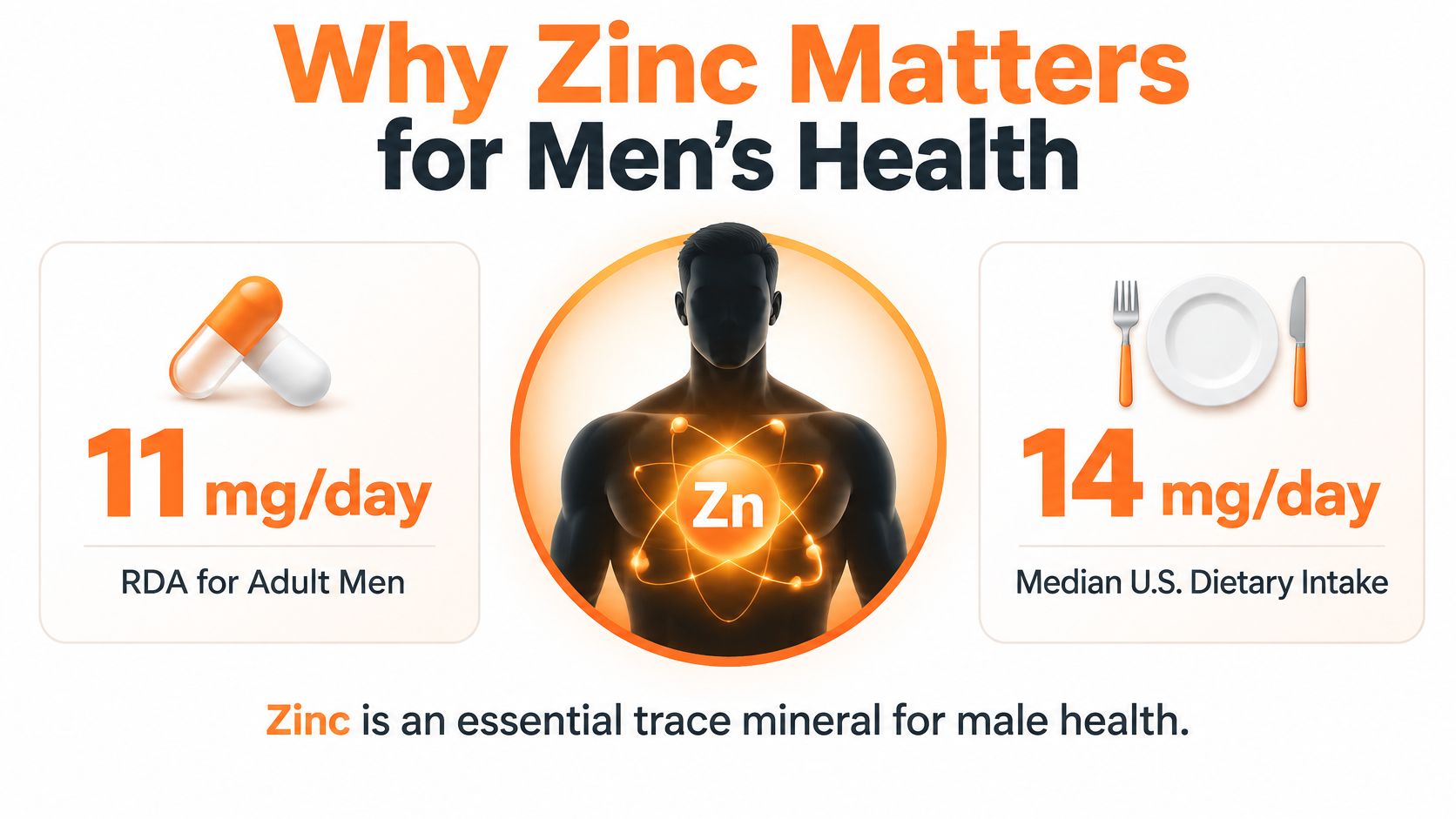
11 mg per day is the recommended dietary allowance for adult men. Historical U.S. dietary surveys reported median intakes of approximately 14 mg daily among men aged 19–50, but an average doesn't establish whether your own diet supplies enough, as the NIH zinc reference information makes clear.
Think of zinc as a tool your cells need for routine maintenance. It participates in DNA and protein synthesis, cell division, immune function, and reproductive biology. Those are foundational activities, not optional upgrades.
Adequacy is different from enhancement
A nutritional requirement tells you what intake generally supports normal function. It doesn't tell you that exceeding that requirement will improve a particular laboratory result, sexual experience, or reproductive outcome.
The distinction resembles supplying a workshop. Without the necessary tools, workers can't perform their jobs properly. Once the workshop is adequately equipped, delivering more identical tools doesn't guarantee faster or better work.
- Nutritional adequacy asks whether your usual intake meets your needs.
- Supplement effectiveness asks whether adding zinc changes a defined outcome.
- Safety asks whether your combined intake remains appropriate over time.
Remember the distinction: The recommended allowance is a nutritional target. The upper intake limit is a safety boundary, not a more ambitious target.
Men also shouldn't interpret population intake figures as personal clearance to ignore nutrition. Food choices, dietary restrictions, and life stage can change the picture. Conversely, being interested in reproductive wellness doesn't establish that you have a zinc deficiency.
The practical starting point is therefore ordinary rather than dramatic: understand your diet before deciding what a supplement should add. Zinc supports normal physiology, but that statement shouldn't be stretched into a promise about treating infertility or another medical condition.
Three Jobs Zinc Performs in the Male Body
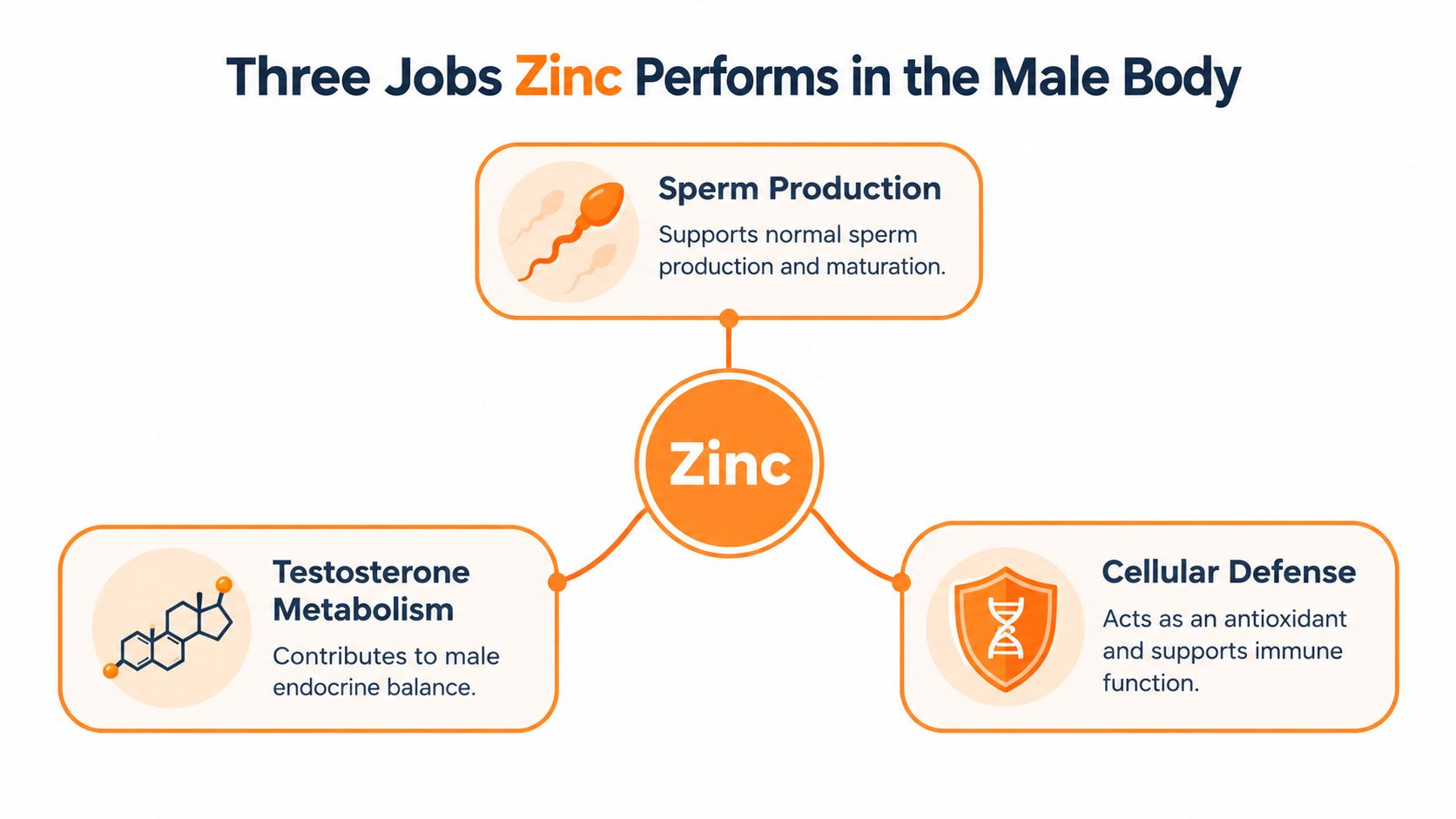
Zinc takes part in several kinds of cellular work at once, which is why one nutrient can appear in discussions about sperm, hormones, and oxidative stress without being the explanation for all three. The useful question is narrower: which job is being studied, and which endpoint was measured?
Building and maintaining reproductive cells
Zinc participates in the reproductive biology that supports normal sperm production and maturation. Researchers have also examined proposed contributions to sperm-membrane integrity and antioxidant defense, while emphasizing that biological plausibility differs from demonstrated supplement benefit in the review of zinc and reproductive evidence.
Sperm production and maturation unfold over a biological cycle rather than changing immediately after a capsule. That timing is why reproductive studies usually look across months and measure semen parameters, not impressions after one dose. A perceived overnight change would not establish improved sperm production.
Participating in endocrine function
Zinc also plays a role in normal male endocrine function. A systematic review of zinc and testosterone reported an association between zinc deficiency and diminished testosterone, with supplementation showing benefits in some contexts.
The phrase that matters is in some contexts. Low zinc alongside low testosterone can signal a correctable gap in intake; it does not predict a meaningful hormonal rise for every man who adds a supplement. Persistent symptoms still belong in medical evaluation.
Supporting cellular defense
Zinc is involved in cellular antioxidant systems that help maintain cell integrity, which is why researchers have studied it in reproductive physiology. A plausible protective mechanism still leaves practical questions open: whether intake is already adequate, whether extra zinc changes a measured endpoint, and whether that endpoint is sperm quality, hormone concentration, conception, or symptoms.
Each job needs the outcome it claims to affect.
What the Clinical Evidence Actually Shows
The evidence resembles a balance scale, with encouraging findings on one side and important limitations on the other. Reading only the positive studies gives an incomplete answer. Reading only the negative trial can obscure why nutritional adequacy still matters.
What the positive findings measured
A 2016 systematic review and meta-analysis included 20 studies involving 2,600 cases and 867 controls and reported improvements associated with zinc supplementation in semen volume, sperm motility, and normal morphology. These are meaningful research endpoints, but they aren't interchangeable with pregnancy or live birth.
Motility describes movement. Morphology describes shape. Semen volume describes the amount of ejaculate, not the number of sperm it contains.
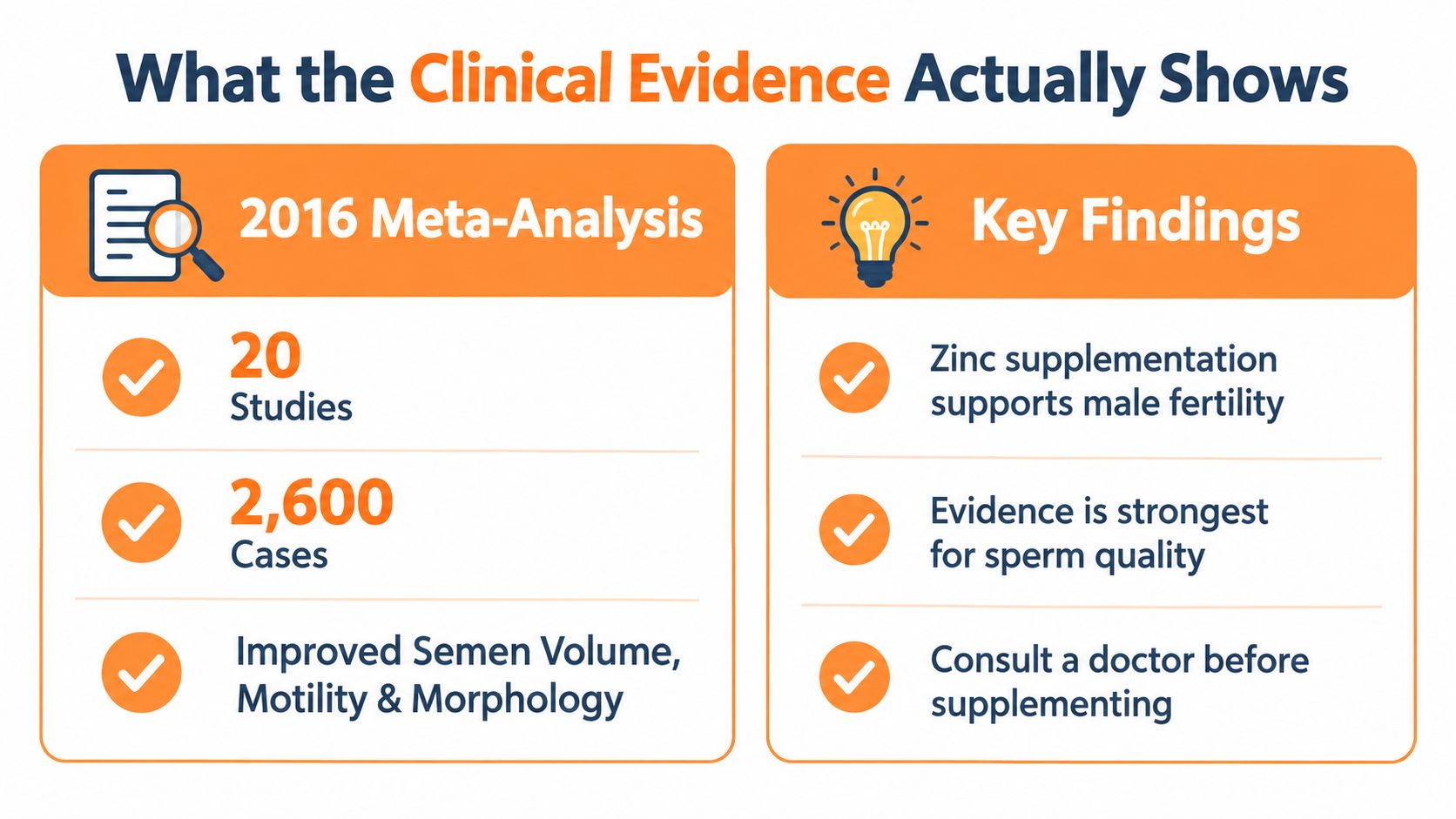
The narrower interpretation matters: improvements in selected semen parameters shouldn't be translated into a promise of improved fertility. The studies differed in participants, doses, duration, and quality, which limits how confidently their combined findings apply to an individual reader.
What the larger randomized trial measured
The FAZST randomized clinical trial published in JAMA tested 30 mg of elemental zinc plus 5 mg of folic acid daily for six months. As noted in the opening, the combination didn't produce a significant benefit in semen quality or live birth; the supplement group also experienced more gastrointestinal symptoms and higher sperm-DNA fragmentation.
Because researchers tested a combination, the result shouldn't be described as an isolated test of zinc alone. Nevertheless, it directly challenges the assumption that adding reproductive nutrients reliably improves outcomes in couples receiving fertility care.
| Endpoint | What it can tell you | What it doesn't establish |
|---|---|---|
| Semen volume | Amount of ejaculate | Sperm concentration or conception probability |
| Motility and morphology | Particular sperm characteristics | Guaranteed pregnancy |
| Testosterone measurement | Hormonal status at assessment | A complete picture of sexual wellness |
| Live birth | A clinically decisive reproductive outcome | Which ingredient caused a change |
Our guide to zinc and fertility provides additional context for separating nutrient support from treatment claims.
The most defensible conclusion isn't a blanket endorsement or rejection. Zinc supports normal reproductive function, while supplemental benefits depend on context and the outcome measured. Persistent fertility concerns deserve assessment of both partners rather than indefinite experimentation with supplements.
Food Sources That Actually Deliver Zinc
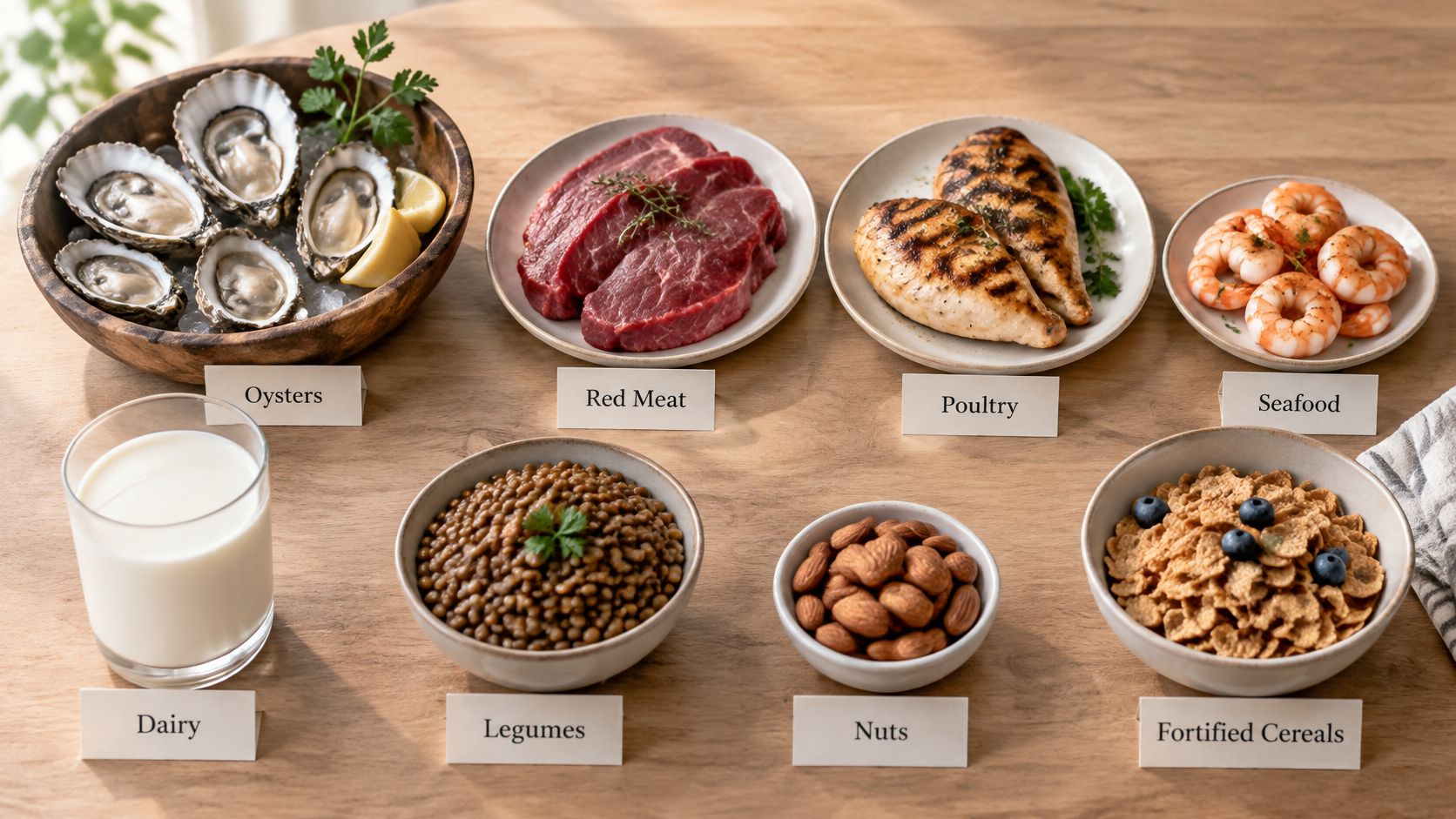
Treat dietary zinc like deposits into a daily account. Meat, seafood, dairy, legumes, nuts, and fortified foods can all contribute. The useful question isn't whether a food has a healthy reputation, but how it fits into your usual eating pattern.
Build meals before building a supplement stack
The NIH consumer guide to zinc identifies foods such as oysters, meat, seafood, dairy, legumes, nuts, and fortified breakfast cereals as dietary sources. You don't need to turn every meal into a nutrient calculation, but you do need to recognize where zinc enters your diet.
Practical choices include:
- Seafood meals: Consider oysters or other seafood when these fit your preferences and dietary needs.
- Meat and poultry: Include them as dietary options rather than assuming supplements are your only source.
- Dairy foods: Count these contributions when reviewing your overall intake.
- Legumes and nuts: Use beans, lentils, and nuts to diversify plant-based meals.
- Fortified cereals: Read the specific label because fortification varies by product.
For example, a breakfast built around fortified cereal and dairy, followed by a meal containing beans or meat, creates several opportunities to obtain zinc. That example isn't a calculated meal prescription. Exact amounts depend on the food, portion, preparation, and label.
Food-first principle: Decide what your supplement needs to contribute after considering what you already eat.
A bottle's capsule count doesn't tell you whether it meets your nutritional needs. The relevant information is the amount supplied by the labeled daily serving, considered alongside food and any other supplements.
Our discussion of zinc deficiency and food choices can help you organize that review. Start with meals you repeat, not an idealized menu you rarely follow.
Food-first thinking also avoids a false choice. You don't have to reject supplements to value nutrition, and taking a supplement doesn't make dietary quality irrelevant.
Recognizing Zinc Deficiency and Excess
Feeling well isn't proof that your zinc intake is appropriate. Feeling unwell isn't proof that zinc is the problem, either. Symptoms alone are a poor basis for choosing a high-dose supplement.
The fuel-gauge analogy is useful here. Too little fuel prevents normal operation, but filling beyond the tank's capacity doesn't improve the vehicle. Nutritional adequacy is a working range, not a contest to maximize intake.
Signs deserve context
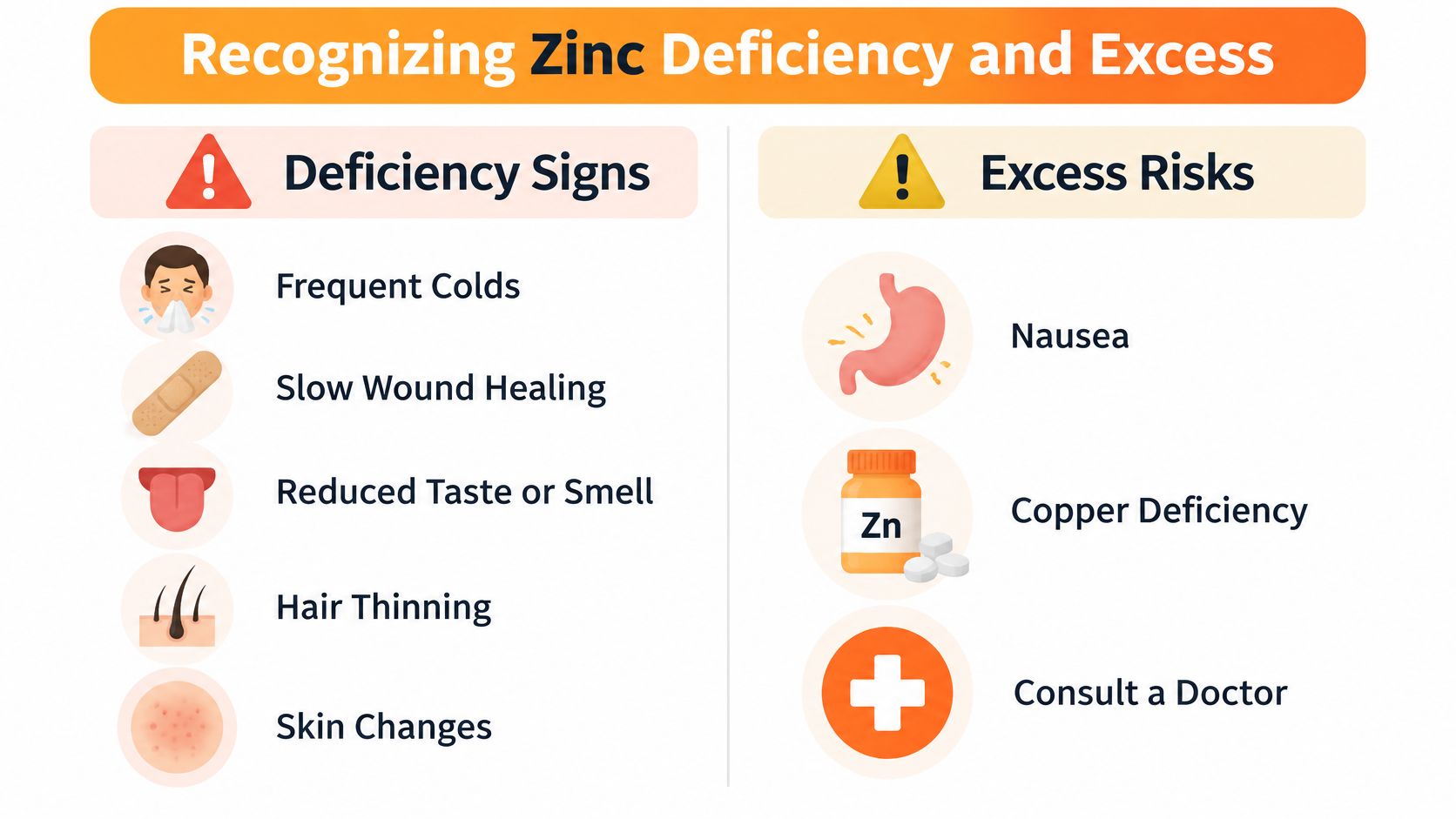
Concerns such as frequent colds, delayed wound healing, changes in taste or smell, hair thinning, or skin changes shouldn't become a self-diagnosis checklist. They don't establish a cause on their own, and a supplement purchase isn't a substitute for understanding persistent symptoms.
A useful assessment brings together:
- Dietary history: What foods do you regularly eat or avoid?
- Supplement history: Which products contain zinc, including products you don't think of as zinc supplements?
- Symptom history: What changed, when did it begin, and what else was happening?
- Clinical judgment: Does your clinician think nutritional assessment or testing would help?
Our guide to zinc deficiency symptoms in men offers a starting point for organizing those questions, not confirming a diagnosis.
Excess is a separate nutritional problem
The adult tolerable upper intake level is 40 mg per day from all sources, including foods, beverages, supplements, and medications, according to the NIH zinc consumer fact sheet. Excess intake can cause gastrointestinal symptoms and interfere with copper absorption.
That limit isn't a line you should try to approach. It's a reason to look beyond the dose printed on an individual bottle and consider your complete routine.
If you suspect deficiency, already use several supplements, or have persistent reproductive concerns, professional guidance is more useful than escalating the dose.
How to Supplement Zinc Safely
The first number to find on a zinc label is elemental zinc. That's the amount of zinc itself, rather than the total weight of the compound carrying it.
A review of zinc supplementation studies describes widely varying doses and forms, including a study using two 220-mg zinc-sulfate capsules daily for three months. The weight of zinc sulfate isn't identical to elemental-zinc content, so copying that number onto a shopping list would be a mistake.
Common Zinc Supplement Forms at a Glance
| Form | Typical Elemental Zinc | Common Use Case |
|---|---|---|
| Zinc picolinate | Product-specific, check the label | An option to review for filling a dietary gap |
| Zinc citrate | Product-specific, check the label | An option when comparing labeled daily servings |
| Zinc bisglycinate | Product-specific, check the label | An option to discuss when reviewing your routine |
| Zinc sulfate | Product-specific, not the same as salt weight | A form encountered in clinical research |
The form name alone doesn't identify a standard dose or establish superiority. Without suitable comparative evidence, claims that a particular form guarantees better reproductive results go beyond what the name on the bottle can tell you.
Use a total-intake checklist
Think of the upper limit as a shared budget. Food, fortified products, multivitamins, and dedicated zinc supplements all draw from that same allowance.
- Identify the serving size. Check whether the listed amount applies to a capsule or the full daily serving.
- Record elemental zinc. Don't substitute the weight of the zinc compound.
- Inventory overlapping products. Include your multivitamin and any other men's wellness formulas.
- Consider dietary contributions. Don't treat food-derived zinc as if it doesn't count.
- Review the plan with a clinician when needed. This matters especially when symptoms persist or you're considering intake beyond routine nutritional support.
A useful purchasing question: What nutritional gap am I trying to fill, and how will I know whether this product is appropriate?
The research timelines discussed earlier also matter. Reproductive biomarkers aren't an immediate feedback system, and daily changes in perceived semen volume aren't a reliable way to judge them.
Our guide to zinc supplement side effects can help you prepare questions before changing your routine. Don't interpret a study's high dose as permission for self-directed use. Clinical research conditions and an unsupervised supplement routine aren't equivalent.
Zinc in a Broader Men's Wellness Stack
A men's wellness formula can resemble a team roster: several ingredients, each selected for a proposed role. But a roster isn't evidence that the team performs as expected. You still need to examine the ingredient, dose, intended function, and supporting outcome.
Zinc-containing formulas may also include L-arginine, sunflower lecithin, bromelain, maca root, Panax ginseng, ashwagandha, tongkat ali, saw palmetto, and horny goat weed. These names shouldn't be treated as interchangeable versions of the same nutritional support.
Separate ingredients from claims
The clearest way to evaluate a formula is to separate different categories of claims rather than grouping everything under male enhancement.
- Nutritional claims ask whether an ingredient helps meet a physiological requirement.
- Mechanistic claims describe a proposed biological pathway, such as nitric-oxide-related blood-flow support.
- Experiential claims concern outcomes such as perceived volume, taste, or satisfaction.
- Clinical claims require evidence for a clearly defined medical endpoint.
L-arginine is often discussed in relation to nitric oxide and blood flow. Sunflower lecithin and bromelain appear in volume- and taste-focused formulations, while the botanical ingredients are often grouped into broader wellness blends. Those categories describe the rationale for including ingredients, not proof that any finished product delivers a particular result.
Evaluate the finished routine
Ingredient-level research doesn't automatically establish product-level effectiveness. A study of zinc can't validate every other ingredient beside it, and a collection of separately studied ingredients doesn't establish that their combination improves fertility.
From a practical standpoint, evaluating complementary functions is more sensible than repeatedly adding the same nutrient. That isn't an endorsement of a larger stack. More ingredients also mean more details to review.
Consistency should mean following an appropriate, clearly labeled routine, not continuing indefinitely despite unresolved symptoms. Keep a record of what you take and bring it to medical appointments. A complete product list makes a more useful conversation possible than a general statement that you take something for male health.
Common Zinc Myths Worth Correcting
More zinc always produces better results
The correction is match intake to need. The safety discussion makes clear why a larger dose isn't automatically a better choice. Before adding zinc, identify the reason for doing so and review the full routine rather than judging a product by how large its dose appears.
Zinc alone can fix infertility
The correction is separate nutritional support from medical care. Selected semen measurements and successful reproduction aren't the same endpoint. Fertility concerns warrant appropriate assessment, not an assumption that finding the right supplement will resolve them.
Testosterone will reliably rise
The correction is baseline status matters. The endocrine research discussed earlier doesn't establish a predictable increase for every man. Don't use a nutrient's role in normal hormone physiology as proof that supplementing it will improve your own hormone measurements or sexual experience.
Every zinc form is interchangeable
The correction is compare actual labels, not just ingredient names. Compound weight, elemental-zinc content, and daily serving are different pieces of information. A claim that a form appeared in research doesn't establish that an unrelated product, serving, or combination produces the same outcome.
Zinc supports normal male physiology at appropriate intake levels. It isn't a treatment or a guarantee of a reproductive result.
The practical takeaway is to begin with nutritional adequacy, choose a specific goal, and ask whether the available evidence measures it. That approach is less dramatic than a silver-bullet promise, but it makes better decisions possible.
For readers considering a daily supplement alongside food-first nutrition, SEMEX offers a men's formula containing zinc and other ingredients selected for semen-volume, taste, and broader wellness support. Visit to review its ingredient list and serving information, then consider how it fits your existing routine without treating it as a fertility treatment.
These statements have not been evaluated by the Food and Drug Administration. This product is not intended to diagnose, treat, cure, or prevent any disease.