

10 Zinc Deficiency Foods to Add to Your Diet
What makes a food useful for zinc intake, its label value or the amount the body can absorb? A practical list of zinc deficiency foods should consider both. Zinc-rich animal foods generally have higher bioavailability, while legumes, whole grains, nuts, and seeds contain phytates that can limit absorption. Preparation shifts that balance. Soaking, sprouting, fermenting, and grinding can make plant foods easier to use as part of a zinc-focused diet.
The ten foods below are ranked by practical usefulness, rather than zinc content alone. Each entry pairs a serving estimate with absorption considerations, preparation ideas, vegan context, and a simple meal application. Adult zinc needs differ by sex, with general planning benchmarks of 11 mg per day for men and 8 mg per day for women, as described by Harvard's Nutrition Source. These figures guide food choices, not individualized dosing.
Food choices can help support adequate intake, but they do not diagnose or treat deficiency. Persistent symptoms, a restricted diet, digestive conditions, or concerns about absorption call for advice from a qualified healthcare professional.
Table of Contents
- 1. Oysters
- 2. Beef and Lean Red Meat
- 3. Pumpkin Seeds
- 4. Chickpeas and Legumes
- 5. Cashews
- 6. Crab and Other Shellfish
- 7. Hemp Seeds
- 8. Turkey and Poultry
- 9. Flax Seeds
- 10. Almonds and Tree Nuts
- Top 10 Zinc-Rich Foods Comparison
- Build a Zinc-Smart Plate That Fits Your Diet
1. Oysters
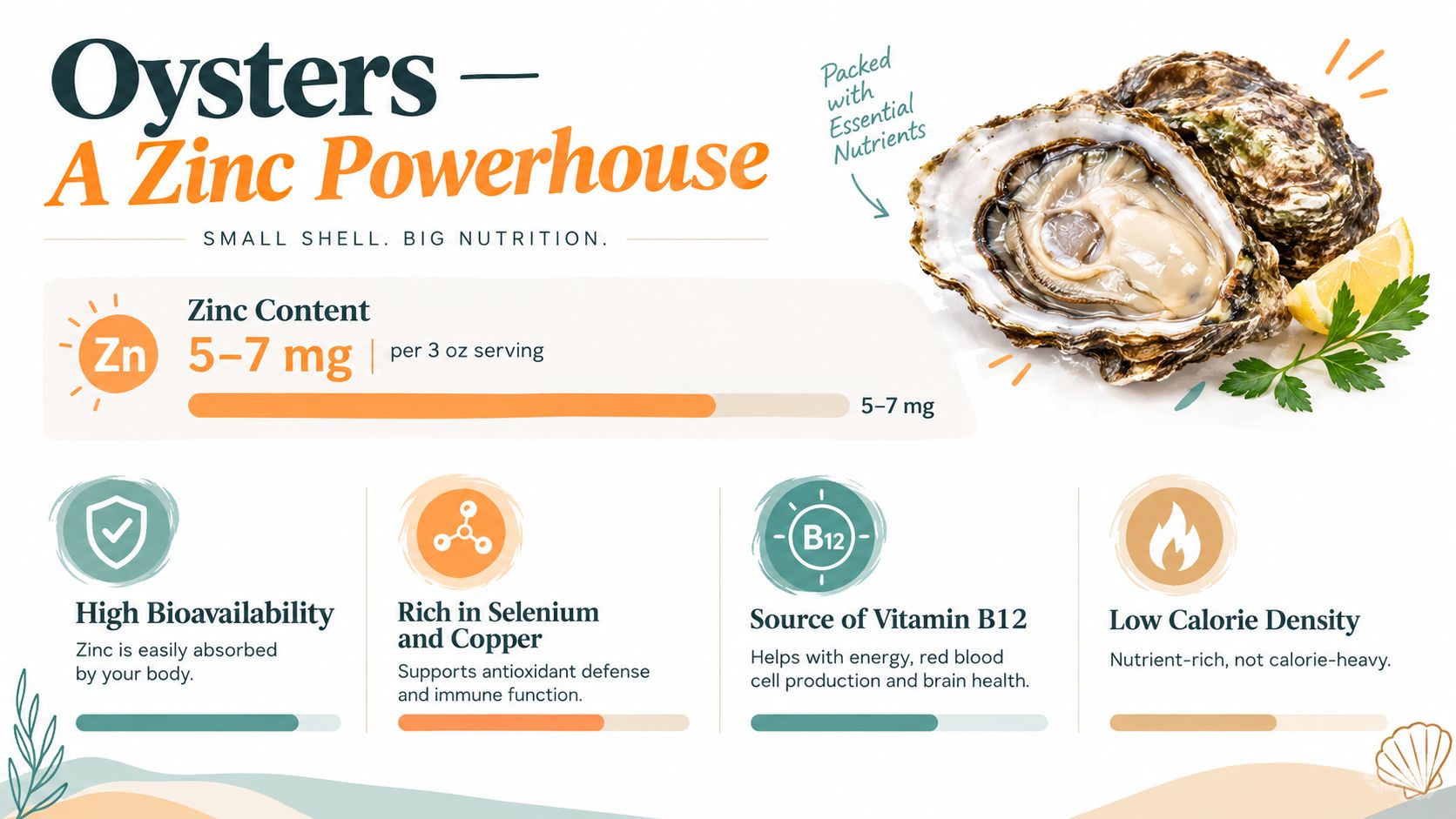
Which zinc deficiency food offers the most practical value per serving? For people who eat seafood, oysters rank first because they combine a concentrated zinc amount with generally good absorption. A 3-ounce serving provides 32.0 mg of zinc, according to the NIH Office of Dietary Supplements. That makes oysters useful when someone wants a compact food source instead of relying on several plant foods at one meal.
Oysters also provide selenium, copper, and vitamin B12. Zinc is the reason they lead this ranking, while these other nutrients add value to the meal without changing the main comparison.
How to use oysters
Raw oysters are traditional, but lightly cooked oysters may be a more practical choice for people focused on food safety. Choose reputable suppliers, keep them properly refrigerated, and handle them carefully. Lemon, tomato, or another vitamin C food can brighten the plate and support a broader nutrient strategy, though it does not guarantee greater zinc absorption.
Try lightly cooked oysters with tomato and parsley salad, or add them to a vegetable seafood stew. They are not vegan or vegetarian, so people avoiding animal foods need plant options such as legumes, seeds, nuts, or fortified foods across the day. Soaking, sprouting, fermenting, or grinding some plant foods can help address phytate-related absorption limits.
Practical rule: Oysters are a concentrated option, not a requirement. A varied diet can spread zinc sources across several meals.
Men exploring zinc's role in normal male reproductive function can read what zinc does for men, while keeping food-based nutrition separate from diagnosis or treatment claims.
2. Beef and Lean Red Meat
Could a familiar serving of beef be more useful than a plant food with a higher listed zinc value? For people who eat red meat, lean beef ranks highly for practical use because its zinc is generally more available than zinc in phytate-rich plant foods. Beef sirloin provides 3.8 mg per 3-ounce serving, a planning estimate from the nutrient reference cited earlier. That portion also provides protein, so it can anchor a filling meal.
Sirloin, tenderloin, and lean ground beef are straightforward choices. Grass-fed or pasture-raised meat may matter for farming or personal food-quality preferences, but the useful comparison here is the serving estimate and how easily the food fits a regular meal. Production method alone does not guarantee better zinc status.
Make the portion work
A 3-ounce serving fits into a stir-fry, grain bowl, taco filling, or salad. Add bell peppers, tomatoes, broccoli, or another vegetable for vitamin C and a more balanced plate. Cook beef to a safe doneness and avoid treating cooking style as a way to preserve zinc, since zinc is a mineral rather than a fragile vitamin.
For vegan diners, lentils, chickpeas, pumpkin seeds, hemp seeds, and fortified foods can fill the same meal-planning role across the day. These foods work best in varied combinations because phytate can reduce zinc absorption. Soaking, sprouting, fermenting, or grinding some plant foods may improve availability, making preparation part of the comparison rather than an afterthought.
3. Pumpkin Seeds
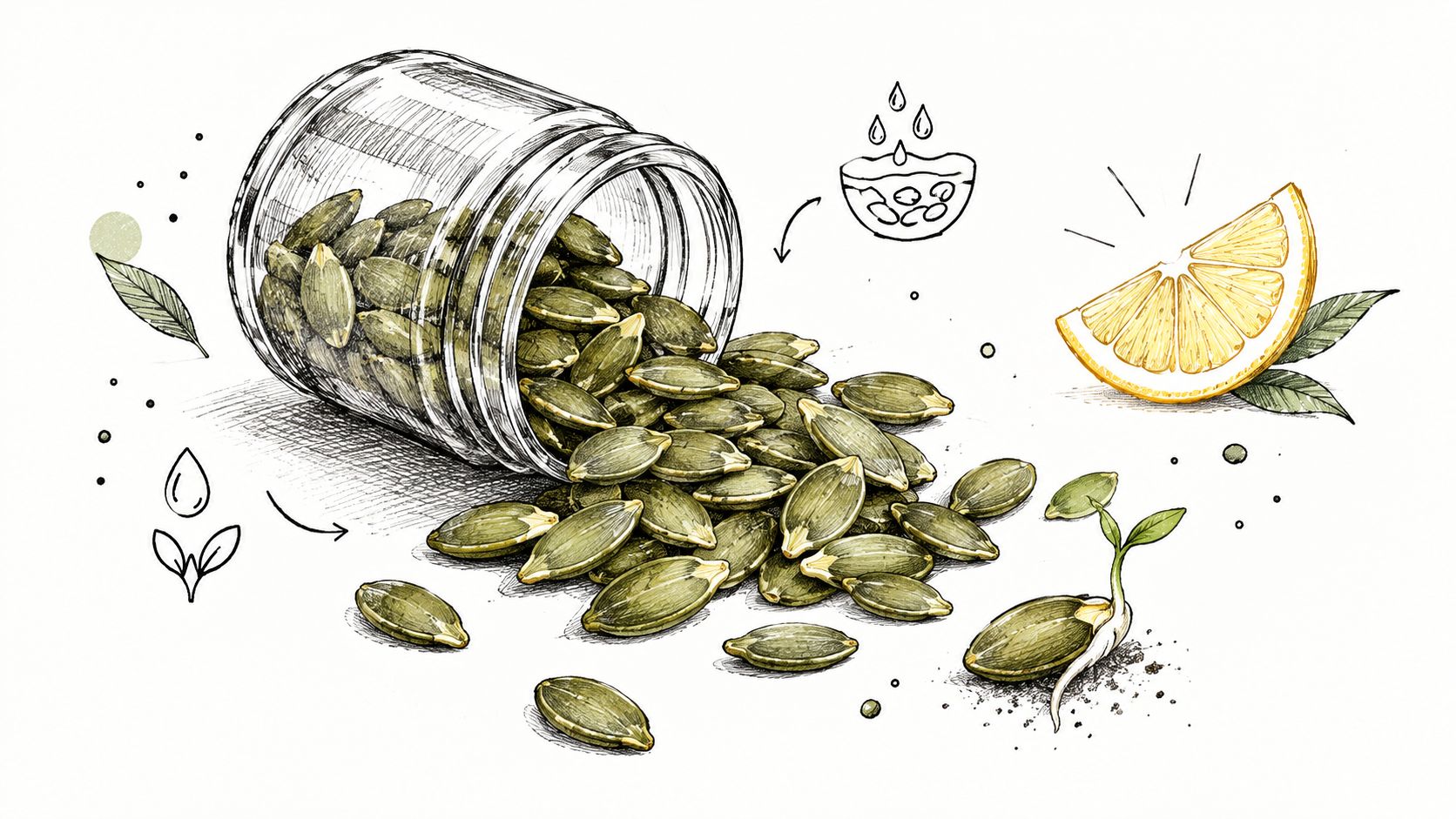
Could a small handful of pumpkin seeds make a useful contribution to a zinc-focused meal? Also called pepitas, they are among the more practical plant options, with 2.2 mg per common serving. Their value comes from more than the estimate: they are portable, store well, and add zinc to meals that might otherwise contain little.
Absorption is the main qualification. Phytate in plant foods can bind zinc during digestion, so the amount eaten is not the same as the amount absorbed. Pumpkin seeds still count. Preparation and the rest of the meal help determine how useful they are.
Preparation makes the habit stronger
Soaking or sprouting may reduce phytate in seeds and legumes. Light roasting can improve texture, while heavy roasting is unnecessary for a zinc-focused eating pattern. Store pepitas in an airtight container in a cool place. Refrigeration makes sense for longer storage because their fats can become stale.
For a vegan breakfast, scatter them over oatmeal with berries. At lunch, add them to a salad with chickpeas, lemon, and tomatoes. Seed butter works in a smoothie, although whole or ground seeds can make portions easier to judge. Pairing them with legumes creates a more substantial meal, while varied plant sources prevent one food from carrying the whole plan.
Zinc from a plant food counts, but preparation and the rest of the meal influence how much becomes available for absorption.
The 2.2 mg serving estimate is a planning guide, not a personal prescription. Use pumpkin seeds as one repeatable part of a varied diet, with soaking, sprouting, or grinding as optional preparation choices.
4. Chickpeas and Legumes
Could a modest zinc contribution become more useful when it anchors a complete meal? Oregon State University lists 1.2 mg per one-half cup of chickpeas in its zinc food examples (Oregon State University zinc resource). That serving is below the amount supplied by leading animal foods, yet chickpeas add plant protein and fiber, so they function as a meal base rather than a garnish.
For vegan and vegetarian eaters, legumes rank highly for practical usefulness. Their low preparation barrier and flexibility support hummus, chana masala, soups, stews, grain bowls, and bean burgers. Lentils and black beans provide similar ways to vary the menu.
Improve the plant-food setup
Soak dried chickpeas before cooking, and consider sprouting them if meal planning allows. This guide to cooking beans from scratch walks through soaking versus no-soak methods, stovetop and pressure-cooker times, and storage, which makes the habit easier to keep. Phytate can reduce zinc absorption from plant foods, so the listed amount is a planning estimate, not a guarantee of how much the body uses. Lemon juice, tomatoes, and peppers add acidity, flavor, and variety, with vitamin C also fitting naturally into the meal.
Try chickpeas with quinoa or another grain, chopped tomato, parsley, lemon, and pumpkin seeds. Tofu, lentils, or black beans can replace the chickpeas in a vegan rotation.
People reviewing possible zinc deficiency symptoms should remember that skin or appetite changes, altered taste, and recurring illness have many possible causes. Symptoms alone cannot confirm deficiency, so a healthcare professional should assess the broader context.
5. Cashews
Could a food that needs no cooking still help close a zinc gap? Cashews are useful mainly because they are easy to add, though they provide less concentrated zinc than oysters or beef. For plant-based eaters, they work as one part of a varied pattern alongside legumes, whole grains, seeds, and fortified foods. Phytate in many plant foods can limit zinc absorption, so the amount eaten is not the same as the amount the body uses.
An ounce is a practical portion for a snack or topping, but the number of individual nuts varies. Choose raw or lightly roasted cashews without excessive salt or added oil for routine use. An airtight container helps protect freshness, especially in a warm kitchen.
Cashews rank well for convenience, not for zinc density alone. Blend them into a dairy-free curry sauce, stir cashew butter into oatmeal, or scatter them over a grain and vegetable bowl. In a chickpea curry, they add texture and make a plant-based meal more satisfying.
Pairing cashews with whole grains is easy, but it does not remove phytate or guarantee absorption. Rotate them with pumpkin or hemp seeds, tofu, and legumes to widen zinc sources. Men comparing supplements can review zinc options for men, while suspected deficiency still calls for professional evaluation rather than self-treatment.
6. Crab and Other Shellfish
Crab ranks well for practical zinc value because it combines a meaningful serving with relatively favorable absorption. A 3-ounce serving of cooked blue crab provides 3.2 mg of zinc, according to the reference used earlier. Compared with legumes, whole grains, nuts, and seeds, crab contains little of the phytate that can reduce zinc absorption in plant foods. The amount absorbed still depends on the whole meal, but crab is a useful animal-based option.
Its mild meat also fits ordinary meals rather than requiring a restaurant-style entrée. Add it to a salad, soup, pasta, rice dish, or crab cake. A serving can function like a protein anchor, with vegetables and grains filling out the plate.
Choose shellfish carefully
Fresh or properly frozen crab supports a practical meal plan when sourcing, storage, food safety, sustainability, and allergies are considered. Lemon, lime, tomatoes, or vegetable slaw add acidity and contrast. Avoid overcooking, which can make the meat dry and reduce its appeal.
Try crab with citrus, greens, and beans for a meal that combines animal and plant foods. For a vegan plate, substitute chickpeas, marinated tofu, or a seed topping. These choices can contribute zinc, but their phytate content means they will not automatically provide the same absorption profile as crab.
Anyone with a shellfish allergy should avoid crab. This ranking reflects usefulness for people who tolerate and choose shellfish, not a recommendation that everyone include it.
7. Hemp Seeds
Hemp seeds rank well for practical vegan use because a small topping can add zinc without changing the meal's basic structure. Sprinkle them over oatmeal, yogurt, salads, soups, or roasted vegetables. Their protein also fits vegetarian and vegan patterns, though their zinc contribution should be viewed alongside the rest of the day's foods.
Plant-based zinc absorption can vary with phytate, a compound found in many seeds, legumes, and grains. As noted in the global zinc intake assessment, zinc intake also differs across eating patterns. Hemp seeds therefore work best as one part of a varied strategy, rather than as a stand-alone answer to low zinc intake.
Build a repeatable breakfast
Combine hemp seeds with oats, berries, and fortified plant milk for an easy breakfast. A chickpea and roasted-vegetable bowl finished with hemp seeds and lemon offers another practical option. Soaking, cooking, or fermenting the meal's legumes and grains may help reduce phytate, while hemp seeds provide a convenient finishing ingredient.
Use a modest spoonful or two as a topping, then include other zinc-containing foods across the day. Vitamin C foods can add color and variety, although the combination should not be presented as a guaranteed absorption enhancer.
Store hemp seeds in a cool, dark, airtight container. Heat, light, and air can reduce their freshness. The most useful choice is the one that remains appealing and easy to use regularly, because consistent meals matter more than a food that rarely reaches the plate.
8. Turkey and Poultry
Could turkey or chicken make zinc intake easier without relying on red meat? Poultry is a practical option because it fits familiar meals, and dark meat generally supplies more zinc than white meat. One listed serving provides 1.8 mg per 3 ounces of dark-meat chicken, according to Oregon State University zinc food data. Use that serving estimate as a guide for a sandwich, soup, wrap, salad, or meal-prep bowl.
Dark-meat chicken or turkey ranks well for everyday usefulness: it offers zinc in a commonly eaten protein, with less planning than many plant-based sources. White meat still contributes zinc, so the choice can follow taste, budget, and the rest of the plate.
Build a balanced poultry meal
Roast, grill, or bake poultry, then pair it with peppers, broccoli, tomatoes, or cabbage. These foods add color and fiber, while the poultry supplies a dependable zinc-containing component. Turkey and bean chili combines animal and plant sources in one meal. Chicken with chickpeas offers a similar mix, although zinc from legumes may be absorbed differently because plant foods can contain phytate.
For a vegan plate, replace poultry with tempeh, tofu, lentils, or chickpeas. Fermentation may reduce some phytate in tempeh, but zinc amounts vary by product and portion. A practical choice is one you will eat consistently: select a suitable portion, choose dark meat when zinc is the priority, and add plant foods to complete the meal.
9. Flax Seeds
Flax seeds are best viewed as a supporting food. They provide fiber, lignans, and alpha-linolenic acid, but their zinc contribution is modest compared with oysters, beef, shellfish, and pumpkin seeds. That makes flax useful for dietary variety, not a primary zinc strategy.
Ground flax is easier to incorporate than whole seeds because it blends into oatmeal, smoothies, yogurt, and baked foods. Grinding also improves access to the seed's other nutrients. Freshly grinding a small amount, or refrigerating ground flax in an airtight container, helps preserve quality.
Use flax alongside stronger sources
A plant-based breakfast might combine ground flax with fortified cereal, oats, berries, and soy yogurt. Lunch could add it to a hummus dressing, while dinner includes lentils or tofu as the more substantial zinc source. This approach keeps flax in its proper role.
Water is important when increasing fiber-rich foods, especially for people not accustomed to them. Flax shouldn't displace legumes, seeds, fortified foods, or other zinc contributors.
Flax can strengthen a varied plant-based pattern, but it can't carry the zinc plan by itself.
People who need an individualized nutrition strategy should discuss portion sizes and digestive tolerance with a registered dietitian or other qualified healthcare professional.
10. Almonds and Tree Nuts
Almonds provide a modest plant-based contribution to zinc alongside vitamin E, magnesium, and monounsaturated fats. Their main practical advantage is convenience. A small container of almonds can turn a low-zinc snack into a more nutrient-dense option, although almonds remain less concentrated than pumpkin seeds and far below oysters or beef.
Raw or lightly roasted almonds without excessive salt or added oil are straightforward choices. Soaking can reduce some phytate, but it isn't necessary for every person or every meal. The broader strategy is to combine almonds with other zinc foods rather than expecting them to meet the day's target alone.
Add almonds to a complete meal
Sliced almonds work over lentil soup, roasted vegetables, or a chickpea salad. Almond butter can be added to oats or blended into a smoothie with fortified plant milk. Berries, citrus, tomatoes, or peppers bring vitamin C and keep the meal varied.
Store almonds in an airtight container, and refrigerate them if they won't be used quickly. Rancid nuts can develop an unpleasant flavor that makes an otherwise sensible food difficult to use consistently.
A vegan plate might combine almonds with soaked chickpeas, pumpkin seeds, and a fortified food across separate meals. That combination is more practical than relying on almonds alone because it distributes zinc sources and addresses the lower bioavailability of many plant foods.
Top 10 Zinc-Rich Foods Comparison
| Item | Zinc per serving | Bioavailability & expected outcomes | Implementation complexity | Resource requirements & sustainability | Ideal use cases & key advantages |
|---|---|---|---|---|---|
| Oysters | 5–7 mg per 3 oz | Very high bioavailability; rapid zinc uptake; also provides B12, selenium, copper | Low cooking complexity but requires careful handling/safe sourcing | Higher cost; sustainability and regional availability concerns | Targeted zinc boost for nutrient-dense meals; advantage: highest zinc concentration and absorption |
| Beef and Lean Red Meat | 4–7 mg per 3 oz cooked | High bioavailability; supports immune function and muscle recovery | Moderate, standard cooking methods; portion control advised | Widely available year-round; environmental/ethical concerns for some | Regular zinc source for athletes and omnivores; advantage: complete protein with synergistic nutrients |
| Pumpkin Seeds (Pepitas) | 2.5–3 mg per 1 oz | Moderate zinc amount; bioavailability reduced by phytic acid unless soaked/sprouted | Very low, ready-to-eat; optional soaking/sprouting for better absorption | Affordable, long shelf-life; widely available | Vegan snacks, toppings, and portable zinc option; advantage: plant-based, easy to add to meals |
| Chickpeas and Legumes | ~2.4 mg per 1 cup cooked | Moderate zinc with reduced bioavailability from phytic acid; adds fiber and protein | Higher prep if using dried (soak/cook); canned is easy | Very low cost and sustainable; excellent shelf-life when dried | Budget-friendly plant-based diets and staples; advantage: high fiber and protein with stable supply |
| Cashews | 1.6 mg per 1 oz | Moderate zinc with relatively good bioavailability (lower phytic acid); provides copper | Very low, ready-to-eat; no prep needed | Moderate cost; sourcing/processing quality varies | Convenient snack or ingredient; advantage: easy incorporation and good mineral synergy |
| Crab and Other Shellfish | 3–4 mg per 3 oz cooked | High bioavailability; lean protein plus selenium and astaxanthin antioxidants | Moderate, needs proper handling and cooking | Often higher cost; sustainability and allergy considerations | Seafood-focused meals and nutrient-dense diets; advantage: lean, antioxidant-rich zinc source |
| Hemp Seeds | 1.6 mg per 3 tbsp (30g) | Moderate bioavailability; low phytic acid; complete plant protein and healthy fats | Very low, ready-to-eat; sprinkle into foods | Moderate cost; specialty but increasingly available | Vegan athletes, smoothies, and salads; advantage: complete protein plus favorable fat profile |
| Turkey and Poultry | 2–3 mg per 3 oz cooked (dark meat higher) | Good bioavailability especially in dark meat; supports muscle maintenance | Low to moderate, common cooking methods; attention to safe prep | Widely available and affordable; variable farming practices | Meal prep and lean-protein diets; advantage: accessible, versatile zinc source |
| Flax Seeds | 0.8 mg per 3 tbsp (30g) | Low individual zinc contribution; phytic acid can reduce absorption; high in ALA and fiber | Low, best ground for absorption; add to foods or smoothies | Low cost; whole seeds stable, ground seeds oxidize faster | Complementary source for omega‑3/fiber; advantage: supports cardiovascular and digestive health, not primary zinc source |
| Almonds and Tree Nuts | 0.9 mg per 1 oz | Modest zinc contribution; some phytic acid; provides vitamin E and healthy fats | Very low, ready-to-eat; optional soaking to reduce phytic acid | Moderate cost; water-intensive cultivation for some nuts | Snacks and heart-health–focused diets; advantage: convenient, nutrient-dense complement to zinc intake |
Build a Zinc-Smart Plate That Fits Your Diet
Which zinc-rich food will help most in real life? The answer depends on more than the number beside zinc on a nutrition label. Zinc density, absorption, availability, cost, dietary fit, and repeatability all matter. Oysters rank highly for concentrated zinc and favorable absorption. Beef and crab provide strong animal-based choices, while poultry offers a familiar option for regular meals, with dark meat generally contributing more zinc than lighter cuts.
For vegan and vegetarian diets, pumpkin seeds, chickpeas, cashews, hemp seeds, flax, and almonds are useful in different roles. Plant sources often contain phytate, which can limit zinc absorption, so variety works better than relying on one food. Try oats or fortified cereal with seeds at breakfast, chickpeas or lentils with tomatoes, peppers, and lemon at lunch, then tofu, tempeh, beans, or another prepared legume at dinner. Nuts and seeds can add smaller amounts between meals.
Preparation can improve the practical value of plant foods. Soak dried chickpeas, sprout suitable legumes or seeds, and include fermented foods when they fit your diet. Grind flax before adding it to oats or smoothies. Cook legumes until tender so they are easier to eat regularly. Vitamin C-rich foods can complement a plant-based meal, but no pairing guarantees complete absorption of the zinc listed on a label.
For planning purposes, the adult RDA is 11 mg daily for men and 8 mg daily for women. These figures provide a general target, not individualized treatment instructions. Age, pregnancy, digestive health, medications, dietary pattern, and confirmed nutrient status can affect personal needs.
A varied pattern is more practical than building every meal around a “superfood.” Someone who eats oysters occasionally can use beans, meat, seeds, or poultry at other meals. Someone following a vegan diet can rotate legumes, seeds, tofu, and fortified foods rather than depending only on pumpkin seeds. Persistent concerns deserve discussion with a qualified healthcare professional, particularly when symptoms overlap with other conditions or absorption may be impaired.
SEMEX includes zinc within a broader men's wellness formula. Any zinc-related role belongs to zinc itself, not to SEMEX as a treatment for deficiency or disease. Review the product's ingredients and use it only as a dietary supplement, never as a substitute for food, diagnosis, or medical care.
These statements have not been evaluated by the Food and Drug Administration. This product is not intended to diagnose, treat, cure, or prevent any disease.
For men seeking a supplement that combines zinc with L-Arginine, Sunflower Lecithin, Bromelain, and other men's wellness ingredients, SEMEX offers a daily formula to review. Examine the full ingredient list before deciding whether it fits an existing zinc-smart eating routine.