

How Hickeys Are Formed and What Happens Under the Skin
You catch the mark in the mirror and your first thought is usually simple: what happened under my skin? A hickey can look dramatic, but the process behind it is ordinary bruising, not a mystery injury. It starts with suction, pressure, and a small amount of vessel damage, then ends with the body slowly clearing away leaked blood over the next several days.
Imagine a balloon pressed against a fine net. The outside force doesn't break the skin open, but it can stretch the tiny vessels underneath enough to make them leak. That's why the mark can shift from red or purple to darker shades, then fade as the bruise heals.
Table of Contents
- A Quick Look at Why Hickeys Appear
- The Suction Mechanism and Capillary Rupture Explained
- How the Color of a Hickey Changes Over Time
- Typical Healing Timeline and What Can Affect It
- Gentle Aftercare and Ways to Conceal the Mark
- Warning Signs That Mean You Should See a Doctor
- Putting It All Together on How Hickeys Form
A Quick Look at Why Hickeys Appear
You spot a hickey in the mirror and the first question is usually simple, what exactly happened under the skin? A hickey is a localized bruise, medically similar to ecchymosis, formed when suction or biting stresses the skin and the small blood vessels beneath it WebMD. The mark is blood that has leaked into nearby tissue while the skin above stays intact.
That is why the area can look dramatic without being an open wound. The visible color comes from blood trapped just under the surface, not from surface bleeding or broken skin. The same basic biology applies to bruises from a bump or other minor injury. The trigger changes, but the tissue response is the same.
Practical rule: if the skin is unbroken and the area is only mildly tender, you're usually looking at a bruise, not a cut.
A suction-and-balloons comparison helps here. The skin stretches like the outer layer of a balloon, while the tiny vessels underneath are more like delicate tubes that can leak when pressure pulls on them. That simple chain of events explains why hickeys change color, why they fade over time, and why the red flag signs matter later. For a plain-language look at circulation and local vessel behavior, a note on nitric oxide and blood flow gives useful context.
The Suction Mechanism and Capillary Rupture Explained
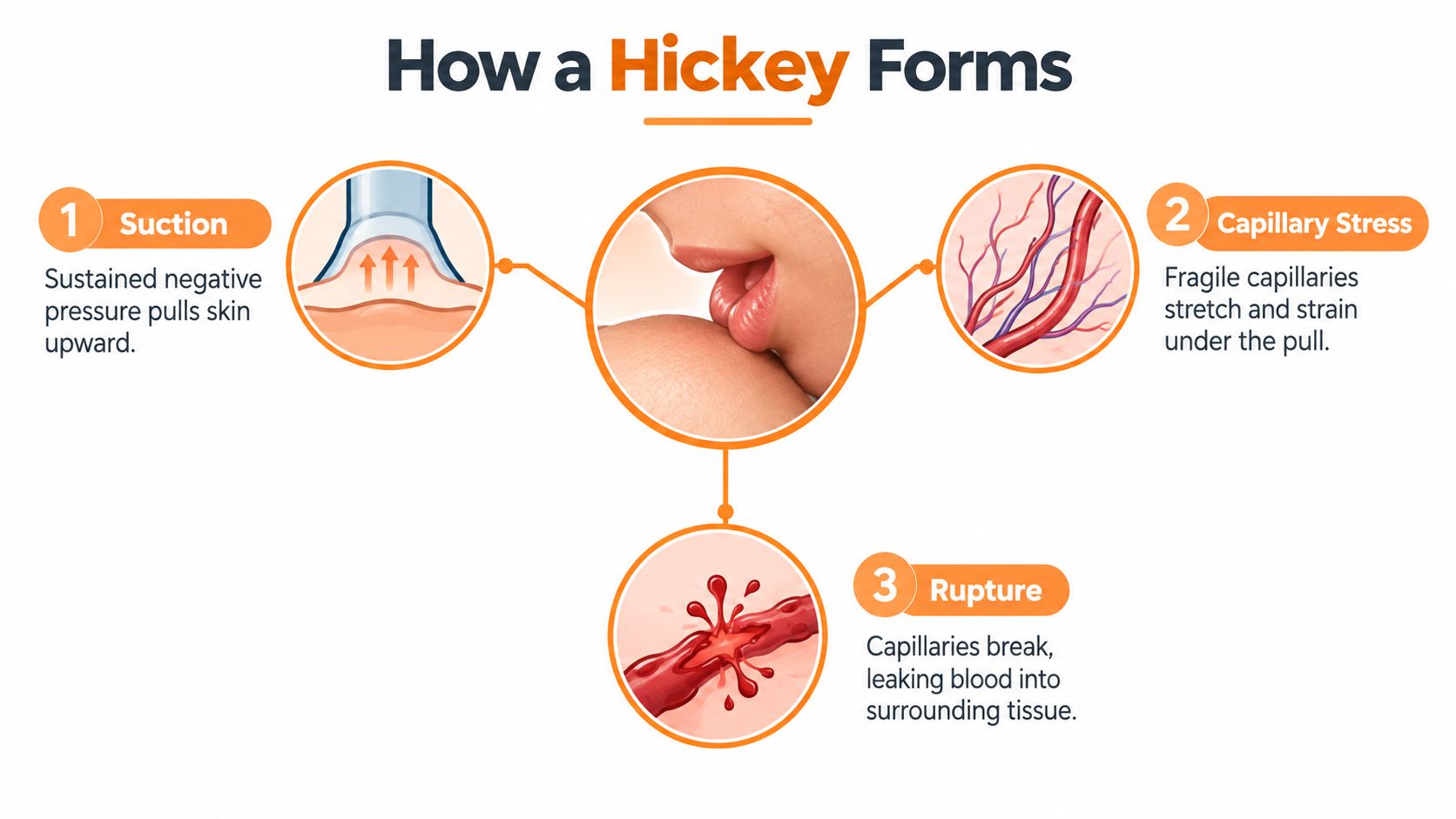
A hickey begins when sustained suction, and sometimes gentle biting, creates mechanical stress on the skin. The surface layer is pulled upward while the tissue below stretches, especially in the papillary dermis, where tiny blood vessels sit close to the surface Merck Manual. If that force is strong enough, small capillaries and venules can rupture, and blood leaks into the surrounding tissue instead of staying inside the vessels.
A simple mental model
First the skin is lifted. Then the vessels stretch. Then the thinnest walls give way.
That sequence helps explain why the skin itself usually stays closed. The blood does not spill out of the body, it collects just under the surface, which is why the mark appears as a red, purple, or blue patch. A suction-and-balloons comparison fits here, because the outer skin can stretch while the tiny vessels underneath are more delicate. For a plain-language look at circulation and local vessel behavior, a note on nitric oxide and blood flow gives useful context.
A hickey is a suction-induced contusion, in the same family as bruises caused by blunt bumps Cleveland Clinic. Stronger or longer suction usually raises the chance of vessel damage, but there is no medically meaningful “ideal” suction level.
Mechanism matters more than intensity. More suction usually means more vessel stress, not a “better” hickey.
Some people bruise more easily because of thinner skin, more fragile vessels, or medicines that affect clotting Merck Manual. People taking anticoagulants or antiplatelet drugs may see bruising after relatively minor trauma because the normal clotting response is less effective Merck Manual. The same kind of vessel fragility is part of why a small amount of suction can leave a visible mark.
How the Color of a Hickey Changes Over Time
A hickey changes color because the blood trapped under the skin is slowly broken down and reabsorbed. Right after the suction breaks small vessels, the spot can look red or purple from fresh blood pooling just below the surface Medical News Today. As oxygen leaves that pooled blood, the mark often shifts toward blue, black, or darker in appearance, which is why an older bruise can look deeper even when the injury itself is not getting worse.
What the colors usually mean
As healing continues, the blood pigments are dismantled into smaller byproducts. Medical News Today notes that hemoglobin breaks down into compounds including biliverdin and bilirubin, which helps explain why the color later moves toward green or yellow Medical News Today. A bruise on lighter skin may then fade into yellow-brown or light brown. On darker skin, the same mark can be harder to map to a textbook color sequence, since it may darken gradually or fade in a more subtle way. Bruise appearance can also differ by skin tone, so the change is not always obvious at every stage Cleveland Clinic.
A suction-and-balloons analogy helps here. The suction pulls on tiny vessels the way a balloon stretches under pressure, and when those vessels leak, the trapped blood starts its slow color shift as the body clears it away. Oxygen loss changes the first phase, then pigment breakdown shapes the later colors.
| Color you might see | What's happening underneath |
|---|---|
| Red or purple | Fresh blood is pooled under intact skin |
| Blue, black, or darker | Blood has lost oxygen and the bruise has deepened |
| Green or yellow | Hemoglobin is breaking down into byproducts |
That gradual change is why the spot does not disappear all at once. The body first reabsorbs the leaked blood, then processes its remaining pigments, so the bruise moves through stages instead of vanishing in a single step. If the color is still shifting, the mark is usually still in its healing phase.
Skin tone changes what you notice first. Some people see bold color changes, while others mainly notice the bruise becoming less distinct. That is normal, and it is one reason color alone is only a rough guide to healing.
For a related look at how enzyme-based breakdown is discussed in another context, see the overview of bromelain enzyme benefits.
Typical Healing Timeline and What Can Affect It
A hickey often fades in about 5 to 12 days, and some marks can last up to about two weeks. The exact timing depends on how much suction was applied, where the mark sits, and how easily your skin bruises MedlinePlus. A hickey is still a bruise, so it does not clear on a fixed schedule. The body has to stop the leak, break down the pooled blood, and remove the leftover pigment.
Variables that change the pace
| Variable | Typical effect on healing |
|---|---|
| Stronger or longer suction | Usually makes the bruise larger or darker, which can take longer to fade |
| Location on the body | Some areas bruise more easily or get rubbed more often |
| Skin sensitivity | Sensitive skin can show more obvious discoloration |
| Individual bruising tendency | Some people heal visibly faster than others |
| Medications that affect clotting | Can make bruising more extensive and slower to resolve |
Medicines that affect clotting matter because platelet function and coagulation help stop bleeding in tiny vessel injuries Merck Manual. If clotting is less efficient, even a small suction injury can leave a larger bruise than expected. People who bruise easily for other reasons may notice the same pattern.
A mark on the neck can also linger if it keeps getting bumped or rubbed by collars, shaving, or makeup removal. Less friction usually means less extra irritation, which gives the skin a calmer path back to normal. A practical comparison of recovery windows can help here, and a broader look at healing time shows the same general principle, tissue stress often slows visible improvement.
Gentle Aftercare and Ways to Conceal the Mark
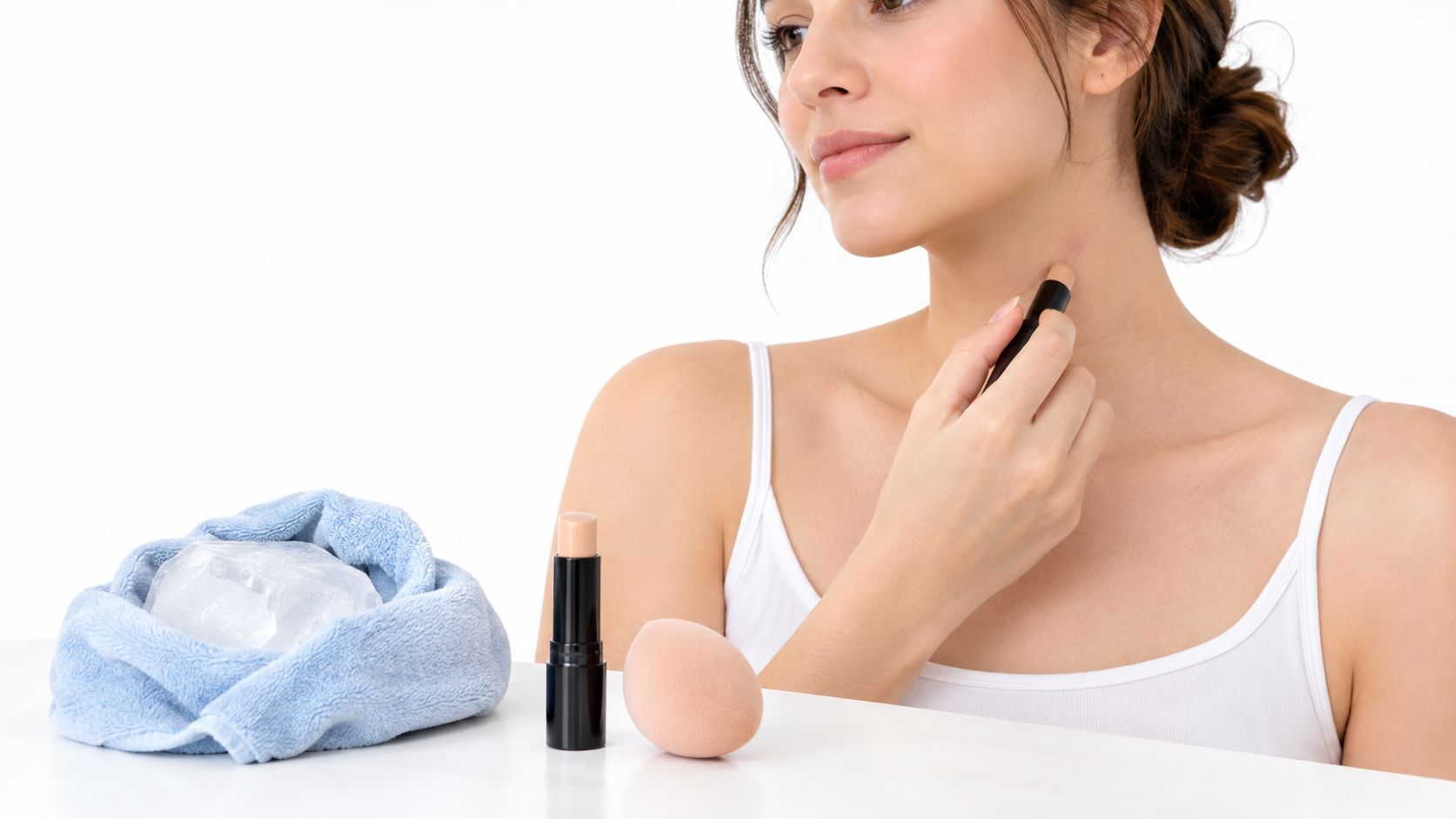
The safest early step is to reduce more irritation. A cold compress can help calm the area soon after the bruise appears, and avoiding friction, pressure, or repeated rubbing keeps the vessel injury from being aggravated. You're not trying to “erase” the bruise in minutes, you're helping the body do its normal cleanup without adding more stress.
Cosmetic concealment that stays low risk
Makeup can hide the color shift without changing the bruise itself. Color-correcting shades followed by foundation that matches your skin tone usually work better than piling on one thick layer. If clothing is the easier fix, collars, scarves, turtlenecks, or a hairstyle that falls over the area can do the job just as well.
Practical rule: concealment should cover the color, not irritate the skin.
Home remedies get talked about a lot, but many of them are more about tradition than evidence. If something feels abrasive, hot, or painful, skip it. The bruise is already under the skin, so rough treatment only adds another injury on top of the first one.
A calm approach works best in the first day or two, then camouflage takes over if you need it. That keeps the area comfortable while the body handles the rest of the healing on its own. If you're choosing between covering it and treating it, cosmetic cover-up is the safer route when the skin is intact.
Warning Signs That Mean You Should See a Doctor
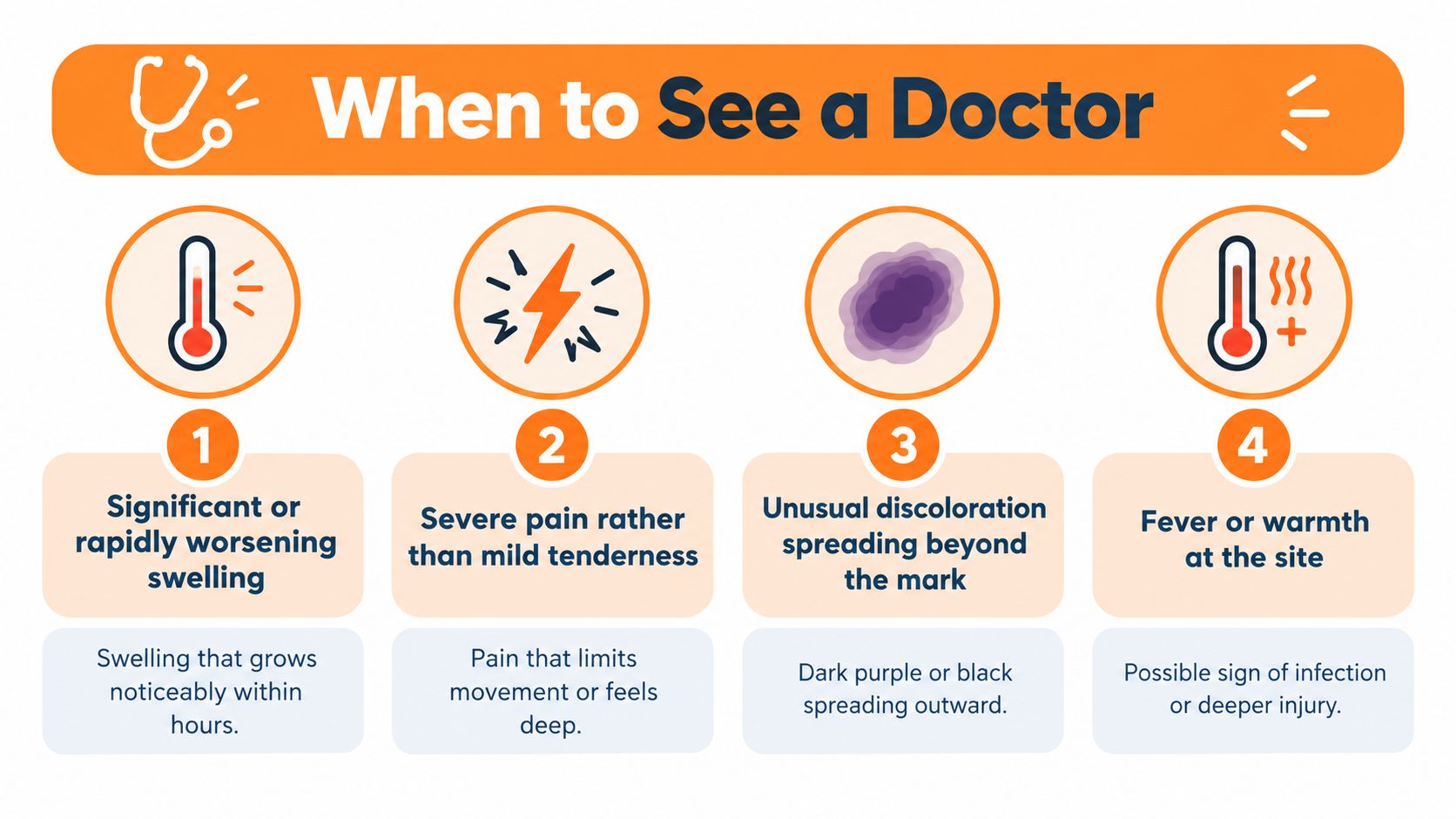
A hickey usually fades on its own, but certain changes suggest the bruise is behaving differently from a routine surface injury. If swelling grows quickly, pain becomes severe, breathing or swallowing feels difficult, or you feel faint, the mark deserves medical attention. If it is still not improving after about two weeks, that is another reason to be checked.
Red flags to scan for
- Significant or rapidly worsening swelling. A neck bruise should not keep getting puffier over a short time.
- Severe pain rather than mild tenderness. A hickey may feel sore, but deep or escalating pain is different.
- Breathing or swallowing difficulty. Any trouble with either one needs urgent evaluation.
- Fainting or feeling suddenly unwell. That pattern should not be treated as a simple bruise.
These warning signs matter because suction can do more than leave surface discoloration. It can irritate tissue enough that swelling or pain starts to move beyond the expected bruise pattern. For a focused discussion of risk, see whether hickeys can be dangerous.
If the area is just tender, flat, and slowly fading, that fits the usual course. If it starts acting worse instead of better, home care is no longer the right answer.
Putting It All Together on How Hickeys Form
A hickey starts with suction or biting that puts enough stress on tiny blood vessels near the skin's surface to make them leak. The skin itself usually stays intact, so the blood collects underneath and the body slowly clears it over time. The changing colors come from normal blood breakdown, not from a fresh injury each day.
The process is easier to picture if you use the balloon idea. Strong suction pulls on the skin the way a balloon stretches under pressure, and the smallest vessels are the first to give way. That is why a firmer mark often points to more vessel injury and a slower fade. As noted earlier, gentle cooling, light concealment, and avoiding extra rubbing can help a typical bruise settle more comfortably.
A hickey that keeps getting more swollen, feels sharply painful, causes swallowing trouble, or leaves you faint or unwell needs medical attention. A mark that still is not improving after about two weeks also deserves a clinician's look.
If you want a broader look at men's wellness topics, you can visit SEMEX and read the product details for yourself. It is separate from bruise care and is not a treatment for skin injury. These statements have not been evaluated by the Food and Drug Administration. This product is not intended to diagnose, treat, cure, or prevent any disease.