

Prince Albert Healing Time: What to Expect and When to Worry
Initial Prince Albert healing is usually seen in 4–8 weeks, although complete tissue maturation can take several months. Some genital piercings may take much longer to fully settle, so a piercing that feels comfortable early on isn't automatically ready for every kind of activity.
A nervous first-timer often searches for “Prince Albert healing time” after noticing a little blood, swelling, or an unfamiliar urinary stream. Those changes can be part of early recovery, but the timeline isn't a countdown that ends on one guaranteed day. The piercing passes through tissue near the urethral opening, so friction, pressure, erections, jewelry movement, urine exposure, aftercare, and individual anatomy all affect the pace.
Table of Contents
- Prince Albert Healing Time at a Glance
- Healing Milestones Week by Week
- Common Complications and Warning Signs
- Aftercare Steps That Actually Work
- When to Resume Sexual Activity Safely
- Recovery Checklist and Final Takeaways
Prince Albert Healing Time at a Glance
You check the piercing a few days in, the swelling has eased a bit, and it is easy to wonder whether the hard part is already over. With a Prince Albert, that feeling can arrive well before the tissue is fully settled. Initial healing usually falls around 4–8 weeks, while medical and urological references often describe about 1–2 months or longer. Those estimates do not necessarily conflict. They are often describing different stages of recovery.

The outer opening may look calm before the inner channel is strong. That inner channel, often called the fistula, has to toughen and settle over time. A piercing can feel comfortable during daily life and still be easy to irritate with friction, jewelry movement, pressure, or early sexual contact. That is why one simple number never tells the whole story.
Professional piercers also see wide differences from person to person. Anatomy, jewelry fit, placement, aftercare habits, urine exposure, clothing friction, erections, and general healing response can all shift the timeline (professional piercing guidance on Prince Albert healing). Two clients can be pierced on the same day and have very different week three experiences without either one doing anything obviously wrong.
The urethral route also deserves patience. Reported complication patterns are covered in detail below, and they help explain why a Prince Albert may feel settled before it is fully mature.
Initial healing versus mature healing
Initial healing means the early reaction has started to calm down. Bleeding, swelling, and soreness are reduced, and the openings look more stable.
Mature healing takes longer. The channel strengthens from the inside, becomes less reactive, and is better able to handle normal movement without flaring up afterward.
That distinction matters. Less soreness, a cleaner-looking opening, or jewelry that moves more easily does not confirm that the piercing is ready for a jewelry change, stretching, or sexual activity.
Practical rule: Feeling mostly normal is a good sign, but it is not the same as being fully healed.
A safe baseline is 4–8 weeks for initial healing, with more time if tenderness, discharge, bleeding, or irritation continues.
Healing Milestones Week by Week
You can have a Prince Albert that looks calm on the outside and still reacts like a fresh piercing after one bad snag. That throws people off. Healing usually moves forward, but small setbacks are common, so the useful question each week is what is improving, what is staying the same, and what is flaring back up.
Week 1, bleeding and sensitivity
The first week is the rawest stage. Light bleeding, swelling, tenderness, and extra sensitivity can all show up early, and urination can feel strange because the jewelry sits right by the urethral opening. A few spots of blood or brief oozing can happen. The pattern should still drift in the right direction, with less reactivity day by day, not more.
Treat the area like a new cut that also has jewelry passing through it. Clean hands matter. Gentle rinsing matters. Repeatedly twisting the jewelry, checking the opening, or pressing on sore tissue usually creates more irritation than reassurance.
Persistent bleeding, heavier bleeding, or pain that is clearly intensifying is outside the usual week 1 pattern and should not be brushed off.
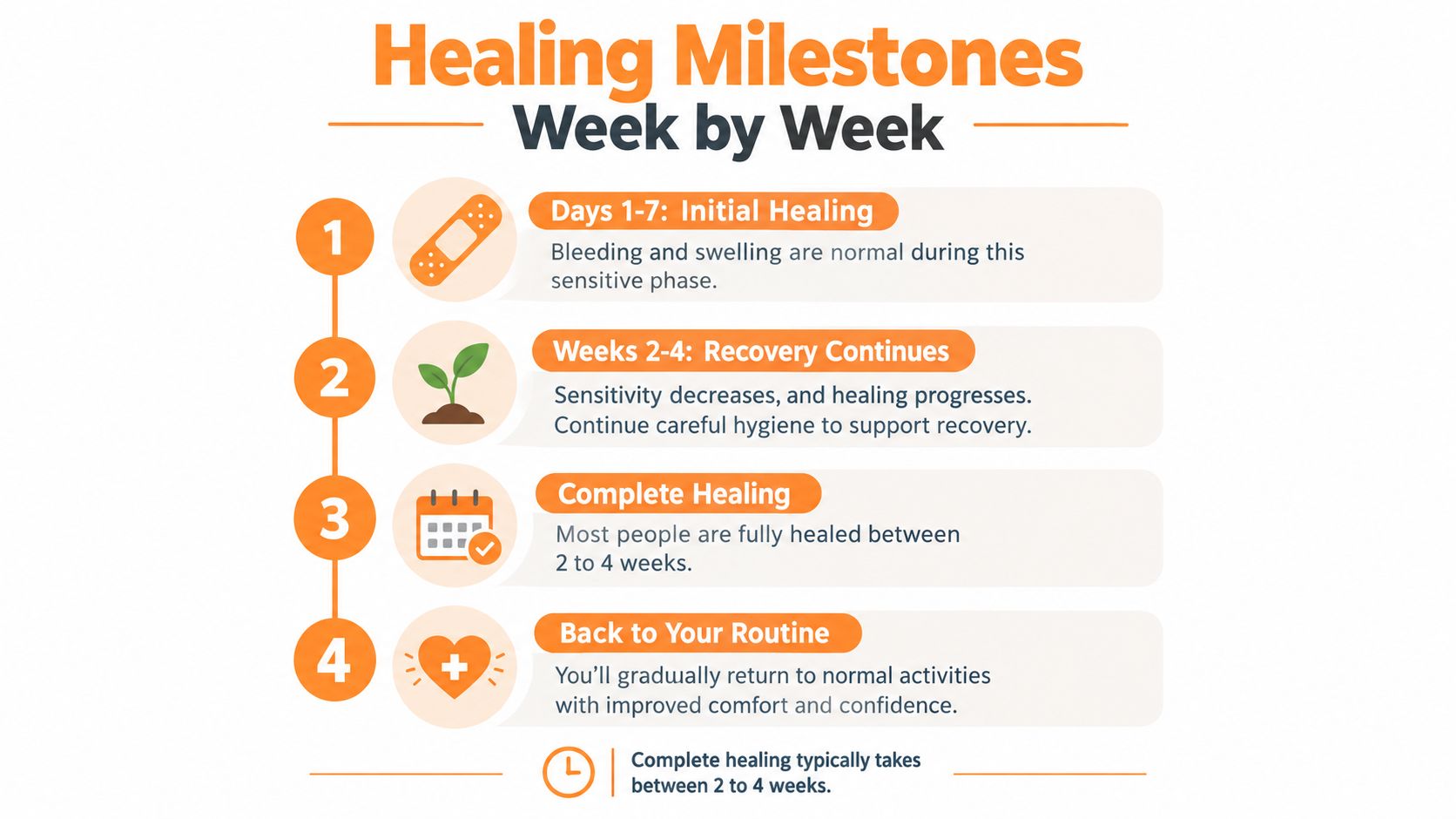
Weeks 2–4, calmer but not finished
This is the stage that tricks people. The piercing often feels much easier to live with. Swelling may be down. Tenderness may be milder. You may see small amounts of clear or whitish fluid dry around the jewelry into crust. On its own, that can be part of normal healing, especially if there is little odor and no spreading redness, increasing heat, or worsening pain.
What has changed here is comfort, not durability. The outer openings can look settled while the channel inside is still fragile, more like skin that has closed over a scrape than tissue that is ready for friction. That is why early sexual activity, unnecessary jewelry movement, or slacking on aftercare often causes a sudden step backward.
A medical review describes genital-piercing healing as a broad 2–8-week process and separates practical healing from full maturation (medical review of genital-piercing healing).
Weeks 5–8 and beyond
By this stage, many people are close to initial healing. The best signs are specific. Little or no tenderness during ordinary movement. No active bleeding. No unusual discharge. No irritation after routine cleaning or urination.
Even then, the timeline is not identical for everyone. Some references describe healing anywhere from 4 weeks to 6 months, and heavier or larger-gauge jewelry can add stress to the tissue between the urethral opening and the piercing channel, increasing the chance of tearing or similar problems (extended healing ranges and jewelry-related risks)).
Use week 8 as a checkpoint, not a finish line. If you still have daily crusting, tenderness with erections, or stinging after friction, treat the piercing as still actively healing and book a check-in with an experienced piercer or clinician. A healing milestone infographic timeline showing recovery stages from the first week through the fourth week. can help you compare the broad stages, but your symptoms matter more than the calendar.
Common Complications and Warning Signs
You wake up, go to the bathroom, and the stream suddenly sprays sideways or stings more than it did yesterday. That is the kind of moment that makes people wonder whether healing is still on track. A Prince Albert can look calmer on the outside before the channel is fully settled, so the better test is direction. Symptoms should trend down over time, not get sharper, messier, or more disruptive.
As noted earlier, urinary-flow changes were one of the more commonly reported issues in the cited findings, which is why urinary symptoms deserve their own row here.
| Symptom | Normal Healing | Seek Medical Care |
|---|---|---|
| Tenderness | Mild and gradually improving | Increasing, persistent, or severe pain |
| Swelling | Limited and settling | Significant or worsening swelling |
| Discharge | Clear or whitish, with little odor | Thick, foul-smelling, or green discharge |
| Bleeding | Light or intermittent during early recovery | Persistent, heavy, or recurring bleeding |
| Urination | Temporary change in flow or aim | Difficulty urinating or a persistent stream change |
| Skin | Mild localized irritation | Spreading redness, heat, discoloration, or pus |
| Whole-body symptoms | None expected | Fever, chills, or feeling systemically unwell |
A simple way to read the table is this. Mild symptoms can be normal if they are smaller this week than last week. Trouble signs are symptoms that intensify, spread, or start interfering with basic functions like urinating, walking, or sleeping.
Urinary problems need prompt attention because the piercing sits close to the urethral opening. If you have trouble passing urine, a marked change in flow, increasing pain, or signs of infection, do not try to fix it by cleaning more often or waiting it out. Get assessed by a clinician.
Sex can create a different problem before the tissue is fully healed. Friction can reopen fragile tissue, and jewelry can damage condoms, so barrier protection needs to be checked carefully for fit and damage. Good daily hygiene matters too. Routine buildup is not automatically an infection, and learning the common causes of smegma can help you tell ordinary residue from a change that deserves medical attention.
Aftercare Steps That Actually Work
Good aftercare is intentionally simple. The aim is to remove irritants without stripping or traumatizing the healing tissue.
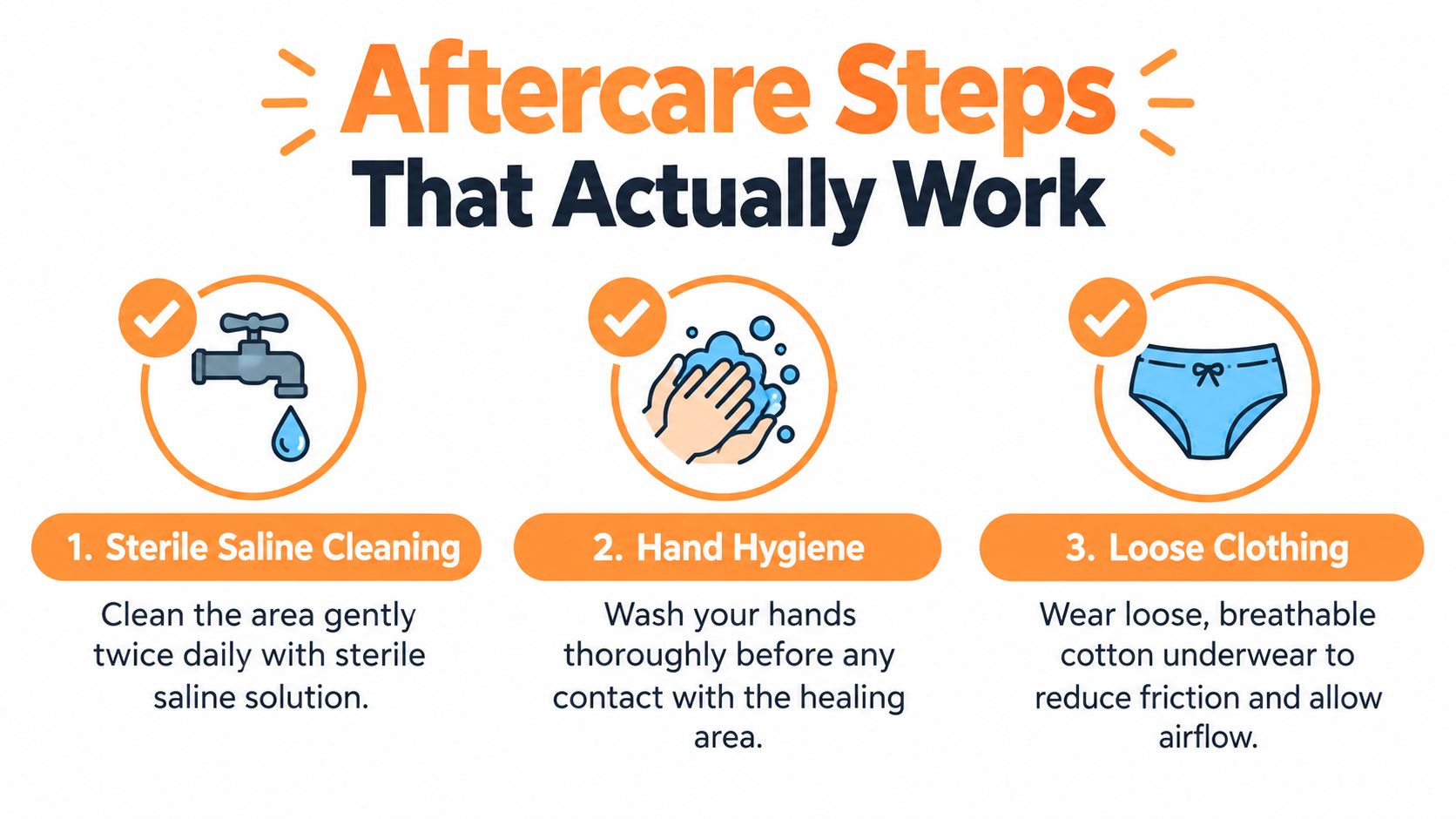
Clean gently
Use sterile saline according to the piercer's aftercare guidance. Saline can rinse away residue without the chemical harshness associated with alcohol or peroxide-based products. Pat the area dry with a clean disposable material rather than rubbing it or leaving it damp.
Over-cleaning can be counterproductive. Vigorous scrubbing, picking at crusts, twisting the jewelry, and repeatedly checking the channel create mechanical irritation that may prolong recovery. A calm routine is more useful than constant intervention.
Wash hands before contact
Hands carry oils, dirt, and microbes that don't belong on a healing genital piercing. Washing thoroughly before any necessary contact reduces avoidable contamination. Contact should remain limited to cleaning and essential care, rather than testing whether the jewelry moves freely.
Professional medical guidance recommends minimizing sexual contact and friction, using sterile saline, washing hands before contact, and avoiding alcohol or peroxide-based products. The same guidance lists increasing pain, spreading redness, fever, pus, difficulty urinating, persistent bleeding, and a change in urinary stream as reasons for medical assessment (piercing aftercare and warning signs).
Reduce friction
Loose, breathable clothing can limit rubbing and snagging. Sleep positions may need temporary adjustment if pressure causes discomfort, and activities that repeatedly move the jewelry should be reduced during early healing. Avoiding friction doesn't guarantee a specific timeline, but it removes a common source of setbacks.
Bathing, grooming, and personal hygiene should stay gentle. Guidance on male pubic hair grooming can be useful for reducing accidental pulling or irritation around the area, but grooming should never involve tugging the jewelry or applying harsh products to the channel.
When to Resume Sexual Activity Safely
The safest time to resume sexual activity is after the piercing has settled, not just when a calendar estimate has passed. Sexual contact includes masturbation, oral sex, and penetrative activity. Each can move the jewelry, apply pressure, introduce bacteria, or cause a small tear before the tract is ready.
A practical readiness check looks for all of the following:
- No active bleeding: Contact shouldn't trigger fresh blood.
- No meaningful swelling: The tissue should look and feel settled.
- No significant tenderness: Light, necessary contact shouldn't cause pain.
- No unusual discharge: Ongoing foul-smelling, thick, or colored discharge needs assessment.
- No irritation after ordinary movement: Clothing and everyday movement shouldn't repeatedly inflame the site.

Even after initial healing, full maturation may take substantially longer. A clinical review notes that genital piercings can take up to one year to fully heal, with repeated microtrauma from jewelry movement, sexual activity, erections, clothing, and urinary exposure contributing to delayed recovery (clinical review of prolonged genital-piercing healing).
Re-entry should be gradual
Partners should discuss the piercing before sexual contact resumes. The person with the piercing should be able to stop immediately if pain, bleeding, or sharp pulling occurs. A condom may offer barrier protection, but Prince Albert jewelry can damage or break condoms, so the barrier needs careful inspection and shouldn't be treated as foolproof.
Clean hands, gentle handling, and a pause after any irritation support safer recovery. Practical preparation, including showering before sex, supports general hygiene but doesn't make an incompletely healed tract safe for sexual activity.
Recovery Checklist and Final Takeaways
A Prince Albert healing timeline is best treated as a set of milestones rather than a single promise.
- Early days: Mild bleeding, swelling, and sensitivity can occur.
- Weeks 2–4: Crusting and reduced discomfort may appear, but the channel can remain fragile.
- Weeks 5–8: Many people reach initial healing, while others need longer.
- Beyond the initial window: Several additional months, and in some cases much longer, may be needed for full maturation.
- Jewelry: Leave it in place unless a qualified clinician advises removal, and don't change or stretch it before professional confirmation.
- Aftercare: Use sterile saline, wash hands before contact, avoid alcohol and peroxide, and limit friction.
- Medical care: Seek prompt assessment for persistent bleeding, worsening pain, significant swelling, pus, fever, spreading redness, difficulty urinating, or a meaningful urinary-flow change.
A qualified piercer can assess jewelry fit and local irritation. A clinician should evaluate suspected infection, urinary complications, significant tears, or symptoms that are getting worse. Patience protects the result better than trying to force the timeline.
The SEMEX product can be considered separately from piercing aftercare, since supplements don't replace cleaning, sexual-health precautions, or medical evaluation.
These statements have not been evaluated by the Food and Drug Administration. This product is not intended to diagnose, treat, cure, or prevent any disease.
SEMEX offers a daily men's wellness supplement for people who want to explore a separate approach to sexual wellness while they follow responsible piercing aftercare. Visit SEMEX to review the product information and decide whether it fits their routine.