

Zinc Supplement Dose Guide for Men's Health
A man comparing zinc bottles can quickly end up staring at 15 mg, 30 mg, and 50 mg labels, wondering which zinc supplement dose fits his goal. He might want dependable nutritional coverage, support for normal reproductive function, or something that fits a demanding training and recovery routine. The highest number looks persuasive, but it may be the least appropriate choice.
Zinc dosing makes more sense when the decision starts with the intended use, total daily intake, zinc form, and length of use. The key distinction is simple: adequacy is different from targeted supplementation, and neither requires chasing the largest milligram figure.
Table of Contents
- Why the Number on the Bottle Isn't the Whole Story
- Understanding Zinc Dose Basics Before You Supplement
- The RDA and Upper Limit Every Man Should Know
- Zinc Forms and How They Change the Dose Equation
- Zinc Dose for Male Reproductive Support
- What the Research Actually Uses
- Common Dosing Mistakes and the Upper Limit Trap
- Putting It All Together Into a Practical Zinc Plan
Why the Number on the Bottle Isn't the Whole Story
The bottle's front panel gives only one piece of information. A zinc supplement dose describes the amount listed by the manufacturer, but it doesn't automatically explain how much comes from food, whether the label reports elemental zinc, how well the form is tolerated, or whether the product is intended for everyday nutritional support.
Consider three men choosing from the same shelf. The first already receives zinc through meals and wants a modest supplement to help cover an inconsistent diet. The second is focused on normal male reproductive support and is comparing ingredient-focused formulas. The third is considering a high-dose product because he assumes more zinc must create a stronger effect. Those are three different decisions, even if all three are holding the same bottles.
Absorption adds another layer. Zinc picolinate, citrate, gluconate, sulfate, and oxide don't offer identical practical experiences. A product that causes nausea may be difficult to take consistently, while a lower-dose product in a well-tolerated form may fit a daily routine more effectively.
Men comparing products can also review this guide to supplement bioavailability and absorption, because the label amount isn't the same as the complete dosing picture. Food intake, mineral interactions, timing, and the form of zinc all influence how a supplement fits into a routine.
Practical rule: The right zinc supplement dose is the smallest amount that matches the intended purpose while respecting the total daily safety boundary.
That principle separates three broad use cases. Baseline adequacy focuses on meeting ordinary nutritional needs. Reproductive support focuses on ensuring sufficient zinc for normal physiological roles. Recovery-oriented use requires extra caution, because a demanding routine doesn't automatically justify a high zinc intake.
Understanding Zinc Dose Basics Before You Supplement
Before choosing a product, two terms need to become familiar. The Recommended Dietary Allowance, or RDA, is the daily intake level designed to meet the nutrient needs of nearly all healthy people in a defined group. The Tolerable Upper Intake Level, or UL, is the highest daily intake unlikely to create harm for almost everyone.
A daily-budget analogy makes the distinction easier. The RDA is the amount that keeps the account funded for ordinary needs. The UL is the spending cap. Reaching the RDA supports adequacy, but moving toward the UL doesn't create a goal to pursue. It marks the point where routine self-supplementation deserves more caution.
Food counts toward the daily total before a capsule is added. Meat, seafood, dairy foods, eggs, legumes, nuts, and fortified products can all contribute zinc, although the amount varies with the food and serving. A supplement therefore fills a gap rather than existing outside the daily budget.
How to read a zinc label
A useful label check follows a short sequence:
- Find elemental zinc. This is the amount that matters for comparing products, not necessarily the total weight of the zinc compound.
- Check the serving size. One capsule may not equal one full serving.
- Review the rest of the formula. A multivitamin, mineral blend, or men's wellness product may already contain zinc.
- Add food and supplements together. The UL applies to total intake from food, beverages, supplements, and medications.
Zinc doesn't live at one perfect number. It sits inside a range bounded by nutritional adequacy below and safety considerations above. Once those boundaries are clear, a bottle's milligram figure becomes useful context instead of a selling point.
The RDA and Upper Limit Every Man Should Know
If a man is aiming for baseline adequacy, the reference point is 11 mg of zinc per day. The adult UL is 40 mg per day from all sources combined, according to the National Institutes of Health zinc fact sheet. These figures answer different questions. The RDA describes usual nutritional coverage, while the UL marks a safety boundary for routine intake, not a performance target.
| Age Group | RDA (Adequacy Target) | UL (Safety Ceiling) | Usable Range |
|---|---|---|---|
| Adult men | 11 mg/day | 40 mg/day | From dietary intake toward the RDA, with supplementation kept below the UL unless professionally guided |
The practical challenge is adding the totals correctly. A man might take a multivitamin, a men's formula, and a standalone zinc capsule. Each product can appear moderate alone, yet the combined supplement dose may be much higher than intended.
Adequacy isn't the same as intensity
A man already eating meat, seafood, dairy foods, eggs, legumes, nuts, or fortified products may need only a modest supplement to help cover a dietary gap. Someone with limited food variety may need a different plan. The bottle should be judged against the whole day's intake, rather than against the largest dose available on a shelf.
Zinc can interfere with copper absorption in the intestine. Over time, high intake may therefore reduce copper status, which helps explain why the UL is a boundary rather than a target.
Use the numbers as decision points:
- Near 11 mg daily: This matches the adult male adequacy benchmark and may fit baseline nutritional coverage.
- Between the RDA and UL: This may suit a targeted formula for goals such as reproductive support or recovery, but total intake and duration still matter.
- Above 40 mg daily: This exceeds the adult UL and should not become routine self-directed use.
A larger dose does not automatically provide stronger support for testosterone metabolism, reproductive wellness, or recovery. First identify the goal, then account for zinc from food and every supplement before deciding whether extra zinc has a clear role.
Zinc Forms and How They Change the Dose Equation
Two bottles can display the same zinc supplement dose while offering different forms of the mineral. The most important label distinction is elemental zinc, which refers to the actual zinc supplied, rather than the full weight of the compound carrying it.
A zinc sulfate tablet, for example, includes zinc attached to sulfate. Zinc oxide includes zinc attached to oxygen. The compound weight and elemental zinc amount aren't interchangeable, so shoppers should compare the elemental zinc line in the Supplement Facts panel.
Common forms side by side
| Zinc Form | Typical Elemental Zinc % | Absorption Notes | GI Tolerability |
|---|---|---|---|
| Picolinate | Varies by formulation | Chelated form commonly selected for absorption-focused formulas | Often considered easier for some users |
| Citrate | Varies by formulation | Generally well absorbed and frequently used in capsules or powders | Commonly regarded as well tolerated |
| Gluconate | Varies by formulation | Widely used in tablets and lozenges | Tolerability varies by person |
| Sulfate | Varies by formulation | Effective zinc salt, though practical absorption can depend on the product and diet | May be more irritating for some users |
| Oxide | Higher compound yield than some forms | Lower bioavailability than several commonly used alternatives | Digestive response varies |
The exact elemental percentage depends on the chemical form, so a product's Supplement Facts panel remains the deciding reference. A larger compound weight doesn't necessarily mean a larger usable zinc amount.
Food and timing also affect the experience. Zinc may absorb better away from meals, but some people develop nausea when taking it on an empty stomach. A light snack can improve comfort, while standalone zinc may be best separated from large doses of competing minerals.
Readers comparing chelated forms can also review zinc options for men and form selection. The useful question isn't which form has the most impressive front-label number. It's whether the elemental amount, tolerability, and intended use fit the person's daily routine.
Zinc Dose for Male Reproductive Support
A man choosing zinc for reproductive health may have several different goals. He might be covering a nutritional gap, supporting normal sperm development, or addressing inadequate intake during a defined recovery plan. The dose should follow that goal, much like choosing the right tool for a specific job.
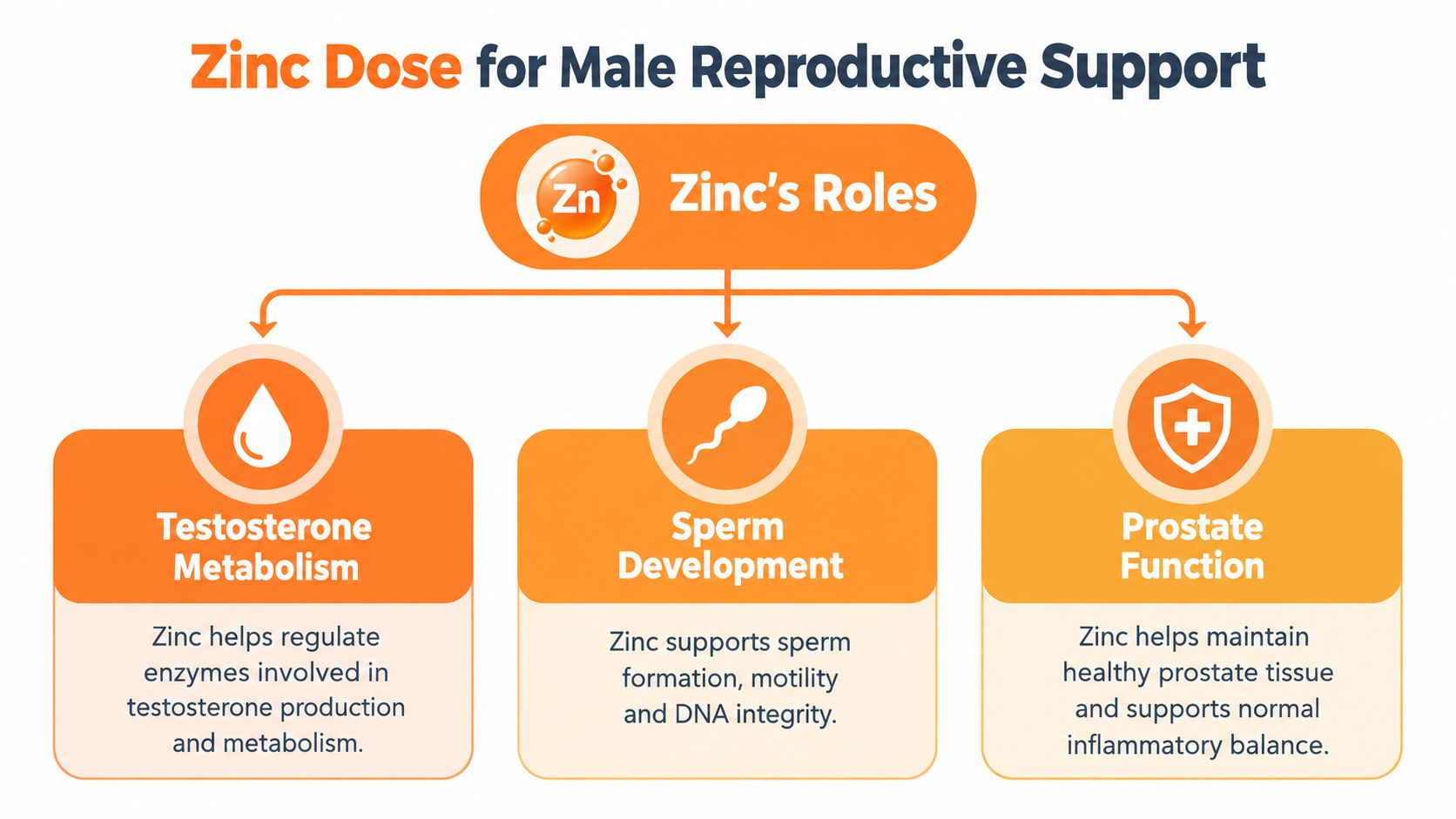
Zinc contributes to testosterone metabolism, sperm development, and the maintenance of zinc-dependent tissues, including the prostate. These functions explain its presence in many men's wellness formulas. They do not make zinc a treatment for infertility, low sperm count, or another medical condition.
Start with adequacy. An adult man can compare food intake and supplements with the 11 mg daily RDA. If the combined amount already sits near that target, adding a much larger dose does not automatically provide greater support. The RDA is a coverage point, not a performance score.
A more targeted plan uses a different lens. Research has examined zinc doses from 15 mg to 100 mg per day, with intervention periods ranging from 45 days to 20 weeks, as described in this review of zinc supplementation research. Those protocols answer specific research questions. They may examine repletion or a defined intervention, particularly when baseline intake is inadequate, rather than provide a daily template for every man.
Matching the dose to the goal
- Baseline support: Choose an amount that helps total intake approach the adult male RDA.
- Reproductive support: A moderate elemental dose may fit a men's formula intended to support normal reproductive physiology.
- Repletion: Higher research doses call for a clear reason, review of total intake, and professional oversight.
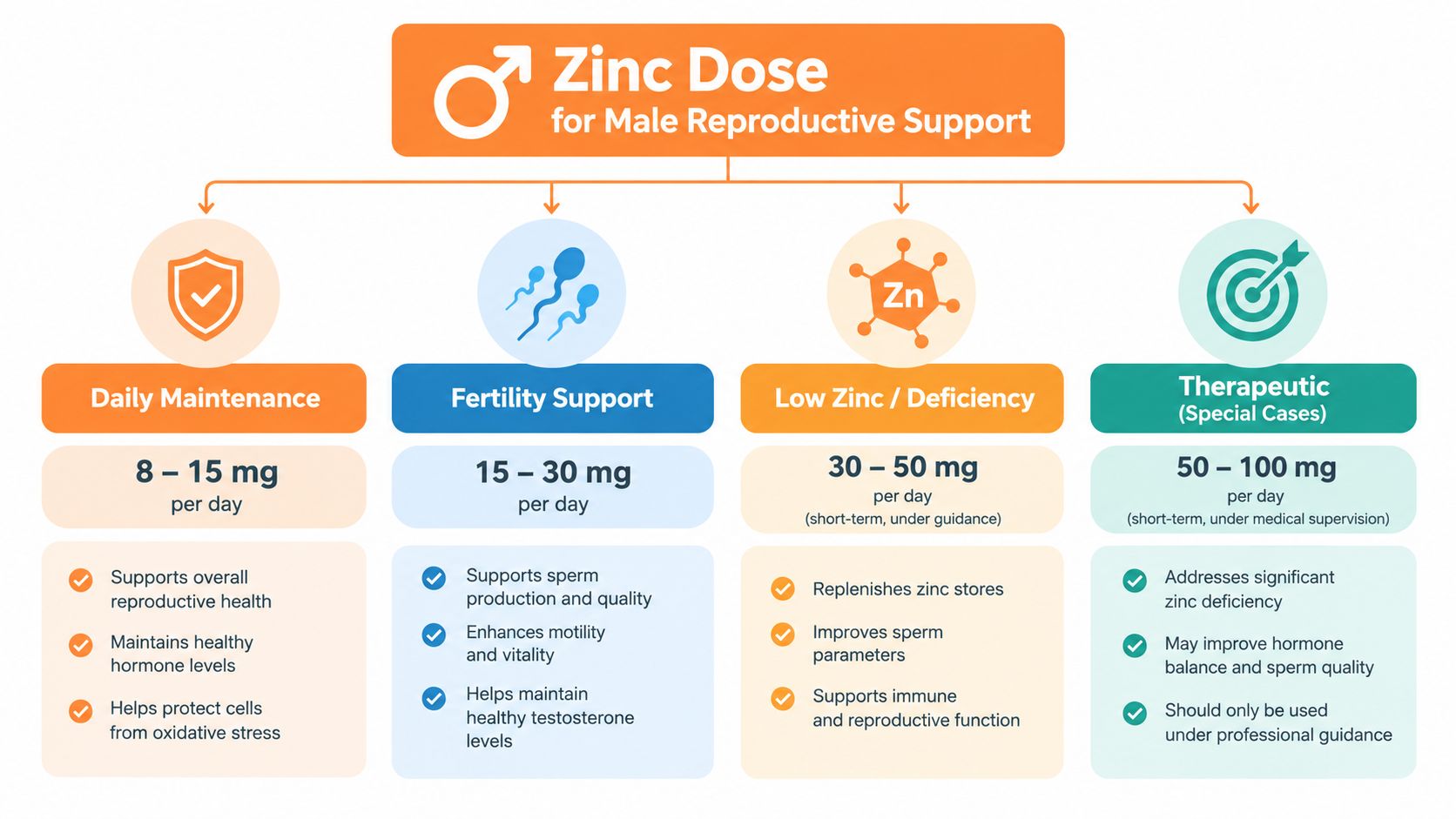
The adult UL remains the guardrail. Sustained intake above 40 mg per day can raise concerns about excess zinc, copper status, and digestive side effects. A research-informed ingredient amount belongs in a balanced plan, not a promise to diagnose, treat, cure, or prevent a medical problem.
What the Research Actually Uses
A man comparing zinc labels may see a study dose and assume the largest number offers the greatest benefit. Research does not support that shortcut. Trials ask narrower questions, such as whether zinc status, semen measures, or hormone findings change under a defined protocol.
The outcomes also vary. Some studies examine semen quality, including measures such as sperm concentration or movement. Others assess testosterone or broader markers of reproductive function. A change in one measure does not prove that zinc alone improves fertility, especially when participants begin with different diets or nutritional status.
Study formulas can create another source of confusion. Researchers sometimes combine zinc with folate, antioxidants, or other reproductive-support nutrients. Any result then belongs to the full formula and study design, not automatically to zinc by itself. This matters when a man compares a single-mineral capsule with a multi-ingredient product.
Translating findings into label decisions
A 30 mg capsule is not automatically inadequate because a trial used more. It may provide a substantial amount above the adult male RDA while staying below the adult UL, depending on food intake and other supplements. The useful question is whether that amount fits the man's goal and total daily intake.
Use the research as a map, not a prescription:
- Baseline adequacy: A near-RDA amount supports filling a dietary gap.
- Reproductive support: A moderate dose may fit a defined wellness plan, while expectations should remain tied to normal physiology rather than guaranteed fertility results.
- Recovery or repletion: Higher-dose protocols require a clear reason, attention to duration, and professional guidance.
The global context explains why adequacy matters. A global zinc intake analysis estimated that 17.3% of the world's population, roughly 1.1 billion people, was at risk of inadequate zinc intake. That finding supports correcting insufficient intake, not treating a high-dose supplement as a general performance tool.
Research findings become more useful when paired with the person's starting point. Someone with a limited dietary intake may need a different plan from someone already receiving zinc through food and a multivitamin. Dose, formulation, outcome, and total intake all belong in the same decision.
Common Dosing Mistakes and the Upper Limit Trap
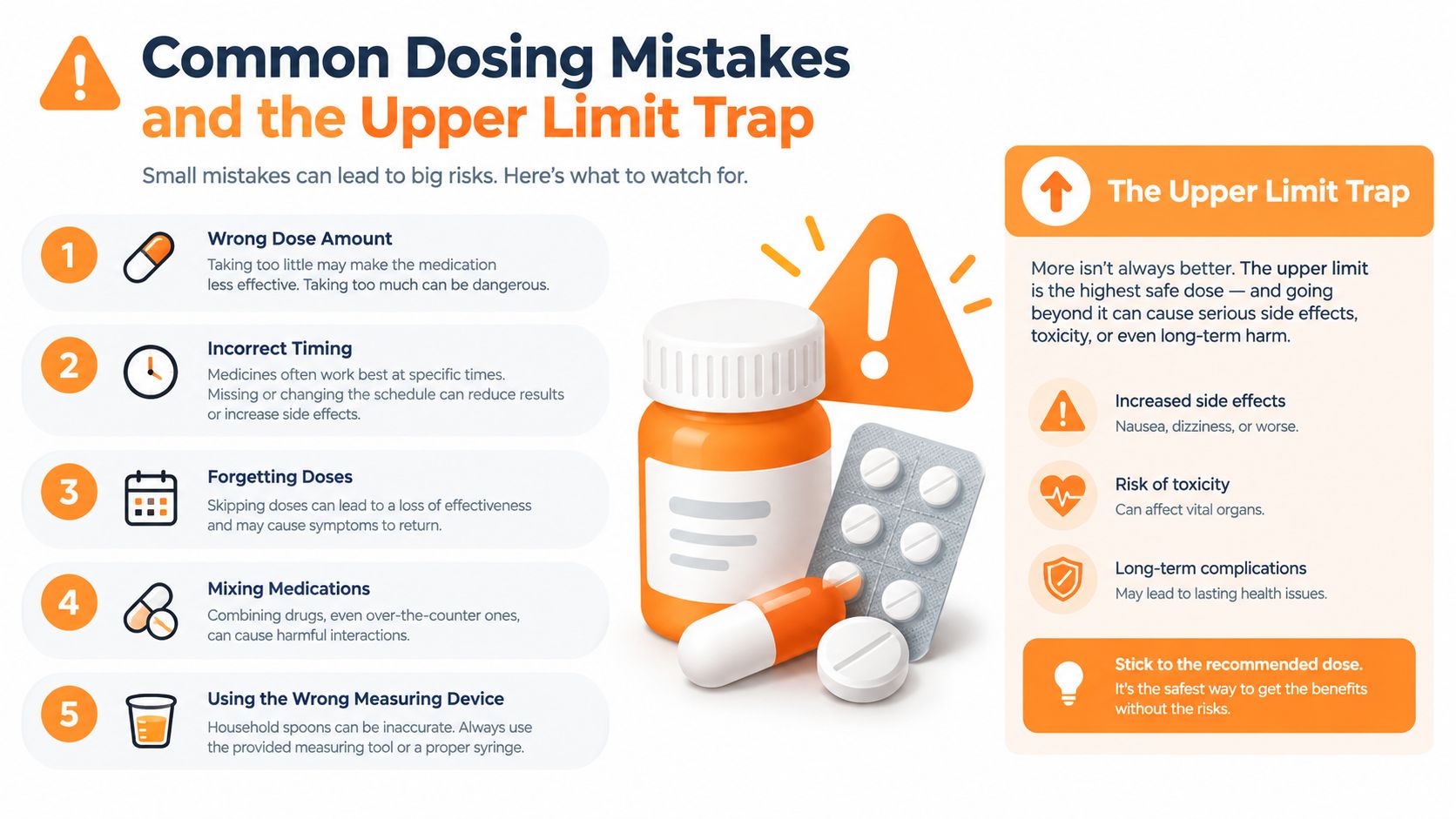
A man choosing zinc for daily adequacy, reproductive support, or recovery can mistake a larger milligram number for a better plan. A 50 mg capsule may look more powerful than a 15 mg capsule, yet it also leaves less room for zinc from food, multivitamins, and other formulas. The label is one piece of the dose, not the whole decision.
Zinc and copper share part of the digestive pathway. Sustained high zinc intake can gradually reduce copper availability, so the adult UL functions like a guardrail rather than a target. Copper depletion is usually a concern over continued high intake, not a reason to treat one capsule as proof of harm. The practical question is how long the dose continues and what else the man takes.
The stacking problem
Many men use more than one zinc-containing product:
- A multivitamin: It may already contribute zinc to the daily total.
- A men's wellness formula: Zinc may appear alongside herbs, amino acids, or other nutrients.
- A standalone mineral: This is often added without recalculating the total.
Each label can look reasonable on its own while the combined intake exceeds the intended zinc supplement dose. Food counts too, so the calculation should include dietary sources rather than capsules alone.
Stomach symptoms are not evidence that zinc is working. Persistent nausea, cramping, vomiting, or appetite changes warrant stopping the product and seeking professional advice, especially when the dose is high. This guide to zinc supplement side effects provides further practical context.
More zinc is not automatically more support. The dose has to earn its place in the routine.
Putting It All Together Into a Practical Zinc Plan
A sensible plan starts with the diet, then adds only what the intended goal requires. The adult male RDA provides the adequacy reference, while the adult UL defines the boundary that routine self-supplementation shouldn't cross.
A three-tier framework
Maintenance tier: Food and a moderate supplement can work together to bring daily intake near the 11 mg RDA. This is the appropriate starting point for a man focused on general nutritional coverage rather than a targeted protocol.
Reproductive-support tier: A moderate elemental dose, commonly around 25 to 30 mg per day in research and product discussions, may fit a focused men's wellness routine. That amount still needs to be evaluated alongside food, multivitamins, and other zinc-containing products.
Ceiling tier: Total intake should remain at or below 40 mg per day for routine use unless a qualified healthcare professional provides individualized guidance. Going above the UL isn't a performance strategy.
Form selection matters within every tier. Picolinate or citrate may be reasonable options when a man prioritizes a commonly used, well-tolerated form, while oxide may require closer attention to the product's elemental zinc declaration and personal response. Taking zinc with a small amount of food can help men who experience nausea, even though absorption may be better away from a full meal.
If higher intake is being considered for more than a short period, professional guidance is preferable, especially because copper status may become relevant. Supplement statements about dietary ingredients haven't been evaluated by the FDA, and this educational article supports, but doesn't replace, personalized medical advice.
For men evaluating a broader daily formula, SEMEX provides zinc bisglycinate at 12 mg per serving alongside ingredients including L-arginine, sunflower lecithin, bromelain, maca root, Panax ginseng, ashwagandha, tongkat ali, saw palmetto, and horny goat weed. Its product directions specify three capsules daily with water, preferably with a meal, so its zinc contribution should be counted alongside the rest of a man's daily intake.
These statements have not been evaluated by the Food and Drug Administration. This product is not intended to diagnose, treat, cure, or prevent any disease.
Men comparing a zinc supplement dose with a broader men's wellness routine can review the ingredient details and serving guidance offered by SEMEX. Visit SEMEX to evaluate how its zinc-containing formula fits alongside food, multivitamins, and the rest of a personal supplement plan.