

Zinc Supplement Benefits for Men's Wellness
More zinc doesn't automatically mean more testosterone, better semen, or stronger sexual performance. That popular “more is better” idea ignores how micronutrients work: zinc supports normal biological processes, but extra zinc only has a clear rationale when intake or zinc status is low. For men already getting enough, megadosing can add risk without adding a meaningful reproductive advantage.
The most useful zinc supplement benefits are therefore foundational rather than miraculous. Zinc helps maintain the cellular systems involved in male reproductive function, and correcting inadequate intake may support normal semen parameters. The important question isn't whether zinc works. It's who is most likely to benefit, what the evidence measures, and where supplementation stops being helpful.
Table of Contents
- Rethinking Zinc Supplement Benefits for Modern Men
- How Zinc Powers Male Reproductive Function
- What the Clinical Data Reveals About Semen Parameters
- Navigating Dosage Ranges and the Upper Limit
- Managing Absorption and Nutrient Interactions
- Building a Balanced Men's Wellness Stack
- Practical Takeaways for Evaluating Supplements
Rethinking Zinc Supplement Benefits for Modern Men
Zinc is a trace mineral, but “trace” doesn't mean unimportant. It acts as a structural and catalytic cofactor in many biological reactions, including processes involved in cell division, tissue maintenance, sperm development, and membrane protection. In men's wellness, that makes zinc part of the operating system, not a stimulant that pushes reproductive function beyond its normal range.
A useful comparison is a car's spark plug. The plug is essential for the engine to run properly when the system is functioning as designed. Replacing a damaged plug can restore normal performance, but installing extra spark plugs won't make the engine produce unlimited power. Zinc supplementation follows a similar principle. If a man has low intake or poor zinc status, adding zinc may help support normal function. If his status is already adequate, more may not create an additional benefit.
Population data reinforce why deficiency deserves attention. A 2024 nationwide Japanese medical claims analysis found zinc deficiency in 34.8% of patients overall, with prevalence of 36.6% in males and 33.1% in females according to the published medical claims analysis. That finding doesn't prove that every man needs a supplement, but it does show why zinc status remains relevant in modern nutrition discussions.
Practical rule: Zinc makes the strongest case as a correction strategy for inadequate intake, not as a license to take increasingly high doses.
Men comparing products can find a practical explanation of zinc's male-specific roles in this guide to what zinc does for men. The central takeaway is simple: a zinc supplement may help fill a nutritional gap, but it shouldn't be marketed or understood as a universal fertility enhancer.
How Zinc Powers Male Reproductive Function
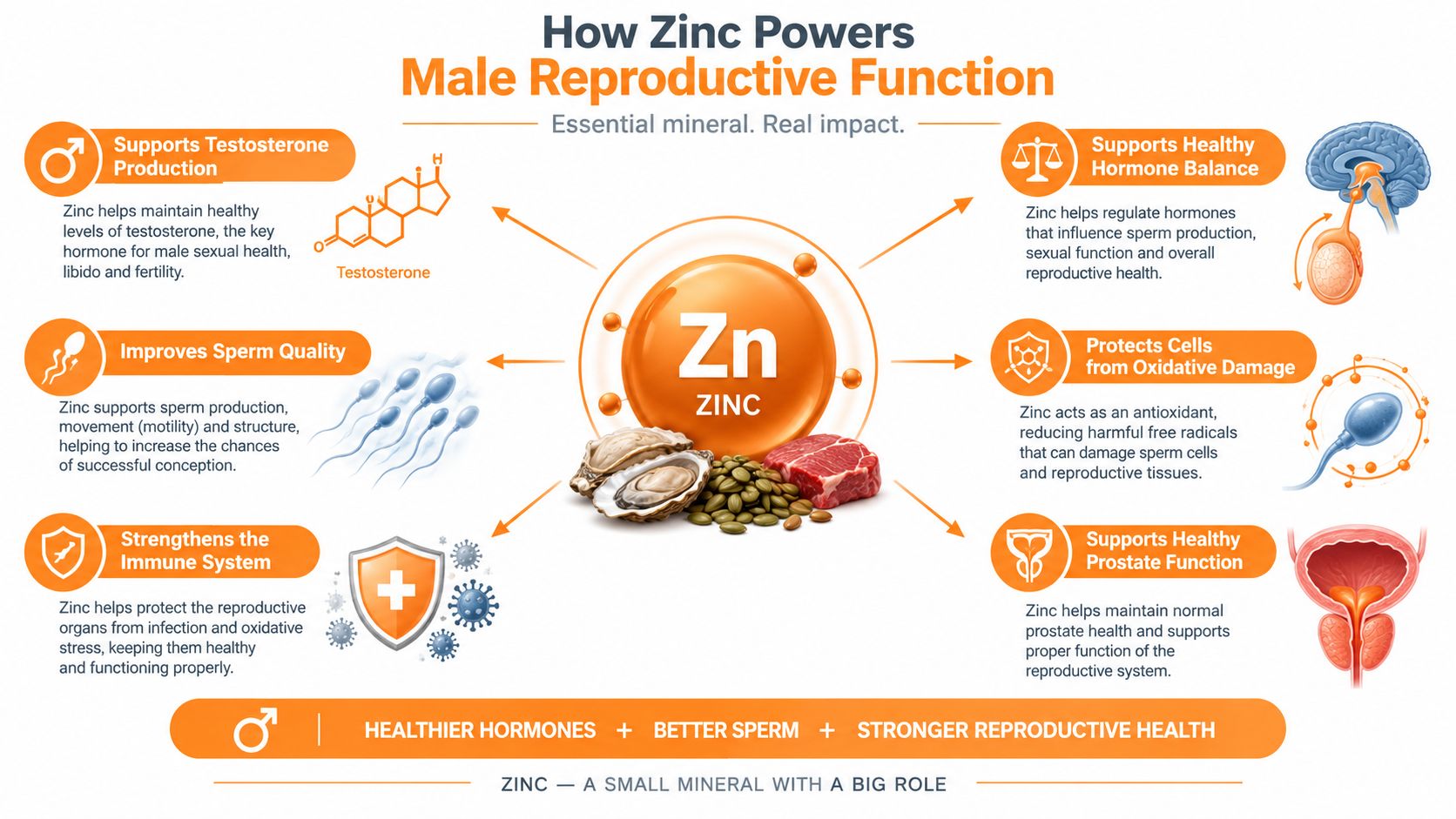
Male reproductive physiology depends on connected tissues and cellular events. Zinc supports the development and function of the testis, epididymis, and prostate. Lower seminal plasma zinc has also been associated with lower sperm count and quality, as described in this NIH review of zinc in human reproduction.
Zinc and sperm production
Spermatogenesis is the process through which developing germ cells become mature sperm. Zinc contributes to the structural support and enzyme activity required during that process. A scaffolding analogy clarifies its role: scaffolding does not become the finished building, but it provides the framework workers need to build safely and in the right sequence. Adequate zinc helps support sperm development, while extra zinc does not replace other requirements for healthy sperm production.
Zinc also helps protect sperm membranes. These membranes must remain flexible and intact as sperm move through the reproductive tract. Zinc's involvement in membrane protection and cellular antioxidant defenses supports the conditions needed for normal sperm function. That role does not mean zinc prevents every form of cellular damage or improves fertility for every man.
Motility, capacitation, and the acrosome
Sperm motility refers to movement. Zinc participates in motility and in capacitation, a maturation process that enables sperm to interact appropriately with an egg. It also supports acrosomal exocytosis, the release of enzymes from the sperm's acrosome during that interaction. The NIH-indexed review on zinc and male fertility describes these functions and connects zinc-deficient nutrition with low sperm quality and male infertility.
At the cellular level, zinc helps regulate the transition from a relatively quiet state to the coordinated activity required for forward movement and reproductive interaction. This process depends on adequate supply. Too little zinc may disrupt normal function, whereas more zinc offers no automatic improvement after needs are met.
These biological roles provide the basis for examining how zinc supplementation affects measured semen parameters in clinical research.
What the Clinical Data Reveals About Semen Parameters
Zinc supplementation has a ceiling, and the clinical data makes that limit clear. Semen volume, motility, and morphology are measurable laboratory markers, but a change in any of them does not automatically mean a higher chance of pregnancy or live birth. Separating these outcomes keeps a promising biological signal from becoming an inflated fertility claim.
A 2016 systematic review and meta-analysis in Scientific Reports reported measurable improvements across several male reproductive markers. The pooled standardized mean differences were -0.99 for semen volume, -1.82 for sperm motility, and -0.75 for normal sperm morphology, as reported in the systematic review and meta-analysis.
| Reproductive Marker | Effect Size (SMD) | Clinical Significance |
|---|---|---|
| Semen volume | -0.99 | A measurable pooled signal across controlled studies |
| Sperm motility | -1.82 | A measurable pooled signal in sperm movement |
| Normal morphology | -0.75 | A measurable pooled signal in normally shaped sperm |
The negative signs describe how the original analysis coded its comparison. They do not mean zinc reduced these outcomes. The practical reading is that several controlled studies showed a statistical signal, although that signal still requires careful interpretation.
Why the ceiling effect matters
A large randomized clinical trial involving 2,370 couples tested a daily combination of 30 mg of zinc plus 5 mg of folic acid in male partners. Compared with placebo, the treatment did not improve semen quality or live birth rates, according to the randomized clinical trial published in JAMA.
This finding fits a ceiling-effect model. A man with low zinc intake or inadequate zinc status may have room for improvement because supplementation helps correct a nutritional gap. A man who already receives enough zinc has less room to gain, so adding more may leave semen measures and reproductive outcomes unchanged. Zinc works more like fuel for normal function than a performance booster that keeps producing benefits at higher intake.
The recent review of zinc and male reproductive outcomes likewise found no evidence that zinc supplementation in male partners improved pregnancy or live birth, even though some studies reported better sperm parameters. The broader evidence is summarized in this review of zinc and fertility. The evidence-based boundary is clear: zinc may support laboratory markers without proving a broader reproductive outcome.
Men considering a zinc product should first ask whether their diet suggests a plausible shortfall. They should also assess the amount, count zinc from all sources, and avoid products that promise fertility results clinical trials have not established.
Navigating Dosage Ranges and the Upper Limit
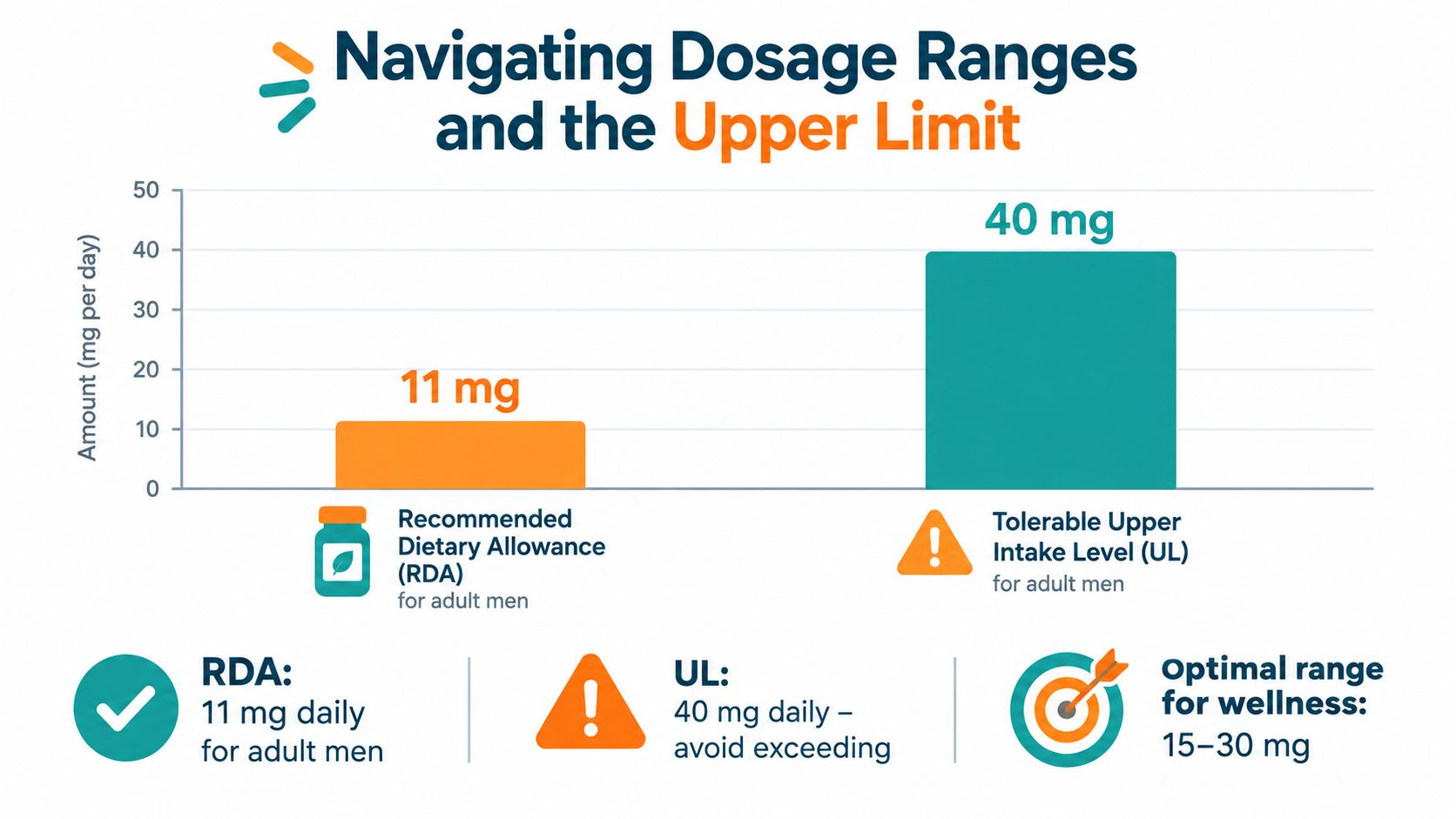
A bigger zinc dose does not automatically produce greater benefits. Start by calculating total daily intake, including food, fortified products, and supplements. The National Institutes of Health lists the adult tolerable upper intake level for zinc at 40 mg per day for men and women age 19 and older, as explained in the NIH zinc fact sheet. This limit is a safety ceiling, not a target.
The adult recommended dietary allowance for men is 11 mg per day. A commonly discussed wellness range of 15 to 30 mg, often shown in zinc supplement dose guides, should not be treated as a universal prescription. The appropriate amount depends on diet, other products, personal health factors, and whether a clinician has identified low zinc status.
Comparing practical choices
Food-first intake provides zinc through ordinary meals and reduces the chance of unnecessary concentration. A moderate supplement may be reasonable when dietary intake is inconsistent or difficult to maintain. High-potency products leave less room below the adult upper limit, especially after food and other supplements are counted.
The ceiling matters because excess zinc can work against the goal. High exposure has been associated with oxidative stress and changes that may impair fertility rather than improve it, as discussed in the 2025 systematic review. Long-term high-dose use can also disrupt copper balance, which warrants extra caution.
The useful dose is the one that supports adequacy without crowding out nutritional balance.
Check whether the label states elemental zinc, rather than only the total weight of the zinc compound. A clinician or qualified pharmacist can help interpret the amount if a man uses several supplements, follows a restrictive diet, or plans sustained use. Zinc is better understood as support for normal function when intake is inadequate, not as a universal fertility enhancer.
Managing Absorption and Nutrient Interactions
A supplement's listed dose isn't the same as the amount the body absorbs. Zinc absorption can vary with the meal, the mineral form, digestive tolerance, and the rest of the diet. Plant-based eating patterns can be especially relevant because phytates in foods such as legumes, nuts, seeds, and whole grains can bind minerals and reduce absorption.
That doesn't make plant foods undesirable. It means men should interpret zinc intake in dietary context. Soaking, sprouting, fermenting, and cooking can alter phytate content, while a varied diet can provide zinc through several food sources. Men who avoid animal products may benefit from paying closer attention to consistency of intake rather than assuming that a single high-dose capsule solves the issue.
Timing around meals
Zinc taken on an empty stomach can cause nausea or stomach discomfort for some people. Taking it with a meal often improves tolerability, even if the meal contains compounds that modestly affect absorption. A supplement routine that causes nausea is unlikely to remain consistent, so comfort is part of practical effectiveness.
Mineral competition also matters. Calcium, iron, and magnesium may compete with zinc for absorption when several mineral products are taken together. Separating products can be a reasonable strategy when a clinician or pharmacist identifies a meaningful interaction, particularly for people using several supplements.
Zinc and copper balance
Zinc and copper require attention because sustained high zinc intake can reduce copper availability. The issue isn't that every moderate zinc supplement causes copper deficiency. The concern is that prolonged, unnecessary high intake can disrupt the balance between two essential minerals.
Men should review the full supplement stack rather than evaluating one bottle in isolation. That includes multivitamins, immune products, workout formulas, and fortified foods. Persistent nausea, unusual symptoms, or plans for long-term high-dose use warrant professional guidance rather than self-adjustment.
Building a Balanced Men's Wellness Stack
Zinc works within a broader nutritional and lifestyle routine. A man focused on reproductive and physical wellness can first review food quality, sleep, exercise, hydration, and stress. A targeted supplement then has a clearer job: filling a demonstrated gap, rather than carrying the entire plan.
A formula may combine ingredients with different intended roles. L-Arginine is commonly included for nitric oxide and blood-flow support, Maca Root for vitality, and Ashwagandha for stress-related wellness support. These functions do not replace zinc's role in normal reproductive physiology. More ingredients also do not guarantee a stronger result.
Matching ingredients to the goal
The stack should follow the goal, not the trend. Zinc fits the foundational category, supporting normal cellular and reproductive function. L-Arginine fits a circulation-oriented category, while Maca Root and Ashwagandha may suit a broader vitality routine. Each ingredient should have a defined purpose, like tools selected for different tasks rather than extra tools added without a plan.
SEMEX is one example of a daily men's supplement combining Zinc, L-Arginine, Sunflower Lecithin, and Bromelain with a men's wellness blend containing Maca Root, Panax Ginseng, Ashwagandha, Tongkat Ali, Saw Palmetto, and Horny Goat Weed. Its product information describes support for semen volume and taste. Zinc should still be understood separately, as support for normal reproductive physiology, not as a treatment or guarantee.
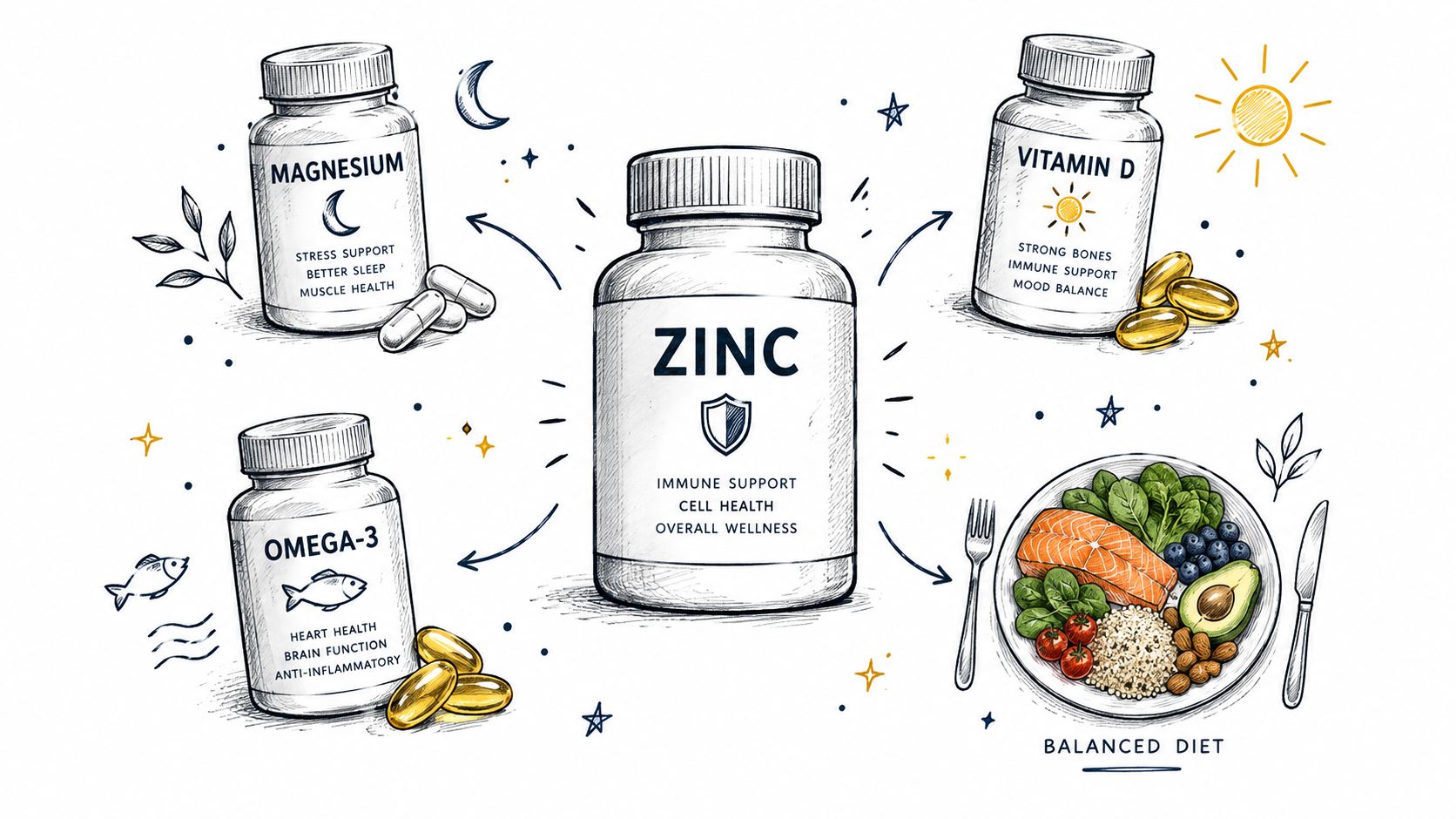
A useful stack also needs restraint. Multiple products can duplicate zinc, magnesium, or other ingredients, making total intake harder to calculate. Check every label, define the primary goal, and remember that a longer ingredient list does not automatically make a formula better.
Practical Takeaways for Evaluating Supplements
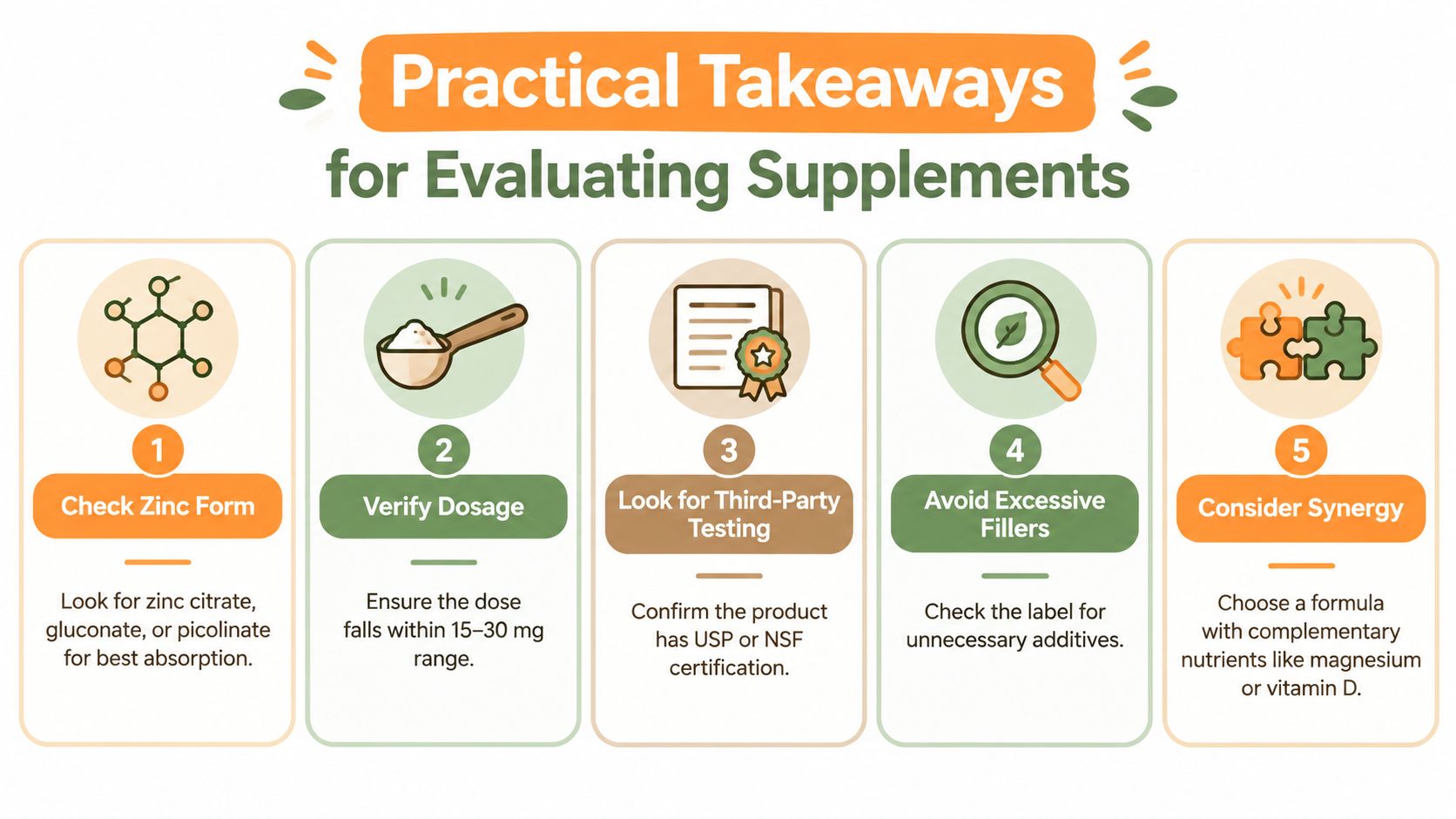
A zinc product should pass a careful label review before it enters a daily routine. The useful questions are simple: what form does it contain, how much elemental zinc does it provide, and how does that amount fit with the rest of the diet?
A practical evaluation checklist
- Check the zinc form: Citrate, gluconate, and picolinate are common options. The form can affect formulation and tolerability, while the elemental zinc amount is the figure needed to calculate total intake.
- Verify the dose: Add zinc from food, multivitamins, and other supplements. The adult upper limit discussed above is 40 mg per day from all sources.
- Look for independent quality controls: Third-party testing and a cGMP-registered manufacturing facility can offer information about identity, purity, and manufacturing practices.
- Inspect the full ingredient panel: Look for duplicated ingredients and unnecessary additives. The serving size and elemental zinc amount should be easy to locate.
- Keep expectations realistic: Monitor consistency, digestive comfort, and general wellness. Semen parameters require appropriate testing, not assumptions based on how a product feels.
A consistent routine can make tolerability and adherence easier to assess, but it cannot guarantee a reproductive outcome. Men with fertility concerns, chronic health conditions, medication use, or suspected deficiency should consult a qualified healthcare professional before changing supplementation.
SEMEX offers a daily men's supplement containing zinc alongside L-Arginine, Sunflower Lecithin, Bromelain, and other wellness ingredients for men building a structured routine around semen volume, taste, and overall vitality. Men can review the formula, testing information, and usage details by visiting SEMEX.
These statements have not been evaluated by the Food and Drug Administration. This product is not intended to diagnose, treat, cure, or prevent any disease.