

Zinc for Sperm Health How It Supports Fertility
A man usually lands on zinc research the same way. A semen analysis looked less than ideal, a partner asked about fertility nutrition, or a late-night search turned up a dozen products all promising stronger results. Zinc keeps showing up, which makes it sound like a shortcut. It isn't.
What zinc does offer is more useful than hype. It's a foundational mineral in seminal fluid and male reproductive biology, and the evidence suggests it matters most when intake or status is low. That's a very different message from “take more zinc and fertility improves.”
Table of Contents
- Introduction to Zinc and Male Reproductive Wellness
- How Zinc Supports Spermatogenesis and Sperm Function
- What Clinical Research Shows About Zinc and Semen Parameters
- Food Sources and Supplement Forms That Provide Zinc
- How to Use Zinc Safely and Consistently for Sperm Health
- Common Misconceptions About Zinc Dosage and Fertility Outcomes
- Building Your Plan for Zinc and Long Term Sperm Health
Introduction to Zinc and Male Reproductive Wellness
A lot of men start looking into zinc after a practical concern, not out of curiosity. A semen analysis comes back with a few weak spots. A supplement label keeps mentioning zinc. A search for sperm health turns up the same mineral again and again.
There is a real biological reason for that. Seminal plasma is naturally rich in zinc, and reviews of male fertility research describe zinc as part of the environment that supports normal sperm function and fertilization, as summarized in this review of zinc in male fertility science.
The easiest way to place zinc is to see it as part of the reproductive system's maintenance supply. Sperm production is a long build process, and sperm function depends on stable structure, coordinated signaling, and protection inside seminal fluid. Zinc shows up in all three areas, which is why it gets so much attention in male reproductive wellness.
That attention can create confusion. Zinc has a clear biological role, but that does not automatically mean every man benefits from taking more of it. In practice, zinc makes the most sense as a nutrient worth checking, especially if diet, absorption, or prior intake may have been poor. More is not always better, and dose still matters.
For readers who want a broader primer first, this plain-language overview of what zinc does for men gives useful background before narrowing the focus to sperm health.
A good starting mindset is simple. Ask two questions. Why would zinc matter in semen at all, and which parts of sperm health could it realistically affect?
Those are the questions that make the rest of the topic easier to read clearly.
How Zinc Supports Spermatogenesis and Sperm Function
Sperm are built in stages, more like a long manufacturing line than a single event. A cell has to divide, mature, condense its DNA, form a tail, and leave the testis able to move through a demanding environment later on. Zinc shows up at several points in that process, which helps explain why it keeps appearing in male fertility research.
Zinc as a structural tool
One of zinc's core jobs is structural. It acts as a cofactor for many proteins and enzymes involved in cell growth, DNA packaging, antioxidant defense, and membrane stability. In the setting of sperm production, that matters because developing sperm are constantly being remodeled. They are not just multiplying. They are being shaped into a highly specialized cell.
A practical comparison helps here. Zinc works like a small fastener inside a complex machine. You barely notice it, but without enough of it, parts do not hold their shape or work together as cleanly.
That helps explain why zinc is often discussed in relation to:
- Sperm formation
- Membrane stability
- Chromatin and DNA packaging
- Normal fertilization-related function
Researchers reviewing zinc's mechanistic role in sperm biology describe these structural and protective functions in this mechanistic review of zinc and sperm function.
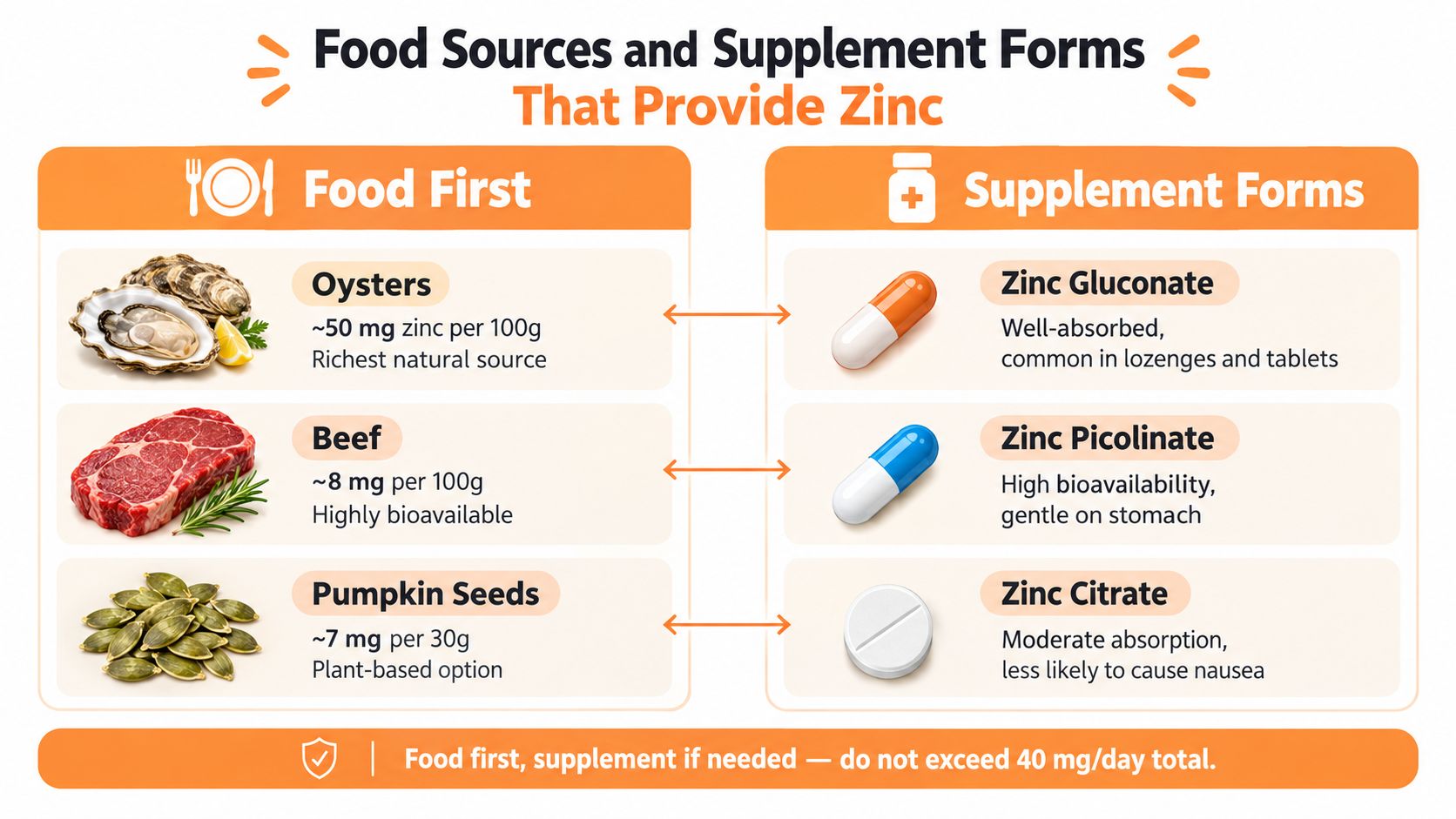
This comparison visual helps place zinc sources in context:
Zinc as a signaling switch
Zinc also appears to act like a signal, not just a building material.
That distinction matters because a sperm cell has to do more than exist. It has to respond. It must change how it moves, interact with its surroundings, and prepare for the acrosome reaction, the release process that helps it penetrate an egg.
One pathway researchers discuss involves GPR39, a receptor that can respond to extracellular zinc. Experimental work suggests this signaling may influence sperm motility and acrosomal activity, as described in this review of GPR39 and zinc signaling in physiology.
The easiest way to picture that is a car that needs both solid hardware and working wiring. Strong tires do not help if the ignition cannot relay signals. Clean electrical signaling does not help if the frame is unstable. Sperm function depends on both.
Why these mechanisms matter in real life
This biology gives zinc a plausible role in male reproductive wellness, but it also sets a limit on the claim. Zinc is connected more clearly to how sperm are built and how they function than to a guaranteed increase in pregnancy odds.
That is an important distinction.
If zinc supports membrane stability, DNA packaging, and signaling tied to motility, the most realistic outcomes to watch are selective semen-parameter changes, not a universal fertility boost. A man may see movement or morphology improve without every marker changing. He may also see no meaningful difference if zinc status was already adequate.
A practical summary looks like this:
- Zinc helps sperm development at the level of structure and maturation.
- Zinc also appears to participate in signaling related to movement and fertilization readiness.
- Those roles fit better with targeted changes in semen quality than with a blanket promise of improved fertility.
- The dose question still matters, because a nutrient that supports normal function is not automatically better in excess.
What Clinical Research Shows About Zinc and Semen Parameters
A common real-world scenario looks like this. A man sees zinc mentioned in fertility forums, starts to assume more zinc must mean better sperm, and expects every lab marker to rise together.
Clinical research does not support that simple story.
The clearer pattern is narrower. Zinc appears more relevant as a correction tool for men who may be low in zinc, and its effects show up more often in selected semen measures than in broad fertility outcomes.
Where studies do show improvement
The most cited positive signal comes from a 2016 systematic review and meta-analysis. It found significant improvement in semen volume, sperm motility, and normal morphology in this systematic review and meta-analysis on zinc and semen quality.
That pattern matters because these are specific parts of semen analysis. They are not the same as proving a higher chance of conception or live birth.
A practical way to read those findings is this: zinc may help a few dashboard lights, especially ones tied to movement and shape, without rebuilding the whole engine. In the same review, sperm concentration, total count, and viability did not show the same consistent benefit.
That selective pattern is more useful than a blanket claim. It tells you what to watch for if zinc helps at all.
Where the claim runs into limits
A large randomized trial tested a tougher question. Could supplementation improve actual fertility outcomes in couples trying to conceive?
In the published JAMA trial report, men received 5 mg folic acid plus 30 mg zinc. The trial did not find improvement in live birth rates or semen quality after 6 months.
That does not make zinc irrelevant. It changes the framing.
Zinc has a plausible role in sperm biology, and some studies show parameter-level gains. But a nutrient that supports normal function is different from a treatment that reliably raises pregnancy rates across a general infertility population.
Why results look mixed
Part of the confusion comes from studies asking different questions.
Some trials look at semen volume, motility, or morphology. Others look at pregnancy or live birth, which depend on many variables outside semen quality alone. Some studies may include men with low zinc intake, where correction has more room to help. Others include broad infertility groups, where zinc may not be the main bottleneck.
Blood testing adds another layer. A study on serum zinc and semen quality found no clear correlation between serum zinc and overall semen quality, while still suggesting a more complicated relationship in men who fell below semen-quality thresholds. In plain terms, a blood zinc number does not act like a simple fertility score.
The most accurate takeaway is modest and useful. Zinc may improve selected semen parameters in some men, especially when intake or status is low. That is very different from saying zinc is a universal fertility booster or that higher doses will produce better outcomes.
Food Sources and Supplement Forms That Provide Zinc
The first practical question isn't which capsule to buy. It's whether a man is likely to need more zinc at all.
Food-first versus supplement-first
For many men, the cleanest starting point is diet. Foods that naturally provide zinc also bring protein, fats, and other nutrients that fit into a broader reproductive-wellness routine. Men who eat little animal protein, follow restrictive eating patterns, or suspect low intake may have more reason to look at supplements.
This internal guide on zinc deficiency foods and practical diet choices is useful for that first screen.
A simple comparison helps:
| Option | What it offers | Best fit |
|---|---|---|
| Oysters | Very zinc-dense food source | Men who eat shellfish and want a strong food-first option |
| Beef | Readily absorbed dietary zinc | Men who include red meat in a balanced diet |
| Pumpkin seeds | Plant-based zinc source | Men who want a vegan-friendly food option |
| Zinc gluconate | Common supplement form | Men looking for a familiar general-use format |
| Zinc picolinate | Often chosen for absorption-focused formulas | Men comparing forms and tolerability |
| Zinc citrate | Commonly used supplemental form | Men who prefer a straightforward tablet option |
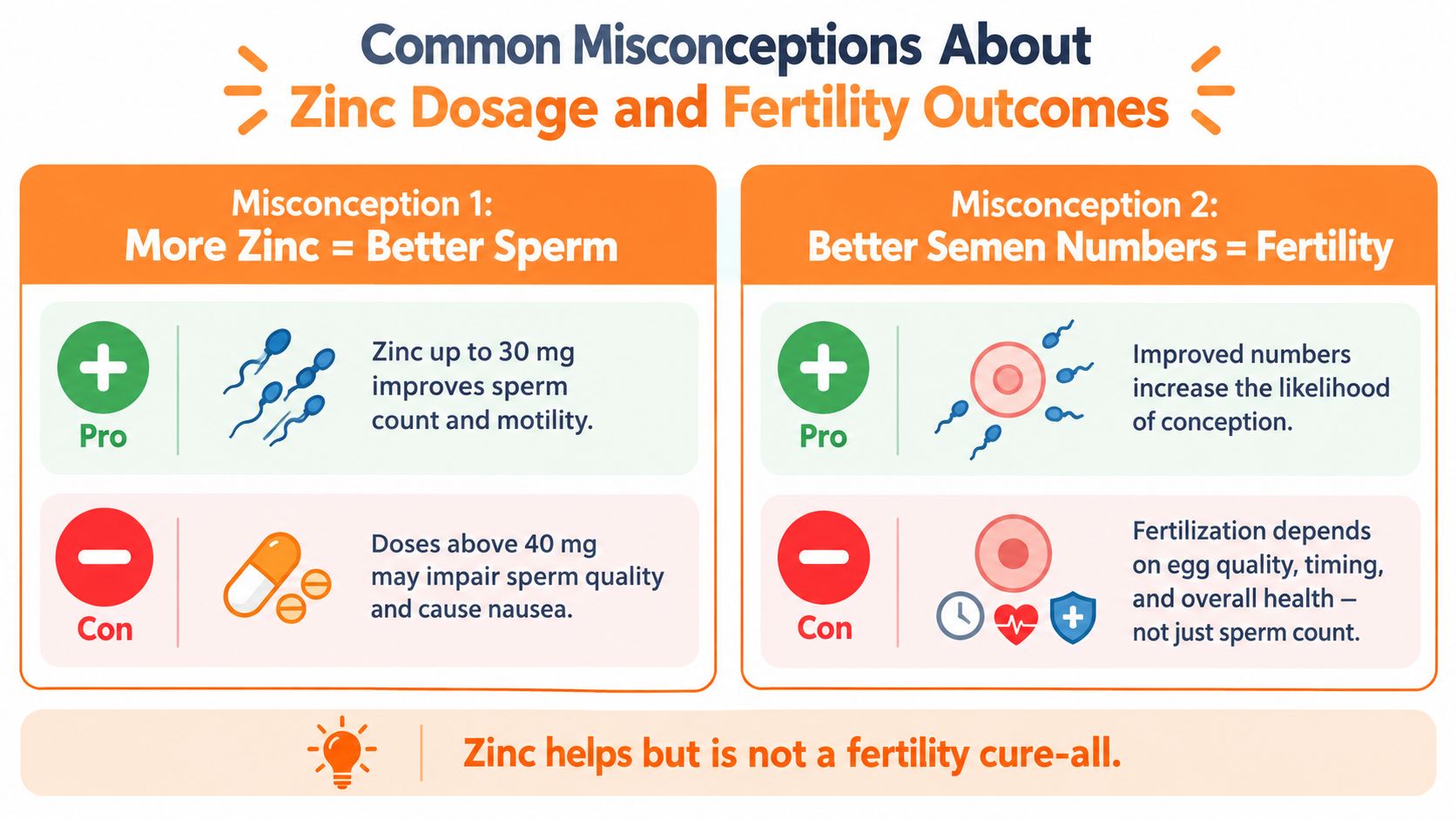
This infographic captures the common misunderstandings around dose and outcomes:
Who is most likely to benefit from additional zinc
The strongest case for supplementation is usually not “trying to optimize everything.” It's correcting an intake gap.
Men might look more closely at zinc support when they have:
- Low-zinc eating patterns: Diets with limited zinc-rich foods.
- Plant-based routines: Useful, but they often require more attention to mineral planning.
- Signs of inconsistency: Skipping meals, low overall protein variety, or highly repetitive diets.
- A targeted plan: A clinician has suggested paying closer attention to zinc status.
For men already eating zinc-rich foods consistently, supplementation may still be used as a convenience tool, but expectations should stay modest.
Where a product like SEMEX fits
Some men prefer a combined routine instead of managing a single-ingredient bottle plus several other products. SEMEX is a daily 3-capsule supplement for men that includes zinc alongside ingredients such as L-Arginine, Sunflower Lecithin, and Bromelain, with a broader men's wellness blend. In that context, zinc should be understood as one ingredient that supports normal male reproductive function, not as a stand-alone promise.
The useful question is less “food or supplement?” and more “what problem is being solved?” If a man already eats well, a supplement may mainly add consistency. If intake looks weak, food and supplementation may work best together.
How to Use Zinc Safely and Consistently for Sperm Health
Consistency matters more than intensity. That's especially true with minerals.
Start with adequacy, not megadosing
Clinical studies have used a range of approaches, and one major trial used 30 mg zinc alongside folic acid, but it didn't improve semen quality or live birth outcomes in that broader infertility-treatment setting, as covered earlier in the JAMA trial. That's a useful reminder that a bigger dose doesn't automatically produce a better result.
More recent review literature has emphasized a dose-sensitive tradeoff. A 2025 review notes that low zinc is linked to impaired spermatogenesis and male infertility, while high zinc can increase oxidative stress and other changes that may contribute to infertility in this review on zinc balance and male infertility.
This is the practical middle ground:
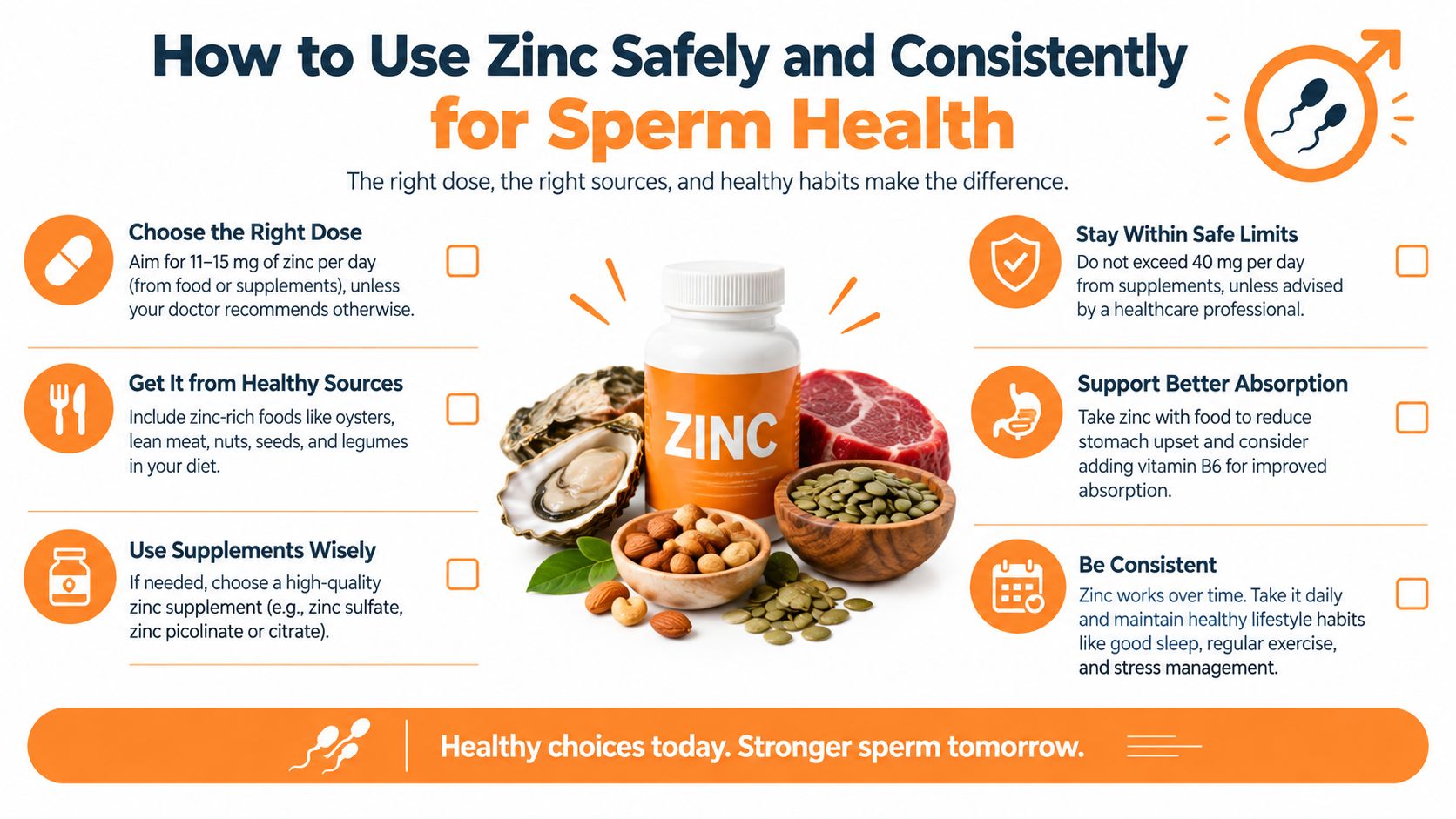
- Aim for adequacy: Enough zinc to support normal function.
- Avoid the “more is better” trap: Extra intake can backfire.
- Use meals to improve tolerance: Zinc can be easier to tolerate with food.
- Stay steady: Consistent daily use is more useful than sporadic high intake.
This safety checklist sums up the habits that matter most:
Build a repeatable routine
Men usually do better with zinc when it becomes part of a simple daily pattern. This guide on zinc dosage for men and label-reading basics can help translate a supplement panel into a real-world routine.
A low-friction plan often looks like this:
- Take it at the same time daily: Breakfast or dinner tends to be easiest.
- Pair it with a meal: That can reduce stomach discomfort.
- Check the total daily intake: Include both supplement and diet.
- Watch for tolerance issues: Nausea or digestive discomfort can signal that the setup needs adjustment.
- Discuss personal needs with a clinician: Especially if a man already uses multiple supplements.
The best zinc routine is the one a man can follow consistently without pushing intake into a range that no longer makes sense.
Labeling and claim language matter
For any dietary supplement, structure/function claims need to stay in bounds. The FDA requires the exact disclaimer: “These statements have not been evaluated by the Food and Drug Administration. This product is not intended to diagnose, treat, cure, or prevent any disease.” The agency also states that the disclaimer must appear immediately adjacent to the claim, or elsewhere on the same panel or page with a linked symbol if boxed separately, according to the FDA dietary supplement labeling guide.
That's more than legal wording. It's a useful filter for readers. Claims about support and maintenance are one thing. Claims about treating infertility are another.
Common Misconceptions About Zinc Dosage and Fertility Outcomes
A common real-world scenario goes like this. A man reads that zinc supports sperm health, buys a high-dose supplement, then assumes higher intake should mean higher fertility. That sounds tidy. Human reproduction is not tidy.
Zinc is better understood as a correction tool than a fertility shortcut. If intake or status is low, bringing it back into a normal range may help the parts of sperm health that depend on zinc. If zinc status is already adequate, the case for extra benefit gets much thinner.
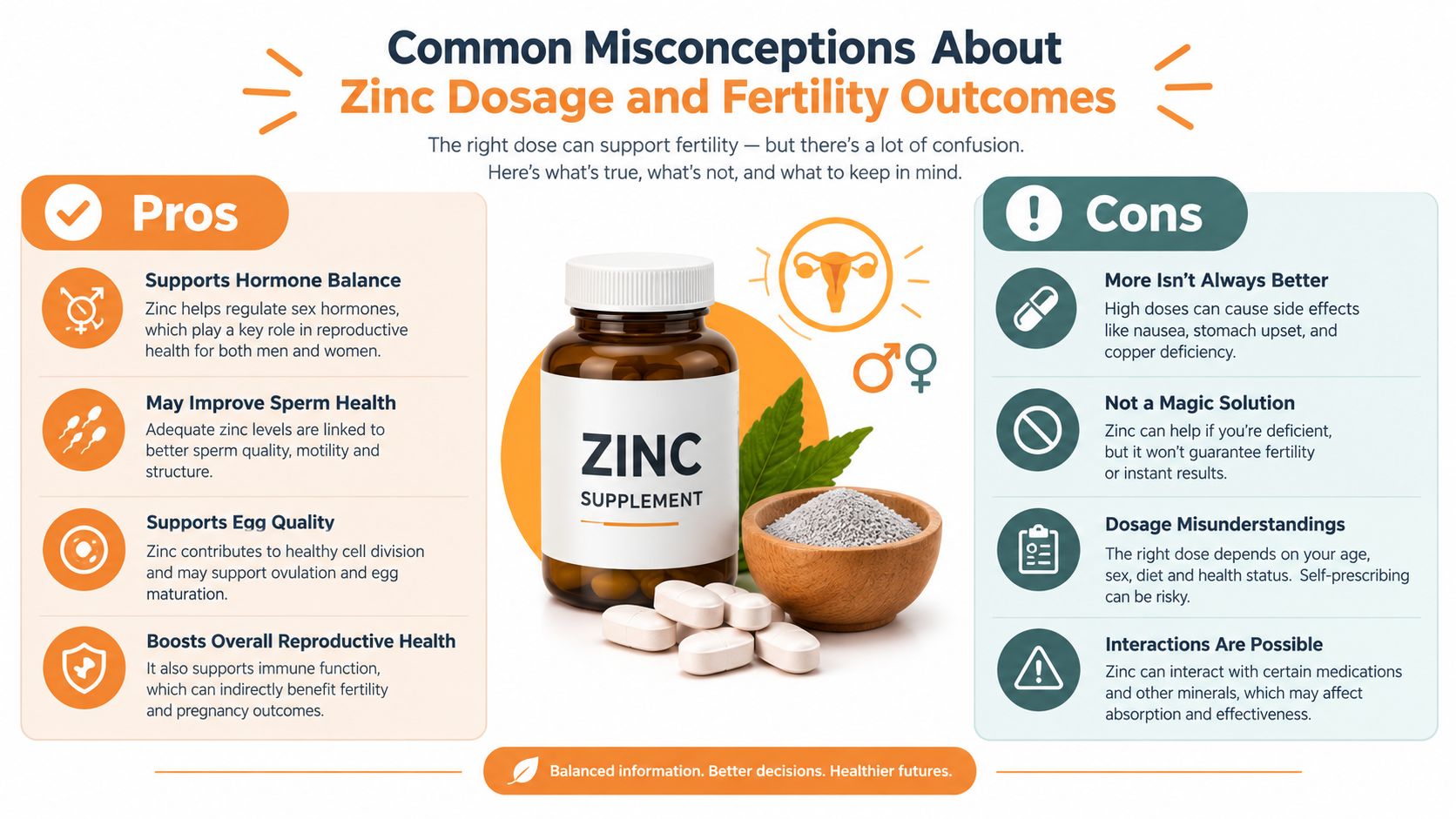
Misconception one more zinc always means better sperm
This myth usually starts with a true idea, then stretches it too far. Zinc does support normal sperm production and sperm function. But support is not the same as unlimited upside.
A better frame is to ask, "What problem is zinc solving here?" If the answer is low intake, a supplement may make sense. If the answer is wanting faster or bigger results, that is where expectations drift away from the biology.
The practical point is simple. Dose questions belong in the safety section. The decision question here is whether a man is correcting a likely gap or chasing an effect that research does not clearly promise.
This visual summarizes the tradeoff well:
Misconception two better semen numbers automatically mean better fertility
This is the bigger misunderstanding.
A semen analysis is a dashboard, not the finish line. One marker can improve while the final outcome, conception and live birth, does not change in a clear or predictable way. That helps explain why supplement studies can look encouraging at the semen-parameter level and still leave major uncertainty about pregnancy outcomes.
As noted earlier, research in this area does not show a clean chain from zinc use to more pregnancies or live births. That does not mean semen measures are useless. It means they are intermediate signs, not guarantees.
Fertility also depends on timing, the female partner's health, sexual function, underlying medical issues, and plain variation between couples. A stronger lab value can matter without being enough to change the whole outcome.
A semen metric is a clue, not a promise.
A better way to judge zinc claims
Before accepting a claim about zinc and male fertility, run it through three filters:
- Is it describing support for normal reproductive function, or promising conception?
- Is it talking about a semen parameter, or about pregnancy and live birth?
- Is it aimed at correcting a shortfall, or implying that every man benefits from taking more?
That small shift in thinking clears up a lot of confusion. Zinc can be useful. It is just more selective, and more dose-sensitive, than fertility marketing often suggests.
Building Your Plan for Zinc and Long Term Sperm Health
The most realistic plan starts with a calm reset. Zinc matters, but it matters in a specific way. It supports normal male reproductive function most convincingly when it helps correct low intake or low status, and its clearest evidence sits at the level of selected semen parameters rather than guaranteed fertility outcomes.
A balanced long-term approach usually has three parts.
Keep the foundation practical
Food still matters. Zinc-rich meals, enough protein, steady sleep, and a routine that doesn't run on extremes give reproductive health a better base than any single ingredient can provide.
Use supplements as support, not as a shortcut
If a man wants added consistency, zinc can fit into a daily supplement routine. The key is staying within a sensible range, watching tolerance, and remembering that support claims are narrower than treatment claims.
Think in months, not quick fixes
Sperm health changes gradually. Men usually do better when they commit to steady habits, then reassess rather than constantly changing products or doses.
The best mindset is simple. Correct gaps, support normal function, avoid excess, and stay realistic about outcomes. That's the version of zinc for sperm health that lines up with the biology and the research.
SEMEX offers a daily men's wellness supplement that includes zinc alongside other ingredients chosen to support semen volume and overall vitality, with a routine built around consistent daily use. Men who want a transparent, vegan, non-GMO option made in the USA in a cGMP-registered facility and third-party tested can explore more at SEMEX.
These statements have not been evaluated by the Food and Drug Administration. This product is not intended to diagnose, treat, cure, or prevent any disease.