

Whats Giving Head and Enhancing Taste
What's giving head, and why do so many people treat it like a side topic when it sits at the center of real intimacy, communication, and sexual health? The honest answer is that oral sex is a common part of partnered sex, but most conversations still skip the parts that matter most, what it is, how people stay safe, and how lifestyle choices can affect semen taste and volume without turning sex into a gimmick.
Table of Contents
- Defining the Act and Understanding Prevalence
- Prioritizing Safety and Informed Consent
- The Biological Composition of Semen
- Lifestyle Factors and Supplement Ingredients
- Navigating Communication and Partner Etiquette
- Common Misconceptions and Realistic Expectations
Defining the Act and Understanding Prevalence
Giving head is a casual phrase for fellatio, oral stimulation of a penis. In plain terms, it is one form of partnered oral sex, and it appears far more often in real life than casual conversation suggests.
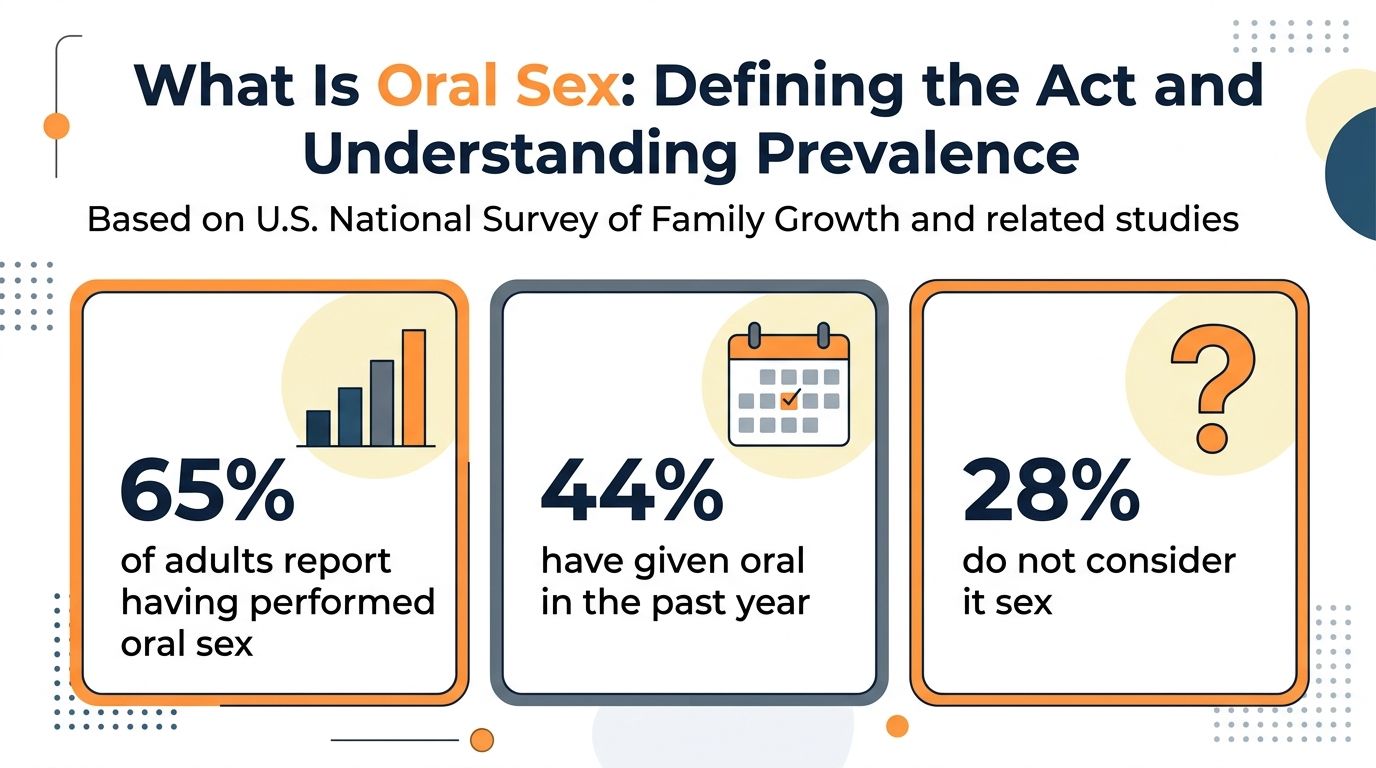
CDC national survey data found that more than 75% of men and women had engaged in oral sex at least once CDC survey data. Among younger Americans, CDC data showed that about 65% of males and 66% of females aged 15–24 had experienced oral sex. That places the practice squarely in mainstream adult intimacy, not on the margins.
A broader human pattern
A scholarly review places oral-genital activity in a wider cultural and biological context, noting examples across many cultures, including preindustrial societies, and comparing it with behavior seen in several mammals scholarly review. The meaning changes from place to place, and so does the language, but the behavior itself is not a modern invention.
Practical takeaway: the useful question is not whether this activity is normal. It is how people can approach it well, safely, and with confidence.
Prioritizing Safety and Informed Consent
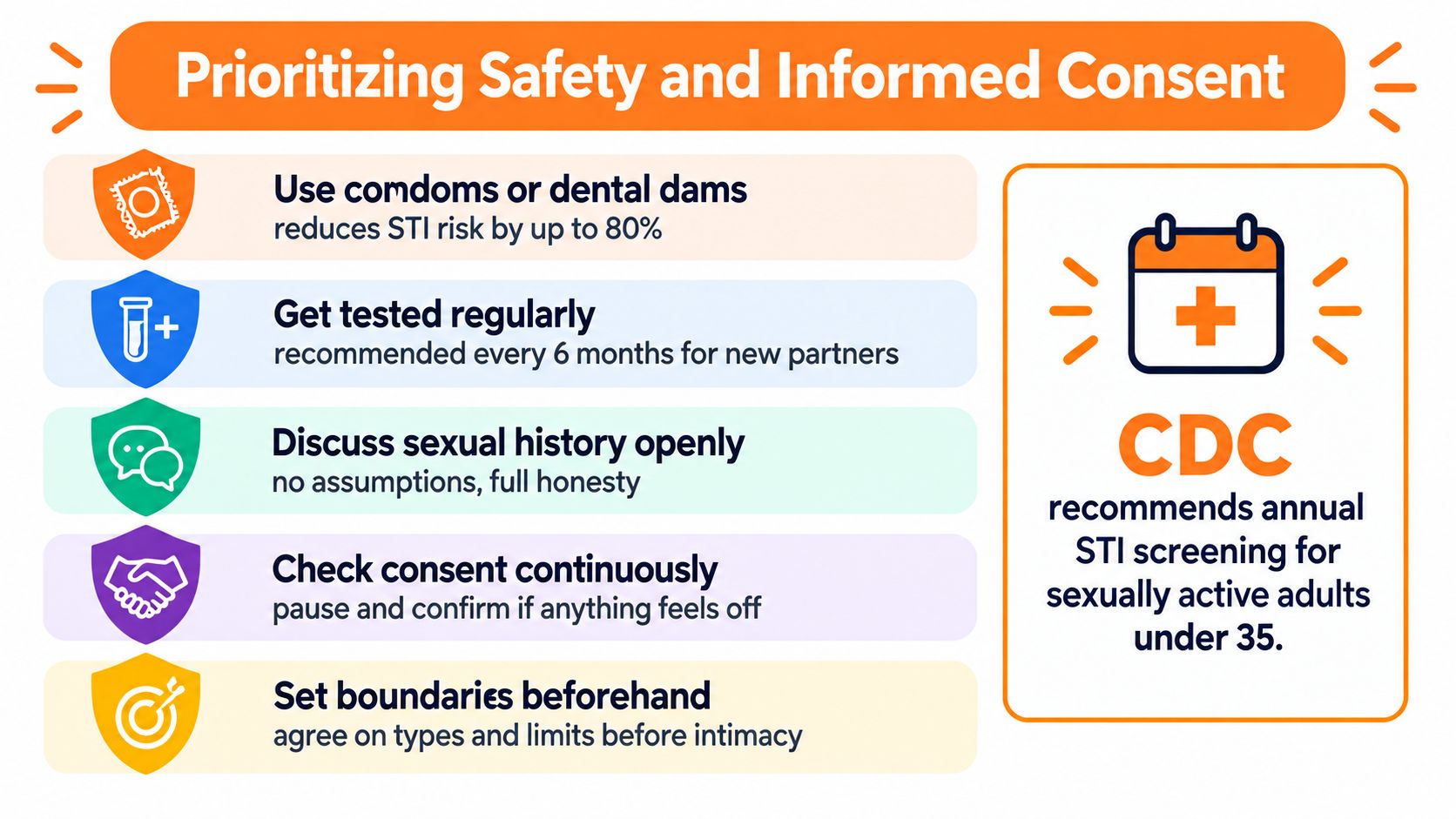
What makes oral sex feel safe enough to enjoy? The answer starts with clear consent and a realistic view of infection risk. Oral sex has a lower HIV transmission risk than vaginal or anal sex, but it can still pass infections such as gonorrhea, chlamydia, syphilis, herpes, and HPV CDC oral sex risk guidance. Barrier use and testing belong in the conversation because they reduce avoidable exposure, not because they spoil intimacy.
What changes the risk
Risk is not fixed. It depends on the infection involved, the kind of contact, how many exposures happen, whether there are oral sores or bleeding gums, and whether ejaculation happens in the mouth CDC STI risk and oral sex. The CDC also notes that HIV risk from oral sex is extremely low overall, while still recommending barrier methods for oral sex encounters CDC oral sex risk guidance.
A simple safety checklist helps keep the focus on care, not guesswork.
- Use condoms or dental dams to lower STI exposure.
- Avoid oral sex if either partner has visible sores or active symptoms.
- Keep testing current, especially when partners change.
- Talk about consent before and during. If anything feels off, pause.
- Do not assume relationship length equals safety. Recent testing and mutual exclusivity matter more than how long people have been together CDC STI risk and oral sex.
Long-term relationships can still involve risk if people have not had a direct conversation about exclusivity or testing. That is not pessimism, it is the same logic you would use with food safety or any other health habit. Clear communication lowers uncertainty, and lower uncertainty usually makes the experience better for both partners.
Good sexual etiquette starts before contact starts. People relax more when expectations are clear, and that usually makes the experience better for both partners.
The Biological Composition of Semen
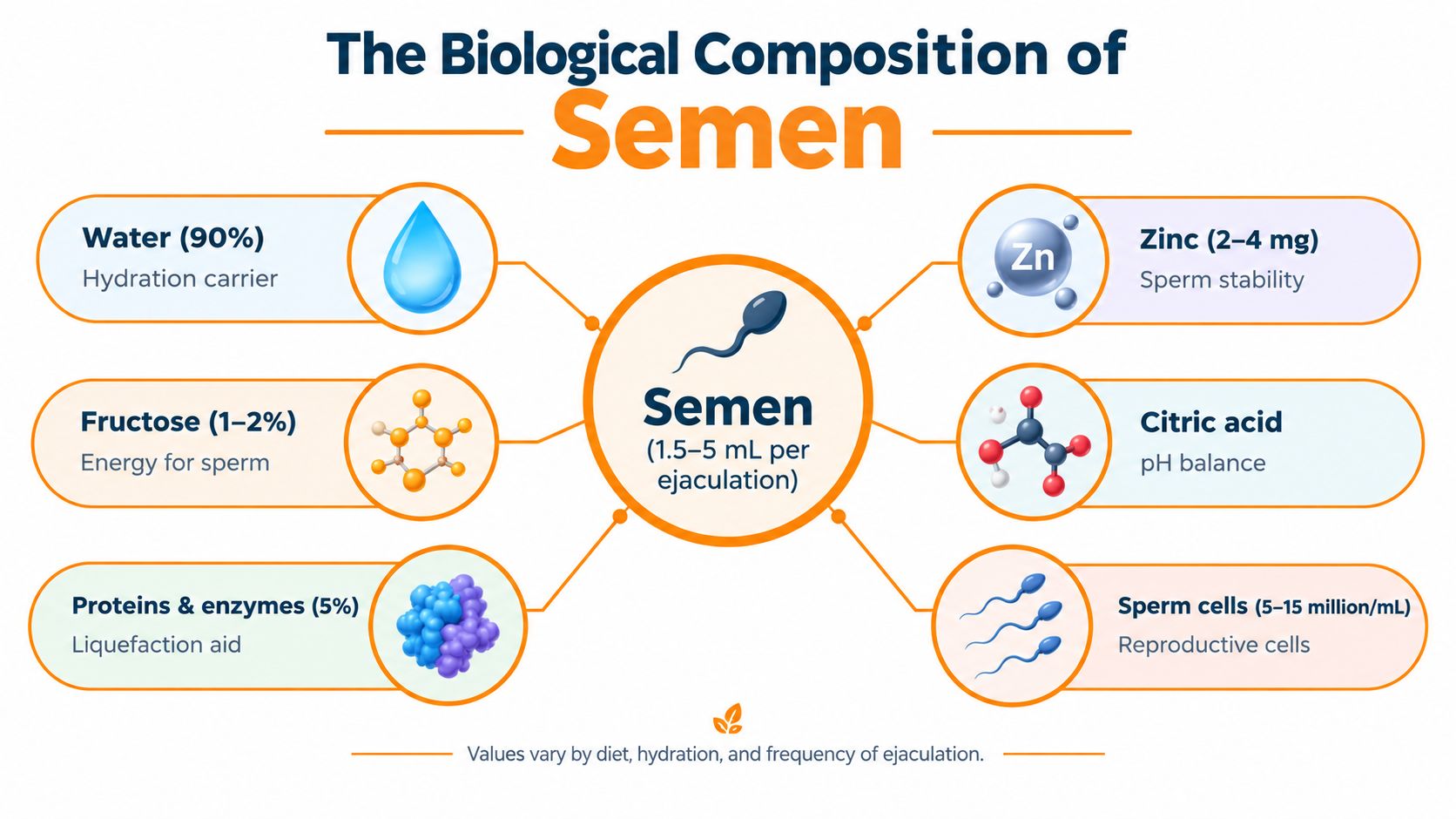
What seems like one fluid is a mix of secretions from several parts of the reproductive system. Semen is a composite fluid, and that is why texture, volume, and taste can shift from person to person and even from one day to the next WHO semen analysis manual.
The World Health Organization identifies zinc and citric acid as markers of prostate-gland secretion, while seminal fructose points to seminal-vesicle function. Those markers help show that semen is not produced by a single gland. It is assembled from different sources, and each one adds its own part to the final fluid.
Why volume and fertility aren't the same thing
A larger ejaculate does not automatically mean stronger sperm function or higher fertility. Volume mainly reflects accessory-gland fluids, while sperm concentration, motility, morphology, and total sperm number are measured separately in semen analysis WHO semen analysis manual. That separation matters, because appearance can be misleading if you are trying to read reproductive health from the amount alone.
Claims that a supplement can improve semen quality by increasing fluid deserve skepticism. More fluid can mean more accessory secretions, not better reproductive performance. For a closer look at the protein question, see this explanation of whether semen has protein.
Bottom line: semen is not a single ingredient, so changes in taste or volume do not tell the whole story.
Lifestyle Factors and Supplement Ingredients
People usually want two things here, a cleaner taste and a more satisfying volume. The problem is that online advice often overpromises both. Available evidence does not establish a strong causal link between a specific food and semen flavor, so diet and wellness habits are better described as general support for normal reproductive physiology, not guaranteed flavor fixes review of semen taste evidence.
That doesn't make lifestyle irrelevant. It just keeps expectations honest. Hydration, regular sleep, a steady diet, oral health, and avoiding habits that drag overall wellness down can all influence how semen is perceived. But there isn't a magic menu item that reliably changes taste on command.
What ingredient labels are really saying
Supplement marketing gets slippery here. Ingredients such as zinc, L-arginine, sunflower lecithin, and bromelain are usually discussed in terms of normal body function, not instant sensory transformation. That distinction matters because the FDA allows structure/function claims only when they're truthful, not misleading, and limited to maintaining normal structure or function FDA structure/function guidance. It also requires the standard disclaimer on qualifying claims FDA labeling guide.
A realistic way to think about these ingredients is:
- Zinc supports normal reproductive biology, but it isn't a promise of better fertility or a sweeter taste.
- L-arginine is commonly discussed for nitric-oxide pathways and circulation.
- Sunflower lecithin is often marketed for semen-related goals, but claims should stay in the support category.
- Bromelain gets used in flavor-related conversations, yet semen taste evidence remains limited and inconsistent.
If you want a more ingredient-focused overview, this guide to making cum taste better frames the topic in a way that's closer to the evidence than the hype.
Navigating Communication and Partner Etiquette
A couple sitting across from each other with coffee can teach a lot about sex. The people who do best with oral intimacy usually don't treat it like a performance review, they treat it like a conversation. One partner says what feels good, the other listens, and nobody has to guess at the rules.

A simple way to say what you want
Try direct language that lowers pressure. “I like it when you go slow at first” is clearer than vague praise, and “Tell me if you want me to stop” makes consent feel active instead of assumed. The point isn't to make the moment clinical. It's to make it safer and easier for both people to relax.
One practical pattern is to separate preference, boundary, and check-in.
- Preference: what feels good, what pace works, what makes the experience better.
- Boundary: what's off-limits, what should stop immediately, what needs protection.
- Check-in: a quick question or signal during the moment.
That structure keeps awkwardness low because nobody has to improvise the rules while already in the middle of things. If you want more ideas on communication and technique, this guide to oral sex tips for men is a useful companion read.
A respectful pause is attractive, not awkward. If one person is tired, unsure, or not in the mood, the right response is adjustment, not persuasion.
Common Misconceptions and Realistic Expectations
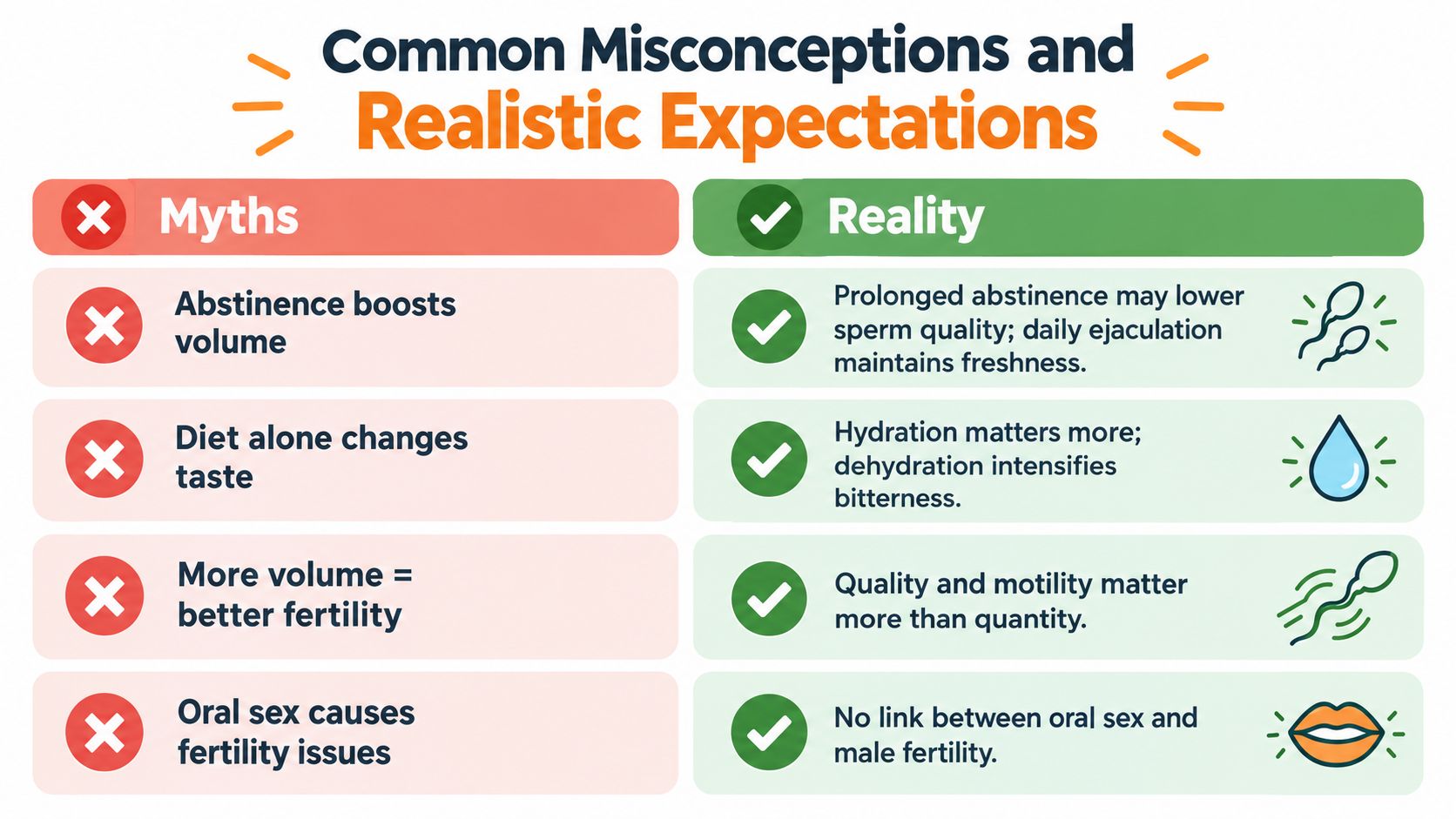
What do semen volume and taste really tell you? A lot of the confusion comes from mixing lab rules with bedroom expectations. The World Health Organization recommends collecting a semen sample after 2–7 days of abstinence for clinical analysis, but that is a standardization rule for testing, not a sign that longer abstinence automatically improves intimacy or makes semen more appealing WHO abstinence guidance. The point is comparable measurements, not a bedroom recipe.
Myths that keep getting repeated
One persistent myth says more volume always means better fertility. Fertility depends on more than quantity, including sperm movement and shape WHO semen analysis manual. Another myth says oral sex harms fertility. No evidence links oral sex to reduced male fertility; the documented concern is STI transmission, not reproductive damage CDC oral sex risk guidance.
The better way to think about semen volume, taste, and overall comfort is consistency. Sleep, hydration, sensible supplement use, honest testing, and clear communication usually matter more than dramatic promises. If you are comparing products, look for structure/function language, ingredient transparency, and third-party testing, not miracle wording.
For a straightforward take on taste, this article on does semen taste good is useful if you read it with a skeptical eye and a practical mindset.
If you want a simple, science-grounded way to support semen volume, taste, and overall male wellness, explore SEMEX. It is built for men who want a daily routine that stays in the support lane, with ingredients discussed for normal reproductive function and vitality rather than hype. These statements have not been evaluated by the Food and Drug Administration. This product is not intended to diagnose, treat, cure, or prevent any disease.