

Does Semen Taste Good: What Actually Shapes the Flavor
Does semen taste good, or are most answers really describing personal expectation rather than measurable biology? The honest answer is that semen doesn't have one universal flavor. Some people describe it as mildly sweet, salty, bitter, metallic, mineral-like, or slightly chlorine-like, while others notice very little taste at all.
That variation makes sense once semen is understood as a fluid mixture rather than as “sperm” alone. Fructose, zinc, sodium, potassium, chloride, pH, hydration, and accessory-gland secretions all influence the chemical solution that reaches the tongue. Food and lifestyle may affect the broader biological environment, but popular advice about pineapple or other ingredients is much more confident than the evidence allows.
Table of Contents
- What Determines How Semen Actually Tastes
- The Chemistry Behind Sweet, Salty, and Metallic Notes
- Popular Flavor Myths and What the Evidence Really Shows
- Bromelain and Pineapple What the Research Actually Says
- Why Zinc Keeps Showing Up in the Semen Flavor Conversation
- Practical Habits That Support Semen Composition and Flavor
- Honest Takeaways on Semen Taste and What Comes Next
What Determines How Semen Actually Tastes
Ejaculate is a composite fluid. It contains spermatozoa along with secretions from the seminal vesicles, prostate, and bulbourethral glands. Taste perception mainly reflects the surrounding seminal plasma, not the microscopic cells themselves. The plasma carries sugars, minerals, buffering compounds, enzymes, and other substances that create the sensory profile.
The seminal vesicles contribute much of the fluid and supply fructose, a sugar that helps provide energy for sperm. The prostate adds zinc and other compounds associated with mineral or metallic notes. A peer-reviewed review of semen composition reported average fructose concentrations of 272 mg per 100 mL and glucose concentrations of 102 mg per 100 mL (review of semen composition). Another authoritative source reports that seminal vesicles contribute 50 to 65% of semen volume and supply fructose at approximately 1.5 to 6.5 mg/mL (seminal-fluid chemistry overview).
Why two samples can taste different
Taste isn't fixed because semen chemistry isn't fixed. Individual genetics, recent meals, hydration, alcohol intake, medications, and general metabolic state can change the solution that the tongue samples. The exact contribution of each factor differs, so a short-term dietary experiment can't be expected to produce the same outcome for every person.
Volume and pH matter too. One ejaculate analysis found that fructose and inorganic phosphorus were significantly lower in samples with volume under 2.0 mL, hypoviscosity, hyperviscosity, delayed liquefaction beyond 120 minutes, or pH at or below 7.1. Zinc was significantly lower when volume exceeded 5.0 mL and when pH was above 8.0 (ejaculate analysis study).
Practical rule: A perceived flavor change doesn't identify its cause. A different balance of sugars, minerals, dilution, and glandular fluid may all produce a different sensory impression.
This framework answers the central question without reducing it to folklore. Semen may taste good to one person and unpleasant to another, and both reactions can be genuine. Preference is personal, while the underlying flavor has a physiological basis.
The Chemistry Behind Sweet, Salty, and Metallic Notes
Could a few dissolved compounds explain why semen may taste sweet, salty, or metallic? The answer is largely yes. Fructose supports sweetness, while ions such as sodium, potassium, chloride, and zinc shape salty or mineral impressions. Seminal fluid is better understood as a chemical mixture than as a liquid with one “flavor ingredient.”
| Compound | Approximate amount | Taste contribution | Primary source |
|---|---|---|---|
| Fructose | 272 mg/100 mL average; approximately 1.5 to 6.5 mg/mL in one source | Mild sweetness | Seminal vesicles |
| Glucose | 102 mg/100 mL average | Minor sweet contribution | Seminal plasma |
| Zinc | Amount varies with sample chemistry | Metallic, mineral, or bitter notes | Prostate |
| Sodium | Approximately 118 mM | Salty baseline | Seminal plasma |
| Potassium | Approximately 27 mM | Mineral and salty notes | Seminal plasma |
| Chloride | Approximately 37 mM | Saline character | Seminal plasma |
The fructose and glucose figures come from a peer-reviewed composition review. The seminal-vesicle contribution and sodium, potassium, and chloride values appear in this technical semen-flavor overview. Together, these measurements help explain why semen is sometimes described as faintly sweet. They cannot predict whether a particular person will enjoy the result.
Minerals and buffering chemistry
Zinc is prominent in seminal plasma and can contribute to metallic, mineral, or bitter sensations. Sodium, potassium, and chloride provide a salty foundation. Their balance and dilution can vary between samples, so one ejaculation may taste stronger or more mineral-like than another.
Semen is slightly alkaline, commonly reported around pH 7.2 to 7.4 (technical overview of semen pH and mineral composition). This buffering helps counter vaginal acidity. On the tongue, less acidity may mean less sourness, leaving salty, mineral, or metallic notes more noticeable.
Other substances add to the mixture. Citric acid, prostaglandins, polyamines, enzymes, and trace compounds occur in seminal plasma, but their individual effects on taste are difficult to separate. The tongue receives them together, with their combined concentration, interactions, and intensity shaping the sensory impression.
The clearest model is a changing balance of sugars, ions, pH, and trace compounds. Chemistry supplies the baseline. Individual sensitivity then influences whether that baseline seems sweet, salty, metallic, bitter, neutral, or unpleasant.
Popular Flavor Myths and What the Evidence Really Shows
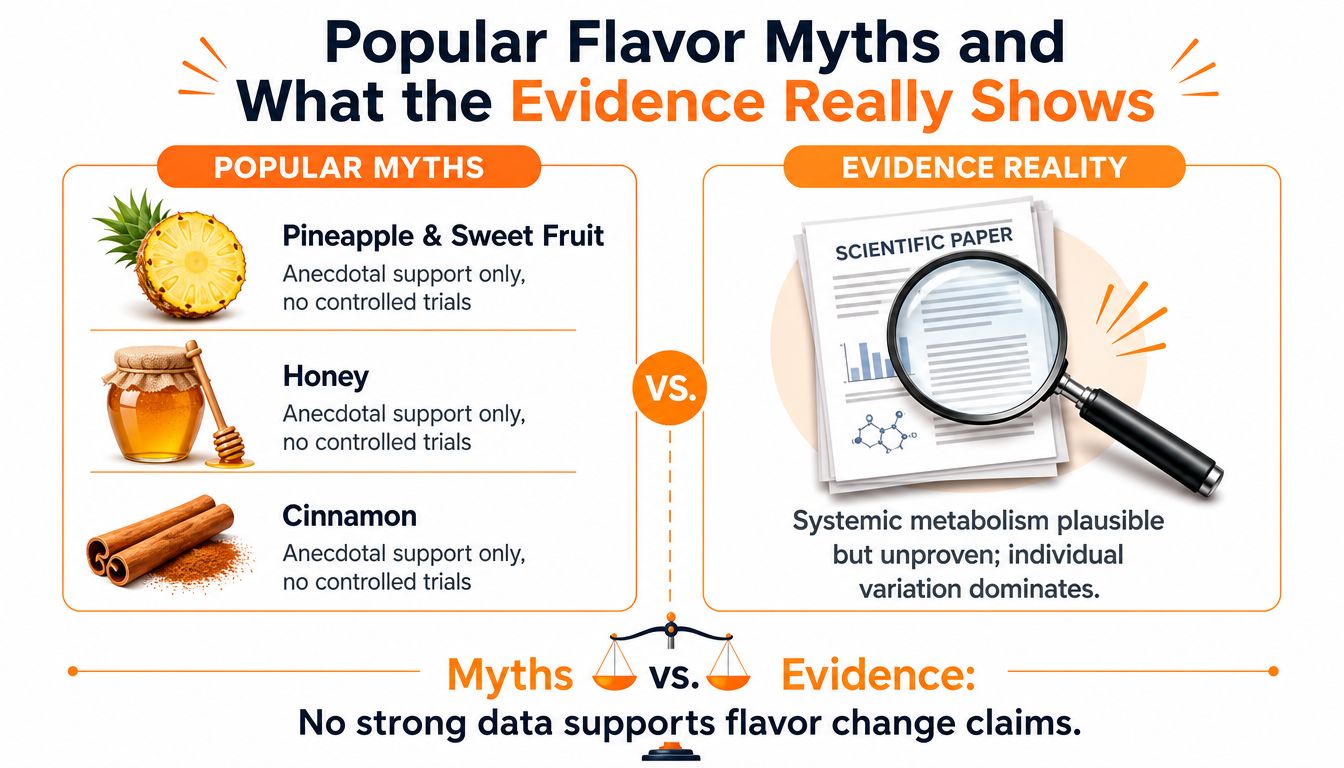
Does eating pineapple make semen taste sweeter? It is a popular idea, yet reputable reviews find no definitive evidence that any specific food or drink reliably changes semen taste (Healthline discussion of semen taste; Medical News Today review). Diet can influence overall body chemistry, but that broad possibility does not demonstrate a repeatable sensory change in seminal plasma.
Grading the common claims
- Pineapple and sweet fruit, plausible but unsupported: Anecdotes are common, but no controlled trial has isolated pineapple or another sweet fruit and then measured a repeatable change in semen flavor. Any possible effect would need to move through digestion and metabolism before influencing seminal-fluid secretion.
- Honey, unsupported: Honey contains sugars, but sweetness does not transfer directly from food into seminal plasma. Existing reviews do not establish a reliable flavor effect.
- Cinnamon, unsupported: Cinnamon is often described as warming or aromatic. Evidence does not show that it changes seminal plasma composition or taste.
- Red meat, dairy, and asparagus avoidance, weakly supported: These foods may affect broader metabolic outputs or urine odor in some situations. Evidence specific to semen flavor is lacking, and no established mechanism shows that avoiding them reliably changes taste.
- Coffee and alcohol, unproven for flavor: Caffeine and alcohol are often blamed for bitter or sharp notes. Hydration can alter concentration, but direct flavor trials are absent. Alcohol also has broader reproductive-health considerations, so moderation makes sense without promising a taste change.
- Cigarettes, unstudied for taste: Smoking is associated with oxidative stress and changes in semen parameters, but its specific effect on perceived flavor has not been established. Saying cigarettes definitely produce one taste goes beyond the evidence.
The central limitation is study design. Few blinded sensory trials have compared samples before and after one food, drink, or supplement while controlling for hydration, timing, pH, volume, and individual variation. Most online flavor advice therefore remains anecdotal rather than a tested recipe.
A person may notice a difference after eating pineapple, drinking more water, or stopping smoking. The observation can be genuine, while the cause remains uncertain. Without controlled evidence, a personal report cannot show that the same habit will produce the same change for everyone.
Bromelain and Pineapple What the Research Actually Says
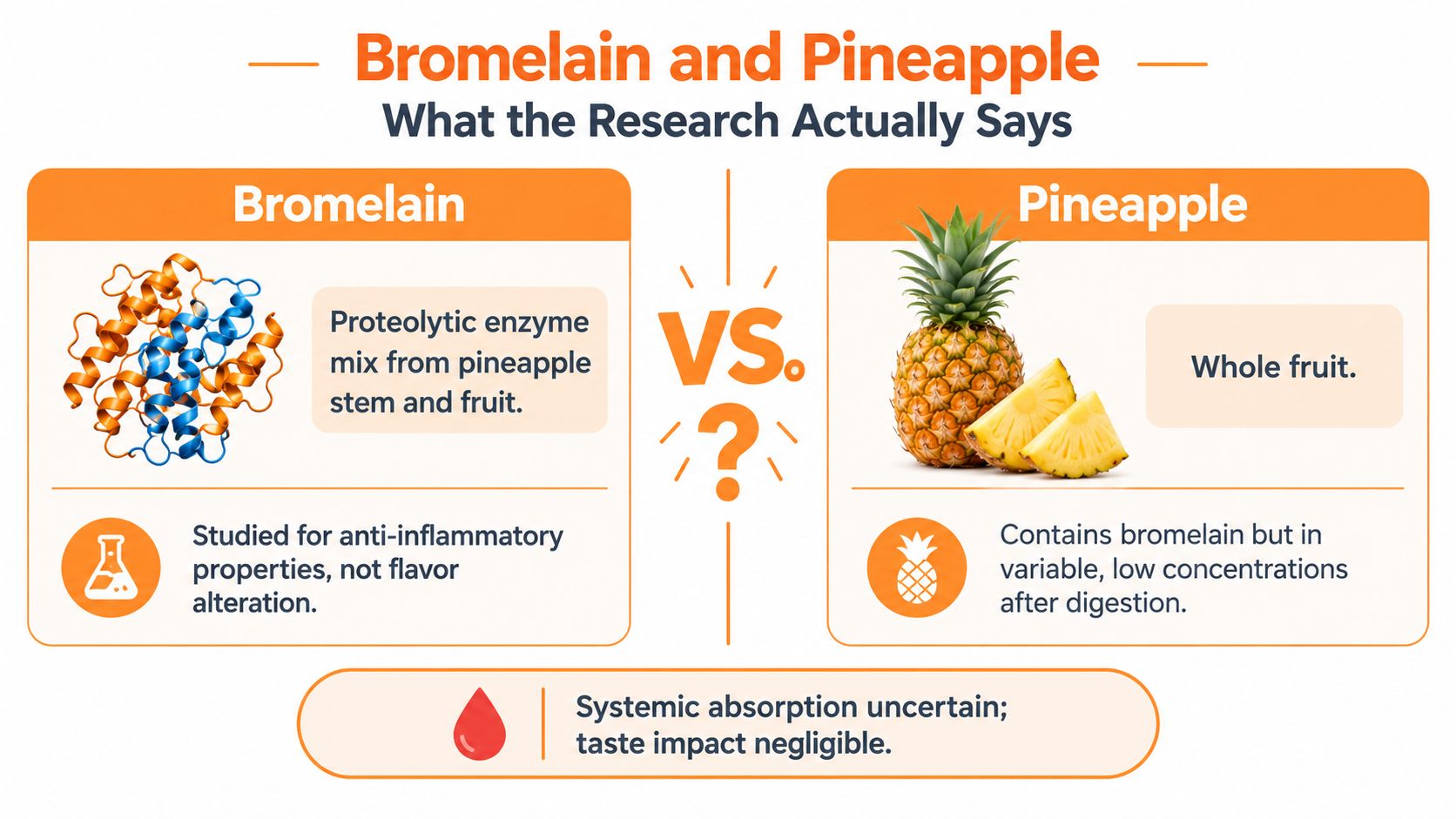
Bromelain receives special attention because it appears in many pineapple-related flavor claims. It isn't just “pineapple flavor in capsule form.” Bromelain is a mixture of proteolytic enzymes extracted from pineapple stem and fruit, and research has focused mainly on anti-inflammatory, digestive, and food-tenderizing applications.
Human bromelain studies have examined pharmacokinetics, dosing, and safety rather than changes in seminal plasma or sensory perception. Trial doses have commonly fallen within 200 to 1,000 mg per day, but those studies don't establish that bromelain supplementation changes semen taste. The dose range is documented in the broader bromelain research context, not as a validated flavor protocol.
The mechanism people assume
The popular theory is straightforward: bromelain breaks down proteins, seminal fluid contains proteins, and therefore bromelain might alter the fluid's taste. That chain of reasoning skips several important steps. An orally consumed enzyme must survive digestion to some degree, interact with the body systemically, reach relevant tissues, and affect seminal-fluid composition in a measurable way.
No published trial has linked bromelain supplementation to a documented change in semen taste. The available evidence doesn't show a controlled before-and-after sensory outcome, nor does it establish a change in fructose, zinc, sodium, potassium, chloride, or pH caused by bromelain.
Whole pineapple and bromelain supplements also aren't interchangeable. Whole fruit contains water, sugars, fiber, acids, and a variable amount of enzyme, while a supplement provides a defined ingredient amount but still doesn't come with evidence of a flavor outcome. Claims about either form should remain separate from evidence about bromelain's other studied uses.
Readers comparing the ingredient with product-level promises can review this bromelain and semen taste discussion, but the central conclusion remains cautious. Bromelain has a real research history as an enzyme mixture. That history doesn't demonstrate a reliable, repeatable effect on seminal flavor.
Why Zinc Keeps Showing Up in the Semen Flavor Conversation
Zinc is more relevant to semen chemistry than pineapple because it is directly present in seminal plasma and has been studied in relation to reproductive markers. It helps support normal sperm structure and cellular defenses, while zinc ions and related compounds can contribute to metallic or slightly bitter sensations.
That doesn't make zinc a flavor hack. It makes zinc a useful example of the difference between supporting normal composition and promising a noticeable sensory transformation. Zinc status may affect volume and reproductive markers, but a change in those measures isn't the same as a proven change in taste.
What depletion and supplementation studies measured
A controlled zinc-depletion study lowered intake from 10.4 mg per day to 1.4 mg per day. Mean semen volume declined from 3.30 mL to 2.24 mL, while serum testosterone declined from 26.9 to 21.9 nmol/L (zinc-depletion study). The study supports zinc's relationship with semen volume and testosterone during short-term depletion, not a guaranteed flavor effect.
A 2016 meta-analysis of zinc supplementation in infertile males reported statistically significant improvements in semen volume, sperm motility, and normal sperm morphology. The standardized mean differences were -0.99 for semen volume, -1.82 for motility, and -0.75 for morphology (2016 zinc supplementation meta-analysis). Those outcomes concern semen and sperm measurements, not blinded taste ratings.
| Study type | Population | Dose or intervention | Measured outcome |
|---|---|---|---|
| Zinc depletion study | Young men | Intake reduced from 10.4 mg/day to 1.4 mg/day | Semen volume and serum testosterone |
| Supplementation meta-analysis | Infertile males | Zinc supplementation across included trials | Semen volume, motility, morphology |
| NIH-hosted review | Men and reproductive-health literature | Assessment of seminal zinc and nutrition | Zinc associations with sperm count and quality |
An NIH-hosted review on seminal zinc states that seminal zinc concentration is associated with sperm count and that zinc-deficient nutrition is linked with low sperm quality and male infertility. A separate review of zinc and male reproductive function also describes lower seminal zinc as associated with low sperm count and quality.
The evidence stack is stronger for normal reproductive composition than for taste. That distinction matters. Correcting inadequate intake may support biological functions, but adding more zinc when intake is already adequate doesn't guarantee a more pleasant flavor.
Readers exploring the relationship between zinc and ejaculation can also review zinc and ejaculation, while keeping the evidence focused on composition and reproductive markers rather than unsupported sensory promises.
Practical Habits That Support Semen Composition and Flavor
Flavor optimization isn't a recipe problem with a guaranteed ingredient. Supportive habits can help maintain normal hydration, nutrition, and reproductive function, but they can't override individual baseline chemistry.
A sensible daily checklist
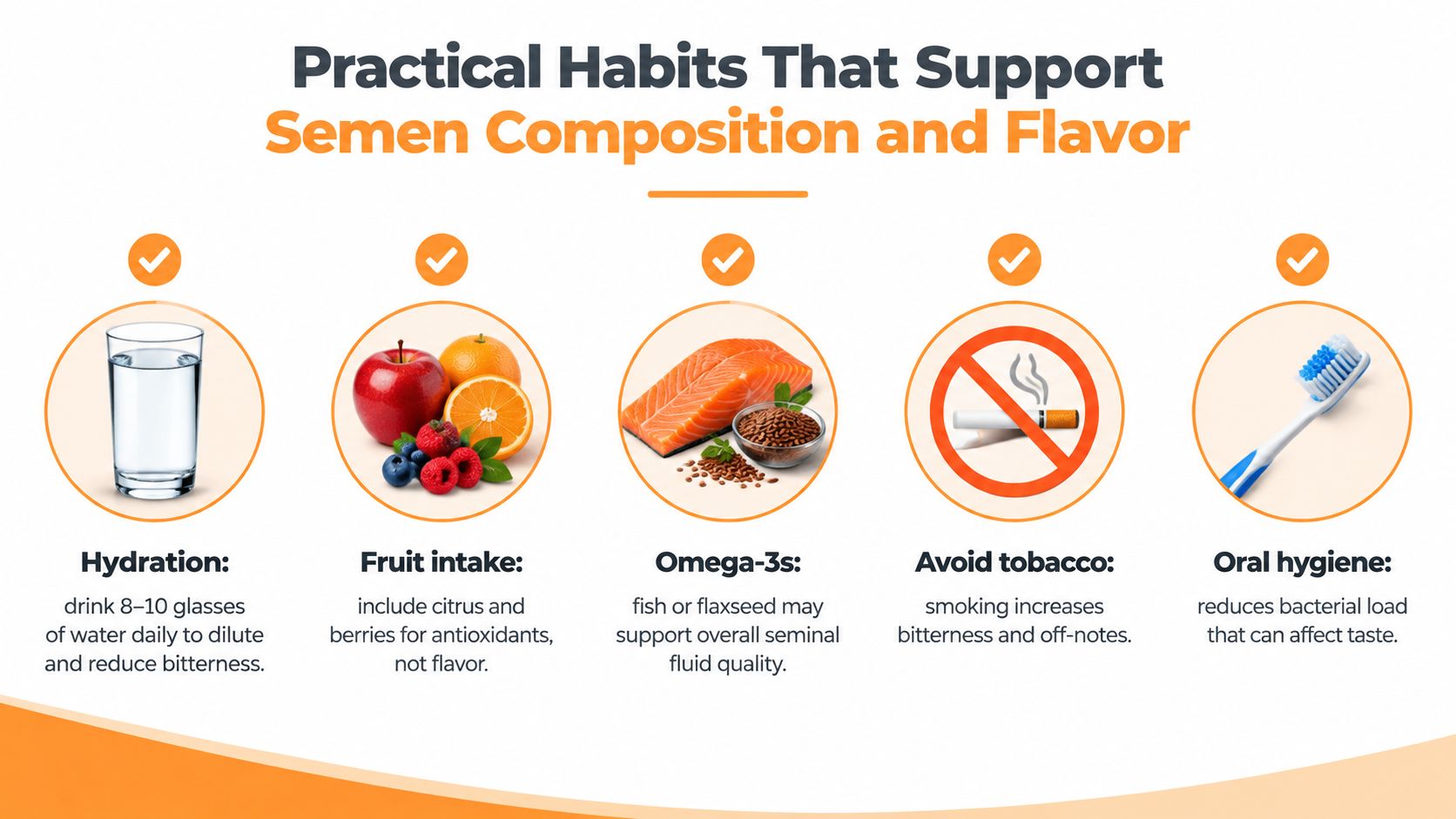
- Hydration: Regular fluid intake supports normal body-fluid balance. It may influence how concentrated salts and other solutes seem, but no fixed drinking target has been established as a semen-flavor treatment.
- Balanced nutrition: A varied diet supplies carbohydrate, protein, vitamins, and trace minerals used throughout the body. Fruit can be part of that pattern for general nutrition, but evidence doesn't show that citrus, berries, or pineapple reliably sweeten semen.
- Zinc from food first: Oysters, beef, pumpkin seeds, and legumes provide dietary zinc. Supplement decisions should account for total intake, because the NIH upper intake limit for adults is 40 mg per day (NIH zinc fact sheet).
- Alcohol moderation: Alcohol can affect broader hormonal and semen-related variables, while its direct influence on taste remains unproven. Reducing intake may support general health without guaranteeing a particular flavor.
- Avoiding tobacco: Smoking is linked with oxidative stress and semen-parameter concerns, but the specific sensory effect is not established. Stopping remains a health-focused choice, not a validated taste formula.
Oral hygiene and mutual comfort matter in intimate situations, but neither should be presented as a proven method for changing seminal plasma chemistry. A sudden, persistent change in odor or taste accompanied by pain, burning, discharge, fever, or other symptoms deserves clinical attention rather than dietary experimentation.
Better target: Support normal semen composition first. Treat flavor as a variable sensory outcome, not as a performance score.
A supplement can be considered only within that broader context. SEMEX discusses ingredients associated with semen volume or taste, but ingredient research shouldn't be converted into a product-level promise that the evidence doesn't support.
Honest Takeaways on Semen Taste and What Comes Next
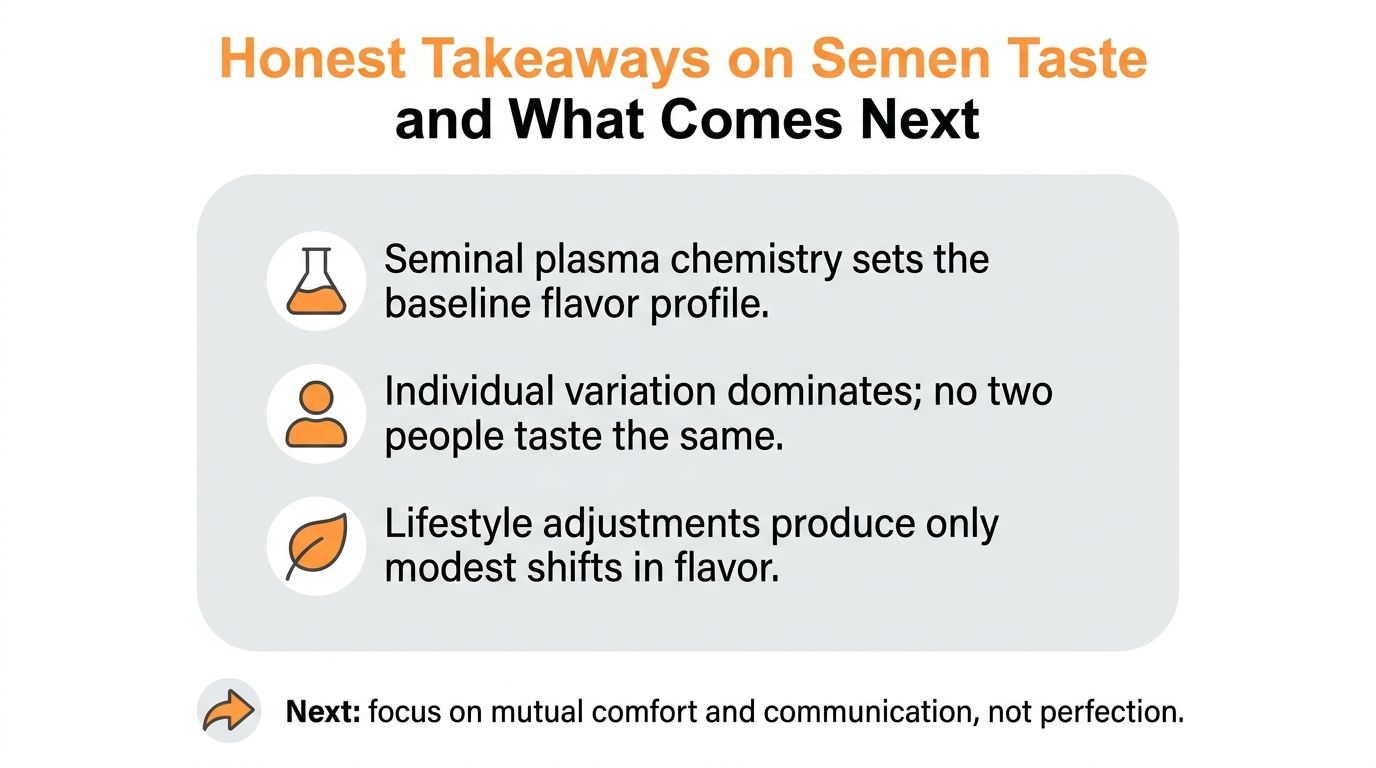
So, does semen taste good? There isn't a universal answer. Seminal plasma chemistry establishes the baseline, and personal sensory preference determines whether that baseline seems pleasant, neutral, or unpleasant.
The most defensible conclusions are narrower than internet advice:
- Chemistry sets the starting point: Fructose can support sweetness, while zinc and other minerals can create metallic, bitter, or mineral notes.
- Variation is normal: Volume, pH, hydration, glandular secretions, diet, medication, and individual biology can change the sample.
- Myths exceed evidence: Pineapple, coffee, celery, red meat, honey, and cinnamon lack definitive evidence as reliable flavor-changing interventions.
- Lifestyle changes have limits: Hydration and adequate nutrition support the underlying biological environment, but they don't provide a repeatable flavor recipe.
- Zinc is about composition first: Depletion and supplementation studies measured volume, testosterone, motility, and morphology, not a guaranteed sensory improvement.
What matters more than chasing a perfect flavor
The research gap is important. Few controlled trials have directly measured semen taste, and the available reviews don't establish that a specific food or drink produces a dependable result. Anecdotes about pineapple, cigarettes, coffee, celery, or red meat may outpace the published evidence because taste is difficult to standardize and highly personal.
Broader reproductive-health markers are more informative goals than flavor optimization. A semen analysis can evaluate volume, sperm count, motility, and morphology, while a clinician can decide whether hormone testing or another assessment makes sense for a person's circumstances. Flavor alone can't diagnose a reproductive problem, and a preferred flavor doesn't prove that semen is biologically healthier.
For couples, communication is practical. Partners can discuss comfort, consent, preferences, and whether any change is persistent or accompanied by symptoms. No one needs to treat a normal variation as a failure, and no one needs to accept discomfort just because a myth says a particular food should have changed the experience.
A product such as SEMEX can be evaluated as a dietary supplement option, but its presence doesn't change the evidence standard. Supplements and lifestyle changes discussed here support general wellness or normal composition and aren't substitutes for individualized medical guidance.
These statements have not been evaluated by the Food and Drug Administration. This product is not intended to diagnose, treat, cure, or prevent any disease.
Readers who want to compare a supplement option with the chemistry and evidence discussed above can visit SEMEX and review the product information carefully. The most useful next step is to choose supportive habits for overall wellness, discuss preferences openly with partners, and consult a qualified clinician about persistent symptoms or reproductive-health concerns.