

What Is Head Sexually? a Clear, Respectful Guide
“Head” is common slang for oral sex performed on a penis, technically called fellatio, involving stimulation with the mouth, lips, and tongue. It's a common adult sexual practice, but understanding the phrase is only the beginning. Many individuals also want to know how partners can communicate, stay comfortable, and reduce STI risks without shame or exaggerated claims.
You might encounter the word in a song, a private message, or a conversation where everyone else seems to understand it. Then you realize that nobody has explained what it means in respectful, useful language. Asking is completely normal, especially because slang definitions often leave out the questions that matter most: What does the activity involve? Does agreeing to it mean agreeing to everything? How can someone say “slower” or “stop”? Is it safe?
This guide treats those questions as part of the definition, not as awkward extras. It focuses on informed consent, comfort, communication, hygiene, and practical sexual-health information. For a related discussion of the experience from a partner's perspective, see people giving head.
Table of Contents
- Introduction to a Common but Rarely Explained Term
- What Head Means in Plain Language
- Consent and Boundaries Before Anything Else
- Basic Techniques and Etiquette for Comfort
- STI Risk and How to Reduce It
- Taste, Nutrition, and When to Seek Advice
Introduction to a Common but Rarely Explained Term
Slang can make a sexual topic sound simpler than it is. A person may ask, “What is head sexually?” because they want a direct answer, but they may also be trying to understand a message from a partner or decide whether an experience feels right for them. A useful explanation should answer both needs without assuming someone's gender, relationship, experience, or desire.
The direct definition is straightforward: “head” usually means oral sex performed on a penis. The technical term is fellatio, a form of oral sex involving the mouth, lips, and tongue. That definition describes the activity, but it doesn't tell partners how to make decisions together or how to respond when comfort changes.
Oral sex can be part of a mutually desired sexual experience, but nobody owes it to another person. A person can be curious and still choose not to participate. Someone can agree to begin and then decide to pause. A partner can want one form of stimulation but not another, or enjoy the activity without wanting ejaculation to occur.
The useful definition includes autonomy: oral sex is only a positive experience when everyone involved freely agrees and can change their mind.
Sexual health also includes emotional and social well-being, not only the absence of infection or physical discomfort. That broader view helps explain why communication belongs beside anatomy and STI information. A respectful experience makes room for questions, boundaries, pauses, and different kinds of pleasure.
The phrase itself is also imprecise in casual conversation. One person may use it to mean a brief act, while another may imagine a longer sexual encounter with several kinds of stimulation. Partners shouldn't rely on slang alone. Clarifying what each person means prevents assumptions before they become pressure.
What Head Means in Plain Language
Start with the slang-to-anatomy translation. Head generally refers to fellatio, or oral stimulation of the penis, especially the glans, commonly called the head, and the frenulum, a sensitive area beneath it. Stimulation may involve the lips, tongue, mouth, hands, or a combination, depending on what partners discuss and consent to.
The word oral sex is broader than fellatio. It describes sexual stimulation involving the mouth, lips, or tongue and may include different body parts and activities. “Making out” works as a useful comparison. The phrase covers a range of kissing styles, but it doesn't tell you exactly what two people will do. Oral sex works similarly. It names a category, not a fixed routine.
A partner shouldn't assume that agreeing to oral sex means agreeing to every technique, position, pace, or outcome. The practical meaning comes from the conversation between the people involved.
Oral sex is also not an unusual or fringe behavior. In a nationally representative U.S. survey of adults aged 18–44, more than 85% reported having oral sex at least once with a partner of the opposite sex. Among U.S. teenagers aged 15–19, a separate survey conducted from 2011 to 2015 found that 41% reported having oral sex with a partner of the opposite sex. These figures come from different age groups and survey contexts, so they shouldn't be treated as a universal global rate. CDC sexual-health guidance explains the survey context and why prevalence varies.
That context matters for education. A common activity still deserves accurate information about consent, protection, symptoms, and testing. Familiarity doesn't make an activity automatically safe, and popularity doesn't create an obligation to participate.
In everyday speech, “head” can also be used loosely or casually. If someone uses the term with you, you can ask a simple follow-up: “What do you mean by that?” or “What are you comfortable with?” Those questions aren't embarrassing. They turn an ambiguous slang word into a clear conversation.
Consent and Boundaries Before Anything Else
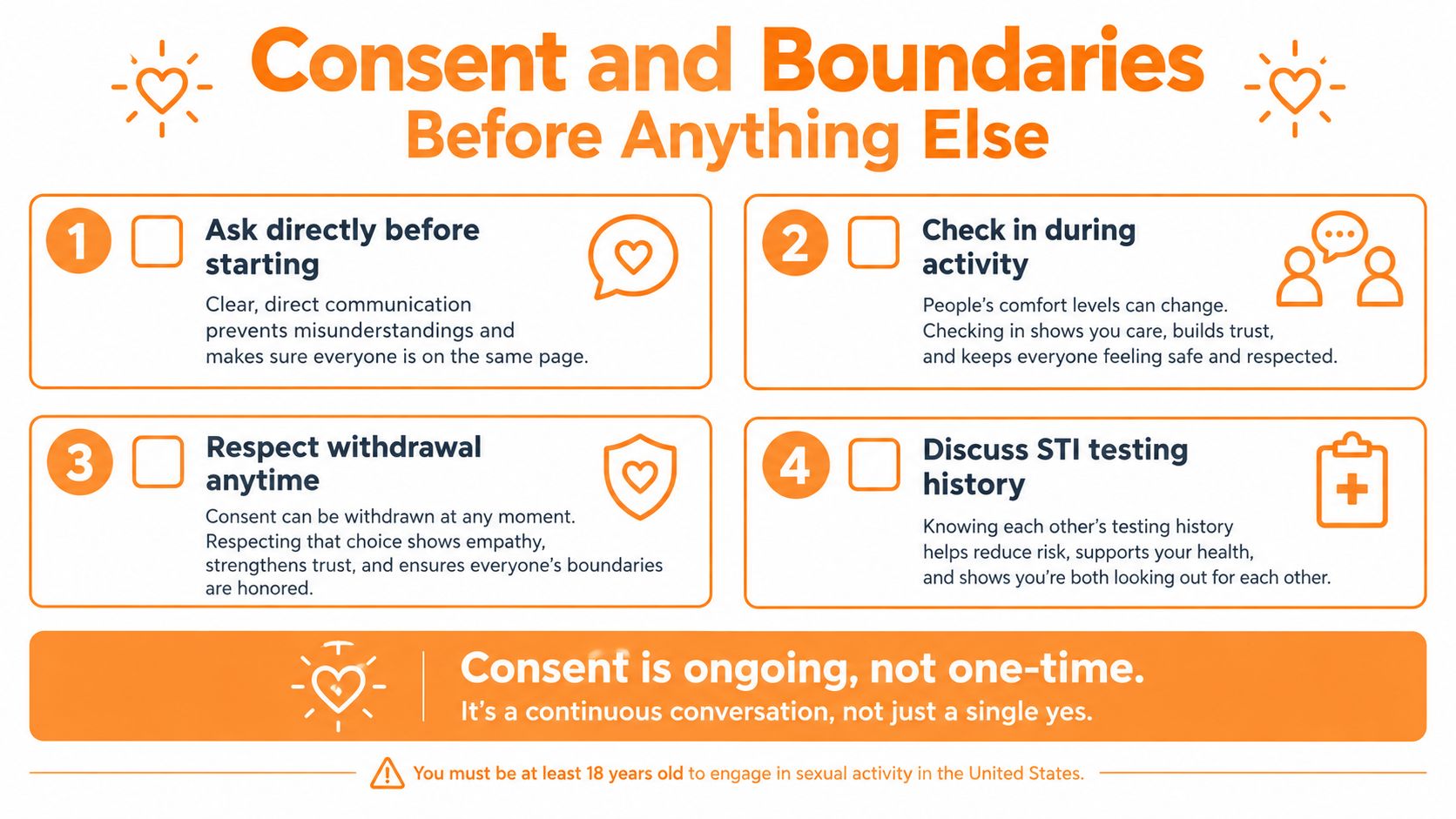
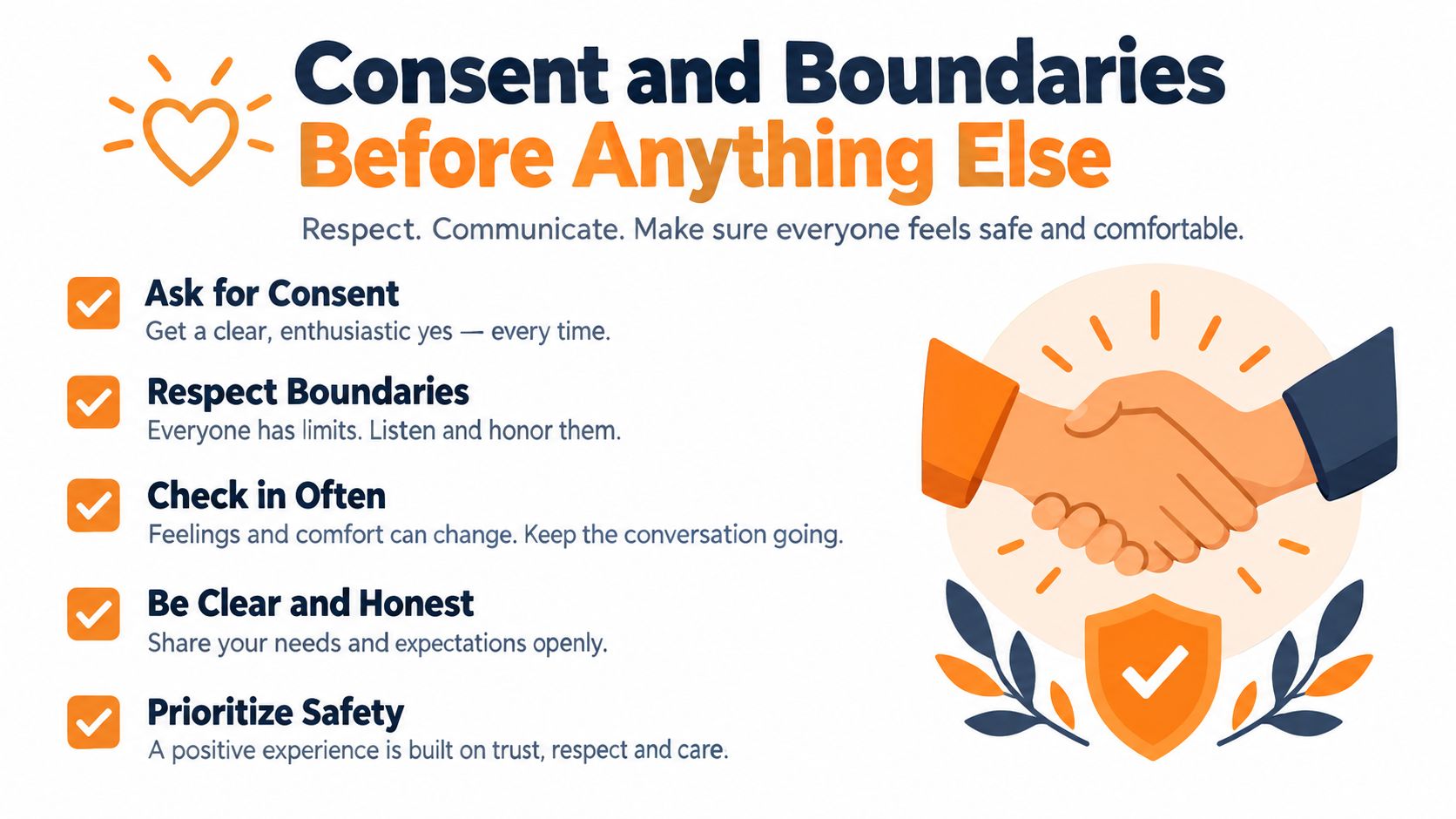
Consent is an ongoing conversation, not a one-time permission. Either person can change their mind, pause, or stop, and both partners should check in as the activity develops. Planned Parenthood's consent guidance explains consent as part of continuing sexual decision-making. Sexual health also includes physical, emotional, mental, and social well-being, along with experiences that are safe, pleasurable, and free from coercion, discrimination, and violence.
Agreeing to one activity does not cover every detail. A person may want oral sex but not ejaculation in the mouth, deeper pressure, a certain position, or continuation after discomfort starts. They may want it today and not another time. Consent applies to the specific activity, circumstances, and moment.
Words that make checking in easier
A boundary can be clear in your mind yet difficult to express quickly. Short, neutral phrases give both people useful information:
- “Slower, please.” Requests a change without requiring an explanation.
- “Not there.” Identifies an area that feels unwanted or sensitive.
- “Less pressure.” Describes how to adjust an intense sensation.
- “Let's pause.” Stops the activity while leaving the next choice open.
- “I want to stop.” Ends the activity and needs no defense.
The receiving partner has responsibilities too. A request is information, not an insult. The respectful response is to slow down, stop, or ask what would feel better, rather than argue or persuade.
Consent must be easy to withdraw. Anger, guilt, ridicule, or pressure after someone says “stop” does not create a respectful situation.
Reciprocation requires the same freedom. One person may enjoy giving oral sex without wanting anything in return. Another may prefer mutual exploration, while their partner may not. Shared desire is welcome, but it cannot become a debt. “I did this for you” applies pressure rather than expressing consent.
Comfort is not measured by duration, performance, ejaculation, or following a script. It rests on informed agreement, attention to feedback, and the freedom to stop without consequences. For more first-experience communication guidance, see tips for having sex for the first time.
Basic Techniques and Etiquette for Comfort
Once partners have agreed on what they want, comfort matters more than performance. Genital stimulation activates sensory nerve pathways and can increase blood flow, supporting an erection. Psychological arousal and nervous-system activity also influence the response, so the same touch may feel different depending on mood, trust, stress, or physical comfort.
Orgasm and ejaculation are related but distinct. They often happen together, yet ejaculation can occur without orgasm, and orgasm can occur without ejaculation. That means neither event should be treated as the required finish line.
Start with responsiveness
A considerate approach usually begins gently and changes according to feedback. Partners can:
- Begin slowly: Give the receiving person time to notice the sensation and communicate.
- Adjust pressure gradually: Small changes are easier to evaluate than sudden intensity.
- Use hands as well as the mouth: This can vary sensation and reduce strain.
- Use suitable lubrication when needed: Reduced friction can improve comfort, but partners should choose a product compatible with any barrier being used.
- Avoid forced depth: No one should push another person's head or treat discomfort as something to overcome.
The last point is basic etiquette, not a preference. A person giving oral sex controls their own breathing, jaw, neck, and movement. The receiving partner can communicate rhythm and location, but shouldn't physically force the other person.
Comfort is information, not an obstacle. If someone tenses, pulls away, coughs, or says a sensation hurts, pause and check in.
Hygiene can also make the experience feel more relaxed. Partners may shower, wash hands, brush teeth at an ordinary time, and discuss any sores, irritation, or unusual symptoms before sexual contact. Brushing or flossing aggressively immediately beforehand can irritate the gums, so basic cleanliness is preferable to harsh scrubbing.
The sexual-medicine review on sexual response supports a flexible understanding of arousal rather than a rigid sequence. Slowing stimulation, checking comfort, using lubrication when needed, and avoiding forceful pressure can reduce discomfort and support mutually pleasurable activity. For additional practical ideas focused on penis owners, see oral-sex tips for men.

STI Risk and How to Reduce It
Oral sex is not risk-free, but “risk” isn't one single measurement that applies equally to every infection. Transmission depends on the infection, the body sites involved, whether sores or blood are present, and whether a barrier is used.
CDC guidance states that chlamydia, gonorrhea, syphilis, herpes, and HPV can spread through oral sex, with infection potentially occurring in the mouth, throat, genitals, or rectum. HIV transmission through oral sex presents little to no risk, although the exact risk is difficult to quantify. Low HIV risk does not mean no STI risk. CDC information on oral-sex STI risk provides the relevant distinction.
| STI | Can spread via oral sex | Where infection can occur | Risk reduction |
|---|---|---|---|
| Chlamydia | Yes | Mouth, throat, genitals, or rectum | Use a condom or oral barrier and discuss testing |
| Gonorrhea | Yes | Mouth, throat, genitals, or rectum | Use a barrier and seek testing when exposure is possible |
| Syphilis | Yes | Contact sites, including mouth or genitals | Avoid contact with sores and use barriers |
| Herpes | Yes | Mouth, genitals, or nearby skin | Avoid contact during visible sores or symptoms |
| HPV | Yes | Mouth, throat, genitals, or rectum | Barriers can reduce exposure, and vaccination discussions may be appropriate |
| HIV | Little to no risk through oral sex | Exact risk is difficult to quantify | Discuss personal circumstances with a healthcare provider |
Practical ways to lower exposure
Condoms can reduce exposure during oral sex on a penis. Dental dams or a cut-open condom can create a barrier for other forms of oral contact. Barriers don't eliminate every possible route of skin contact, but they can reduce contact with bodily fluids and affected areas.
Avoid oral contact when either partner has visible sores, unexplained bleeding, or symptoms that could reflect an infection. This doesn't mean symptoms are always present. Many infections can be asymptomatic, and throat infections may be overlooked if a person receives testing only at another body site.
A sexual-health clinician can help decide which tests fit the exposure and body sites involved. Tell the provider that oral sex occurred so throat testing can be considered when appropriate. Partners can also discuss recent testing, symptoms, vaccination, and barrier preferences without turning the conversation into an accusation.
Taste, Nutrition, and When to Seek Advice
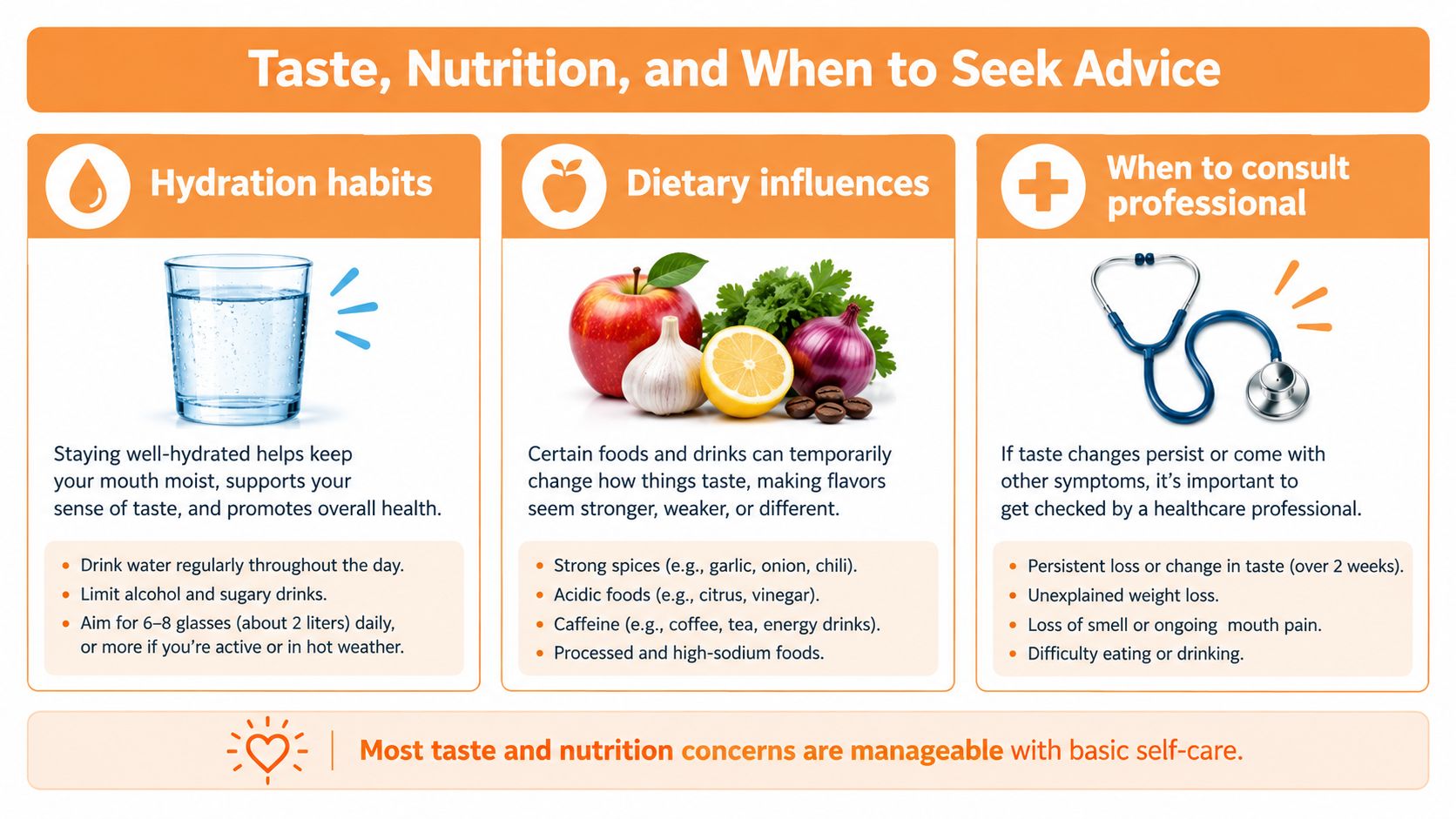
People often focus on taste because it affects the shared experience, but the most useful starting points are ordinary care and honest expectations. Washing, staying hydrated, and paying attention to foods that personally affect digestion can help someone feel more comfortable. These habits don't guarantee a particular taste, and they don't replace STI prevention or medical advice.
The evidence does not establish bromelain as a reliable method for changing semen taste. No controlled human trial identified here demonstrates a taste-change threshold, time course, or dose. Ingredient discussions should therefore remain background information, not promises about a predictable sensory result.
What nutrition evidence can and cannot show
Zinc is a nutrient involved in normal reproductive biology, but that fact doesn't prove that a zinc supplement increases semen volume or improves fertility for every man. An NIH-supported randomized trial enrolled 2,370 couples undergoing infertility treatment and compared a daily combination of 30 mg elemental zinc plus 5 mg folic acid with placebo for six months. Live birth occurred in 34% of the supplement group and 35% of the placebo group, and sperm concentration, motility, morphology, semen volume, and total motile sperm count did not differ significantly between groups. DNA fragmentation was higher in the supplement group, 29.7% versus 27.2% with placebo. The NIH summary of the trial supports cautious, ingredient-level language rather than fertility promises.
A supplement such as SEMEX is a dietary product formulated around ingredients including zinc, L-arginine, sunflower lecithin, and bromelain, alongside other men's wellness ingredients. It may be considered as one option for people interested in ingredient-based support for normal male reproductive and general wellness functions, but it shouldn't be presented as treating infertility, changing a guaranteed outcome, or replacing professional care.
The discussion of whether swallowing sperm is healthy should also be approached through consent, personal comfort, and infection awareness rather than assumptions. Nobody has to swallow, and a person can change their mind at any point.
Seek professional advice for persistent pain, sores, bleeding, unusual discharge, recurring irritation, difficulty swallowing, or concerns after a possible STI exposure. A clinician can assess symptoms and recommend testing based on the sites involved.
The core answer to “what is head sexually?” is simple, but responsible understanding is broader: it means oral sex performed on a penis, while the quality of the experience depends on mutual consent, clear boundaries, responsive comfort, and realistic sexual-health information.
These statements have not been evaluated by the Food and Drug Administration. This product is not intended to diagnose, treat, cure, or prevent any disease.
If you're evaluating a daily men's wellness supplement in the context of semen volume, taste, or shared sexual comfort, review the ingredient information and product details at SEMEX. Use the guide's consent, barrier, hygiene, and testing principles alongside any supplement decision, and speak with a healthcare professional about personal concerns.