

People Giving Head: Respectful, Safe & Clear Intimate Guide
The room is quiet, the other person is waiting, and the person giving head is trying to guess what will feel good without losing their own comfort. Maybe there's uncertainty about pressure, pace, ejaculation, taste, gagging, or whether stopping will disappoint a partner. Those awkward pauses aren't failures. They're opportunities to replace guessing with mutual attention.
People giving head deserve to be treated as active participants, not background characters in someone else's pleasure. A satisfying experience depends on consent, communication, health, physical ease, and the freedom to change direction at any point.
Table of Contents
- Why Connection Matters More Than Technique
- Practical Consent and Communication Scripts
- Understanding STI Risks and Protection Options
- Physical Comfort and Hygiene Best Practices
- Creating Mutual Satisfaction Through Shared Focus
Why Connection Matters More Than Technique
A couple once arrived at an intimate conversation after an encounter that had felt strangely formal. One partner had focused on “doing everything right,” while the person giving head had spent most of the time monitoring the other person's reactions, ignoring jaw tension and worrying about whether a pause would seem rejecting. Neither had said much. Afterward, both assumed the other had been dissatisfied.
The problem wasn't a missing technique. It was the silence before and during the encounter. One person was performing, the other was evaluating, and neither was fully present.
Safety changes the entire experience
Anxiety narrows attention. Someone who's wondering whether they're taking too long, making the right sounds, or meeting an imagined standard has less capacity to notice their own breathing, muscle tension, or genuine desire. That pressure can turn intimacy into a task, even when both partners care about each other.
Connection works differently. A partner who feels seen can say, “That pressure is uncomfortable,” or “That pace works,” without fearing punishment or ridicule. The other partner receives useful information instead of having to interpret every movement. Clear feedback makes the experience more responsive, not less erotic.
Practical rule: The person giving head should never have to trade comfort for proof of desire.
A person can be enthusiastic and still need breaks. They can enjoy the closeness while not wanting ejaculation in the mouth. They can want to continue but change position because their neck hurts. These aren't contradictions. They're ordinary parts of embodied intimacy.
Presence beats performance
Memorable encounters rarely depend on a flawless sequence. They tend to involve mutual curiosity, relaxed attention, and permission to be human when something unexpected happens. A cough, a lost rhythm, excess saliva, or a request to pause doesn't have to derail the moment. A calm response often strengthens trust.
The person receiving oral sex also has a role beyond staying passive. They can offer feedback without issuing commands, support a comfortable position, and accept a boundary without sulking. When both partners participate in the emotional atmosphere, technique becomes easier to adapt.
People giving head should ask themselves a simple question before starting: “Do I want this right now?” If the answer is uncertain, the honest response might be a slower beginning, a different form of intimacy, or no oral sex at all. Genuine enthusiasm can't be negotiated through pressure.
Practical Consent and Communication Scripts
Good communication doesn't require a formal meeting or clinical vocabulary. It needs specific language, a receptive response, and room for either person to change their mind. The most effective conversations usually happen before arousal makes every question feel more difficult.
Start with preferences, not assumptions
A natural opening might be: “What are you in the mood for tonight, and is there anything you definitely don't want?” This invites a real answer without assuming that oral sex is expected.
The person giving head can add: “Oral sounds appealing, but there are a few boundaries. No biting, no pressure on my neck, and a pause if my jaw gets tired.” A person who doesn't want ejaculation in the mouth might say, “I'm happy to continue, but ejaculation needs to happen elsewhere.”
These statements work because they describe what is welcome and what is not. They don't require an apology or a long justification.
Use small check-ins during the encounter
Check-ins should be brief enough to preserve connection:
- “Is this pressure comfortable?”
- “Do you want slower or faster?”
- “Can the angle change? My neck's getting tight.”
- “Pause for a second.”
- “Keep going, but don't finish in my mouth.”
- “That doesn't feel good. Try something else.”
- “I'm done with oral for tonight.”
A partner's response matters as much as the wording. “Of course,” followed by an immediate adjustment builds trust. Complaining, withdrawing affection, or repeatedly asking after a clear refusal turns consent into a negotiation the person giving head shouldn't have to keep defending.
Make rejection safe
A person may say no because of fatigue, illness, a sore mouth, anxiety, a previous uncomfortable experience, or simple lack of desire. The respectful response is short: “Thanks for telling me. What would feel good instead?” That response keeps the relationship intact and prevents a boundary from becoming a referendum on attraction.
The same principle applies to requests. “Would you be open to using a condom?” is more inviting than treating barrier use as an accusation. Partners can also discuss testing, symptoms, sores, contraception, and whether semen in the mouth is wanted. A conversation about safer sex can remain warm when it's framed as care rather than suspicion.
The CDC's oral-sex risk guidance supports barriers and honest discussion, while communication research on sexual health and relationships underscores the value of openly discussing consent, desires, boundaries, and STI status.
A conversation can also continue outside the bedroom. Resources such as guidance on intimate communication and sexual confidence may help couples find language that feels personal rather than rehearsed.
Understanding STI Risks and Protection Options
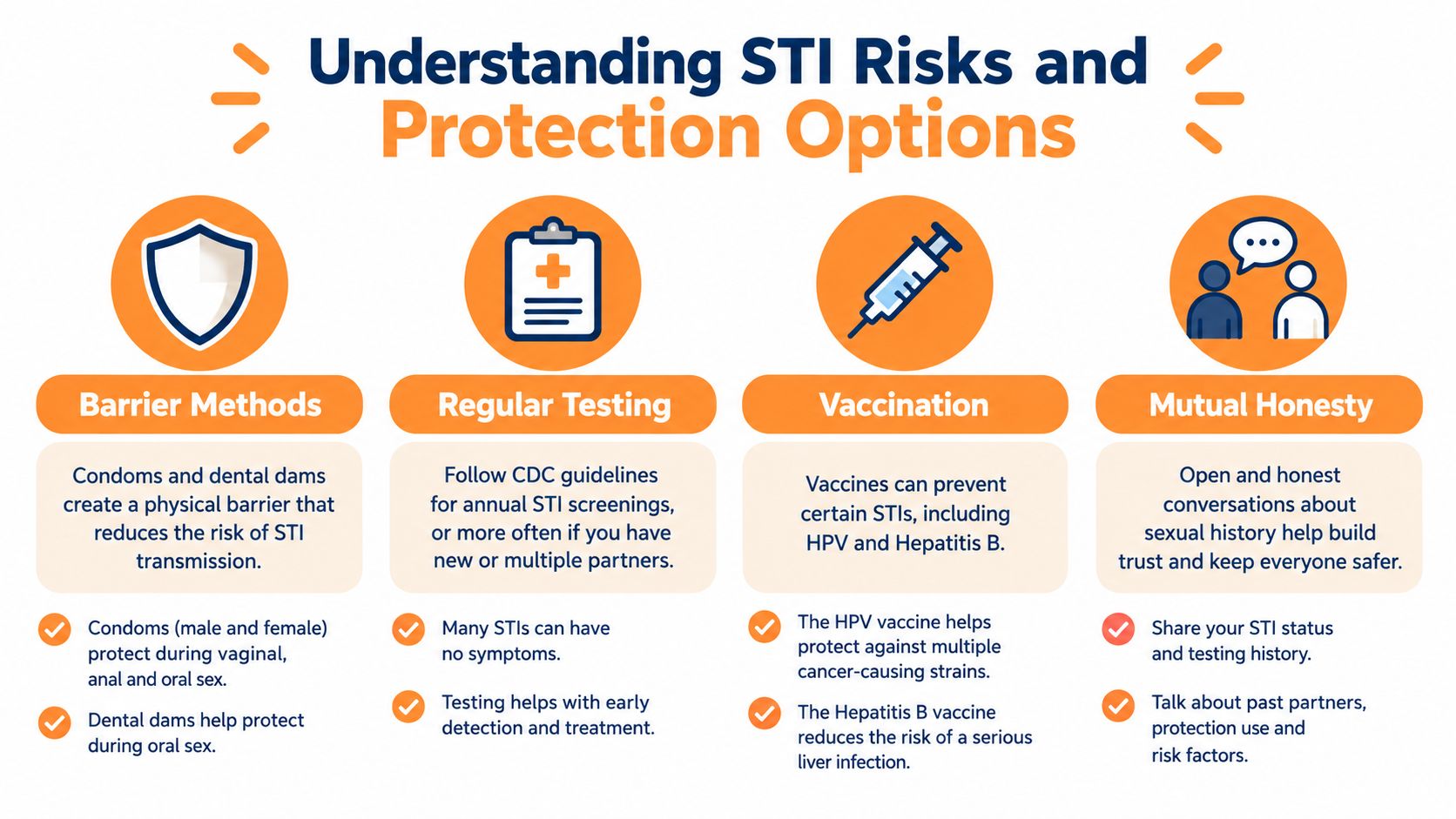
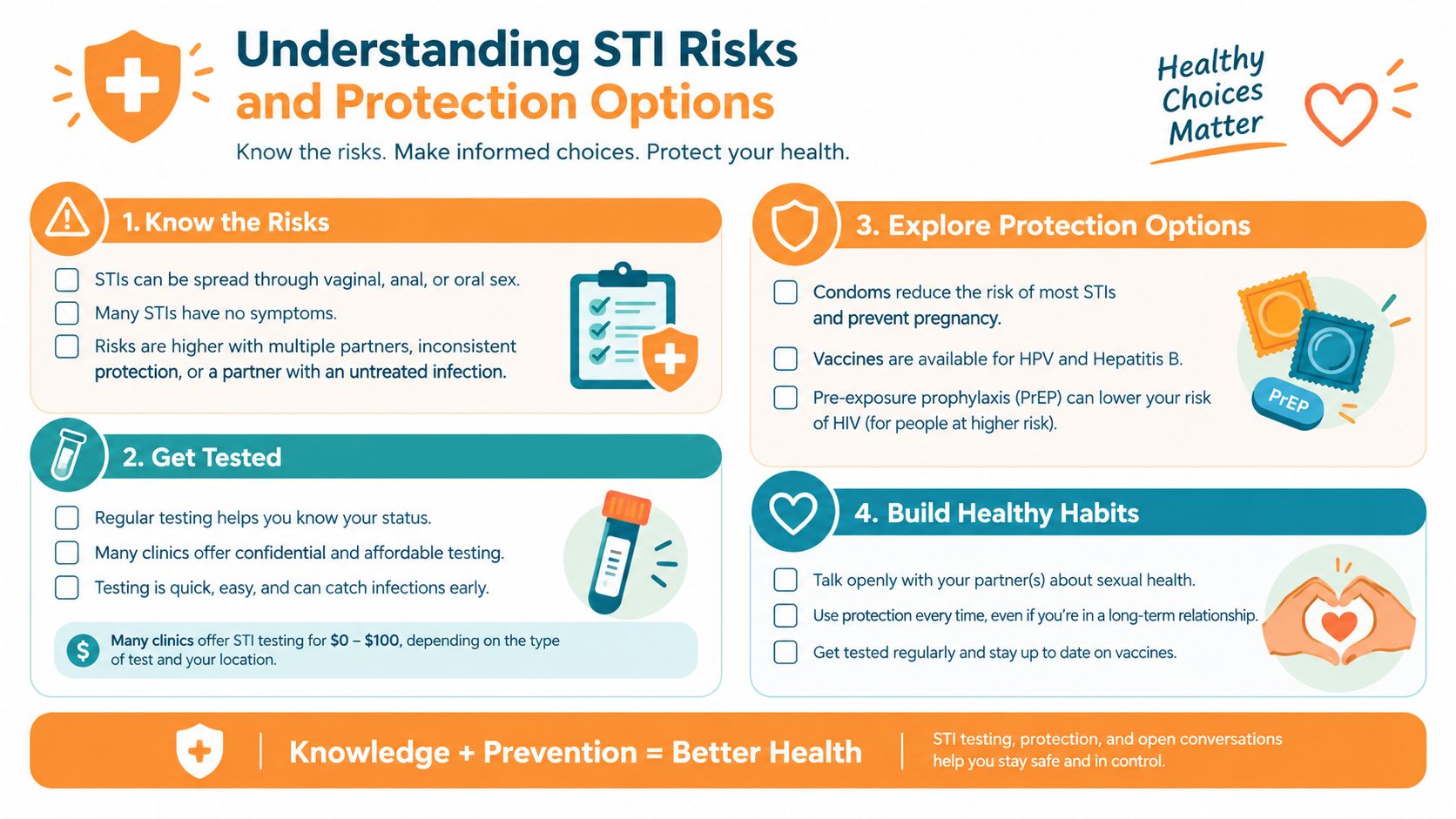
Oral sex can transmit gonorrhea, chlamydia, syphilis, herpes, HPV, and other infections to the mouth, throat, genitals, or rectum. The exact risk depends on the infection, the presence of sores or lesions, oral health, ejaculation, barrier use, and whether a partner has an infection. There isn't a reliable universal per-act transmission percentage, so a single “success rate” for safer oral sex would be misleading.
National U.S. data show that oral sex is a mainstream part of sexual experience. In the CDC's National Survey of Family Growth, 82.7% of men and 82.2% of women aged 15 to 49 reported ever having oral sex with an opposite-sex partner during 2017 to 2019 (CDC National Survey of Family Growth key statistics). Those figures describe lifetime experience, not regular frequency, a specific role, or whether someone gave or received oral sex.
Match the protection to the situation
A new condom for each session is a practical option for fellatio. Latex is commonly used, while polyurethane can be an alternative for someone with a latex allergy. Lubricant should be condom-compatible, because unsuitable products can weaken the material and increase the chance of breakage.
Dental dams can create a barrier for oral contact with a vulva or anus. A condom can also be cut lengthwise to create a flat barrier. The barrier doesn't eliminate every concern, and some people find it changes sensation, but it can reduce direct contact with infectious fluids and skin.
Avoid oral sex when either person has mouth sores, bleeding or inflamed gums, genital lesions, or an active STI. Brushing or flossing immediately beforehand can irritate the gums and create small abrasions, so timing those activities earlier is a sensible precaution. Recent dental work may also be a reason to wait and ask a dental professional for individualized advice.
HIV transmission through oral sex is described by public-health guidance as having little to no risk compared with other sexual routes, but that nuance shouldn't obscure the infections that can transmit more readily through oral contact. Testing decisions should account for exposure, symptoms, partner status, and clinical guidance. A throat infection can exist without obvious symptoms, so people should tell a clinician about oral exposure when discussing STI testing.
Questions about semen and swallowing also deserve a nonjudgmental answer. Information about whether swallowing sperm is healthy shouldn't replace discussion of STI status, symptoms, allergies, or personal preference. No one should swallow semen to prove trust, satisfy a script, or avoid disappointing a partner.
Physical Comfort and Hygiene Best Practices
Comfort starts with positioning, not endurance. The person giving head should choose an angle that keeps the neck neutral, allows easy breathing, and makes it simple to pause. A pillow under the receiving partner's hips or a side-by-side position may reduce strain, while changing positions before discomfort becomes pain prevents the encounter from turning into a test of stamina.
Jaw fatigue deserves attention early. Short pauses, relaxed facial muscles, and using the hands as part of the rhythm can reduce repetitive strain. If gagging is likely, the person giving head can control depth and pace rather than allowing a partner's movement to determine both. A clear hand signal or a hand placed against the partner's hip can communicate “slow down” without interrupting every moment verbally.
Pain isn't a technique problem to push through. It's information that the position, pace, depth, or activity needs to change.
Saliva, taste, and smell can create awkwardness when partners treat them as personal criticism. Water nearby helps with dryness, and a shower can support comfort without turning hygiene into a demand for perfection. Strongly fragranced products may irritate sensitive skin, so mild, unscented options are often more practical than aggressive scrubbing. Advice on showering before sex can help couples frame preparation as shared care rather than an inspection.

A sore throat, mouth ulcer, bleeding gums, or feeling unwell is a valid reason to stop. Period blood, natural fluids, and ordinary body odors don't require panic or embarrassment, but partners should discuss what each person is comfortable with. Towels, water, and a calm sense of humor solve more practical problems than shame ever does.
Creating Mutual Satisfaction Through Shared Focus
Mutual satisfaction doesn't mean both people experience the same thing or follow a fixed sequence. It means each person's comfort, desire, and response count. The person giving head isn't a service provider, and the person receiving it isn't a silent judge. Both partners are shaping the encounter.
One useful way to read the moment is to combine body language with direct questions. Relaxed breathing, responsive movement, and active participation may suggest comfort, but they don't replace verbal consent. Tension, pulling away, freezing, pushing a head down, or going quiet can mean many things, so a gentle check-in is safer than guessing.
Share responsibility for the experience
The receiving partner can help by:
- Supporting position: Avoid forcing movement or holding the head in place. Let the person giving head control depth, pace, and pauses.
- Offering useful feedback: “That pace feels good” is more helpful than vague criticism or constant direction.
- Respecting limits immediately: A pause, change, or no should receive a calm response without bargaining.
- Checking in afterward: Ask whether the position was comfortable and whether anything should change next time.
The person giving head can also stay connected to personal sensations. Is the jaw tightening? Is breathing easy? Is the activity still wanted? Pleasure may come from closeness, giving, receiving touch elsewhere, feeling desired, or sharing a trusted moment. It doesn't have to match a narrow script.
Handle differences without turning them into conflict
Partners often want different things. One person may want more oral sex, while the other prefers it occasionally. One may enjoy swallowing, while the other prefers ejaculation outside the mouth. One may want extended attention, while the other becomes uncomfortable after a short time.
A workable response names the difference without assigning blame: “That's not something wanted tonight, but this alternative is appealing.” Couples can also agree on signals, positions, barriers, and aftercare in advance. These agreements are flexible, not permanent contracts.
Semen-related expectations should stay grounded in reality. The World Health Organization places the lower fifth-percentile reference limit for semen volume at 1.4 mL, with a 95% confidence interval of 1.3 to 1.5 mL, but this is a statistical reference point, not a diagnosis or a measure of sexual satisfaction (WHO semen-analysis reference data). Semen volume alone doesn't determine fertility, sperm health, intensity, or whether a partner enjoys the experience.
Zinc is present in seminal plasma and plays a role in normal sperm-related processes, but research cautions that zinc evidence doesn't prove that a supplement treats infertility or guarantees a change in semen volume (review of zinc and male reproductive function). A daily supplement such as SEMEX is formulated to support semen volume and taste through ingredients including zinc, L-arginine, sunflower lecithin, and bromelain. It belongs alongside, not instead of, communication, STI precautions, hygiene, and respect for the person giving head.
The strongest intimate relationships keep negotiating. People change, bodies change, and preferences change. When both partners can say yes, no, slower, different, or not tonight without fear, oral sex becomes less about performance and more about shared attention.
SEMEX offers a daily male wellness supplement formulated to support semen volume and taste, with a vegan, non-GMO formula made in the USA and third-party testing. Visit SEMEX to review the ingredients and decide whether it fits the couple's broader approach to comfort, communication, and shared bedroom satisfaction.
These statements have not been evaluated by the Food and Drug Administration. This product is not intended to diagnose, treat, cure, or prevent any disease.