

Tongkat Ali and Ashwagandha Together Guide
A man may start researching tongkat ali and ashwagandha together after noticing the same frustrating pattern: energy feels inconsistent, stress stays high, sleep isn't restorative, and sexual vitality doesn't feel as reliable as it once did. The temptation is to add both herbs to a routine and assume that more ingredients must mean a stronger testosterone effect.
A better way to understand the pairing is as a complementary two-pathway stack. Ashwagandha is generally associated with stress regulation and sleep support, while tongkat ali is more closely associated with testosterone-related and libido-related outcomes. That makes the combination biologically interesting, but it doesn't make the combination clinically proven. The two herbs have usually been studied separately, and no controlled human trial directly tests the stack as a combined formula (Aminoscope's comparison of the available evidence).
Table of Contents
- Why Men Stack Tongkat Ali and Ashwagandha
- The Complementary Pathways of Stress and Vitality
- What the Clinical Research Shows
- Dosing Strategies and Staggered Introduction
- Safety Profiles and Theoretical Interactions
- Integrating Adaptogens into a Broader Wellness Routine
- Setting Realistic Timelines and Regulatory Facts
Why Men Stack Tongkat Ali and Ashwagandha
A typical supplement search begins with a practical problem rather than a desire to manipulate a lab value. A man may be training consistently but recovering poorly, working under sustained pressure, or feeling less interested in sex than usual. He may see tongkat ali marketed for testosterone support and ashwagandha discussed for stress and sleep, then wonder whether taking both can address the entire picture.
That question makes sense, because stress and vitality are connected without being identical. A demanding schedule can affect sleep, mood, training consistency, and sexual interest. A supplement that supports one part of that picture doesn't automatically solve the others.
One stack, two different targets
Tongkat ali, also known as Eurycoma longifolia, is the more androgen-focused ingredient in this pairing. Human studies have measured testosterone and stress markers, and separate research has examined erectile function in men with androgen deficiency of aging males (the clinical review of tongkat ali and ashwagandha). That doesn't mean every user will experience a noticeable hormonal change, but it explains why tongkat ali appears in men's vitality formulas.
Ashwagandha, or Withania somnifera, is more commonly positioned around stress resilience, cortisol modulation, sleep, and recovery. Its possible relevance to testosterone is often indirect. If stress and poor sleep are undermining normal recovery, supporting those areas may help maintain a healthier foundation for vitality.
The pairing therefore isn't necessarily a redundant attempt to add two testosterone boosters. It is better viewed as a proposed division of labor. Tongkat ali may support androgen signaling and libido-related endpoints, while ashwagandha may help address stress-related pressure on recovery and hormonal balance.
Practical rule: A two-herb stack can be conceptually complementary without having proven synergy.
The realistic foundational goals are modest and functional. Men may use the combination to support normal energy, stress management, recovery, mood, and sexual vitality. It shouldn't be treated as a replacement for medical evaluation when symptoms are persistent, severe, or suggestive of an underlying hormonal problem.
The Complementary Pathways of Stress and Vitality
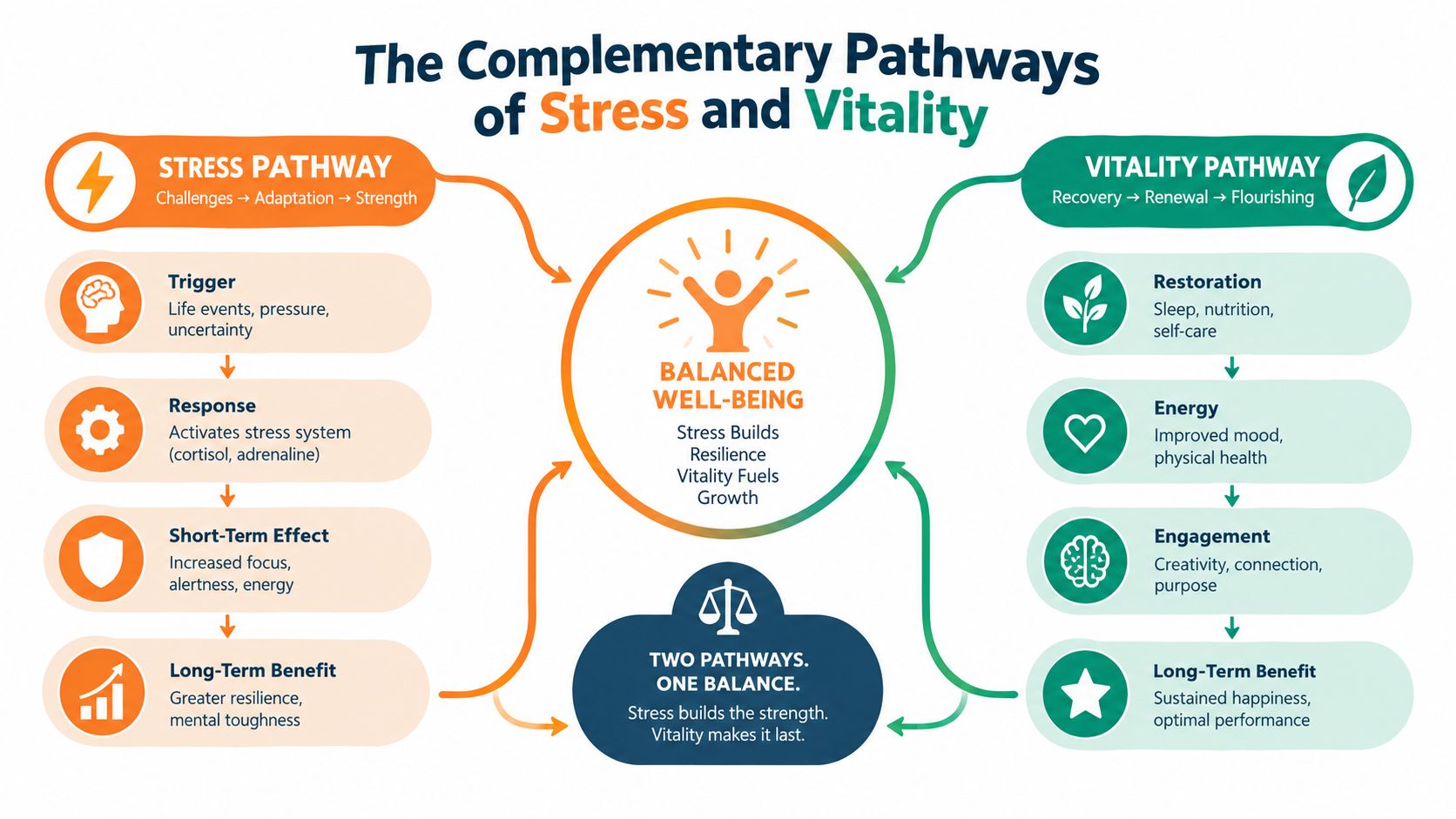
The most useful model separates stress regulation from androgen signaling. These systems influence one another, but they aren't the same biological pathway.
Ashwagandha is commonly discussed through the hypothalamic-pituitary-adrenal axis, or HPA axis. This system coordinates the body's response to stress and includes signaling that influences cortisol. Human ashwagandha research commonly measures stress, cortisol, fatigue, and sleep outcomes, which is why the herb is often selected for men whose vitality concerns appear alongside mental strain or poor rest (the evidence review of tongkat ali and ashwagandha).
Tongkat ali is more closely associated with androgen-related signaling. The human literature includes testosterone measurements and libido or erectile-function outcomes, especially in studies involving men with lower baseline status or androgen deficiency. Its proposed role is therefore closer to the vitality side of the equation than to a purely calming or sleep-oriented intervention.
Removing the brakes and pressing the accelerator
An analogy can make the distinction easier. Stress support is like releasing a brake that keeps recovery from moving smoothly. Vitality support is more like pressing the accelerator, encouraging energy, drive, and androgen-related functions. Releasing the brake doesn't guarantee a faster vehicle, and pressing the accelerator doesn't fix a brake problem.
That analogy also explains why the combination is attractive. A man may have normal androgen signaling but feel depleted because sleep and stress are poorly managed. Another man may have adequate sleep but be interested in support for libido-related outcomes. A third may have both concerns, although a supplement stack can't identify the cause on its own.
The evidence supports a mechanistic theory, not a proven combined result. Tongkat ali has shown testosterone and cortisol signals in some human studies, while ashwagandha has more consistent positioning around stress and sleep support. Because the herbs operate through different proposed routes, formulas often present them as complementary rather than interchangeable.
Extract quality changes the equation
The label matters because raw milligram amounts don't tell the full story. Extracts can differ in plant part, extraction method, standardization, and active compound content. Two products with the same listed amount may not deliver the same botanical profile.
That variability makes broad claims about “the stack” difficult. The observed effect depends on the specific extract, the population taking it, the dose, the duration, and the user's baseline health. Readers comparing adaptogenic supplements can review this guide to adaptogenic supplements, but the same principle applies across products: mechanistic plausibility isn't the same as a standardized clinical outcome.
What the Clinical Research Shows
The evidence is easier to interpret when each herb is assessed separately. Human trials have not established that tongkat ali and ashwagandha together outperform either ingredient alone. The review of tongkat ali and ashwagandha research also describes the available studies as largely separate, so the proposed combination remains a complementary two-pathway strategy rather than a proven combined treatment.
Tongkat ali findings
One randomized, placebo-controlled study involved 63 moderately stressed adults who used 200 mg per day of tongkat ali for 4 weeks. Compared with placebo, researchers reported a 16% reduction in cortisol and a 37% increase in testosterone. Those results help explain tongkat ali's connection with stress-related vitality, but they apply to one population, duration, and preparation.
A separate randomized trial followed 45 men with androgen deficiency of aging males for 6 months. Participants used 200 mg of Eurycoma longifolia, and the trial reported significant improvements in erectile function alongside higher total testosterone. Men with normal baseline testosterone may not experience the same response, so the finding should not be generalized broadly.
Ashwagandha findings
Ashwagandha research commonly uses 600 mg per day of standardized root extract for approximately 60 days to 8 weeks. Outcomes generally focus on stress, cortisol, fatigue, and sleep. The herb therefore fits the HPA-axis side of the stack more closely, while tongkat ali is more often discussed in relation to androgen signaling and vitality. A comparison of the two evidence profiles is available in Aminoscope's evidence comparison.
That distinction helps prevent a common misunderstanding. The herbs may address different contributors to how a man feels, but separate findings do not prove an additive or synergistic effect when both are taken together.
Clinical Evidence Snapshot
| Ingredient | Typical Study Dose | Study Duration | Primary Outcomes Observed |
|---|---|---|---|
| Tongkat ali | Around 200 mg/day | 4 weeks to 6 months | Testosterone-related markers, cortisol, erectile function |
| Ashwagandha | Commonly 600 mg/day of standardized root extract | About 60 days to 8 weeks | Stress, cortisol, fatigue, sleep-related measures |
The evidence supports two recognizable profiles, not a standardized stack. Extract type, participant health, baseline status, and study design can all affect the outcome. A combined formula still lacks a shared dose and a predictable result.
Dosing Strategies and Staggered Introduction
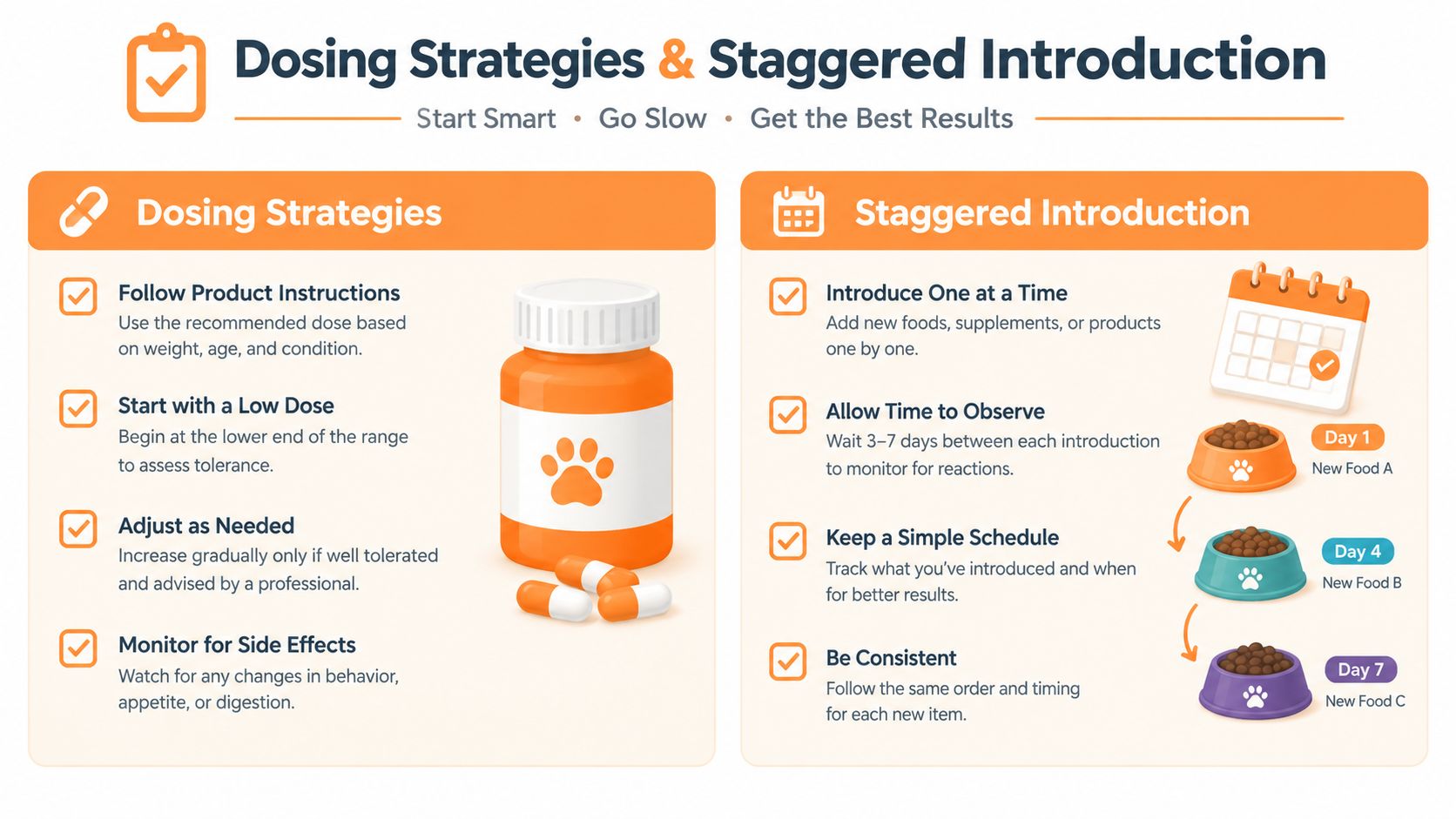
The safest practical approach is to treat the combination as two separate experiments rather than starting both on the same day. Product strength varies, and the combined effect isn't standardized across formulas. Starting one ingredient at a time makes it easier to identify whether a change in sleep, anxiety, alertness, mood, or energy is connected to a specific herb.
A measured introduction
Research commonly places tongkat ali around 200 mg per day for periods ranging from 4 weeks to 6 months, while ashwagandha research commonly uses 600 mg per day of a standardized root extract for roughly 60 days to 8 weeks (Aminoscope's summary of study dosing). Those figures describe study protocols, not individualized medical prescriptions.
A cautious sequence can look like this:
- Choose one ingredient first. Follow the product label and select a clearly identified extract. Avoid beginning with a large multi-ingredient blend, because several active ingredients make attribution difficult.
- Track a stable baseline. Record resting heart rate, sleep quality, morning energy, anxiety, mood, and training recovery before adding the second herb.
- Monitor for 1 to 2 weeks. Safety references recommend watching these signals during the initial period. If sleep worsens or anxiety and stimulation become uncomfortable, continuing automatically isn't a sound strategy.
- Add the second ingredient only after the first is understood. This preserves a clearer cause-and-effect picture and reduces the chance of overlooking an unwanted response.
Timing should follow response
Some men may find tongkat ali more suitable earlier in the day if it feels alerting, while ashwagandha may fit better later if it feels calming. That isn't a universal rule, so the response should guide timing rather than marketing language.
The key is consistency. A man who changes the dose, timing, caffeine intake, sleep schedule, and training plan at once won't know what caused a perceived improvement or side effect. Practical details about using tongkat ali can be reviewed in this tongkat ali timing guide, but the central principle remains simple: start conservatively, change one variable, and keep records.
Safety Profiles and Theoretical Interactions
“Natural” doesn't mean risk-free. Tongkat ali and ashwagandha have more safety information when considered separately than when taken together, and the combined evidence remains limited.
No specific negative interaction between the two herbs has been formally documented. That absence shouldn't be mistaken for proof of complete safety, because short studies and incomplete product standardization can miss additive effects.
What could overlap
Theoretical concerns include changes in sleep, blood pressure, blood sugar, mood, and stimulation. Tongkat ali may feel activating for some users, while ashwagandha may affect alertness or calmness differently. When two botanicals influence stress and endocrine signaling in related systems, the combined response can vary from person to person.
Tongkat ali's available human studies summarized in an academic review reported no adverse side effects in the studies discussed, while rodent research reported an acute LD50 of 2,000 mg/kg body weight and a 28-day no-observed-adverse-effect level above 1,000 mg/kg body weight (the tongkat ali academic review on PubMed Central). Rodent toxicology findings don't establish a human dose, but they do show why safety discussions need more than the word “herbal.”
Safety checkpoint: A person who takes prescription medication should ask a clinician or pharmacist about the full combination, not just each ingredient in isolation.
Extra caution is appropriate with hormone-active medications, sedatives, antihypertensives, and antidiabetics. The concern is theoretical, but the possible overlap with endocrine signaling, alertness, blood pressure, or blood sugar makes professional review worthwhile.
When to pause
A new supplement should be stopped and reviewed if a user notices persistent insomnia, unusual agitation, significant mood changes, marked changes in resting heart rate, or other concerning symptoms. Anyone with a diagnosed condition involving hormones, blood pressure, blood sugar, or liver function should seek individualized advice before experimenting.
Men comparing multiple supplements can also review this guide to supplement interactions. The practical lesson is that monitoring is part of responsible use, not an optional extra.
Integrating Adaptogens into a Broader Wellness Routine
Tongkat ali and ashwagandha make more sense when they support a broader routine rather than carry the entire burden of a man's goals. Energy, sexual confidence, reproductive wellness, and recovery depend on sleep, food quality, physical activity, stress management, and consistent habits. A capsule can't compensate for a routine that leaves those foundations neglected.
A broader men's wellness formula may include ingredients selected for different functions. Zinc plays a role in normal reproductive function. L-arginine is associated with nitric oxide production and blood flow. Maca root is commonly used in vitality-focused formulations. These ingredients aren't interchangeable with tongkat ali or ashwagandha, and each should be assessed according to its own evidence and purpose.

How to evaluate a multi-ingredient product
A formula that contains both herbs may be convenient, but convenience can hide important details. The label should identify the plant species, plant part, extract amount, and any available standardization. It should also make clear whether the listed amount applies to the extract itself or to the original raw material equivalent.
Men should also look beyond the front label:
- Ingredient transparency: A proprietary blend can make it difficult to determine how much of each ingredient is present.
- Testing information: Third-party testing for microbials, heavy metals, and adulterants provides useful quality information.
- Purpose of the formula: A product designed for general vitality may use different ingredients from one focused on semen volume or taste.
- Personal compatibility: A convenient blend is still a poor choice if one ingredient disrupts sleep or interacts with medication.
SEMEX is one example of a men's daily supplement that combines zinc, L-arginine, sunflower lecithin, bromelain, maca root, Panax ginseng, ashwagandha, tongkat ali, saw palmetto, and horny goat weed. Its stated focus includes semen volume and taste, alongside broader men's wellness support, so it represents a multi-ingredient approach rather than a standalone tongkat ali and ashwagandha product.
The most sensible routine connects supplement selection to a specific goal. A man focused on stress may prioritize ashwagandha and sleep habits. Someone evaluating androgen-related vitality may examine tongkat ali and discuss persistent symptoms with a clinician. Someone interested in semen volume or taste may assess a formula built around those stated functions, without assuming that an adaptogen stack alone determines the result.
Setting Realistic Timelines and Regulatory Facts
Adaptogenic routines shouldn't be judged by a single afternoon. The clinical protocols summarized for these herbs generally run for 4 weeks to 6 months for tongkat ali and approximately 60 days to 8 weeks for ashwagandha, so gradual evaluation is more realistic than expecting an immediate transformation (Aminoscope's clinical comparison).
A practical observation window can extend from 30 to 60 days of consistent use, provided the user tolerates the ingredients and follows the label. That doesn't guarantee a benefit. It gives a routine enough time to be assessed against the timelines used in the available research.
Quality and claims matter
Third-party testing can help screen for heavy metals, microbes, and adulterants, although testing doesn't prove that a product will produce a particular personal outcome. Extract standardization remains important because active compound content can vary substantially between products.
Regulatory language also matters. The FDA guidance on dietary supplement structure/function claims states that the required disclaimer must be prominently displayed and in boldface when used with applicable structure/function claims. FDA guidance also distinguishes structure/function language from drug claims, meaning supplement communication can describe support for normal function but cannot claim to diagnose, mitigate, treat, cure, or prevent a disease or class of diseases (FDA guidance on structure/function and related claims).
The central conclusion is straightforward. Tongkat ali and ashwagandha may be complementary, but the combined outcome remains unproven. A staggered introduction, careful monitoring, transparent product labeling, and clinician input for medication users offer a more responsible path than chasing aggressive promises.
These statements have not been evaluated by the Food and Drug Administration. This product is not intended to diagnose, treat, cure, or prevent any disease.
SEMEX offers a daily men's supplement that includes both ashwagandha and tongkat ali alongside zinc, L-arginine, sunflower lecithin, bromelain, and other wellness ingredients aimed at supporting semen volume, taste, and overall vitality. Men interested in a transparent, third-party-tested formula can visit SEMEX to review the ingredients and product details.