

6 Sex on a Car Safety Tips for Private Encounters
A couple may pull into a quiet-looking spot, focus on the excitement, and overlook the risks around sex on a car. A vehicle can move unexpectedly, windows can expose private activity, phones can record without permission, and cramped positioning can cause pain or strain. Even a seemingly private location may create legal concerns if people passing by can see inside.
Any intimate activity should be mutual, private, physically manageable, and consistent with local law. The following six checks give partners a practical order to follow before, during, and after the experience. The guidance stays non-explicit and focuses on consent, privacy, comfort, hygiene, and preventable safety problems.
Table of Contents
- 1. Choose Private Locations Away from Public View
- 2. Ensure Vehicle Stability and Safety Features
- 3. Communicate Boundaries and Use Safe Words
- 4. Protect Against Unwanted Recording or Photography
- 5. Plan for Physical Comfort and Space Considerations
- 6. Maintain Hygiene and Health Precautions
- 6-Point Car Sex Safety Comparison
- Use the Six-Point Check Before You Decide
1. Choose Private Locations Away from Public View
Privacy comes before convenience. A location that feels quiet at one moment may become exposed when a pedestrian, resident, security guard, cyclist, or passing driver arrives. Partners should choose a place with natural barriers, limited foot traffic, and minimal visibility from roads, homes, trails, and nearby businesses.
A private driveway or parking area on property controlled by the couple offers more control than a busy public lot. Remote parking areas in forests, secluded overlooks, and low-traffic scenic areas may also reduce exposure, but they still require a check of local rules and the surrounding environment. A location doesn't become private merely because the vehicle doors are locked.
Healthline's guidance on privacy and legal concerns around car sex explains that legal exposure often depends on whether intimate activity can be seen from a public place. A driveway may still create a problem if passersby can see through the windows, and vehicle ownership doesn't automatically remove public-conduct concerns.
Scout before the encounter
Partners should visit an unfamiliar location during daylight. That makes it easier to identify walking routes, nearby homes, lighting, cameras, unstable ground, signs, and possible exits. Activities should take place during quieter periods, but darkness shouldn't be treated as a substitute for privacy or personal safety.
- Use controlled property: Choose the couple's own vehicle or property whenever possible.
- Check the surroundings: Look for roads, trails, residences, businesses, and sightlines into the cabin.
- Review local rules: Confirm how the relevant jurisdiction handles public conduct and exposure.
- Improve visibility control: Privacy screens or suitable window tint may reduce visibility, but they don't override local law.

Privacy rule: If an ordinary passerby could reasonably see inside, the location isn't private enough.
2. Ensure Vehicle Stability and Safety Features
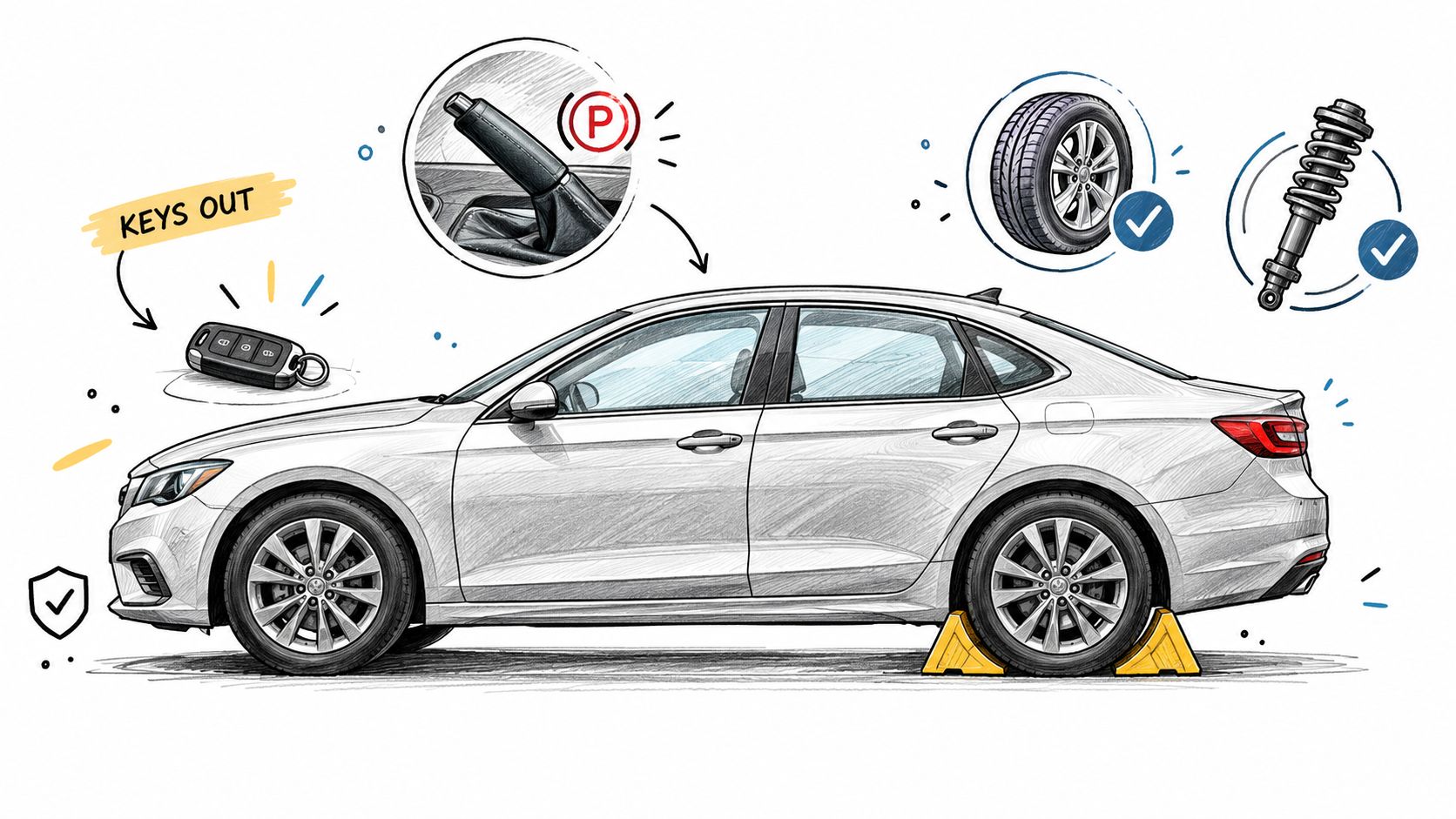
A parked vehicle must stay parked. Before any intimate activity begins, the driver should position the car on flat, solid ground, engage the parking brake, and confirm that the vehicle won't roll, slide, or shift. Slopes, loose gravel, mud, wet grass, and uneven shoulders create avoidable problems, especially when weight moves inside the cabin.
A stable surface matters more than a scenic view. A well-maintained gravel or dirt area can work if the tires have secure traction and the vehicle sits level. A driveway with a reliable parking surface is preferable to an isolated incline. Partners should also leave enough room around the car for doors to open and for an orderly exit.
Remove movement and access risks
The vehicle should be checked before the couple settles inside. The parking brake needs to hold firmly, tires should appear properly inflated and undamaged, and the suspension should not show obvious signs of failure. The keys should stay out of the ignition so nobody can accidentally start the engine or shift the vehicle.
Door locks deserve attention too. They should work properly without trapping either person inside, and the couple should know how to open every door quickly. The vehicle shouldn't be placed where another car can block the only exit.
- Test the parking brake: Confirm that it holds the vehicle before activity starts.
- Choose firm ground: Avoid steep slopes, unstable shoulders, and surfaces with poor traction.
- Inspect the vehicle: Check tires and general mechanical condition beforehand.
- Keep an exit available: Leave space around the vehicle and make sure every door functions.
- Separate keys from movement controls: Remove keys from the ignition and avoid accidental contact with the gear selector.
For couples comparing interior configurations, stability ball sex offers a separate discussion of positioning and support considerations. The same basic principle applies inside a car: any setup that makes balance, movement, or a quick exit difficult should be rejected.
3. Communicate Boundaries and Use Safe Words
Consent needs to remain clear in a cramped environment. Partners should discuss comfort, boundaries, and stop signals before entering the vehicle, while both people are calm and have room to speak freely. A quick conversation can cover which forms of contact are welcome, what is off-limits, and what should happen if either person becomes uncomfortable.
A simple word such as “red” or “stop” can serve as an immediate signal. If talking may become difficult, partners can agree on a hand signal instead. The signal must have one meaning: activity stops immediately, without debate, pressure, or a demand for explanation.
Make consent easy to change
Consent isn't a one-time permission. Either partner can pause, change a boundary, or end the encounter at any point. A partner who becomes quiet, tense, frightened, or physically uncomfortable should receive a direct check-in rather than pressure to continue.
Physical limitations and concerns deserve discussion before the vehicle becomes part of the setting. Limited space can make certain movements uncomfortable, and a person may need to protect an injury, manage pain, or avoid pressure on a sensitive area. Partners should agree that discomfort is enough reason to stop.
- Talk outside the vehicle: Discuss preferences and limits before the setting becomes distracting.
- Choose a clear signal: Use an easy-to-say word or an unmistakable hand signal.
- Check in during the encounter: Short questions can confirm that both partners remain comfortable.
- Stop immediately: A safe word or signal ends the activity without negotiation.
- Debrief afterward: Partners can discuss what felt comfortable and what should change next time.
A discussion of dirty text sex can also help partners communicate desires before meeting in person. The same communication standard applies here: excitement never replaces clear, ongoing agreement.
4. Protect Against Unwanted Recording or Photography
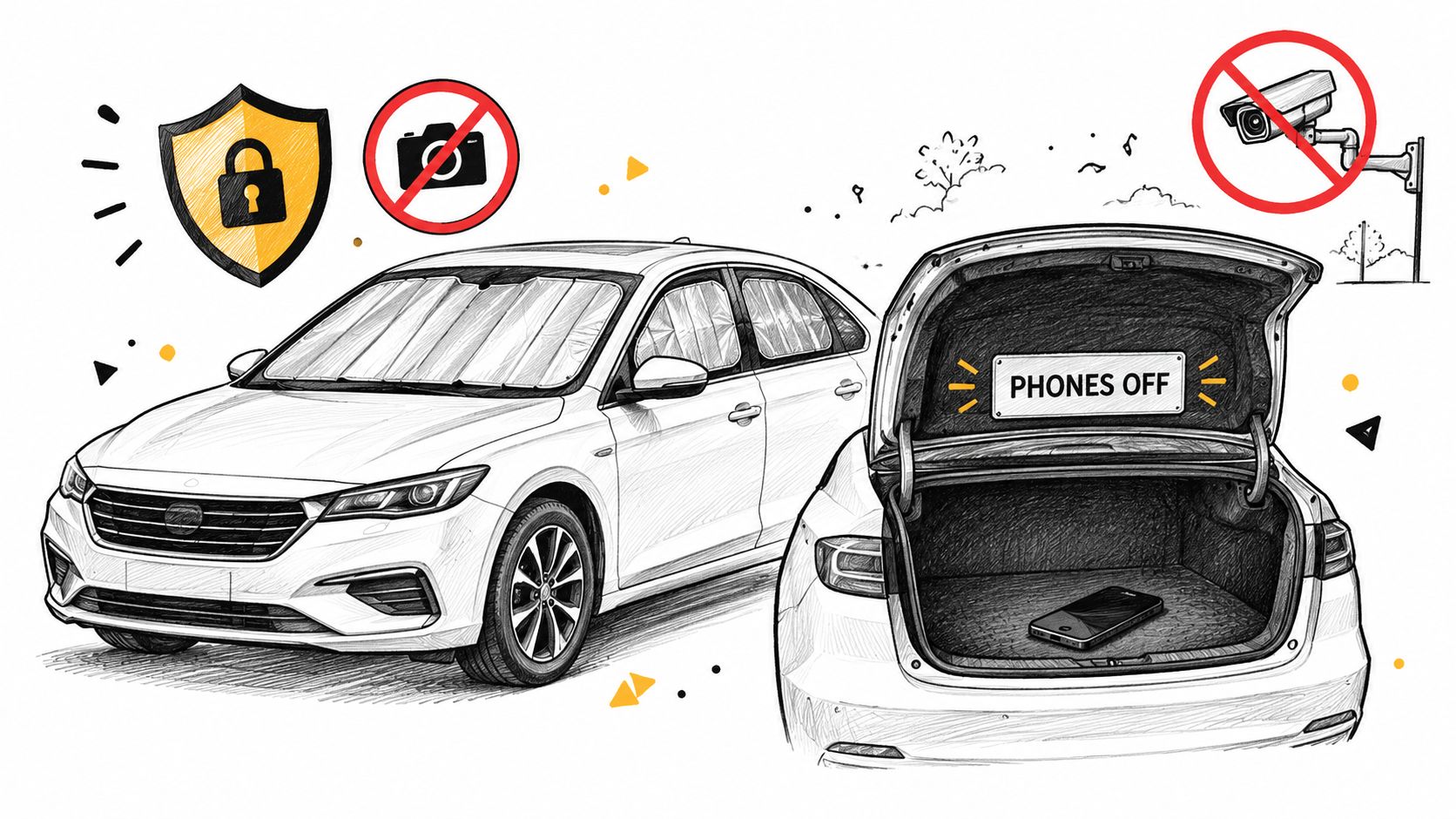
A private encounter can become a lasting privacy problem if a phone, camera, or nearby security system captures it. Partners should decide in advance whether any device will be present. For the safest arrangement, phones can be placed in the trunk or another location outside the cabin, with recording features disabled before activity begins.
Both people need explicit agreement before any photograph, video, or audio recording. Consent to one type of recording doesn't automatically cover another, and consent to record doesn't permit sharing. A partner who changes their mind should be able to end recording immediately and request deletion.
Check the location for surveillance
Retail areas, apartment entrances, public parking facilities, and commercial lots may have visible or concealed cameras. Partners should inspect the surroundings during the daylight scouting visit and avoid locations near businesses or properties with security systems when privacy can't be confirmed.
Window coverings can reduce casual visibility. Reflective sunshades and suitable interior screens may help, but they shouldn't obstruct the driver's view while the vehicle is moving. The car should remain stationary, and any covering should be used only when it doesn't create a new safety problem.
- Remove personal devices: Put phones in the trunk or disable their cameras.
- Inspect nearby equipment: Look for security cameras, building entrances, and illuminated lots.
- Use trusted property: A personal vehicle and controlled location reduce uncertainty.
- Follow discomfort signals: If a place feels watched or exposed, partners should leave.
- Set a recording rule: No recording or sharing should occur without clear permission from both people.
5. Plan for Physical Comfort and Space Considerations
Car interiors limit movement, support, and legroom. A setup that seems manageable while sitting still may become painful once partners shift position. The couple should test the available space first, remove unnecessary items, and avoid forcing the body into an awkward angle only because the vehicle has limited room.
Vehicles with front bench seats, flexible rear seating, or larger cabins may offer more options than compact cars. SUVs and vans can provide additional interior space, but size alone doesn't guarantee comfort. Seat edges, hard consoles, loose objects, and unstable surfaces can still create pressure points or cause falls.
Treat comfort as a safety requirement
Clean towels, blankets, and cushions can soften hard surfaces and protect clothing and upholstery. Seat covers also make cleanup easier, while climate control helps prevent the cabin from becoming too hot or cold. Partners should take breaks whenever muscles cramp, joints feel strained, or a position becomes difficult to maintain.
No one should hold an uncomfortable position to avoid interrupting the encounter. A pause gives both partners time to adjust the seats, change the arrangement, drink water, or decide to stop. The vehicle should contain no loose objects that could cause injury if someone shifts suddenly.
- Test the layout first: Adjust seats and remove bags, tools, and other hard objects.
- Add clean padding: Use dedicated towels, blankets, or cushions for support and hygiene.
- Protect balance: Avoid positions that require bracing against doors, windows, or unstable surfaces.
- Control the temperature: Use ventilation or climate control to maintain a tolerable cabin environment.
- Stop at the first warning sign: Pain, numbness, cramping, dizziness, or restricted breathing requires a break.
A short trial while fully clothed can reveal whether the back seats, front seats, or cargo area provide enough room. If the layout requires force, bending, or balancing, the couple should choose a different setting instead of trying to push through.
6. Maintain Hygiene and Health Precautions
A vehicle can collect dust, sweat, food residue, and other contaminants, so basic preparation protects comfort. Partners should clean the relevant surfaces, use fresh towels or seat covers, and carry a small hygiene kit containing wet wipes, hand sanitizer, tissues, and disposal bags. Any cleanup supplies should be stored where both people can reach them.
Barrier protection should be available before the encounter begins. Condoms and compatible water-based lubricants help partners follow their agreed protection plan without leaving the vehicle to search for supplies. A couple should postpone intimate activity if either person feels ill, has an active infection, or can't maintain the agreed hygiene and protection standards.
Keep reproductive-support claims precise
Zinc is an essential mineral involved in sperm formation, and a peer-reviewed review links adequate zinc status with processes including spermatogenesis, sperm maturation, motility, capacitation, and normal sperm function. The review also discusses measurable endpoints such as semen quality, sperm membrane stability, and motility, rather than treating zinc as a shortcut for sexual performance. The zinc review supports structure/function wording such as “supports normal male reproductive function.”
That evidence doesn't turn a supplement into a treatment. NIH reports that a large study of zinc and folic-acid supplements marketed for male infertility didn't improve pregnancy rates, sperm counts, or sperm function, so ingredient-level reproductive support shouldn't be presented as proof of fertility treatment. SEMEX can be considered only as a dietary supplement option, not as a drug or treatment.
- Clean before and after: Washing and changing into clean clothing can improve comfort.
- Pack protection: Carry condoms and water-based lubricant before leaving home.
- Use clean materials: Keep dedicated towels or blankets separate from dirty items.
- Avoid cross-contamination: Dispose of used materials and clean touched surfaces.
- Plan post-encounter care: Partners should wash thoroughly and monitor any unusual discomfort.
Guidance on showering before sex reinforces the practical value of basic cleanliness before intimacy. Hygiene can't remove every health risk, but it can prevent avoidable mess, discomfort, and contamination in a confined space.
6-Point Car Sex Safety Comparison
| Item | Implementation complexity | Resource requirements | Expected outcomes | Ideal use cases | Key advantages |
|---|---|---|---|---|---|
| Choose Private Locations Away from Public View | Moderate planning/scouting | Time, location knowledge, access to private property or vehicle | Reduced visibility and legal risk; greater privacy | Remote spots, private driveways, off-peak hours | Strong privacy, lower chance of exposure or surveillance |
| Ensure Vehicle Stability and Safety Features | Low–medium (pre-checks, maintenance) | Basic tools, functioning parking brake, level ground | Minimized movement risk; safer environment | Flat parking areas, driveways, maintained lots | Prevents accidents, allows focus on safety and comfort |
| Communicate Boundaries and Use Safe Words | Low (conversation and agreement) | Time, mutual willingness, agreed signals or words | Clear consent, quick ability to pause or stop | New partners, trying new activities, high-anxiety situations | Builds trust, reduces misunderstandings, enhances emotional safety |
| Protect Against Unwanted Recording or Photography | Medium (vigilance and mitigation) | Phone-securement, window covers, scouting for cameras | Lower likelihood of unauthorized recording or sharing | Areas near businesses/cameras, public-adjacent locations | Protects privacy and reputation; reduces blackmail risk |
| Plan for Physical Comfort and Space Considerations | Low–medium (trial and adjustments) | Cushions/blankets, seat configuration, suitable vehicle | Reduced strain, improved positioning and duration | Small-car interiors, long sessions, limited mobility | Enhances comfort, prevents muscle strain and injuries |
| Maintain Hygiene and Health Precautions | Low (preparation and supplies) | Wet wipes, condoms, sanitizer, clean coverings | Reduced infection risk; improved overall health and comfort | Any intimate activity in limited-facility settings | Protects health, prevents infections, supports hygiene |
Use the Six-Point Check Before You Decide
Before partners begin, the location should pass a genuine privacy check. That means limited visibility from public areas, no obvious exposure to nearby homes or roads, and a clear understanding that local law may treat visible activity as a public-conduct issue. A locked vehicle, private driveway, or owned car doesn't automatically remove that concern.
The vehicle should sit securely on level ground with the parking brake engaged, functioning doors, suitable tire condition, and a clear exit. Keys should be out of the ignition, and the vehicle shouldn't be positioned where another car, gate, or terrain feature could prevent departure. A stable car protects both partners from an avoidable mechanical or positioning problem.
Consent should be discussed before entering the cabin. Partners need clear boundaries, a stop word or signal, and an agreement that either person can pause or end the encounter without pressure. Any recording plan must also be explicit, mutual, and limited to what both people approve.
Comfort deserves a practical test. Seats, blankets, cushions, temperature, legroom, and body support should work without forcing an awkward position. Pain, numbness, dizziness, cramping, restricted breathing, or difficulty moving provide sufficient reason to stop.
Hygiene supplies and barrier protection should be ready before activity begins. Clean towels, wipes, sanitizer, condoms, and appropriate lubricant reduce preventable problems, while illness or an active infection is a clear reason to postpone. Either partner can decide not to proceed because of discomfort, exposure risk, unsafe surroundings, or uncertainty. No explanation is required.
These statements have not been evaluated by the Food and Drug Administration. This product is not intended to diagnose, treat, cure, or prevent any disease.
SEMEX offers a daily men's wellness supplement formulated with Zinc, L-Arginine, Sunflower Lecithin, Bromelain, and additional wellness ingredients, so it can fit a broader routine alongside practical privacy, consent, hygiene, and safety planning. Men interested in reviewing the formula and product information can visit SEMEX.