

Semenax Before and After: What Results Are Realistic
A dramatic “before and after” image can look convincing, but it can't show whether a supplement changed sperm production, whether the sample was collected under comparable conditions, or whether the difference came from timing. That matters for people looking up Semenax before and after results and trying to decide what a personal outcome might look like.
Semen volume changes naturally. Abstinence duration, hydration, ejaculation frequency, incomplete collection, illness, and laboratory technique can all affect a sample. A larger-looking ejaculation may therefore reflect timing rather than a meaningful biological change.
The more useful question isn't whether a testimonial looks impressive. It's whether the same person can document a consistent change under comparable conditions, and whether that change concerns volume, sperm concentration, motility, morphology, sexual sensation, or another clearly defined endpoint. Those outcomes aren't interchangeable.
Table of Contents
- Why Before and After Claims Deserve Scrutiny
- What Semen Volume Actually Consists Of
- The Ingredient Research Behind Volume Claims
- L-Arginine, Bromelain, and the Limits of the Evidence
- Realistic Timelines and the Placebo Effect
- How to Track Your Own Results Responsibly
- Safety, Label Reading, and What to Do Next
Why Before and After Claims Deserve Scrutiny
A single dramatic comparison has a basic weakness: it compares two moments without controlling the conditions between them. If the “after” sample followed a longer abstinence interval, better hydration, or a complete collection, the visible difference can't automatically be attributed to a supplement.
The picture doesn't identify the outcome
A photo can show appearance, but it can't measure total sperm number, concentration, motility, progressive motility, vitality, or morphology. It also can't establish a change in fertility or sexual satisfaction. Semen volume is only one measurement, and it mostly reflects accessory-gland fluid rather than sperm cells.
The WHO reference values illustrate why personal interpretation requires care. The 2021 edition lists a lower fifth-percentile reference value of 1.4 mL, while the 2010 edition listed 1.5 mL. The updated reference population consisted of men whose partners achieved natural conception within 12 months of unprotected intercourse, so these figures are population-based reference points, not personal targets or guarantees. The change is documented in the peer-reviewed analysis of the WHO 2021 semen standards.
Practical rule: A visible increase is an observation, not a diagnosis and not proof of a supplement effect.
Testimonials also self-select. People who notice a striking change are more likely to post about it than people who notice no difference, and marketing pages may emphasize visual impressions without showing collection conditions or laboratory results. That doesn't make every testimonial false. It means the testimonial answers a different question from a controlled comparison.
What a credible comparison needs
A defensible personal comparison should separate:
- Volume, measured under similar collection conditions.
- Sperm concentration and total sperm number, which describe different aspects of the sample.
- Motility, including progressive movement.
- Morphology and vitality, which require laboratory assessment.
- Subjective outcomes, such as perceived intensity or satisfaction.
Ingredient research can provide context, but it doesn't turn a finished supplement into a proven treatment. A reader evaluating any formula should ask which ingredient was studied, at what dose, in which population, and against which outcome. That approach produces a more useful answer than treating every “before and after” image as evidence of predictable results.
What Semen Volume Actually Consists Of
Semen isn't mostly sperm. A peer-reviewed review reports that seminal plasma accounts for more than 95% of ejaculate volume, while testicular secretions containing spermatozoa contribute approximately 2–5%. The seminal vesicles contribute roughly 65–75%, the prostate and epididymis about 20–30%, and the bulbourethral glands approximately 1% of total volume, as described in this review of seminal plasma and semen composition.
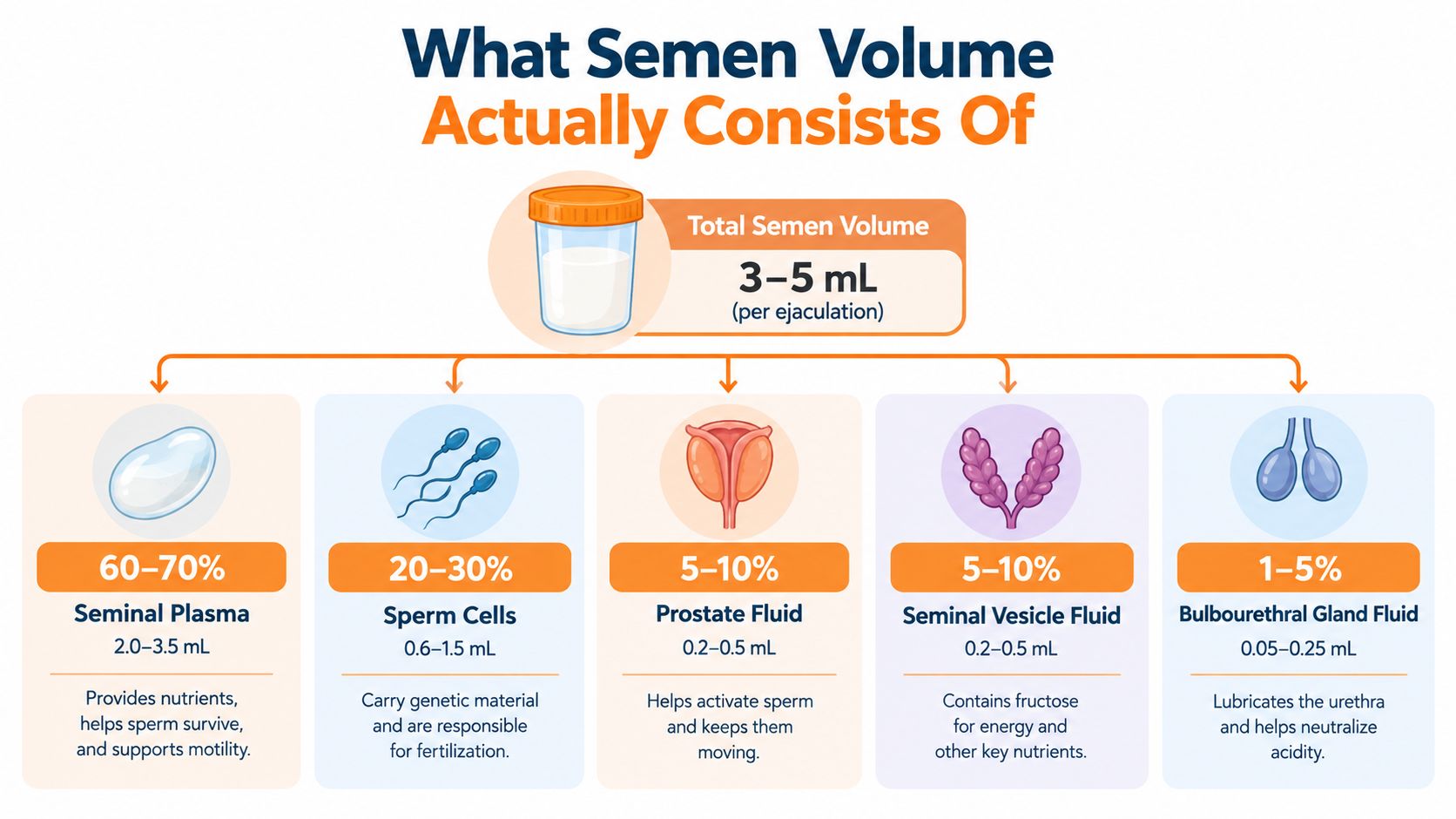
That composition explains a common misunderstanding. A change in visible fluid can occur without a corresponding change in sperm production or concentration. Conversely, sperm parameters can change without an obvious visual difference in volume.
WHO reference values are not performance targets
The same review summarizes the WHO 2021 distribution among approximately 3,500 men whose partners achieved a natural pregnancy resulting in a live birth within one year. The fifth percentile for volume was 1.4 mL, the median was 3.0 mL, and the 90th percentile was 5.5 mL. These figures describe a reference distribution, not an ideal amount that every man should reach.
The distinction matters for searches based on appearance. A sample above the lower reference point isn't automatically fertile, and a sample below it doesn't by itself establish infertility. Fertility depends on multiple factors involving both partners, while semen analysis evaluates several parameters rather than visual volume alone.
Volume and sperm health answer different questions
A person may want more volume for sexual reasons, reproductive reasons, or simple curiosity. Each goal requires a different measure. Orgasm intensity is subjective. Taste is subjective and hasn't been established as a predictable outcome of the ingredients discussed here. Sperm concentration and motility require analysis, and pregnancy or live birth are clinical outcomes that supplement studies don't consistently demonstrate.
The anatomy also explains why short-term comparisons can mislead. Seminal-vesicle and prostate fluid can vary with ejaculation frequency, hydration, illness, and collection completeness. A responsible before-and-after review therefore treats volume as one observation within a wider pattern, not as a proxy for every aspect of sexual or reproductive health.
The Ingredient Research Behind Volume Claims
Zinc has some of the more developed ingredient-level evidence in this area, but the findings are mixed by outcome. A meta-analysis associated zinc supplementation with higher semen volume, sperm motility, and normal morphology. It found no significant effect on sperm viability, concentration, total count, or abnormal morphology. A separate meta-analysis of randomized trials estimated zinc-associated increases of 1.48 million sperm/mL in concentration and 7.03 percentage points in total motility, as reported in the meta-analysis of zinc and semen parameters.
Those results don't establish that every zinc-containing formula produces the same changes. Effects can depend on baseline nutrient status, dose, formulation, study population, and adherence. An association with one semen endpoint also shouldn't be expanded into a claim about fertility, sexual pleasure, or predictable volume for an individual.
Ingredient Evidence at a Glance
| Ingredient | Studied Outcome | What Evidence Shows |
|---|---|---|
| Zinc | Volume, motility, morphology, concentration, count, viability | Findings vary by endpoint. Some pooled analyses report associations with volume, motility, and normal morphology, while other outcomes show no significant effect. |
| L-arginine | Blood-flow and vascular measurements | Human research supports a role in nitric-oxide and circulation pathways, but the cited studies don't establish a semen-volume outcome. |
| Bromelain | Taste | No identified human evidence substantiates a predictable semen-taste effect. |
| Maca and other botanicals | Various wellness or reproductive measures | Product-specific conclusions require studies of the finished formula and shouldn't be inferred from biological plausibility alone. |
Readers comparing labels can also consult this ingredient guide for Semenax, while keeping the distinction between ingredient research and product-specific evidence clear.
A large NIH-supported randomized trial provides an important counterweight to optimistic zinc interpretations. Male partners in 2,370 couples pursuing infertility treatment received either 30 mg of elemental zinc plus 5 mg of folic acid daily or a matching placebo for six months. Live birth occurred in 34% of the supplement group and 35% of the placebo group, and sperm movement, shape, and total count didn't differ significantly, according to the NIH summary of the randomized zinc and folic acid trial.
The sensible conclusion is narrow. Zinc is an essential nutrient involved in normal reproductive function, and some studies report changes in selected semen measures. That doesn't mean zinc supplementation, or any product containing zinc, reliably improves fertility or produces a fixed before-and-after result.
L-Arginine, Bromelain, and the Limits of the Evidence
L-arginine is a physiological precursor to nitric oxide, a signaling molecule involved in vasodilation through cyclic GMP. That mechanism is biologically plausible, but a mechanism isn't the same as a demonstrated consumer outcome.
In one controlled human study, 10 healthy men received an intravenous infusion of 30 g of L-arginine over 30 minutes or placebo. The intervention reduced peripheral arteriolar resistance, and femoral-artery Doppler measurements showed increased blood flow. The study used intravenous dosing and measured vascular outcomes, not semen volume or sexual performance, as reported in the controlled L-arginine blood-flow study.
Mechanism is not a before-and-after result
A separate randomized, double-blind crossover study involved recreationally trained men taking 3.2 to 9.6 g of oral L-arginine daily for four days or placebo, followed by a 14-day washout. L-arginine increased brachial-artery diameter one minute after exercise, with a reported significance level of p = 0.023, but it didn't significantly change plasma nitric-oxide levels, blood pressure, muscular endurance, volume load, or fatigue ratio, according to the oral L-arginine exercise study.
That evidence supports careful wording. L-arginine may participate in vascular signaling, but the cited studies don't establish that oral L-arginine increases semen volume, improves sexual performance, or produces a predictable personal transformation.
Bromelain claims need the same discipline
Bromelain is often discussed in connection with semen taste, yet the identified human studies don't substantiate a predictable taste effect. Research on another outcome or another ingredient can't be transferred automatically to flavor.
The available discussion of bromelain in Semenax can help readers understand why the ingredient appears in taste-focused conversations, but an ingredient rationale remains different from proof that a finished product changes taste. Taste is also affected by diet, hydration, smoking, medications, and individual perception, so informal reports are especially difficult to interpret.
A plausible pathway can justify further study. It can't substitute for a controlled trial measuring the result consumers care about.
Realistic Timelines and the Placebo Effect
Claims about changes within a few days deserve skepticism because sperm production doesn't operate on a short, visible schedule. Recent urology guidance emphasizes substantial within-person variability and the value of repeat semen analyses, with reassessment often reflecting the roughly 2–3-month spermatogenic cycle, as outlined in NICE guidance on fertility investigation.
That timing doesn't mean nobody notices a short-term change in fluid volume. It means a short-term change can't automatically demonstrate altered sperm production. A longer observation period, consistent conditions, and repeated measurements provide a stronger basis for interpretation than a sample collected after an unusually long abstinence interval.
Felt changes and measured changes differ
Perceived volume, orgasm intensity, and sexual confidence are subjective. Expectations can shape how a person interprets an experience, particularly when attention is focused on finding evidence that a purchase is working. That doesn't make the experience meaningless, but it does make it unsuitable as a standalone measure of sperm health.
A 2025 systematic review reported possible improvements in individual sperm measures for certain supplements, but found no evidence that supplements improved pregnancy or live-birth outcomes. The review's focus on selected measures reinforces the need to define the desired outcome before interpreting a testimonial.
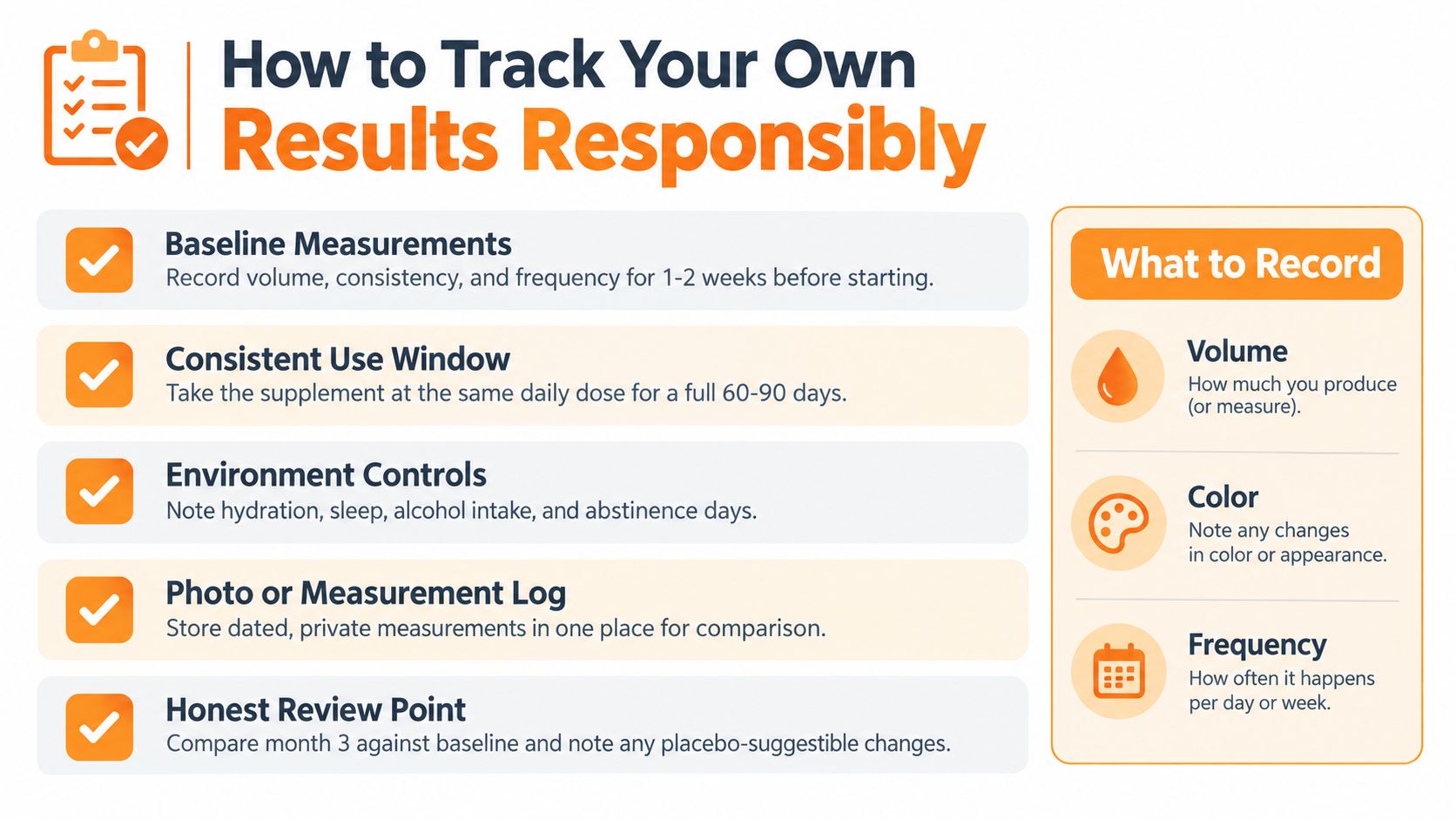
A 30-day log can still be useful as an observation period, provided it's described accurately. It can record subjective volume, frequency, abstinence interval, hydration, sleep, illness, and tolerability. It can't establish a change in sperm morphology or fertility, and it shouldn't be presented as a substitute for laboratory testing.
How to Track Your Own Results Responsibly
A useful log begins before supplementation. The goal is to make the comparison fair, not to create a dramatic story. The same collection approach, similar abstinence intervals, and consistent recording make it easier to identify a pattern.
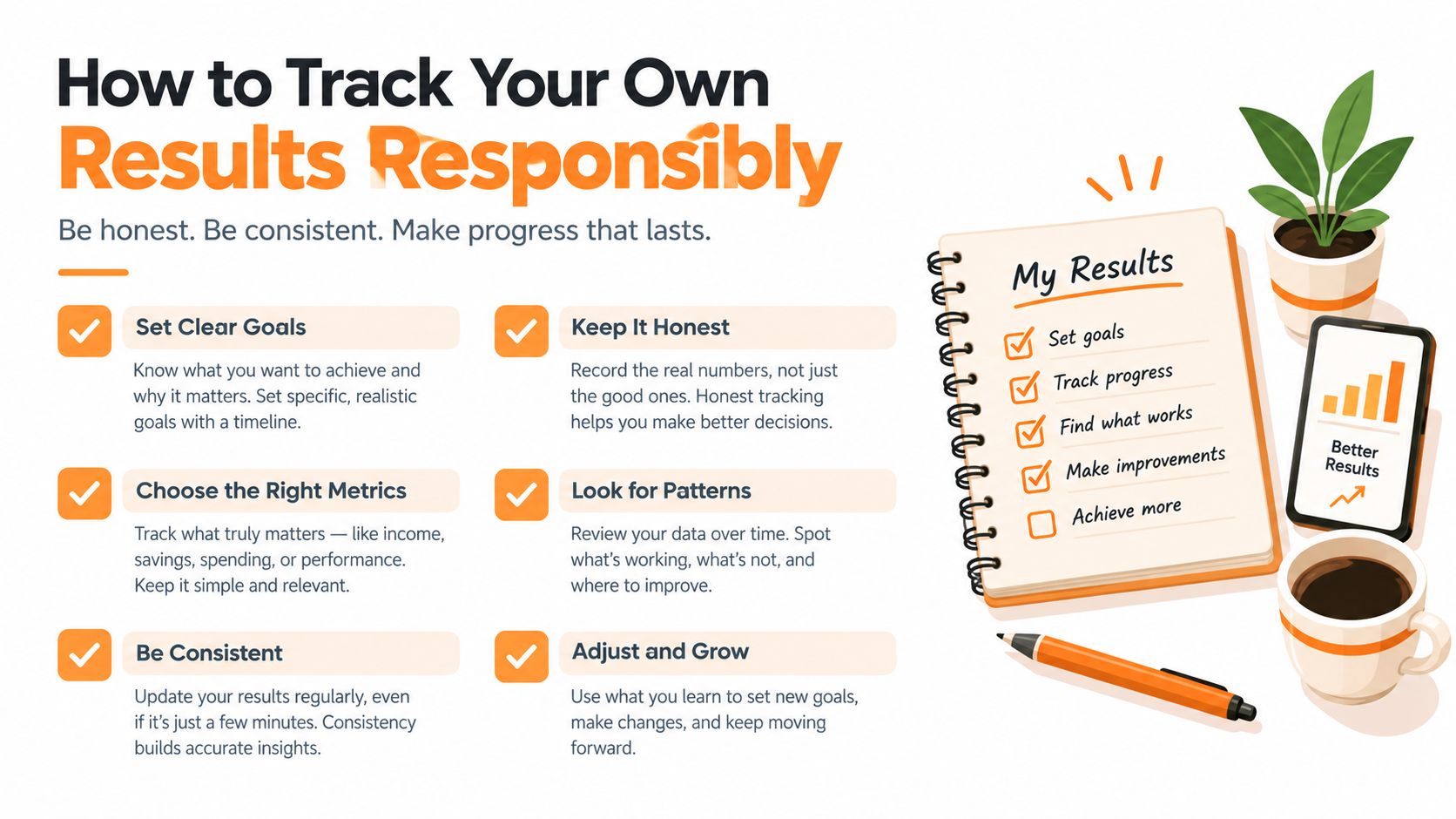
A practical 30-day framework
- Create a baseline: Record ejaculation frequency, approximate volume if measured, abstinence interval, hydration, sleep, illness, and any discomfort before starting.
- Keep conditions similar: Compare samples collected after similar abstinence intervals. A perceived increase after several days without ejaculation may reflect timing rather than a supplement effect.
- Log subjective outcomes separately: Note perceived intensity, satisfaction, taste, and tolerability in separate fields. These observations matter personally, but they aren't laboratory measurements.
- Record confounding factors: Note changes in alcohol intake, medication use, exercise, diet, stress, and sleep. A change during the month may reflect the overall period rather than one ingredient.
- Review trends, not snapshots: Compare multiple observations with the baseline. Avoid treating the largest result as the representative result.
For fertility-related questions, a semen analysis is more informative than a visual comparison. The 2021 WHO lower reference limits include 1.4 mL for volume, 39 million total sperm per ejaculate, 16 million/mL for concentration, 42% for total motility, 30% for progressive motility, and 4% for normal morphology. These are reference limits, not improvement targets, and a single ejaculate isn't a reliable personal benchmark because semen parameters vary within individuals, as shown in the WHO 2021 reference-limit table.
What makes testing more meaningful
Testing under similar abstinence conditions at the same accredited laboratory reduces some sources of variation. A clinician can also interpret results alongside medical history, medications, symptoms, and reproductive goals.
The most honest before-and-after conclusion may be that a perceived change occurred without proof of why it occurred. That isn't a failure of the log. It's a more accurate account of what a personal observation can and can't show.
Safety, Label Reading, and What to Do Next
A supplement label should answer practical questions before purchase. It should identify the amount of each ingredient per serving, the serving instructions, additional sources of zinc in the person's diet or other supplements, and the manufacturer's quality controls. Third-party testing and cGMP manufacturing can provide useful information about identity and contamination controls, but they don't prove that the formula produces a particular semen-volume result.
Readers can use this guide to reading supplement labels to compare formulas without treating a long ingredient list as evidence of additive benefits. The dose studied for one ingredient shouldn't be assumed to apply to another, and research on an isolated ingredient doesn't automatically validate the finished product.
When clinical advice matters
Persistent concerns about fertility, sexual function, pain, blood in semen, or repeated abnormal results warrant clinical evaluation. A supplement shouldn't replace a semen analysis or medical assessment, particularly when conception has been difficult or symptoms continue.
Medication use and health conditions also matter. Anyone taking prescription medicines or managing a chronic condition should disclose supplement use to a clinician or pharmacist. Zinc and other ingredients can create problems when total intake is overlooked or when supplements interact with medicines.
SEMEX is a dietary supplement formulated with zinc, L-arginine, sunflower lecithin, bromelain, and additional botanicals. Readers considering it should evaluate the label, define the outcome they care about, and track changes under consistent conditions rather than assuming a visual result predicts fertility or sperm health.
Decision standard: Choose based on transparent labeling, appropriate expectations, and personal tolerability, not on an uncontrolled photo.
SEMEX offers an ingredient-focused daily supplement for men interested in tracking semen volume and related subjective outcomes without presenting those observations as medical results. Readers who want to review the formula and product information can visit SEMEX, then compare the label with their own goals and discuss any persistent concerns with a qualified clinician.
These statements have not been evaluated by the Food and Drug Administration. This product is not intended to diagnose, treat, cure, or prevent any disease.