

Ingredients of Semenax: Formula and Research Guide
The most popular advice about the ingredients of Semenax starts with the longest possible ingredient list. That approach is backwards. A supplement cannot be evaluated by counting botanical names or assuming that every ingredient contributes the same kind of evidence. The more important questions are whether each ingredient has a disclosed dose, whether a compound's active constituent is clear, whether botanical extracts are standardized, and whether studies on isolated ingredients say anything reliable about the finished formula.
Older labels make this problem especially clear. The NIH Dietary Supplement Label Database records a historical Semenax label listing zinc aspartate at 30 mg, equivalent to 20% elemental zinc, alongside L-carnitine, maca, pine bark extract, and L-arginine HCl. That historical label shouldn't automatically be treated as a current formula. Product versions change, and a label comparison is meaningful only when the serving size, ingredient forms, and amounts are verified on the package.
Table of Contents
- Understanding the Core Ingredients of Semenax
- Breaking Down the Volume and Taste Formula
- Exploring the Men's Wellness Botanical Blend
- Evaluating Zinc and Male Reproductive Research
- Understanding Amino Acids and Nitric Oxide Pathways
- Quality Control and Third-Party Testing Standards
- Safety Interactions and Supplement Compliance Rules
- Frequently Asked Questions About Semenax Ingredients
Understanding the Core Ingredients of Semenax
A long formula isn't clinical evidence. It may show that a manufacturer has selected ingredients associated with reproductive biology, vascular function, digestion, or general wellness, but ingredient presence alone doesn't establish that the finished combination produces a particular outcome. A review of the historical label and later formula descriptions therefore needs to separate identity, dose, form, and evidence.
Why the chemical form matters
Zinc aspartate, for example, is a compound. The biologically relevant figure for intake assessment is the amount of elemental zinc, not just the total weight of the compound. The same principle applies to botanical extracts. “Maca” doesn't disclose the plant part, extraction ratio, solvent, or concentration of marker compounds. “Ginseng” doesn't identify the botanical species and extract standardization clearly enough for a rigorous comparison.
The historical label recorded by the NIH Dietary Supplement Label Database illustrates the practical problem. It identifies zinc aspartate, L-carnitine, maca, pine bark extract, and L-arginine HCl, but a consumer comparing it with a newer multi-ingredient label could mistakenly assume that the names and quantities remain identical. That mistake matters because an ingredient's total compound weight may not equal its active constituent, and a plant name alone says little about extract potency.
Label rule: A meaningful comparison requires the current label, serving size, chemical form, elemental amount where relevant, and standardized extract details.
The evidence problem is equally important. Some individual ingredients have been studied in male reproductive or sexual-health research, but those findings cannot be added together. A trial of isolated L-arginine doesn't prove that a blend containing L-arginine, zinc, enzymes, lecithin, and botanicals will produce the same result. A study of one maca preparation may not apply to a different extract made from another plant part or with another extraction method.
A better evaluation framework
A consumer-advocacy review should ask four questions:
- What is present? The label should identify every active ingredient and its chemical or botanical form.
- How much is present? Per-serving quantities should be visible rather than hidden inside a proprietary blend.
- What was studied? Ingredient-level research should be distinguished from trials of the complete product.
- Can the contents be verified? Identity, potency, contamination limits, and stability should be supported by appropriate testing.
This framework produces a less exciting conclusion than a list of promises, but it's more useful. A formula may support normal biological functions associated with its ingredients while still lacking evidence for a specific semen-volume, fertility, or pregnancy outcome. The central analytical mistake is treating a collection of plausible ingredients as if it were a clinical trial.
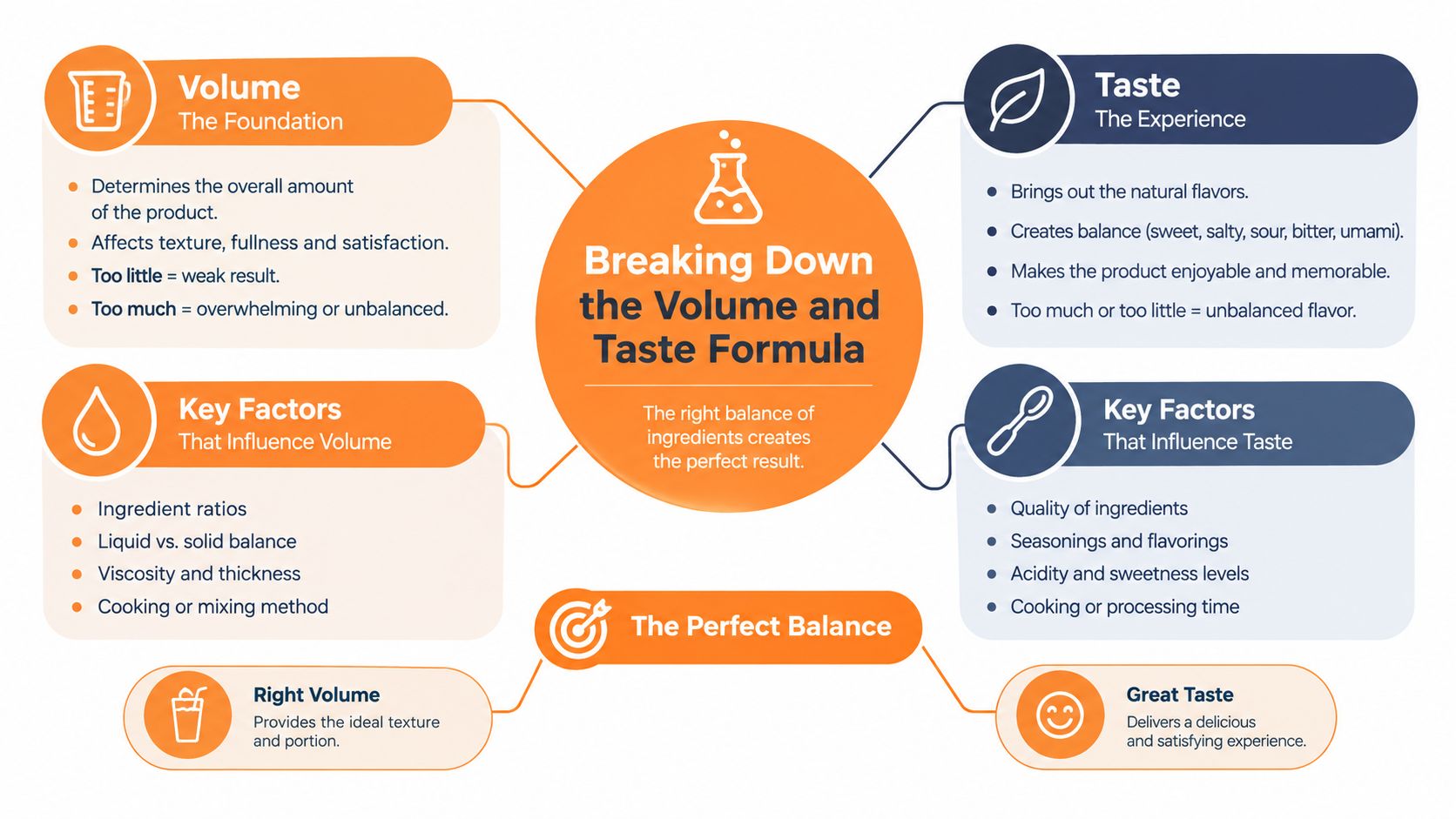
Breaking Down the Volume and Taste Formula
The volume- and taste-focused portion of a formula commonly draws attention to zinc, L-arginine, sunflower lecithin, and bromelain. Each has a different biological role, and none should be assigned the same evidentiary status merely because they appear on one label.
Zinc is a mineral involved in normal reproductive function. That role supports a careful structure/function description, but it doesn't establish that adding zinc will reliably increase semen volume or improve fertility outcomes. The strongest evidence must come from a defined dose, a relevant population, and a controlled study of the outcome being claimed.
L-arginine is an amino acid studied in relation to nitric oxide pathways, blood flow, and male sexual health. A 2022 systematic review placed L-arginine among ingredients associated in the literature with possible changes in sperm concentration or motility and listed a representative dose of approximately 1.4 g, but the review did not establish a product-level clinical effect for every formula containing the ingredient. The distinction is essential. A pathway may be biologically plausible without producing a predictable change in semen volume.
Lipids and enzymes require their own evidence
Sunflower lecithin is a phospholipid-rich ingredient used as a nutritional lipid source and emulsifying component. Its presence can describe a role in general nutrition or formula composition, but it doesn't by itself demonstrate a change in semen volume or taste. The relevant questions would include the amount supplied, the product's intended structure/function claim, and whether a controlled human study evaluated that exact preparation.
Bromelain is an enzyme preparation associated with pineapple. It has a different identity from lecithin and shouldn't be treated as another version of a mineral or amino acid. Traditional associations with food and taste don't substitute for a controlled trial that measures taste outcomes in people using the finished formula.
A useful label assessment therefore looks for:
- Elemental mineral disclosure, especially for zinc.
- Exact amino-acid quantity, rather than a blend total.
- Lecithin source and amount, with clear serving information.
- Bromelain activity or assay details, rather than the ingredient name alone.
The research hierarchy also limits the conclusion. Ingredient studies can support cautious language such as “supports normal reproductive function,” “supports nitric-oxide pathways,” or “helps maintain general wellness,” when the wording is truthful and substantiated. They can't be converted into a claim that the combination guarantees greater volume, changes taste, or improves fertility.
Exploring the Men's Wellness Botanical Blend
Botanicals such as maca, Panax ginseng, ashwagandha, tongkat ali, saw palmetto, and horny goat weed are often grouped together as a men's wellness blend. That grouping may make sense from a product-positioning perspective, but it obscures important differences in plant identity, traditional use, pharmacology, and clinical evidence.
Maca is commonly discussed in relation to vitality and sexual wellness. Panax ginseng has been evaluated in broader health and sexual-health contexts. Ashwagandha is frequently described in connection with stress response and general adaptation. Tongkat ali, saw palmetto, and horny goat weed have also appeared in male-wellness products, but their evidence bases are uneven and their preparations aren't interchangeable.
Traditional use isn't finished-product proof
The systematic review of dietary supplements for male infertility describes the evidence for many herbal ingredients as limited, smaller in scale, or insufficiently standardized. That limitation changes the language a responsible label can use. Traditional use and mechanistic plausibility may support investigation, but they shouldn't be presented as established treatment efficacy or as proof of a direct volume-enhancing effect.
The practical issue is standardization. A botanical specification should identify:
- Latin name and plant part, because roots, leaves, bark, and seeds can differ.
- Extraction ratio or solvent, which affects the resulting preparation.
- Marker compounds, where applicable, to help define consistency.
- Contaminant limits, including microbes, heavy metals, pesticides, residual solvents, and adulterants.
- Allergen status and batch identity, so the finished product can be traced and assessed.
A proprietary blend makes this evaluation harder because it can conceal whether an ingredient is present at a meaningful amount. Published analyses of sexual-health supplements have identified products containing multiple ingredients at negligible doses or with limited supporting evidence. A list of six botanicals can therefore create an impression of breadth while providing little information about exposure or standardization.
The combined formula is its own research question
The central insight is that a botanical blend may reasonably be framed around general vitality, wellness, or support for normal physiological pathways, but its complete combination remains a separate research question. Positive findings for one botanical don't validate every other ingredient, and they don't establish that the combination changes semen parameters.
The prudent consumer compares plant identity, extraction details, dose, and testing documentation before comparing marketing claims. An exotic ingredient name is not a quality metric. A reproducible specification is.
Evaluating Zinc and Male Reproductive Research
Zinc illustrates why a nutrient can have a legitimate biological role without producing a reliable clinical result when taken as a supplement. A 2016 meta-analysis covered 20 studies involving 2,600 cases and 867 controls and reported statistically significant improvements associated with zinc supplementation in semen volume, sperm motility, and normal sperm morphology. The reported standardized mean differences were -0.99, -1.82, and -0.75, respectively, while the analysis found no significant effects on sperm viability, sperm concentration, total sperm count, or abnormal morphology, as reported in the published meta-analysis.
Those findings don't settle the question because study design, population, formulation, and dose can alter the result. The larger U.S. FAZST trial supplied a different type of evidence. It randomized 2,370 men across four infertility-treatment centers from 2013 through 2017 to receive 30 mg of elemental zinc plus 5 mg of folic acid daily or placebo for six months.
The controlled trial boundary
The FAZST findings are particularly important because they tested clinically consequential outcomes alongside semen measures. The trial found no significant differences in semen volume, sperm concentration, motility, morphology, or total motile sperm count. Live birth occurred in 34% of the zinc-folic-acid group and 35% of the placebo group, while sperm DNA fragmentation was 29.7% with supplementation compared with 27.2% with placebo, according to the NIH summary of the FAZST trial.
The trial outcomes can be summarized as follows:
| Metric | Supplement Group | Placebo Group |
|---|---|---|
| Live birth | 34% | 35% |
| Sperm DNA fragmentation | 29.7% | 27.2% |
| Semen volume | No significant difference | No significant difference |
| Sperm concentration | No significant difference | No significant difference |
| Sperm motility | No significant difference | No significant difference |
| Sperm morphology | No significant difference | No significant difference |
| Total motile sperm count | No significant difference | No significant difference |
These results support a narrow conclusion. Zinc contributes to normal reproductive biology, but zinc supplementation shouldn't be described as a guaranteed way to increase semen volume, sperm count, or fertility outcomes.
Elemental zinc is the actionable number
The label must state elemental zinc per serving. The U.S. adult tolerable upper intake level is 40 mg per day from all sources, including food, beverages, supplements, and medicines, according to the NIH zinc fact sheet. Sustained intake above that level can raise the risk of adverse effects, including copper depletion and impaired iron handling.
A three-capsule serving makes the serving calculation especially important. Consumers should add the zinc supplied by the full daily serving to zinc from other products before assessing total intake. A compound weight that appears large on a label can also mislead unless the elemental yield is stated.
Understanding Amino Acids and Nitric Oxide Pathways
L-arginine is often included because the body can use it in pathways related to nitric oxide. The basic sequence is straightforward. L-arginine serves as a substrate for nitric-oxide production, nitric oxide acts as a signaling molecule, and that signal can contribute to vascular smooth-muscle relaxation and blood-flow regulation.
That mechanism explains why L-arginine appears in male-wellness research. Blood flow has relevance to sexual function, and the ingredient has been studied in relation to sperm concentration or motility. The mechanism, however, doesn't answer whether a particular capsule formula changes semen volume. A pathway-level effect and a product-level clinical outcome are different claims.
Dose and formulation determine interpretation
The 2022 review cited earlier listed approximately 1.4 g as a representative L-arginine dose in the literature. That figure should be treated as a research reference, not as proof that any product containing a smaller or different amount will have the same effect. L-arginine HCl also isn't identical, by weight, to free-form L-arginine, so the chemical form and declared quantity matter.
A label review should therefore distinguish:
- Pathway support, such as support for nitric-oxide production.
- Physiological function, such as support for normal blood-flow processes.
- Specific outcome claims, such as increased semen volume or improved pregnancy rates.
Only the first two may fit cautious structure/function language when substantiated. The third requires direct evidence from an appropriately designed human study of the finished product and outcome.
The same reasoning applies when L-arginine appears beside zinc, lecithin, bromelain, and botanicals. A positive study of isolated L-arginine can't be combined mathematically with a separate study of zinc to create proof for a multi-ingredient formula. The research discussion of L-arginine and male reproductive supplements is most useful when it keeps biological plausibility separate from demonstrated product efficacy.
Quality Control and Third-Party Testing Standards
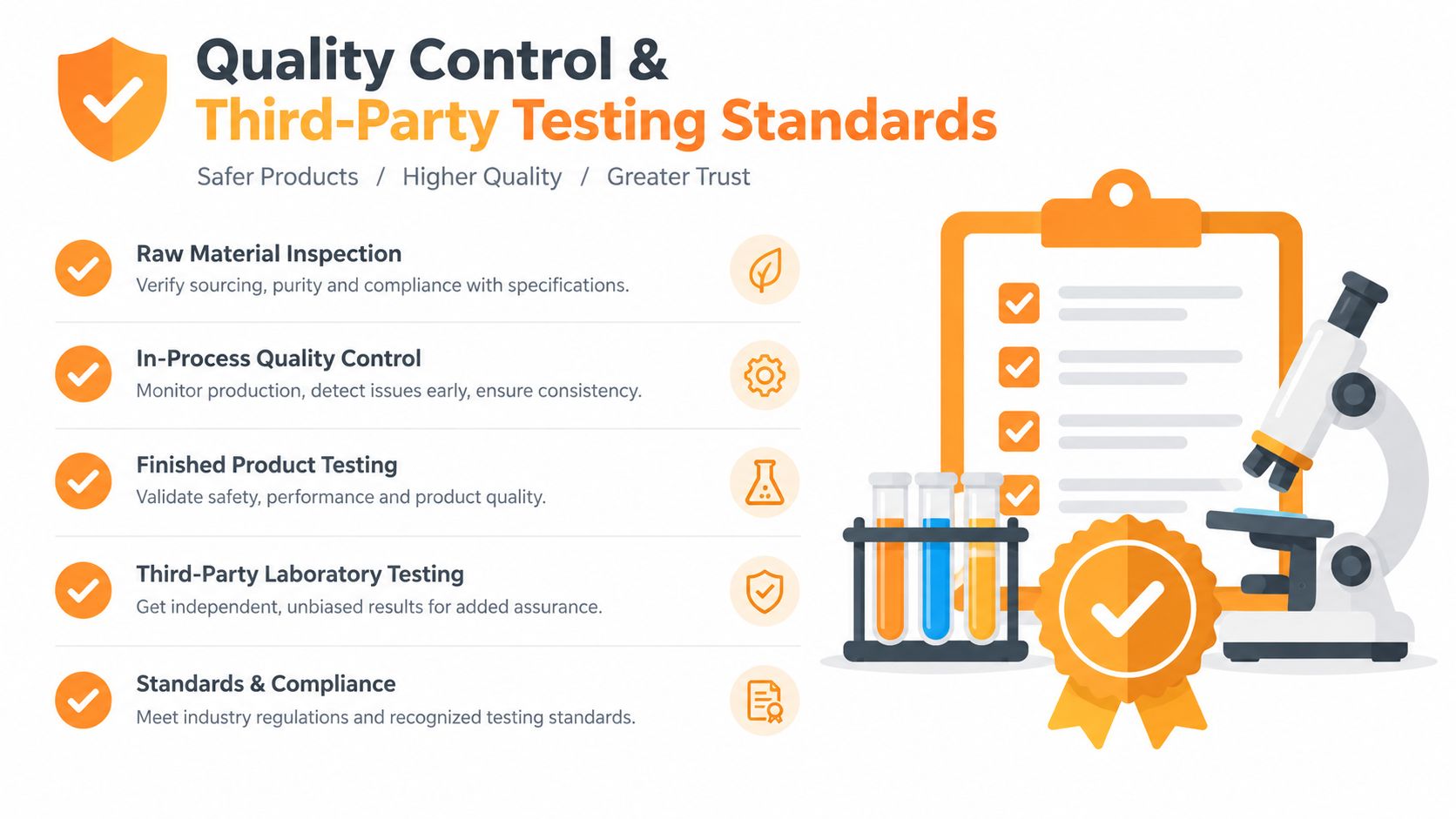
A multi-ingredient formula should be managed as a specification and standardization problem, not as a shopping list of attractive names. U.S. dietary-supplement current good manufacturing practice requirements call for specifications covering identity, purity, strength, composition, and contamination limits for components and finished products, as described in the FDA CGMP compliance guide.
What a defensible specification contains
For ingredients such as L-arginine, sunflower lecithin, bromelain, maca, Panax ginseng, ashwagandha, tongkat ali, saw palmetto, and horny goat weed, documentation should establish what the ingredient is and what the finished capsule contains. The useful evidence isn't a supplier's general statement. It's a method, an acceptance limit, and an actual batch result.
A certificate of analysis should be examined for:
- Identity testing, confirming that the declared mineral, amino acid, enzyme, or botanical is present.
- Potency testing, showing the actual result against the declared specification.
- Botanical characterization, including Latin name, plant part, extraction ratio, solvent, and marker compounds where relevant.
- Contaminant testing, covering microbes, heavy metals, pesticides, residual solvents, and adulterants.
- Finished-batch review, confirming that the combined product meets its specifications.
- Stability evidence, demonstrating that the three-capsule daily serving remains within specification through shelf life.
Why proprietary blends weaken consumer review
A proprietary blend can make a formula look complete while preventing a meaningful dose assessment. If the label provides only a combined weight, the consumer can't determine whether zinc, L-arginine, or a botanical is supplied at the amount used in relevant research. Transparent per-ingredient quantities are more decision-useful because they allow comparison with study preparations and total daily intake.
Third-party testing improves manufacturing confidence when the methods and thresholds are disclosed. It doesn't establish that a product changes semen volume, improves fertility, or produces a particular taste. Those are separate evidence questions, as the third-party verification discussion should make clear.
The most credible quality posture is therefore specific rather than promotional. It names the test, identifies the acceptance limit, reports the batch result, and explains which claims the evidence can and cannot support.
Safety Interactions and Supplement Compliance Rules
A multi-ingredient male-wellness formula can create a more complicated safety profile than any single ingredient suggests. L-arginine, ginseng, ashwagandha, tongkat ali, saw palmetto, horny goat weed, and zinc may each raise different questions about medicines, existing conditions, allergies, or overlapping supplements. The combined interaction profile can't be inferred from one ingredient study.
A healthcare professional should review the full current label before use, especially when a person takes:
- Blood-pressure medicines or nitrates, because ingredients associated with vascular pathways may require individual assessment.
- Anticoagulants or antiplatelet medicines, because some botanicals can raise interaction concerns.
- Diabetes medicines, because changes in glucose-related physiology may affect medication management.
- Other mineral or herbal products, because duplicate zinc and overlapping botanicals can increase total exposure.
The FDA has separately warned that sexual-enhancement and energy products may contain undeclared pharmaceutical ingredients, creating a category-wide adulteration concern. A third-party test that covers identity, microbes, heavy metals, and adulterants supports quality confidence, but it doesn't replace medical review or prove effectiveness.
Structure function language has limits
U.S. dietary-supplement rules distinguish structure/function claims from disease claims. A compliant statement may say that an ingredient supports, helps maintain, or plays a role in normal body function when the claim is truthful, not misleading, and substantiated. It shouldn't say that a supplement treats, cures, prevents, diagnoses, or fixes infertility, low sperm count, or another medical condition.
This distinction also protects consumers from a subtle error. Saying that zinc plays a role in normal reproductive function is not the same as saying that a zinc-containing formula improves fertility. Saying that L-arginine supports nitric-oxide pathways is not the same as promising a specific semen-volume outcome.
The label, serving size, medication list, and testing documentation should be reviewed together. No single certificate, ingredient name, or mechanistic explanation answers every safety question.
Frequently Asked Questions About Semenax Ingredients
Can the formula be combined with daily vitamins?
A consumer shouldn't assume compatibility just because the ingredients are available without a prescription. The full label should be compared with other vitamins, minerals, performance products, and herbal supplements, with particular attention to duplicate zinc and overlapping botanicals. A pharmacist or clinician can assess the combined list alongside medicines and relevant health history.
What is the difference between elemental zinc and a zinc compound?
A zinc compound includes zinc bound to another substance, such as aspartate. Elemental zinc is the amount used to assess total zinc intake. The label should state elemental zinc per serving, and the full daily serving should be included when comparing intake with the adult upper intake level described by the NIH zinc guidance.
How long do botanical ingredients take to build up?
There isn't a single evidence-based timetable for maca, ginseng, ashwagandha, tongkat ali, saw palmetto, or horny goat weed because preparations, doses, study designs, and outcomes differ. Claims that a botanical blend reliably produces a particular result after a fixed period aren't justified without a controlled study of that formula. Consistent use may be part of a product's directions, but it doesn't convert limited ingredient evidence into a guaranteed outcome.
Do vegan and non-GMO certifications prove effectiveness?
No. Those certifications address attributes such as sourcing or manufacturing criteria, not semen-volume effects, fertility outcomes, or clinical efficacy. They may help a consumer choose a product aligned with personal preferences, while dose transparency, extract standardization, identity testing, and contaminant controls address different questions.
What should a consumer verify before purchase?
The current package label should identify the serving size and per-ingredient amounts. The most useful supporting documentation identifies chemical forms, botanical plant parts, marker compounds where relevant, testing methods, acceptance limits, actual batch results, and controls for microbes, heavy metals, pesticides, residual solvents, and undeclared drugs.
These statements have not been evaluated by the Food and Drug Administration. This product is not intended to diagnose, treat, cure, or prevent any disease.
SEMEX offers a daily formula combining zinc, L-arginine, sunflower lecithin, bromelain, and men's wellness botanicals, with the label and testing documentation serving as the appropriate basis for evaluation. Readers comparing the ingredients of Semenax can review the current formula, serving details, and quality information by visiting SEMEX.