

Male Sexual Libido Drivers and Support
The most popular advice about male sexual libido is often the least useful: assume low desire means low testosterone, then reach for a hormone booster. Libido doesn't work like a dashboard light with one cause and one repair. Desire reflects an interaction between the brain, hormones, sleep, stress, physical health, medications, and relationship context.
That distinction matters because sexual desire, erection quality, orgasm, ejaculation, and relationship satisfaction are related but separate outcomes. A man can want sex but struggle with erections, or have reliable erections while feeling little interest. Understanding those differences leads to better decisions than chasing a single number.
Table of Contents
- Understanding the Biological and Psychological Drivers
- How Age and Lifestyle Factors Shape Sexual Desire
- The Testosterone Myth and Normal Hormonal Variability
- Evidence-Backed Lifestyle Strategies to Support Vitality
- Key Supplement Ingredients and Their Supporting Functions
- Setting Realistic Timelines for Sexual Health Improvements
- Frequently Asked Questions About Male Sexual Libido
Understanding the Biological and Psychological Drivers
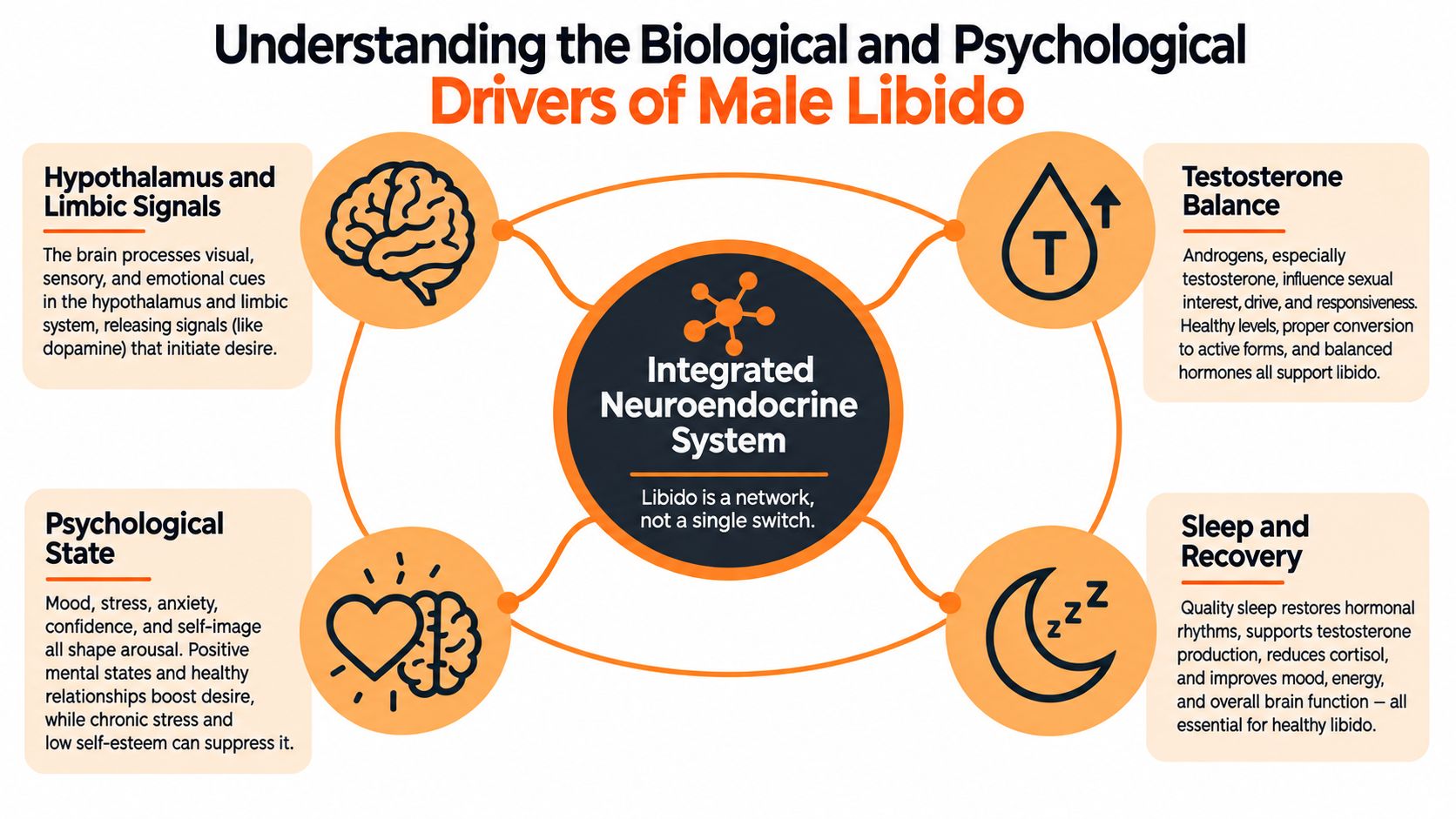
Male sexual libido is regulated by an integrated neuroendocrine system, not by testosterone alone. Testosterone acts on brain areas involved in motivation and arousal, including hypothalamic circuits, while dopamine, serotonin, noradrenaline, oxytocin, melanocortin, and endogenous-opioid pathways can influence sexual interest. The result resembles a sound-mixing console more than an on-and-off switch. Several controls must work together before desire feels strong and available.
Two men with similar testosterone concentrations can therefore report different libido. Poor sleep may reduce reward-system signaling, chronic stress can keep attention focused on threat and responsibility, and relationship tension can make intimacy feel emotionally difficult even when physical capacity remains intact. Medications, mood, metabolic health, and self-image can also shift the balance.
Desire begins in a wider system
The brain doesn't receive a sexual command from the body. It evaluates energy, safety, anticipation, emotional connection, and reward. When a man is exhausted or anxious, the same stimulus that once felt exciting may receive less attention. That response doesn't automatically signal a hormone disorder. It may indicate that the system is prioritizing recovery or coping.
This is why libido can change during demanding work, poor sleep, relationship conflict, grief, or prolonged worry. The experience is real, but the cause may sit outside the reproductive organs. A useful first question is not “How can testosterone be raised?” but “What changed in sleep, stress, health, medication, or connection?”
Practical rule: A persistent change in desire deserves a broad review, not an automatic assumption about testosterone.
Relationship context deserves equal attention. Pressure to perform can suppress spontaneous desire, while affection, novelty, honest communication, and emotional safety may make intimacy easier. Men looking for context around fluctuations in arousal can also review this guide to why sexual desire can feel unusually strong, while remembering that occasional changes aren't the same as persistent distress.
How Age and Lifestyle Factors Shape Sexual Desire
Age influences average sexual desire, but it doesn't create a fixed expiration date. In a Swedish study of partnered men, more than 90% of men aged 18 to 60 reported sexual activity during the previous year in 2016, approximately 75% of men aged 61 to 70 remained sexually active, and nearly half of men older than 70 did so, according to the Swedish population study on sexual activity and desire. Older age can bring lower average desire and activity, yet continued interest remains common.
The same study found that sexual activity across the full sample fell from 81% in 2005 to 73% in 2016, while reported absence of sexual desire rose from 8.5% to 13.2% over that period, a change of nearly five percentage points. The findings show why survey results need context. Year, relationship status, age range, and question wording can all alter the apparent picture of male sexual libido.
The age pattern isn't a straight line
A cross-cultural web-based study of 5,255 men aged 18 to 75 from Portugal, Croatia, and Norway found that 14.4% experienced a distressing lack of sexual interest lasting at least two months during the preceding year, as reported in the cross-cultural study of male sexual desire. Country results differed, with 10.5% in Portugal, 17.4% in Croatia, and 22.7% in Norway. Across seven geographic regions, estimates for low desire lasting at least two months ranged from 13% to 28%.
The age pattern was non-linear. Low desire was reported by 6% of men aged 18 to 29, 17% of those aged 30 to 39, 12% of those aged 40 to 59, and 27% of those aged 60 to 67. Persistent lack of interest lasting at least six months was reported by 2% of male participants. These differences show why occasional low interest, distressing low desire, and persistent low desire shouldn't be treated as identical.
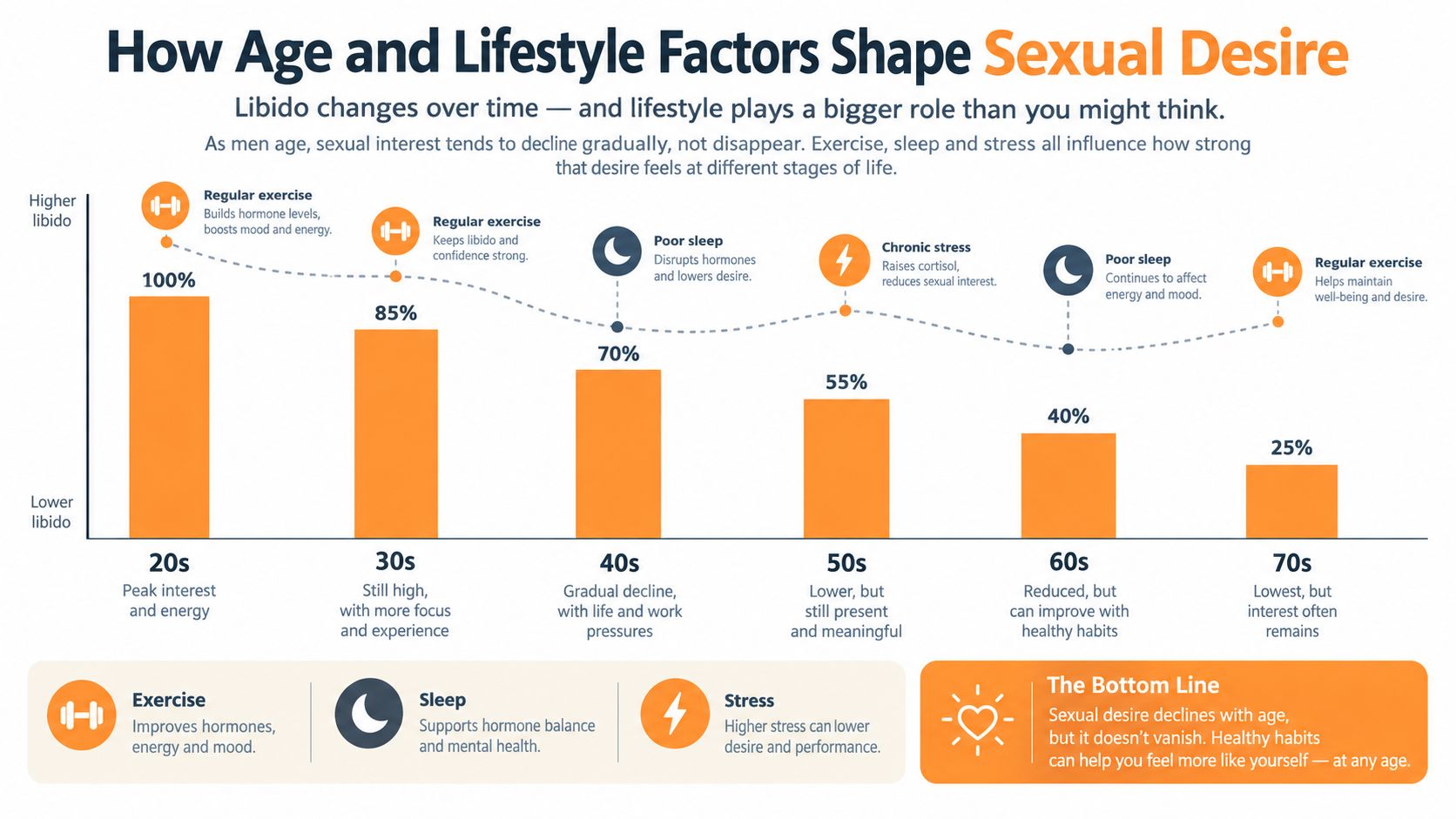
Lifestyle can modify the experience at every age. Sleep loss, chronic stress, limited movement, alcohol use, metabolic problems, and relationship strain may reduce desire, while recovery, physical activity, and emotional closeness can support it. A separate survey found that 89.5% of respondents described themselves as somewhat to very sexually active, while 80.1% rated their desire to become more sexually active above neutral; the age comparison showed 96.2% of older men above neutral for wanting more activity compared with 65.3% of younger men, as reported in the survey on testosterone, energy, well-being, and sexual interest. Current activity and desired activity aren't interchangeable measures.
The Testosterone Myth and Normal Hormonal Variability
Low libido isn't automatically low testosterone. Testosterone deficiency should be considered when compatible symptoms occur alongside consistently low morning testosterone, not when a man has one vague symptom or one consumer test result. The European Association of Urology guideline identifies 12 nmol/L as a useful diagnostic threshold and advises against testosterone therapy in eugonadal men, meaning men whose testosterone isn't deficient.
That guidance changes the order of questions. A man with normal testosterone and low desire may need to examine sleep, stress, depression, relationship circumstances, alcohol, medications, exercise, and cardiometabolic health. A single home test or symptom checklist can't establish the full explanation.
Hormones influence desire, but they don't dictate it
A meta-analysis of 23 randomized testosterone trials found increased libido in 13 trials, no effect in eight, and mixed findings in two, according to the review of testosterone and male sexual function. In a separate placebo-controlled meta-analysis of hypogonadal men, testosterone therapy produced a statistically significant but small improvement in sexual desire, with a standardized mean difference of 0.17, a 95% confidence interval of 0.01 to 0.34, and 1,383 participants.
The practical message isn't that hormones never matter. Men with genuine hypogonadism may benefit from appropriate clinical care. The mistake is treating testosterone as a universal answer for sexual dysfunction when levels are normal.
A clinician should assess persistent or sudden low desire, especially when it appears with fatigue, mood changes, medication changes, erectile difficulties, or other health concerns. Men researching the topic can also learn more about male reproductive system hormones, but educational content can't replace repeated, properly timed testing and professional interpretation.
Evidence-Backed Lifestyle Strategies to Support Vitality
Lifestyle habits create the conditions in which the neuroendocrine system can function normally. They won't guarantee a particular level of desire, but they can address common influences on energy, mood, circulation, and recovery. A practical routine starts with a few fundamentals rather than a long list of aggressive interventions.
Build recovery before chasing stimulation
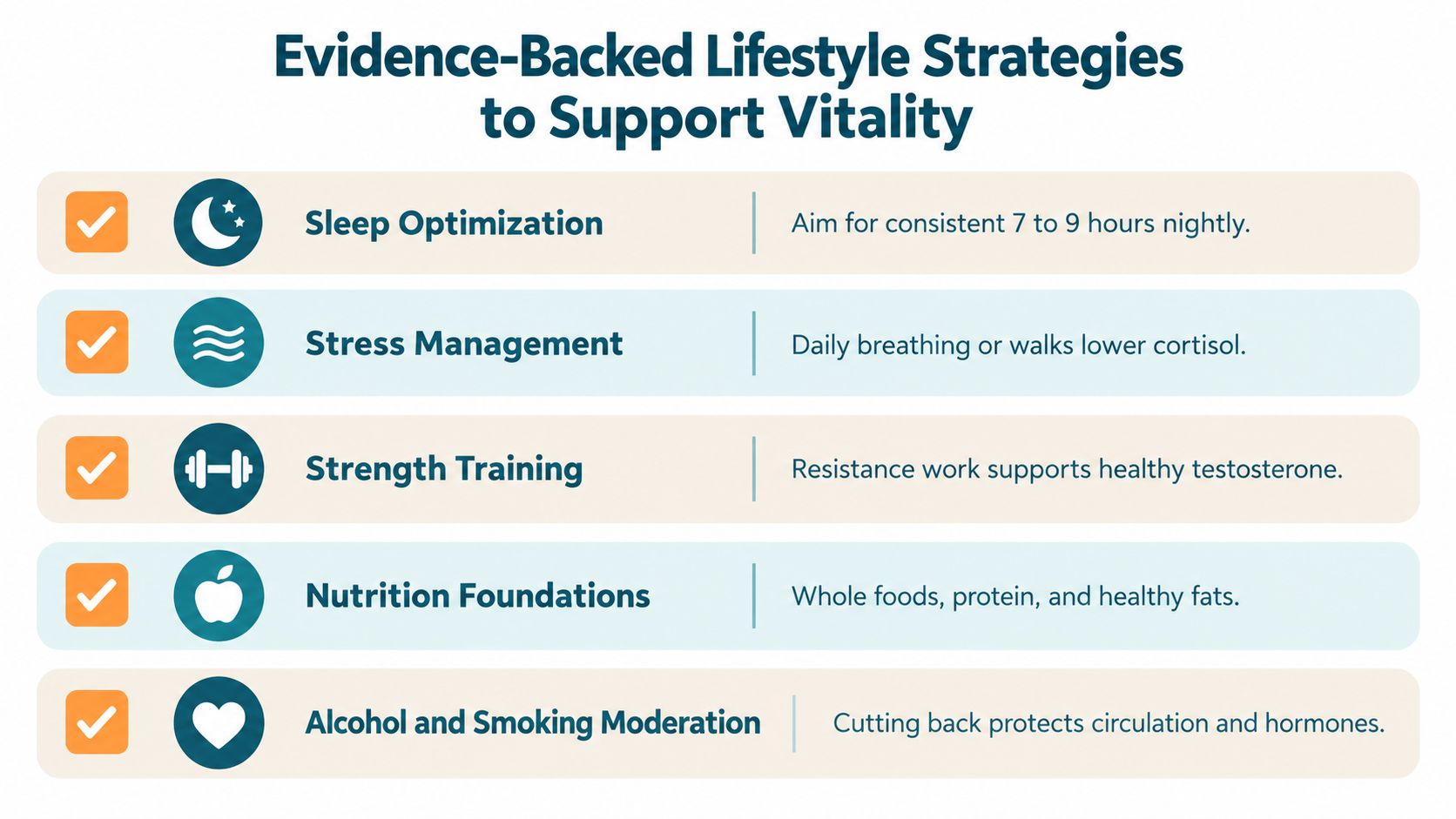
Sleep deserves priority because fragmented or insufficient rest can affect mood, energy, stress regulation, and reward processing. Consistent sleep and wake times, a darker bedroom, reduced late-night screen exposure, and a calmer evening routine can make recovery more predictable. The lifestyle infographic's suggested target is 7 to 9 hours nightly, but individual needs and sleep quality still matter.
Stress management works best when it's repeatable. A short breathing practice, a walk without a phone, time outdoors, or a planned transition between work and home can reduce the mental load that follows a man into intimacy. The point isn't to eliminate stress. It's to give the nervous system regular opportunities to leave high-alert mode.
Support circulation and metabolic health
Regular cardiovascular movement supports general fitness and blood-flow capacity, while resistance training helps maintain strength and lean tissue. Neither should be treated as a direct libido prescription. They are foundations that support energy and physical confidence.
A simple weekly approach can include:
- Move consistently: Use brisk walking, cycling, swimming, or another sustainable activity that raises breathing without creating excessive fatigue.
- Train resistance: Include manageable strength work for major muscle groups and progress gradually.
- Eat regular meals: Emphasize whole foods, adequate protein, fiber-rich plants, and unsaturated fats.
- Review alcohol and smoking: Cutting back supports circulation and reduces avoidable strain on recovery.
- Track patterns: Note sleep, stress, desire, medications, and exercise so changes can be discussed clearly with a clinician.
A useful test: If a routine leaves a man more exhausted, anxious, or sleep-deprived, it isn't supporting vitality, regardless of how impressive it looks on paper.
Key Supplement Ingredients and Their Supporting Functions
Supplements fit best as additions to sound habits, not substitutes for assessment. Each ingredient has a different structure-function role, and evidence for one outcome shouldn't be stretched into a promise about another. Zinc may contribute to normal reproductive function, while L-arginine relates to nitric-oxide pathways and blood flow. Those descriptions don't establish that either ingredient treats low libido or erectile dysfunction.
| Ingredient | Primary Supporting Function |
|---|---|
| Zinc | Plays a role in normal reproductive function and normal physiological processes |
| L-Arginine | Serves as a precursor involved in nitric-oxide-related blood-flow pathways |
| Maca Root | Used in wellness routines to support normal energy, vitality, and sexual well-being |
| Ashwagandha | Used to support stress resilience and normal adaptation to everyday demands |
| Panax Ginseng | Included in some wellness formulas for general vitality and energy support |
| Sunflower Lecithin | Provides phospholipids that support normal cellular structure |
| Bromelain | An enzyme included in some formulas for digestive and taste-focused wellness support |
| Tongkat Ali | Used in men's wellness routines to support normal vitality |
| Saw Palmetto | Included for general men's wellness and normal reproductive-system support |
| Horny Goat Weed | Traditionally used in wellness products supporting sexual vitality |
Read the evidence by outcome
Zinc research illustrates why precision matters. A large randomized, double-blind, placebo-controlled trial tested 30 mg of elemental zinc plus 5 mg of folic acid daily for six months in men whose partners were undergoing infertility treatment. The regimen didn't improve overall semen-quality parameters or live-birth rates, as reported in the randomized zinc and folic acid trial.
A separate systematic review and meta-analysis reported statistically significant improvements in semen volume, sperm motility, and normal sperm morphology among supplemented men, with standardized mean differences of −0.99, −1.82, and −0.75, respectively, while finding no significant effect on sperm viability, concentration, total sperm count, or abnormal morphology in the zinc evidence review. Different populations and outcomes can produce different findings.
L-arginine also requires restraint. In a trial of men with confirmed organic erectile dysfunction, 5 g daily for six weeks produced subjective improvement in 9 of 29 men receiving L-arginine, or 31%, compared with 2 of 17 controls, or about 12%. The study found no changes in objective measures and suggested that any benefit may be limited to men with reduced nitric-oxide production or excretion, so the result shouldn't be generalized to male sexual libido.
For men comparing formulas, supplements for male libido should be evaluated by ingredient transparency, intended structure-function role, quality controls, and compatibility with existing medications. SEMEX is one daily supplement option that combines zinc, L-arginine, sunflower lecithin, bromelain, and a broader men's wellness blend. It should be viewed as dietary support, not as a treatment for a medical condition.
Setting Realistic Timelines for Sexual Health Improvements
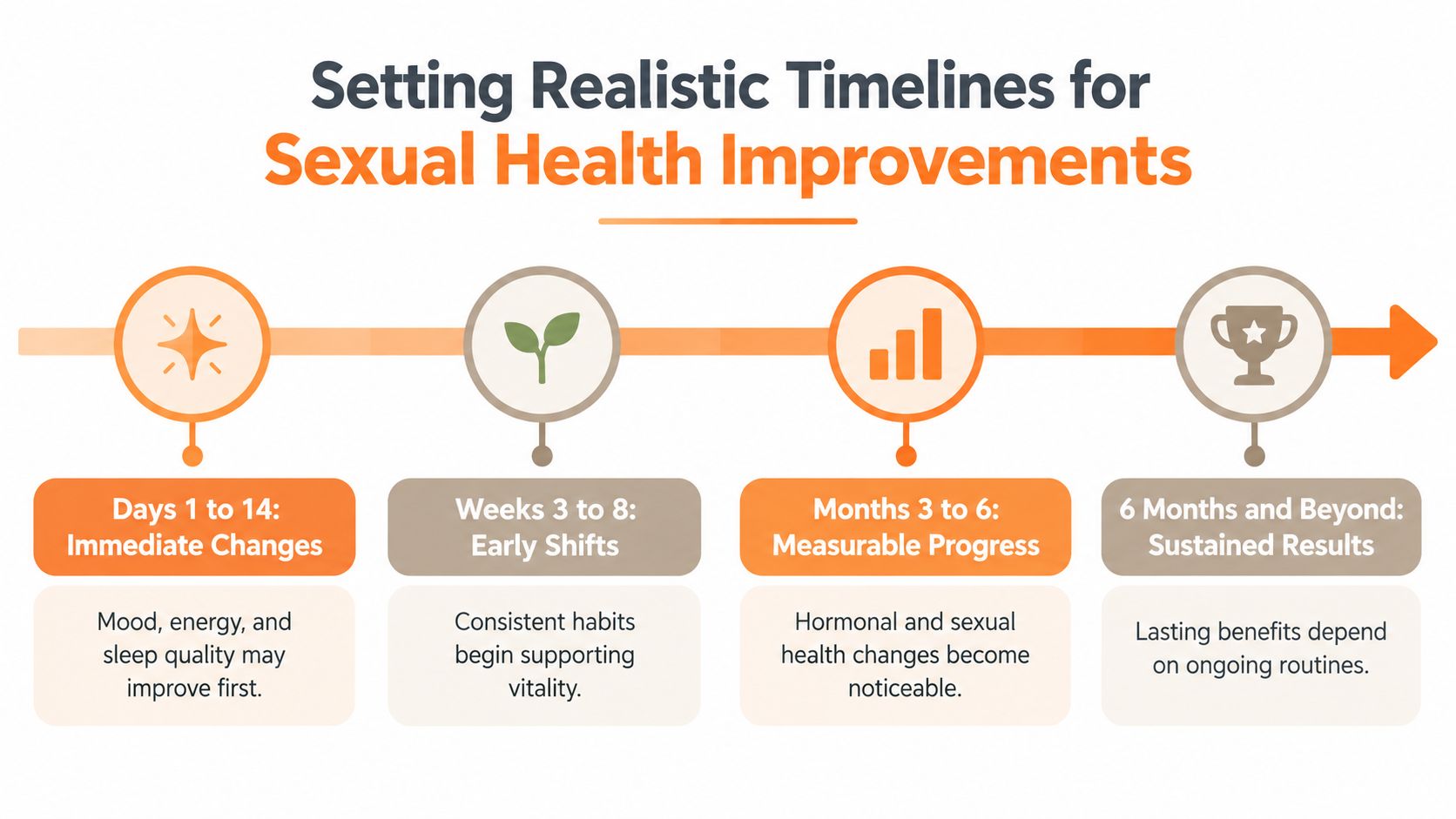
A man who changes his routine on Monday shouldn't judge the entire approach by Wednesday. Sleep quality, mood, and perceived energy may shift before sexual desire does, while desire may change without producing an immediate change in erection quality. The sequence varies because these outcomes depend on overlapping but distinct systems.
Separate early signals from lasting patterns
Guideline evidence indicates that when appropriately treated hypogonadism is present, improvements in sexual desire are often among the earliest effects, appearing within roughly 3 to 6 weeks, while erectile function, energy, and mood may change more gradually, according to the clinical review of testosterone treatment timelines. That timeline applies to clinically appropriate treatment of hypogonadism, not to men with normal testosterone and not automatically to supplements.
A sensible tracking method focuses on patterns rather than one unusually good or bad day:
- First days: Sleep quality, morning energy, mood, and stress may be the earliest observations.
- Following weeks: Consistent habits may make energy and desire feel more stable.
- Later assessment: Sexual desire, erection firmness, orgasm, ejaculation, and relationship satisfaction should be recorded separately.
- Any point: Sudden, persistent, or distressing symptoms deserve medical evaluation rather than escalating doses.
Progress isn't one sensation. More desire with inconsistent erections calls for a different conversation than stable erections with no interest.
The same principle applies to supplements. Gradual support of normal physiological processes is more plausible than an immediate transformation, and a routine should be judged alongside sleep, stress, diet, exercise, and medication context. Men shouldn't increase a product's dose just because one outcome hasn't changed.
Frequently Asked Questions About Male Sexual Libido
Is low libido always a sign of low testosterone?
No. Testosterone is one influence within a broader neuroendocrine system. Sleep disruption, stress, depression, relationship context, medications, alcohol, metabolic health, and exercise can all affect desire. Testosterone deficiency requires compatible symptoms and consistently low morning measurements, not a symptom alone.
Can a man have desire but still have erection problems?
Yes. Libido describes interest or motivation, while erection quality describes a physical response. They can change independently, so a man shouldn't assume that stronger desire will automatically produce consistent erections. Persistent erection concerns warrant qualified medical assessment.
When should medical evaluation happen?
Evaluation is appropriate when low desire is persistent, distressing, sudden, or accompanied by other changes such as fatigue, mood symptoms, medication changes, or sexual-function difficulties. A clinician can review health history, medications, sleep, mood, cardiometabolic factors, and properly timed laboratory testing.
Do zinc or L-arginine guarantee better sexual function?
No. Zinc supports normal reproductive physiology, but supplementation doesn't guarantee improved fertility or libido in every population. L-arginine participates in nitric-oxide-related blood-flow pathways, yet trial results in men with organic erectile dysfunction were limited and shouldn't be generalized to every man.
How should supplements fit into a wellness routine?
They should complement sleep, movement, balanced nutrition, stress management, and appropriate care. Ingredient labels, serving directions, testing standards, medication interactions, and individual health needs all deserve attention. Persistent symptoms shouldn't be managed by supplements alone.
These statements have not been evaluated by the Food and Drug Administration. This product is not intended to diagnose, treat, cure, or prevent any disease.
SEMEX offers a daily men's wellness supplement with zinc, L-arginine, and additional volume- and vitality-focused ingredients for men who want structured nutritional support alongside healthy routines. Men can review the formula and product details at SEMEX and discuss persistent or distressing symptoms with a qualified healthcare professional.