

How to Increase Male Libido Naturally: A Practical Guide
Just one week of restricting sleep to five hours can reduce testosterone by 10–15%, making sleep the most effective starting point for men who want to increase male libido naturally. A supplement may support a specific bottleneck, but it can't compensate for persistent sleep loss, unmanaged stress, or declining fitness.
The popular advice usually starts with a bottle. A more useful approach starts with the body and daily routine that determine whether sexual desire has room to show up. Libido often reflects energy, mood, recovery, metabolic health, confidence, and relationship safety as much as it reflects any single ingredient.
That doesn't make supplements irrelevant. It means they work best as targeted support, not as a substitute for the foundations that influence male vitality every day.
Table of Contents
- Why Quick Fixes Miss the Real Root Causes
- Building a Daily Routine That Supports Natural Drive
- Smart Supplement Choices Backed by Ingredient Research
- Navigating Relationship Dynamics That Affect Desire
- How to Choose Between Lifestyle Work and Supplement Support
- A Simple 30-Day Plan to Track Real Progress
Why Quick Fixes Miss the Real Root Causes
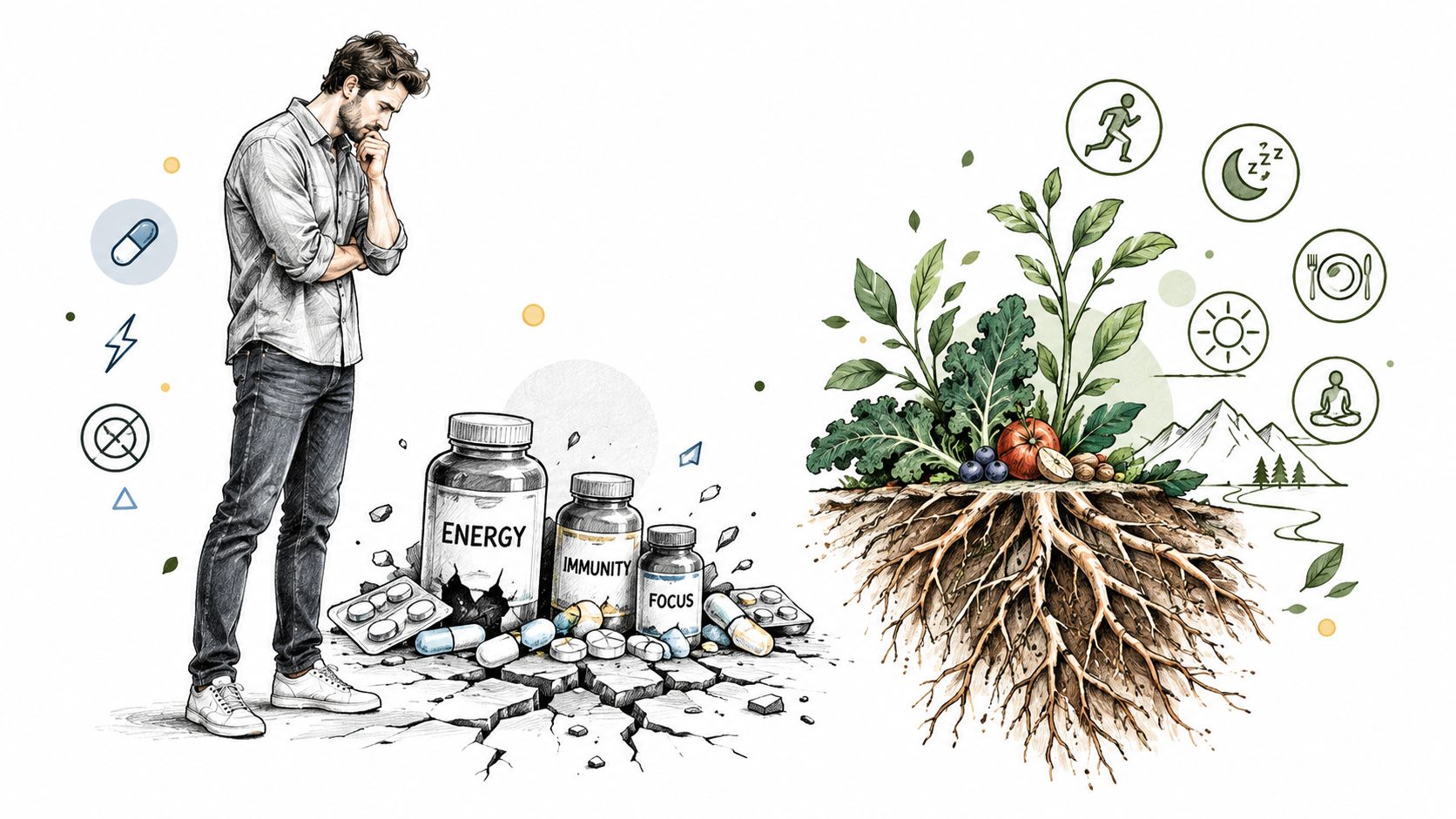
The fastest-selling solution to low desire is often the least useful starting point: add a supplement and wait. That approach treats libido as an isolated switch when it frequently behaves more like a dashboard light. When sleep deteriorates, stress stays high, body composition changes, or activity falls away, sexual desire may decline before a man identifies the broader problem.
A 2026 review links declining testosterone with modifiable factors including obesity, physical inactivity, unhealthy diet, chronic stress, poor sleep, and endocrine-disrupting chemicals. The same review notes that limiting sleep to five hours for one week reduced testosterone by 10–15% in healthy young men (ConsumerLab's review of enhancement supplements). That finding changes the order of operations. Sleep isn't a minor wellness detail. It can be a primary libido intervention.
Libido follows the condition of the system
Men often notice low desire after a demanding period at work, several weeks of poor recovery, increased alcohol intake, or a long stretch without meaningful exercise. The sexual symptom gets attention, while the trigger remains untouched. A product may create a sense of action, but it won't necessarily address the reason desire changed.
Stress matters for another reason. A body focused on constant pressure, insufficient recovery, and poor sleep has fewer resources for relaxed sexual interest. Relationship tension can amplify the same pattern, especially when sex becomes another area where performance is judged.
Practical rule: Before buying a libido product, identify the largest recent change in sleep, stress, training, weight, alcohol use, mood, or relationship quality.
What quick fixes get wrong
A supplement-first approach also encourages unrealistic timelines. Some ingredients require consistent use over several weeks, and their effects may be modest or most noticeable when a specific need exists. Zinc, for example, supports normal male reproductive function when intake is low, but it isn't a guaranteed libido booster.
The more reliable strategy is to treat desire as information. If libido changes alongside energy, sleep, or body composition, lifestyle correction deserves priority. If those areas are stable but a specific deficiency, stress pattern, or circulation concern remains, targeted support may have a more logical place.
Building a Daily Routine That Supports Natural Drive
A practical routine doesn't need to be extreme. It needs to be repeatable enough that training, sleep, and stress control become normal parts of the week rather than emergency responses after libido has already fallen.
Start with strength and recovery
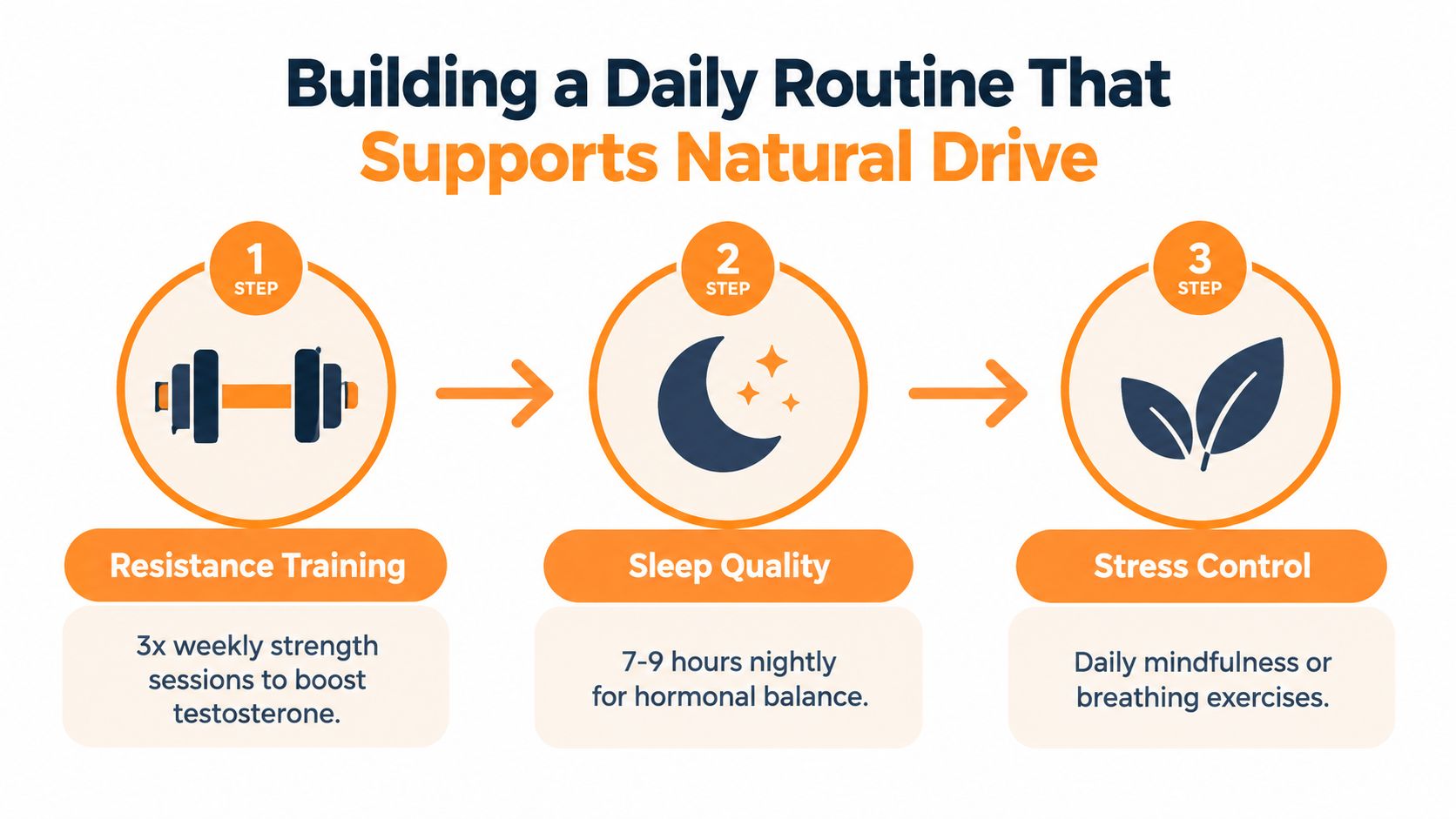
Resistance training should anchor the physical side of the routine. A review-style source associates regular exercise three to four times per week with measurably higher testosterone and recommends building a routine that includes strength work (exercise and sleep guidance for male libido). Sessions can focus on major movement patterns such as squats, presses, rows, hinges, and carries, with intensity adjusted to current fitness.
Consistency matters more than destroying the body in one session. Excessive training combined with inadequate food and sleep can leave a man fatigued, irritable, and less interested in sex. The target is a body that feels capable and recovered, not one that treats every workout as a test of toughness.
Protect the sleep window
The routine should reserve 7–9 hours for sleep each night, rather than treating sleep as whatever remains after work, screens, and late-night obligations. A consistent bedtime, a darker room, and a short wind-down period can make the target more realistic. Men who regularly wake unrefreshed should also consider whether snoring, breathing interruptions, or persistent insomnia deserves professional attention.
The sleep restriction finding is particularly useful because it explains why libido can drop even when training continues. A man may keep lifting while losing the hormonal and mental benefits of adequate recovery.
Reduce the daily pressure load
Stress control doesn't require an elaborate retreat. A brief breathing exercise, a walk without a phone, a written end-of-day shutdown list, or a few minutes of mindfulness can create separation between work pressure and personal life. Alcohol reduction and gradual weight management also belong in this category because they can influence energy, sleep, mood, and metabolic health.
A simple weekly rhythm might look like this:
- Train regularly: Schedule strength sessions three to four times weekly, with easier movement on recovery days.
- Sleep deliberately: Protect a 7–9-hour sleep opportunity and keep wake times reasonably consistent.
- Lower stimulation: Use a short evening routine that helps the nervous system shift away from work.
- Review after several weeks: Track desire alongside energy, mood, recovery, and relationship connection rather than expecting an overnight change.
A daily supplement routine for men can fit around these habits, but it shouldn't replace them. Benefits from lifestyle work aren't always immediate, yet they tend to support several parts of male wellbeing at once.
Smart Supplement Choices Backed by Ingredient Research
Once the foundations are credible, supplements become easier to evaluate. The right question isn't “Which pill increases libido fastest?” It's “Which ingredient matches the bottleneck?”
Match the ingredient to the need
Ashwagandha has the clearest controlled human evidence in this group for sexual desire and testosterone. In a major 2022 randomized, double-blind, placebo-controlled trial involving adult men, the treatment group's SDI-2 sexual desire score reached 27.87 ± 12.40 at week 8, while the placebo group's score was 13.63 ± 5.86. The between-group difference was 14.24 points, with a 95% confidence interval of 9.81–18.67 and p < 0.001, and the treatment group's score increased by 61.9% over the study period. The same trial reported a mean between-group testosterone difference of 66.52 units, with a 95% confidence interval of 52.34–80.70 and p < 0.0001 (the controlled ashwagandha trial). These results support a gradual, roughly eight-week expectation, not an instant effect.
Zinc is more relevant to deficiency correction than to indiscriminate libido enhancement. It plays a role in spermatogenesis, sperm motility, semen quality, normal fertilization, and sex-hormone handling, and zinc deficiency can impair spermatogenesis and affect testosterone concentration (NIH-reviewed zinc evidence). However, the research is mixed. A 2016 meta-analysis reported improvements in semen volume, sperm motility, and normal sperm morphology, with standardized mean differences of -0.99, -1.82, and -0.75, respectively (the zinc and male infertility meta-analysis). A large NIH-linked trial found no meaningful fertility benefit from zinc plus folic acid, with live births occurring in 34% of the supplement group and 35% of the placebo group (the NIH fertility trial summary).
Tongkat ali may fit men interested in stress and hormone-related support, but its evidence shouldn't be inflated. A 12-week randomized trial of 109 men reported improved free testosterone and sexual satisfaction, according to an ingredient-focused clinical summary (ingredient research on libido supplements). Circulation-focused ingredients such as L-arginine or citrulline address blood-flow support rather than desire itself. That distinction matters because erection quality and sexual interest overlap, but they aren't identical outcomes.
Quality and timing matter
Quality control deserves as much attention as the ingredient list. A 2026 ConsumerLab review found that only 3 of 10 selected sexual-enhancement products passed quality tests, while FDA-linked analysis cited in related coverage found undeclared sildenafil in a recalled sexual-enhancement product (coverage of supplement quality and testing). A legitimate label, transparent serving instructions, testing information, and restrained claims are more useful signals than aggressive promises.
A daily formula such as SEMEX combines zinc, L-arginine, sunflower lecithin, bromelain, maca root, Panax ginseng, ashwagandha, tongkat ali, saw palmetto, and horny goat weed. It should be considered as nutritional support for male wellness, not as a treatment, and individual ingredients should be judged by their own evidence and appropriate timeline. A guide to supplements for male libido can help compare those roles without turning a blended formula into a guarantee.
Navigating Relationship Dynamics That Affect Desire
A man can improve sleep, train consistently, and still feel little desire if the relationship context creates pressure. Sexual interest often weakens when conversations become defensive, affection becomes transactional, or every intimate moment carries an expectation of performance.
The solution isn't to demand more sex. Pressure usually makes desire less spontaneous. A better opening sounds like, “How has closeness felt for both of us lately?” That invites information instead of assigning blame. The conversation can include workload, privacy, touch, conflict, body confidence, and what each partner considers enjoyable.
Rebuild connection without making sex a test
Small changes often work better than dramatic gestures. Partners can set aside device-free time, share an activity outside the usual routine, or reintroduce affectionate touch without treating it as a promise of intercourse. Novelty doesn't need to mean something extreme. A different setting, a new shared plan, or a more direct discussion of preferences can interrupt repetitive patterns.
Stress also travels between partners. If one person carries most household responsibilities or both partners remain mentally at work, desire may have little space to emerge. Dividing practical tasks more fairly can be a sexual-health intervention in the ordinary sense, because it reduces resentment and creates capacity for attention.
Desire grows more easily when both partners feel safe to communicate without being evaluated.
Men should also separate libido from performance anxiety. A man may want intimacy while worrying about erection reliability, stamina, or disappointing a partner. Naming that fear can reduce its power, particularly when the couple agrees that connection matters more than a particular outcome.
A resource on relationship satisfaction and intimacy can support that broader conversation. If conflict, distress, or persistent sexual difficulty continues, a qualified healthcare professional or sex therapist offers more appropriate guidance than another supplement purchase.

How to Choose Between Lifestyle Work and Supplement Support
The choice becomes clearer when the suspected bottleneck is explicit. A man sleeping poorly, feeling chronically stressed, and exercising rarely has a lifestyle problem to address first. A man with stable habits but a suspected nutrient gap may have a reasonable case for targeted supplementation, ideally with professional input.
| Situation | More sensible first move |
|---|---|
| Poor sleep or irregular schedule | Protect the sleep window and investigate persistent sleep problems |
| High stress and low recovery | Reduce pressure load, add simple stress-control habits, and moderate training |
| Low dietary zinc intake or suspected deficiency | Discuss assessment and appropriate zinc intake with a clinician |
| Desire changes alongside relationship strain | Start a non-accusatory conversation and consider counseling support |
| Persistent symptoms despite consistent habits | Seek medical evaluation rather than stacking products |
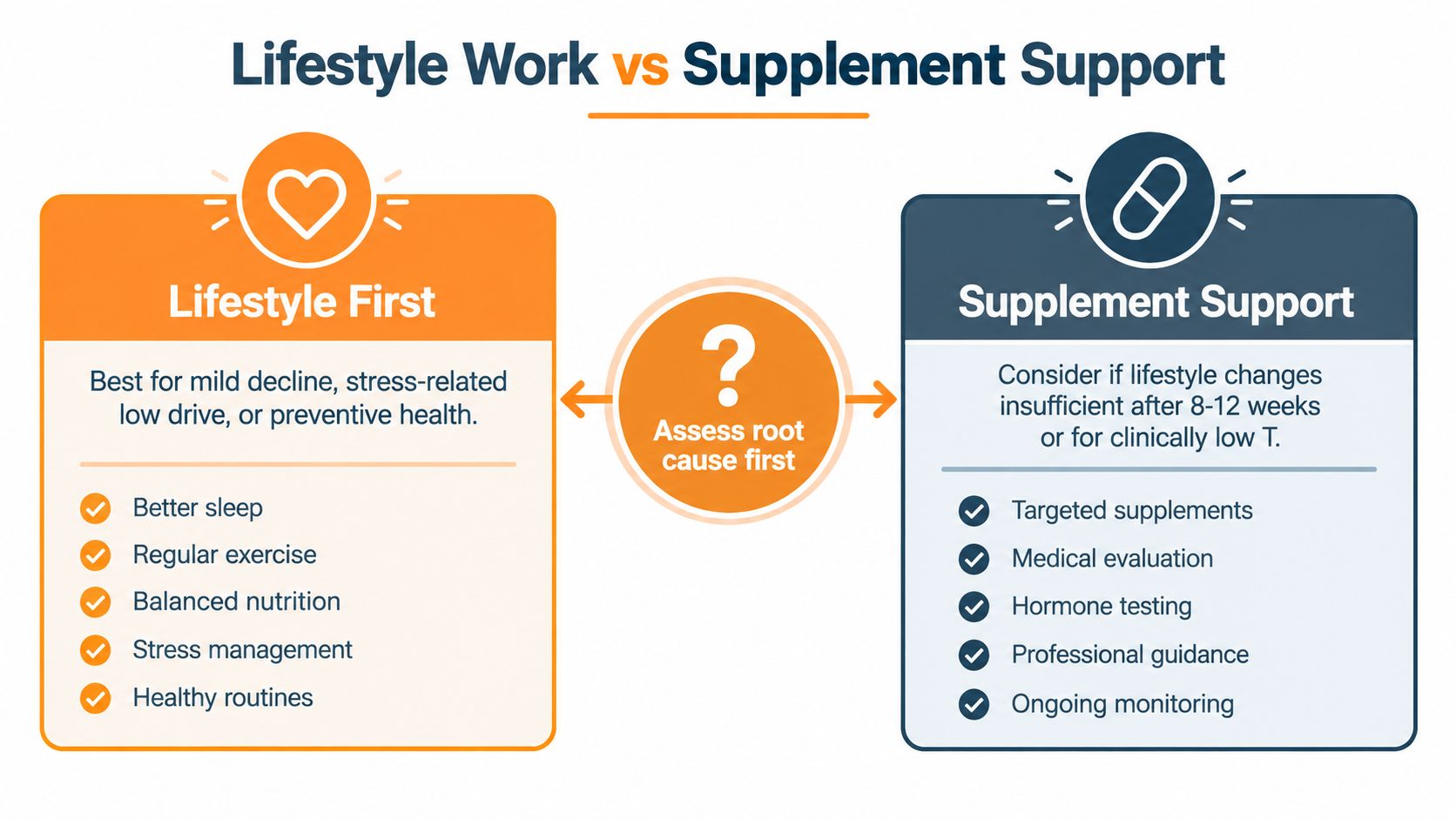
Supplements make the most sense when they match a defined need. Ashwagandha may be relevant to stress-related decline, zinc to low intake or deficiency, and L-arginine or citrulline to circulation support. None should be presented as equivalent to medically supervised hormone therapy when a clinically significant hormonal issue exists.
Professional guidance becomes the smarter route when low desire is sudden, persistent, distressing, or accompanied by other concerning changes. A clinician can review medications, mental health, sleep, endocrine factors, and general health instead of guessing from a marketing label.
A Simple 30-Day Plan to Track Real Progress
A month-long experiment can reveal whether the main issue is routine, recovery, relationship context, or a need for further evaluation.
- Days 1–7: Record sleep duration, energy, mood, training, alcohol use, and sexual desire without trying to change everything at once.
- Days 8–14: Establish resistance training three to four times weekly, protect the 7–9-hour sleep opportunity, and add one daily stress-control practice.
- Days 15–21: Review recovery and relationship patterns. Reduce late-night stimulation and schedule relaxed, pressure-free connection with a partner if applicable.
- Days 22–30: Assess trends rather than a single good or bad day. Note whether energy, confidence, mood, recovery, and desire are moving together.
A supplement can be introduced only after the routine is clear enough to judge, and its ingredient, dosage, quality testing, and expected timeline should be understood before use. If libido remains low or worsens despite consistent changes, professional evaluation is more useful than adding another product.
SEMEX offers a daily men's wellness formula with ingredients including zinc, L-arginine, sunflower lecithin, bromelain, maca root, Panax ginseng, and ashwagandha, designed to support semen volume, taste, and overall vitality. Men who want to compare targeted supplement support with the lifestyle plan above can visit SEMEX and review the formula, testing information, and usage details. These statements have not been evaluated by the Food and Drug Administration. This product is not intended to diagnose, treat, cure, or prevent any disease.