

How Does Sperm Taste Like and What Changes It
Eating pineapple won't instantly turn semen sweet. That popular internet tip sounds simple, but it treats a complex biological fluid as though one ingredient controls its entire flavor. The honest answer to how does sperm taste like is more variable: people commonly describe semen as salty, bitter, sweet, or metallic, and perceptions can differ between individuals and even between occasions.
The confusion starts with the word “sperm.” Sperm cells make up only a small part of semen. Most of the fluid comes from the prostate and seminal vesicles, so flavor reflects a mixture of sugars, minerals, amino acids, enzymes, and amines rather than a single food or supplement. Health-focused guidance on semen taste is most useful when it separates anecdote from established reproductive biology.
Table of Contents
- The Reality Behind Semen Flavor Myths
- Understanding the Chemistry of Seminal Fluid
- How Lifestyle and Daily Habits Influence Perception
- Key Ingredients That Support Reproductive Health
- Building a Consistent Daily Wellness Routine
- Prioritizing Hygiene and Shared Intimacy
The Reality Behind Semen Flavor Myths
Why one food can't control the result
There's no definitive clinical proof that a specific fruit, drink, or supplement reliably makes semen taste sweeter. A historical BBC account of a controlled taste experiment described men following a bland protocol for three days, avoiding alcohol and strongly flavored foods such as garlic and asparagus before providing samples. That setup shows that researchers have treated taste as a diet-sensitive sensory question, but it doesn't establish that pineapple or any other single food produces a predictable result.
Semen's flavor is generally described as salty, bitter, sweet, or metallic because it contains a complex mix of sugars, minerals, amino acids, and amines, as summarized in the biological overview of semen composition. Some people also perceive a warm, salty profile with a slightly chlorine-like smell. Others notice more bitter, sweet, or metallic notes.
Practical rule: A viral food hack may be an anecdote, but it isn't the same as a controlled human study.
A Columbia University sexual-health answer states that no definitive link between diet, physical activity, and semen taste has been scientifically established, and many online articles turn personal experiences into universal promises. Taste may shift with hydration, recent meals, smoking, alcohol, hygiene, and general health, yet those influences don't allow anyone to predict a specific flavor with confidence.
The more accurate expectation is modest. A balanced lifestyle may support a more neutral baseline, while individual chemistry remains important. Partners can also perceive the same fluid differently, so communication and comfort matter more than chasing a guaranteed sweet taste.
Understanding the Chemistry of Seminal Fluid
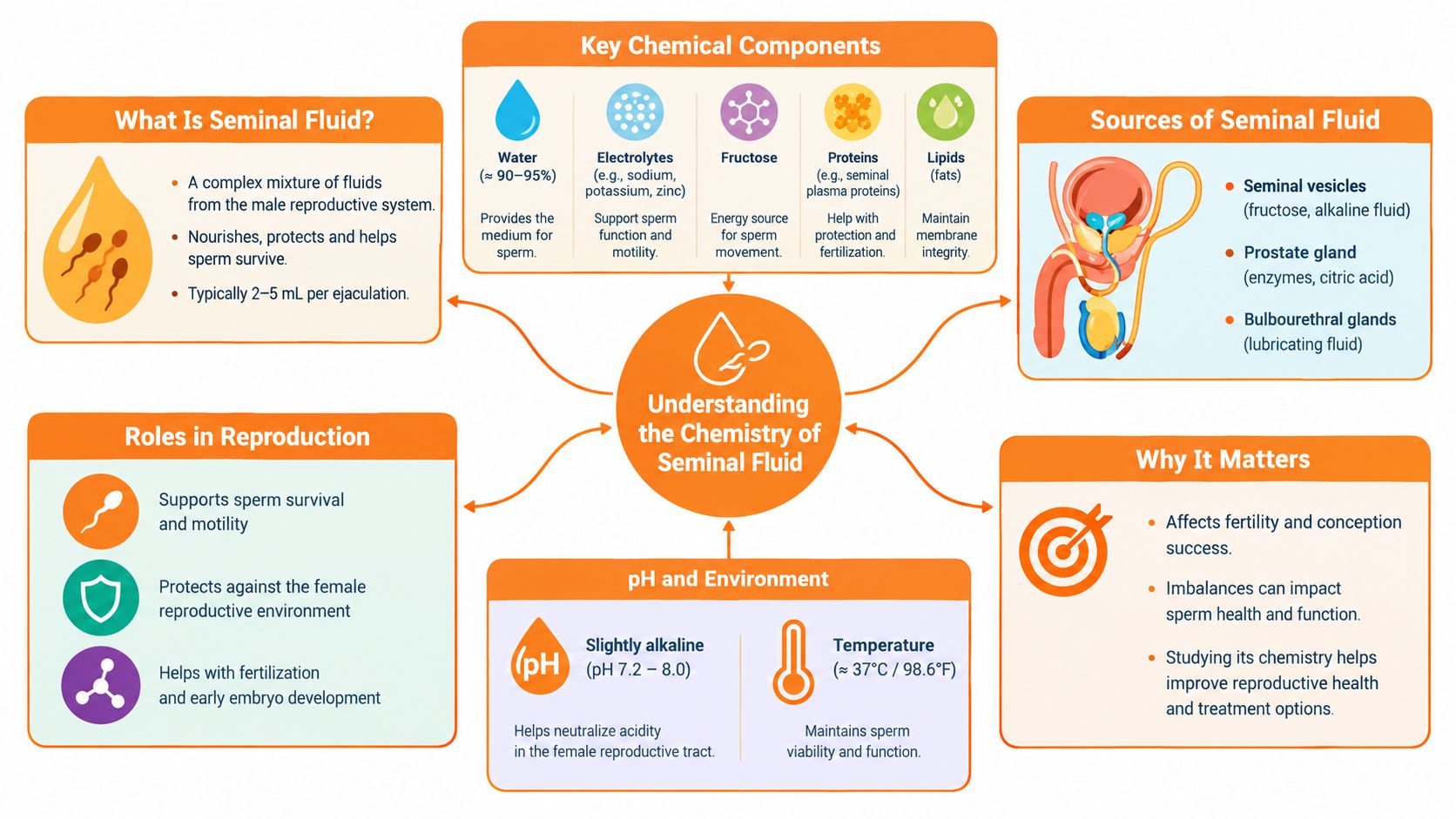
Semen is better understood as a transport fluid than as a container filled mainly with sperm. Sperm cells account for only about 5% of semen, while the remaining fluid comes largely from the prostate gland and seminal vesicles and contains sugars, amino acids, enzymes, zinc, and other compounds, according to this review of semen flavor and composition.
That distinction explains why “sperm taste” is an imprecise phrase. The sperm cells themselves aren't the main driver of the sensory experience. Seminal plasma surrounds and supports them, and its chemical mixture creates the baseline profile that people describe as salty, bitter, slightly sweet, metallic, or alkaline.
What the fluid contributes
The prostate and seminal vesicles add different substances that help form the fluid's texture, chemistry, and reproductive function. Fructose and other sugars provide energy for sperm, while amino acids, enzymes, minerals, and amines contribute to the overall composition. Changes in the concentration or balance of these compounds can affect intensity and perception, but that doesn't mean a meal can reliably rewrite the fluid immediately.
The fluid also contains zinc in a biologically meaningful concentration. A JAMA discussion of seminal fluid notes that seminal fluid contains about 30 times more zinc than blood. Zinc is therefore relevant to semen characteristics and reproductive biology, not merely a minor ingredient added by wellness marketing.
A useful analogy is soup. Sperm cells are one ingredient, but the broth determines most of the taste. The broth comes from several glands and contains many dissolved substances, so its final profile depends on the whole mixture, not just one component.
For readers comparing products, a factual guide to nutrients found in sperm should be read as a biology resource, not as proof that any ingredient changes flavor. Research supports the importance of seminal fluid for reproductive function far more strongly than it supports claims about predictable taste changes.
How Lifestyle and Daily Habits Influence Perception
Flavor reports often reflect the broader condition of the body rather than a single meal. Hydration, smoking, alcohol, caffeine, and sulfur-rich foods are repeatedly associated with stronger or less pleasant taste descriptions in practical health discussions, while a bland diet and alcohol avoidance appeared in one historical taste-testing protocol. The summary of lifestyle factors linked with semen taste descriptions also emphasizes that the evidence remains limited.
Habits that can create stronger impressions
Hydration is a sensible starting point because the body relies on fluid balance across many systems. Drinking water regularly supports ordinary bodily function, but it shouldn't be marketed as a guaranteed flavor modifier. A dehydrated person may notice more concentrated bodily fluids, yet that observation doesn't prove a fixed change in semen chemistry.
Smoking and alcohol deserve attention for health reasons independent of taste. Both can introduce unpleasant sensory associations and undermine broader reproductive wellness. Caffeine and sulfur-rich foods, including strongly flavored ingredients, may also be linked with sharper or more noticeable descriptions, but individual responses vary.
A practical routine can stay simple:
- Drink water consistently: Regular hydration supports normal fluid balance instead of relying on a last-minute fix.
- Limit smoking and alcohol: These habits affect overall wellness and may contribute to harsher taste impressions.
- Notice personal patterns: A short food and lifestyle journal can reveal whether a particular meal seems to influence perception.
- Keep meals balanced: Whole foods support general health better than an extreme, restrictive flavor protocol.
Small, repeatable habits are more credible than a dramatic promise attached to one food.
No peer-reviewed study has directly measured flavor changes from controlled diet interventions in a way that establishes a reliable food-based formula. That leaves a clear boundary between what can be reasonably practiced and what can be claimed. A clean diet, adequate hydration, and reduced exposure to smoke or excess alcohol may support a healthier baseline, but they don't guarantee that semen will taste sweet.
Key Ingredients That Support Reproductive Health
Flavor claims often distract from a more useful question: which nutrients support the reproductive system itself? Zinc has the strongest role in this discussion. Peer-reviewed reviews identify it as an essential trace element for male reproductive function, with deficiency associated with reduced spermatogenesis, poorer sperm quality, and lower testosterone. Seminal plasma zinc can also be a stronger marker of semen quality than blood zinc, as discussed in this review of zinc and male reproductive function.
A recent review reports that semen zinc concentrations are associated with normospermia, and cited human studies reported concentrations of 0.23 to 2.30 mg/mL. The same review reports that zinc supplementation has been associated with improvements in semen volume, sperm count, motility, and morphology among men with suboptimal zinc status. Those findings concern reproductive parameters, not a guaranteed taste change, so the distinction matters.
How commonly discussed ingredients fit
| Ingredient | Primary Biological Role | Relevance to Seminal Fluid |
|---|---|---|
| Zinc | Supports normal male reproductive function and spermatogenesis | Highly concentrated in seminal fluid and associated with semen quality |
| L-Arginine | Serves as a precursor involved in nitric oxide production and blood-flow support | Supports broader sexual and circulatory wellness rather than guaranteeing a flavor change |
| Bromelain | An enzyme complex traditionally used in wellness formulations | Included in some formulations aimed at supporting digestion and overall wellness, with flavor claims requiring caution |
| Sunflower Lecithin | Supplies phospholipids used in cellular structures | Relevant to general cell and fluid composition, without definitive proof of a taste effect |
Zinc shouldn't be taken indiscriminately. A qualified healthcare professional can help assess dietary intake, supplement suitability, and possible interactions. The ingredient guide for sperm-health supplements can help readers compare formulas, but ingredient presence alone doesn't establish a product-level medical outcome.
The most defensible approach is to choose ingredients for their known biological roles, not for an exaggerated promise about flavor. Zinc has meaningful reproductive evidence. L-arginine and bromelain may appear in men's wellness formulas, but their roles should be described carefully and separately from claims about semen taste.
Building a Consistent Daily Wellness Routine
Quick fixes appeal because taste seems immediate. Reproductive wellness works differently. The body absorbs nutrients, maintains tissue function, and produces seminal fluid through ongoing biological processes, so a consistent routine makes more sense than changing meals for a single intimate moment.
A routine built around fundamentals
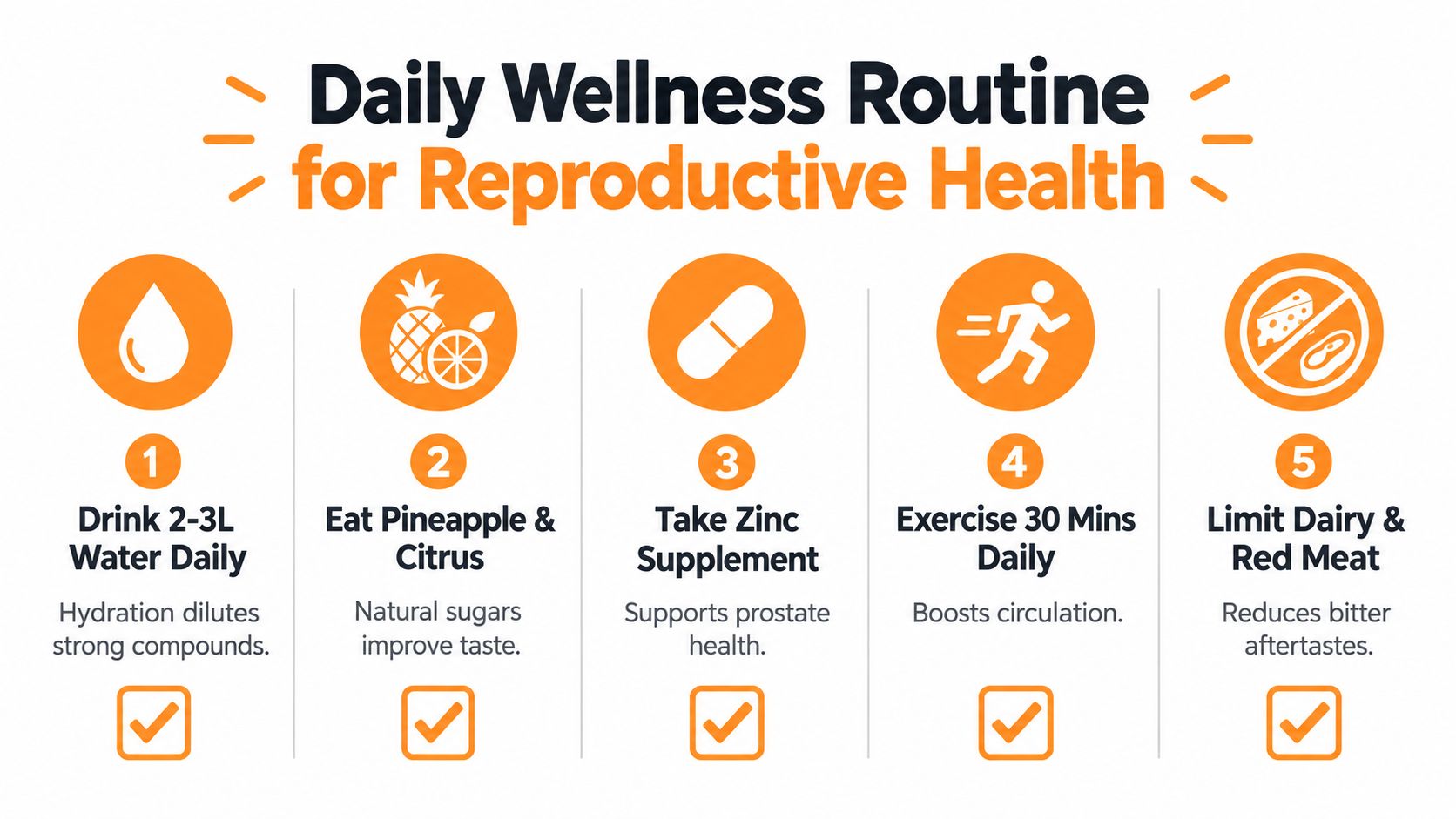
Start with the basics: regular water intake, balanced meals, physical activity, adequate sleep, personal hygiene, and lower exposure to smoking and excess alcohol. These choices support general wellness without pretending to offer a guaranteed flavor outcome. A supplement can complement those habits, but it can't replace them.
The daily approach can then become more specific:
- Review the formula. Look for clearly labeled ingredients and amounts rather than vague proprietary promises.
- Match ingredients to goals. Zinc relates to reproductive function, while L-arginine relates to nitric oxide and circulation support. Bromelain is an enzyme used in wellness formulations, not a proven flavor switch.
- Check manufacturing details. Vegan, non-GMO, third-party tested products made in a cGMP-registered facility offer useful transparency points.
- Follow the label consistently. A routine is easier to evaluate when intake isn't constantly changing.
Some men's formulas combine zinc, L-arginine, sunflower lecithin, and bromelain with ingredients such as Maca Root, Ashwagandha, Panax Ginseng, Tongkat Ali, Saw Palmetto, and Horny Goat Weed. SEMEX is one example of a daily supplement formulated around semen volume and taste support, with a broader men's wellness blend. It's vegan, non-GMO, made in the USA in a cGMP-registered facility, and third-party tested by Eurofins for microbials, heavy metals, and adulterants.
Independent research summarized in a recent review of zinc and semen quality reports that zinc supplementation has been associated with improved semen volume, sperm count, motility, and morphology in men with suboptimal zinc status. Those findings support consistent nutritional attention, not an instant taste guarantee.
Prioritizing Hygiene and Shared Intimacy
A partner's experience often depends more on cleanliness, comfort, and communication than on a small dietary adjustment. Regular washing, clean hands, and appropriate grooming can reduce avoidable odors and make oral intimacy more comfortable. Hygiene won't change the underlying chemistry of semen, but it can change the overall sensory experience around intimacy.
A couple might notice a stronger flavor after a day involving little water, alcohol, smoking, or strongly seasoned food. Another couple might notice no meaningful difference. Neither experience proves a universal rule, because individual variation is substantial and research hasn't established that specific foods reliably alter semen flavor.
Recent consumer health guidance on semen taste highlights the gap between broad flavor descriptions and the limited evidence behind food-based claims. Partners can discuss preferences without treating taste as a test of health or masculinity. Persistent unusual odor, pain, blood, irritation, or other concerning symptoms warrant medical advice rather than a supplement experiment.
The mature approach combines realistic expectations with steady habits. Cleanliness supports shared comfort, balanced nutrition supports general wellness, and evidence-based ingredients may support reproductive function when appropriate. No routine can promise a particular flavor, but a respectful conversation can make intimacy better informed and less pressured.
These statements have not been evaluated by the Food and Drug Administration. This product is not intended to diagnose, treat, cure, or prevent any disease.
SEMEX offers a daily men's wellness formula combining zinc, L-arginine, sunflower lecithin, bromelain, and additional vitality-focused ingredients to support semen volume and taste as part of a consistent routine. Men comparing ingredient transparency, testing, and manufacturing standards can visit SEMEX to review the formula and product details.