

Does Tongkat Ali Increase Testosterone? an Evidence Guide
A 2022 meta-analysis found that tongkat ali produced a statistically significant increase in total testosterone, with a pooled effect size of SMD = 1.352 and p = 0.001. The strongest signal appears in men with low or low-normal baseline testosterone, not as a universal boost for every healthy user.
That distinction matters because “increase testosterone” can describe several different outcomes. A rise in total testosterone isn't automatically a rise in free testosterone, a symptom improvement, or a durable change that continues after supplementation stops. The useful question isn't only whether tongkat ali works, but for whom, under which conditions, with which extract, and according to which hormone measurement.
Table of Contents
- What the Current Evidence Actually Shows
- What Tongkat Ali Is and How It May Affect Testosterone
- The Human Clinical Trials Broken Down
- Where the Testosterone Signal Breaks Down
- Typical Dosing, Duration, and Product Quality
- How Tongkat Ali Compares to Other Testosterone-Supporting Ingredients
- Safety, Side Effects, and Interactions to Consider
- A Practical Framework for Deciding If It's Worth Trying
What the Current Evidence Actually Shows
The clearest positive signal comes from the 2022 systematic review and meta-analysis of clinical trials. Across the pooled evidence, Eurycoma longifolia was associated with a large standardized increase in total testosterone, measured as SMD = 1.352, with a 95% confidence interval from 0.565 to 2.138 and p = 0.001.
A standardized mean difference is useful when clinical trials measure the same outcome in different ways. It expresses the difference between tongkat ali and placebo in standard-deviation units rather than in a single hormone unit. An SMD above one represents a large pooled effect, not a marginal change. Still, that number shouldn't be treated as a guaranteed rise for an individual because the review combined trials with different populations, extracts, durations, and baseline testosterone levels.
Why the pooled result isn't the whole answer
Meta-analysis strengthens the evidence by combining multiple randomized trials, but it doesn't erase differences between those trials. Some participants were healthy volunteers, while others had hypogonadism or lower testosterone at the start. Those groups don't have the same room for a supplement to change a hormone measurement.
The review supports tongkat ali as a possible testosterone-supporting supplement, while also calling for more clinical research before routine use. Its conclusion is therefore stronger than “there's no evidence,” but more cautious than “tongkat ali reliably boosts testosterone.”
| Metric | Value | What It Means |
|---|---|---|
| Pooled effect on total testosterone | SMD = 1.352 | The overall standardized effect was large |
| Statistical significance | p = 0.001 | The pooled result was statistically significant |
| Confidence interval | 0.565 to 2.138 | The estimated effect remained positive across the interval |
| Main outcome | Total testosterone | The result doesn't establish a consistent free-testosterone increase |
| Most relevant population | Men with low or low-normal levels | The signal isn't proven to be universal in eugonadal men |
The practical interpretation is conditional. Tongkat ali may help move total testosterone in some men, particularly when baseline levels are low, but the evidence doesn't establish a dependable hormone boost in men whose testosterone is already normal. Individual trials and the details of hormone measurement matter more than the headline alone.
What Tongkat Ali Is and How It May Affect Testosterone
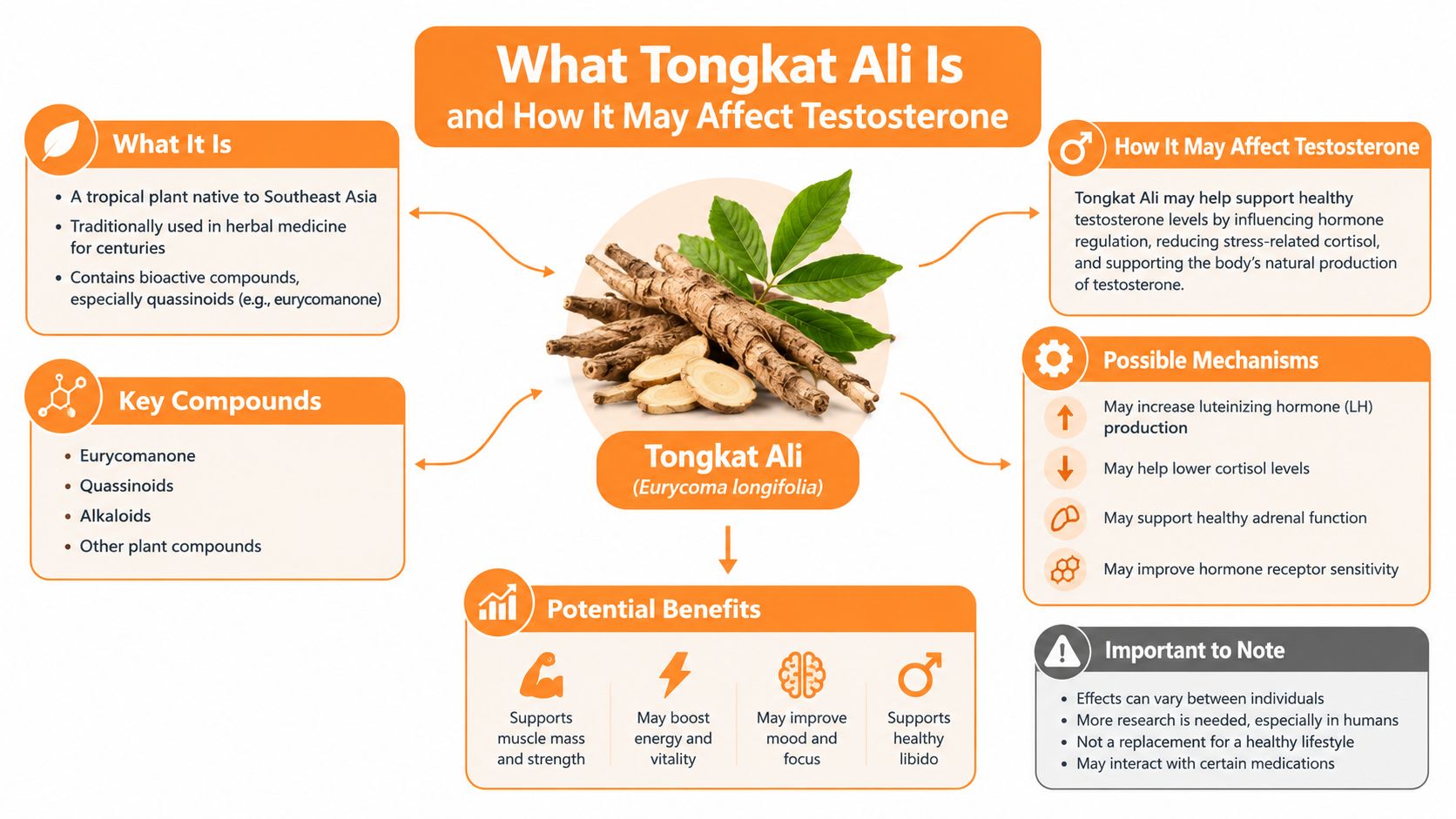
Tongkat ali is the common name for Eurycoma longifolia, a botanical ingredient used in root extracts. Compounds discussed in connection with the plant include quassinoids, such as eurycomanone, and glycoprotein fractions. Those compounds help describe an extract, but their presence doesn't prove that a finished supplement will reproduce the results of a clinical trial.
Several biological explanations have been proposed for a testosterone effect. One possibility involves Leydig cells, the cells in the testes that produce testosterone. In a simplified analogy, Leydig cells function like factory workers. A botanical extract might influence the signals that tell those workers how actively to produce hormone, but a proposed signal pathway isn't the same as a demonstrated clinical outcome.
Another hypothesis involves sex hormone-binding globulin, or SHBG. SHBG binds circulating sex hormones and affects how much testosterone remains unbound. Free testosterone is the fraction more directly available to tissues, so a change in total testosterone without a corresponding change in free testosterone can have a different practical meaning than marketing language suggests.
A third theory involves stress biology. The hypothalamic-pituitary-gonadal axis coordinates signals that influence testosterone production, and researchers have proposed that changes in stress or cortisol could indirectly affect that system. This is a plausible explanation for why a supplement might appear more relevant to stressed or low-testosterone men than to healthy men whose hormone regulation is already functioning normally.
Mechanisms remain less certain than outcomes
The human evidence is strongest for the question researchers measured, usually total testosterone. Mechanistic explanations are less conclusive because much of the proposed biology comes from laboratory or preclinical work. A convincing mechanism can explain a result, but it can't substitute for a well-controlled human trial.
That distinction also helps readers evaluate what tongkat ali extract means on a supplement label. The plant name identifies the botanical, not necessarily the extraction method, chemical profile, dose, or clinical equivalence of the product.
The most important biological limitation is the difference between total and free testosterone. A liver-safety review in LiverTox's discussion of Eurycoma longifolia notes that human studies have reported mild increases in serum total testosterone, usually after several weeks, but not a consistent increase in free testosterone or SHBG. That gap prevents a simple conclusion that every total-testosterone change will translate into a noticeable benefit.
The Human Clinical Trials Broken Down
Three human trial patterns explain why tongkat ali cannot be judged from one pooled estimate alone. The studies differ in age, baseline testosterone, exercise exposure, dose, duration, and extract preparation. Taken separately, they suggest a stronger signal in men who begin with lower testosterone, while longer protocols provide more opportunity to detect a delayed change.
The six-month exercise trial
A 2020 randomized, double-blind, placebo-controlled trial followed 45 men around age 47 for six months. Participants received either 200 mg of Eurycoma longifolia or the same herb alongside progressive exercise performed three times weekly for 60 minutes. The combined group improved erectile function and increased total testosterone. The tongkat-ali-only group also showed testosterone gains over time, according to the published trial report.
The trial reported total-testosterone changes from baseline of 48% in the combined-exercise group, 29.3% in the exercise-plus-placebo group, and 43.9% in the tongkat-ali-only group after six months. Exercise therefore formed an important part of the study context. These results do not establish that tongkat ali alone produces the same change in men with different hormone levels, exercise habits, or extract exposure.
The older men with low testosterone
A one-month study in 76 older men with late-onset hypogonadism reported that 200 mg daily of standardized tongkat ali increased the proportion of participants with normal testosterone values from 35.5% before treatment to 90.8% afterward, according to the study's published report.
This result is most relevant to men who started below a healthy reference range. They have more room for a measured value to move toward normal than men who already begin near the upper part of that range. The finding also concerns testosterone classification, not proof that every participant experienced the same symptom relief, sexual benefit, or physiological change.
The dose and timing study
A 2021 randomized, double-blind, placebo-controlled multicenter study in aging men found a statistically significant increase in total testosterone at week 12 with 100 mg daily. The 200 mg daily group showed significant increases at weeks 4, 8, and 12, compared with placebo, as reported in the published multicenter trial.
The timing is more informative than the claim that “200 mg works.” In this study, dose and duration both appeared relevant, with the higher dose producing an earlier measurable response. That does not show that continually increasing the dose would improve the outcome, or that another extract with the same milligram amount would behave identically.
| Study | Population | Dose & Duration | Total T Result | Key Caveat |
|---|---|---|---|---|
| Six-month randomized trial | 45 men around age 47 | 200 mg, six months, with separate exercise conditions | Gains over time, with the largest reported change in the combined-exercise group | Exercise and baseline status complicate attribution |
| Older-men study | 76 men with late-onset hypogonadism | 200 mg daily, one month | Normal testosterone values rose from 35.5% to 90.8% | The result applies to men with low baseline levels |
| Multicenter randomized trial | Aging men | 100 mg or 200 mg daily, 12 weeks | 100 mg significant at week 12, 200 mg significant at weeks 4, 8, and 12 | The extract and population were study-specific |
Practical rule: Trial dose and extract identity belong together. A label showing the same milligram amount does not make two preparations clinically interchangeable.
Across these studies, the positive signal is coherent but conditional. The 2022 meta-analysis reported a large pooled total-testosterone effect, with an SMD of 1.352, yet the individual trials show why that result should not be treated as a universal response. The signal is strongest in selected groups and for total testosterone. Questions about free testosterone and longer-term liver safety remain less settled, so the pooled estimate cannot answer every clinically relevant question.
Where the Testosterone Signal Breaks Down
The 2022 meta-analysis reported a large pooled effect on total testosterone, with an SMD of 1.352. That estimate becomes less persuasive when applied to every man, preparation, treatment length, and hormone measurement. The review also included trials with no clear improvement after three weeks or eight weeks, as described in the systematic review available through PMC.
Short protocols leave two competing explanations. Treatment may have ended before a delayed response could appear, or tongkat ali may have limited effects in healthy men. The available trials cannot separate those possibilities confidently. The practical conclusion is narrower than an immediate, universal testosterone boost: response appears more dependent on baseline status, study population, and duration.
Total testosterone is not free testosterone
Total testosterone is the measurement most often reported, yet it does not show how much hormone is available for tissues. The LiverTox review describes mild total-testosterone increases in some human studies, while consistent changes in free testosterone or SHBG have not been established. A rise in total T therefore does not automatically demonstrate a comparable change in the biologically available fraction.
Baseline status also changes the interpretation. Men with hypogonadism or low-normal testosterone may have more room to respond than healthy men whose levels are already within the normal range. Combining these populations can produce an impressive pooled estimate while offering limited guidance to a eugonadal man.
| Trial condition | Total T pattern | Free T and SHBG evidence | What the finding supports |
|---|---|---|---|
| Low or low-normal baseline levels | The clearest positive signal | Not consistently established | Possible clinical relevance, with limited certainty |
| Healthy men with normal levels | Small, delayed, or absent changes are possible | No reliable parallel benefit established | Mixed evidence |
| Protocols lasting three to eight weeks | Some trials showed no improvement | Too little evidence to confirm a free-T response | Weak support for universal claims |
| Longer or dose-responsive protocols | Positive changes appeared in selected trials | Total T does not settle the free-T question | More informative, though extract-specific |
| After supplementation ends | A durable benefit has not been established | Persistence of free-T changes is unknown | Clear evidence gap |
The pooled SMD cannot establish that the effect lasts after supplementation stops. It also cannot show that a man with normal testosterone will gain more energy, libido, or sexual function. The most defensible reading is that tongkat ali has a meaningful total-testosterone signal in selected men. Reliable free-testosterone improvement, a consistent response in healthy men, and lasting benefits remain unproven.
Typical Dosing, Duration, and Product Quality
The multicenter dose-ranging trial discussed above is more useful for setting expectations than for establishing a universal prescription. Its practical lesson is that response timing may depend on dose and preparation. Someone choosing the lower studied dose should allow a longer evaluation window rather than deciding the product has failed after six weeks. A higher dose reaching significance earlier does not prove that increasing the dose is appropriate, safer, or more effective for every user.
Clinical findings generally reflect repeated daily use over several weeks, not an immediate hormonal response. A six-month study also used 200 mg of Eurycoma longifolia, but its exercise conditions and participant characteristics limit how confidently that regimen can be applied to another product or population. Duration should therefore be treated as part of the trial design, not as a guarantee of benefit.
What standardization can and can't tell readers
A standardized extract is manufactured to meet a defined chemical specification. Eurycomanone may be measured when an extract is characterized, but standardization alone does not predict a particular testosterone outcome. It gives buyers clearer information about the preparation being supplied.
Extraction method also affects the chemical profile. Water and alcohol can draw different compounds from plant material, while a generic root powder, water extract, and concentrated extract may differ substantially despite sharing the Eurycoma longifolia name. The dose reported in a study therefore refers to a specific preparation, not to the weight printed on any label.
A product evaluation should include:
- Extract identity: Check whether the label specifies root material, extract type, and standardization details.
- Clinical comparability: Assess whether the preparation resembles the extract studied in humans.
- Testing documentation: Look for independent testing of identity, heavy metals, microbes, and adulterants.
- Duration expectations: Judge results over weeks rather than expecting an immediate hormone change.
- Medication review: Ask a qualified clinician or pharmacist about interactions before combining the ingredient with prescription treatment.
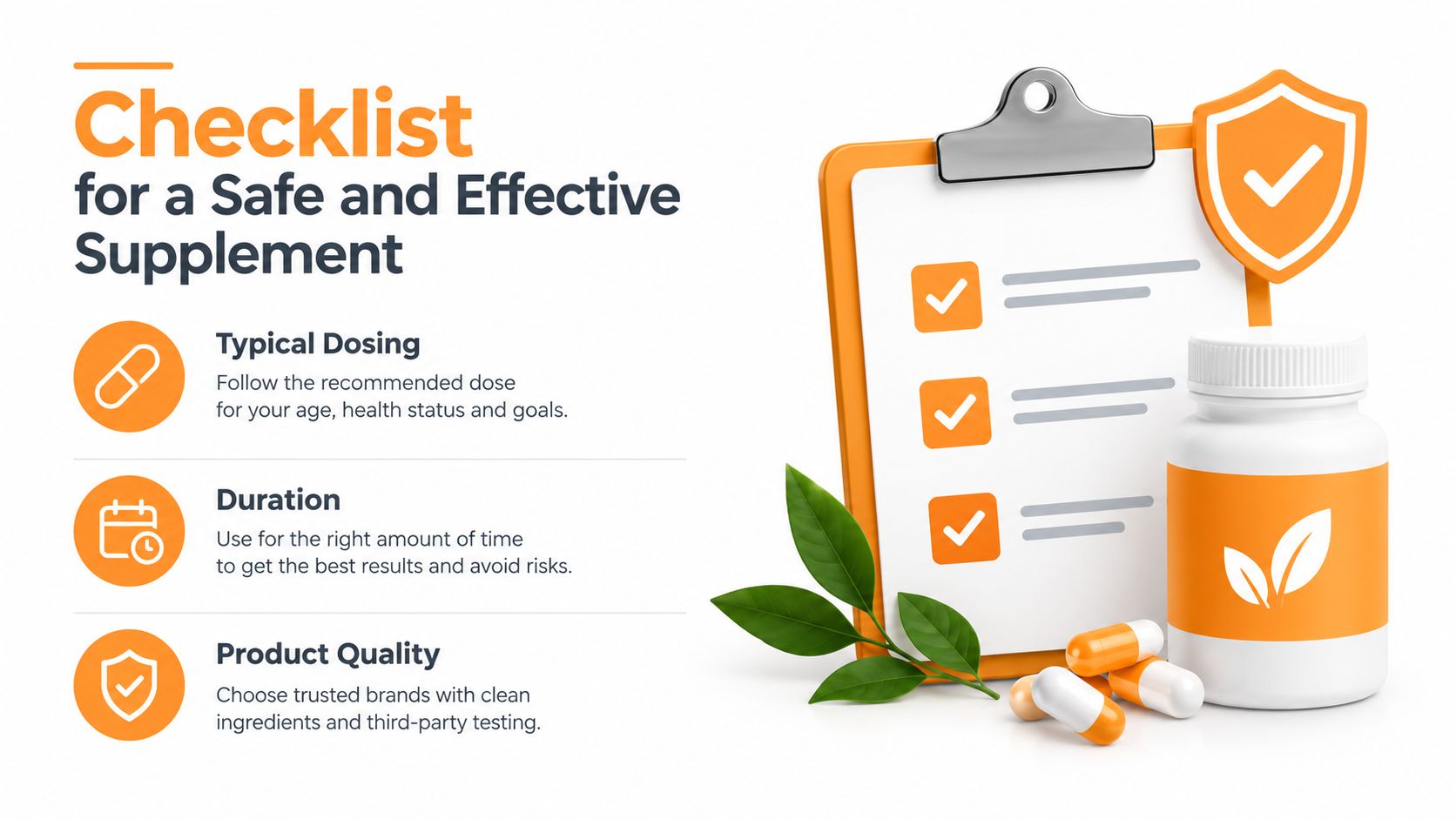
The studies used defined preparations, so a generic powder should not automatically inherit their results. The discussion of how much tongkat ali per day can help frame dose as a research variable rather than a promise. If an extract is neither characterized nor independently verified, it becomes difficult to determine whether the clinical evidence applies.
How Tongkat Ali Compares to Other Testosterone-Supporting Ingredients
Comparisons between testosterone-supporting ingredients are less certain than supplement marketing suggests. A 2022 meta-analysis reported a positive pooled effect for tongkat ali, with an SMD of 1.352, but that result does not make it superior to ashwagandha, fenugreek, or D-aspartic acid. The studies were not designed as direct head-to-head comparisons, and the size of the pooled signal does not show whether free testosterone, symptoms, or long-term safety improve consistently.
The strongest comparison starts with the question being asked. Tongkat ali appears most relevant to men studying total testosterone, particularly when baseline levels are low or low-normal. That evidence does not establish an equivalent effect for men whose main concern is stress, fatigue, or another symptom without confirmed testosterone deficiency.
Ashwagandha is commonly discussed through stress-related pathways, but the evidence summarized here cannot rank it against tongkat ali for testosterone. Fenugreek and D-aspartic acid present the same problem. Without comparable trial data, claims about their consistency, hormone pathways, dosing, or trial duration would go beyond the available evidence.
| Ingredient | Proposed Mechanism | Testosterone Evidence | Trial Comparison |
|---|---|---|---|
| Tongkat ali | May affect testosterone regulation and stress-related pathways | Positive pooled total-testosterone signal, strongest in selected men | Study durations vary |
| Ashwagandha | Commonly associated with stress regulation | No direct comparison established here | Not established here |
| Fenugreek | Proposed hormone-related effects | Not established here | Not established here |
| D-Aspartic Acid | Proposed influence on reproductive hormone signaling | Not established here | Not established here |
The practical conclusion is conditional, not a universal ranking. A man with low testosterone needs evidence from participants with a similar baseline profile. A man whose symptoms may reflect stress needs a different clinical question. The comparison between horny goat weed and tongkat ali also illustrates why botanicals should not be treated as interchangeable because they appear in the same men's wellness category.
Safety, Side Effects, and Interactions to Consider
Short-term tolerability appears generally acceptable in controlled human studies, but the evidence does not establish long-term safety. Trials report uncommon mild effects such as gastrointestinal discomfort, restlessness, or insomnia. These reactions may be more noticeable when an activating supplement is taken late in the day, so timing and individual response matter.
The LiverTox safety review describes isolated reports of clinically apparent liver injury and notes that prolonged safety is not well documented. The reports are uncommon, but their seriousness makes them relevant when a product is used repeatedly or without medical oversight. New jaundice, dark urine, unusual itching, persistent nausea, or significant abdominal discomfort should prompt discontinuation and medical assessment rather than dose reduction.
Product quality creates a separate uncertainty. A controlled trial tests a defined preparation, while a commercial product may differ in identity, concentration, or contamination risk. Third-party testing can provide evidence that the contents match the label, although it cannot guarantee safety or a beneficial outcome.
| Safety Dimension | Controlled Trial Findings | Case Reports & Caveats |
|---|---|---|
| Short-term tolerance | Uncommon mild effects, including gastrointestinal discomfort, have been reported | Individual sensitivity varies |
| Sleep and alertness | Restlessness or insomnia may occur | Late-day use may be unsuitable for some people |
| Liver safety | Prolonged safety evidence is limited | Isolated clinically apparent liver injury has been reported |
| Product identity | Trials use defined extracts | Commercial preparations may not match trial material |
| Drug combinations | Medication review is prudent | Interaction risk depends on the medicine and extract |
People taking blood-pressure, blood-sugar, liver-metabolized, or hormone-related medicines should seek professional advice before using tongkat ali. The available evidence does not establish compatibility with every medication, and interaction risk may depend on both the extract and the person's treatment. The same caution applies to anyone with a history of liver disease or unexplained abnormal liver tests.
A short trial without a recorded adverse event cannot establish safety for prolonged use, a different extract, or a complex medication regimen. The relevant question is not whether side effects were reported, but whether the specific product, duration, health history, and medicines resemble the conditions studied.
A Practical Framework for Deciding If It's Worth Trying
A cautious trial is most defensible for men with low or low-normal baseline testosterone, particularly after a clinician has assessed persistent symptoms. Older men and men who exercise regularly more closely resemble the studied groups than young men with clearly normal hormone levels.
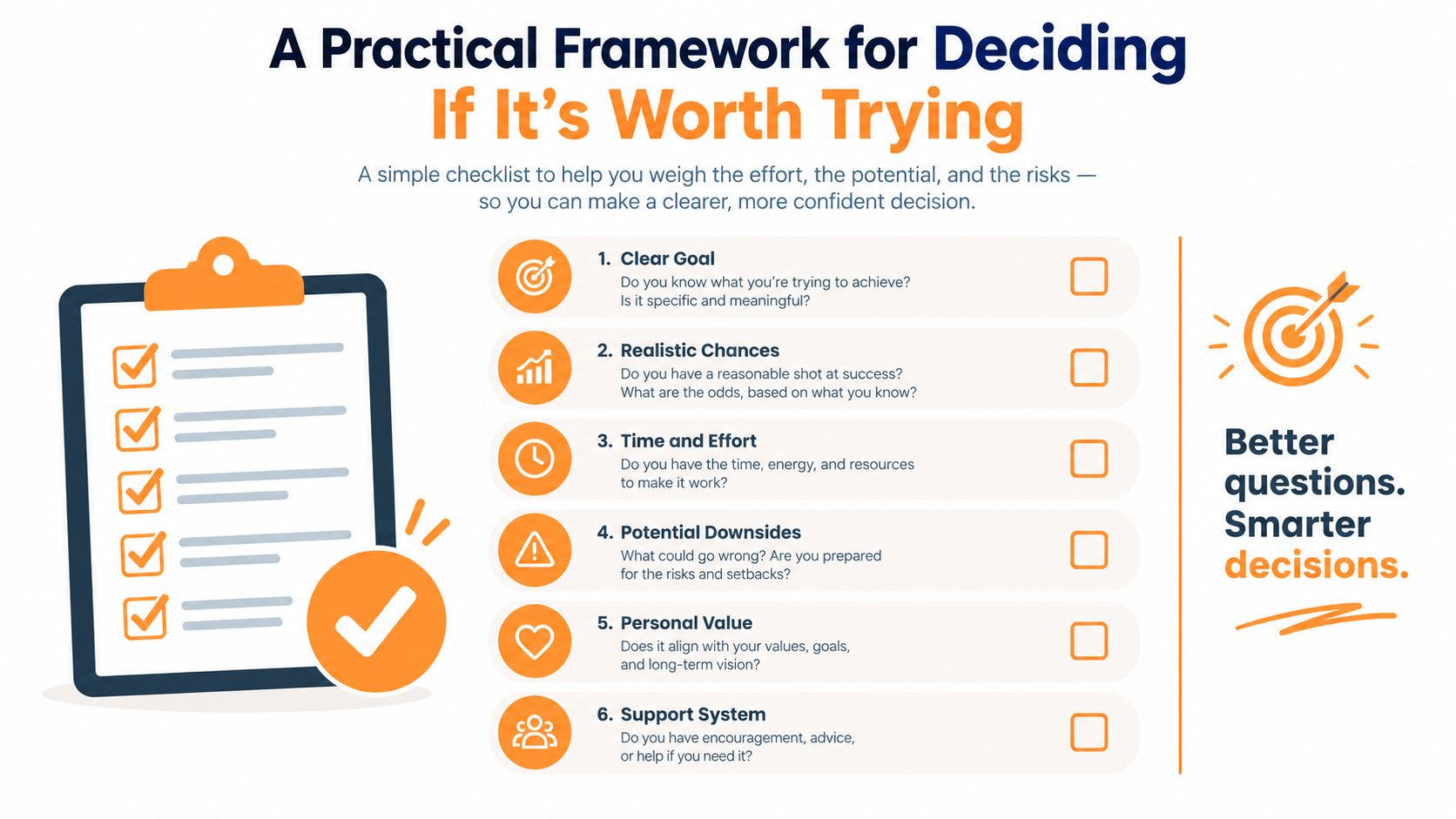
Use six checks before deciding:
- Confirm the question. Evaluate a testosterone concern with appropriate laboratory testing and clinical context, not a supplement advertisement.
- Match the extract. Choose a defined preparation with clear standardization details. The botanical name alone does not identify the tested material.
- Set a time boundary. Human trials assess changes over weeks or months, so an immediate effect is not an evidence-based expectation.
- Check safety first. Review liver history, medicines, and other supplements with a qualified professional.
- Track the right endpoint. Total testosterone, free testosterone, symptoms, and safety markers measure different outcomes. A rise in total testosterone may not resolve the free-testosterone question.
- Reassess the result. Continued use is harder to justify if symptoms do not improve, free testosterone does not respond, or safety concerns emerge.
The most defensible answer is sometimes, especially for total testosterone in men with lower baseline levels. Evidence does not establish a universal boost, a dependable free-testosterone increase, or lasting effects after stopping. Product composition and liver safety also remain important gaps.
SEMEX provides a daily men's wellness supplement containing tongkat ali with other ingredients. Review its formulation and testing information at SEMEX, then compare those details with the evidence.
These statements have not been evaluated by the Food and Drug Administration. This product is not intended to diagnose, treat, cure, or prevent any disease.