

Zinc Supplement Testosterone: What the Evidence Shows
Can a zinc supplement raise testosterone if your zinc intake is already adequate? The answer isn't a simple yes or no. Zinc appears to matter most when the body lacks enough of it; evidence for pushing testosterone higher in men who already have adequate zinc is much less convincing.
That distinction can help you make a more sensible decision than a blanket recommendation to supplement. First, understand how zinc participates in testosterone physiology. Then compare what human studies show in people with low versus adequate zinc status. Finally, check the safety limits and medication interactions before adding up zinc from different products.
Table of Contents
- Will Zinc Actually Raise Your Testosterone
- How Zinc Supports Testosterone Physiology
- What the Key Human Studies Show
- Why Zinc-Replete Men Usually See Little Change
- Who Is Most Likely to Benefit From Zinc
- Safe Dosing and Drug Interactions to Know
- Putting It Together Into a Personal Decision
- Common Questions About Zinc and Testosterone
Will Zinc Actually Raise Your Testosterone
The short answer is sometimes, depending on your starting zinc status. Zinc supports normal reproductive and endocrine function, but that doesn't mean taking more will reliably raise testosterone in everyone. Correcting inadequate intake and trying to boost hormones above your baseline are different goals.
The distinction matters because a nutrient can be essential without working like a hormone-enhancing switch. If someone's intake or zinc status is low, restoring an adequate supply may help support normal physiology. If their zinc status is already sufficient, extra zinc may raise zinc levels without changing testosterone.
Three questions make the evidence easier to interpret:
- Is zinc involved in testosterone physiology? Yes. It contributes to processes that support normal hormone production and reproductive function.
- Do studies show a response when zinc is inadequate? Some small human studies found substantial changes when intake was restricted or deficiency was present.
- Does more zinc reliably mean more testosterone? No. Findings in men with adequate intake are inconsistent, and high doses bring safety concerns.
This conditional answer is more useful than either extreme: “zinc is a testosterone booster” or “zinc has nothing to do with testosterone.” The practical aim is to meet nutritional needs, not to assume that a larger dose will produce a larger hormonal effect.
The next step is understanding what zinc does inside the body. That biology helps explain why low zinc can matter, while extra zinc may do little when there is already enough.
How Zinc Supports Testosterone Physiology
Think of zinc as a spark plug, not the fuel. It helps the body carry out biological work, but it doesn't provide an unlimited supply of testosterone or make hormone production rise without constraint.
In the testes, specialized cells called Leydig cells produce testosterone. Zinc participates in cellular processes and enzyme activity involved in steroid hormone production, so inadequate zinc availability can interfere with the machinery that supports normal function. It also contributes to reproductive processes such as sperm production. Those roles help explain why zinc appears in discussions of male reproductive health, even though the presence of zinc in a pathway doesn't prove that supplementation will increase testosterone in every person.
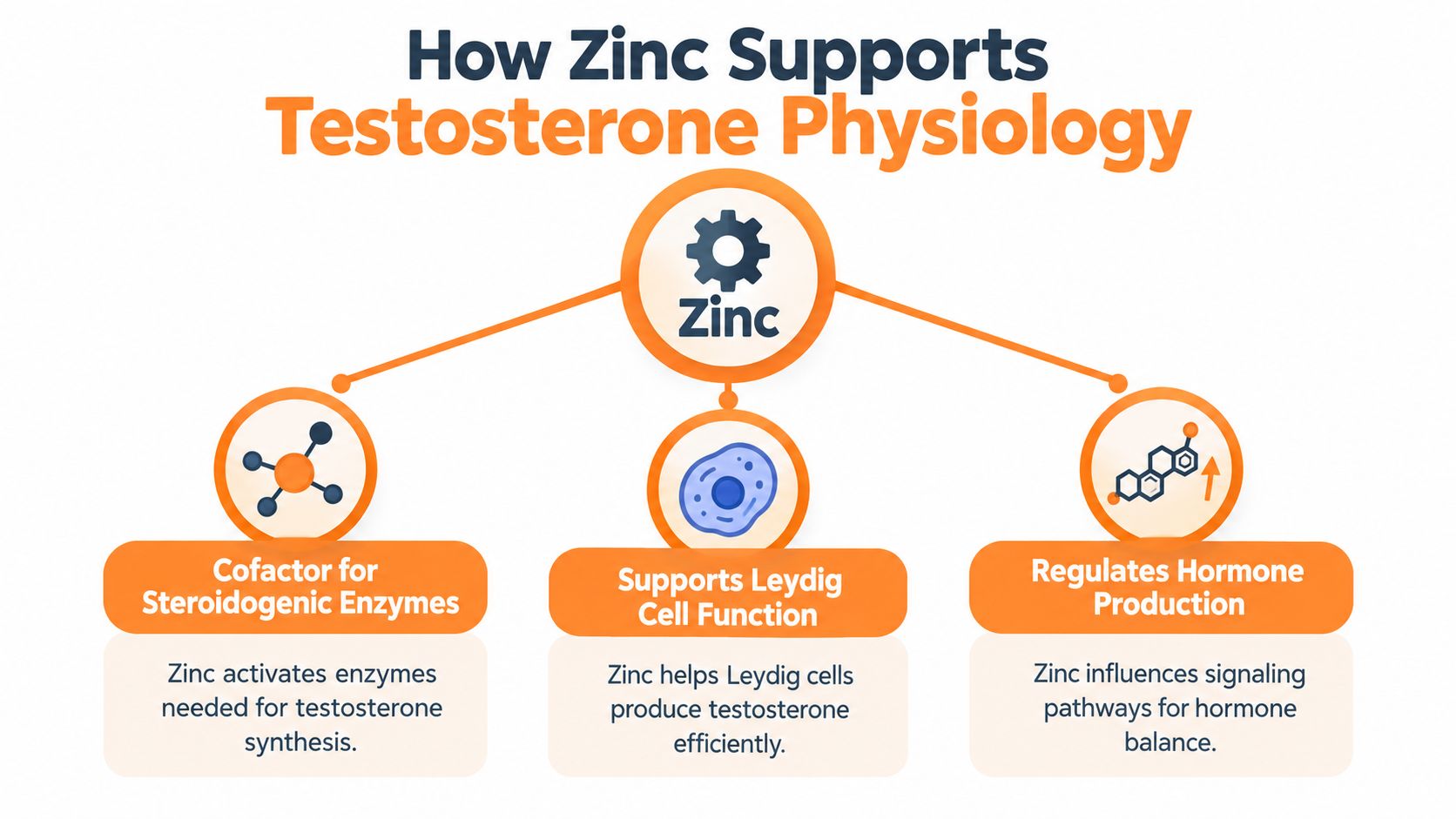
From nutrient availability to hormone production
A trace mineral can have an outsized role because enzymes and cells need the right conditions to do their jobs. If zinc is scarce, processes that depend on it may work less effectively. But once zinc availability is adequate, adding more doesn't necessarily keep improving those processes.
Zinc also participates in broader aspects of reproductive function and cellular regulation. That's why the body's zinc status can be relevant to both hormone physiology and sperm production, while still being only one part of a much larger system. For a plain-language overview of how hormones relate to male reproductive function, see this guide to the male reproductive system and hormones.
A useful way to explain the connection to someone else is: zinc helps support the systems involved in normal testosterone production, but it doesn't guarantee a testosterone increase when intake is already sufficient. That's the difference between a nutrient's biological role and a predictable supplement effect.
What the Key Human Studies Show
The clearest human evidence comes from two opposite conditions: too little zinc, and zinc given back after status was low. Read together, they show zinc can act like a required part in the production line. When the part is missing, output falls; when the part is replaced, output can recover.
In one controlled study (PMID 8875519), restricting dietary zinc for 20 weeks in four healthy young men reduced mean serum testosterone from 39.9 ± 7.1 nmol/L to 10.6 ± 3.6 nmol/L (p = 0.005), while supplementation of about 105 mg elemental zinc daily in nine marginally deficient older men raised mean testosterone from 8.3 ± 6.3 nmol/L to 16.0 ± 4.4 nmol/L (p = 0.02).
That design is small, so it cannot prove a universal effect. It does show direction under a specific condition: inadequate zinc availability coincided with much lower testosterone, and repletion coincided with recovery in men whose status was marginal. Those averages also hide individual variation; a mean shift in a tiny cohort is informative, not definitive. The dose in the older group was high, so treat it as a correction scenario rather than a target for routine use.
What these results can and can't tell you
The fair conclusion is narrow: correcting inadequate zinc status may support normal testosterone physiology. Extending that result to every man would assume the body keeps responding once the missing part is replaced, which is a different claim.
A useful analogy is a factory with one missing bolt: installing the bolt restores normal output, while stacking extra bolts does not make the line run faster. When evaluating any product claim, ask whether the trial started with deficiency, how dose and duration were set, and what changed besides zinc; this guide to judging supplement effectiveness can help structure that review.
Why Zinc-Replete Men Usually See Little Change
A nutrient can be required for normal physiology and still deliver nothing extra once the body already has enough. Zinc follows that pattern, which is why striking results in deficient groups do not transfer automatically to men whose diets already cover their needs.
The clearest test of that idea comes from a controlled study of 14 healthy, regularly exercising men aged 22–33 years whose baseline zinc intakes ran about 11.9–23.2 mg per day. After using a high-dose zinc-containing ZMA formulation, their serum and urinary zinc rose significantly, yet neither total nor free serum testosterone changed significantly, and testosterone-metabolite excretion stayed flat, according to the NIH Office of Dietary Supplements zinc fact sheet.
Zinc moved. Testosterone did not.
That split is the key lesson here: a supplement can raise measurable zinc exposure while leaving hormone output alone. When zinc status is already adequate, the pathways that depend on it are already supplied, so additional intake has no obvious job to do.
More zinc isn't a dependable hormone strategy
The same ceiling appears in men with hormone-related conditions. In a randomized study of 67 men with isolated hypogonadotropic hypogonadism, follicle-stimulating hormone therapy alone produced the same serum testosterone as the same therapy plus 40 mg of zinc over 18 months, as summarized in this review of testosterone booster evidence.
Zinc still matters for nutrition and reproductive physiology. What the evidence does not support is assuming zinc adds a testosterone effect across every clinical situation, and a clinical review similarly declines to recommend it broadly for every type of hypogonadism.
The working rule: if your zinc intake is already adequate, more zinc may raise zinc measurements without raising testosterone. Baseline status is the variable that decides which scenario applies to you.
Who Is Most Likely to Benefit From Zinc
Whether zinc does anything for testosterone depends less on the capsule than on the person taking it. The men most likely to benefit share one trait: a real possibility that their zinc status is inadequate to begin with. For them, supplementing corrects a gap. For everyone else, it adds supply to a system that is already stocked.
Three situations raise the odds of falling short. The first is a diet low in zinc-rich foods such as oysters, red meat, poultry, dairy, and pumpkin seeds. The second is impaired absorption from digestive conditions that reduce what the gut can take up. The third deserves a closer look, because it surprises people: a diet heavy in phytates.
Phytates are compounds in whole grains, legumes, nuts, and seeds that bind zinc in the digestive tract and carry it out unabsorbed. As one example, a day built around bran cereal, bean chili, lentil soup, and a handful of almonds can be nutritious by almost every measure and still deliver less usable zinc than the label math suggests. A person eating this way may be eating well overall. The food is harder to extract zinc from.
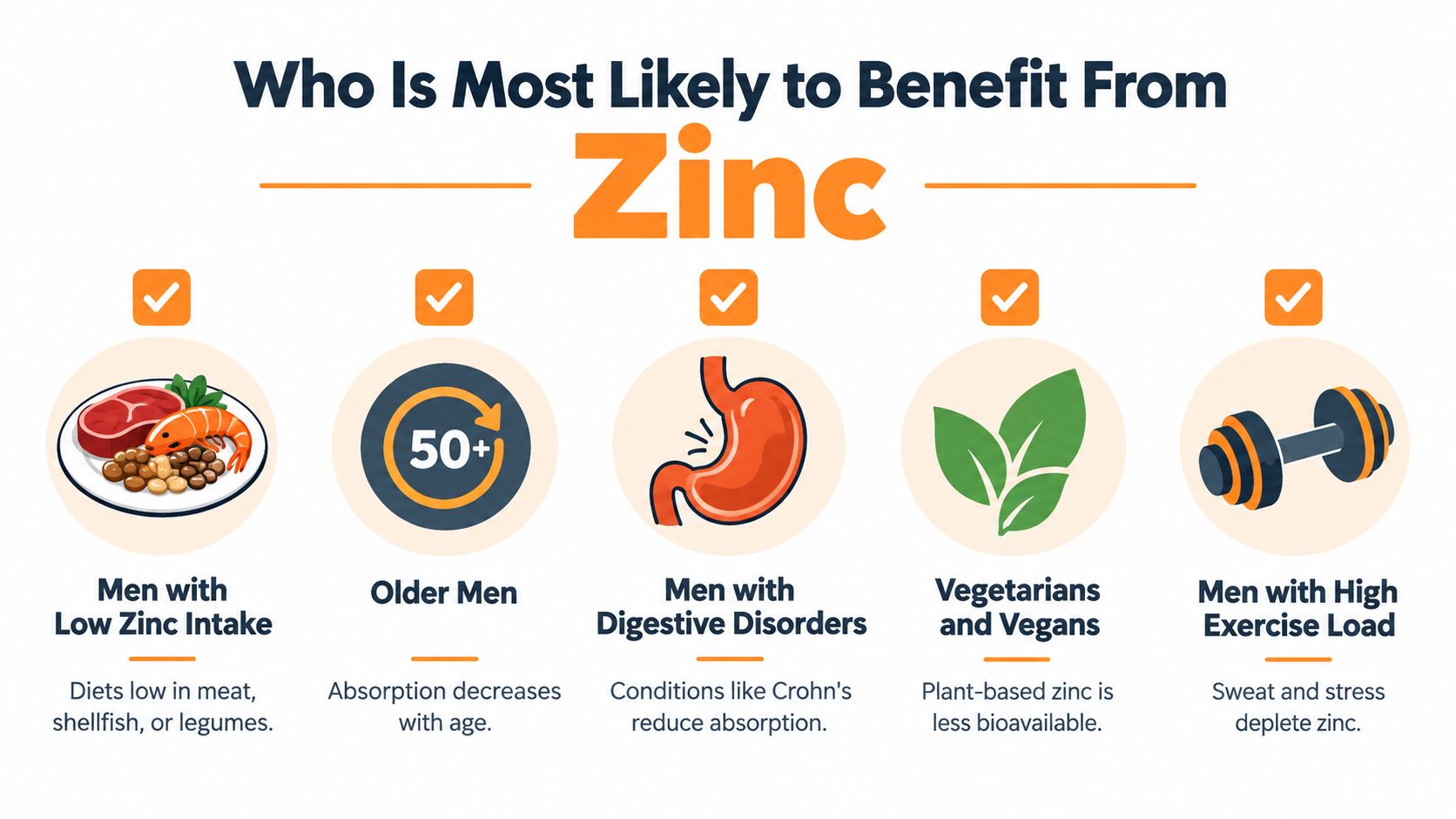
Think in terms of risk, not promises
None of these patterns proves a deficiency. They work as screening questions, pointing toward who should look closer rather than confirming anything on their own. That distinction matters because zinc's payoff is conditional: as noted earlier, the 2025 review reported that outcomes varied with baseline zinc status, zinc form, elemental dose, and duration. A man eating a phytate-heavy vegetarian diet and a man eating steak twice a week are unlikely to get the same result from the same pill.
If several risk factors describe your routine, raising the question with a clinician beats guessing. A guide to possible zinc deficiency symptoms can help you frame that conversation, though symptoms alone cannot confirm low status. Blood testing and an honest look at your diet history give a clearer answer.
Safe Dosing and Drug Interactions to Know
Two numbers from the same source do most of the safety work here. The U.S. National Institutes of Health sets 40 mg of zinc per day as the adult tolerable upper intake level from food, beverages, supplements, and medications combined, and its zinc consumer fact sheet also recommends separating zinc from tetracycline and quinolone antibiotics by at least two hours before, or four to six hours after, and from penicillamine by at least one hour. Your pharmacist can translate those timing windows into a schedule that fits your specific prescription.
That ceiling works like a maximum load rating on a bridge, not a speed to aim for. Sustained excess zinc interferes with copper absorption, and copper supports normal body function, so running a long-term high-dose experiment because a bottle mentions testosterone is a poor trade. The limit also counts everything at once: a multivitamin, a standalone zinc tablet, and a fortified shake all feed the same daily total.
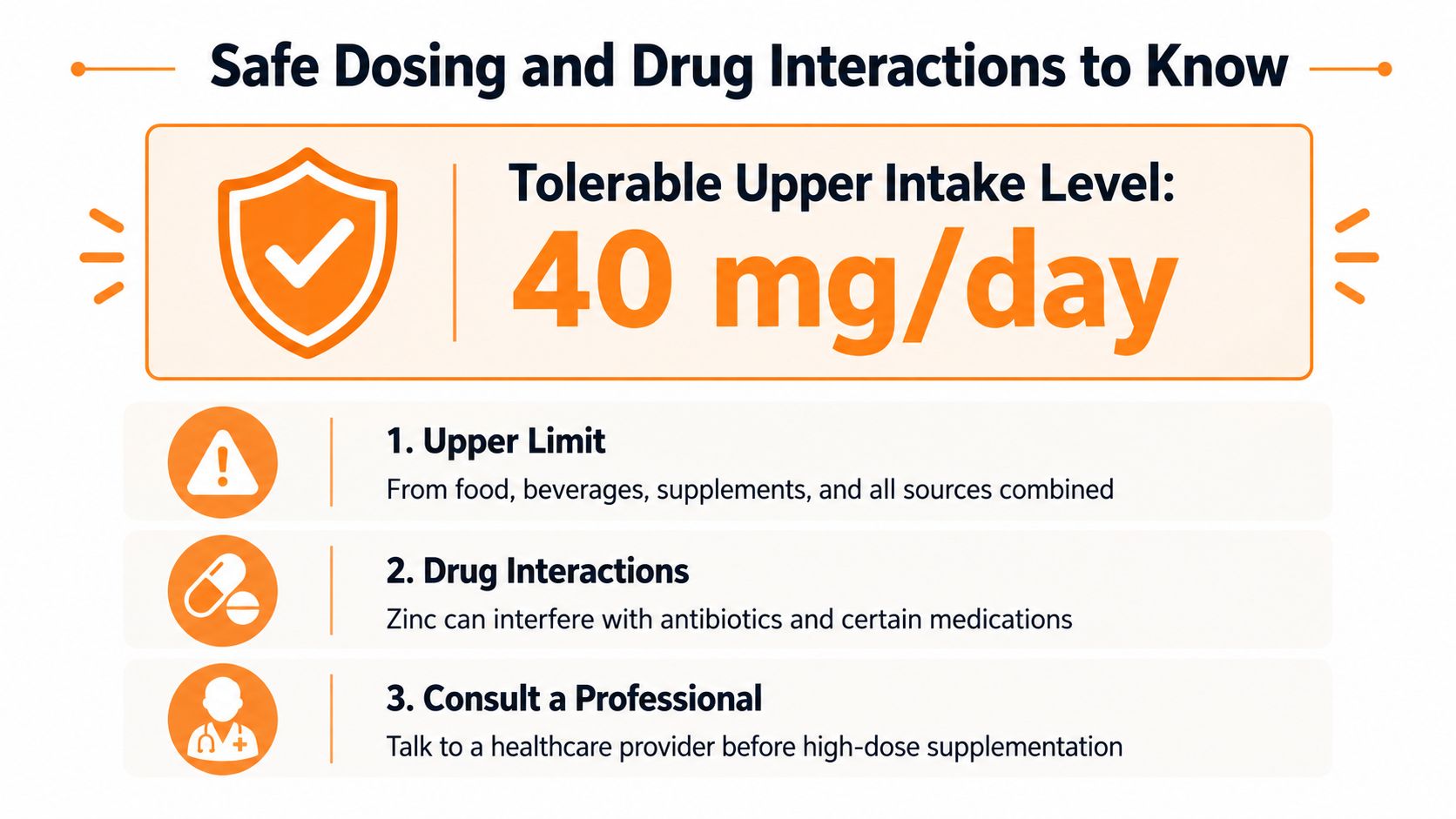
Read the elemental zinc amount
Labels can mislead in a subtle way. The weight printed for a zinc compound covers the whole molecule, while only part of it is elemental zinc, the portion your body receives. Two products can look identical on the shelf and deliver different amounts. Check the elemental zinc figure in the supplement facts panel rather than relying on the compound name or capsule weight.
Stacking is where totals climb. If you take a multivitamin plus a separate zinc product, add both elemental amounts before considering anything else. When prescriptions enter the picture, the timing rules described above meet real medication schedules, so reviewing potential supplement interactions with a pharmacist or clinician is a reasonable step rather than an overcautious one.
If you compare multi-ingredient formulas, SEMEX is one example that lists zinc alongside other ingredients. Read its current label for the elemental zinc amount and include it in your daily total, the same arithmetic you would apply to any other product.
Putting It Together Into a Personal Decision
A useful decision starts with your likely zinc status, not a promise about testosterone. Think through the following questions before adding a supplement:
- What do you already get from food? Review your usual meals and note whether zinc-containing foods are a regular part of your diet.
- Are there reasons intake or absorption could be low? Consider a limited diet, a phytate-heavy eating pattern, or a gastrointestinal condition that may affect mineral absorption.
- What does the label provide? Look for elemental zinc, not only the weight of the compound.
- What's your total from all sources? Add zinc from multivitamins, fortified foods, standalone supplements, and medications, and keep the adult upper limit in mind.
If your intake may be inadequate, the sensible aim is to meet nutritional needs, not to copy a high-dose protocol from a small study involving men with marginal zinc deficiency. If your intake appears adequate, the evidence doesn't support expecting extra zinc to reliably boost testosterone.
Zinc is also only one part of a broader approach to men's wellness. Ingredients such as L-Arginine, Maca Root, Ashwagandha, and Tongkat Ali each have their own research base, but they shouldn't be treated as interchangeable or as guaranteed hormone solutions. For zinc, the most responsible description is that it plays a role in normal reproductive function and helps maintain normal nutrient status. If you have ongoing concerns about testosterone or sexual health, talk with a clinician rather than trying to solve them by increasing supplement doses.
Common Questions About Zinc and Testosterone
How long does zinc take to affect testosterone?
There isn't a reliable timeline that applies to everyone. If inadequate zinc is contributing to the issue, correcting intake may support normal physiology, but the available evidence doesn't establish a predictable personal response time.
Does zinc help low libido specifically?
Zinc supports normal reproductive function, but supplementation isn't a proven fix for low libido. Persistent changes in sexual desire can have many causes, so discuss them with a clinician rather than assuming zinc is the answer.
Is zinc better than magnesium or vitamin D for testosterone?
There's no universal winner. The relevant question is whether you have inadequate intake or status of a particular nutrient; don't assume that taking more zinc, magnesium, or vitamin D will raise testosterone if your needs are already met.
When should I seek hormone testing?
If you have persistent symptoms that concern you, speak with a clinician about evaluation and whether testing is appropriate. A supplement can't diagnose what's causing those symptoms.
These statements have not been evaluated by the Food and Drug Administration. This product is not intended to diagnose, treat, cure, or prevent any disease.
SEMEX is a daily supplement formulated with Zinc, L-Arginine, Sunflower Lecithin, Bromelain, and a men's wellness blend. If you're comparing ingredient labels while considering zinc's role in normal reproductive function, visit SEMEX to review the product information.