

What Makes Semen Taste Good and How to Improve It
Pineapple isn't a magic switch, and no single food has been proven to make semen reliably taste sweet. The more useful answer to what makes semen taste good starts with biology: hydration, the concentration of natural compounds, everyday habits, and the broader metabolic environment all shape the baseline experience. Small, consistent changes may make the flavor milder or less pungent, but expectations should stay realistic.
Taste also varies between people and from one ejaculation to another. A practical approach focuses less on chasing an instant fruit effect and more on supporting a balanced routine, reducing strong-smelling exposures, and choosing supplements for clearly defined wellness roles rather than unproven promises.
Table of Contents
- The Biological Baseline of Semen Flavor
- How Daily Habits and Hydration Alter Taste
- Separating Diet Myths from Biochemical Reality
- Targeted Ingredients for Volume and Wellness Support
- Building a Consistent Routine for Noticeable Changes
- Understanding Research Limitations and Safety
The Biological Baseline of Semen Flavor
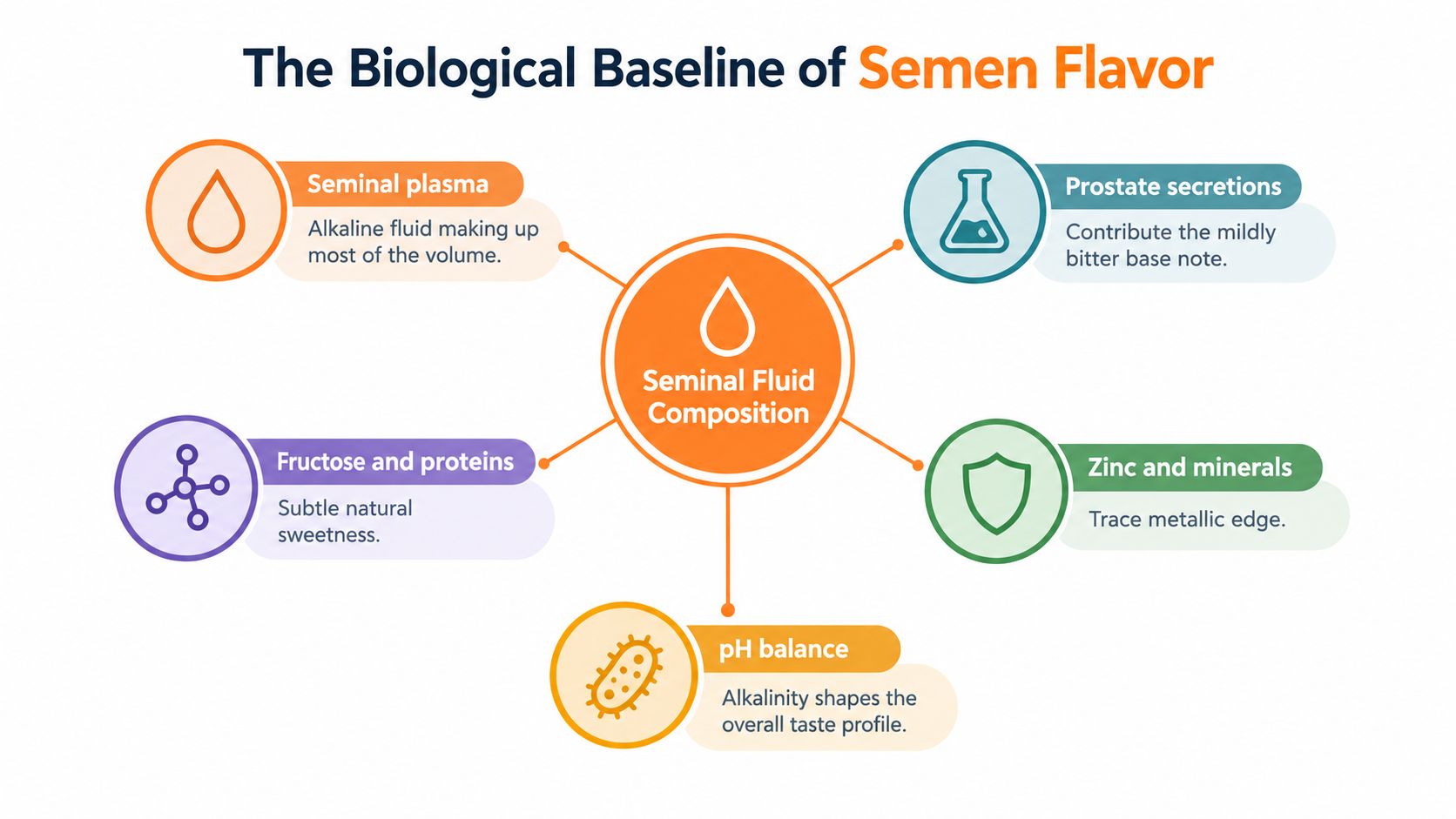
Pineapple cannot override the underlying chemistry. Before food or lifestyle enters the picture, semen already has a natural profile shaped by seminal plasma, sperm cells, and dissolved substances such as sugars, proteins, enzymes, minerals, amino acids, and citrate. These ingredients create the range of descriptions people report, including salty, bitter, metallic, earthy, or mildly sweet.
The fluid is typically alkaline. A pH around 7.2 to 8.0, with an average of 7.7, has been reported, while seminal plasma contained about 272 mg per 100 mL of fructose and 102 mg per 100 mL of glucose in the review of semen chemistry and composition. Those sugars serve biological purposes rather than making the fluid taste like dessert. Fructose helps supply energy for sperm, while the surrounding fluid determines much of the sensory experience.
Why alkalinity matters
Because the fluid is alkaline and salt-rich, its dominant impression is often mineral rather than sweet. The small fructose and glucose concentrations described above are too limited to create a fruit-juice effect. Alkalinity is one part of the baseline, not a flavor switch that food can reliably reverse.
Historical reproductive standards also explain why researchers measure pH and volume. A 1992 World Health Organization benchmark used a volume of 2 mL or more and a pH of 7.2 to 8.0 as reference points in reproductive medicine, details included in the same andrology review cited above. These measurements help assess reproductive function, not whether semen has a pleasant flavor.
For a clearer distinction between sperm cells and seminal fluid, see this overview of what nutrients sperm and semen contain. Taste mainly reflects the combined fluid environment, so focusing on sperm alone gives an incomplete picture.
Metabolic health sets the background
Overall metabolic health provides the backdrop for bodily fluids. Diet quality, alcohol intake, tobacco exposure, hydration, and general wellness can influence that chemical environment, but none guarantees a particular taste.
A practical rule follows: a milder baseline is more likely to come from supporting the whole routine than from adding one celebrated ingredient for a single day.
Practical rule: Aim to improve the background chemistry, not chase a magic food.
How Daily Habits and Hydration Alter Taste
Hydration is the simplest variable to address because it changes concentration. Semen taste is driven by its chemical composition, and water intake can dilute dissolved compounds, making the flavor milder. Dehydration can concentrate those compounds and make the experience more intense, as explained in this overview of semen nutrients and hydration.
That doesn't mean drinking water guarantees a sweet taste. It means hydration can turn down intensity, particularly when a stronger flavor comes from concentrated minerals and other dissolved substances. Steady fluid intake throughout the day makes more sense than trying to compensate at the last moment.
Habits that can sharpen flavor
Strong-smelling substances can influence body fluids through the compounds and metabolites the body processes. Tobacco, alcohol, coffee, garlic, onions, and cruciferous vegetables are commonly discussed because they can contribute pungent or bitter notes. The effect isn't identical for everyone, and the evidence is stronger for the general influence of lifestyle and exposure than for a precise flavor prediction.
A useful routine includes three practical adjustments:
- Keep hydration steady. Regular water intake supports a less concentrated fluid profile. It's better treated as an everyday habit than a quick pre-intimacy trick.
- Reduce tobacco exposure. Smoking introduces strong compounds and affects broader reproductive wellness, so cutting back or stopping supports more than taste alone.
- Moderate alcohol and heavy caffeine use. These can contribute to a sharper or more noticeable profile, especially alongside dehydration.
- Notice personal triggers. A food that seems neutral for one person may produce a stronger odor or taste for another. Tracking patterns is more useful than accepting universal online rules.
Sleep, nutrition, and physical activity also belong in the background picture. They won't create an overnight flavor transformation, but they support the metabolic conditions that shape body fluids over time.
The goal isn't to remove every flavorful food from the diet. Garlic and vegetables can be nutritious, and coffee may fit comfortably into a balanced routine. The practical choice is to identify which exposures seem to affect an individual's experience and adjust them without sacrificing overall dietary quality.
Separating Diet Myths from Biochemical Reality
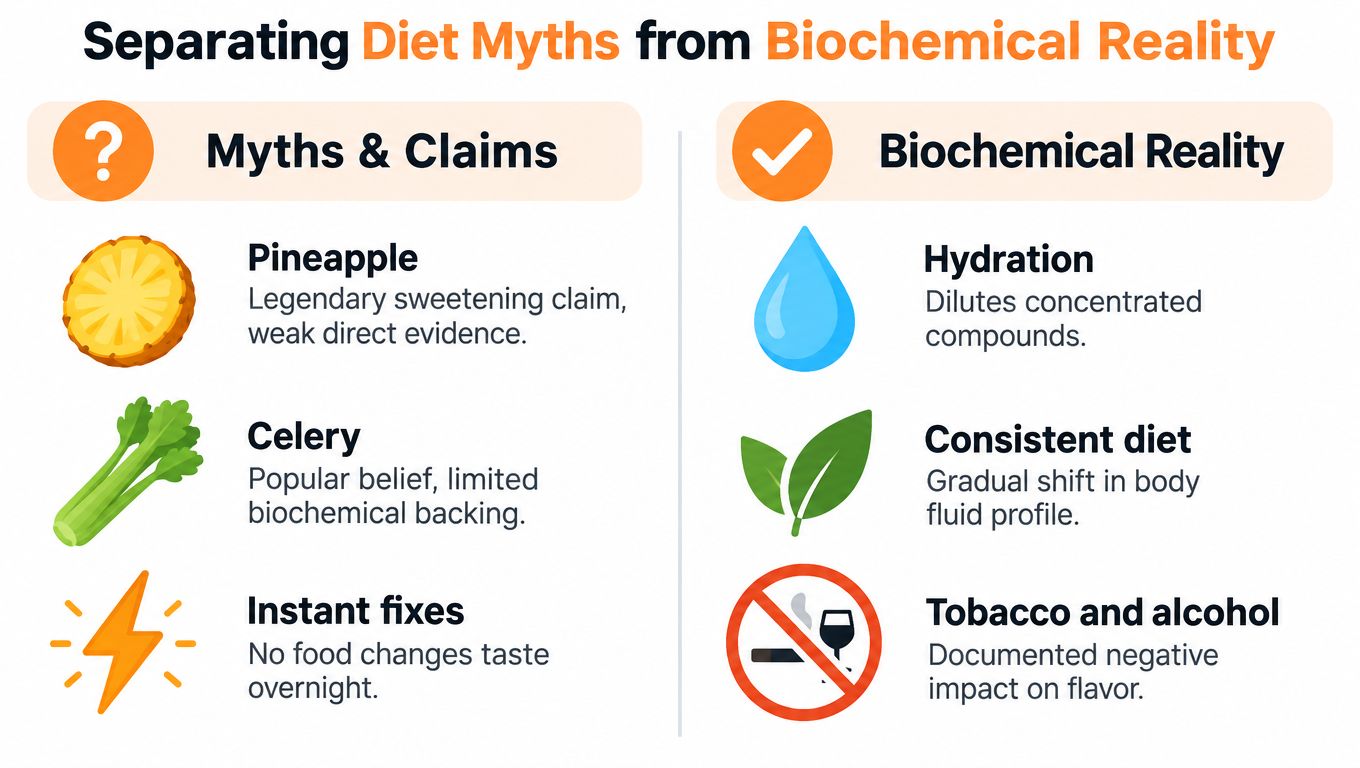
The pineapple claim is popular because it sounds simple: eat a sweet fruit, and semen becomes sweet. Human evidence doesn't support that level of certainty. There's no conclusive clinical evidence that any specific food or ingredient reliably makes semen taste sweeter, and claims involving pineapple, celery, cinnamon, or bromelain remain anecdotal, as summarized in this review of semen taste and dietary claims.
A small BBC experiment helped move the discussion beyond casual anecdotes. Three men followed different diets for three days, including “Hot and Spicy” and “Fabulously Fishy” plans, before partners assessed samples by smell and taste. The experiment wasn't a controlled clinical trial, so it can't prove that a particular food causes a predictable result. It does show why the topic gained attention and why short-term diet observations should be interpreted cautiously.
Why strong foods are different from sweet foods
Strong-smelling foods have a more plausible pathway to noticeable pungency because their compounds and metabolites can influence body-fluid odor and flavor. Garlic, onions, asparagus, and cruciferous vegetables may make the profile more noticeable for some people. That doesn't make them unhealthy, and it doesn't mean every person will detect the same change.
Fruit works differently. Eating pineapple doesn't send pineapple sugar directly into semen in a way that reliably sweetens it. Fruit can support a nutrient-dense dietary pattern, but that broad benefit shouldn't be confused with a proven ingredient-level flavor effect.
A BBC experiment described in a scientific discussion also excluded stronger-tasting foods such as garlic and asparagus during a control period. That detail shows how researchers and participants have tried to isolate diet variables, but it still doesn't establish a universal food formula. The reported experiment and its dietary setup are better understood as structured observation than definitive proof.
For readers exploring bromelain specifically, this guide to bromelain and semen taste can provide ingredient context without turning an anecdotal claim into a guarantee.
The better dietary target
A consistent diet built around fruit, vegetables, adequate protein, and minimally processed foods is a stronger wellness strategy than relying on a single “sweetening” food. It may support a healthier metabolic background, while hydration and reduced exposure to pungent substances can influence immediate intensity.
Targeted Ingredients for Volume and Wellness Support
Supplements belong in a separate category from food myths. An ingredient may support a reproductive or wellness function without reliably changing taste, and a result observed in semen quality research doesn't automatically translate into a better flavor experience.
Zinc is a good example. A meta-analysis of infertile men associated zinc supplementation with improvements in semen volume, sperm motility, and normal morphology. The reported standardized mean differences were -0.99 for semen volume, -1.82 for motility, and -0.75 for normal morphology, as shown in the PubMed-indexed meta-analysis. Those findings concern semen-related measures, not proof that zinc makes semen taste better.
How ingredients fit different roles
L-Arginine is commonly used in men's wellness formulas because it supports nitric oxide production and healthy blood flow. That role is different from directly sweetening seminal fluid. Sunflower lecithin is included in some formulations for its relationship to phospholipids and general nutritional support, while bromelain is a pineapple-derived enzyme often selected for ingredient-specific taste-support positioning.
Maca root, Panax ginseng, ashwagandha, tongkat ali, saw palmetto, and horny goat weed are used in broader men's wellness blends for vitality or reproductive wellness support. Their presence in a formula doesn't establish that they alter semen flavor, and individual ingredients should be assessed according to their evidence and safety profile.
| Ingredient | Primary wellness role | Mechanism of support |
|---|---|---|
| Zinc | Supports normal male reproductive function | Contributes to reproductive and cellular processes |
| L-Arginine | Supports blood flow and performance wellness | Serves as a precursor involved in nitric oxide production |
| Sunflower lecithin | Provides phospholipid support | Contributes phospholipids used in cell structures |
| Bromelain | Supports ingredient-level taste positioning | Pineapple-derived enzyme used in wellness formulations |
| Maca root | Supports vitality | Used as a botanical wellness ingredient |
| Ashwagandha | Supports stress and vitality wellness | Adaptogenic botanical traditionally used in wellness products |
A practical ingredient comparison covering arginine, zinc, pygeum, and lecithin can help readers evaluate a formula by function rather than by a single marketing promise.
Choose evidence over stacking
More ingredients don't automatically create a better outcome. A supplement should complement hydration, diet, sleep, and tobacco or alcohol reduction. Anyone taking medication, managing a health condition, or investigating fertility concerns should speak with a qualified healthcare professional before adding concentrated ingredients.
Building a Consistent Routine for Noticeable Changes
A workable routine needs to be repeatable. It shouldn't depend on an extreme diet, a last-minute food purchase, or a supplement schedule so complicated that it collapses after a few days.
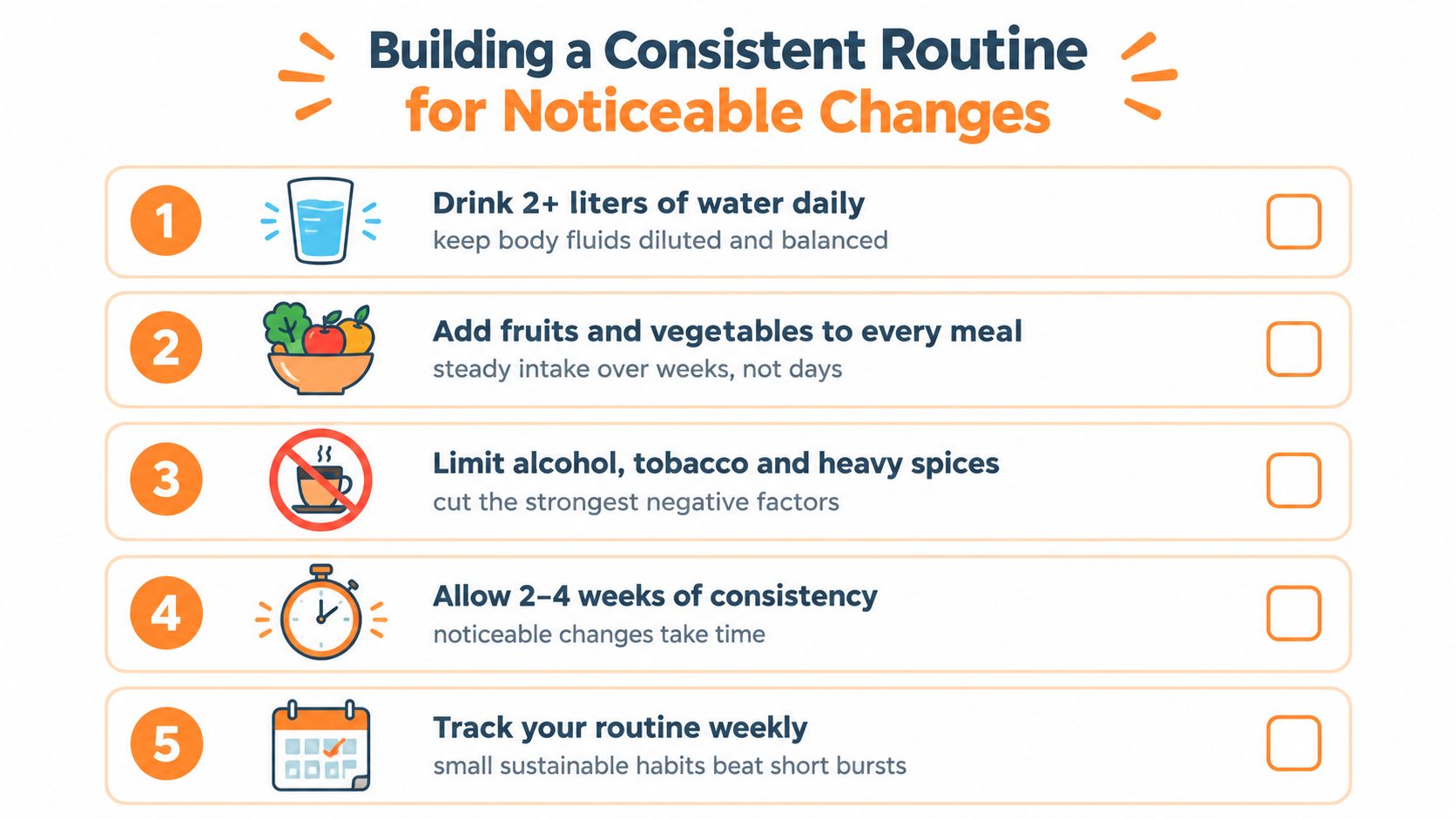
Start with a simple daily framework:
- Hydrate consistently. Keep water intake regular so body fluids don't become unnecessarily concentrated. The aim is a stable habit, not a dramatic short-term correction.
- Build meals around variety. Include fruit and vegetables regularly, while keeping overall nutrition balanced. A broad dietary pattern offers more value than treating pineapple or celery as a guaranteed flavor tool.
- Reduce the strongest variables. Limit tobacco, excess alcohol, and foods that personally create a pungent result. Don't remove nutritious vegetables solely because internet anecdotes label them negatively.
- Use supplements deliberately. Follow the product label and take ingredients consistently if they fit the reader's wellness goals. Avoid combining multiple overlapping products without checking total intake.
- Track observations without overinterpreting them. Note hydration, major dietary changes, tobacco or alcohol use, and perceived taste over time. One experience can't establish a cause.
Make the routine easy to follow
A morning water habit, fruit with breakfast, vegetables at lunch and dinner, and a planned supplement time can reduce decision fatigue. A person who uses a daily supplement should follow its label rather than copying someone else's serving pattern.
The expected change should also be framed correctly. Hydration may affect perceived intensity sooner than a broader lifestyle shift, while dietary consistency and wellness changes develop gradually. Current evidence doesn't establish a universal timeline or a precise amount of water, alcohol reduction, or a particular food required to notice a taste difference.
Consistency beats intensity. A moderate routine that survives busy weeks is more useful than a dramatic plan followed briefly.
Partners can also make the process collaborative. Taste is subjective, so respectful feedback matters more than trying to meet an internet-defined standard. The shared goal is comfort and enjoyment, not perfection.
Understanding Research Limitations and Safety
Research on semen taste has a basic problem: flavor is subjective, difficult to standardize, and influenced by smell, texture, expectations, hydration, recent food exposure, and individual metabolism. A small diet experiment can suggest a question, but it can't prove that one ingredient will create the same result for everyone.
The strongest evidence often concerns semen quality, reproductive measures, or general wellness rather than taste. That distinction matters. A supplement study may report changes in volume or motility while offering no information about sweetness, bitterness, or partner perception.
Conflicting supplement findings reinforce the need for caution. A large randomized trial involving 2,370 couples found that 5 mg of folic acid plus 30 mg of zinc in men didn't significantly improve semen quality or live birth rates compared with placebo, as reported in the JAMA clinical trial. The result doesn't mean zinc has no biological role. It shows that a specific combination and dose may not produce the broad reproductive outcomes people hope for.
Use supplements responsibly
Readers should check labels, avoid unnecessary megadosing, and discuss supplements with a healthcare professional when they have fertility concerns, take medication, or have an underlying condition. A sudden change in odor, pain, blood, discharge, or other unusual symptom deserves medical evaluation rather than a diet experiment.
No supplement should be presented as a treatment, cure, or prevention for disease. SEMEX is a daily men's wellness supplement formulated with ingredients including zinc, L-arginine, sunflower lecithin, bromelain, and additional botanical ingredients, but its role is to support wellness goals, not replace professional care.
These statements have not been evaluated by the Food and Drug Administration. This product is not intended to diagnose, treat, cure, or prevent any disease.
Readers who want a structured option for supporting semen volume and taste as part of a consistent hydration and lifestyle routine can explore SEMEX. Reviewing its ingredient formula and using it according to the label may help men choose a wellness approach that fits their goals without relying on pineapple myths or instant promises.