

What Is Pillow Humping and Sexual Safety
Pillow humping is a form of external solo masturbation in which a person presses, rubs, or moves the genitals against a pillow or other soft surface to create rhythmic friction and pressure. It's generally considered a normal variation of self-stimulation, not a separate medical diagnosis or disorder.
Why do so many explanations define the behavior but skip the more useful question, namely when friction becomes too much and how solo activity differs from partnered dry humping? Understanding the mechanics, skin warning signs, infection risks, and consent boundaries gives a clearer answer than treating the topic as either embarrassing or automatically risk-free.
Table of Contents
- Understanding the Mechanics of Pillow Humping
- How Sensory Cues Shape Arousal Patterns
- Managing Friction and Physical Safety Limits
- Solo Practice Versus Partnered Dry Humping
- Supporting Overall Vitality and Reproductive Health
- Common Misconceptions and Final Safety Takeaways
Understanding the Mechanics of Pillow Humping
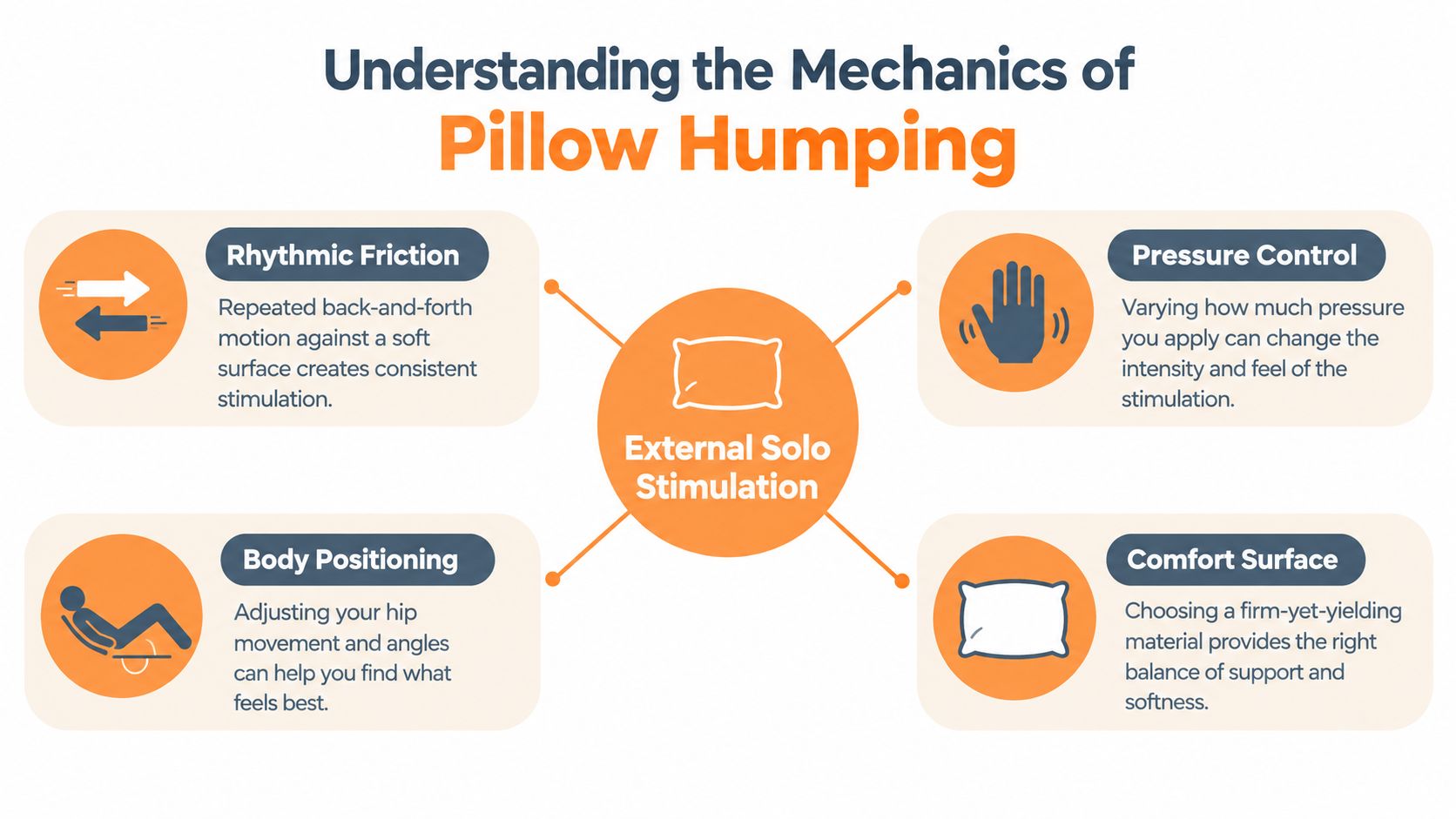
What makes a pillow useful for external stimulation? Pillow humping uses a cushioned object to create genital contact through pressure, movement, and friction. A person may press or rub the pelvis against a pillow, folded bedding, or another soft surface. Penetration isn't required, because the sensation comes from contact with external genital areas.
The pillow spreads pressure across a wider area than a fingertip. That cushioning may feel comfortable, while pelvic movement and body position control the angle, rhythm, and intensity. A pillow is also private, commonly available, and does not require a dedicated sexual device, as described in this population research on masturbation and sexual stimulation.
What the body is controlling
Three mechanical variables shape the experience:
- Friction: Repeated movement creates sliding contact against fabric or a pillowcase. Smooth material usually feels different from rough or heavily textured fabric.
- Pressure: The pelvis may apply light, moderate, or firmer contact. The sensation should stay comfortable, without pain, numbness, or forced pressure.
- Positioning: Lying face down, kneeling, sitting astride a pillow, or lying on one side changes the angle and the areas receiving contact.
A stable, soft surface offers more predictable support. A pillow that collapses, shifts, or has hard seams can create concentrated pressure instead. Clean, washable bedding or a barrier helps reduce contact with dirt, detergent residue, and bodily fluids. Stop or change position if the skin feels raw, sore, numb, or unusually sensitive.
Population surveys measure masturbation more often than pillow use specifically. One U.S.-relevant analysis reported that approximately 60% of men and 36.5% of women had masturbated during the previous month, while about 10.4% of men and roughly one-quarter of women reported never masturbating alone. These figures describe masturbation overall, not the prevalence of pillow humping.
For broader anatomical context, readers can review this guide to the male reproductive system and its functions. Pillow humping remains a technique within solo sexual activity, rather than a medical condition requiring a diagnostic label. Solo contact also differs from partnered dry humping, where consent, clothing, bodily fluids, and STI exposure require separate attention.
How Sensory Cues Shape Arousal Patterns
A preferred technique can become familiar because the nervous system learns associations. A particular pillow texture, body position, pressure level, or pelvic rhythm may repeatedly occur alongside arousal and orgasm. Over time, those cues can become reliable signals that help the body enter an aroused state.
Behavioral-learning research describes this process through classical conditioning, where a previously neutral cue becomes associated with sexual arousal, and operant reinforcement, where a behavior becomes more likely because it produces a rewarding outcome. This research on sexual conditioning and arousal cues describes how repeated sensory patterns can strengthen a specific response.
Preference isn't the same as pathology
A strong preference for pillow humping doesn't automatically mean that anything is wrong. A pattern becomes concerning when it causes distress, feels impossible to change despite a person's goals, creates injury, or interferes with relationships or daily responsibilities. Comfort and repetition alone aren't evidence of a disorder.
For example, someone may prefer a certain pressure because it feels predictable. Another person may find that a particular position works more reliably than direct hand stimulation. These differences reflect individual sensory preferences, not a universal standard for sexual response.
Practical rule: A preferred technique can remain healthy when it's voluntary, physically comfortable, and compatible with the person's broader sexual goals.
Building sensory flexibility gradually
Someone who wants more flexibility doesn't need to eliminate a familiar method abruptly. Gradual variation may be more practical:
- Change the body position while keeping the pressure similar.
- Use a slower or faster rhythm for part of the session.
- Vary the pillowcase texture with a clean, smooth material.
- Reduce pressure slightly and allow more pelvic movement.
- Alternate pillow-based stimulation with another comfortable form of external touch.
The purpose isn't to make every experience identical. It's to prevent one narrowly defined combination of pressure, position, and rhythm from becoming the only pattern that feels effective. If a person experiences persistent distress or sexual difficulty, a qualified healthcare professional or sex therapist can provide individualized support.
Managing Friction and Physical Safety Limits
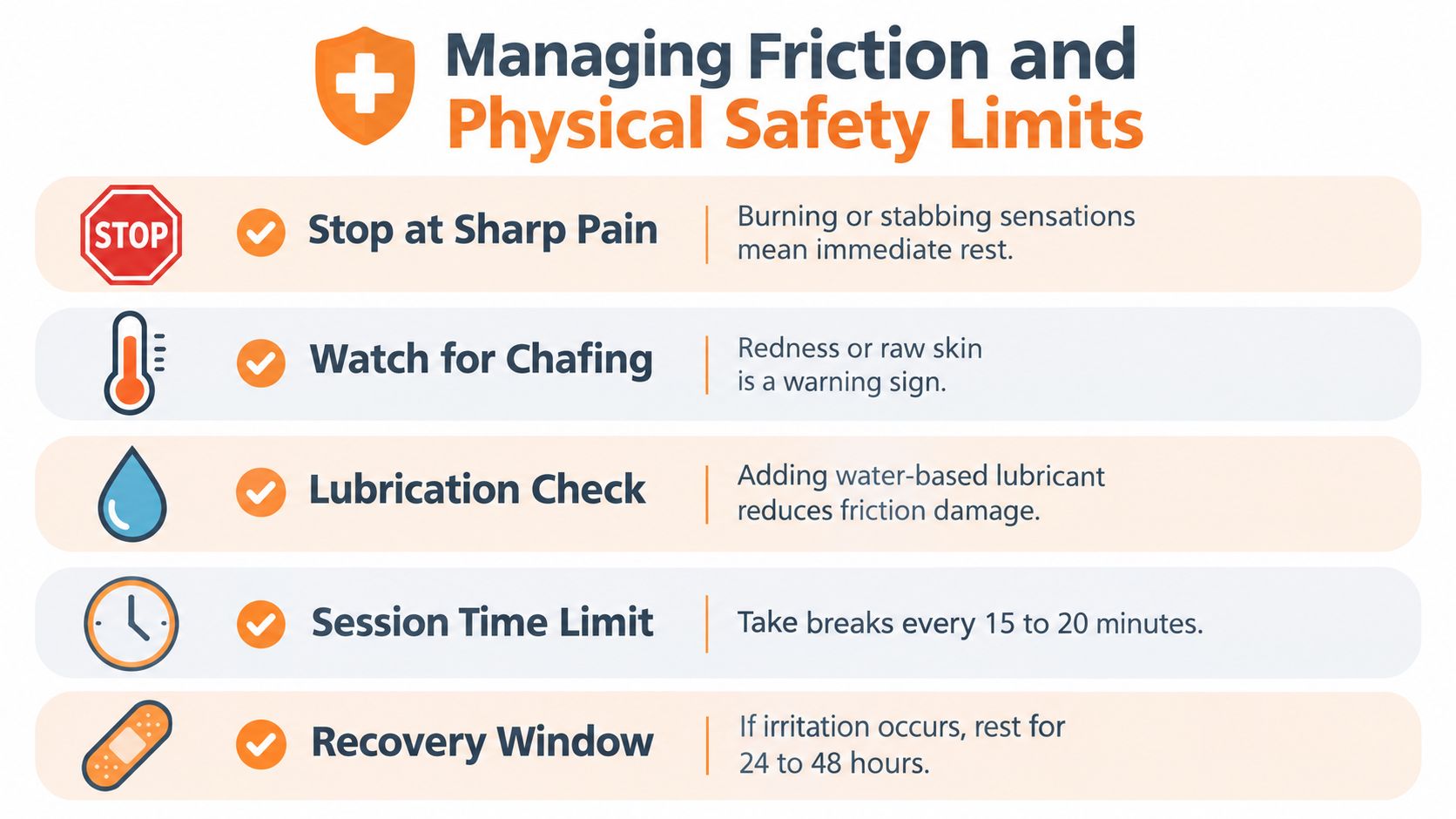
Friction is the central mechanical feature of pillow humping, but it also sets the main physical limit. Excessive force, prolonged rubbing, rough fabric, and inadequate lubrication can produce temporary chafing, tenderness, or irritation. The fact that a surface feels soft overall doesn't guarantee that every seam, zipper, or fabric texture is suitable for genital contact.
A clean, smooth pillowcase is a practical starting point. A washable barrier can protect the pillow and reduce contact with residue, while a suitable personal lubricant may reduce friction when dryness makes movement uncomfortable. Any lubricant should be compatible with the material being used and should not replace attention to pain or skin changes.
Signs that mean stop
The body's warning signals matter more than a preset routine. Available sexual-health guidance on pillow friction and warning signs identifies the following symptoms as reasons to stop:
- Burning or sharp pain: Rest immediately instead of trying to push through it.
- Raw or irritated skin: Pause until the area feels comfortable again.
- Bleeding: Stop and seek medical advice, particularly if the source isn't clear.
- Swelling or marked tenderness: Avoid further friction and monitor the change.
- Persistent numbness: Stop and seek medical evaluation if sensation doesn't return normally.
- Ongoing pain: Arrange a clinical assessment rather than assuming the symptom is only temporary.
Minor irritation may improve with rest, but persistent pain, skin injury, swelling, numbness, or bleeding warrants medical evaluation. A surface should be discarded or covered if it has rough seams, exposed fasteners, hard components, or cannot be cleaned adequately.
Pain is a stop signal, not a sensation to work through.
Hygiene also matters. A clean pillowcase, a washable cover, and separate bedding for personal sexual activity can reduce contamination concerns. Anyone managing recurring irritation may also benefit from discussing skin sensitivity, allergies, or other possible causes with a healthcare professional. Guidance about male pubic hair grooming and skin care can provide related context, but grooming isn't required for safe solo stimulation.
Solo Practice Versus Partnered Dry Humping
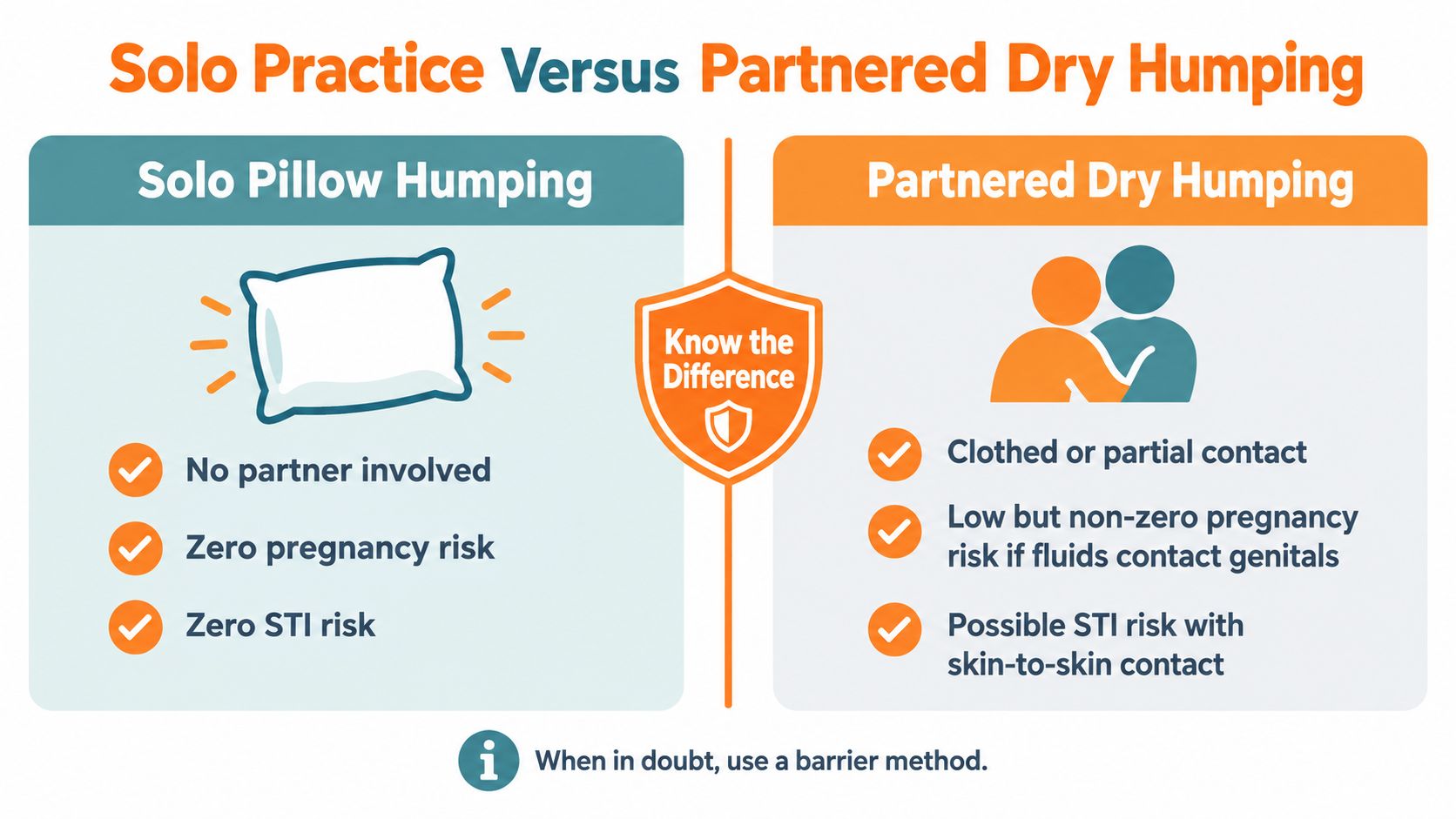
Solo pillow humping and partnered dry humping can look mechanically similar, but their health and consent considerations differ. In solo activity, there's no partner's genital skin, sexual fluids, or personal boundary involved. Solo pillow humping doesn't cause pregnancy or sexually transmitted infections by itself, provided the surface and any shared sexual materials are kept clean.
Partnered grinding introduces different pathways for risk. Genital skin-to-skin contact can transmit some infections, even without penetration, as explained in this sexual-health discussion of dry humping and infection exposure. Pregnancy becomes relevant if semen reaches the vulva or vagina, including situations where fluids contact the genitals without penetrative sex.
Consent must stay specific
Agreement to one activity doesn't automatically cover another. Consent to clothed grinding doesn't necessarily include genital exposure, touching under clothing, penetration, ejaculation on a partner, sharing sexual fluids, or recording.
Clear communication can sound simple:
- “Is this pressure comfortable?”
- “Are clothes staying on?”
- “Is touching under clothing okay?”
- “Do you want to stop or change activities?”
- “Is recording completely off the table?”
Consent must be voluntary, informed, and ongoing. Either person can pause or withdraw agreement at any point, and a partner's silence shouldn't be treated as permission. Barrier methods may reduce some exposure during partnered sexual activity, but they don't eliminate every form of skin-to-skin transmission.
The clean distinction is practical: solo pillow humping concerns surface choice, friction, hygiene, and skin comfort. Partnered dry humping adds infection exposure, fluid contact, pregnancy considerations, and the need to negotiate boundaries before and during the activity.
Supporting Overall Vitality and Reproductive Health
Pillow humping is one private sexual behavior, not a complete measure of sexual health or reproductive function. Broader wellbeing also includes sleep, movement, stress management, nutrition, medical care, and communication. No supplement should be presented as a treatment for a sexual or reproductive condition.
For dietary supplements, the FDA's guidance on structure-function claims defines acceptable claims as truthful, non-misleading descriptions of how a nutrient or dietary ingredient affects or helps maintain a body structure or function. That framework supports careful language such as “helps maintain normal function” or “plays a role in,” rather than claims that a product diagnoses, treats, cures, or prevents disease.
What ingredient language can responsibly say
Zinc plays a role in normal male reproductive function. L-Arginine participates in pathways involved in nitric oxide production and healthy blood flow. Bromelain has been studied in relation to taste, while ingredients such as Maca Root and Ashwagandha are commonly discussed in the context of general wellness support.
Those ingredient-level descriptions don't prove that a product changes pillow-humping behavior, sexual performance, semen volume, fertility, or any medical outcome. A person considering nutritional support should check the label, review potential interactions, and consult a qualified healthcare professional when medical conditions or prescription medicines are involved.
Readers interested in general nutrition and ways to support sperm health should keep supplement information separate from the physical safety advice above. A supplement can't compensate for painful friction, untreated symptoms, unclear consent, or a surface that causes skin injury.
Common Misconceptions and Final Safety Takeaways
Pillow humping isn't automatically a sign of immaturity, dysfunction, or a clinical disorder. It's a descriptive term for external solo masturbation involving pressure and friction against a pillow or another soft surface. Historical and survey evidence shows that masturbation has been documented across age groups and countries for decades, providing context for research on masturbation and sexual behavior, although those studies don't establish a global prevalence estimate for pillow humping.
The most useful safety rules are straightforward:
- Choose a clean surface: Use a smooth, washable pillowcase or barrier.
- Control friction: Begin gently and adjust pressure if contact feels harsh.
- Stop at warning signs: Burning, raw skin, bleeding, swelling, pain, or persistent numbness require a pause and possibly medical evaluation.
- Separate solo and partnered risks: Solo activity doesn't create pregnancy or STI risk by itself, while partnered genital contact can involve infection and fluid exposure.
- Keep consent specific: Agreement to grinding doesn't automatically include exposure, penetration, ejaculation, or recording.
Pillow humping can be an ordinary personal preference when it remains comfortable, voluntary, and compatible with a person's goals. The practical standard isn't whether the behavior looks unusual. It's whether the body is protected, the surface is clean, symptoms are respected, and every partner's boundaries are clear.
These statements have not been evaluated by the Food and Drug Administration. This product is not intended to diagnose, treat, cure, or prevent any disease.
SEMEX offers a daily vegan, non-GMO supplement formulated with ingredients that support semen volume, taste, and overall male vitality, including Zinc, L-Arginine, Sunflower Lecithin, and Bromelain. Men interested in adding structured nutritional support to broader sexual wellness habits can explore the formula and product details at SEMEX.