

What Is Mammary Intercourse: A Clear Beginner's Guide
Mammary intercourse is non-penetrative sexual activity in which a penis is placed between a partner's breasts and stimulated through movement and pressure. In a real-world moment where two people are trying something new and feeling a little awkward, that plain definition matters because it turns a confusing term into something concrete and understandable.
You might be here because the phrase sounds clinical, funny, or slightly intimidating, and you're trying to figure out whether it's normal, how it works, and whether it can feel comfortable for both people. The short answer is that it's a descriptive intimacy practice, not a medical procedure, and the important questions are about consent, comfort, and communication, not performance.
Table of Contents
- A Familiar Moment That Raises Real Questions
- How the Practice Actually Works
- What Research Says About Arousal and Sensation
- Safety, Comfort, and Practical Variables
- Consent and Communication as Standard
- Wellness Habits That Support Bedroom Confidence
- Final Takeaways and Common Questions
A Familiar Moment That Raises Real Questions
A couple is in bed, talking half-laughing, half-nervous, because one person has heard the term before and the other has only a fuzzy idea of what it means. One of them asks if it's “a thing people do,” and the other wonders whether they're supposed to move a certain way or just figure it out as they go.
That's where the definition helps. Reference literature classifies mammary intercourse as a form of non-penetrative sexual activity in which a penis is placed between a partner's breasts and stimulated through movement and pressure, sometimes ending in ejaculation without vaginal, anal, or oral penetration. The term sounds specialized, but the underlying idea is straightforward, and many people encounter it as either foreplay or an alternative to genital penetration.
Why the phrase can feel confusing
People often get stuck on the word “mammary.” In everyday use, it refers to the breast's mammary glands, but the practice itself usually involves the external breasts, not the milk-producing tissue deep inside. That's one reason the topic can sound more technical than it really is.
The more helpful frame is simple. This is an intimacy practice that depends on touch, rhythm, and mutual comfort. It's not about doing it “right” in some scripted way, it's about whether both people want to explore it and can talk about what feels good, what feels awkward, and what should stop.
A good first question isn't “Am I doing this correctly?” It's “Do we both want this, and do we know what feels okay?”
If the term has felt strange or embarrassing, that's normal too. Many readers arrive here with the same mix of curiosity and uncertainty. What matters most is that the topic can be discussed plainly, without shame, and that the physical details are easier to understand once the anatomy is clear.
How the Practice Actually Works
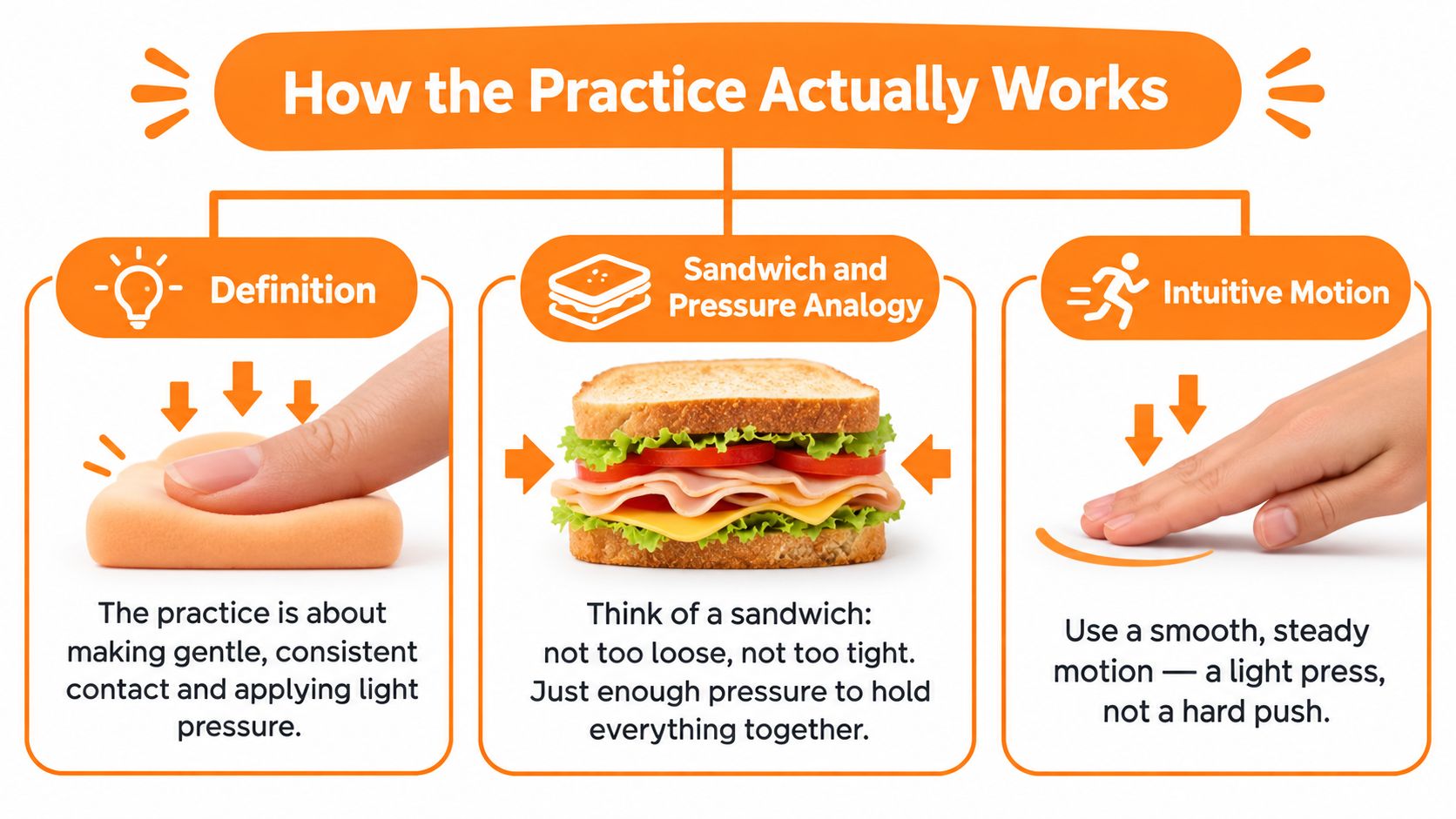
The easiest way to picture it is like a soft sandwich with movement. The breasts create the contact surface, pressure comes from the chest closing gently around the penis, and the sensation comes from controlled motion rather than penetration.
The anatomy behind the feeling
The breasts are not just one uniform structure. Female breasts contain glandular tissue and milk ducts that support lactation, while the nipples and surrounding tissue contain sensory nerves that can be linked with arousal. Male breasts also contain nipples and sensory tissue, but they don't usually have a lactation function. That's why touch can feel different from person to person, even when the outward motion looks similar.
In practical terms, the activity usually involves three things working together:
- Contact, the penis sits between the breasts.
- Pressure, the breasts gently compress around it.
- Motion, the pair uses a back-and-forth or up-and-down rhythm.
That motion may be framed as foreplay, mutual stimulation, or a complete sexual activity on its own, depending on the couple. The label changes the meaning, but the physical mechanics stay rooted in pressure and movement.
Simple rule: if the motion feels pinchy, harsh, or awkward, the setup probably needs less force and more lubrication or a different angle.
Why experience varies so much
Breast tissue and nipple sensitivity aren't identical across bodies. Some people find the contact highly stimulating, others feel neutral, and some don't like it at all. Hormonal state, lactation, recent surgery, tenderness, and general arousal level can all change the experience.
That's why two people can do what looks like the same thing and have very different reactions. A person who's relaxed and already aroused may experience the touch as intense and pleasurable, while someone who's tense or sensitive may need a lighter approach or may prefer a different activity entirely. If you want a companion read about technique and body awareness, this guide on how to give head fits naturally with the same idea of paying attention to response instead of chasing a script.
What Research Says About Arousal and Sensation
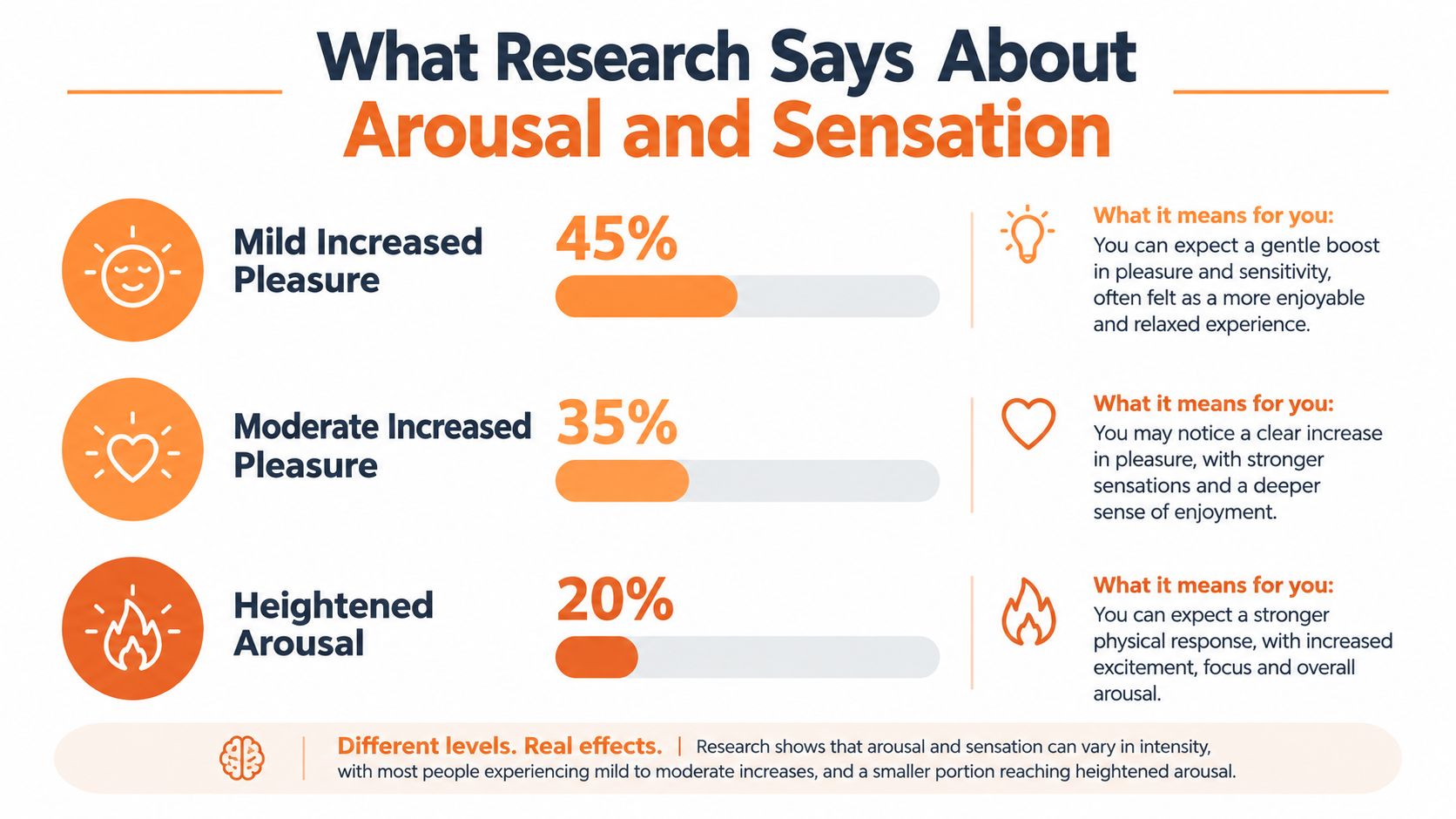
Arousal around breast and nipple stimulation varies a lot from person to person. For some, the touch is a strong signal; for others, it is mild or barely noticeable. A study summary from the University of Texas Meston Lab found that 81.5% of young women reported nipple or breast stimulation caused or increased sexual arousal, 78.2% said it raised arousal when they were already aroused, and 7.2% said it lowered arousal. Those figures describe breast stimulation, not mammary intercourse itself. a summary of research on nipple stimulation and sexual arousal
What those numbers do and don't mean
These results matter because they show that breast-related touch can be part of sexual response for many people. They do not prove that mammary intercourse produces the same response pattern, and they should not be treated as a prevalence estimate. The stimulus and the activity are related, but they are not the same thing.
A separate 2006 survey of 301 sexually experienced young adults, 148 men and 153 women ages 17–29, found a similar pattern. Among women, 81.5% said nipple or breast stimulation caused or enhanced arousal, while among men, 51.7% reported that it did. Only 7.2% of women and about 7–8% of men reported decreased arousal. Again, these are breast-stimulation findings, not mammary-intercourse findings. the 2006 survey of 301 young adults on breast stimulation
Why the physiology matters
Clinical research describes breast tissue as capable of erectile or tumescent responses to touch, and arousal can change how breast and nipple sensations are felt. A clinical overview of breast tissue and sexual response also links pleasurable breast or nipple stimulation with clitoral sensitivity, vaginal lubrication, orgasm, and partner satisfaction, while making clear that none of those outcomes are guaranteed. a clinical overview of breast tissue and sexual response
That is the right frame to keep in mind. Some bodies respond strongly, some only a little, and some not at all. The reaction depends on anatomy, timing, comfort, and consent just as much as on technique.
If you want a related confidence read, this article on why am I horny helps explain why arousal can feel uneven or unpredictable.
Safety, Comfort, and Practical Variables
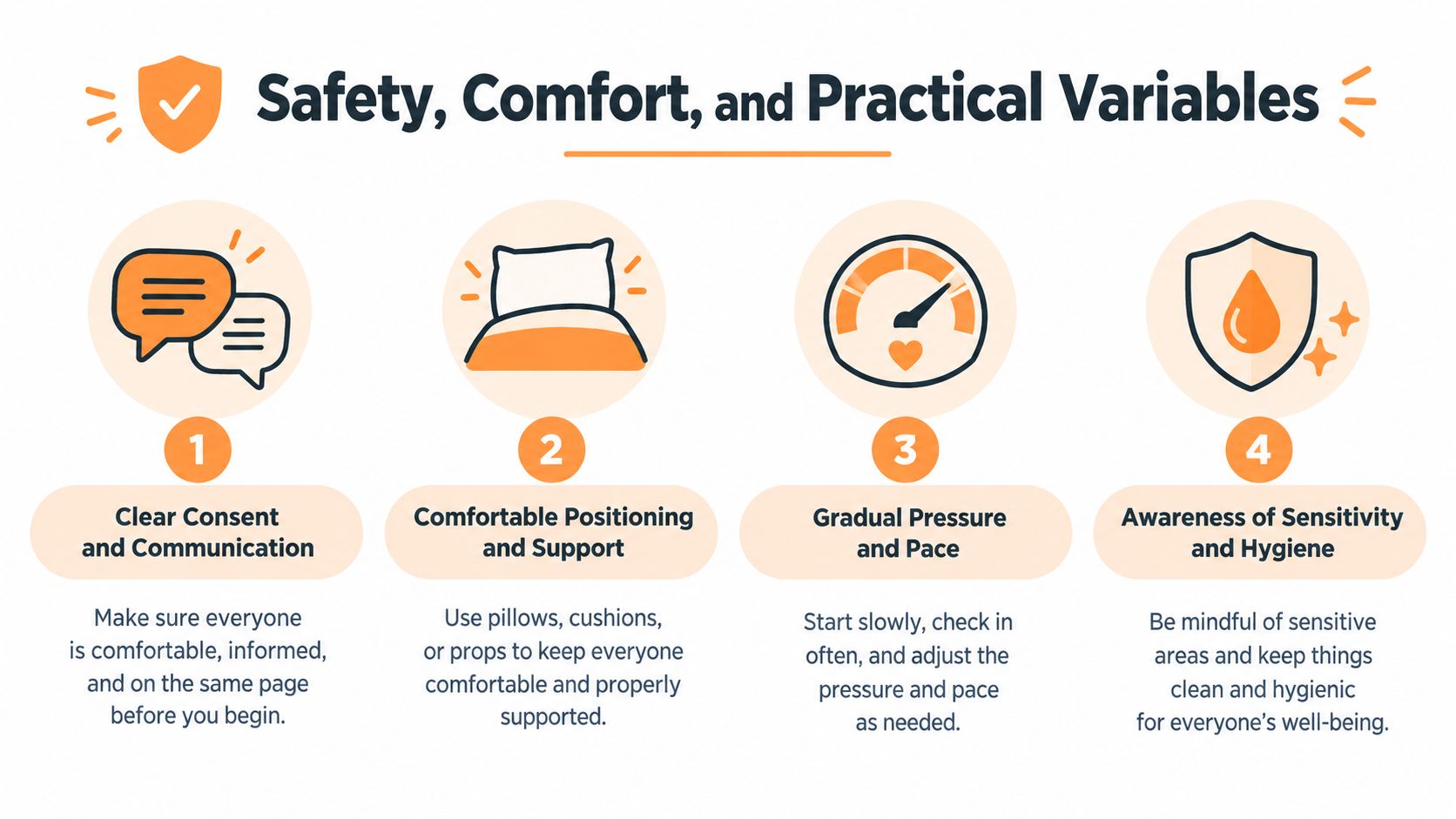
The main variables are simple: friction, pressure, lubrication, communication, and where ejaculation happens. If you keep those five things in view, the experience usually becomes easier to manage and much less awkward.
The comfort checklist
Excessive dry friction or force can cause superficial irritation, abrasions, bruising, or nipple pain, especially when breast tissue is compressed heavily or when the partner is lactating, engorged, recovering from surgery, or dealing with breast tenderness. A body-safe, condom-compatible lubricant can reduce mechanical friction, and oil-based products should not be used with latex condoms because they can weaken latex. Columbia health guidance
A practical checklist helps:
- Agree on pressure first, so nobody has to guess what “gentle” means.
- Use enough lubricant, especially if skin feels dry or sensitive.
- Check the angle and support, because awkward positioning can create unnecessary strain.
- Decide where ejaculation may occur, since semen in the eye can irritate and may carry infection risk if an STI is present.
Special situations call for extra care
Lactation can change the comfort equation quickly. Breasts may be more sensitive, stimulation may trigger milk ejection, and discomfort is a reason to stop or adjust the activity. The same applies after surgery, during tenderness, or any time touch stops feeling neutral or pleasant.
If touch starts feeling sharp instead of warm, the right move is to slow down, add lubrication, or stop.
Hygiene also matters in a straightforward way, not a fussy one. A quick shower or basic cleanup can make body contact feel more comfortable and can reduce the distraction of dryness, sweat, or residue. If you want that practical baseline, this piece on showering before sex pairs naturally with the comfort basics here.
Consent and Communication as Standard
Consent isn't a mood, a guess, or a one-time yes. It's an agreement about what each person is willing to do during the encounter, and it remains necessary regardless of relationship status or previous sexual activity. University of Colorado consent guidance
What good communication sounds like
Before starting, a couple might say things like, “Do you want more pressure or less?” or “Are you okay if I finish there, or would you rather not?” Those questions are direct, kind, and much more useful than hoping body language will do the work.
During the activity, check-ins should stay simple:
- “Is this pressure okay?”
- “Do you want more lubricant?”
- “Should I slow down?”
- “Do you want to stop?”
That kind of language keeps the moment grounded in real feedback. It also makes the encounter less performative, because both people know they can change course without making it a big event.
Why pause rights matter
Any partner may pause or stop without needing to give a reason. That matters because comfort can change fast, especially when there's tenderness, anxiety, or a mismatch between expected and actual sensation. Consent is easier to maintain when everyone knows that stopping is allowed.
If you're bringing up the topic for the first time, a calm opener works better than a grand speech. Something as simple as, "I've been curious about trying this, would you be open to talking about it?" gives the other person room to respond openly. If you want another practical communication reference, having sex for the first time tips fits well as a general model for low-pressure intimacy talks.
Wellness Habits That Support Bedroom Confidence
Bedroom confidence usually grows from ordinary habits, not one perfect trick. Sleep, hydration, nutrition, and routines that help you feel steady in your own skin all shape energy, body awareness, and sexual ease.
Confidence is partly physical, partly habitual
A rested body pays attention better. So does one that is hydrated and not running on fumes. Sleep and hydration affect mood, stamina, and how clearly you notice sensation long before anything happens in the bedroom, and a steady sleep schedule with consistent water intake is one of the least flashy ways to support confidence.
For men who also care about semen volume, taste, and general sexual confidence, wellness habits can support the background conditions that make intimacy feel easier. Ingredients such as zinc, L-arginine, and bromelain are commonly discussed in relation to normal male reproductive function, nitric oxide and blood flow, and taste-related support. Those are ingredient-level ideas, not promises about any product.
If a supplement fits your routine, one option is SEMEX, a daily men's supplement positioned around those ingredients and broader wellness support. It is also described as vegan, non-GMO, made in a cGMP-registered facility, and third-party tested, which are the kinds of details many buyers like to review before deciding.
Why this matters for intimate confidence
Good bedroom habits are usually quiet habits. They look like showing up calm, prepared, and less distracted by avoidable discomfort. That kind of steadiness can make a new sexual practice feel less awkward and more collaborative, because the focus stays on what both people are noticing in real time.
Confidence usually grows from repetition, honest feedback, and a body that is not fighting you the whole time.
The practical takeaway is simple. If you want more ease in intimate moments, build the outside-the-bedroom habits that help you feel better inside it. That approach tends to support novelty, communication, and patience more reliably than chasing a quick fix.
Final Takeaways and Common Questions
Mammary intercourse is a non-penetrative sexual practice that uses the breasts, pressure, and movement, and it makes sense best when both people understand the basics and talk openly. The main themes are simple, consent, comfort, lubrication, and honest feedback. If touch feels good, you can explore it. If it feels off, you can stop or adjust.
People often ask whether it's “normal.” It's better to ask whether it's mutually wanted and physically comfortable. Others wonder how to bring it up, and the easiest answer is a direct, low-pressure question. If there's discomfort, the right move is to slow down, reduce friction, or choose a different activity.
SEMEX is a dietary supplement, not a treatment for any condition.
These statements have not been evaluated by the Food and Drug Administration. This product is not intended to diagnose, treat, cure, or prevent any disease.
If you're building more confidence in the bedroom and want a straightforward daily routine to support that mindset, take a look at SEMEX. It's one of the ways men think about consistency, ingredient support, and feeling more prepared for intimate moments. If that matches what you're looking for, visit the site and see whether it fits your routine.