

What Is Lesbian Trib: Meaning, Practices, and Safety
“Lesbian trib” usually means tribbing or tribadism, a sexual practice involving vulva-to-vulva or vulva-to-body contact focused on external genital rubbing and clitoral stimulation rather than penetration. The English term tribade is documented from at least 1601, although its meaning changed over time.
Why does a search for “lesbian trib” so often lead to a single crossed-legs image, when the activity itself is broader, more flexible, and not limited to one sexual orientation? The phrase is common shorthand, but it combines two different ideas: “lesbian” describes an identity or orientation, while “tribbing” describes a sexual behavior. Separating those ideas makes the subject easier to understand and gives people more accurate language for consent, comfort, pleasure, and sexual health.
Table of Contents
- What Lesbian Trib Actually Means
- The Word Has a Longer History Than You Think
- Anatomy and Mechanics in Plain Language
- Beyond Scissoring and Beyond the Lesbian Label
- Talking It Through Before and During
- Sexual Health and Risk Reduction
- A Practical Routine for Safer and More Comfortable Tribbing
- Key Takeaways and Where to Learn More
What Lesbian Trib Actually Means
A clear answer to what is lesbian trib starts with the act itself. Tribbing, also called tribadism, involves rubbing one person's vulva or external genitals against another person's vulva, thigh, abdomen, hip, buttocks, or another body part. Pleasure generally comes from external friction and clitoral stimulation, not from penetration.
The word “lesbian” appears in the search phrase because tribbing has a strong cultural association with sex between women. That association doesn't make lesbian identity a requirement. A lesbian may enjoy tribbing, another lesbian may not, and a bisexual, queer, trans, or nonbinary person with a vulva may also enjoy it. The behavior and the identity answer different questions.
What the term includes
Tribbing isn't a fixed routine or a single pose. Partners might choose direct vulva-to-vulva contact, genital rubbing against a thigh, or a body position that creates steady pressure against the external genital area. Some people may use the term for broader vulva-to-body contact, while others use it more narrowly.
That variation matters because online images can make the activity seem like a performance that must look a certain way. In practice, bodies, angles, mobility, anatomy, and preferences differ. A comfortable experience depends less on copying an image and more on finding contact that feels good to both partners.
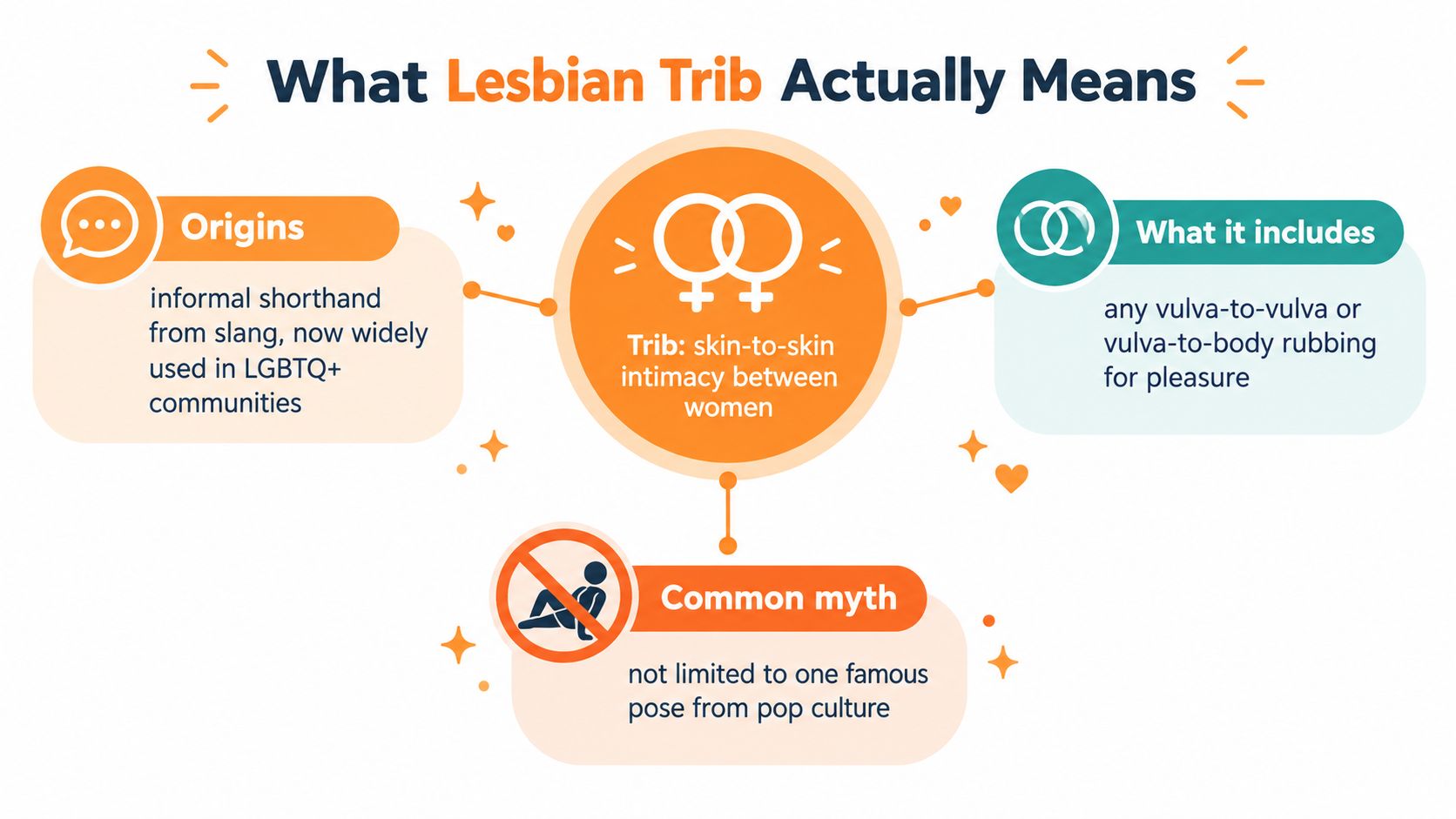
The language has also shifted. Tribade once carried broad and often judgmental meanings, while tribbing is now the more familiar informal term for genital rubbing. “Tribadism” may sound historical or clinical, but it describes the same general activity.
Core distinction: Tribbing describes something people do. Lesbian describes how someone may identify. One doesn't determine the other.
The Word Has a Longer History Than You Think
The history begins with the ancient Greek verb tribein, meaning “to rub.” In ancient Greek and Roman contexts, tribas or tribade didn't initially describe only a rubbing position. The label could refer to a woman or intersex person portrayed as taking an active, penetrative role with another person, sometimes using the clitoris or a dildo.
That older meaning was broader than the modern one, and it often reflected the moral judgments of the societies and writers using it. Over time, the term became more closely associated with sexual activity between women. By the modern era, “tribbing” had developed into a more specific description of external genital rubbing.
From label to behavior
The English word “tribade” is documented from at least 1601 and remained a common label in English and European writing through the mid-1800s, when it was gradually displaced by “lesbian,” “sapphist,” and “homosexual” (historical background on tribadism). That shift wasn't merely a vocabulary update. It reflected changes in medical writing, sexology, public language, and LGBTQ+ communities' own descriptions of identity.
During the twentieth century, “tribade” increasingly gave way to other terms, while descriptions of lesbian sexuality developed narrower words for genital rubbing. Terms such as “friction,” “dyking,” and “banging” appeared in some 1950s subcultures. Since about 1965, “tribadism” has generally referred more specifically to rubbing external genitals against another person's genitals, thigh, hip, or pubic area, according to the history of homosexual terminology.
The result is a word with two layers. Older uses may be stigmatizing or imprecise, while modern uses are usually descriptive. That distinction helps explain why some readers prefer “tribbing,” which sounds more conversational, while others encounter “tribadism” in educational or clinical writing.
Anatomy and Mechanics in Plain Language
Tribbing works through contact between external genital structures, including the vulva, clitoris, and surrounding pelvic area. The clitoris is especially relevant because it contains sensitive external tissue, and rubbing or sustained pressure in the right place can create pleasure without penetration.
A useful analogy is two soft surfaces pressed together. A small change in angle can shift pressure from one area to another, just as tilting a hand changes where contact is felt. One partner may prefer a firm, steady surface, while another may prefer slower movement or lighter pressure. There isn't a universal “correct” angle.
Why pressure and lubrication matter
Friction can feel pleasurable when it matches the partners' preferences, but dry or forceful contact can create irritation. Lubrication may help reduce unwanted drag, especially during extended activity. It doesn't replace communication, and more lubricant isn't automatically better. Partners can add a small amount, pause, and adjust based on sensation.
Position also changes the mechanics. Face-to-face contact may provide closeness and easy verbal check-ins. Side-by-side or staggered positions can make it easier to control pressure and reduce strain. A pillow or supportive surface may help some bodies maintain a comfortable angle, but comfort should guide the choice rather than appearance.
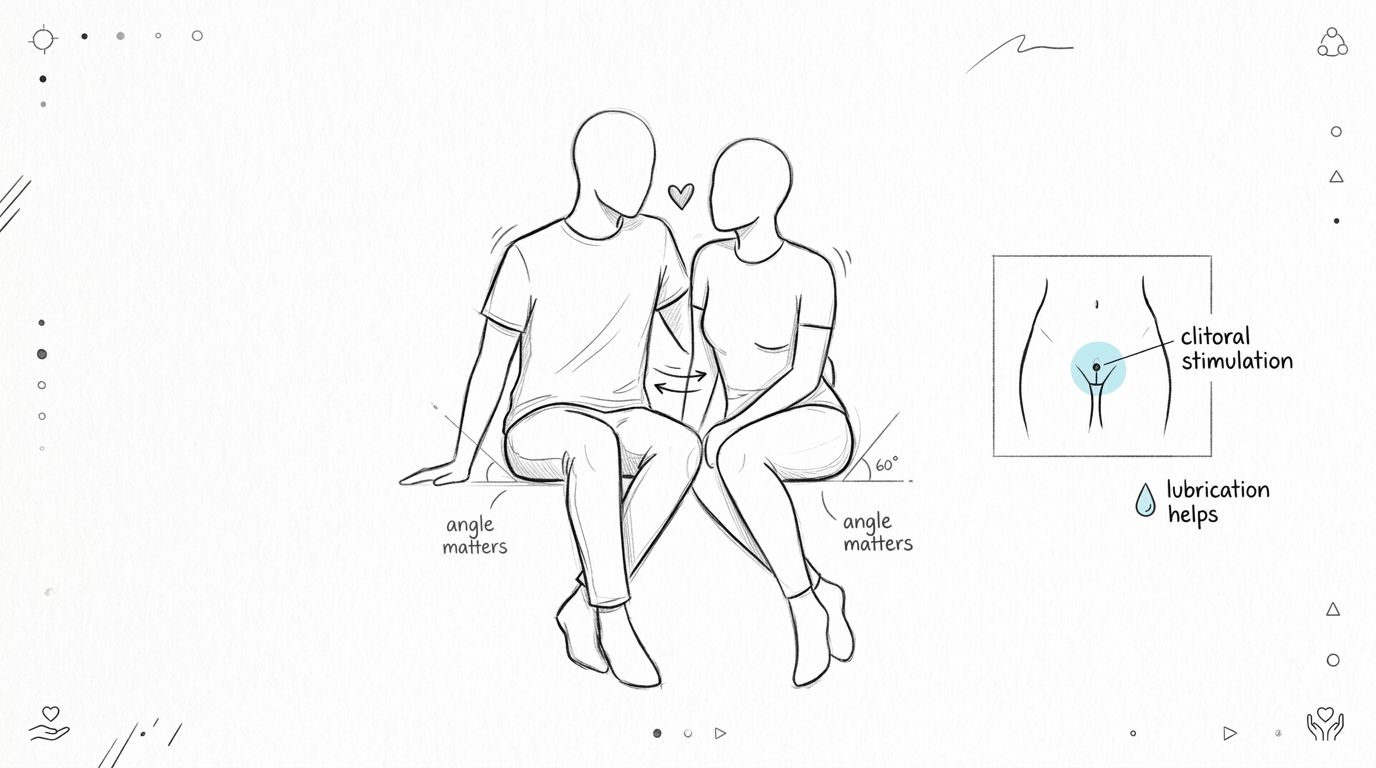
The central principle is responsiveness. If contact feels too sharp, partners can slow down, change direction, add lubrication, or move the pelvis slightly. If someone wants to learn about related external pleasure topics, a separate resource on how women may experience squirting should be treated as general sexual-wellness information, not as a required outcome.
Beyond Scissoring and Beyond the Lesbian Label
Many people first encounter tribbing through the image called scissoring, where partners interlock or cross their legs with genital contact. That image has become so familiar that it can overshadow the broader meaning of tribbing. Healthline describes tribbing as the wider sexual act and scissoring as one possible position, while its explainer on scissoring also reflects how often people use the terms interchangeably.
The distinction is simple:
| Term | Meaning |
|---|---|
| Tribbing | A broad category of external genital or vulva-to-body rubbing |
| Scissoring | One particular position that may involve interlocked legs and genital contact |
Scissoring can therefore be tribbing, but tribbing doesn't require scissoring. A person might rub against a partner's thigh, hip, abdomen, or pubic area without crossing legs at all. Some partners may prefer a position that keeps their legs parallel, while others may choose close body contact with one person controlling the movement.
Behavior doesn't assign an identity
The phrase “lesbian trib” can help someone find information, but it can also suggest an eligibility rule that doesn't exist. Someone's participation in tribbing doesn't determine whether that person is lesbian, bisexual, queer, trans, nonbinary, or another identity. Sexual orientation describes patterns of attraction and personal identity, while a sexual act describes behavior.
Inclusive language also matters anatomically. Not every person with a vulva identifies as a woman, and not every lesbian has the same anatomy, preferences, or relationship to the word “lesbian.” A respectful explanation focuses on the bodies and behaviors involved without assuming gender presentation or identity.
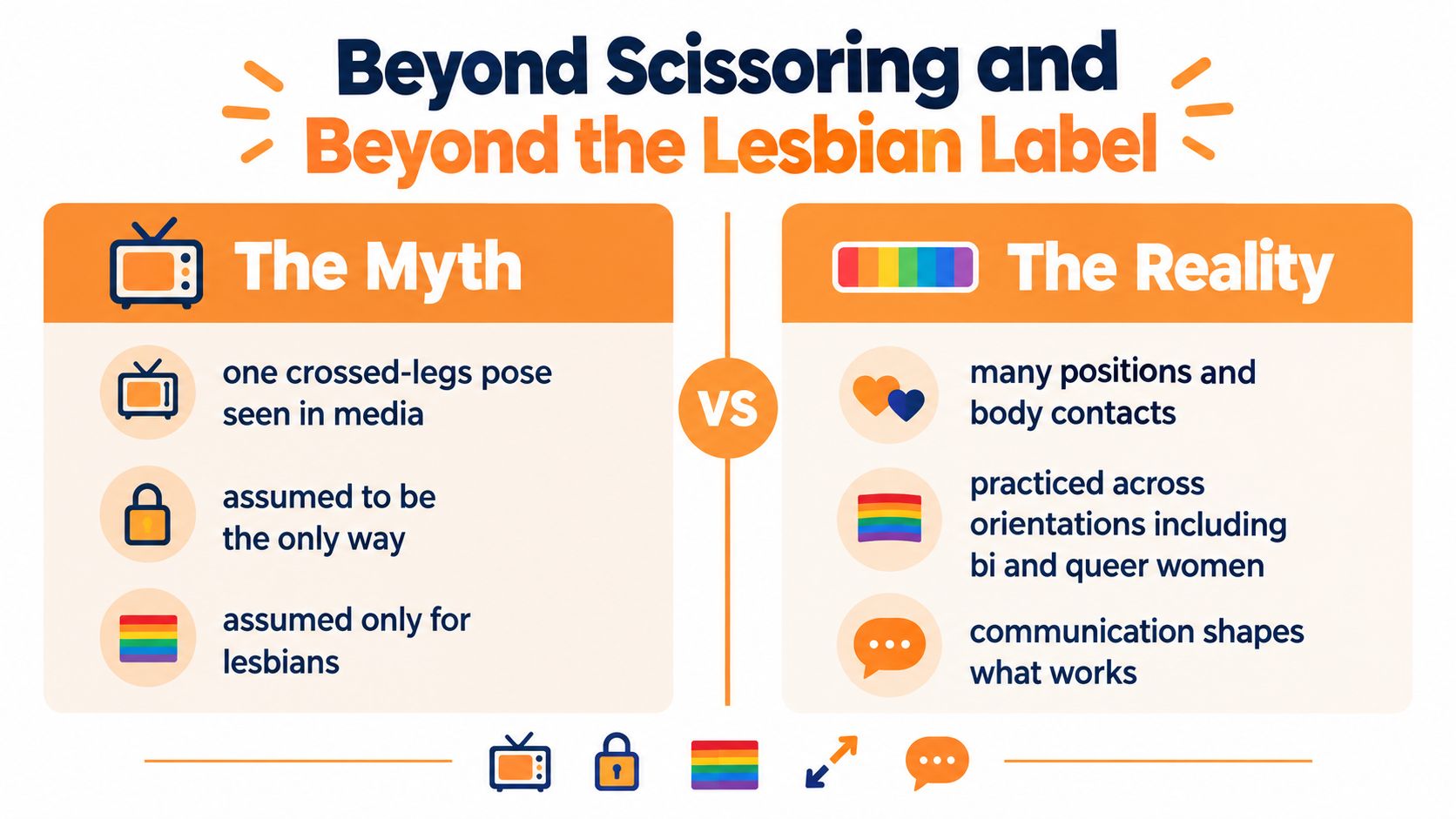
A more accurate mental model: Scissoring is a picture of one possible arrangement. Tribbing is the broader experience of shared external friction.
Talking It Through Before and During
Consent works best as a conversation rather than a one-time permission slip. Before trying tribbing, partners can discuss what kinds of contact feel appealing, what areas are sensitive, and what should remain off-limits. A direct question such as “Would vulva-to-vulva contact feel good, or would rubbing against a thigh feel more comfortable?” gives both people useful choices.
Pressure and pace deserve specific language. “Light or firm?” is easier to answer than “Does this feel okay?” A partner can also ask, “Should the movement stay steady?” or “Would a different angle help?” These questions don't have to interrupt intimacy. Short check-ins can make adjustments feel natural.
Practical phrases partners can use
- Before starting: “What kind of contact sounds good tonight?”
- For boundaries: “Are there any areas that should be avoided?”
- For lubrication: “The friction feels a little dry. Would more lubricant help?”
- During movement: “More pressure, less pressure, or the same?”
- For a pause: “Pause means stopping immediately, no explanation needed.”
- For changing course: “A change of mind is okay. What would feel better now?”
A partner who says “stop,” pulls away, becomes tense, or seems uncertain should receive an immediate pause. Consent remains changeable throughout the experience, including after activity has started. The person who wants to continue can ask what adjustment would feel safer, but shouldn't pressure the other person to resume.
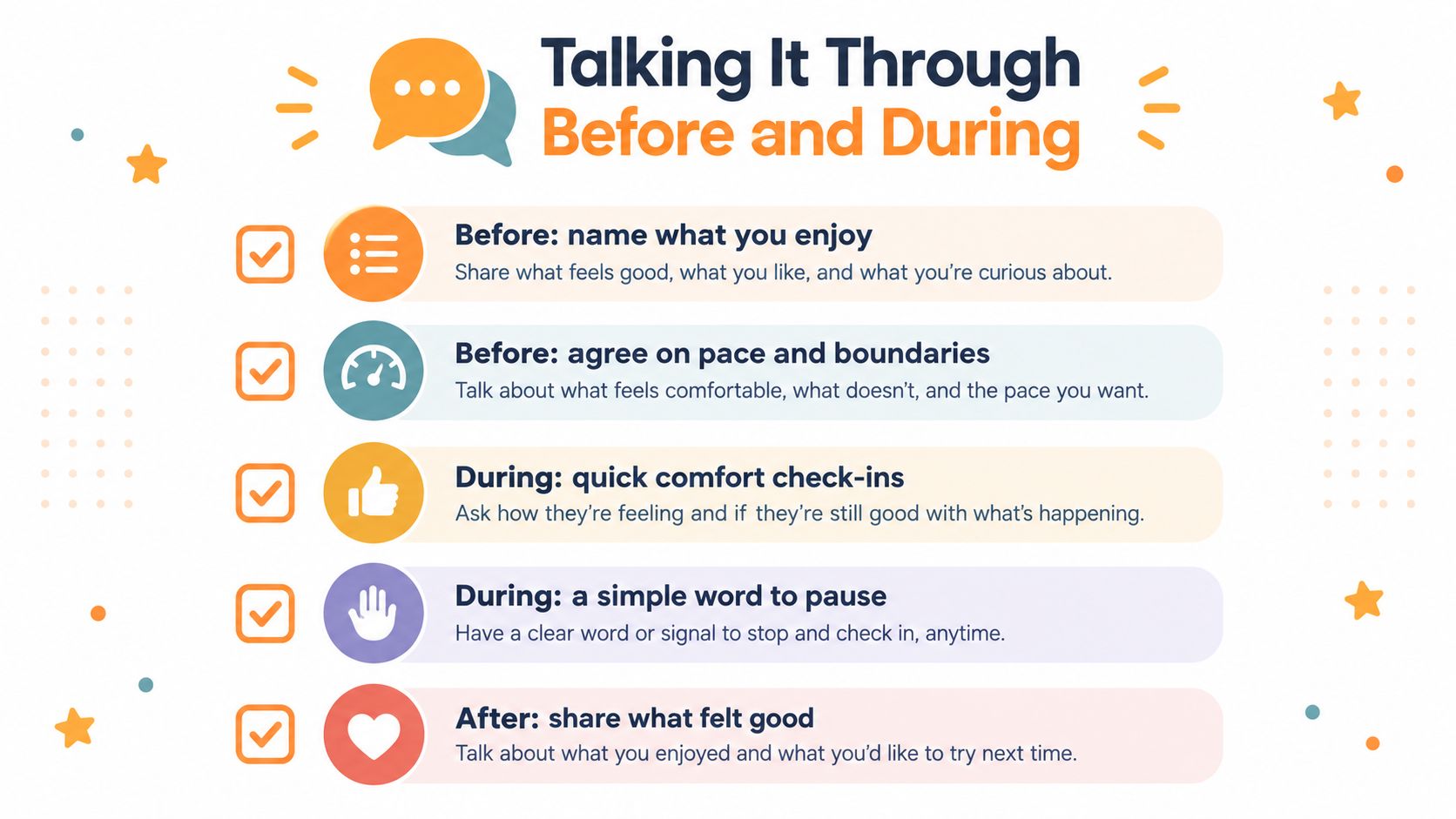
Afterward, a brief conversation can reinforce trust. Partners might share which pressure, pace, or position felt comfortable and which adjustment they'd avoid next time. Readers seeking broader guidance on communicating during a new sexual experience can consult first-time sex tips focused on comfort and consent.
Sexual Health and Risk Reduction
Tribbing shouldn't be treated as automatically risk-free. Infections can pass between partners through genital contact, oral-genital activity, hands, and shared sex toys. Documented concerns include human papillomavirus, herpes simplex virus, bacterial vaginosis-associated organisms, and other sexually transmitted infections, as described in Mayo Clinic's sexual-health guidance for lesbians.
Risk reduction focuses on interrupting exposure pathways. It doesn't eliminate every possibility, and the most suitable approach depends on the partners, symptoms, activities, and available barriers.
Measures that can reduce exposure
- Discuss testing: Partners can talk about recent testing, known diagnoses, symptoms, and any changes in sexual health before intimate contact.
- Avoid active lesions: Sexual contact should wait when either person has active sores, unexplained lesions, or concerning symptoms until a healthcare professional provides guidance.
- Use oral barriers: Dental dams or other latex barriers can reduce exposure during oral-genital contact.
- Protect shared toys: A new condom can cover a shared penetrative toy for each partner, and toys should be cleaned between uses.
- Wash hands: Hand washing before sexual contact and after touching sores, fluids, or toys supports cleaner practices.
- Maintain screening: Cervical screening remains appropriate according to national guidelines, regardless of sexual orientation or whether someone has had sex with men.
- Ask about vaccination: HPV and hepatitis A and B vaccination may offer additional prevention for eligible people.
Direct vulva-to-vulva contact can make barriers less practical, so honest conversations become especially important. A healthcare professional can help interpret symptoms, recommend testing, and clarify vaccination or screening needs without assuming a person's identity or sexual practices.
A Practical Routine for Safer and More Comfortable Tribbing
A flexible routine can make the experience smoother without turning it into a script. The first step is a quick health and comfort check. Partners can discuss symptoms, active sores, recent testing, and any boundaries that matter that day.
Next comes setup. Clean hands, accessible lubricant, a towel, and any chosen barriers or toys can prevent avoidable interruptions. If a shared toy is involved, a fresh condom for each partner and appropriate cleaning should be part of the plan. Preparation supports intimacy because neither person has to search for supplies while trying to stay present.
A repeatable sequence
- Agree on the starting contact. Choose direct vulva-to-vulva contact, vulva-to-thigh rubbing, or another comfortable arrangement. The choice can change later.
- Begin gently. Slow movement gives both partners time to notice pressure, friction, and sensitivity.
- Adjust one variable at a time. Try a small change in angle, pace, pressure, or lubrication instead of changing everything at once.
- Use brief check-ins. A question such as “Keep going or shift?” allows a clear answer without demanding a long explanation.
- Stop for pain or irritation. Pleasure shouldn't require someone to tolerate burning, sharp friction, or discomfort.
- Finish with care. Wash hands and clean toys according to their material and the manufacturer's directions. Partners can also share what felt good and what should change next time.
Personal hygiene can support confidence, but excessive washing or harsh products may irritate sensitive tissue. A general resource on showering before sex can offer broader hygiene context, while partners should still follow their own bodies' needs and any clinician's advice.
The routine remains optional. Some partners may use only a conversation and lubricant, while others may add barriers, pillows, or external toys. The measure of success is mutual comfort and consent, not a particular position or result.
Key Takeaways and Where to Learn More
Tribbing is a sexual behavior, not an identity marker. “Lesbian trib” is a useful search phrase because tribbing is often discussed in lesbian and sapphic contexts, but the activity isn't exclusive to lesbians and isn't the same thing as scissoring. Scissoring is one possible position within the broader category of external genital or vulva-to-body rubbing.
The most reliable approach combines anatomy, communication, and practical risk reduction. Partners can discuss comfort and boundaries, adjust pressure and lubrication, avoid contact during active sores, use barriers where practical, clean shared toys, and keep up with appropriate cervical screening and vaccination conversations.
For further information, readers can consult established sexual-health services, a qualified healthcare professional, and reputable sexual-wellness publications. A clinician can provide individualized guidance about symptoms, testing, HPV or hepatitis vaccination, and screening.
The FDA disclaimer for dietary supplements is: “These statements have not been evaluated by the Food and Drug Administration. This product is not intended to diagnose, treat, cure, or prevent any disease.”
SEMEX offers a daily men's wellness supplement formulated with Zinc, L-Arginine, Sunflower Lecithin, Bromelain, and additional wellness ingredients, with a focus on supporting semen volume and taste. Readers interested in learning more about the formula, testing, and usage can visit SEMEX.