

Vitality Ingredients Explained: What Works and What Doesn't
You're scrolling late at night after another long workday, you're tired in a way coffee doesn't fix, and your drive in the gym and the bedroom isn't what it was a few years ago. An ad promises renewed energy in a capsule. It's a familiar moment, and it's exactly where clear information about vitality ingredients matters more than bold promises.
Table of Contents
- Why Men Turn to Vitality Ingredients
- How Vitality Ingredients Work in the Body
- The Key Ingredients and What They Do
- What the Research Really Shows About Vitality
- Dosing, Safety, and Quality Considerations
- How to Choose a Vitality Supplement Wisely
- Common Myths and Misconceptions About Vitality Ingredients
- Final Thoughts and Important Disclaimer
Why Men Turn to Vitality Ingredients
Mark is in his early forties, he trains when he can, and he eats reasonably well. Lately he's noticed slower recovery, more afternoon fatigue, and less interest in sex than he expects from himself. Nothing feels broken, but nothing feels sharp either. That's the gap where most men start searching.
He isn't looking for a diagnosis. He's looking for support. Vitality is a broad word on supplement labels, and it usually bundles together energy, stamina, libido, mood, recovery, and reproductive wellness. Companies group very different ingredients under that one word, which is why two products with similar claims can contain almost nothing in common.
What Drives the Search
- Energy that feels less reliable: Work, poor sleep, and stress can leave you running on stimulants rather than real recovery.
- Changes in libido or performance: Many men notice circulation, confidence, and desire don't always move together.
- A desire to optimize, not medicate: You may want nutritional support for normal function without jumping straight to prescription options.
- Questions about semen and fertility: Some men care about volume for confidence, others care about sperm quality for family planning, and those are not the same goal.
That last distinction matters from the start. Semen volume is mostly fluid from glands. Sperm quality covers concentration, motility, and morphology. A product can talk about one without proving anything about the other, and marketing often blurs the line.
Start with the goal: If you can't name whether you care about energy, circulation, stress, or reproductive markers, you can't judge whether an ingredient fits.
A realistic expectation helps you shop better. These ingredients, at their best, support normal processes your body already performs. They don't replace sleep, exercise, medical care, or a fertility workup. When you keep that frame, you're less likely to chase the loudest claim and more likely to ask the useful questions. What's in it? How much? What outcome was studied? Who shouldn't take it?
That mindset is the difference between hoping a blend works and choosing ingredients with your eyes open.
How Vitality Ingredients Work in the Body
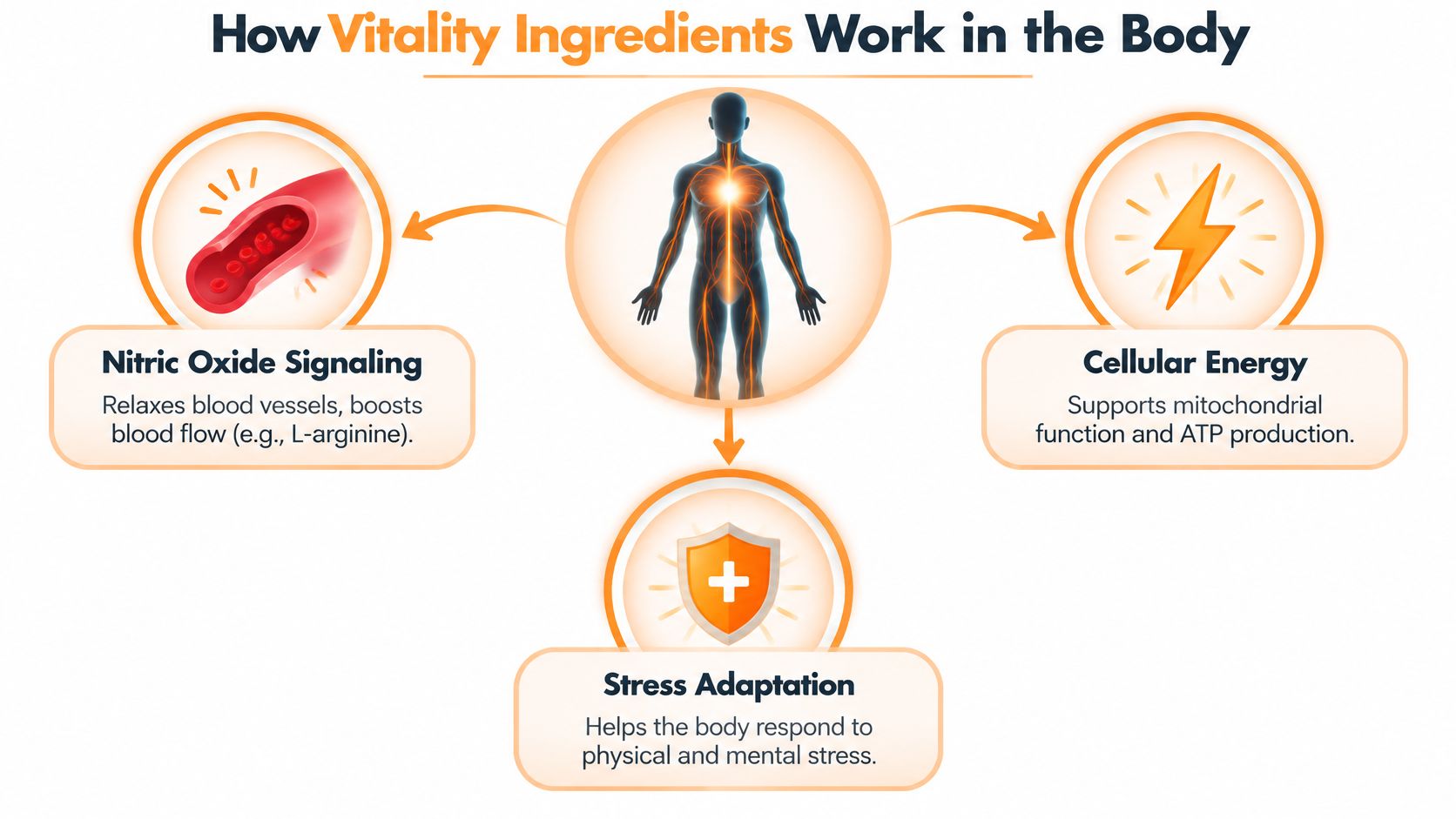
Most vitality ingredients cluster around a few biological jobs. Once you see the jobs, the ingredient lists stop looking like random botanicals and start looking like a strategy, sometimes a sensible one, sometimes just a long label.
Blood Flow and Nitric Oxide Signaling
Think of nitric oxide as a short, local signal that tells blood vessel walls to relax. Wider vessels allow blood to move more easily, which is relevant to exercise performance and erections, since both depend on circulation.
That pathway has serious scientific history. In 1998, Robert Furchgott, Louis Ignarro, and Ferid Murad received the Nobel Prize in Physiology or Medicine for discoveries identifying nitric oxide as a signaling molecule involved in blood vessel relaxation, and L-arginine serves as a substrate for nitric oxide production, as described in the review of nitric oxide biology and L-arginine. A substrate is raw material. Having more raw material does not guarantee your body will make or use more of the signal, especially if other steps in the pathway are the limiting factor.
Essential Nutrients and Cellular Basics
Some ingredients aren't exotic at all. Zinc helps enzymes do routine work tied to DNA and protein synthesis, immune function, and metabolism. If your intake is low, correcting that gap supports normal function. If you're already getting enough, adding much more doesn't automatically upgrade the system.
It's like oil in an engine. Too little causes problems, the right level keeps things running, and overfilling creates a new issue. Nutrient support is mostly about adequacy, not endless escalation.
Stress Adaptation and Energy
Botanicals such as ashwagandha and Panax ginseng are often called adaptogens, a label for ingredients marketed to help the body respond to physical and mental stress. The proposed logic is indirect. If stress, poor sleep, and fatigue are dragging down mood and libido, an ingredient that supports a calmer stress response could help you feel more like yourself.
A plausible mechanism explains why researchers study an ingredient. It doesn't prove a capsule will produce a noticeable effect for you.
That caution applies to every pathway above. Mechanisms tell you where an ingredient might act. Human studies, dose, duration, and your baseline health determine whether that possibility becomes a real world benefit. Supportive is the right word, curative is not.
The Key Ingredients and What They Do
You'll see the same names across men's formulas. They aren't interchangeable, and lumping them together hides important differences in evidence and purpose.
Zinc and L-Arginine
Zinc is the most measurable ingredient in this category because it has an established daily requirement. The NIH zinc fact sheet for health professionals lists an adult male recommended dietary allowance of 11 mg per day, compared with 8 mg per day for adult women, and reports average consumption of approximately 13 mg per day among U.S. men older than 19. That average conceals variation. Men with restricted diets or limited food access may get less, while men stacking a multivitamin and a men's blend may get far more than they realize.
L-arginine is an amino acid tied to nitric oxide production. Its appeal is circulation, not nutrition in the vitamin sense. That makes dose and context important, because amino acids in food and in studied supplement regimens aren't always comparable, and blood flow effects can matter if you take blood pressure or nitrate medication.
Botanicals You'll See Repeatedly
Maca root is traditionally used for libido and stamina. Panax ginseng is positioned for energy and physical performance. Tongkat ali is marketed for male drive and vigor. Ashwagandha is used for stress, sleep, and general men's wellness, and you can read more in this guide to ashwagandha for men's health. These are ingredient level descriptions, not proof that any specific product delivers those outcomes.
| Ingredient | Proposed Benefit | Evidence Strength |
|---|---|---|
| Zinc | Supports normal reproductive function and nutrient adequacy | Strong for adequacy, limited for fertility outcomes |
| L-Arginine | Supports circulation through nitric oxide production | Plausible mechanism, mixed human results |
| Ashwagandha | Supports stress response and general wellness | Preliminary to moderate, safety limits apply |
| Panax Ginseng | Supports energy and performance | Preliminary, results vary by extract |
| Maca Root | Supports libido and stamina | Preliminary, mostly traditional positioning |
| Tongkat Ali | Supports male drive and vigor | Limited, product quality varies widely |
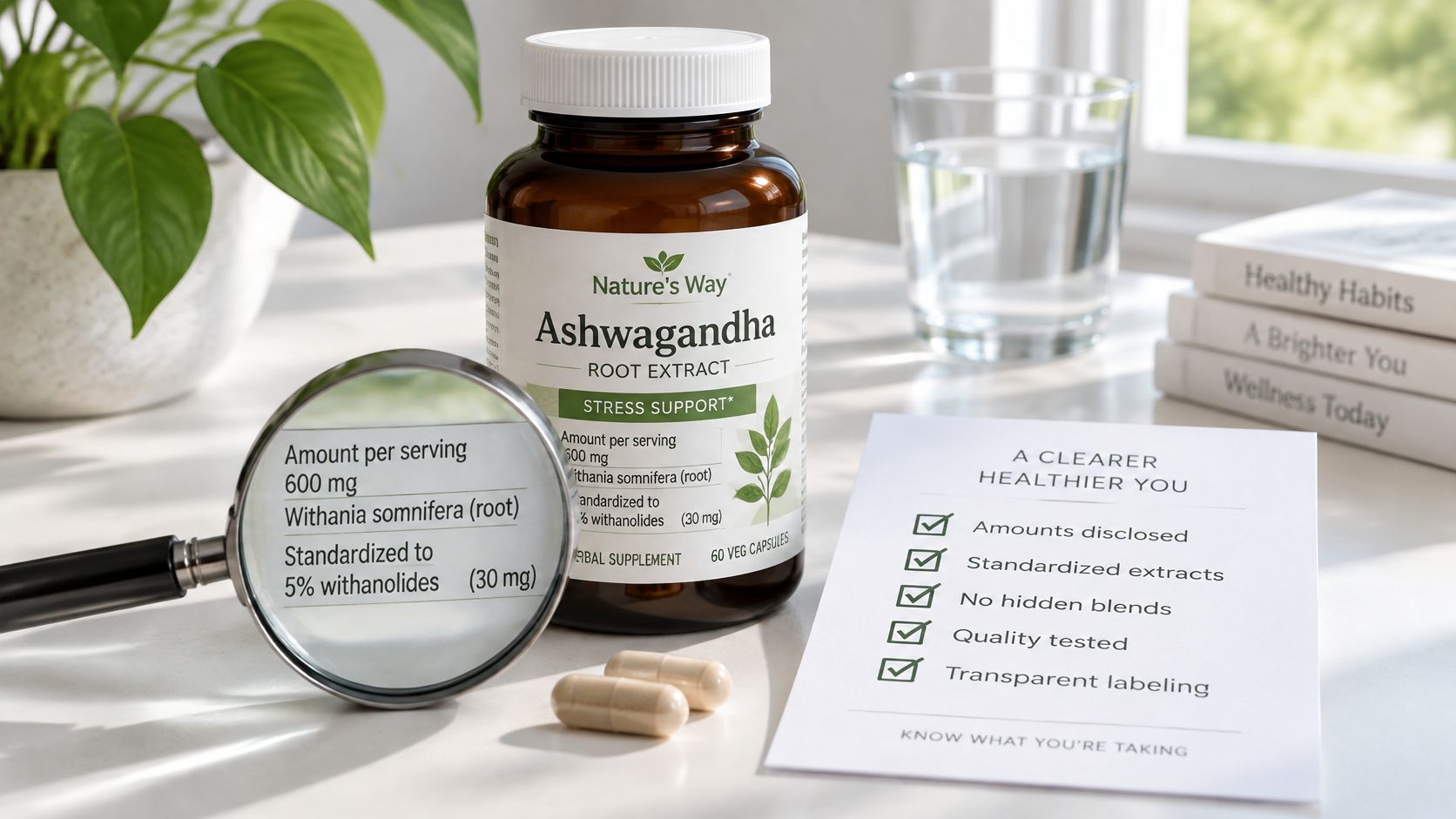
Two label habits deserve your attention. First, standardized extracts tell you the marker compounds a botanical was prepared to contain, which makes batches more comparable. Second, full disclosure of amounts lets you compare a dose with what was studied. A proprietary blend that lists six botanicals and one total weight gives you neither.
No single ingredient here is a magic bullet. Zinc fills a defined nutritional role, L-arginine has a clear pathway, and the botanicals carry more traditional and preliminary support. Treat those tiers differently when you read claims, because a label that presents every ingredient as equally proven is selling certainty the research doesn't provide.
What the Research Really Shows About Vitality
The hardest question in this category is simple. Do these ingredients improve outcomes that matter, or do they move a lab marker that may not change real life? Honest research makes that distinction, marketing usually doesn't.
The Zinc Trial Every Buyer Should Know
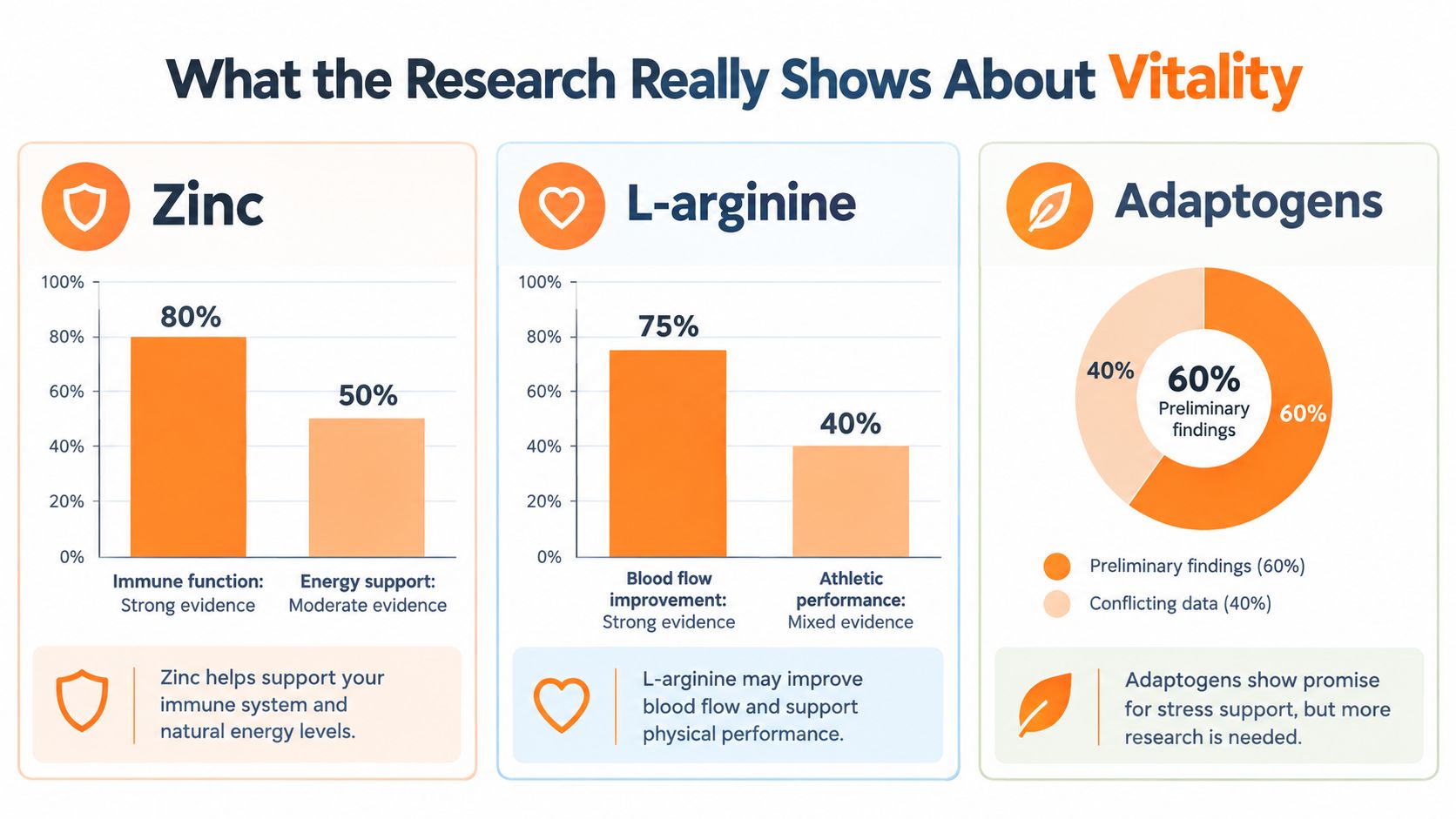
Zinc is essential for normal reproductive biology, so it was reasonable to test whether extra zinc improves fertility. A large randomized trial gave men in couples undergoing fertility treatment zinc plus folic acid or placebo and followed semen measures and births.
The result was clear. In the NICHD summary of the folic acid and zinc trial, 2,370 couples participated, men received 30 mg elemental zinc plus 5 mg folic acid daily or placebo for six months, and live births occurred in 34% of the supplement group versus 35% of the placebo group. Semen volume, concentration, motility, morphology, and total motile sperm count didn't significantly improve either.
That doesn't make zinc useless. It means zinc's value is maintaining normal function and adequacy, especially if intake is low, not guaranteeing larger ejaculates or correcting infertility. The trial also reported higher sperm DNA fragmentation in the supplement group on average, a reminder that more of a nutrient isn't automatically better.
Surrogate Markers Versus Real Endpoints
Researchers often measure sperm motility or concentration because those outcomes are faster and cheaper to study than pregnancy or live birth. Those are surrogate markers. They're relevant, but a change in one marker doesn't prove a couple is more likely to conceive.
L-arginine illustrates the gap well. Its nitric oxide rationale is strong, and small human studies have explored circulation and sperm related outcomes, but formulations and populations vary so much that broad promises outrun the data. Studies in men with diagnosed conditions also don't tell healthy men what to expect. For a deeper look at that problem, see this overview of supplement effectiveness.
Evidence check: Ask whether a claim is about a mechanism, a lab marker, how you feel, or pregnancy and live birth. Those are four different levels of proof.
Adaptogens follow a similar pattern. You may feel less stressed or sleep better, and that can matter for quality of life, but feeling better isn't the same as improved fertility. That's why compliant language uses words like supports and helps maintain. Language about treating infertility, low sperm count, or erectile dysfunction belongs to drugs and medical care, not dietary supplements.
If fertility is your goal, clinical testing gives you answers a label can't. A semen analysis, hormone evaluation when appropriate, and a clinician's review of medications and health history will tell you far more than adding another blend and waiting hopefully.
Dosing, Safety, and Quality Considerations
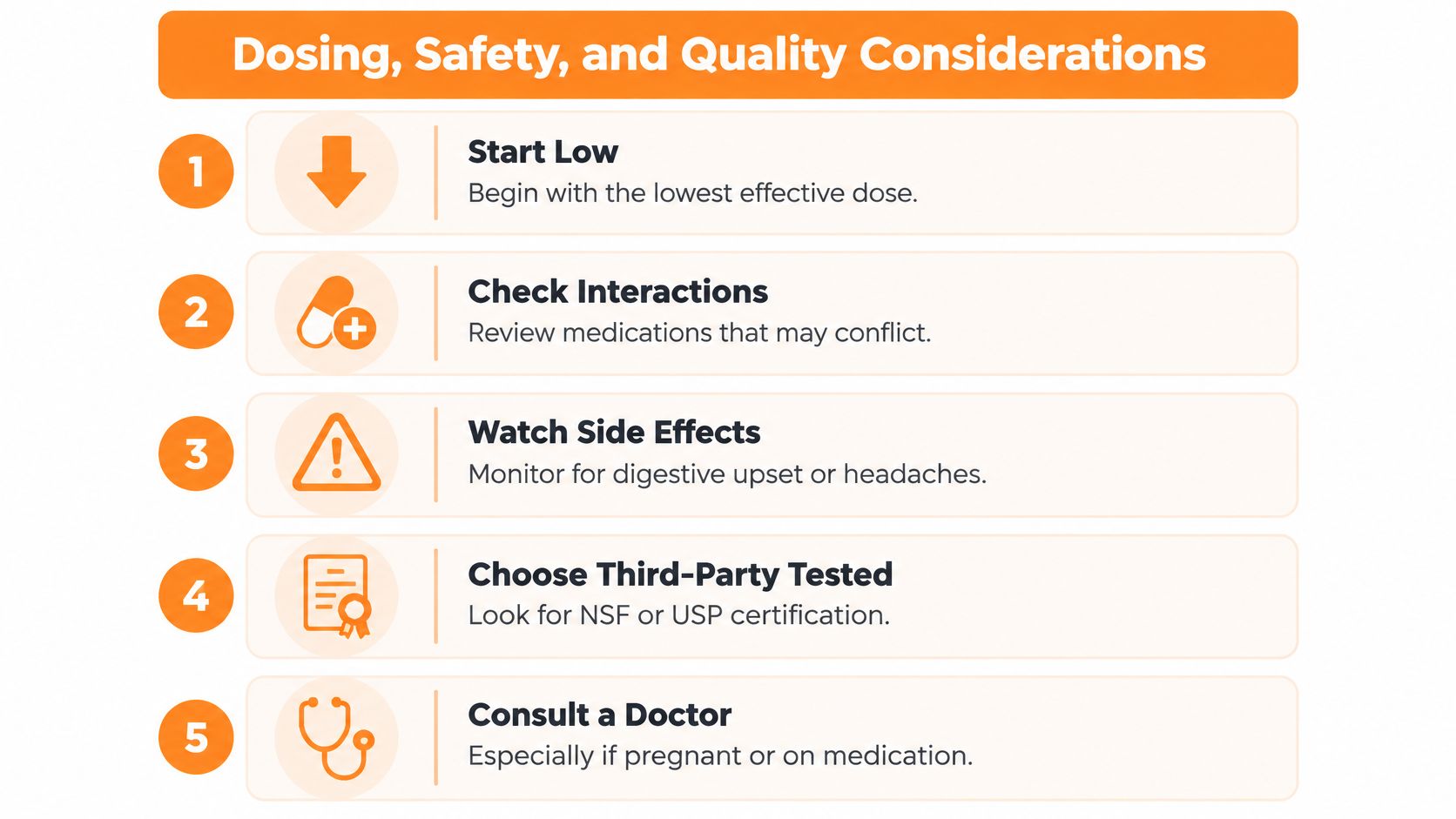
Safety work starts before you swallow anything. Read the full formula, check it against your medications, and decide how long you plan to use it. Most problems in this category come from stacking products casually, not from one careful choice.
A Practical Safety Sequence
- Add up your total intake: Count zinc and other overlapping nutrients across your multivitamin, pre-workout, and men's blend. Labels don't coordinate with each other, you have to.
- Check medication conflicts: Blood pressure drugs, nitrates, diabetes medication, thyroid treatment, sedatives, and immune suppressing medicines deserve extra caution with circulation and botanical ingredients. This guide to supplement interactions can help you prepare questions for a clinician.
- Set a review date: Decide in advance when you'll reassess benefits and side effects instead of continuing indefinitely by default.
- Stop and seek advice for warning signs: New dizziness, persistent digestive upset, unusual drowsiness, palpitations, or symptoms involving the liver or thyroid aren't things to push through.
Ashwagandha shows why duration matters. According to the NIH consumer fact sheet on ashwagandha, it appears reasonably tolerated for up to about three months, but long term safety is unknown, with reported concerns including gastrointestinal effects, drowsiness, possible liver injury, thyroid effects, and interactions with thyroid, diabetes, blood pressure, sedative, immune suppressing, and other medicines. Short term tolerability for one ingredient can't validate indefinite use of a whole combination.
Quality Is a Separate Question
In the United States, dietary supplements don't undergo FDA premarket approval the way drugs do. That puts more weight on manufacturing controls and independent testing. Look for published third party testing for specified microbials, heavy metals, and adulterants, clear batch information, and a company that lists thresholds rather than just using the word tested.
Third party testing can support identity and purity. It doesn't prove the formula works, and it doesn't guarantee you'll respond like someone in a study.
Talk with a clinician first if you have thyroid, liver, autoimmune, hormonal, or cardiovascular issues, if you're planning surgery, or if you and a partner are undergoing fertility evaluation. That's not excessive caution. It's how you avoid turning a wellness experiment into an unmonitored interaction.
How to Choose a Vitality Supplement Wisely
A good buying decision is mostly subtraction. Remove products that hide doses, promise disease outcomes, or can't explain their testing, and the field gets much smaller.
Your Label Checklist
- Disclosed amounts: Every active ingredient should list its own dose, not hide inside a proprietary blend.
- Standardization where relevant: Botanical extracts should identify plant part and marker compounds when applicable.
- Third party testing you can verify: Look for what was tested, by whom, and against what limits.
- Claims that stay in bounds: Responsible brands use supports language and attribute research to ingredients. The NIH guide to dietary supplements explains that FDA guidance allows a structure/function claim only when the marketer has substantiation showing the statement is truthful and not misleading, and the claim does not diagnose, mitigate, treat, cure, or prevent a disease.
If you want practice applying those checks, this walkthrough on how to read supplement labels breaks the panel down line by line.
Words like natural, vegan, and non-GMO describe sourcing or formulation preferences. They don't prove safety or effectiveness. A plant extract can still affect blood pressure, thyroid function, or sedation, and a vegan capsule can still contain a dose you don't need.
As one option to evaluate against this checklist, SEMEX combines zinc, L-arginine, sunflower lecithin, and bromelain with maca root, Panax ginseng, ashwagandha, and Tongkat ali, and is positioned to support semen volume, taste, and overall male vitality. Judge it the same way you'd judge any formula. Check disclosed amounts, testing, total zinc from all sources, medication fit, and whether its goals match yours.
The strongest position you can take as a buyer is simple. Prefer transparency over novelty, match ingredients to a named goal, and walk away from any product that needs hype to make its label sound convincing.
Common Myths and Misconceptions About Vitality Ingredients
Myth one is that more is better. Nutrients have requirements and upper limits for a reason. Doubling a dose can raise side effect risk, interfere with other minerals such as copper in the case of excess zinc, and add cost without adding benefit. Your total intake from food and every supplement counts.
Myth two is that natural means safe for everyone. Botanicals are biologically active, which is the whole point of taking them. That activity is also why they can interact with medicines or cause drowsiness, digestive upset, or organ related concerns in some people. Natural describes origin, not risk.
The Volume Equals Fertility Myth
Myth three is that more visible semen means better fertility. Volume mostly reflects glandular fluid. Fertility depends far more on sperm concentration, motility, morphology, timing, and partner factors. You can notice a change in volume and know nothing new about your ability to conceive.
The evidence supports that separation. A recent systematic review and meta-analysis on dietary supplements and male infertility found some supplements were associated with improvements in individual parameters, zinc and folic acid with concentration, and selenium, carnitine, and coenzyme Q10 with motility, but that does not establish that a multi-ingredient formula improves pregnancy or live birth rates.
If conception is the goal, a semen analysis answers questions that appearance and marketing can't.
The final myth is that a supplement can substitute for care. It can't diagnose a hormone problem, infection, varicocele, or medication effect. Use these products, if you choose them, as nutritional support with clear limits.
Final Thoughts and Important Disclaimer
Vitality ingredients can play a supportive role when they match a clear goal, a disclosed dose, and your health profile. Zinc supports normal reproductive function through nutritional adequacy, L-arginine has a credible circulation pathway, and several botanicals carry preliminary support for stress, energy, and drive. None of that makes a blend a cure, a fertility treatment, or a substitute for testing.
Choose transparency, monitor your response, and involve a clinician when medications or health conditions are part of the picture.
These statements have not been evaluated by the Food and Drug Administration. This product is not intended to diagnose, treat, cure, or prevent any disease.
If you're looking for a daily men's formula built around ingredients such as zinc, L-arginine, maca, ginseng, and ashwagandha to support semen volume, taste, and overall vitality, explore the formula and its third party testing details at SEMEX. Read the label against the checklist above, check it against your medications, and choose based on transparency rather than promises.