

Tongkat Ali Testosterone Evidence and Safety Guide
Traditional use and a positive pooled result don't mean every Tongkat Ali supplement reliably raises testosterone. The evidence is more conditional: findings vary with who took part, what preparation researchers tested, how much they used, and how long the study lasted. That matters because “Tongkat Ali” on a label doesn't establish that the product matches an extract used in a clinical trial.
This guide reviews the ingredient, Eurycoma longifolia, rather than making a product-level medical claim. It separates hormone measurements from broader experiences such as sexual wellness or energy, and focuses on the practical variables that often get lost in testosterone headlines: baseline hormone status, study duration, extract identity, dose, and independent quality verification.
Table of Contents
- What Tongkat Ali Testosterone Research Actually Shows
- From Malaysian Tradition to Modern Clinical Research
- Understanding Testosterone and Related Outcomes
- Reading the Clinical Evidence Without Overclaiming
- Comparing Extract Types and Research Doses
- How to Evaluate a Tongkat Ali Supplement
- Safety Limits and Reported Side Effects
- Making an Evidence-Based Supplement Decision
What Tongkat Ali Testosterone Research Actually Shows
The apparent contradiction is real. A 2022 systematic review and meta-analysis found a statistically significant overall increase in total testosterone among men receiving Eurycoma longifolia, but individual trials have reported different results. That doesn't make the pooled result meaningless. It does mean it shouldn't be treated as a promise that every man, or every supplement, will produce the same outcome. The review's findings are available in the systematic review and meta-analysis of Eurycoma longifolia.
The participants also matter. Healthy young men, older men with age-related symptoms, and men who begin with low testosterone aren't interchangeable groups. A result in one population may not predict what happens in another, especially when researchers also use different extracts, protocols, and study durations.
The useful rule: A clinical result applies to the preparation, dose, duration, and participants researchers actually tested. It doesn't automatically apply to every product that uses the same botanical name.
That rule changes how to read “Tongkat Ali testosterone” claims. A study may measure a change in blood testosterone without showing that participants felt a meaningful difference in energy, mood, or sexual wellness. Another may assess erectile-function measures without proving a uniform hormone effect. Those are related questions, but they're not the same outcome.
Tongkat Ali is therefore best described as a traditional botanical being studied for its potential role in male hormonal and sexual well-being. The evidence is promising in some contexts and mixed across the research as a whole. Neither traditional popularity nor a positive pooled finding establishes that a finished supplement treats or prevents a condition, or that an individual user will experience a particular effect.
From Malaysian Tradition to Modern Clinical Research
Tongkat Ali, also called longjack, has a history rooted in Malaysia. Indigenous communities traditionally used preparations of the plant's root in connection with vitality and aphrodisiac purposes. That background gives the botanical cultural and regional context, but it doesn't tell us whether a particular extract changes testosterone in a controlled trial.
The plant's history also includes a transition into formal research and development. Malaysian public institutions supported work on standardized extracts, and a peer-reviewed account described government involvement in licensing, development, and research through organizations including Malaysia's Forest Research Institute. The same account noted that the plant had become widely known in Malaysia by the phrase “home-grown Viagra.” That label signals cultural recognition, not proof of a mechanism, effectiveness, or a predictable result for users. The account of Tongkat Ali's Malaysian history and research development provides that context.
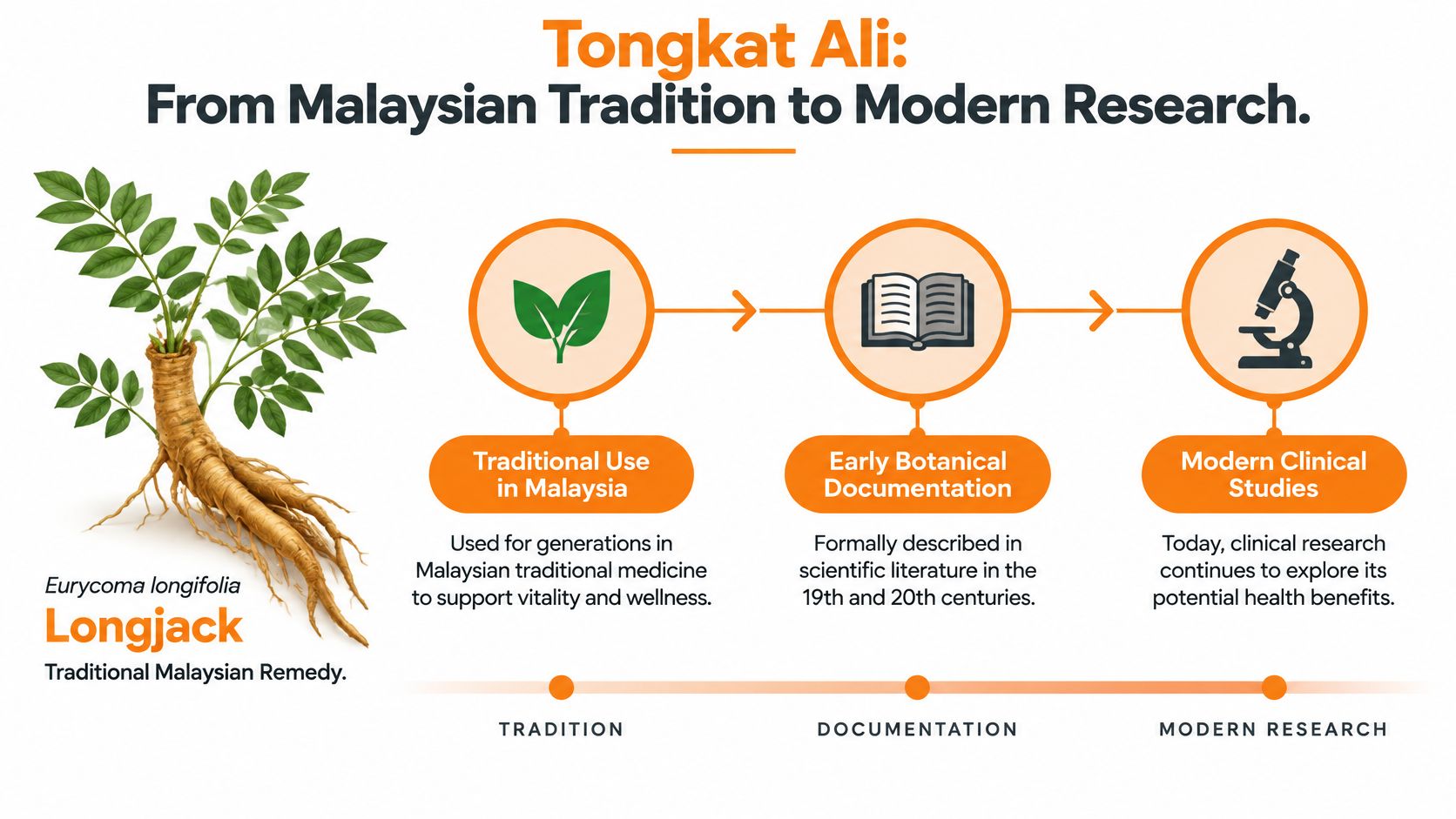
History and trial evidence answer different questions. Traditional use can explain why a plant became important in a region and why researchers chose to study it. A controlled clinical study asks whether a particular preparation produces a measured outcome under specific conditions. Commercial popularity answers neither question by itself.
That distinction preserves two facts at once: Tongkat Ali is a long-used Malaysian botanical, not a newly invented trend, and its traditional reputation does not guarantee a testosterone effect in every user. Today's products may differ in the plant material, processing, extract composition, and amount provided. Those differences are central to evaluating whether research findings can reasonably be compared with a supplement on a shelf.
Understanding Testosterone and Related Outcomes
Total testosterone is a measured hormone level in the blood. It's useful information, but it isn't a complete score for how someone feels or functions. Sexual wellness, energy, mood, and exercise performance are broader outcomes influenced by many factors. A change in one blood marker can't, on its own, prove a change in all of them.
Researchers may also measure free testosterone, estradiol, luteinizing hormone, follicle-stimulating hormone, and sex hormone-binding globulin. These markers provide related but distinct information about hormones and reproductive signaling. Researchers may also track the testosterone-to-epitestosterone ratio. If a study reports a result for one measure, readers shouldn't assume that all the others moved in the same direction.
A double-blind, placebo-controlled study involving 32 young men compared Eurycoma longifolia at 600 mg per day for two weeks with placebo. It found significant treatment-by-time effects for total testosterone, free testosterone, and estradiol, but not for luteinizing hormone, follicle-stimulating hormone, or sex hormone-binding globulin. The study's measurements and results are reported in the clinical trial of hormone markers in young men. The pattern is a reminder that a hormone response isn't necessarily a uniform shift across every reproductive marker.
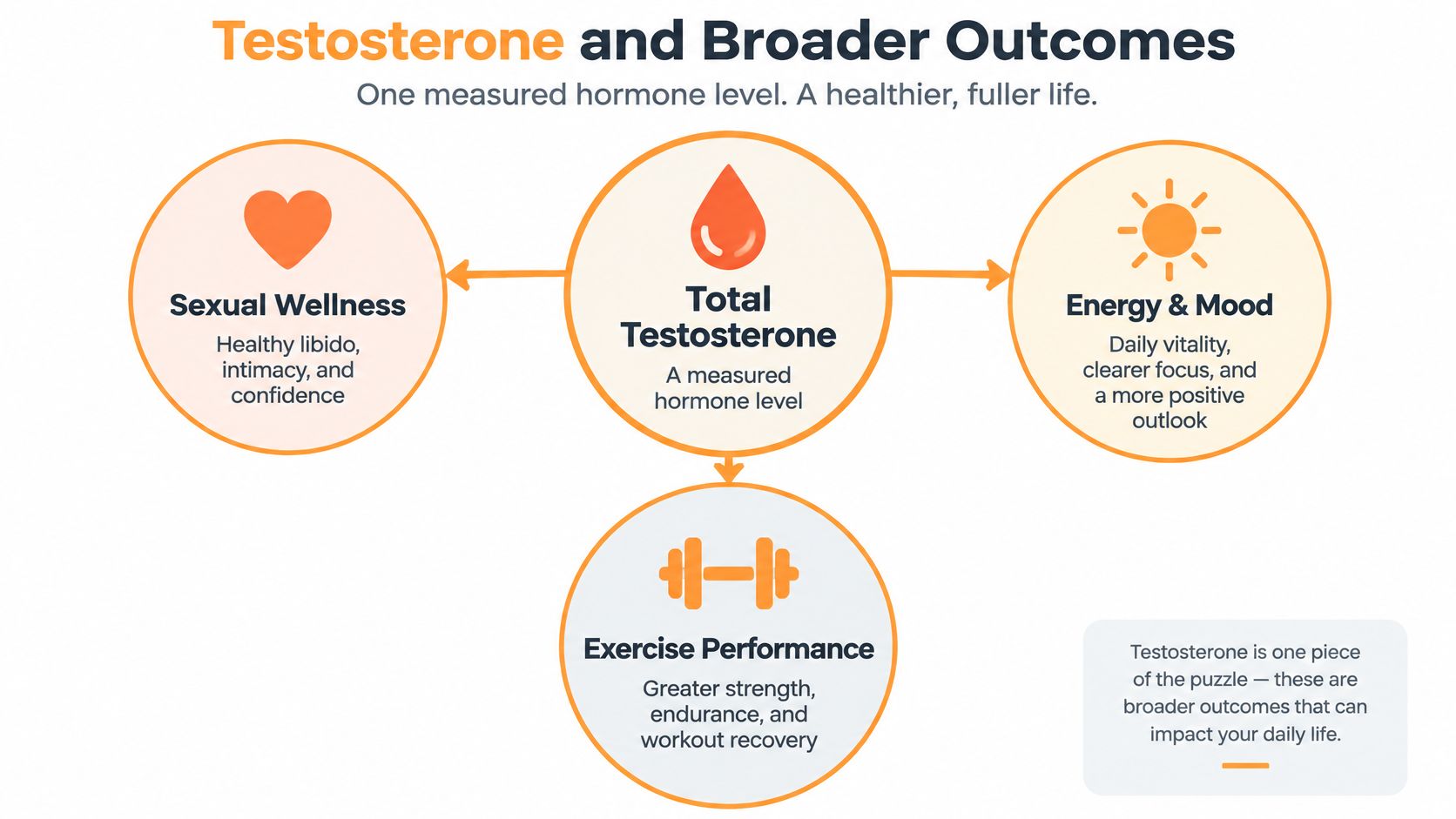
A traffic-light analogy can help. Green means a study measured a specific change. Yellow means that change may not generalize beyond its participants and protocol. Red means claiming that the result proves a broad wellness benefit or guarantees an individual response.
When reading a headline, ask what was measured. Was there a statistically significant group difference, a change in a blood test, or a user-reported experience? Each can be informative, but they aren't interchangeable. For a concise primer on how hormones relate to male reproductive function, see this guide to male reproductive system hormones.
Reading the Clinical Evidence Without Overclaiming
The clinical record makes more sense as a collection of different experiments than as a single yes-or-no verdict. The meta-analysis described earlier found an overall increase in total testosterone, but the trials contributing to a broader analysis don't erase the differences between individual populations and protocols.
One 12-week trial enrolled 109 men aged 30–55 and used 300 mg daily. It found no significant testosterone increase versus placebo. Another 12-week study involving 105 men with low testosterone used 100 or 200 mg daily and reported higher total testosterone than placebo. The contrast raises a practical question: did the participants' starting hormone status, the preparation, the dose, or some combination of these factors affect the outcome? The available results don't isolate one explanation.
Duration and co-interventions matter too. In a six-month randomized trial, 45 men averaging approximately 47 years old with symptoms of age-related androgen deficiency received different combinations of Eurycoma longifolia, progressive exercise, and placebo. The combination of Tongkat Ali and concurrent training improved erectile-function measures and increased total testosterone. Because exercise was part of the intervention, the result suggests a possible interaction rather than a universal effect of the botanical alone. The randomized trial in men with age-related androgen deficiency gives more detail on that study.
A different four-week study using 400 mg daily found no significant pre-to-post changes in testosterone or cortisol. A review of healthy recreational athletes also summarized no change in the testosterone-to-epitestosterone ratio and no changes in renal or liver tests after 400 mg daily for six weeks. These findings make it harder to turn a positive result in one group into a general claim for all users.
| Study context | Dose and duration | Reported outcome | Interpretation |
|---|---|---|---|
| Men aged 30–55 | 300 mg daily for 12 weeks | No significant testosterone increase versus placebo | A longer study can still produce a null result. |
| Men with low testosterone | 100 or 200 mg daily for 12 weeks | Higher total testosterone than placebo | Findings in men with low baseline levels may not predict results in healthy men. |
| Men with age-related androgen-deficiency symptoms, with and without progressive exercise | 200 mg/day in a six-month trial | The combination of Tongkat Ali and concurrent training improved erectile-function measures and increased total testosterone | Exercise and participant characteristics complicate attribution to the extract alone. |
| Study participants receiving 400 mg daily | Four weeks | No significant pre-to-post changes in testosterone or cortisol | A short protocol at a different dose did not show a measurable change in those markers. |
The broad conclusion is conditional. Age, baseline hormone status, dose, extract composition, study duration, and co-interventions can all affect how a result should be interpreted. These studies support cautious language about possible hormonal or vitality support, not a claim that Tongkat Ali treats hormonal deficiency. They also show why “one trial found a benefit” and “the ingredient works for everyone” are very different statements.
Comparing Extract Types and Research Doses
A milligram amount on a label isn't a reliable shortcut to study equivalence. Products may contain root material or root extract, and extracts can differ in their preparation and standardization. Without clear information about the botanical part, extraction method, and extract composition, the number of milligrams alone doesn't show whether a product resembles the material researchers tested.
Like coffee, naming the ingredient “coffee” doesn't tell you whether the cup came from whole beans, an instant preparation, or a concentrated extract. The name identifies a broad source, not a precise preparation. In the same way, two products labeled Tongkat Ali may not deliver equivalent material just because their front labels show a dose.
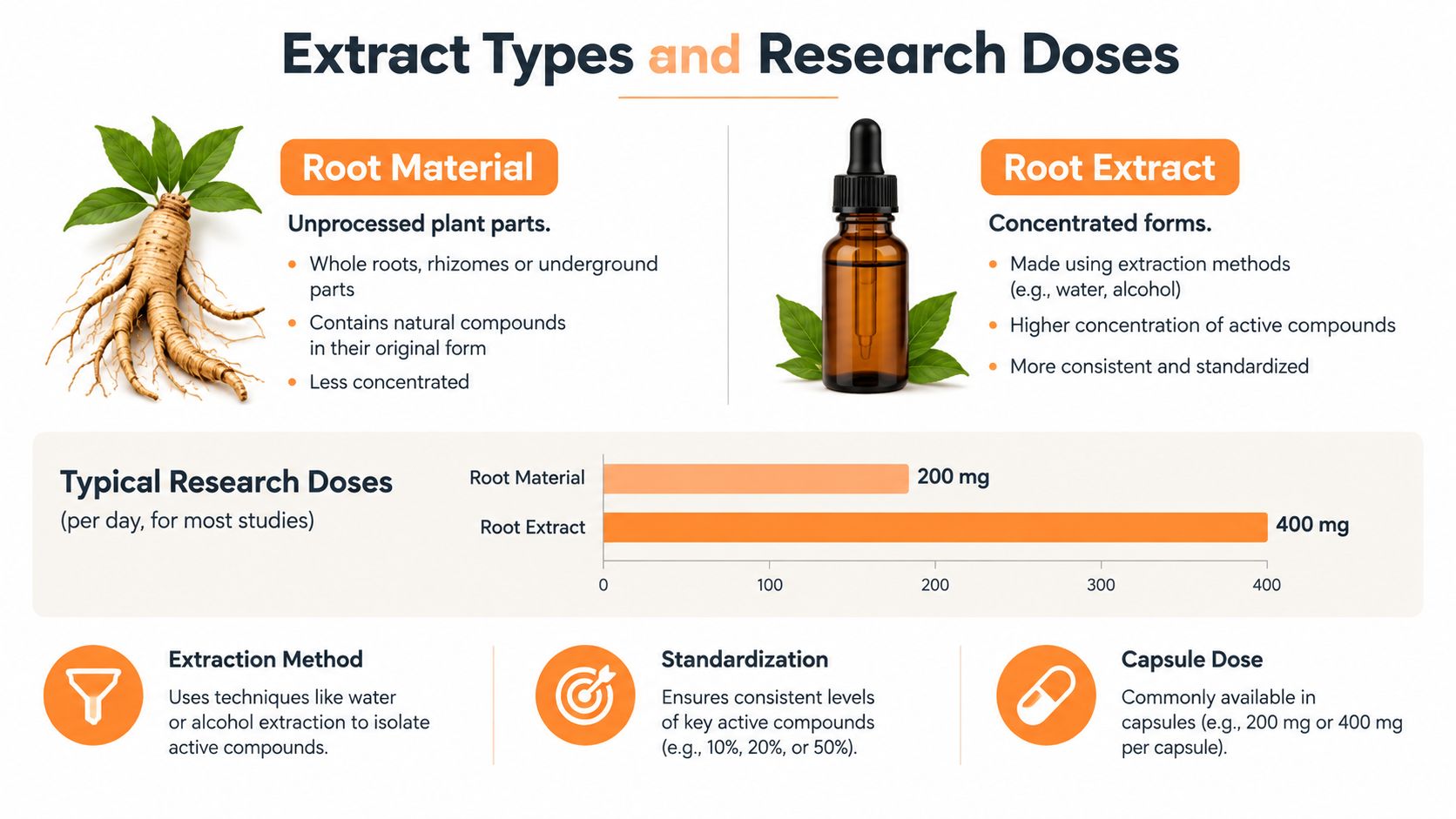
The clinical regimens discussed here illustrate the spread rather than establishing a recommended amount. Studies have used 100, 200, 300, 400, and 600 mg daily, with durations ranging from two weeks to six months. Participants have included young men, men aged 30–55, and men with low testosterone or age-related symptoms. These are study details, not a universal dosing plan, and the amount alone doesn't tell you whether one regimen is safer or more effective for an individual.
The label should help answer practical questions: Is the product made from root material or an extract? Does it explain its standardization? Does it identify the extraction method? Is the stated amount for the extract itself, or for a blend? The more those details are missing, the less confidently a reader can connect the product to a clinical preparation.
Comparison rule: Don't compare products by milligrams alone. Compare what the label says about the plant, the preparation, and the amount, then ask whether those details match a specific study.
For readers considering how study amounts relate to a specific use case, this guide to Tongkat Ali dosage for libido can serve as a starting point for discussion with a qualified professional. It shouldn't replace individualized advice or be treated as a prescription.
How to Evaluate a Tongkat Ali Supplement
Product identity and product safety are separate from whether Eurycoma longifolia may support vitality. A label can make a claim, but the front of the bottle alone can't verify what's inside or how much of it is present. A careful buyer should look beyond the headline amount and check whether the manufacturer gives enough detail to assess the preparation.
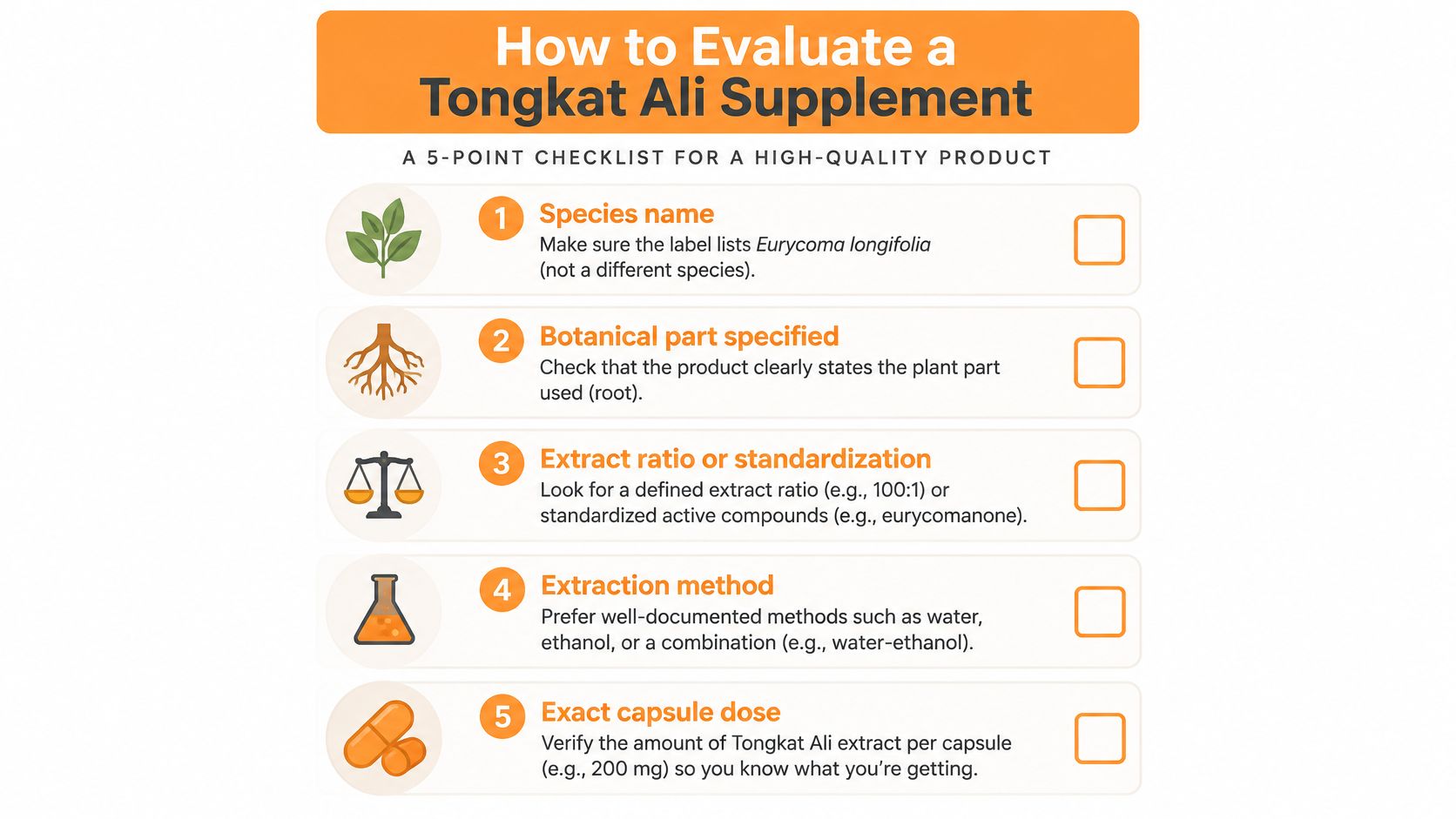
Use these checks to evaluate a label and its supporting documentation:
- Species name: Look for Eurycoma longifolia, rather than a vague proprietary blend or a name that leaves the botanical identity unclear.
- Plant part: Check whether the product identifies the root. Knowing the part used helps you judge whether the preparation is described with enough specificity.
- Extract information: Look for an extract ratio or standardization details. Without them, a stated amount may not tell you much about the extract's composition.
- Extraction method: A clear description helps distinguish preparations that might otherwise appear equivalent on the front label.
- Exact dose and intended duration: The label should make the amount unambiguous and offer clear use information. A reader shouldn't have to infer how much a capsule contains or how long the maker expects it to be used.
Quality verification deserves separate attention. Tongkat Ali products have been reported as contaminated with heavy metals or adulterated with sildenafil, a pharmaceutical ingredient. Those concerns don't tell us whether the botanical itself changes testosterone. They concern whether the product contains what the user expects, and whether it may include something undisclosed. Independent testing for microbes, heavy metals, and pharmaceutical adulterants is worth looking for when available. A test or certification can provide information about product contents, but it can't prove that a supplement produces a testosterone outcome.
Practical check: Ask whether the manufacturer provides independent test results tied to the product or batch. A label alone can't establish actual contents or amounts.
The guide to reading supplement labels offers more detail on interpreting label language. Treat transparency as a quality signal to investigate, not as proof that a product will reproduce a clinical trial.
Safety Limits and Reported Side Effects
“Generally tolerated in short studies” doesn't mean “established as safe for long-term daily use.” Human safety evidence remains limited by the small size and short duration of studies. Gastrointestinal symptoms and itching have been reported, while higher doses and extended use haven't been adequately assessed. The safety guidance on Tongkat Ali supplements describes these limits alongside concerns about product quality and adulteration.
The National Library of Medicine's LiverTox review reports that adverse effects in small clinical studies were generally uncommon and minimal, without associated changes in ALT, AST, GGT, or bilirubin. It also notes that long-term use and higher doses haven't been adequately assessed in humans. Isolated reports of clinically apparent liver injury exist, but some involved young bodybuilders and possible undisclosed anabolic-steroid use, making it difficult to attribute the injury to Eurycoma longifolia alone. See the LiverTox review of Eurycoma longifolia.
This evidence supports caution, not panic. Small studies that don't show a clear safety signal can offer some reassurance about the conditions they examined, but they can't settle questions about prolonged use or uncommon effects. Product contamination and adulteration raise a different risk from ingredient tolerability, so buyers should evaluate both.
Consider your baseline health, medications, planned duration, and personal response before using a supplement. If you develop concerning symptoms, stop taking it and seek professional advice. Persistent concerns about energy, sexual function, or hormone levels deserve clinical evaluation rather than relying on a supplement as a substitute. For a broader discussion of potential supplement side effects, see this guide to supplement side effects.
Making an Evidence-Based Supplement Decision
Tongkat Ali may be relevant to men interested in male vitality and the possibility of hormonal support, but the findings are heterogeneous and individual results aren't guaranteed. A generic “testosterone support” label tells you far less than the details that shaped the research: baseline hormone status, age, dose, duration, and extract identity. Independent testing also matters because authenticity and contamination are separate from clinical efficacy.
The most useful decision is not a blanket endorsement or rejection. It's a match between the evidence and the question you're trying to answer. A blood-test change isn't the same as improved sexual wellness, and neither can be inferred from a product description. Exercise routines, sleep, medical history, and other influences on wellbeing don't collapse into a supplement claim.
SEMEX is a product listing that readers may evaluate separately from the ingredient-level research discussed here. Its listing doesn't establish that a finished product reproduces a clinical trial or produces a particular testosterone outcome.

Before trying a supplement, ask a qualified clinician or pharmacist: Does my health history or medication list change the safety considerations? Is testing appropriate for the symptoms I'm experiencing? Can this product's identity, dose, and independent testing be verified? Tongkat Ali is an ingredient in a dietary supplement, not a drug treatment. These statements have not been evaluated by the Food and Drug Administration. This product is not intended to diagnose, treat, cure, or prevent any disease.
If you're comparing men's wellness supplements, review the product details for SEMEX and consider how its listed ingredients fit your priorities. Visit SEMEX to examine the available product information and make an informed comparison.