

8 Romantic Sex Ideas for Him
The couple wants sex to feel warmer, more romantic, and less predictable, but neither partner wants another routine built around pressure or performance. He may want to feel desired, while his partner may want more emotional closeness and freedom to explore without having to produce a perfect experience. The most effective romantic sex ideas for him usually combine communication, anticipation, sensory attention, emotional safety, presence, playfulness, and shared experimentation.
Pleasing him isn't about mastering one flawless technique. It's about noticing what helps him relax, asking what feels good, and creating enough trust for both partners to stay engaged. Every suggestion below requires mutual consent, ongoing check-ins, privacy, and the freedom to pause or change direction. The focus is connection and pleasure, not promises about sexual performance.
Table of Contents
- 1. Create Anticipation Through Communication
- 2. Prioritize Extended Foreplay and Sensory Focus
- 3. Use Novelty and Environmental Changes
- 4. Incorporate Mindfulness and Presence
- 5. Build Confidence Through Wellness and Physical Vitality
- 6. Create Rituals and Dedicated Time
- 7. Explore Playfulness and Humor
- 8. Develop Emotional Intimacy and Vulnerability
- 8-Point Comparison: Romantic Sex Ideas for Him
- Turn One Idea Into a Shared Ritual
1. Create Anticipation Through Communication
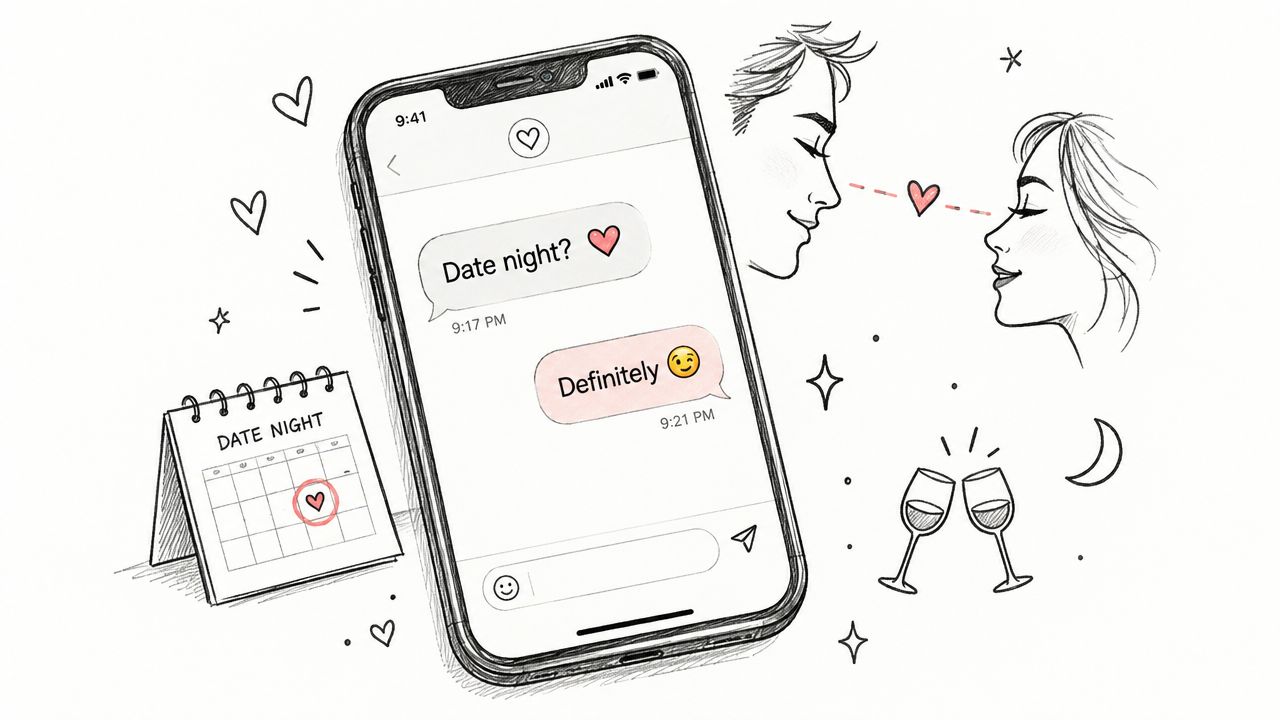
Romance often starts hours before either partner enters the bedroom. A thoughtful message during the day can make him feel wanted without turning intimacy into an obligation. A partner might write, “Tonight, there's time for a slow evening together,” or mention a specific touch, memory, or quality she's looking forward to. Specific language gives anticipation somewhere to go, while a low-pressure tone leaves room for both partners to change their minds later.
Long-term partners can also schedule regular conversations about intimacy. A monthly conversation might cover what felt connected recently, what felt rushed, and what each person would enjoy trying. Some couples refresh those conversations by asking new questions every few months, such as, “What helps you feel desired?” or, “Which part of our intimate routine feels most romantic to you?”
Start with curiosity, not assumptions
The conversation doesn't need to begin with a fantasy. Lighter questions can make deeper honesty easier:
- Ask about preferences: “Would you rather have more kissing, more massage, or more time talking tonight?”
- Use clear wording: Specific requests are easier to understand than hints or disappointment after the fact.
- Invite an honest answer: “Is there anything you'd like to change or skip?”
- Keep preferences flexible: Desire can shift with stress, health, mood, and relationship circumstances.
Practical rule: Anticipation should feel like an invitation, not a contract.
A playful exchange can also introduce the topic of pacing and control without assuming either partner wants a particular activity. Couples looking for ideas about building anticipation can review teasing and denial as a communication-led practice, then decide together which elements, if any, feel comfortable.
2. Prioritize Extended Foreplay and Sensory Focus
Rushing can make sex feel like a task with a finish line. Slowing down gives both partners time to notice small reactions, adjust pressure, and enjoy the experience before focusing on any particular outcome. A couple might reserve a substantial stretch of unhurried time for kissing, massage, touching, conversation, or lying close together. The exact duration matters less than the shared decision not to rush.
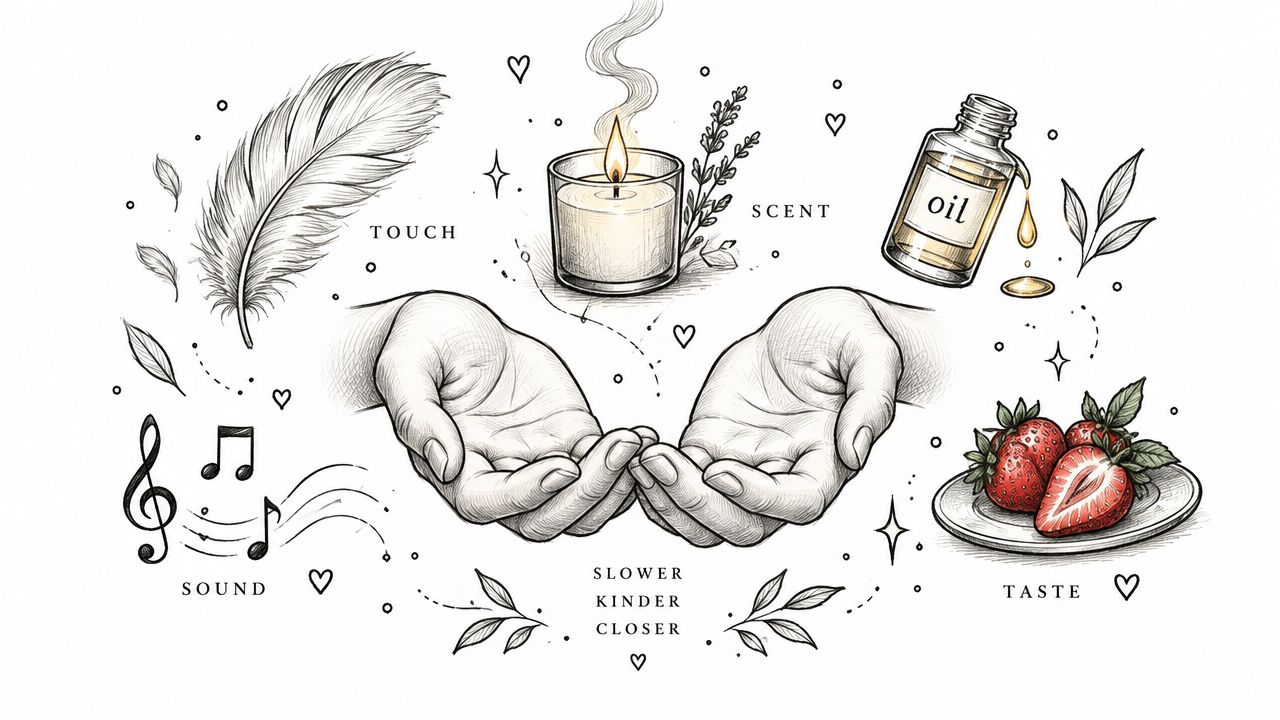
Sensory exploration can make a familiar evening feel distinct. Dim lighting, a carefully chosen playlist, a clean bedroom, and comfortable fabrics can shape the mood before physical contact begins. Warm hands, a cool glass placed against the skin, massage oil, or a soft blanket can add contrast, provided both partners agree to each sensation and check the temperature or texture first.
Let body language guide the pace
Touch should remain responsive rather than scripted. A partner can pause when his breathing changes, ask whether the pressure feels right, or invite him to guide her hand. He can offer the same attention in return. Facial expressions and movement can provide useful information, but they shouldn't replace a direct check-in when something seems uncertain.
Taste and scent also belong to the broader wellness conversation. Hydration, personal hygiene, food choices, and general health can influence how comfortable and confident partners feel during close contact. A dietary supplement whose ingredients support specified aspects of men's wellness may fit someone's routine, but it shouldn't replace communication or be treated as a guarantee about sexual outcomes. Guidance on oral sex for men and responsive sensory attention can help couples think about comfort, consent, and pacing without reducing intimacy to a technique list.
3. Use Novelty and Environmental Changes
A familiar bedroom can make intimacy feel predictable. Changing the setting slightly can refresh attention without turning the experience into an extreme experiment. Partners might use another private, comfortable room, adjust the lighting, or choose a different time of day. A weekend afternoon may feel calmer than late-night intimacy after work. A hotel stay can also create a temporary sense of escape, provided both partners want the change and have planned for privacy.
Novelty works like opening a new path through a familiar place. It gives partners something to anticipate and discuss, while still leaving room for comfort and choice. Desire may respond positively to new experiences for some men and women, but a new position, room, or schedule does not guarantee greater desire or satisfaction. If either person feels evaluated, rushed, or pressured, the change can reduce connection instead.
Let curiosity stay optional
Use a shared list to make experimentation easy to accept or decline. Each partner can place ideas under “curious,” “maybe later,” and “not for us.” Possible entries include:
- Change the atmosphere: Try a dimmer, candles, or colored bulbs. Keep flames safely placed and provide ventilation.
- Change the schedule: Choose early morning, a weekend afternoon, or another time when neither partner feels depleted.
- Change the location: Select a private area at home where both people feel secure and comfortable.
- Change the routine: Explore one new position or activity slowly, without treating it as a test.
Start with a small adjustment, then ask how it feels. One person might enjoy softer lighting while the other prefers a familiar room, so compromise may mean changing only the time or atmosphere. Either partner should be able to suggest an idea without creating an expectation that it will happen. A simple “not tonight” deserves acceptance, without sulking, persuasion, or punishment.

4. Incorporate Mindfulness and Presence
The body may be in bed while the mind is still answering work messages or judging every response. Presence brings attention back to breathing, touch, emotion, and the shared moment. It works like adjusting a camera lens: the goal is not to make every sensation stronger, but to notice what is already happening more clearly.
Begin before sexual activity. Sit together, silence phones, or take several slow breaths while maintaining comfortable eye contact. During touch, notice warmth, pressure, muscle tension, and changes in breathing. A wandering thought is ordinary. Acknowledge it, then return to the current sensation without self-criticism.
Observe instead of grading performance
For a man worried about how his body will respond, a more useful question is, “What am I noticing right now?” His partner can offer reassurance while leaving room for his response to change. Arousal does not need to be forced, and either person can pause or stop when an activity becomes uncomfortable.
Try this short practice:
- Settle the body: Put phones away, reduce distractions, and choose a position that feels relaxed.
- Match the breath: Breathe at a similar pace for a few moments, without trying to control the other person.
- Notice reactions: Observe sensation and emotion as information, not as a score.
- Redirect gently: If attention drifts, return to touch, breathing, or eye contact.
- Talk afterward: Share what felt calming, exciting, or meaningful, and listen without correcting the experience.
Couples connecting wellness habits with intimate presence may find this mindfulness and libido discussion useful for additional context. Rest, hydration, and personal energy also shape attention. Sometimes the most connected choice is to slow down, talk, or rest together rather than continue toward sexual activity.
5. Build Confidence Through Wellness and Physical Vitality
Confidence rarely comes from one evening. It grows when a man feels more connected to his body, has routines that support energy, and knows his partner values him beyond a sexual outcome. Movement, balanced nutrition, hydration, sleep, and stress management can all support the physical and mental conditions that make presence easier.
A sustainable routine may include strength training, cardiovascular exercise, outdoor activity, and regular recovery. It doesn't need to become a demanding performance project. Partners can make wellness relational by taking walks together, preparing nourishing meals, or protecting sleep before a planned date night.
Evaluate supplements carefully
A supplement routine deserves the same attention as any other wellness choice. Zinc has a particularly established research history in male reproductive biology. A 2016 meta-analysis found that zinc supplementation significantly increased semen volume, sperm motility, and normal morphology, while a later review described a study in which 220 mg of zinc sulfate taken twice daily improved ejaculation volume, motility, and morphology after 3 months in 37 men with asthenozoospermia. These findings concern zinc and measured reproductive markers, not SEMEX as a product or a promise of individual results. The PubMed review also discusses links between seminal zinc and sperm concentration, motility, and morphology.
Zinc is described in a more recent review as fundamental to spermatogenesis and overall male reproductive function, which supports structure/function language about its role in normal male reproductive processes, not disease treatment. That review on zinc and male reproductive function provides the relevant ingredient-level context.
A man comparing products should check the full label, serving instructions, manufacturing standards, and independent testing information. No supplement should replace medical advice when persistent sexual or reproductive concerns affect wellbeing.
6. Create Rituals and Dedicated Time
Spontaneous intimacy can be exciting, but long-term partners often face work, fatigue, family responsibilities, and competing screens. A recurring ritual removes some of the uncertainty. It tells both people that connection has a place in the week, without requiring either partner to feel desire on command.
The ritual could be a phone-free Friday evening, a Sunday morning coffee followed by private time, or a regular date that sometimes leads to sex and sometimes ends with conversation and rest. The absence of a guaranteed sexual outcome is important. Dedicated time should protect closeness, not create a scheduled obligation.
Design the ritual around preparation
A useful ritual has a beginning, a mood, and an easy exit. Partners might shower, change into comfortable clothes, tidy the room, choose music, and agree to put phones away. One evening could begin with a back massage; another might begin with a walk and a conversation about the week.
Frequency should match real life. A sustainable weekly plan may work better than daily pressure, while another couple may prefer occasional dedicated afternoons. Stress, energy, health, and work schedules can change the right rhythm.
The ritual is successful when both partners feel more connected, even if sex changes course or doesn't happen.
Partners can also agree on a check-in before beginning: “Does tonight feel good for closeness?” A yes can lead to many possibilities. A no can lead to rest, affection, or rescheduling without resentment. That flexibility helps the ritual remain romantic rather than mechanical.
7. Explore Playfulness and Humor
Playfulness can make intimacy feel less like a performance and more like a shared experience. A private nickname, a lighthearted message earlier in the day, or a small ritual before intimacy can build warmth without demanding a particular outcome. Even a smile during a pause or an admission that something felt awkward can help both partners stay at ease.
Humor works best when it brings partners together. A gentle joke about a changed plan may release tension, while comments about a partner's body, identity, vulnerability, or boundary can create shame. The test is simple: both people should feel included, respected, and free to stop.
Use humor to protect comfort
Try language that keeps choice visible:
- Offer reassurance: “Either of us can pause if this stops feeling good.”
- Remove performance pressure: “Tonight doesn't have to prove anything.”
- Invite a change of direction: “Would you like to try something else?”
- Keep the joke mutual: Share humor that makes both people smile, rather than making one partner the subject.
A playful moment should never cover discomfort. If he becomes quiet, stops laughing, pulls away, or seems tense, pause and check in. Familiarity does not replace ongoing consent, and either partner can change direction at any time.
For him, acceptance during an imperfect moment may support confidence more than exaggerated praise. If a position changes, an erection fades, or an idea does not work, a warm response can show that connection matters more than maintaining a specific physical response. That safety gives both partners room to remain present, explore at their own pace, and enjoy the intimacy they are sharing.
8. Develop Emotional Intimacy and Vulnerability
Romantic intimacy often begins before touch. If he worries about attractiveness, aging, desire, body image, or satisfying his partner, a brief honest comment can open space for connection: “He's been distracted lately,” or “He wants more affection before sex.” The goal is understanding, not an immediate solution.
Specific reassurance usually feels more convincing than broad praise. A partner might mention his patience, warmth, humor, or careful attention, then ask what helps him feel wanted. Listening gives the feeling room to exist before advice enters the conversation.
Vulnerability works like opening a door. One person can show what is behind it, while the other decides whether to enter gently and at a comfortable pace.
Try this sequence:
- Choose a calm moment. Difficult feelings need privacy and enough time, rather than a rushed conversation during intimacy.
- Use personal language. “He feels nervous when intimacy becomes rushed” describes an experience more clearly than blaming a partner.
- Ask one open question. “What would help him feel closer tonight?” allows a real answer, including rest or reassurance.
- Respond with attention. Reflect what was heard, offer a specific affirmation, and ask before suggesting a change.
- Keep the conversation mutual. Both partners can share a hope, concern, or appreciation, then continue the discussion outside the bedroom.
Desire does not require immediate action. One partner may want more romance, while the other needs sleep, emotional reassurance, or time to feel ready. Both needs can be respected, and either person can pause or change direction.
Vulnerability isn't a performance either. It's an invitation to be known, with the right to answer gradually.
The 2025 intimacy findings summarized by DatingNews' report on sensuality and romance suggest that about one-third of respondents wanted more sensuality and romance rather than more sex. Romance can therefore include affection, focused attention, conversation, and reassurance. These forms of closeness may support sexual intimacy without making intercourse or a particular physical response the measure of success.
8-Point Comparison: Romantic Sex Ideas for Him
| Technique | Implementation complexity | Resource requirements | Expected outcomes | Ideal use cases | Key advantages |
|---|---|---|---|---|---|
| Create Anticipation Through Communication | Low–Moderate (requires vulnerability) | Time, openness, smartphone or face-to-face time | Increased excitement, clearer expectations, reduced anxiety | Busy or long‑distance couples; rebuilding spark | Strengthens communication; cost‑free; builds emotional intimacy |
| Prioritize Extended Foreplay and Sensory Focus | Moderate (requires practice and time) | Time, attention, simple props (oils, music, lighting) | Deeper arousal, increased pleasure, reduced performance pressure | Couples wanting richer physical sensation; slow‑down practice | Multi‑sensory enhancement; better physiological response |
| Use Novelty and Environmental Changes | Low–Moderate (planning/practical changes) | Minimal cost, privacy, minor props or location shifts | Renewed excitement, breaks routine, increased curiosity | Long‑term couples experiencing habituation; quick refresh | Immediate freshness; low cost; playful exploration |
| Incorporate Mindfulness and Presence | Moderate–High (skill-building over time) | Time for practice, guided resources or exercises | Reduced anxiety, heightened sensitivity, stronger connection | Those with intrusive thoughts or performance anxiety | Improves focus and awareness; deepens emotional and physical intimacy |
| Build Confidence Through Wellness and Physical Vitality | High (consistent lifestyle changes) | Regular exercise, nutrition, sleep, possibly supplements | Better stamina, improved blood flow, greater self‑confidence | Individuals seeking sustained performance and energy gains | Holistic, long‑term improvements to physiology and confidence |
| Create Rituals and Dedicated Time | Low–Moderate (requires scheduling) | Protected time, agreed routines, distraction removal | Predictable intimacy, less scheduling stress, psychological readiness | Busy couples; those who need intentionality | Signals prioritization; creates reliable opportunity for connection |
| Explore Playfulness and Humor | Low (emotional openness needed) | Emotional safety, mutual consent to be playful | Reduced pressure, increased authenticity and enjoyment | Couples tense about performance; rebuilding lightness | Lowers anxiety; builds shared positive memories |
| Develop Emotional Intimacy and Vulnerability | High (ongoing effort and courage) | Time, honest communication, emotional labor (possible therapy) | Deep trust, meaningful connection, sustained satisfaction | Couples wanting deeper bond or resolving blocks | Foundation for lasting intimacy; reduces shame and performance fear |
Turn One Idea Into a Shared Ritual
Eight ideas can look like a lot when a couple is already tired or disconnected. The practical response is to choose one low-pressure change, discuss it openly, and agree on a small first experiment. A couple might begin with a phone-free evening, a few messages during the day, or an extended period of touch with no required outcome.
The first conversation can stay simple. Each partner can answer three questions: What sounds appealing? What needs more discussion? What would make stopping easy? The answers should shape the plan. If one partner wants novelty but the other feels exhausted, a quieter ritual may create more connection than a new setting. If he wants to feel desired, direct appreciation and affectionate initiation may matter more than a complicated technique.
Consent should remain enthusiastic, specific, and ongoing. Either partner can pause, decline, change an activity, or decide to stop without needing to justify the choice. Comfort, privacy, hygiene, safer-sex considerations, and emotional readiness matter more than novelty. A romantic experience should leave both partners feeling respected, not evaluated.
Afterward, a short review can help the couple learn without turning intimacy into a scorecard. Partners can ask:
- What felt good or emotionally meaningful?
- What felt rushed, distracting, or uncomfortable?
- What should change next time?
- What would each partner like to explore later?
- Did the experience feel connected, or did it create pressure?
SEMEX may be considered as a dietary supplement within a broader men's wellness routine. Its formula includes zinc, L-arginine, sunflower lecithin, bromelain, maca root, Panax ginseng, ashwagandha, Tongkat Ali, saw palmetto, and horny goat weed. Zinc supports normal male reproductive function, while L-arginine is a nitric oxide precursor connected with blood-flow-related mechanisms in ingredient research, not a medical treatment. Research on L-arginine and blood flow describes that mechanism without establishing a treatment claim for SEMEX.
The product should remain one optional part of personal wellness, never a substitute for communication, affection, rest, or professional guidance. Couples can start with one idea tonight, keep the pressure low, and let trust make the experience more satisfying over time.
These statements have not been evaluated by the Food and Drug Administration. This product is not intended to diagnose, treat, cure, or prevent any disease.
SEMEX offers a daily men's dietary supplement with ingredients selected to support semen volume, taste, and broader wellness goals. Men interested in adding that option to a consistent routine can visit SEMEX and review the formula and product information.