

Panax Ginseng Libido
Panax ginseng shows a small-to-moderate signal for male sexual function over several weeks, but direct, validated libido effects remain modest and are often confused with erectile-function gains. In one review, three of four clinical studies reported benefit, while one found no change, and a pooled analysis found improved self-reported ability to have intercourse with a relative risk of 2.55, although the evidence was low-certainty.
The most popular advice about ginseng and libido is also the least precise: “It boosts desire.” The human evidence supports a narrower interpretation. Panax ginseng may gradually support aspects of sexual function, particularly erection quality, intercourse confidence, and satisfaction, while the evidence for a direct increase in sexual desire is less consistent.
That distinction matters. A firmer or more reliable erection can make sexual activity feel easier and improve confidence, but it doesn't automatically mean that the brain's underlying desire has increased. A careful look at the research helps separate those outcomes from one another.
Table of Contents
- What Panax Ginseng Actually Is
- How Ginseng May Influence Sexual Function
- What the Research on Ginseng and Sexual Function Shows
- Why Erectile Function and Libido Are Not the Same Thing
- Dosing Timelines and What to Expect
- Safety Considerations and Who Should Be Cautious
- Realistic Takeaways on Panax Ginseng and Libido
What Panax Ginseng Actually Is
Panax ginseng is a slow-growing perennial root from the Araliaceae family. The plant is generally harvested after four to six years, then prepared as white ginseng, which is dried, or red ginseng, which is steamed before drying. Korean red ginseng is the form most often associated with research on male sexual function, although products can differ substantially in extract strength, preparation, and standardization.
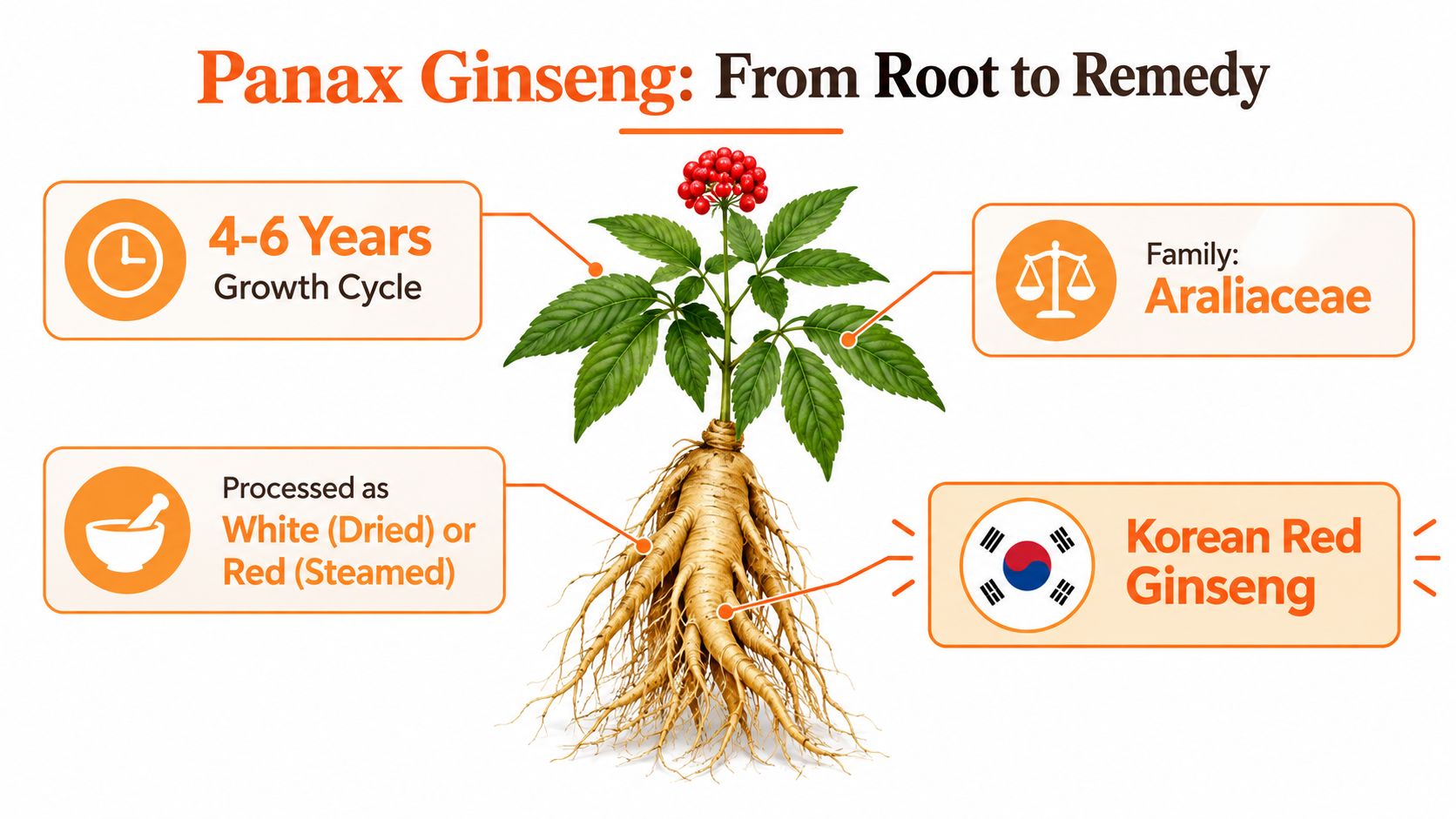
The name creates a common problem. American ginseng refers to Panax quinquefolius, while Siberian ginseng is not a Panax species at all. Findings from Korean red ginseng or another Panax preparation shouldn't automatically be applied to every product labeled “ginseng.” Readers comparing root powders can review Panax ginseng root powder while checking the botanical name and preparation.
Structure and function rather than instant stimulation
A structure/function ingredient is intended to support normal physiology, not produce an on-demand pharmacological effect. Panax ginseng fits that model better than the idea of a rapid libido switch. Its proposed actions involve circulation, cellular signaling, energy perception, and possibly nervous-system pathways, all of which may require consistent use.
The central measurement issue should be clear from the start. Many clinical trials use the International Index of Erectile Function, or IIEF, which asks about erection quality, intercourse satisfaction, orgasm, and related domains. Those scores are useful, but they aren't identical to a validated measure of sexual desire. Someone can want sex without achieving an erection, or achieve an erection without feeling much desire.
Practical rule: A ginseng study about erectile function can inform expectations about sexual performance, but it can't automatically prove a libido effect.
How Ginseng May Influence Sexual Function
The proposed pathway begins with ginsenosides, the main active compounds in Panax ginseng. Compounds such as Rg1, Rb1, and Re are often discussed in relation to endothelial nitric oxide signaling. Nitric oxide helps blood vessels relax, which can support penile blood flow when arousal is already present. This is a support mechanism, not evidence that ginseng creates sexual desire from nothing.
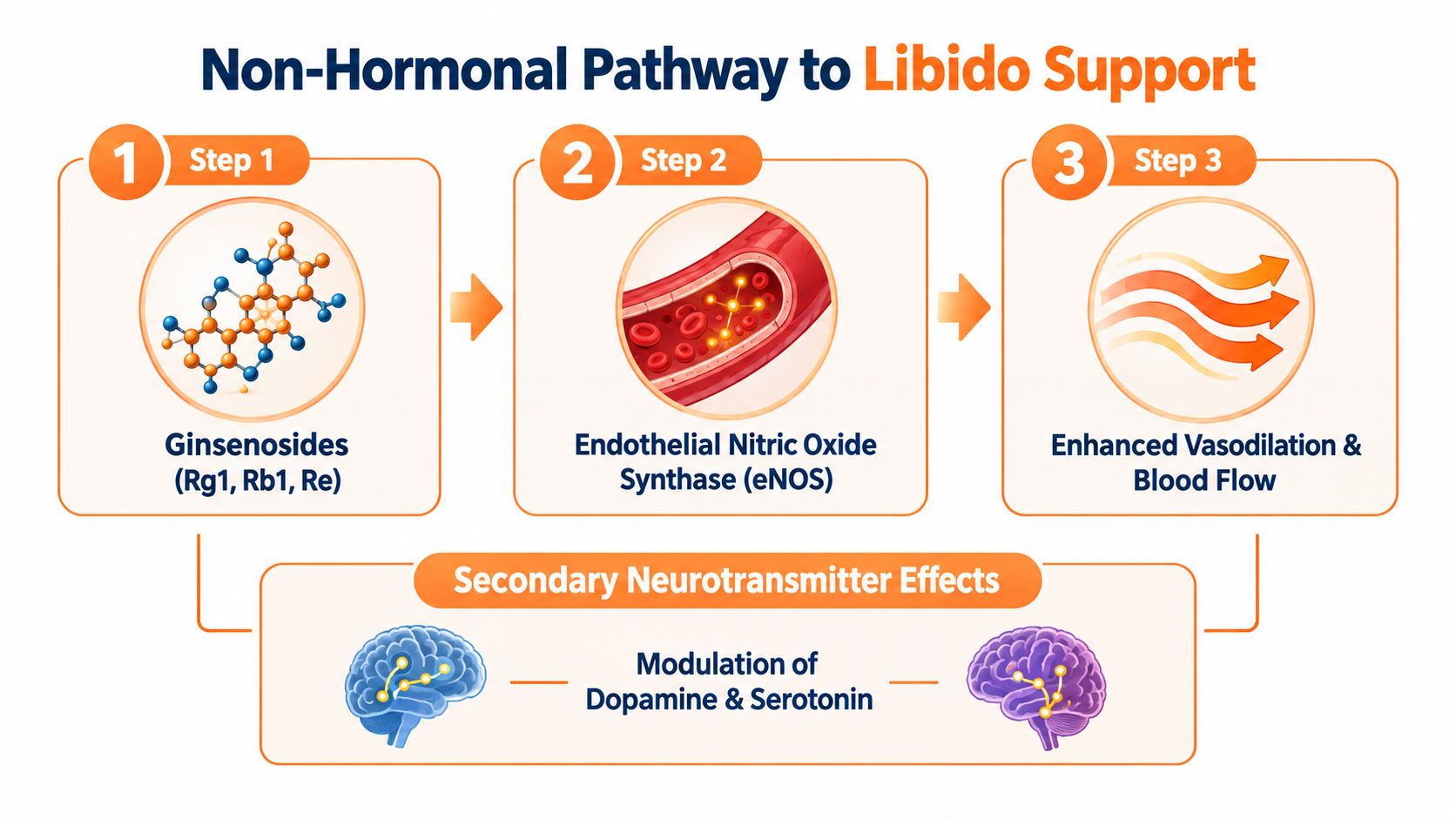
In the corpus cavernosum, the smooth muscle must relax for blood to enter and remain effectively within erectile tissue. Ginseng is discussed in connection with cGMP signaling and PDE5-related activity, but that resemblance shouldn't be confused with the action of a prescription PDE5 inhibitor. A botanical extract may influence related biological processes without replicating the strength, predictability, or timing of a pharmaceutical drug.
Where desire may enter the picture
The second possible layer involves the central nervous system. Experimental discussions describe ginsenosides as potentially affecting dopamine and norepinephrine turnover in hypothalamic and limbic regions involved in arousal, motivation, and the perception of reward. These pathways make a biological rationale plausible, but a mechanism isn't the same as a demonstrated clinical outcome.
Other proposed contributions include stress regulation, energy perception, and metabolic support. These factors can matter because stress, tiredness, and poor overall wellbeing often reduce sexual interest. Still, the available clinical evidence doesn't justify presenting Panax ginseng as a direct hormone-like libido enhancer.
For men evaluating an ingredient blend such as SEMEX, Panax ginseng is best understood in this narrower way. It belongs in a daily wellness framework focused on gradual structure/function support, not as an acute stimulant taken immediately before sexual activity.
What the Research on Ginseng and Sexual Function Shows
Ginseng is not supported as a reliable libido switch. The clinical record points to a narrower effect: some preparations may gradually improve aspects of sexual function, while direct evidence for desire remains limited and uneven.
A 2021 systematic review examined four clinical studies of Panax ginseng for male sexual function. Three reported benefits, while one found no change. One regimen used 600 mg three times daily for 12 weeks and was associated with better penile rigidity, girth, libido, and patient satisfaction. Across six studies, self-reported ability to have intercourse improved, with a pooled relative risk of 2.55 and a 95% confidence interval of 1.76 to 3.69. The review rated the overall certainty as low (systematic review of Panax ginseng and male sexual function).
A separate placebo-controlled trial studied Sanchi ginseng extract, a Panax-related species, in healthy Japanese adult men with low libido. After 12 weeks, participants receiving the extract showed improvement in the IIEF satisfaction domain and fewer subjective low-libido symptoms on the ADAM questionnaire (placebo-controlled Sanchi ginseng trial). Because the product and species differed, those findings should not be applied automatically to every Panax ginseng extract.
Comparing what studies measured
| Study / Year | Participants | Dose & Form | Duration | Endpoint | Key Finding |
|---|---|---|---|---|---|
| Systematic review, 2021 | Men across four clinical studies | One regimen used 600 mg three times daily | 12 weeks in that regimen | Erectile parameters, libido, satisfaction | Three of four studies reported benefit, while one found no change |
| Placebo-controlled Sanchi trial | Healthy Japanese adult men with low libido | Sanchi ginseng extract | 12 weeks | IIEF satisfaction and ADAM low-libido symptoms | Satisfaction improved and subjective low-libido symptoms fell |
| Cochrane review, 2018 | Men in 24 studies | Various ginseng preparations | Varied | IIEF erectile-function domain and intercourse ability | Self-reported intercourse ability improved, while erectile-function effects were trivial or uncertain (Cochrane review) |
| Meta-analysis, 2023 | Men in randomized clinical trials | Various Panax preparations | Several weeks, including about eight weeks in individual trials | IIEF-15 and IIEF-5 domains | Pooled mean difference was 2.67 points, with a 95% confidence interval of 1.10 to 4.25 (nutritional meta-analysis) |
The comparison matters because the studies used different measuring tools. Some recorded erection-related scores, others assessed satisfaction, and fewer tested sexual desire directly. Taken together, the evidence supports a modest, gradual sexual-function signal. It does not establish a predictable transformation in libido.
Why Erectile Function and Libido Are Not the Same Thing
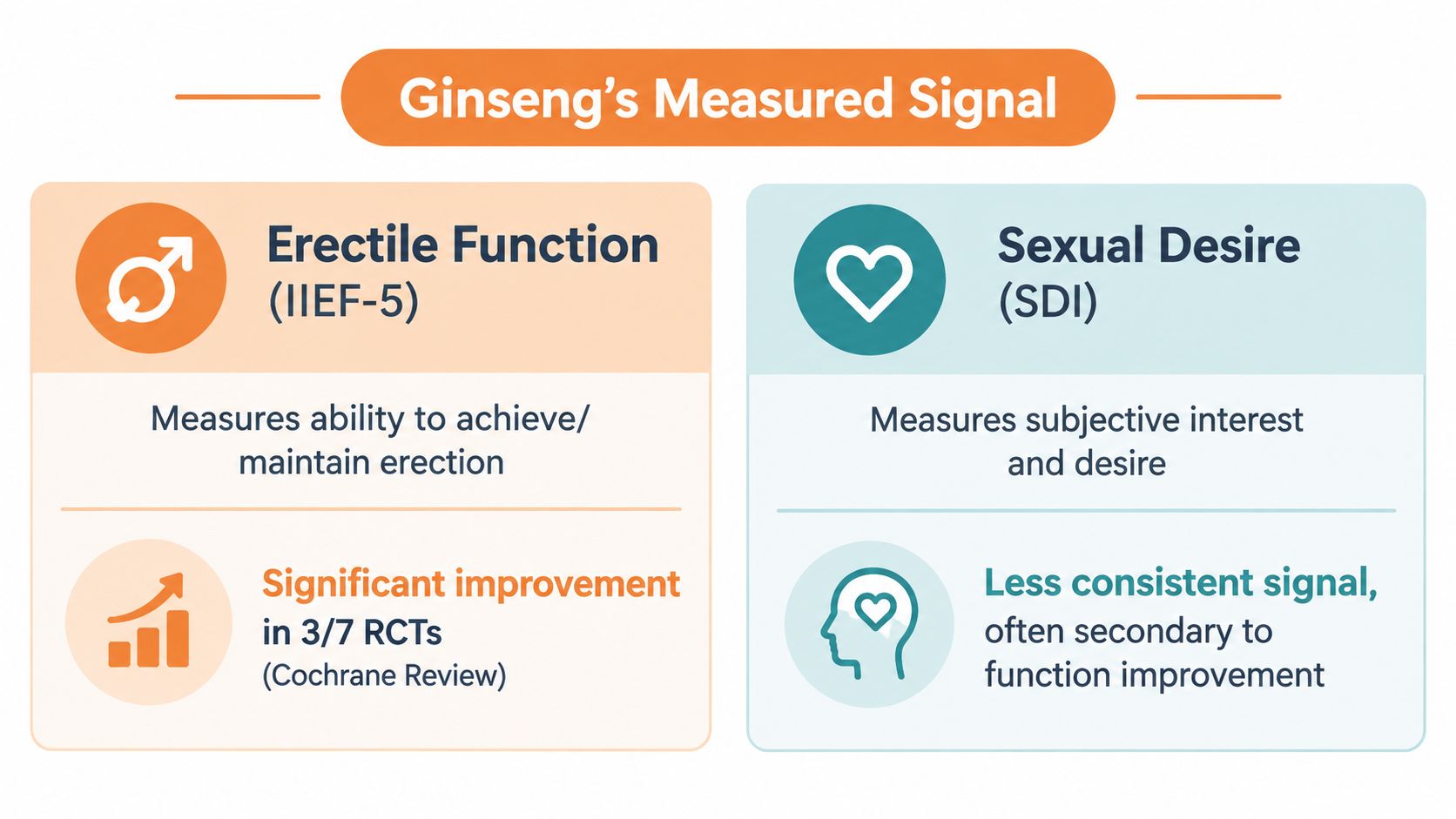
Erectile function asks whether an erection can be achieved, maintained, and used for intercourse. The IIEF erectile-function domain is designed around those questions. Libido, by contrast, describes sexual interest, wanting, motivation, and subjective drive. Instruments such as the Sexual Desire Inventory are intended to measure that mental and motivational dimension more directly.
The difference is practical. A man may feel interested in sex but struggle with erection reliability. Another may have a reliable erection while experiencing little spontaneous desire. If ginseng improves blood flow or intercourse confidence, the second stage of sexual activity may become easier without proving that baseline desire has changed.
The Cochrane evidence illustrates the split. Self-reported ability to have intercourse improved with a pooled relative risk of 2.55, with a 95% confidence interval of 1.76 to 3.69 across six studies, but the review rated the certainty of that evidence as low and described effects on validated erectile-function measures as trivial or uncertain (Cochrane evidence summary). The result supports a cautious interpretation of subjective performance confidence, not a broad promise about libido.
Reading the headline more critically
A 2026 review specifically warns that better erections or greater intercourse satisfaction shouldn't be interpreted as proof of higher libido, because desire requires direct measurement (2026 review of sexual desire and erectile outcomes). That criticism applies to many articles that use “libido” as a catch-all term for every sexual outcome.
A more accurate headline would say that Panax ginseng may support selected aspects of male sexual function over time. That wording leaves room for improved confidence, satisfaction, or erection quality while acknowledging that direct desire findings remain less consistent and less certain.
Dosing Timelines and What to Expect
Clinical doses vary because “ginseng” can mean raw powder, Korean red ginseng, or a concentrated standardized extract. A safety review reported study ranges of 100 to 400 mg per day for standardized extract and 0.9 to 6 g per day for Korean red ginseng powder, with 3 g per day the most common dose across eight studies (safety review of Panax ginseng trials).
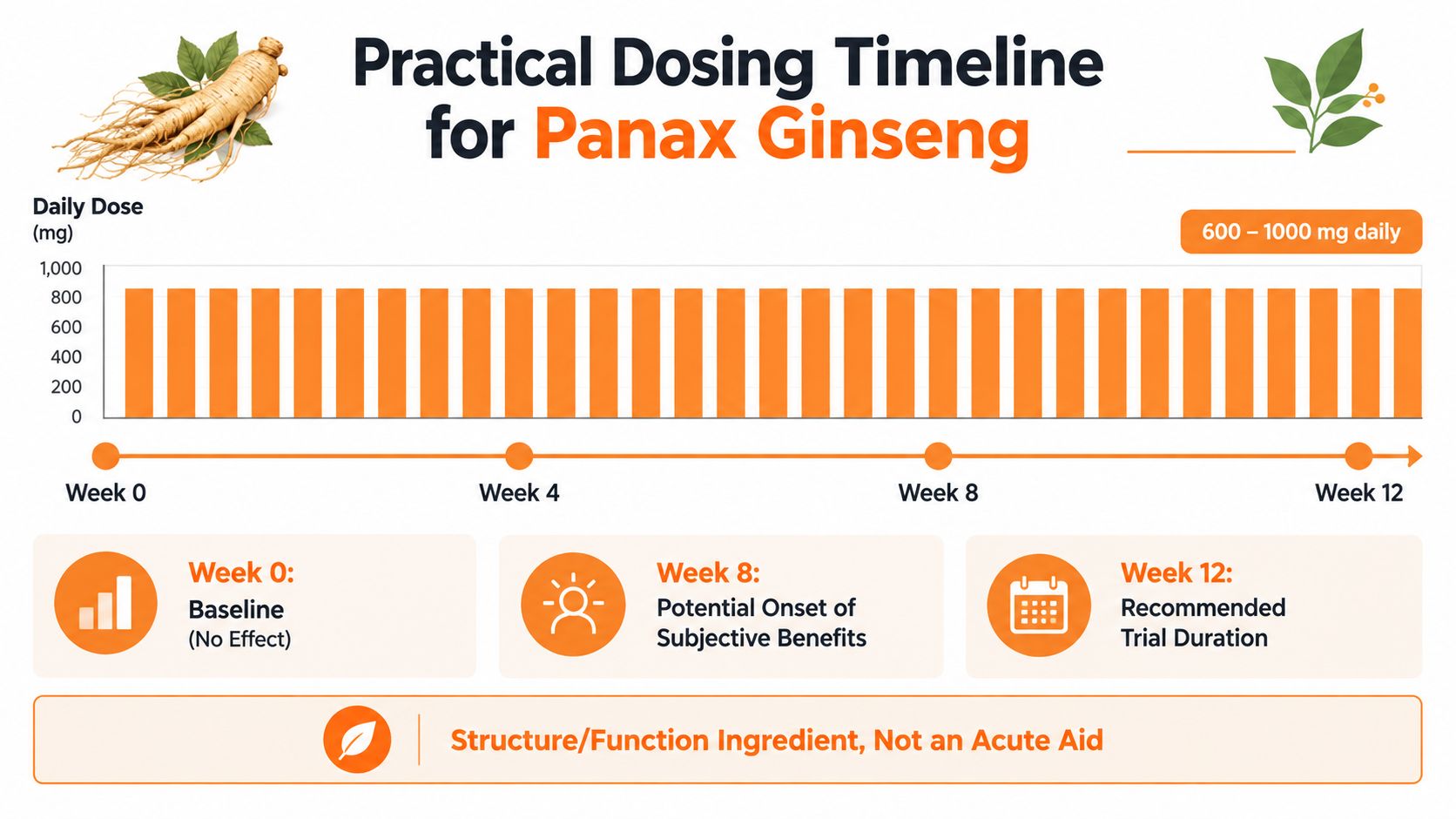
A Korean red ginseng trial used 1,000 mg three times daily for 12 weeks and reported improvements in IIEF-5 scores, rigidity, penetration, and maintenance subdomains. Headache and insomnia were the main reported adverse events in that study (randomized Korean red ginseng trial). These amounts are study-specific and shouldn't be treated as universal personal instructions.
A realistic trial window
A practical way to think about the timeline is gradual rather than immediate:
- Early use: The first stage is mainly about tolerance, digestion, sleep, and whether the product feels stimulating.
- Middle weeks: Some users may notice changes in energy or sexual confidence before any clear change in erection-related outcomes.
- Later weeks: Clinical trials commonly assess sexual-function changes after several weeks, with some studies lasting about eight weeks and others 12 weeks.
- End of the trial: A longer, consistent window makes it easier to judge whether a subtle response is repeatable.
Taking ginseng with food may improve tolerability, while earlier-day use can reduce the chance of sleep disruption. Product standardization also matters because two products carrying the same plant name may contain different amounts of extract and ginsenosides. Guidance on Panax ginseng dosage can help readers compare labels, but a clinician or qualified pharmacist should assess personal dosing questions.
Expectation check: Ginseng is a gradual structure/function ingredient. Sporadic use makes a gradual response harder to recognize, and taking more doesn't guarantee a stronger result.
Safety Considerations and Who Should Be Cautious
Panax ginseng has generally shown a favorable safety profile in studied settings, but “natural” doesn't mean interaction-free. Reported concerns include insomnia, headache, and mild gastrointestinal upset, while blood pressure or glucose may shift in some people. The Korean red ginseng trial cited above identified headache and insomnia as its main adverse events, so late-day dosing may be a poor fit for people sensitive to stimulation.
Situations requiring extra care
A pharmacist or clinician should review Panax ginseng use when a person:
- Uses anticoagulants: Ginseng may be relevant to bleeding-risk decisions and should be checked against the specific medicine.
- Takes antidiabetic medication: Blood-glucose effects may matter, especially when several glucose-lowering strategies are combined.
- Uses stimulants or MAO inhibitors: Additional nervous-system stimulation or interaction risk deserves professional review.
- Takes immunosuppressants: The immune-related context makes self-directed supplementation less suitable.
- Has uncontrolled hypertension or a hormone-sensitive condition: A clinician can determine whether the ingredient fits the person's broader health situation.
- Is pregnant or breastfeeding, or preparing for surgery: Supplement decisions should be made with a qualified healthcare professional.
People also need caution when stacking ginseng with other stimulating products. A combination may increase sleep problems, jitteriness, headaches, or digestive discomfort even if each ingredient seems manageable alone. Anyone experiencing persistent sexual-function concerns should seek medical evaluation rather than relying on a supplement, because sexual changes can have several possible contributors.
The practical approach is conservative: start at the lower end of a product's labeled serving, take it earlier in the day, track sleep and digestive response, and avoid changing several supplements at once. A review of Panax ginseng side effects can support label-level awareness, but it can't replace medication-specific advice.
Realistic Takeaways on Panax Ginseng and Libido
Panax ginseng offers a small-to-moderate, gradual signal for male sexual function, with the clearest human evidence generally involving erection-related outcomes, intercourse ability, and satisfaction. Korean red ginseng studies have used 1.8 to 3 g daily across eight to 12 weeks, but those regimens shouldn't be treated as a guarantee or as a universal personal dose.
The libido question needs a narrower answer. Ginseng may support sexual confidence indirectly through circulation, energy, and the experience of more reliable sexual performance. Direct, validated desire outcomes remain modest, underpowered, and inconsistent, so “libido booster” is a stronger label than the evidence can comfortably support.
A sensible framework includes:
- Consistent use: Evaluate a product across several weeks rather than expecting an immediate effect.
- Quality checks: Confirm the botanical species, form, serving size, and any available standardization details.
- Whole-person support: Sleep, movement, stress management, and balanced nutrition can influence both sexual interest and performance.
- Medication review: A pharmacist or clinician should assess interactions before combining ginseng with prescription drugs.
- Personal tracking: Note desire, erection reliability, satisfaction, sleep, and side effects separately instead of recording one vague “libido” result.
Ginseng works best as a modest component of a broader wellness routine, not as a substitute for medical care or a promise of dramatic change. Readers can judge it more fairly by tracking several distinct outcomes over a defined trial period and ignoring claims that treat erection quality as automatic proof of increased desire.
SEMEX offers a daily men's wellness supplement containing Panax ginseng alongside Zinc, L-Arginine, Sunflower Lecithin, Bromelain, Maca Root, Ashwagandha, Tongkat Ali, Saw Palmetto, and Horny Goat Weed. Men comparing ingredient-based options for a consistent routine can visit SEMEX to review the product information.
These statements have not been evaluated by the Food and Drug Administration. This product is not intended to diagnose, treat, cure, or prevent any disease.