

Natural Male Enhancement: What Works and What to Know
Most advice about natural male enhancement collapses very different goals into one bucket. A capsule that supports blood flow isn't automatically a semen-volume formula. An herb studied for libido isn't the same thing as a nutrient that helps maintain normal sperm parameters. That shortcut creates most of the confusion.
A better way to judge any product is to split the topic into parts. First, ask what the product is trying to support: desire, erection quality, semen volume, or fertility-related markers. Then ask whether the ingredient has evidence for that exact outcome, in that exact type of person. That sounds obvious, but most supplement marketing skips it.
Table of Contents
- What Natural Male Enhancement Actually Means
- The Most Common Ingredients and How They Work
- Evidence Strength for Popular Male Enhancement Ingredients
- Realistic Timelines and What Results to Expect
- Safety, Side Effects, and FDA Language Rules
- How to Evaluate Product Quality Before You Buy
- Putting It All Together and Smart Next Steps
What Natural Male Enhancement Actually Means
Natural male enhancement usually refers to non-prescription supplements and lifestyle strategies meant to support sexual function, libido, hormonal balance, or ejaculatory characteristics through nutrients, herbs, and amino acids instead of pharmaceutical drug pathways.
A useful analogy is a car. Supplements are closer to better fuel, maintenance, and airflow than to a turbocharger. They may help the body run more efficiently if something is missing, stressed, or under-supported. They don't override physiology the way a prescription drug is designed to.
Support claims versus treatment claims
This distinction matters because supplements and drugs play by different rules. The FDA says supplement makers can use structure/function claims that describe the role of a nutrient or ingredient in maintaining normal body structure or function, as long as the claim is truthful and not misleading, and doesn't cross into disease treatment claims, according to the FDA's guidance on structure and function claims for dietary supplements.
That's why “supports healthy testosterone levels” fits the supplement category, while “treats low testosterone” doesn't. “Helps maintain normal blood flow” is different from “treats erectile dysfunction.” “Supports normal semen parameters” is not the same as “fixes infertility.”
Practical rule: If a label sounds like a drug ad, it's probably crossing a line.
The three outcome buckets
Most products in this category aim at one or more of three targets:
-
Libido and arousal
Herbs and adaptogens often sit here. The goal is interest, drive, and subjective sexual desire. -
Erection quality
Amino acids such as L-arginine usually target nitric oxide and circulation. -
Semen volume and fertility-related markers
Many readers get mixed up. Semen volume, sperm count, motility, morphology, and live birth are not interchangeable outcomes.
That last point deserves extra care. A supplement can contain ingredients tied to normal reproductive biology without proving it will increase ejaculate volume in healthy men, and without proving it will improve pregnancy outcomes in couples trying to conceive.
Why the language sounds careful
Careful wording isn't just legal padding. It reflects the biology. Bodies respond differently depending on diet, stress, sleep, age, medications, and whether someone is deficient in a nutrient. In this category, the strongest claims are usually the narrowest ones.
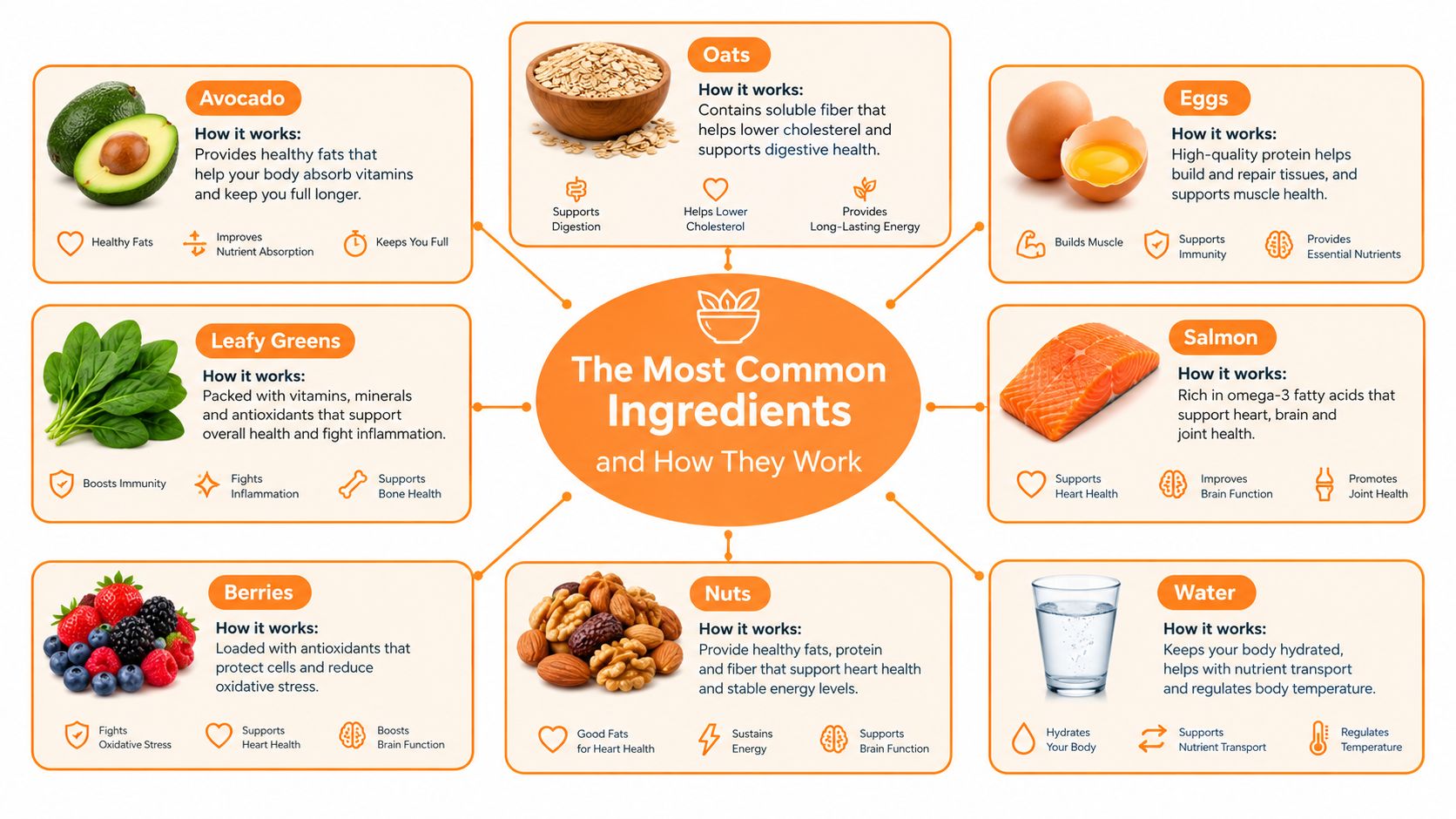
The Most Common Ingredients and How They Work
The average label in this category looks crowded because it usually pulls from several ingredient families at once. The cleanest way to read it is by mechanism, not by branding.
Nitric oxide support
L-arginine belongs here. It's a precursor to nitric oxide, which helps blood vessels relax and expand. In penile tissue, that matters because erection quality depends heavily on blood flow.
In a clinical trial of men with organic erectile dysfunction, 9 of 29 men taking high-dose oral L-arginine reported significant subjective improvement versus 2 of 17 controls, with stronger benefit in men who had reduced nitric oxide production, according to the PubMed record for the L-arginine trial. That makes L-arginine a circulation-support ingredient first, not a direct semen-volume ingredient.
Mineral cofactors
Zinc is the most established mineral in male reproductive nutrition. It plays a role in testicular function, semen parameters, and androgen status. The key caveat is that zinc tends to matter most when intake or status is inadequate, not as a universal “more is better” ingredient.
Magnesium often appears beside zinc on labels because it's commonly positioned in men's wellness formulas, but mechanism alone doesn't guarantee a meaningful effect on the outcome a buyer wants.
Adaptogens and botanicals
This group usually includes maca, tongkat ali, ashwagandha, ginseng, and horny goat weed. These ingredients are often marketed for libido, stress resilience, vitality, or hormone support.
Some may act more through stress biology and sexual desire than through direct hormone elevation. Others are included because they have a traditional reputation, even when whole-product evidence remains thin.
A label can show a plausible mechanism and still fail the more important question: was that ingredient actually studied for the outcome being advertised?
Antioxidant and fertility-support blends
Some male formulas add antioxidants or sperm-support compounds to address oxidative stress around reproductive function. Readers should slow down. An ingredient may be relevant to sperm biology without showing broad fertility benefits across general populations.
A broad review in Nature Reviews Urology noted that male enhancement supplements often rely on familiar ingredients, yet whole-product evidence is scarce, many ingredients have weak or contradictory support, and the field often blurs volume claims with fertility claims. That review also reported that 68% of ingredients in testosterone supplements and 52% in ED supplements fell into categories with contradicting, negative, or lacking evidence, as discussed in this review of male enhancement supplement evidence.
Readers who want a more label-focused breakdown can compare common categories in this guide to male enhancement ingredients.
Evidence Strength for Popular Male Enhancement Ingredients
Not all “popular” ingredients deserve the same confidence. The useful question isn't whether an ingredient sounds impressive. It's whether research supports the specific outcome attached to it.
Evidence Snapshot Five Popular Male Enhancement Ingredients
| Ingredient | Evidence Strength | Typical Studied Dose | Primary Studied Outcome | Key Caveat |
|---|---|---|---|---|
| Zinc | Moderate for deficiency correction and reproductive support | Varies by study | Semen parameters, reproductive physiology | Best case is often correction of low status, not a universal boost |
| L-Arginine | Moderate for blood-flow support in specific men | High-dose oral use in trial settings | Subjective erectile improvement | Not a direct semen-volume ingredient |
| Maca | Limited to moderate | Varies across products and studies | Subjective libido | Often discussed more for desire than for hormones |
| Tongkat Ali | Emerging | Varies by extract and standardization | Stress and hormone-support positioning | Product quality varies widely |
| Ashwagandha | Emerging to moderate | Varies by extract and standardization | Stress support and male reproductive endpoints | Results are ingredient-specific, not proof for blended formulas |
Zinc has the deepest historical footing
Among common ingredients, zinc has one of the strongest biological foundations. In a classic depletion study, five men were placed on a low-zinc diet providing 2.7 to 5.0 mg of zinc daily for 24 to 40 weeks, and oligospermia was induced in 4 of the 5 subjects, defined in that paper as a sperm count below 40 million per ejaculate. Sperm count fell during restriction and returned to normal 6 to 12 months after zinc was reintroduced, according to the historic human zinc study on PubMed.
A separate controlled depletion study found that young men consuming 1.4 mg Zn/day versus 10.4 mg Zn/day had lower semen volume, 2.24 mL vs 3.30 mL, and lower serum testosterone, 21.9 nmol/L vs 26.9 nmol/L, based on the PubMed record for zinc depletion and reproductive effects.
That's strong evidence that zinc matters when status is too low. It is not the same as saying more zinc will keep raising testosterone or semen volume in men who already get enough.
L-arginine is goal-specific
L-arginine belongs in the erection-quality category. Its mechanism is technically clear because it feeds nitric oxide production. If someone buys an arginine-heavy formula expecting larger ejaculate volume, the target and the mechanism don't match well.
Maca, tongkat ali, and ashwagandha need more precise reading
Maca is often discussed for libido support, usually without the same focus on direct hormone change. Tongkat ali is commonly positioned around male vitality and hormone support, but labels vary widely in extract quality and transparency.
Ashwagandha gets a lot of attention because it crosses categories. It's usually discussed for stress support, and recent ingredient-specific evidence has also pointed toward semen-volume effects in a controlled setting. Still, that doesn't validate every blended “male enhancement” formula that includes it.
Why a simple yes-or-no answer fails
One ingredient can look helpful in a deficient population, neutral in a mixed population, and underwhelming inside a proprietary blend. That doesn't mean the science is fake. It means context matters.
A review of male fertility research reported that several studies found oral zinc improved sperm motility in subfertile men with idiopathic asthenozoospermia or oligozoospermia, which supports zinc's role in normal male reproductive function rather than any disease-treatment claim, as described in this review of zinc and male fertility research.
Realistic Timelines and What Results to Expect
Supplements don't operate on one clock. Libido, circulation, and sperm-related changes run on different biological timelines, which is why “nothing happened in a week” isn't always a useful verdict.
Why change is gradual
Nitric oxide support can influence circulation relatively quickly in some people. Hormone-related shifts tend to move more slowly because the body regulates them tightly. Semen characteristics often take longer because sperm production and maturation happen over a longer cycle.
A good analogy is training recovery. Better sleep can improve how someone feels in days. Muscle gain takes longer. Body composition takes longer still. Male enhancement ingredients behave in a similar layered way.
The fastest thing to change is often how someone feels. The slowest thing to change is usually what a lab would measure.
Expected Effect Timelines by Outcome
| Outcome | Mechanism | Expected Onset | Re-evaluation Window |
|---|---|---|---|
| Libido | Stress modulation, subjective arousal, energy support | Gradual | About a month or more of consistent use |
| Erection quality | Nitric oxide support and circulation | Often earlier than hormone-related changes | Several weeks of consistent use |
| Semen volume | Nutrient status, glandular contribution, reproductive physiology | Gradual and variable | Longer trial period |
| Sperm-related markers | Spermatogenesis and reproductive support | Slowest | Multi-week to multi-month evaluation |
What counts as a real result
Readers often confuse three different things:
- Perception changes such as stronger desire or more confidence
- Functional changes such as easier erections or different ejaculate characteristics
- Outcome changes such as fertility treatment success
Those are not the same endpoint. A person may notice a subjective change before any measurable biomarker shifts. Another may correct a nutrient gap with little day-to-day sensation but better support for normal physiology over time.
The most honest benchmark is consistency. If a product is worth testing, it should be used long enough for its intended mechanism to matter, then re-evaluated against the original goal instead of against hype.
Safety, Side Effects, and FDA Language Rules
Safety in this category starts with two basic questions. What is the ingredient doing in the body, and is the label describing that action?
What supplement language can and can't say
The FDA requires supplement structure/function claims to carry the exact disclaimer, “This statement has not been evaluated by the Food and Drug Administration. This product is not intended to diagnose, treat, cure, or prevent any disease,” according to the FDA page on required disclaimer language for structure function claims.
In plain English, “supports” is acceptable when it refers to normal structure or function. “Treats erectile dysfunction,” “fixes infertility,” or “cures low testosterone” moves into drug territory.
A plain-language breakdown of that line is available in this article on structure-function claims.
Common side effect patterns
Side effects usually make sense once the mechanism is understood.
- L-arginine can matter for people already using medications that affect blood pressure because its main role is circulation support.
- Ashwagandha is commonly discussed with cautions around sedation or thyroid-related considerations.
- Tongkat ali may feel stimulating to some users, which is why some people watch for sleep disruption.
- Zinc can become a problem when dosing gets excessive over time, particularly because mineral balance matters.
None of that means an ingredient is unsafe by default. It means labels should be read like operating instructions, not mood boards.
Red flags that deserve skepticism
Some products in this space try to sound natural while behaving like something else entirely.
- Yohimbine-heavy positioning can raise a caution flag because the side-effect profile is a common concern.
- DMAA-like stimulant framing has no place in a men's wellness formula.
- “Herbal Viagra” language is a warning sign because it often suggests disease-style claims or concern about tainted products.
If a supplement promises prescription-style effects with plant-only language, skepticism is the correct first response.
How to Evaluate Product Quality Before You Buy
A quality supplement usually reveals itself on the label before the first capsule is opened. Marketing copy can be polished. The Supplement Facts panel is harder to fake convincingly.
Pillar one is label transparency
A clean label should disclose exactly what's inside and how much of each ingredient is present. Proprietary blends make comparison harder because they hide per-ingredient amounts.
Three things help:
-
Named ingredients with disclosed amounts
This lets a buyer compare a formula to the ingredient's research category instead of guessing. -
Standardized extracts when relevant
Herbs such as tongkat ali or ashwagandha often vary by extract quality. A standardized extract tells a buyer more than a plant name alone. -
A goal that matches the formula
A semen-volume support formula should not look like an energy product with unrelated stimulants.
Pillar two is manufacturing discipline
Country of manufacture, lot number, expiration date, and allergen disclosure matter because they show operational seriousness. cGMP registration is useful because it signals manufacturing controls, but buyers should still ask whether actual content testing happened.
A practical example helps here. A formula such as SEMEX is positioned around semen volume and taste support, and its published details note vegan, non-GMO manufacturing in the USA, cGMP registration, and third-party testing by Eurofins for microbials, heavy metals, and adulterants. That kind of disclosure is more meaningful than vague phrases like “lab tested.”
Pillar three is independent verification
Third-party seals aren't all equal. Some focus more on facility standards, while others emphasize product testing and verification. Buyers should confirm any seal in the certifier's own database instead of trusting packaging artwork.
A deeper checklist for that process appears in this guide to third-party verification.
A five-step pre-purchase check
-
Match the formula to the goal
Blood-flow ingredients, libido botanicals, and semen-support nutrients should not be treated as interchangeable. -
Reject hidden blends when precision matters
If an ingredient is there for a reason, the amount should be visible. -
Look for batch-level clues
Lot number and expiration date suggest the company expects accountability. -
Verify testing claims off-site
Real verification should exist beyond the brand's own homepage. -
Read the promise level
A careful label usually sounds more credible than a dramatic one.
Putting It All Together and Smart Next Steps
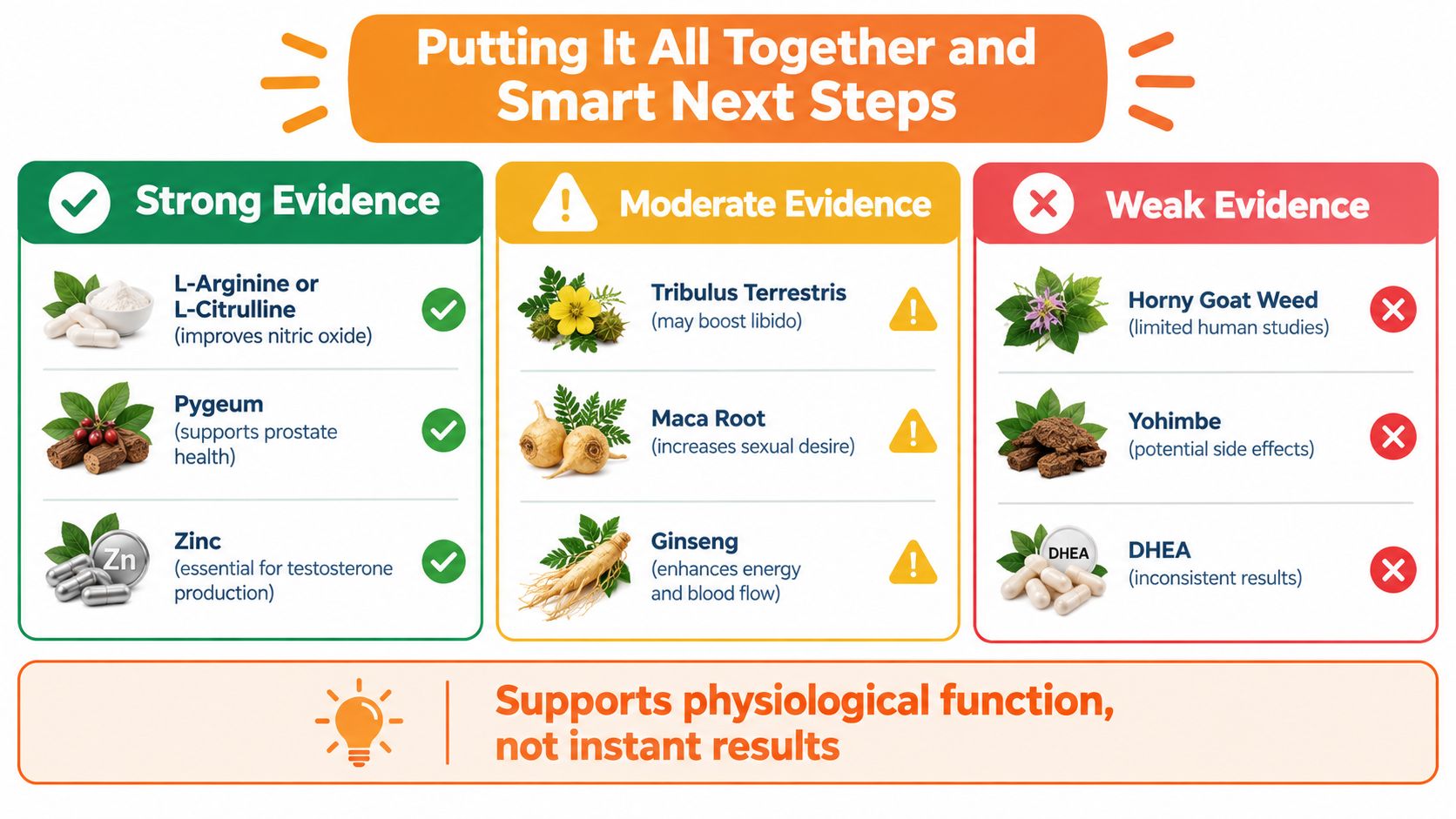
The most useful frame for natural male enhancement is simple. Some ingredients have stronger support for normal physiological function, some have mixed support, and some mostly survive on reputation.
Strongest confidence usually belongs to ingredients with a clear mechanism and a narrow claim. Zinc fits when the conversation is reproductive physiology and deficiency correction. L-arginine fits when the target is nitric oxide and blood flow. Adaptogens and botanicals can be worth considering, but they need tighter reading because “male vitality” can mean almost anything on a label.

A practical decision framework
- For erection quality, prioritize mechanism clarity. Circulation support is different from testosterone marketing.
- For semen volume, separate appearance and experience claims from fertility claims. Those are not the same endpoint.
- For fertility-related goals, look for ingredient-level evidence and keep expectations careful, especially after large modern data on zinc and folic acid failed to improve live-birth outcomes in a broad infertility-treatment population.
That large U.S. multicenter trial randomized 2,370 men and found live birth in 404 couples in the folic-acid-plus-zinc group versus 416 in placebo, or 34% versus 35%, with most semen-quality measures not significantly different after 6 months of supplementation, according to the PubMed report of the multicenter zinc and folic acid trial.
That finding doesn't erase ingredient biology. It does set a limit on overclaiming. Natural male enhancement can support normal function. It shouldn't be framed like a guaranteed fertility fix or an instant pharmaceutical substitute.
These statements have not been evaluated by the Food and Drug Administration. This product is not intended to diagnose, treat, cure, or prevent any disease.
SEMEX offers a daily men's supplement built around ingredients commonly discussed for semen volume support, taste support, blood flow, and overall male vitality, including zinc and L-arginine alongside a broader wellness blend. Men comparing transparent formulas, manufacturing standards, and goal-specific positioning can review the details directly at SEMEX.