

Natural Libido Supplement: What Really Works in 2026
The most popular advice about a natural libido supplement is also the least reliable: choose a traditional herb, take it daily, and expect desire to return on schedule. Human evidence doesn't support that level of confidence. Libido depends on stress, sleep, relationship context, medication, hormones, vascular health, and expectations, while supplement studies often examine only one narrow endpoint.
A more useful question is not “Which capsule is strongest?” but which ingredient has measurable human data, in what dose, for which outcome, and with what quality controls? The answer is uneven. Panax ginseng has encouraging erectile-function data, zinc has a biologically credible reproductive role but conflicting trial results, and ashwagandha appears more relevant to hormone and stress pathways than to immediate desire. Several famous aphrodisiacs still rely heavily on tradition, small studies, or marketing.
Table of Contents
- Why the Natural Libido Supplement Category Deserves a Skeptical Eye
- What Counts as a Natural Libido Supplement
- The Six Headline Ingredients Compared Head to Head
- Quality Standards That Separate Real Products From Label-Only Claims
- Lifestyle Levers That Move Libido More Than Any Capsule
- Safety, Interactions, and When to Talk to a Doctor
- Choosing the Right Natural Libido Supplement for Your Goals
- FAQ on Natural Libido Supplements
Why the Natural Libido Supplement Category Deserves a Skeptical Eye
A supplement can have a plausible mechanism and still fail to improve sexual desire. Blood flow, reproductive biology, stress response, or hormone markers are narrower outcomes than libido itself. Ingredient-level plausibility is not product-level proof, particularly when a formula combines extracts or conceals their amounts in a proprietary blend.
Zinc shows why evidence needs careful interpretation. It contributes to functions in the testis, epididymis, prostate, sperm maturation, ejaculation, motility, and fertilization, according to this peer-reviewed review of zinc in male reproductive function. A 2016 meta-analysis reported improvements in semen volume, sperm motility, and normal sperm morphology across studies of zinc supplementation.
A large randomized trial produced a less encouraging result. Among 2,370 couples, men taking 5 mg folic acid plus 30 mg zinc daily had 404 live births, or 34%, compared with 416, or 35%, with placebo. The risk difference was −0.9%, with a 95% confidence interval from −4.7% to 2.8%. After six months, the trial also found no significant improvement in semen quality, as reported in JAMA.
The disagreement reflects different populations, interventions, and endpoints. A nutrient can support normal physiology, change a reproductive marker, or help someone with inadequate intake without producing a reliable libido benefit for every user.
The practical test is straightforward: compare the product's study population, dose, extract specification, and measured endpoint with its label. If those details do not align, the marketing claim extends beyond the evidence.
A skeptical review does not dismiss the category. It separates ingredients with measurable human trial signals from products resting mainly on tradition, then examines quality control and the lifestyle factors that can determine whether any capsule has a meaningful effect.
What Counts as a Natural Libido Supplement
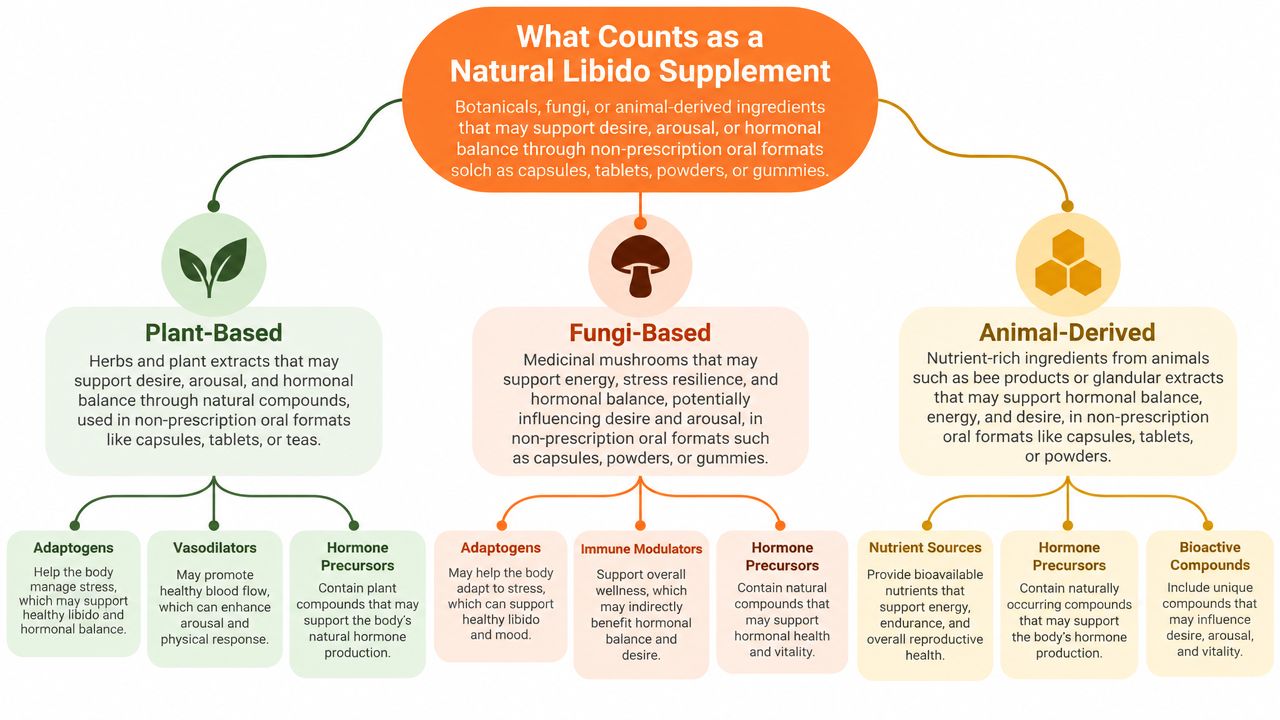
A natural libido supplement is a non-prescription oral product derived from plant, fungal, or animal sources that claims to support desire, arousal, or sexual function. The claimed route usually falls into one of three mechanisms:
- Hormonal or stress-related support, where an ingredient is marketed for testosterone, DHEA-S, stress resilience, or energy.
- Circulation support, where an ingredient is associated with nitric oxide, vascular relaxation, or erectile response.
- Nutritional or reproductive support, where vitamins, minerals, enzymes, or phospholipids contribute to normal reproductive biology rather than directly stimulating desire.
The category becomes easier to assess when divided into families.
- Adaptogens, including ashwagandha and Rhodiola, are generally positioned around stress response, energy, and hormone-related pathways. The human evidence is more credible for selected biomarkers than for an immediate change in sexual interest.
- Traditional aphrodisiacs, such as Maca, Tongkat Ali, and Tribulus, draw much of their appeal from historical use. Some have small human studies, but tradition alone can't establish a reliable dose or outcome.
- Circulation-targeted herbs, including Horny Goat Weed and Panax ginseng, are usually marketed for arousal or erectile function. Their proposed mechanisms differ, and the available human evidence isn't equally strong.
- Nutrient cofactors, especially zinc, support processes involved in male reproductive function. That makes them relevant to reproductive wellness, but it doesn't automatically make them libido stimulants.
The distinction between desire and sexual function matters. A person may want sex but experience an erection problem, or have an erection without much desire. A formula aimed at blood flow shouldn't be judged by a libido endpoint, and a formula aimed at stress shouldn't be judged as though it were a direct vasodilator.
The comparison that follows uses that distinction. It asks what each ingredient has been studied for, whether the dose is identifiable, and whether the conclusion supports a modest structure/function claim or a dramatic promise.
The Six Headline Ingredients Compared Head to Head
The table below requires an important qualification. The verified evidence supplied for these six ingredients doesn't provide reliable clinical dose, sample-size, and endpoint data for every ingredient. Where a commonly marketed dose is mentioned in the marketplace but isn't supported by the verified evidence, the responsible entry is not established, rather than a fabricated number.
| Ingredient | Typical Dose | Study Size & Design | Primary Outcome | Evidence Verdict |
|---|---|---|---|---|
| Maca | Not established in the verified evidence | Human evidence is described as limited and inconsistent in the Harvard Health review | Sexual-function evidence remains uncertain | Yellow |
| Panax ginseng | Not established in the verified evidence | Five studies involving 369 patients were pooled in a 2023 systematic review and meta-analysis | IIEF-15 or IIEF-5 erectile-performance scores improved by a pooled mean difference of 2.67 points, with a 95% CI of 1.10 to 4.25, p = 0.0009, and I² = 39% source | Green for erectile-function support, yellow for libido |
| Ashwagandha | 600 mg/day in the verified trial | Randomized, double-blind, placebo-controlled study in healthy men aged 40 to 70, lasting 8 weeks study | Salivary DHEA-S and testosterone increased, but fatigue, vigor, and sexual or psychological well-being scores didn't change significantly | Yellow |
| Tongkat Ali | Not established in the verified evidence | Human evidence isn't sufficiently specified in the verified data | Testosterone-adjacent marketing is stronger than the documented libido evidence here | Yellow to red |
| Horny Goat Weed | Not established in the verified evidence | Human evidence is thin in the verified data | Icariin is discussed primarily as a mechanism with interaction implications, not as a well-established libido outcome | Red |
| Tribulus | Not established in the verified evidence | Recent review coverage describes insufficient or inconsistent support | Reliable libido improvement isn't established | Red |
Maca illustrates the central problem. The ingredient has a long traditional reputation and some emerging human research, but the verified evidence characterizes the support as limited and inconsistent. That makes claims built around a precise self-reported dose, such as 1.5 to 3 g per day, unsuitable here because that dosing detail isn't supported by the approved evidence set.
Ashwagandha has a clearer study signal, but the result is often misrepresented. The 600 mg/day trial delivered 21 mg of withanolide glycosides and showed changes in DHEA-S and testosterone, not a significant improvement in sexual or psychological well-being. It therefore fits a hormone-support narrative better than an immediate aphrodisiac claim.
Panax ginseng has the most distinct endpoint in this comparison. The meta-analysis found a statistically significant pooled improvement in erectile performance, but erectile performance isn't identical to desire. A product can reasonably discuss that evidence as support for sexual function, while avoiding the leap to guaranteed libido improvement.
For a broader ingredient discussion, the male enhancement ingredient guide can help readers compare mechanisms, but its claims should still be checked against the underlying studies and the exact formula label.
Quality Standards That Separate Real Products From Label-Only Claims
A credible label starts with manufacturing controls, not a long ingredient list. The FDA's dietary-supplement current good manufacturing practice requirements address identity, purity, strength, and composition, and require appropriate testing or examination of incoming materials and finished products, according to this review of supplement manufacturing requirements. cGMP registration supports process control, but it doesn't prove that an ingredient increases libido.
Third-party testing adds a separate layer because the manufacturer isn't the only party assessing the finished product. Independent laboratories can examine label accuracy and screen for contaminants or adulterants. A seal or testing statement still needs interpretation. USP or NSF verification concerns defined quality attributes, while vegan and non-GMO claims describe sourcing or formulation characteristics, not clinical effectiveness.
“Non-GMO” on its own can be vague. A recognized certification, such as Non-GMO Project Verified, communicates more than an unsupported label statement because it identifies a defined verification program. Vegan certification can clarify that the capsule, excipients, and processing inputs meet the stated standard. Neither certification establishes a sexual-function outcome.
Extract standardization is often more important than the botanical name. A label that says “ashwagandha extract” without identifying withanolide content doesn't show whether it resembles the extract used in a trial. The same issue applies to Panax ginseng when a product gives no information about its ginsenoside profile. Dose by raw weight isn't the same as dose by active compounds.
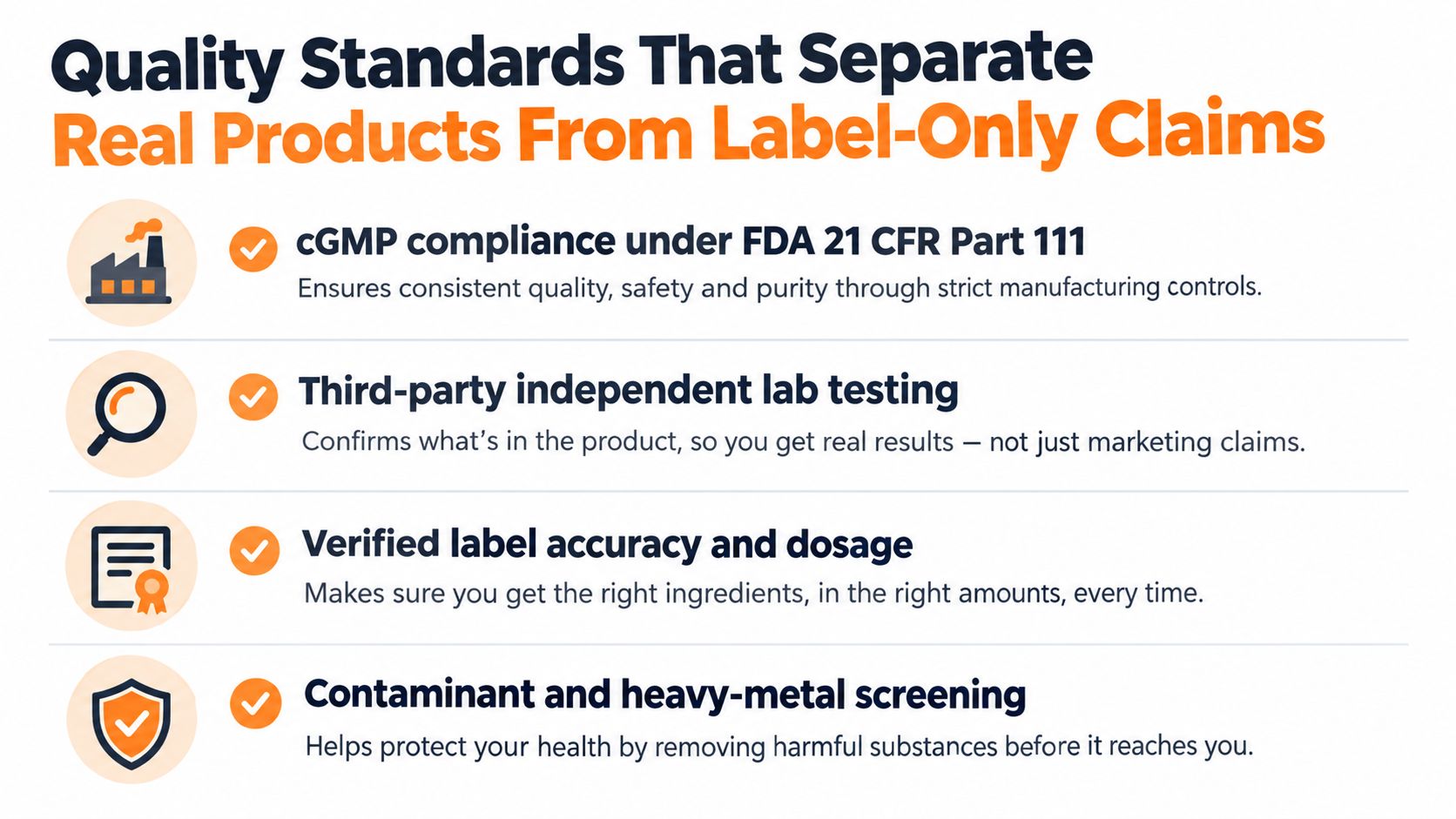
Before buying, a reader can check four items:
- Manufacturing: Look for cGMP language and a responsible manufacturer with a traceable address.
- Testing: Find independent testing details, not only “tested in-house.” The third-party verification guide explains why outside testing matters.
- Standardization: Check whether the label identifies active compounds, extract ratios, or botanical parts.
- Transparency: Reject proprietary blends that conceal individual quantities when dose comparison is essential.
A clean label doesn't guarantee a meaningful libido effect. It does reduce uncertainty about what the buyer is taking.
Lifestyle Levers That Move Libido More Than Any Capsule
A capsule rarely overcomes persistent sleep restriction, inactivity, chronic stress, or heavy alcohol use. These factors influence the same systems supplement marketing often cites, including energy, mood, hormones, vascular function, and sexual confidence.
Sleep should come first. In a controlled study of healthy young men, sleeping below six hours reduced testosterone by 10% to 15%, according to the original JAMA sleep-restriction study. The practical lesson is narrower than “take an herb.” Stabilize sleep before crediting a capsule for a change in desire.
Resistance training provides another measurable foundation. Clinical literature links moderate resistance exercise with support for free testosterone and erectile response, although the outcome varies with baseline health, programming, recovery, and consistency. Training also produces a clearer feedback signal than a multi-ingredient blend because the behavior and its progression can be tracked directly.
Stress complicates nearly every supplement trial. Chronic stress raises cortisol and can affect the DHEA pathway, so an adaptogen may be more relevant to stress-linked symptoms than to low desire associated with medication, relationship strain, or an underlying medical condition. Ashwagandha's trial findings fit that limited interpretation: hormone markers changed, while well-being scores did not change significantly.
Alcohol is another confounder. Intake above two drinks daily is associated with lower libido in the supplied clinical literature summary, regardless of supplement use. Someone who adds a product without changing the drinking pattern cannot confidently judge whether the formula helped.
A sensible sequence is straightforward: stabilize sleep, establish resistance training, reduce chronic stress, moderate alcohol, then assess whether an herbal adjunct adds a noticeable marginal benefit.
This sequence improves judgment and reduces the chance of mistaking a brief stimulant sensation for a durable change in desire.
Safety, Interactions, and When to Talk to a Doctor
“Natural” describes origin, not risk. A plant extract can affect enzymes, blood pressure, thyroid activity, sedation, or drug metabolism, and a multi-ingredient formula can create overlapping effects that haven't been tested together.
The main interaction questions differ by ingredient. Ashwagandha may stimulate thyroid function and may interact with levothyroxine or immunosuppressants. Panax ginseng may affect CYP3A4 metabolism and requires caution with warfarin, stimulants, and MAOIs. Tongkat Ali carries concern about liver safety, including documented hepatotoxicity case reports, so it deserves caution alongside statins or other potentially hepatotoxic drugs. Horny Goat Weed contains icariin, which may amplify the effects of PDE5 inhibitors or nitrates and create a dangerous blood-pressure combination.
| Ingredient | Key Interactions | Population Cautions | Primary Risk |
|---|---|---|---|
| Ashwagandha | Levothyroxine, immunosuppressants | Thyroid disease or hormone-modifying therapy | Excess thyroid stimulation or immune effects |
| Panax ginseng | Warfarin, stimulants, MAOIs, possible CYP3A4 interactions | Cardiovascular medication use | Bleeding, stimulation, or altered drug exposure |
| Tongkat Ali | Statins and other potentially hepatotoxic drugs | Liver concerns or polypharmacy | Liver injury risk |
| Horny Goat Weed | PDE5 inhibitors and nitrates | Cardiovascular disease or blood-pressure treatment | Excessive hypotension |
| Zinc | High-dose supplementation has no established libido benefit in the supplied evidence | People already taking zinc-containing products | Unnecessary excess and misleading expectations |
| Tribulus | Interaction profile is not sufficiently established | People using multiple supplements or medicines | Unknown composition and uncertain evidence |
Pregnant or nursing individuals, people using hormone-modifying therapy, and men with known cardiovascular disease should avoid this category without medical oversight. A clinician should also review persistent changes in desire, erectile function, energy, mood, or reproductive concerns before supplement experimentation.
Label reading matters because sexual-enhancement products have a history of adulteration concerns. Products flagged in FDA recall notices may contain undeclared DMAA, sildenafil analogues, or steroids. A “proprietary performance blend,” dramatic promise, missing manufacturer information, or absence of independent testing should increase caution.
The supplement side-effects guide offers a practical starting point, but it can't replace a medication review. The safest protocol is to introduce one product at a time, use the labeled serving, avoid stacking overlapping stimulants or vasodilators, and stop when concerning symptoms appear.
Choosing the Right Natural Libido Supplement for Your Goals
The right choice depends less on the loudest claim than on the problem being solved. Three profiles help narrow the field.
Stress-driven low desire points toward a stress and recovery conversation, not an instant aphrodisiac. Ashwagandha has the clearest verified hormone-marker data among the adaptogenic options discussed, but the trial didn't show a significant improvement in sexual or psychological well-being. That makes it a cautious adjunct, not a substitute for sleep or mental-health support.
Age-related testosterone concerns require restraint. A hormone marker isn't the same as improved desire, and the supplied evidence doesn't establish a reliable Tongkat Ali dose or libido outcome. A clinician can assess whether symptoms warrant evaluation before a buyer spends money on a testosterone-adjacent blend.
General vitality or sexual-function support may make Panax ginseng the more evidence-aligned option, because the verified meta-analysis measured erectile performance directly. The result still doesn't prove that every ginseng product will reproduce the pooled effect.
A four-step vetting process keeps the purchase grounded:
- Verify production controls. Look for cGMP manufacturing and independent finished-product testing.
- Match dose to research. The label should provide enough detail to compare its extract and active compounds with the studied preparation.
- Reject hidden quantities. Proprietary blends prevent meaningful dose assessment.
- Review the commercial terms. A clear return policy reduces pressure to continue a product that produces no useful signal.
Evidence-to-cost ranking should favor transparent ingredients with a relevant endpoint, then quality and tolerability. Panax ginseng may rank higher for erectile-function support, while ashwagandha may fit a hormone or stress-support goal. Maca, Tongkat Ali, Horny Goat Weed, and Tribulus require more skepticism because the verified evidence doesn't justify confident, universal libido claims.
SEMEX is one example of a vegan, non-GMO, daily men's supplement made in the USA in a cGMP-registered facility and third-party tested by Eurofins for microbials, heavy metals, and adulterants. Its formula combines zinc, L-arginine, sunflower lecithin, bromelain, Maca Root, Panax Ginseng, Ashwagandha, Tongkat Ali, Saw Palmetto, and Horny Goat Weed, so buyers should evaluate it by its disclosed ingredients, quality information, and personal safety profile rather than by assuming that the blend guarantees a libido outcome.
FAQ on Natural Libido Supplements
How quickly can a natural libido supplement work
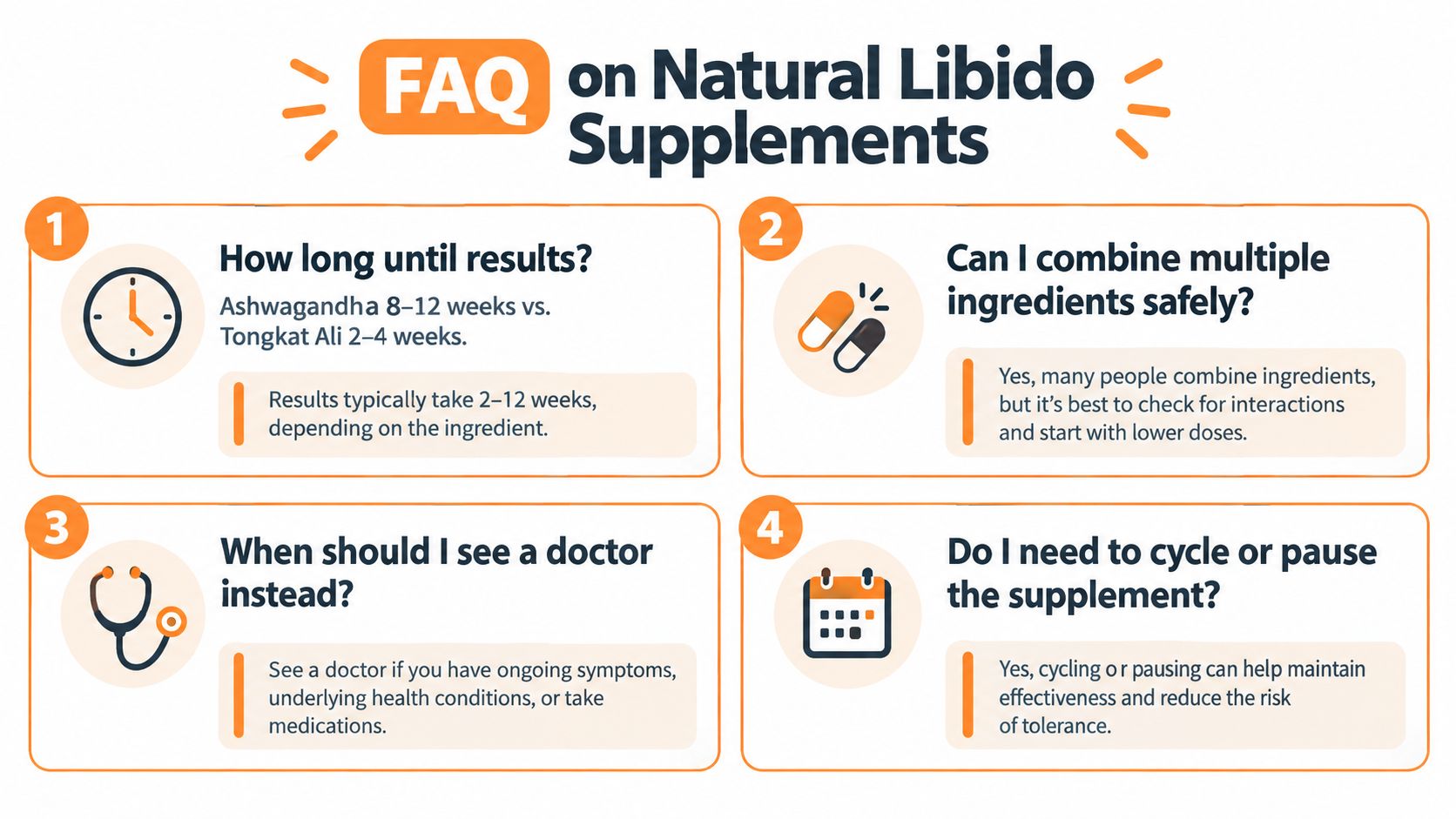
There isn't one reliable timeline for the category. The verified ashwagandha trial lasted 8 weeks and measured hormone markers, not a significant change in sexual well-being, while the supplied marketing context commonly frames Tongkat Ali use around 2 to 9 weeks. Those timelines shouldn't be treated as promises because the evidence quality and product preparations vary.
Panax ginseng also shouldn't be judged solely by a same-day sensation. Its strongest verified signal concerns pooled erectile-performance scores across studies, not an immediate increase in desire.
Can multiple ingredients be combined safely
Stacking isn't automatically safer or more effective. Combining ingredients that affect blood flow can create overlapping effects, while combining stimulatory herbs can intensify jitteriness, sleep disruption, or medication interactions.
A single-ingredient trial is easier to evaluate. If a blend is used, the label should disclose quantities, and a pharmacist or clinician should review medicines before ingredients such as ginseng, Horny Goat Weed, ashwagandha, or zinc are added.
How do alcohol and supplements interact
Alcohol can undermine libido independently, and the supplied evidence identifies intake above two drinks daily as a reliable concern. It can also make sedation and impaired judgment more likely when combined with calming ingredients. Kava deserves particular caution because of overlap with sedatives, while ginseng warrants caution with stimulants.
A buyer shouldn't use alcohol to test whether a product works. Stable habits create a cleaner basis for judging any change.
How long should a product be tested
A practical evaluation should allow enough time for the studied endpoint to emerge, rather than judging a formula after one dose. The supplied guidance uses one full hormonal cycle for men and two menstrual cycles for women as a general trial framework, though individual circumstances and ingredient research differ.
A simple log can record sleep, stress, alcohol, desire, erectile response, and unwanted effects. Persistent or sudden sexual changes warrant medical assessment instead of a longer supplement trial.
Readers comparing a natural libido supplement should start with the ingredient's actual endpoint, then verify dose transparency, cGMP production, independent testing, and interaction safety. For a formula that also addresses semen-volume and taste-focused ingredients alongside men's wellness botanicals, visit SEMEX and review the label and testing information before deciding whether it fits the reader's goals.
These statements have not been evaluated by the Food and Drug Administration. This product is not intended to diagnose, treat, cure, or prevent any disease.