

Mother of Pearl Necklace Meaning and Symbolism
Does a mother of pearl necklace mean the same thing as a pearl necklace, or does the material carry a different story beneath its glow? The answer begins with a distinction many shoppers miss: mother of pearl is nacre, the inner shell lining of a mollusk, while a pearl is a separate formation made from layers of that same material.
That difference matters because symbolism grows from material, history, design, and culture. A necklace made with nacre may suggest calm, protection, nurturing, purity, or elegant femininity, but it doesn't carry one fixed meaning everywhere. Its significance changes with the wearer, the culture, and the intention behind the gift.
Table of Contents
- Understanding the True Mother of Pearl Necklace Meaning
- The Ancient Origins and Global Trade History
- Cultural Interpretations and Spiritual Symbolism
- The Science Behind the Iridescent Glow
- Styling and Gifting for Modern Wearers
- Care Guidelines and Marketing Compliance
Understanding the True Mother of Pearl Necklace Meaning
A mother of pearl necklace isn't a strand of pearls with a different name. Mother of pearl refers to nacre that remains part of the mollusk shell, usually appearing as a flat, gently curved, or carved surface. A pearl, by contrast, forms as a separate rounded or organic gem when nacre builds around an irritant inside the mollusk. The materials overlap, but the finished forms and jewelry uses differ, as explained in this material guide to the difference between mother of pearl and pearls.
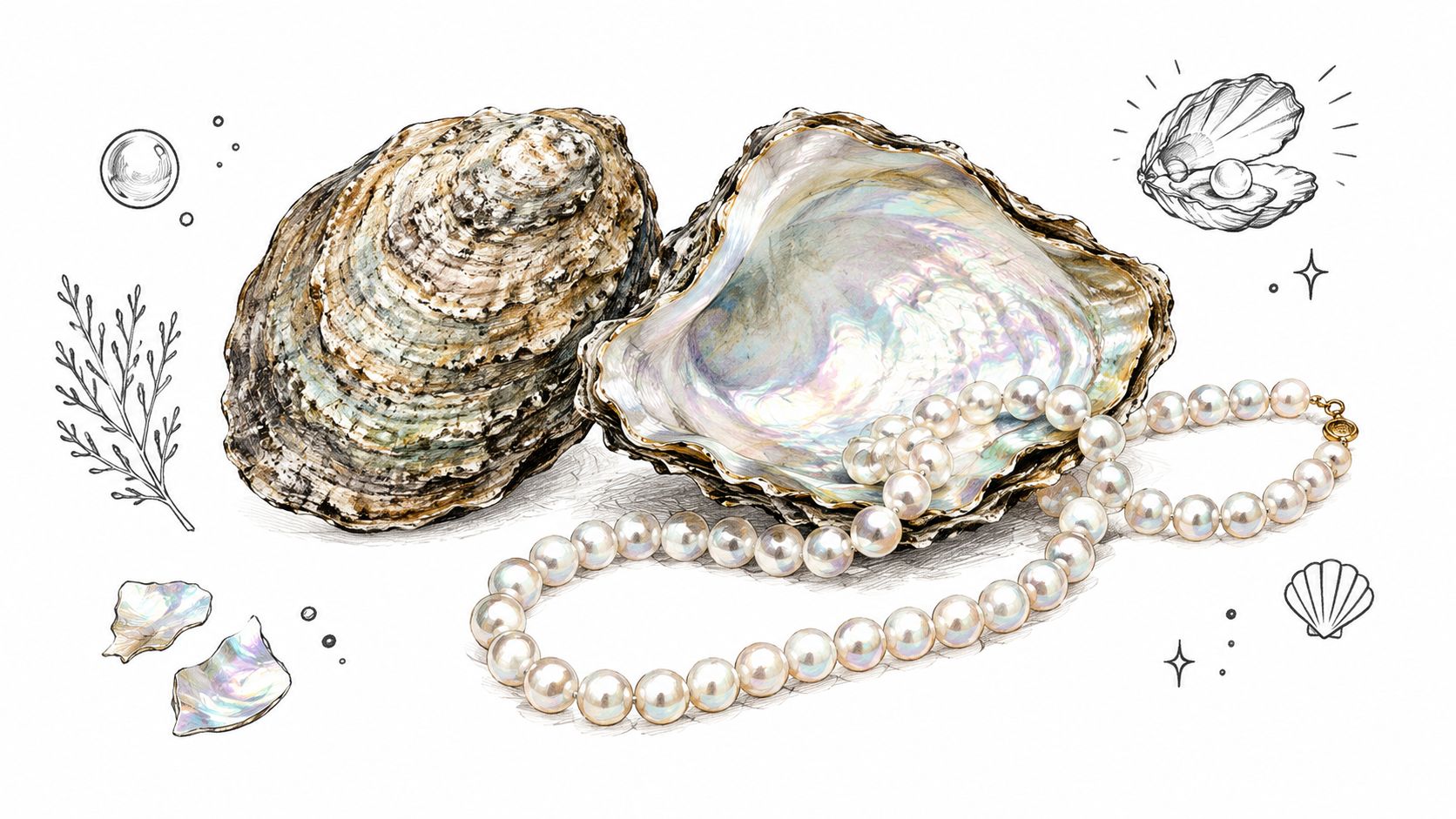
Nacre and pearls are related, not identical
In technical terms, nacre is an organic-inorganic composite made from aragonite platelets and conchiolin. Mother of pearl is the visible shell lining formed from that composite, while a pearl is a separate structure that also uses nacre. A pendant with a broad luminous disc therefore creates a different visual and symbolic experience from a necklace of rounded pearl beads.
The distinction also explains why mother of pearl is often marketed as an identity-signaling material rather than as a gemstone with a single standardized grading system. Its appeal depends on surface, color, pattern, craftsmanship, and the emotional meaning attached to its sheen. A buyer may choose it for a quiet oceanic quality, a soft neutral palette, or a design that feels more contemporary than a traditional pearl strand. Major jewelry references describe its color and luster as varying with mollusk species and water conditions, which supports this overview of mother-of-pearl symbolism and appearance.
The central modern associations
Across contemporary jewelry language, the mother of pearl necklace meaning commonly gathers around four ideas:
- Femininity: Its soft glow and delicate color shifts create an elegant, understated expression.
- Protection: The shell lining has encouraged associations with shelter, guardianship, and a protective maternal presence.
- Purity: Pale nacre is often connected with clarity, innocence, and clean beginnings.
- Balance: Its layered colors and reflective surface suggest composure rather than sharp intensity.
These meanings are cultural interpretations, not scientific properties. The material doesn't guarantee calm or protection, yet its appearance and long history make those associations understandable. A wearer can therefore select a necklace as a personal emblem of gentleness, resilience, family connection, or an understated sense of refinement.
Practical distinction: A pearl is a separate nacreous gem. Mother of pearl is nacre used as the shell's inner lining.
The Ancient Origins and Global Trade History
The symbolic weight of nacre comes from a history that reaches far beyond modern jewelry advertising. Archaeological evidence places mother-of-pearl use in Mesopotamia as early as 3000 BC, with evidence in Asia and the Middle East reaching back as far as 2500 BC, according to this history of mother-of-pearl meaning and properties. Those early uses show that people valued the material not only for decoration, but also for the way its reflective surface could stand for protection, purity, and a connection with the sacred.
Ancient Egypt offers a useful example. Nacre appeared in amulets, inlay work, and cosmetic containers, placing it close to the body, the home, and ritual practices. Its role wasn't limited to a single type of ornament. A small amulet could suggest protection, while an inlaid object could bring luminosity and prestige to an everyday or ceremonial setting.
From sacred object to traded material
Other traditions gave nacre their own meanings. Polynesian and Maori uses connected shell materials with the ocean and ancestral protection. The material's natural origin helped make it symbolically powerful: it came from water, reflected light, and formed part of a living creature's protective structure. Over time, such associations helped link mother of pearl with nurturing and spiritual guardianship.
The history then moved from local craft into international commerce. The Torres Strait became an epicentre of the global mother-of-pearl industry, and the modern pearling boom began in 1869, when Captain William Banner harvested 50 tons of pearl shell from Warrior Reef in a matter of months, as recorded by the Sea Museum's account of the Torres Strait pearling industry.
By 1871, the annual pearl shell harvest was valued at £25,000. By 1874, more than 700 men and nearly 60 vessels were involved in Torres Strait pearling. These figures belong to a specific historical trade system, not to modern necklace production, but they show how quickly shell became part of a global luxury economy.
Why trade changed the necklace's meaning
Shells shipped to London, Paris, and New York became jewelry as well as everyday and luxury goods. This movement changed the social meaning of nacre. It was no longer only an amulet, a sacred material, or a local decorative surface. It also became a visible sign of international fashion, refinement, and access to global trade.
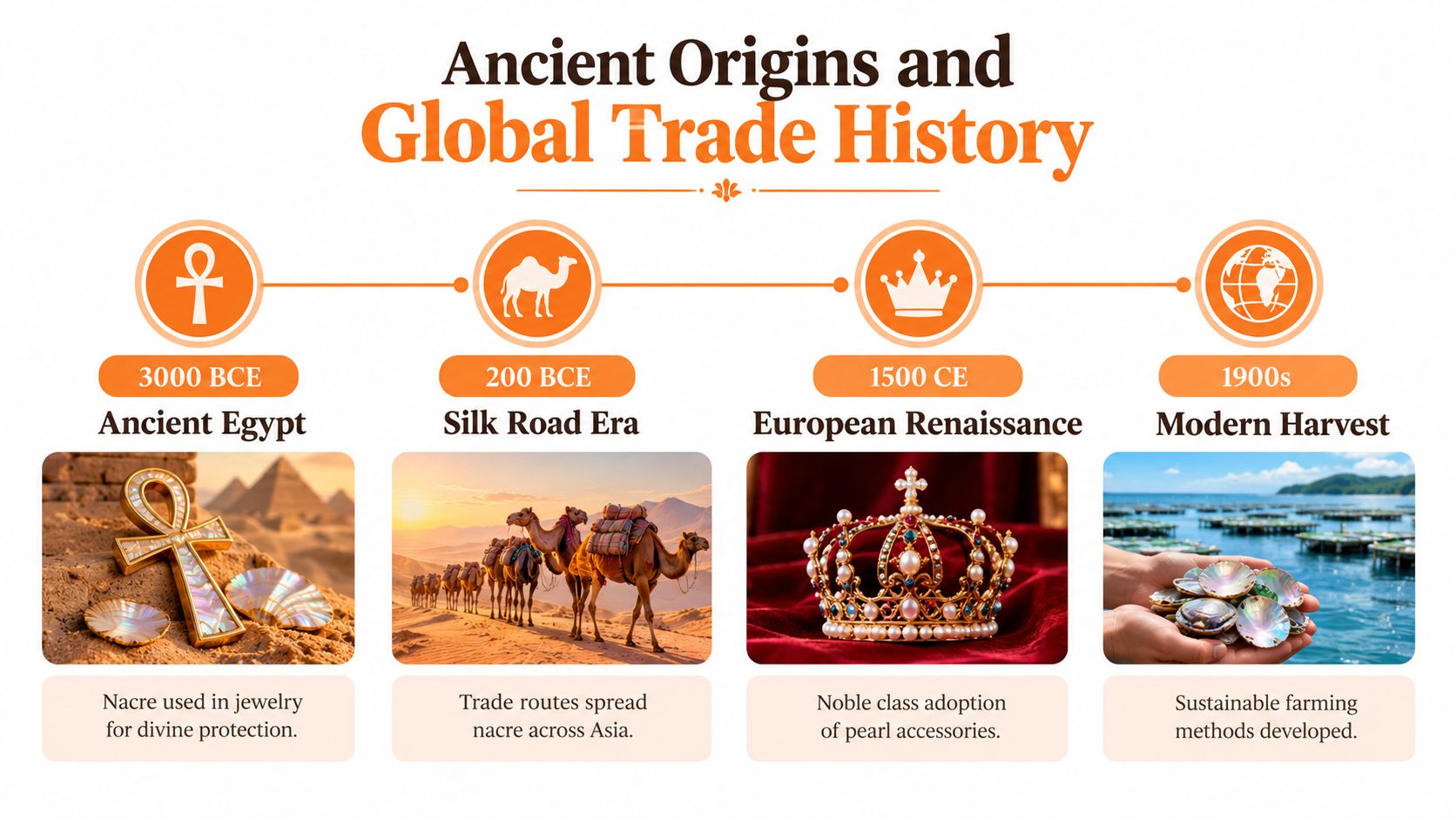
That layered history explains why a mother of pearl necklace can feel both ancient and modern. Its soft radiance carries memories of shell, sea, ritual, craft, and commerce. The wearer doesn't need to adopt every historical interpretation, but understanding those layers makes the necklace more than a decorative accessory.
Cultural Interpretations and Spiritual Symbolism
Does a mother of pearl necklace symbolize motherhood in every culture? No. Its meanings overlap in some places, but they aren't universal. The strongest interpretation depends on cultural context, family tradition, spiritual practice, and the personal story attached to the piece. A useful comparison of cultural meanings in mother-of-pearl jewelry shows how fragmented the symbolism can be across Western, feng shui, Hindu, Polynesian, Maori, Greek, and Chinese traditions.
Western jewelry language often places nacre near motherhood, purity, softness, and protection. That association makes a mother of pearl necklace a natural choice for a gift connected with nurturing, family, or a new chapter. It can also express femininity without the formal intensity of diamonds or the classic uniformity of a traditional pearl strand.
Different traditions, different emphasis
The same material can carry a different emotional center elsewhere:
| Cultural context | Common symbolic emphasis | What the emphasis suggests |
|---|---|---|
| Western jewelry traditions | Purity, motherhood, protection | A personal emblem of care and elegant femininity |
| Feng shui and related Eastern interpretations | Balance, harmony, and favorable energy | A decorative object chosen to support a sense of equilibrium |
| Polynesian and Maori traditions | Ocean connection and ancestral protection | A reminder of water, lineage, and spiritual guardianship |
| Hindu and other South Asian contexts | Purity, sacred beauty, and divine femininity | A symbol shaped by religious and cultural ideas about the feminine |
| Contemporary personal use | Calm, softness, and emotional centering | A meaning created by the wearer rather than inherited from one tradition |
These categories shouldn't be treated as interchangeable. Indigenous ocean traditions have their own histories and responsibilities, and they shouldn't be reduced to generic wellness language. Likewise, a modern buyer who likes the colors of nacre isn't automatically participating in a specific spiritual tradition.
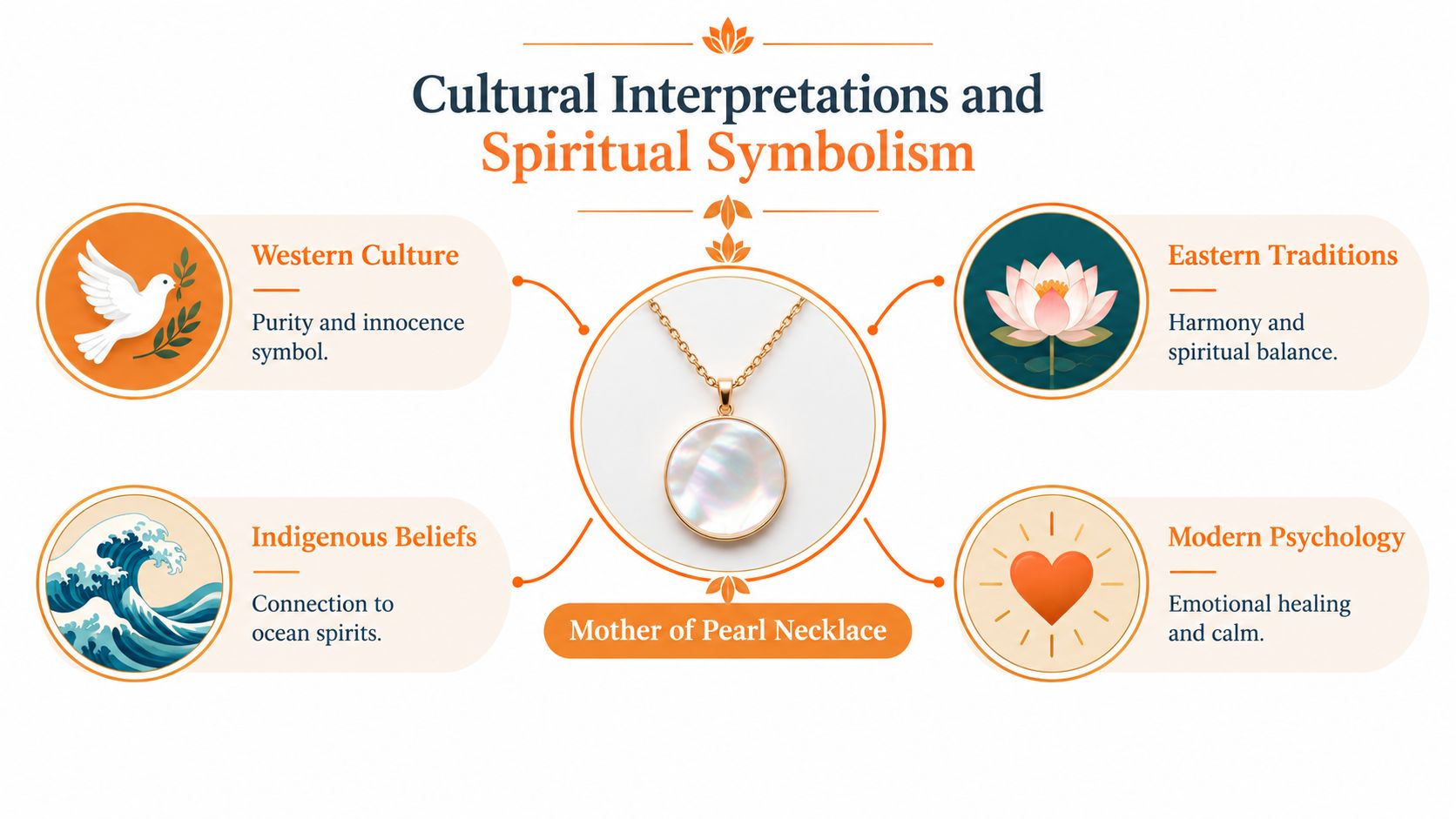
Choosing a meaning without overstating it
A thoughtful buyer can ask three questions before assigning symbolism to a necklace:
- What is the cultural source? A seller should distinguish established tradition from modern marketing language.
- What is the personal intention? The necklace might mark family, renewal, calm, remembrance, or an appreciation of shell and color.
- What does the material communicate? Nacre can visually suggest softness and light, but it doesn't possess scientifically established spiritual powers.
Meaning becomes more respectful when a wearer names a personal intention instead of claiming that one interpretation applies to everyone.
This context-dependent view gives the mother of pearl necklace meaning more depth, not less. A necklace can honor a family relationship for one person, reflect ocean ancestry for another, and serve as a minimalist fashion choice for someone else. None of those uses needs to cancel the others, provided cultural traditions are described accurately and not presented as universal fact.
The Science Behind the Iridescent Glow
The glow of nacre isn't a mere layer of polish placed over an ordinary shell. It comes from the material's microscopic architecture. Nacre contains aragonite platelets arranged with conchiolin, creating a layered organic-inorganic composite whose structure interacts with light. This is why mother of pearl can show shifting tones across a broad surface instead of producing only one concentrated point of reflection.
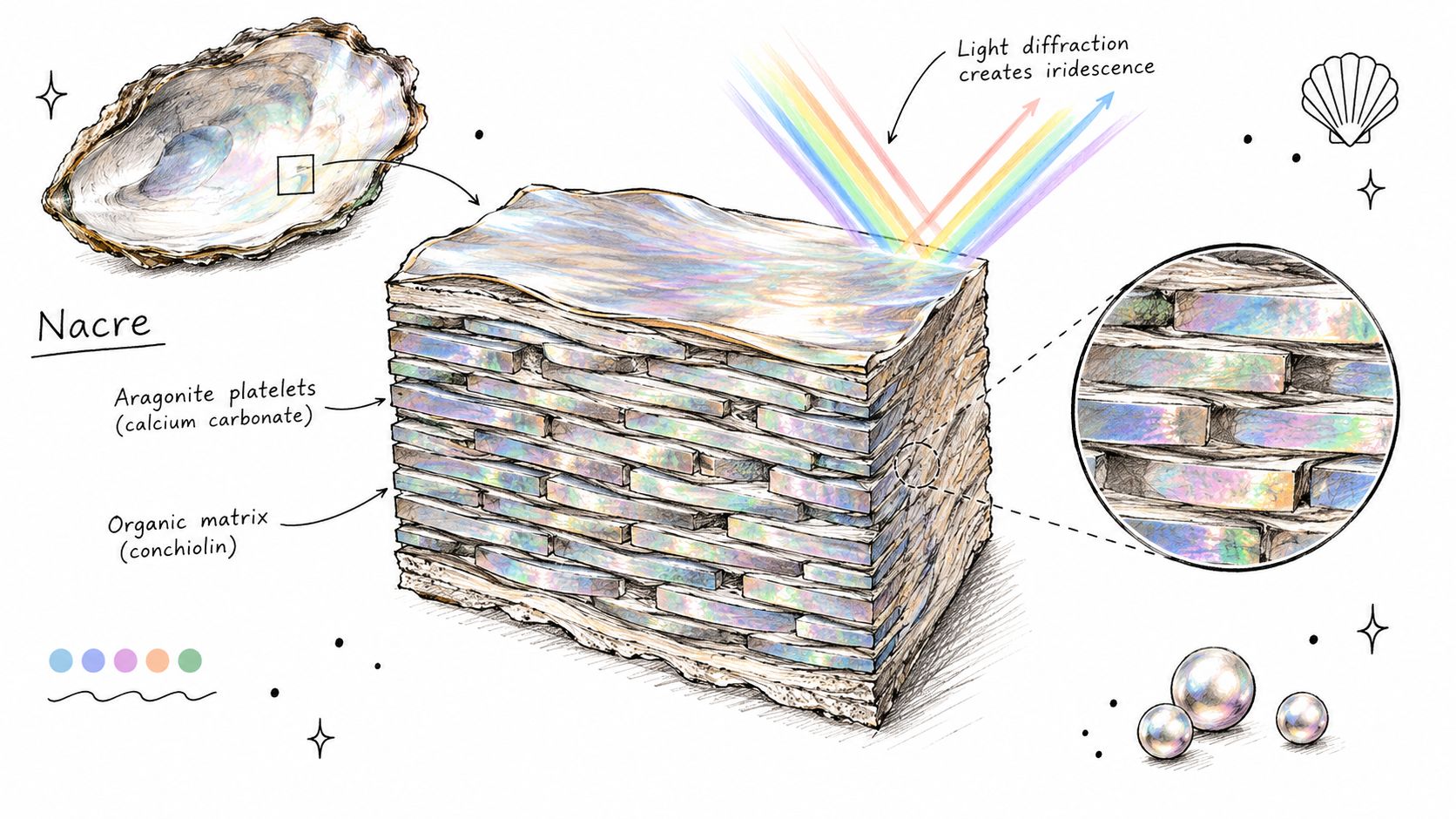
How the layers create color
One reference describes the aragonite tablets as approximately 10 to 20 μm wide and 0.5 μm thick, with their optical effect linked to a platelet thickness close to visible-light wavelengths, as detailed in this technical explanation of nacre structure. Light encounters repeated boundaries between the mineral platelets and the organic material. Some wavelengths reinforce one another while others interact differently, producing the characteristic iridescence.
The effect resembles a natural optical filter built from layers rather than pigments. A slight change in viewing angle can alter which colors reach the eye most strongly. That movement explains why a mother of pearl necklace may appear white, silver, pink, blue, green, or softly multicolored as the wearer moves.
Why science deepens the symbolism
The scientific explanation doesn't remove the material's mystery. It gives that mystery a physical foundation. A wearer may associate nacre with water, clarity, or moonlit softness because the surface naturally shifts with light and resembles the visual movement of a shell or shallow sea.
A careful reader interested in the broader relationship between materials, formulation, and evidence can explore SEMEX's science resource, while keeping jewelry symbolism separate from health claims. Nacre's optical behavior is a material property, not proof of a therapeutic effect.
The result is a useful bridge between gemology and cultural meaning. Ancient observers saw a luminous shell and placed it within stories of protection, ancestry, and divinity. Modern science explains the layered structure that produces the glow. Both perspectives can coexist, as long as symbolic language remains distinct from measurable physical description.
Styling and Gifting for Modern Wearers
A mother of pearl necklace works best when its broad, reflective surface has room to catch light. The piece can complement a plain blouse, a dark knit, a linen dress, or a simple evening neckline without competing with elaborate patterns. A short pendant tends to create a clean focal point, while a longer design can introduce movement over a solid-colored outfit.
Color deserves attention because nacre isn't visually identical from one piece to another. Jewelry references connect variation in color and sheen with mollusk species and water conditions, so a cooler silver tone may suit a minimalist wardrobe while a warmer cream or pink tone may harmonize with softer neutrals. The choice should follow the wearer's existing palette rather than an assumption that every piece must look bright white.
A practical styling method
A wearer can build an outfit around three decisions:
- Start with the surface. Pair a luminous pendant with matte fabrics such as wool, cotton, or linen. The contrast allows the nacre to stand out without adding more shine.
- Limit competing reflections. If the necklace has a large carved or highly iridescent element, understated earrings and a simple bracelet can keep the look balanced.
- Echo one color. A faint blue, green, pink, or silver flash in the nacre can be repeated in a scarf, shoe, or small accessory without matching the entire outfit.
The necklace can also communicate meaning through the occasion. A gift for a mother or caregiver may emphasize nurturing and protection. A piece marking a new beginning may draw on purity and renewal. For a friend navigating change, the giver might explain that the necklace represents steadiness and balance, while making clear that the symbolism is a personal sentiment rather than a promise of emotional or medical results.
Gifting insight: The most meaningful explanation identifies what the necklace represents to the giver and recipient, rather than assigning a universal spiritual definition.
The material's flexibility supports both everyday and formal wear. A graphic nacre pendant can suit modern tailoring, while a delicate shell charm can feel intimate and understated. The strongest choice connects three elements: the recipient's style, the necklace's actual design, and a message that respects the difference between cultural tradition and personal intention.
Care Guidelines and Marketing Compliance
A common assumption is that a glossy shell surface can be treated like a hard, indestructible gemstone. That approach is unsuitable for nacre. Mother of pearl is a layered organic-inorganic material, and its luster depends on preserving the surface and the structure beneath it. A wearer should follow the maker's care instructions, keep the necklace away from avoidable abrasion, and store it so that harder jewelry doesn't rub against it.
The practical rule is simple: protect the surface before trying to restore the shine. A soft cloth can remove ordinary residue, but harsh treatment, abrasive polishing, or unapproved chemicals can change the appearance. A jeweler should assess serious scratches, loose settings, or damaged surfaces instead of relying on an aggressive home remedy.
Symbolism isn't a medical claim
Sellers also need to separate cultural language from objective health claims. Saying that a necklace symbolizes calm, protection, or balance describes a tradition or personal interpretation. Saying that it treats anxiety, prevents illness, diagnoses a condition, or produces a medical outcome crosses into a claim the jewelry cannot support.
The FDA's rules for dietary supplement structure/function claims provide a useful compliance reference for the required disclaimer language. When qualifying claims appear in supplement labeling, the FDA requires the disclaimer to be prominent and in boldface, and its structure/function claim guidance provides the exact wording. The FDA labeling guide also explains that the disclaimer must appear adjacent to the claim, or be linked through a symbol, and must appear on each panel or page where the claim appears.
For advertising, the FTC's health products compliance guidance says marketers need adequate substantiation for objective product claims. Jewelry sellers should therefore use careful wording, label spiritual associations as symbolic, and avoid presenting a necklace as a treatment or cure.
These statements have not been evaluated by the Food and Drug Administration. This product is not intended to diagnose, treat, cure, or prevent any disease.
SEMEX offers a daily, vegan, non-GMO supplement for men formulated to support semen volume and taste with ingredients including Zinc, L-Arginine, Sunflower Lecithin, and Bromelain. Readers interested in a clear, evidence-conscious approach to men's wellness can visit SEMEX to review the formula and product details.