

Male Vitality Supplement: A Practical Buyer's Guide
Male vitality supplements have become a crowded purchase. A man can compare three online listings, see nearly identical promises about energy, stamina, libido, and performance, and still have no clear way to decide which formula deserves attention. The front label creates confidence. The Supplement Facts panel determines whether that confidence is justified.
The category is no longer a niche wellness corner. One market report valued global men's vitality supplements at USD 6.8 billion in 2025 and projected growth at a 7.4% CAGR to USD 13.0 billion by 2034, with North America representing about 37.5% of revenue and capsules and tablets accounting for more than 60% of sales in 2025. Online stores represented about 34% of global sales in 2025, according to the market report available through the National Library of Medicine.
That scale creates a buyer problem. More products mean more ingredient lists, more confident claims, and more formulas that look complete without showing whether their doses resemble human research. The useful question isn't which bottle sounds most impressive. It's which product makes its evidence, quantities, quality controls, and limitations easiest to inspect.
Table of Contents
- Staring at Three Near-Identical Bottles
- How Supplement Claims Are Actually Regulated
- Comparing the Core Male Vitality Ingredients
- Formulation Signals That Separate a Good Product From a Great One
- Dosing, Daily Use, and How Long Results Take to Build
- Why More Ingredients Is Not Always Better
- Who a Male Vitality Supplement Is Actually Right For
- Quick Answers Before You Buy
Staring at Three Near-Identical Bottles
A man stands in front of three bottles at a supplement retailer. One promises stamina, another highlights vitality, and the third features a long list of botanicals associated with male performance. Online, the same scene appears as three product pages with polished photography, bold typography, and nearly interchangeable language about confidence and drive.
The decision shouldn't begin with the front label. It should begin with the back panel.
The label questions that matter
First, are the individual ingredient amounts visible? A proprietary blend that reveals only a total weight prevents a buyer from checking whether any ingredient appears at a meaningful amount. A long list isn't evidence of a well-built formula if the active quantities remain hidden.
Second, does the product show meaningful quality signals? Third-party testing, lot information, an expiration date, manufacturing details, and accessible certificates of analysis give a buyer more to examine than a vague promise about purity. A mark alone shouldn't end the investigation, but no verifiable quality information should lower confidence.
Third, does the claim stay within the role of a dietary supplement? “Supports vitality” and “helps maintain normal reproductive function” are different from statements that claim to diagnose, treat, cure, or prevent a disease. The wording matters because it tells buyers whether the brand understands the regulatory boundary.
Practical rule: A transparent five-ingredient formula deserves more scrutiny and often more confidence than a crowded blend that hides every dose.
A sensible buyer also separates goals. Support for normal reproductive function isn't the same as support for blood-flow regulation, recovery, libido, or general energy. Ingredients should be judged against the intended use, not lumped together under the attractive but broad phrase “male vitality.”
This guide ranks common ingredients by the strength and limits of the available evidence, then examines the quality signals that determine whether a formula can be evaluated at all.
How Supplement Claims Are Actually Regulated
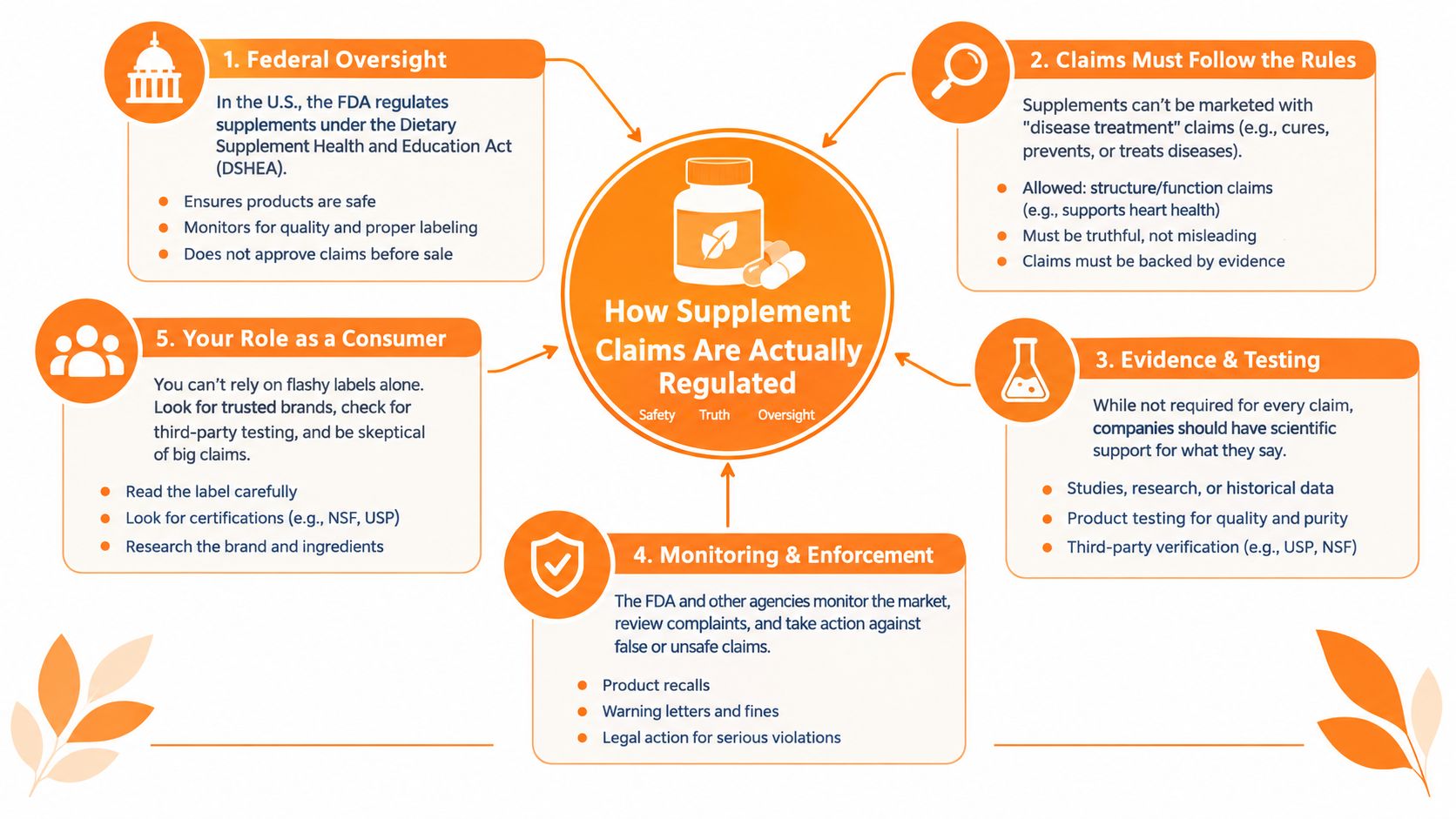
Dietary supplements can make structure/function claims, which describe how an ingredient supports the normal structure or function of the body. Phrases such as “supports vitality,” “helps maintain normal reproductive function,” or “supports blood-flow regulation” fit that general category when they're truthful and not misleading. They aren't the same as FDA approval, and the FDA doesn't pre-approve a supplement for efficacy before it reaches the market.
Disease claims cross the line. A label shouldn't state or imply that a product diagnoses, mitigates, treats, cures, or prevents a specific disease or class of diseases. The FDA's explanation of structure/function claims makes that distinction central to compliant supplement communication.
What the disclaimer tells a buyer
The required statement for structure/function claims is:
“These statements have not been evaluated by the Food and Drug Administration. This product is not intended to diagnose, treat, cure, or prevent any disease.”
The FDA dietary supplement labeling guide says the disclaimer must appear prominently in boldface type and sit adjacent to the claim or connect to it by a symbol on the same panel or page. Its presence means the product is using the structure/function framework. It doesn't prove that the formula works, that the doses match research, or that the manufacturer has conducted a clinical trial on the finished product.
A buyer can find a more detailed explanation of structure/function claims and supplement language before assessing a product page.
The burden of verification
Manufacturers carry responsibility for truthful labeling and product safety, but buyers still need to inspect what they're purchasing. A compliant phrase can sit beside a weak formula. A polished website can provide less useful information than a clear Supplement Facts panel.
Before checkout, a critical buyer asks:
- What exactly is being supported? The claim should identify a normal function, not imply disease treatment.
- Which ingredient supports that function? The formula should connect claims to identifiable ingredients.
- Are the amounts disclosed? Hidden doses make meaningful comparison impossible.
- What quality evidence is available? Testing information should be specific enough to verify.
- Does the disclaimer appear correctly? Its presence is necessary for relevant claims, but it isn't a quality guarantee.
Comparing the Core Male Vitality Ingredients
You are comparing three bottles with nearly identical promises. One lists eight familiar ingredients, another lists twelve, and a third highlights a single nutrient. The label alone does not settle the choice. Ingredient evidence is uneven, so the buying decision should rank ingredients by research quality, outcome relevance, and clarity of dose.
A systematic review of 17 popular male fertility supplements identified 90 unique ingredients, yet only 22% had published evidence for semen parameters and only 17% had positive evidence in randomized trials, according to research published in the Journal of Urology. The practical conclusion is direct: ingredient presence is not evidence of ingredient value.
The table ranks common male vitality ingredients conservatively. “Tier” describes the strength and relevance of the evidence reviewed here, not the guaranteed performance of a finished product.
| Ingredient | Evidence Tier | Typical Studied Dose | Primary Effect |
|---|---|---|---|
| Zinc | Tier 1 for foundational reproductive support | Dose varies by study and product | Supports normal male reproductive function and sperm biology |
| L-arginine | Tier 1 for biological rationale, context-dependent outcomes | Dose varies by study and product | Precursor to nitric oxide and involved in blood-flow regulation |
| Ashwagandha | Tier 1 in selected male-wellness research contexts | No consistent dose identified in the verified sources reviewed for this guide | Discussed in relation to stress, libido, and vitality support |
| Maca | Tier 2, mixed but favorable evidence | No consistent dose identified in the verified sources reviewed for this guide | Associated with libido and balanced vitality support |
| Panax ginseng | Tier 2, mixed but favorable evidence | No consistent dose identified in the verified sources reviewed for this guide | Used for energy, resilience, and male wellness support |
| Tribulus | Tier 3, limited or inconsistent evidence | No consistent dose identified in the verified sources reviewed for this guide | Commonly marketed for male vitality, with limited support here |
| Fenugreek | Tier 3, limited or inconsistent evidence | No consistent dose identified in the verified sources reviewed for this guide | Commonly included in vitality formulas, with uneven evidence |
| Bromelain | Tier 3 for male vitality outcomes | No consistent dose identified in the verified sources reviewed for this guide | Enzyme ingredient requiring a specific claim and evidence context |
The absence of a consistent dose is itself useful information. It means the buyer should not treat a standard label amount as a research-backed target. Check the individual study, extract form, population, and measured outcome before comparing products.
Tier 1 needs careful reading
Zinc has the strongest foundational case. NIH-linked research describes zinc as important to male fertility biology, with deficiency capable of impairing spermatogenesis, sperm morphology, sperm count, sperm function, and serum testosterone levels. A 2016 meta-analysis on zinc and male reproductive outcomes reported improvements in semen volume, sperm motility, and normal morphology. However, a large NIH trial involving 2,370 couples found that daily zinc plus folic acid did not improve live birth rates compared with placebo, 34% versus 35%, and did not significantly improve sperm counts or sperm function.
That split matters. Zinc belongs in a serious male vitality formula when the goal is supporting normal reproductive function, especially where dietary intake may be inadequate. The evidence does not support promising fertility outcomes from zinc alone.
L-arginine has a clear biochemical rationale. The amino acid serves as a precursor to nitric oxide, which participates in endothelial vasodilation and blood-flow regulation. Yet a systematic review and meta-analysis of randomized, double-blind, placebo-controlled studies found no significant improvement in blood flow or key endothelial dysfunction biomarkers among patients with cardiovascular and metabolic disorders. Treat nitric-oxide language as a mechanism, not a guarantee. The outcome depends on the population, formulation, and intended use.
Ashwagandha earns a Tier 1 position only in selected male-wellness contexts. Its relevance depends on the specific outcome and population studied. A general ingredient listing cannot establish a testosterone, libido, or stress benefit for every buyer, and broad “testosterone booster” language asks the label to prove more than it shows.
Tier 2 and Tier 3 require restraint
Maca and Panax ginseng are reasonable ingredients to investigate for libido, energy, and resilience support. Their evidence remains mixed, so a product should state the intended structure/function role clearly and avoid presenting either botanical as a universal solution. Compare the extract identity and declared amount rather than choosing based on the ingredient name alone.
Tribulus and fenugreek appear frequently in male vitality formulas, but the support described here is limited or inconsistent. They may fit a broader wellness formula, yet their presence should not move a product ahead of one with clearer foundational ingredients.
Bromelain requires the most specific explanation. It is an enzyme ingredient, and its inclusion does not establish a male vitality benefit. The label should identify the intended structure/function claim and avoid implying treatment or a proven reproductive result.
Choose the formula according to the goal. Zinc fits foundational nutritional support. L-arginine fits a blood-flow-related rationale with clear limits. Maca and Panax ginseng fit broader wellness positioning, while lower-tier ingredients deserve closer scrutiny before they justify a higher price. A buyer should pay for transparent dosing and relevant evidence, not for an ingredient printed in bold type.
Formulation Signals That Separate a Good Product From a Great One
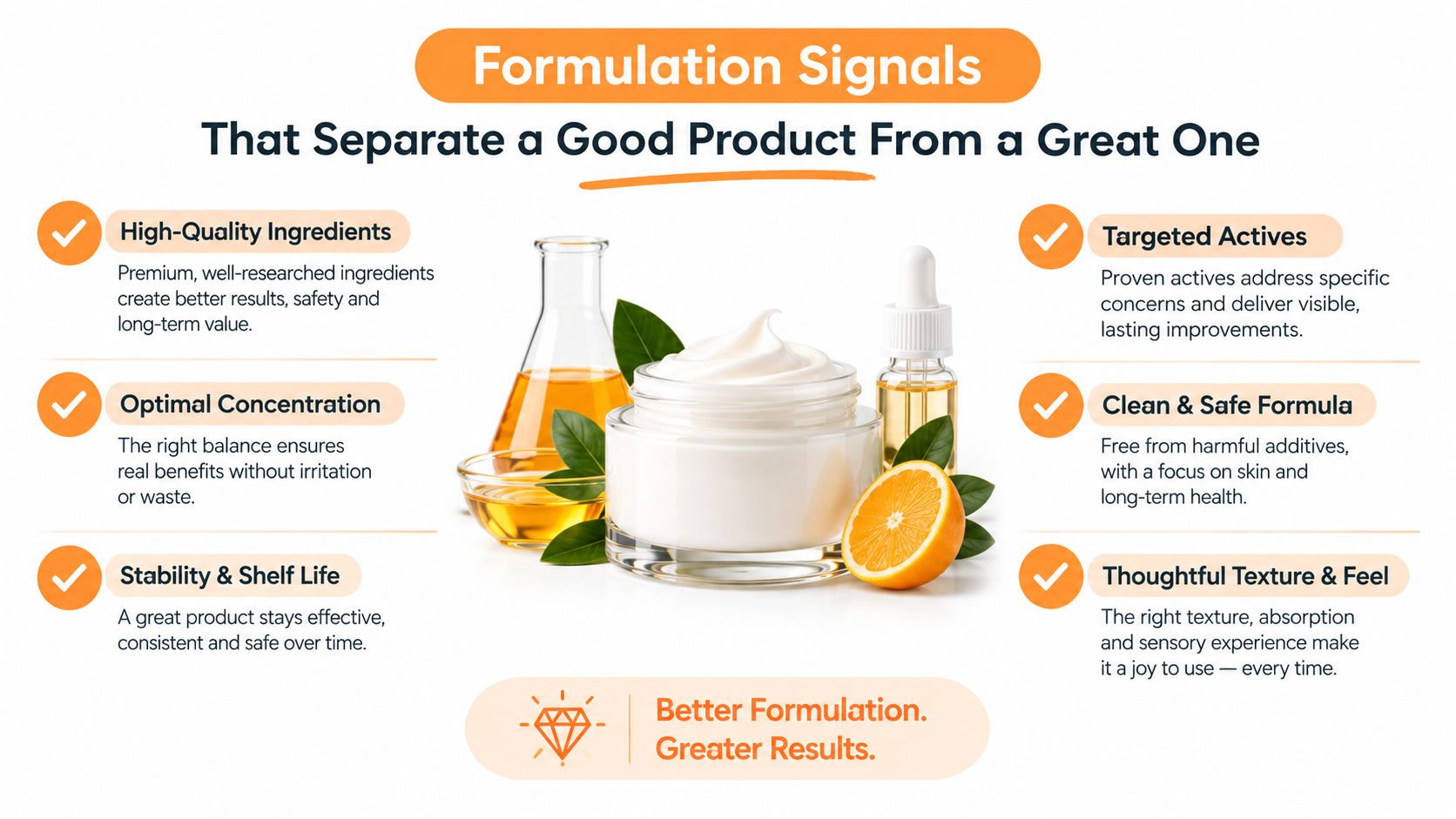
A formula can contain familiar ingredients and still be difficult to trust. Quality assessment begins with the details that manufacturers can show, not the adjectives they use.
What should appear on the package
Third-party testing marks from organizations such as NSF, USP, or Informed Choice can provide useful quality context when the certification is current and verifiable. cGMP information, lot numbers, manufacturing location, expiration dating, and accessible certificates of analysis add practical accountability. A certificate should identify the relevant lot or testing scope rather than function as a generic downloadable badge.
The difference between an FDA-registered facility and an FDA-approved product also matters. Dietary supplements aren't FDA-approved for efficacy in the same way that approved medicines are. Facility registration or manufacturing compliance doesn't prove that a formula delivers every advertised benefit.
A buyer's label checklist
- Testing scope: The brand should identify what testing covers, such as microbial contamination, heavy metals, or adulterants.
- Ingredient identity: Botanical extracts should identify the plant part, extract type, and any meaningful standardization.
- Manufacturing location: Country of manufacture should be easy to find, not buried in customer service language.
- Capsule and excipient details: Vegan capsule material, fillers, flow agents, colors, and allergen information deserve review.
- Certification language: Non-GMO, gluten-free, and allergen-free statements should have a clear verification basis.
- Expiration information: A printed date and lot number are more useful than a vague freshness claim.
- Test access: A published certificate of analysis or direct lot-verification process is stronger than an unsupported purity slogan.
A buyer comparing supplement bioavailability and formulation factors should also remember that absorption isn't determined by a single marketing phrase. Ingredient form, serving size, interactions, and the complete formula all influence how useful a product may be.
Price should follow evidence and transparency. A premium makes more sense when it pays for identifiable testing, clear sourcing, and disclosed doses. It makes less sense when it pays for a longer ingredient list, dramatic packaging, or a proprietary blend that conceals the quantities.
Dosing, Daily Use, and How Long Results Take to Build
Daily use becomes easier when the Supplement Facts panel is read as a schedule rather than a sales document. A product calling for several capsules per serving should show whether that serving is intended once daily or divided across the day. Ingredients that can irritate the stomach may be easier to tolerate with food, while the label's directions should remain the starting point.
The important distinction is not only the amount of a compound, but the form in which it appears. Elemental zinc is different from the weight of a zinc compound such as zinc oxide. L-arginine base and arginine hydrochloride aren't interchangeable label entries. Botanical extracts should be distinguished from whole-root powders, and standardized extracts should identify what standardization means.
The stacking problem
Zinc may appear in a male vitality supplement, a multivitamin, a fertility product, and a workout formula at the same time. Magnesium and selenium can also overlap across products. A buyer should total every source before adding another formula, especially when the existing products already provide concentrated amounts.
The verified evidence doesn't establish universal daily schedules or upper limits for zinc, magnesium, or selenium, so exact limits shouldn't be guessed from a product page. A pharmacist or clinician can review the complete stack, particularly when medications or diagnosed conditions are involved.
| Ingredient | Typical Daily Dose | Time to Measurable Effect |
|---|---|---|
| Zinc | Product- and study-specific | Gradual support of normal reproductive biology |
| L-arginine | Product- and study-specific | Blood-flow effects may be context-dependent |
| Ashwagandha | Product- and study-specific | Requires consistent use in the relevant research context |
| Maca | Product- and study-specific | Gradual, with evidence varying by outcome |
| Panax ginseng | Product- and study-specific | Gradual support, depending on preparation and goal |
The cleanest approach is consistent daily use at the labeled serving, followed by an honest review of tolerability and purpose. The guide to how long supplements take to work is useful for setting expectations without treating a supplement as a rapid diagnostic test.
Why More Ingredients Is Not Always Better
A long ingredient panel can look thorough while giving a buyer less usable information. If a proprietary blend lists only its combined weight, you cannot tell whether any individual ingredient reaches an amount used in human research. That makes the formula difficult to compare with evidence, even when the label appears impressive.
The review cited earlier, available in this published review of male fertility supplements, shows why ingredient count is a weak buying signal. Formulation quality depends on disclosed amounts, relevant evidence, and a clear purpose.
Consider two labels. A 12-ingredient blend listing a 1,200 mg proprietary blend cannot be matched reliably to any single-ingredient study dose. A five-ingredient panel listing 15 mg of zinc as zinc citrate gives the buyer a clearer basis for comparison. The shorter formula is not automatically effective, but its claims are easier to assess.
| Feature | Crowded Blend | Lean Formula |
|---|---|---|
| Dose visibility | Often hides individual amounts | Lists each active amount |
| Evidence matching | Difficult to compare with studies | Easier to compare ingredient by ingredient |
| Interaction review | More complicated | More manageable |
| Buyer confidence | Driven by the size of the list | Driven by transparency |
| Formulation purpose | May look broad without a clear focus | Built around defined goals |
Mechanism stacking isn't automatically useful
Overlapping ingredients can complicate a formula without proving an added benefit. Several nitric-oxide-oriented compounds may create a more complicated blood-flow proposition while leaving the finished combination untested. Mineral combinations also deserve scrutiny because zinc, calcium, and iron can compete during absorption.
Use this buying rule:
Choose fewer ingredients at transparent, research-relevant amounts over a longer list designed to look comprehensive.
Judge every product by whether the label lets you verify identity, quantity, purpose, and quality without guesswork. A long list adds value only when each ingredient has a defined role and a disclosed amount.
Who a Male Vitality Supplement Is Actually Right For
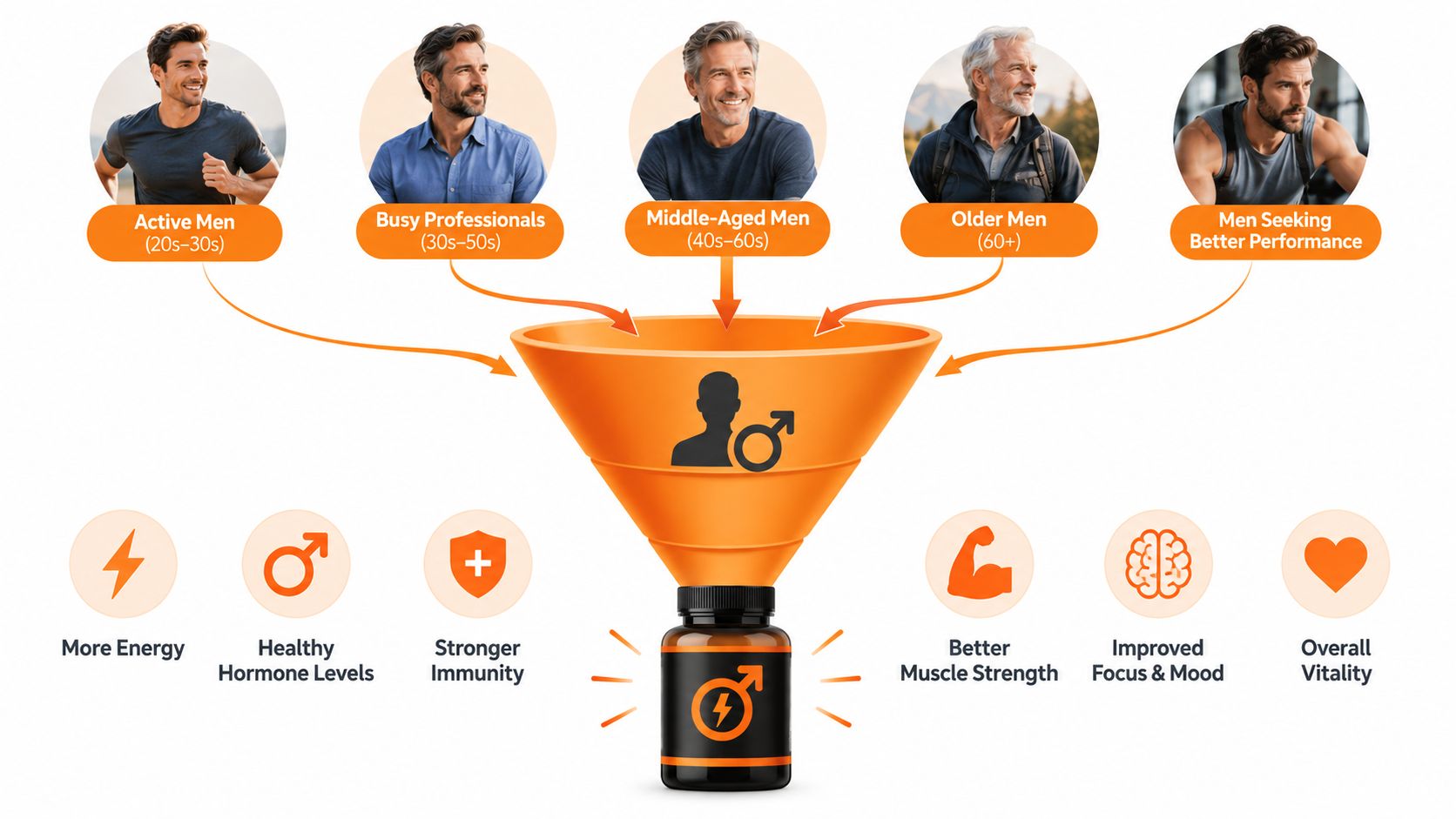
A buyer comparing several male vitality supplements should start with one question: what specific outcome is he trying to support? The category can fit a routine focused on normal energy, exercise recovery, libido, blood-flow regulation, or reproductive wellness. It should not replace medical evaluation when symptoms are persistent, severe, or changing.
Match the ingredient to the goal
A man focused on recovery may examine adaptogenic ingredients such as ashwagandha or Panax ginseng. The preparation and intended outcome matter, so the ingredient name alone does not establish a useful match. A buyer focused on circulation may consider nitric-oxide precursors such as L-arginine, but context-dependent findings do not support aggressive promises.
Zinc deserves attention when dietary intake is limited, especially for men whose diets contain few zinc-rich foods such as red meat or shellfish. The appropriate claim is support for normal biology. A label cannot guarantee a change in fertility or hormone status.
Maca may suit a buyer seeking balanced energy and libido support without a stimulant-focused formula. Men comparing products for semen volume, taste, bedroom confidence, or general wellness should inspect every disclosed amount. The goal printed on the front label does not prove that the finished product will produce that effect.
Who should pause before buying
Men taking blood-pressure medication or nitrate medication should review L-arginine use with a qualified professional because the ingredient relates to nitric oxide and blood-flow regulation. Anyone with thyroid issues should review ashwagandha use with a clinician. Men managing hormone-sensitive conditions should avoid saw-palmetto-heavy blends unless a qualified healthcare professional has assessed the choice.
Anticoagulants, blood-pressure drugs, and thyroid medication also warrant a medication review before using a multi-ingredient formula. Anyone under 18 should avoid self-directed use of this category.
At checkout, apply three checks:
- Third-party testing: Look for verifiable testing information.
- Lead-ingredient dose: Confirm that the main ingredient has a disclosed amount that can be compared with published research.
- Separate active amounts: Check that the Supplement Facts panel identifies each ingredient instead of hiding the formula in a proprietary blend.
SEMEX is one example of a product positioned around semen volume, taste, and broader male wellness. Its listed formula includes zinc, L-arginine, sunflower lecithin, bromelain, maca root, Panax ginseng, ashwagandha, Tongkat Ali, saw palmetto, and horny goat weed. Its stated quality details include a vegan and non-GMO formulation, USA manufacturing in a cGMP-registered facility, and third-party testing by Eurofins.
Quick Answers Before You Buy
How long should a buyer wait before judging a formula? Adaptogenic and botanical products generally require consistent use before a buyer can assess whether they fit the intended goal. Nitric-oxide precursors may have effects that occur sooner, but the verified evidence shows that L-arginine outcomes are context-dependent. A product shouldn't be judged by a single day, and a lack of immediate sensation doesn't prove that a formula is working.
Who should avoid the category? Men taking anticoagulants, blood-pressure medication, nitrate medication, or thyroid medication should seek professional advice before using multi-ingredient formulas. Men with hormone-sensitive conditions should be cautious with saw-palmetto-heavy products, and anyone under 18 should avoid self-directed use.
Does the FDA disclaimer prove quality? No. The disclaimer is required for relevant structure/function claims, and its absence is a compliance warning. Its presence only explains the regulatory status of the claim. It doesn't verify ingredient identity, dose, purity, or efficacy.
Should products be cycled? Cycling isn't automatically required for every ingredient. A clinician may recommend breaks for stimulant-containing products or advise a different approach based on medications, symptoms, and total supplement exposure.
Can another supplement be taken at the same time? Every multivitamin, pre-workout, mineral product, and botanical blend should be checked for overlap first. Zinc, magnesium, selenium, and repeated botanicals can accumulate across products even when each label appears reasonable on its own.
The final buying decision should be based on a defined goal, transparent amounts, credible testing, and safe compatibility with the rest of the routine. Men with persistent fatigue, libido changes, or reproductive concerns should seek healthcare evaluation rather than using a supplement as a diagnostic shortcut.
These statements have not been evaluated by the Food and Drug Administration. This product is not intended to diagnose, treat, cure, or prevent any disease.
SEMEX offers a daily men's supplement formulated to support semen volume and taste while providing a broader blend for male vitality, including zinc and L-arginine. Men comparing transparent formulas and third-party testing details can review SEMEX and decide whether its ingredient profile fits their goals.