

Male Fertility Nutrition: A Practical Guide to Sperm Health
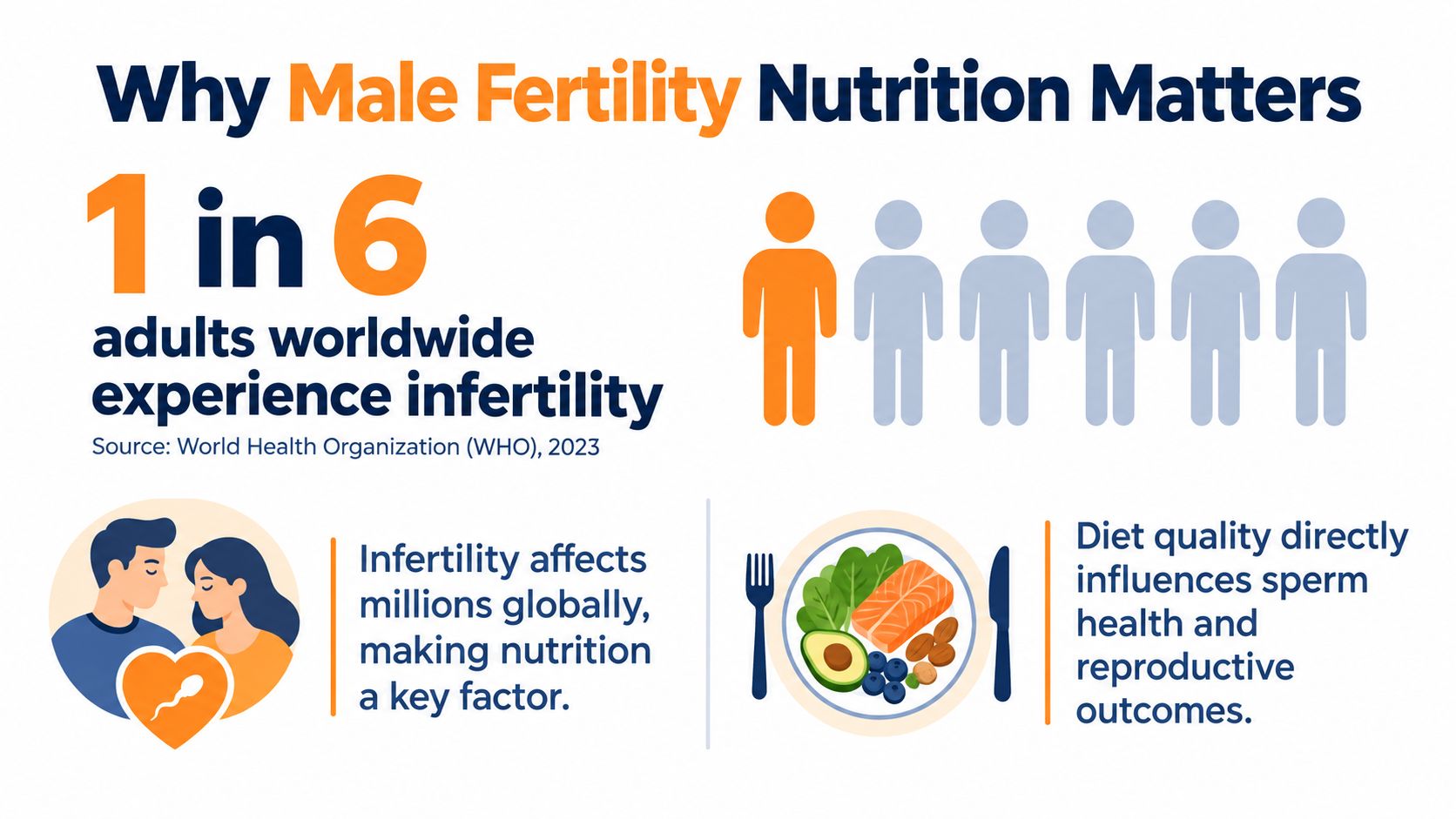
The World Health Organization reported that about 1 in 6 adults worldwide experience infertility during their lifetime. That finding puts male reproductive health in perspective: fertility isn't a niche concern, and nutrition is one part of supporting normal reproductive function. It isn't a guaranteed fix, though. The useful question is not which supplement to take, but whether your diet, health, and circumstances give you a reason to consider one.
Table of Contents
- Why Male Fertility Nutrition Matters
- Key Nutrients for Sperm Health
- Dietary Patterns That Support Fertility
- What the Research Really Says About Supplements
- Building a Fertility-Friendly Meal Plan
- Lifestyle Factors That Work With Nutrition
- When Supplements Make Sense
- Putting It All Together
Why Male Fertility Nutrition Matters
The WHO's estimate was approximately 17.5% of adults worldwide, with lifetime prevalence reported as 17.8% in high-income countries and 16.5% in low- and middle-income countries. The organization defines infertility as not achieving pregnancy after at least 12 months of regular, unprotected sex. It can involve the male or female reproductive system, so fertility is a shared health issue, not something to place on one partner alone. (WHO's global infertility findings)
Consider two men who are both concerned about conception. One eats a varied diet but wonders whether a supplement might offer extra support. The other relies heavily on processed foods and has a health concern that hasn't been assessed. Their next steps may differ. A supplement could be unnecessary for one and still not address the main issue for the other.
Nutrition is part of a wider picture
Sperm develop and function within the context of a person's overall health. Nutrition research looks at nutrients involved in processes such as antioxidant defense, cellular metabolism, blood flow, and sperm formation and maintenance. But diet is only one influence among factors such as age, heat exposure, tobacco and alcohol use, medications, environmental exposures, and underlying health conditions.
This distinction matters. Supporting a normal biological process isn't the same as treating infertility. A nutrient may be associated with a change in a laboratory measurement without proving that taking it helps a couple achieve pregnancy or have a live birth.
A practical starting point: Treat food quality as a foundation, supplements as a possible complement, and medical evaluation as the route to investigating fertility concerns.
Population-level patterns can help explain why researchers study diet and semen measurements, but they don't predict any one man's fertility. If conception is taking longer than expected, a supplement shouldn't replace an assessment by a qualified healthcare professional.
Key Nutrients for Sperm Health
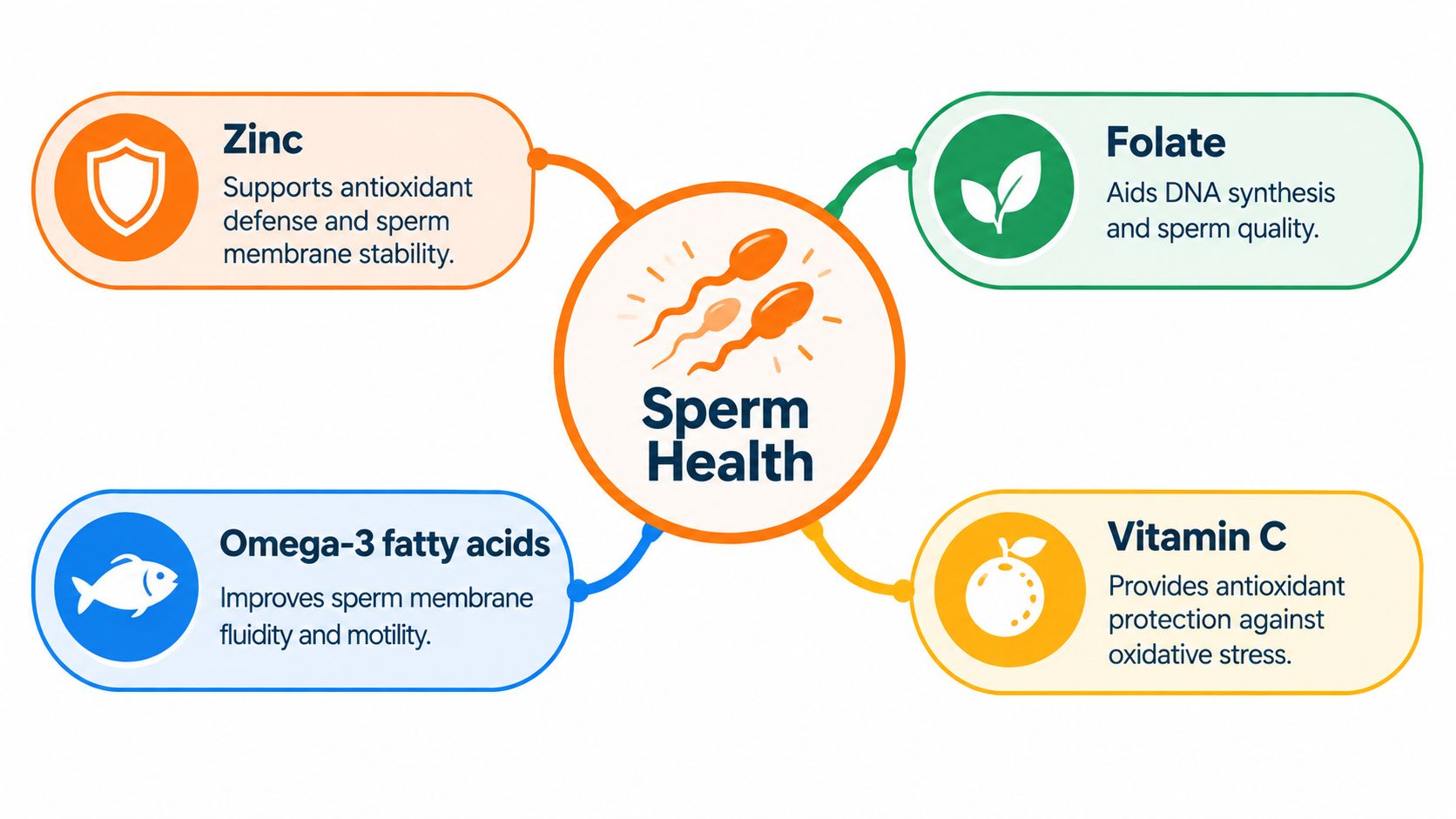
Sperm cells rely on nutrients to maintain their membranes, package genetic material, and manage oxidative stress. These roles help explain why researchers study certain nutrients, but a biological role alone does not show that supplements improve fertility.
Zinc has relevant evidence, with an important caveat
Zinc contributes to antioxidant defenses and is involved in sperm membrane stability, chromatin packaging, and maturation. A systematic review and meta-analysis of 20 studies, including 2,600 infertility cases and 867 controls, examined zinc status and semen quality. Supplementation was associated with higher semen volume, motility, and normal sperm morphology, with standardized mean differences of −0.99, −1.82, and −0.75. These negative values reflect higher measurements in the zinc group for all three parameters. (Zinc and semen-quality research)
The findings make adequate zinc intake relevant, but they do not establish that extra zinc benefits everyone. Oysters, pumpkin seeds, and lean meats are food sources; a supplement may be unnecessary when intake is already adequate. Read more about zinc and its relationship to fertility.
Other nutrients need careful interpretation
Folate and omega-3 fatty acids occur in foods such as leafy vegetables, legumes, fish, and some seeds. Including these foods can help meet nutritional needs, while claims about a single nutrient still need to be judged against evidence for that specific nutrient and outcome.
Research may measure sperm motility, concentration, or the ability to conceive. These are different endpoints, like checking separate parts of a process rather than measuring its final result. A change in a semen measurement does not by itself prove improved pregnancy or live-birth outcomes.
Dietary Patterns That Support Fertility
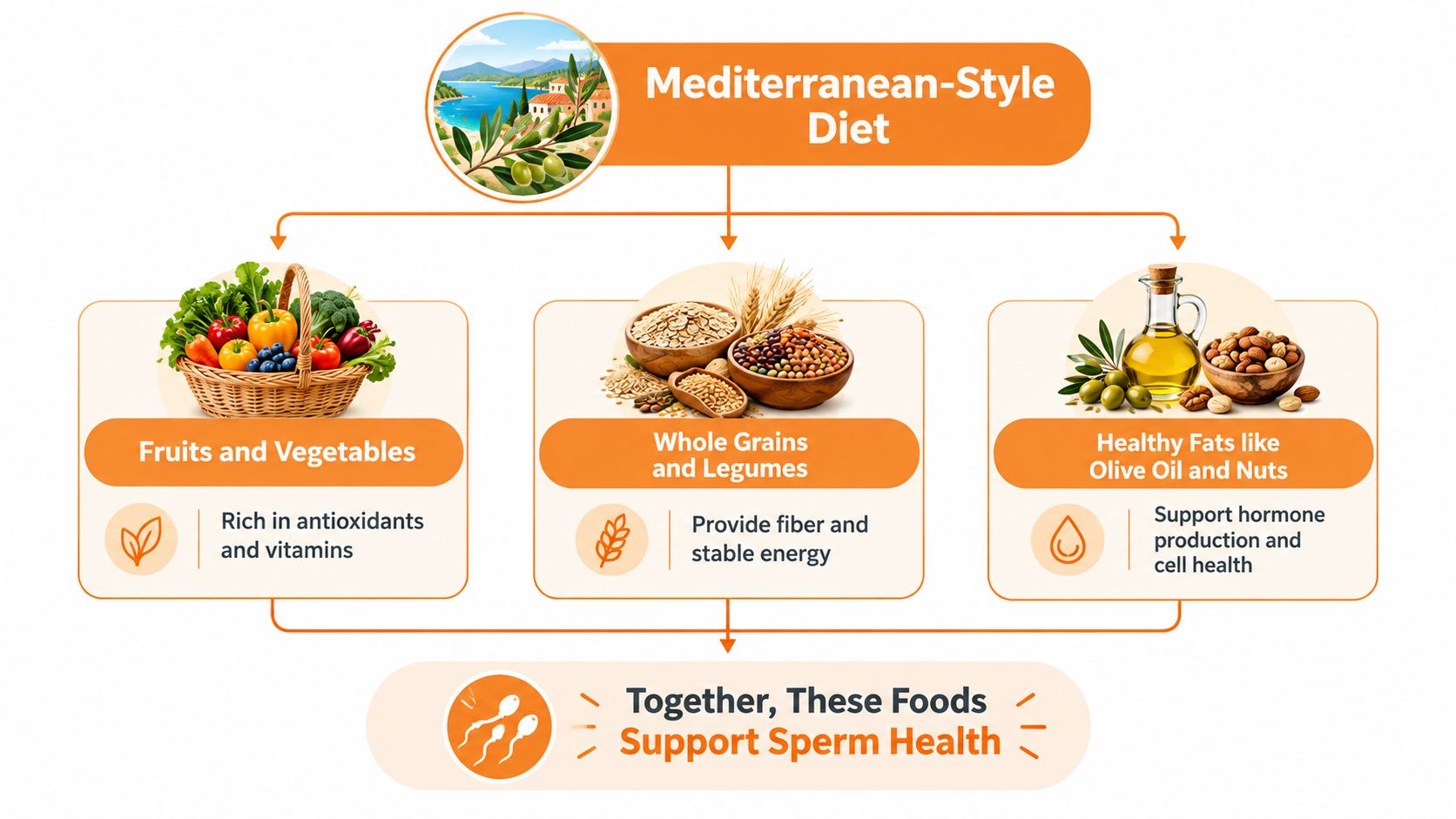
A meal pattern can be more useful than chasing one “fertility food.” A Mediterranean-style approach brings together vegetables, fruit, legumes, whole grains, nuts, olive oil, and fish or plant sources of omega-3 fats. It also generally limits saturated and trans fats. The value of this pattern is its mix of foods, not a promise that any meal will change an individual result.
What the dietary evidence shows
A meta-analysis of observational studies found that greater adherence to a Mediterranean-style diet was associated with higher total sperm motility, with a standardized mean difference of 0.59, and progressive motility, with a standardized mean difference of 0.53. It found no clear association with total sperm count or concentration. Since the evidence was observational, it shows an association, not proof that the diet caused the difference. (Mediterranean-style diets and semen parameters)
The pattern is biologically plausible because it combines unsaturated fats, fiber, folate, carotenoids, omega-3 fats, and antioxidant-rich plants, while generally reducing saturated and trans fats. Researchers have proposed that lowering oxidative stress could help protect sperm membranes and DNA, but current evidence doesn't establish this diet as a treatment for infertility.
Translate the pattern into ordinary meals
A plate might include roasted vegetables, whole grains, beans, and olive oil, with fish or another protein. Fruit, nuts, and legumes can also fit into simple snacks and meals. If you don't eat fish, plant omega-3 sources such as walnuts or flaxseed can be part of your diet.
For practical context on food choices and semen quality, explore this overview of how diet may affect sperm quality. Focus on repeatable choices rather than perfection: adding beans to a meal or choosing whole grains more often is more sustainable than an extreme eating plan.
What the Research Really Says About Supplements
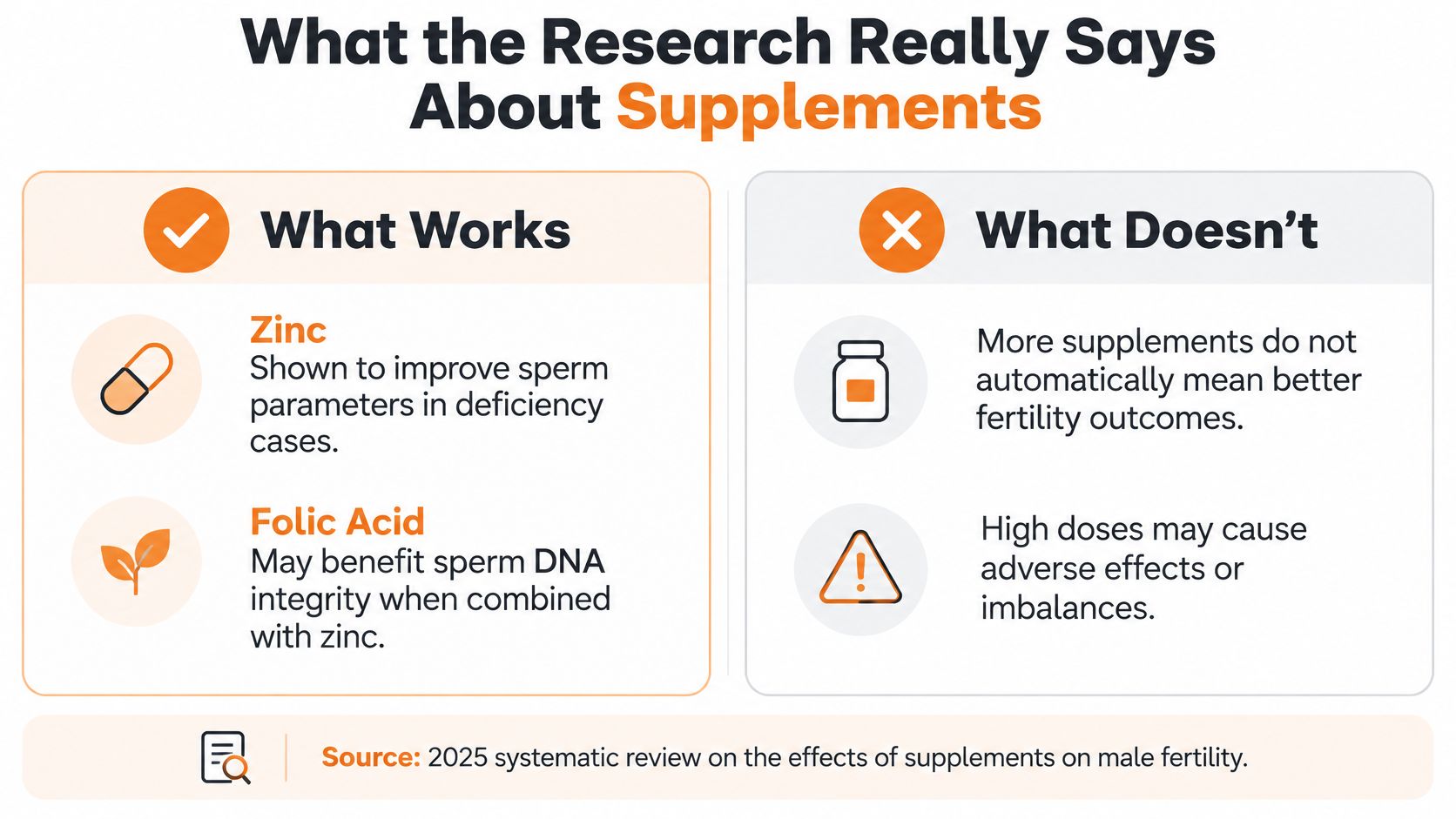
A longer ingredient list doesn't necessarily mean a better fertility outcome. Supplements are often discussed as though they all act on the same target, but studies examine different nutrients and different measurements. A change in a semen parameter may be worth studying, yet it doesn't establish that a supplement improves the outcomes couples care about most.
Separate laboratory measurements from real-world outcomes
A 2025 systematic review found that zinc and folic acid were associated with improvements in sperm concentration, while selenium, carnitine, and coenzyme Q10 were associated with improved motility. In the analyzed evidence, vitamin D, vitamin E, and omega-3 fatty acids didn't improve sperm parameters. The review found no substantial evidence that any supplement improved pregnancy or live-birth outcomes. (2025 review of dietary supplements and male infertility)
That doesn't mean the nutrients have no role in the body. It means the measured results don't support a broad promise that supplements improve a couple's chances of a successful pregnancy. It also means findings about one ingredient shouldn't be transferred automatically to a finished product or a different combination of ingredients.
A better question than “What should I stack?” is “Is there a dietary gap or deficiency worth addressing?”
Why more isn't automatically better
A product may contain several ingredients, but each one has its own evidence, safety considerations, and potential relevance to an individual. Adding more doesn't ensure a better result. If your diet is already adequate, extra supplementation may be unnecessary; if an underlying health issue is involved, a blend may not address it. For more background on weighing the evidence, read about whether male fertility supplements work.
Building a Fertility-Friendly Meal Plan
A practical meal plan doesn't need special products or complicated recipes. It can use familiar foods that supply a mix of nutrients, while making it easier to choose whole foods regularly. The following is a flexible example, not a prescribed fertility treatment.

An adaptable day of meals
- Breakfast: Oats topped with berries and pumpkin seeds, with plain yogurt if it suits your diet. The fruit and seeds add variety, while oats provide a whole-grain option.
- Lunch: A lentil or chickpea bowl with leafy greens, chopped vegetables, olive oil, and whole-grain bread. This combines legumes with vegetables and an unsaturated-fat source.
- Snack: A piece of fruit with walnuts, or vegetables with hummus. Choose the option that's convenient and satisfying.
- Dinner: Salmon with quinoa and a side salad, or a bean-based meal with similar vegetables and a plant source of omega-3 fats.
Oysters, pumpkin seeds, and lean meats are options for zinc-containing foods. Salmon, walnuts, and flaxseed can contribute omega-3 fats. Berries and a range of colorful vegetables add variety to meals, but no single food guarantees a change in sperm health.
Make easy swaps, not rigid rules
Replace processed meats with legumes, fish, or lean meat more often. Choose whole grains in place of refined carbohydrates when practical, and add vegetables to meals you already enjoy. If a suggested food doesn't fit your culture, budget, preferences, or dietary needs, use another whole-food option that serves a similar role.
The goal is a way of eating you can maintain. A simple meal you prepare regularly is more useful than an elaborate menu you abandon after a short time.
Lifestyle Factors That Work With Nutrition
Food doesn't operate in isolation. A 2025 review identified poor nutrition, sedentary behavior, obesity, stress, endocrine-disrupting chemicals, and increasing parental age as possible contributors to declining reproductive health. It also noted limited research on how diet and the testicular environment work together. (Review of nutrition and male reproductive health)
A healthy diet can't cancel every exposure
It would be reassuring if a nutrient-rich diet could erase the effects of smoking, excess alcohol, heat, or chemical exposure. Current evidence doesn't justify that promise. Nutrition can support normal biological processes, but it can't be assumed to neutralize other risks or resolve an underlying medical issue.
A balanced approach is to improve what you can without expecting one change to compensate for everything else. Consider these priorities:
- Build dietary adequacy: Emphasize varied whole foods, including vegetables, fruit, legumes, whole grains, nuts, and suitable protein sources.
- Move regularly: Make physical activity part of your routine and work toward a healthy weight in a sustainable way.
- Reduce avoidable risks: Avoid smoking, moderate alcohol, and limit avoidable heat and chemical exposure where practical.
- Seek assessment when needed: If conception is delayed, get qualified medical advice rather than relying on supplements alone.
If alcohol is one of the factors you're thinking about changing, this overview discusses alcohol's effects on sperm. The key is to view diet as one practical part of reproductive health, not as a shield against every other influence.
When Supplements Make Sense
Supplementation is most rational when it addresses a specific need, such as a documented deficiency, a regular gap in the diet, or another reason identified with a healthcare professional. Taking a high-dose product “just in case” can add risk without clarifying whether it is useful.
A simple decision check
- Review your usual diet. Notice whether you regularly eat a variety of nutrient-rich foods or rely on a narrow range of choices.
- Ask whether testing or clinical advice fits your situation. A healthcare professional can help determine whether checking for a deficiency is appropriate.
- Read the full label. Check the dose of each ingredient and count what you get from other supplements. If you take medication, ask a pharmacist or healthcare professional about possible interactions.
- Check the zinc dose. Clinical trials reviewed in one analysis used 66–500 mg/day. These amounts substantially exceed the adult U.S. tolerable upper intake level of 40 mg/day for elemental zinc, according to the NIH Office of Dietary Supplements zinc fact sheet. Trial doses are not recommendations for self-use. Long-term high-dose zinc can pose safety concerns, so discuss it with a healthcare professional.
A supplement label also needs careful reading. In the United States, structure/function claims describe how a product may affect a body organ or system, rather than claiming to treat a disease. Manufacturers must notify the FDA within 30 days of first marketing a product with such a claim, and the label must include a disclaimer. The NIH overview of dietary-supplement labeling explains these rules.
“Supports normal reproductive function” does not mean “treats infertility.” A supplement's wording is not evidence that it improves fertility outcomes. Choose based on a specific need, dose, and safety considerations, with professional guidance when those are unclear.
Putting It All Together
Male fertility nutrition starts with adequate, varied food, not a long supplement list. A Mediterranean-style pattern offers a practical template, while nutrient research can help identify questions to discuss with a healthcare professional. Sperm measurements are not the same as pregnancy or live-birth outcomes, and nutrition can't replace medical evaluation when conception is delayed.
Begin with meals you can sustain, address relevant lifestyle factors, and consider supplements only when they make sense for your situation. If you're concerned about fertility, seek qualified advice instead of relying on a product alone.
If you're exploring a supplement for men's wellness alongside your broader nutrition choices, SEMEX is a daily supplement formulated to support semen volume and improve taste. Visit SEMEX to review its ingredient information and decide whether it fits your needs.
These statements have not been evaluated by the Food and Drug Administration. This product is not intended to diagnose, treat, cure, or prevent any disease.