

L Arginine for Nitric Oxide: What the Science Actually Shows
“L-arginine boosts nitric oxide” sounds simple, but it leaves out the part that determines whether supplementation does anything noticeable. L-arginine is the raw material for nitric oxide production, yet the body still needs functioning nitric oxide synthase enzymes, adequate endothelial health, and favorable metabolic conditions to turn that material into a useful vascular signal.
That's why one person may notice better blood flow or exercise tolerance while another sees little change. The evidence supports L-arginine as a physiological precursor to nitric oxide, not as a guaranteed nitric oxide switch. The mechanism is well established, but actual response depends on dose, health status, baseline nitric oxide availability, and competing pathways.
Table of Contents
- Why L-Arginine Is Not the Universal NO Booster It's Marketed As
- How the L-Arginine to Nitric Oxide Pathway Actually Works
- What Human Studies Found About Blood Flow and Exercise
- Why the Evidence Gets Murkier in Healthy Users and Meta Analyses
- Dosage Ranges, Timing, and What Studies Actually Used
- Safety, Interactions, and Common Misconceptions
- Putting It Together and What to Do With This Information
Why L-Arginine Is Not the Universal NO Booster It's Marketed As
The marketing claim treats L-arginine like an empty tank: add more, and nitric oxide should rise. Human biology works more like a regulated production line. Having more substrate available doesn't guarantee more nitric oxide production because enzyme activity, endothelial function, metabolism, and endogenous inhibitors can limit the result.
The same dose can therefore produce different outcomes in different people. Someone with impaired endothelial function may have more room for improvement, while a healthy person may already be producing nitric oxide efficiently. A peer-reviewed review of L-arginine and nitric oxide biology describes measurable vascular effects in some human settings, alongside studies that found little or no benefit from oral supplementation.
Baseline conditions help explain that variation. Age, diet, blood pressure, smoking exposure, physical activity, and existing vascular health can influence the response. Dose matters too. A modest oral dose may not overcome a biological limitation, while a larger dose does not guarantee that the pathway will convert the extra arginine into more usable nitric oxide.
Sexual function adds another layer. Erectile difficulties can involve vascular health, nerve signaling, hormones, medication effects, and psychological factors. L-arginine may support one part of blood-flow regulation without addressing every factor affecting sexual function or exercise performance.
Practical rule: L-arginine should be evaluated as a conditional tool, not as an automatic NO booster.
The more useful question is whether a person has a bottleneck that additional L-arginine can relieve. That requires separating the biochemical mechanism from actual human outcomes and considering oral dosing, timing, safety, and baseline health.
The evidence supports a measured conclusion. L-arginine is not a useless ingredient, yet it is not a universal solution. Some vascular studies found clear changes in blood flow, while controlled research in healthy participants found no acute increase in nitric oxide production after oral dosing. These results fit a regulated system, where starting conditions and dose determine whether extra raw material changes the final signal.
How the L-Arginine to Nitric Oxide Pathway Actually Works
A useful analogy is a factory with a signaling system.
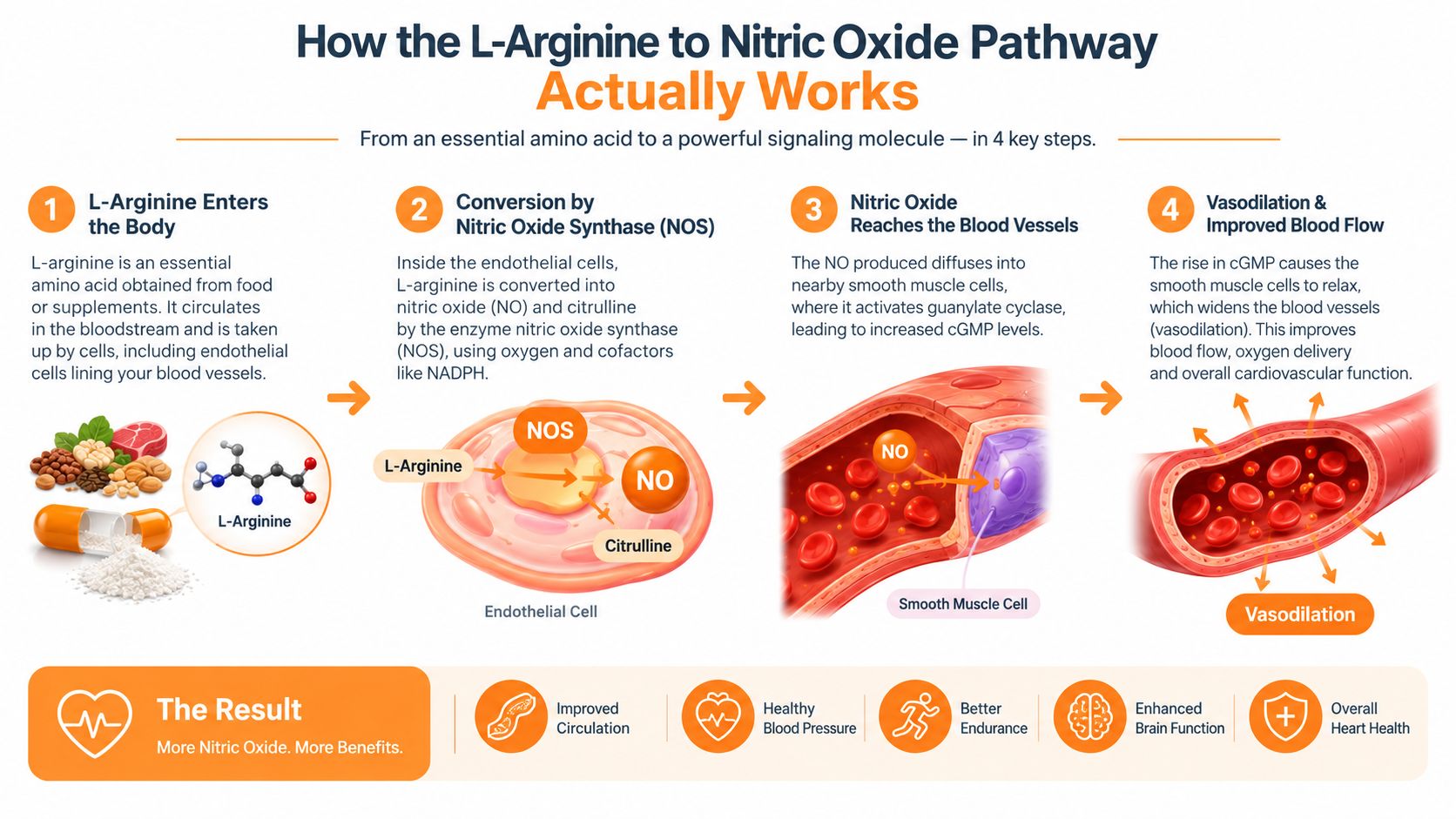
L-arginine is the raw material. Nitric oxide synthase, usually abbreviated NOS, is the assembly line. When the relevant NOS enzyme processes L-arginine, it produces nitric oxide and citrulline through an oxygen- and NADPH-dependent reaction, as described in this review of the nitric oxide synthase pathway.
Nitric oxide is not the final mechanical action. It's the short-lived signal released by the endothelial lining of blood vessels. That signal moves into nearby vascular smooth muscle and activates cyclic GMP, often written as cGMP. cGMP acts like the factory's delivery message, telling smooth muscle to relax. As the muscle relaxes, the vessel can widen and allow more blood to pass.
The three NOS enzymes
The body has three NOS isoforms:
- Endothelial NOS, or eNOS, operates in blood-vessel endothelium and is the main focus for vascular nitric oxide.
- Neuronal NOS, or nNOS, contributes to signaling in nervous tissue and other systems.
- Inducible NOS, or iNOS, can be expressed during immune and inflammatory responses.
For circulation, eNOS matters most because it connects endothelial health with the release of nitric oxide. Healthy endothelium can respond to physical forces, hormones, and chemical signals by producing the molecule when needed.
The pathway also has a brake. Asymmetric dimethylarginine, or ADMA, competes with L-arginine and can inhibit NOS activity. If ADMA is normal and the enzyme system already has adequate substrate, taking more L-arginine may produce little measurable change. A controlled study of healthy subjects found that 6 g of oral L-arginine did not acutely increase plasma NOx or overall nitric oxide production when ADMA levels were normal, according to this human study of L-arginine, ADMA, and nitric oxide production.
That explains why the phrase “more arginine equals more NO” is incomplete. The factory needs raw material, but it also needs an operational assembly line, manageable braking signals, and a downstream system capable of receiving the message. A detailed comparison of the ingredients and pathway appears in L-arginine versus nitric oxide, where the distinction between a precursor and the final signaling molecule is central.
What Human Studies Found About Blood Flow and Exercise
Human studies support a narrower conclusion than the usual supplement claim. L-arginine can affect vascular function, but the response depends on the route, dose, health of the vascular system, and whether nitric oxide production has room to increase.
In one human forearm study, intra-arterial L-arginine increased blood flow in a dose-dependent manner, from 4.7 ± 0.6 to 8.2 ± 0.9 ml·min−1·100 ml−1 at doses up to 60 mg/min. D-arginine did not produce a comparable response. This comparison matters because it links the effect to the biologically relevant amino-acid form rather than to arginine compounds in general. The findings are described in this intra-arterial study of L-arginine and forearm blood flow.
A separate Circulation study examined people with critical limb ischemia. Intravenous L-arginine increased femoral arterial blood flow by 42.3 ± 7.9%, compared with 31.0 ± 10.2% for prostaglandin E1 and 4.3 ± 13.0% with placebo. Those results show that L-arginine can produce a vascular response in a population with serious circulation problems. They do not establish the same outcome for a healthy person taking an oral supplement.
What exercise research adds
Exercise research suggests that nitric oxide may influence oxygen use as well as vessel diameter. In one human trial, acute 6 g L-arginine supplementation increased plasma NO-related markers, lowered systolic blood pressure, reduced the oxygen cost of moderate-intensity cycling, and improved tolerance during severe-intensity exercise. The likely interpretation is conditional: when exercise places demand on vascular regulation, greater nitric oxide availability may support blood flow and oxygen economy. The results are discussed in this exercise physiology study of L-arginine.
| Study Population | Daily Dose | Duration | Main Finding |
|---|---|---|---|
| Human forearm vascular study | Intra-arterial doses up to 60 mg/min | Acute | Forearm blood flow rose from 4.7 ± 0.6 to 8.2 ± 0.9 ml·min−1·100 ml−1 |
| Patients with critical limb ischemia | Intravenous L-arginine | Acute | Femoral arterial blood flow increased by 42.3 ± 7.9% |
| Healthy exercise participants | 6 g | Acute | NO-related markers rose, systolic blood pressure fell, and selected exercise measures improved |
The practical conclusion is measured. L-arginine has changed blood flow in human studies, and exercise-related benefits have also been observed. The clearest responses came from direct vascular delivery, clinical circulation problems, or exercise conditions that challenged the system. A broader discussion of the exercise findings appears in L-arginine benefits for exercise.
Why the Evidence Gets Murkier in Healthy Users and Meta Analyses
The strongest contradiction appears when studies move from vascular dysfunction to people whose endothelial systems already work well. In that setting, additional L-arginine may encounter a ceiling. NOS may already have enough usable substrate, baseline nitric oxide production may be adequate, and the body may rapidly metabolize the extra amino acid before it changes downstream markers.
A controlled study found that 6 g of oral L-arginine did not acutely increase nitric oxide production in healthy subjects. That result doesn't disprove the pathway. It shows that supplying more raw material doesn't always change factory output when the existing system isn't substrate-limited. The study is reported in this analysis of acute L-arginine supplementation and nitric oxide production.
The clinical context matters just as much. In severe peripheral arterial disease, a single intravenous infusion of 30 g over 30 minutes increased limb blood flow 2-fold and was accompanied by rises in urinary nitrogen oxides and plasma and urinary cGMP. Yet long-term oral L-arginine didn't increase nitric oxide synthesis or improve vascular reactivity in the same disease context. A Circulation study of acute and long-term L-arginine in peripheral arterial disease illustrates why route and duration can't be separated from the headline result.
Why reviews reach different conclusions
Several mechanisms can produce divergent findings:
- Baseline NO availability: Healthy participants may have less unused capacity.
- ADMA competition: Normal or raised ADMA can influence how much L-arginine reaches active NOS.
- First-pass metabolism: Oral L-arginine passes through the gut and liver before reaching systemic circulation.
- Measurement choice: Blood nitrate, cGMP, flow, and exercise tolerance don't measure exactly the same biological event.
- Population differences: Endothelial dysfunction may create more opportunity for a measurable response.
A 2018 systematic review found no difference in post-ischemic blood flow versus placebo, with a standardized mean difference of 0.30 and a wide 95% confidence interval from −0.85 to 1.46, as reported in the systematic review of randomized controlled trials.
| Meta-Analysis or Review | Population | Dose Range | Main Outcome | Result |
|---|---|---|---|---|
| 2018 systematic review | Randomized, double-blind, placebo-controlled trials | Varied | Post-ischemic blood flow | No difference versus placebo |
| Review of cardiovascular and metabolic disorders | Patients with cardiovascular or metabolic disorders | Varied | Nitric oxide metabolites and endothelial markers | No significant overall improvement |
| Controlled healthy-subject research | Healthy participants with normal ADMA | 6 g acute oral dose | Plasma NOx and overall NO production | No acute increase |
The apparent contradiction is therefore informative. L-arginine is a real NOS substrate, but its effect is not independent of the system receiving it.
Dosage Ranges, Timing, and What Studies Actually Used
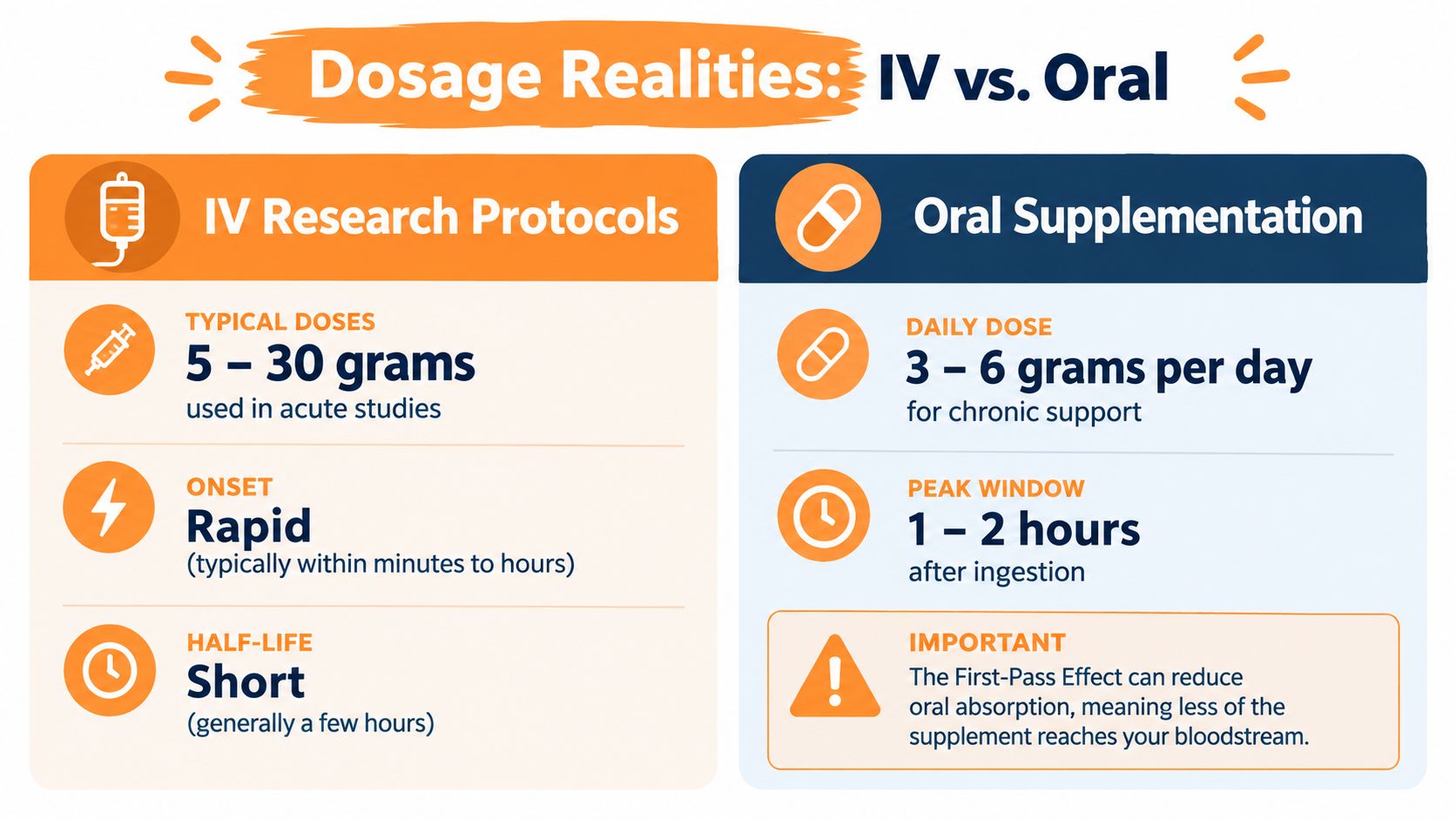
Dose discussions often combine very different protocols. Intravenous research delivers L-arginine directly into circulation, while oral supplementation must pass through digestion and first-pass metabolism. A large acute infusion shouldn't be treated as a normal daily capsule recommendation.
Oral studies commonly examine 3 to 6 g per day, while some endothelial dysfunction protocols use 6 to 9 g in divided doses. Acute intravenous research has used much larger amounts, including 30 g over 30 minutes in a peripheral arterial disease study. That protocol produced a short-term rise in limb blood flow, but it doesn't establish that a similar oral dose is suitable for unsupervised use.
Timing and split dosing
Fasting use may reduce competition with a protein-heavy meal, but gastrointestinal tolerance can be worse for some people. Pre-workout use is often placed within a 30 to 60 minute window, although the best timing depends on the study design, the formulation, and the individual response.
Chronic vascular outcomes are more relevant to continuous use than to a single serving. Research protocols have examined daily supplementation over periods ranging from 2 to 12 weeks, while acute exercise trials test a single dose. These designs answer different questions. An acute protocol asks whether a temporary change appears during a defined task. A longer protocol asks whether repeated exposure changes a vascular measure over time.
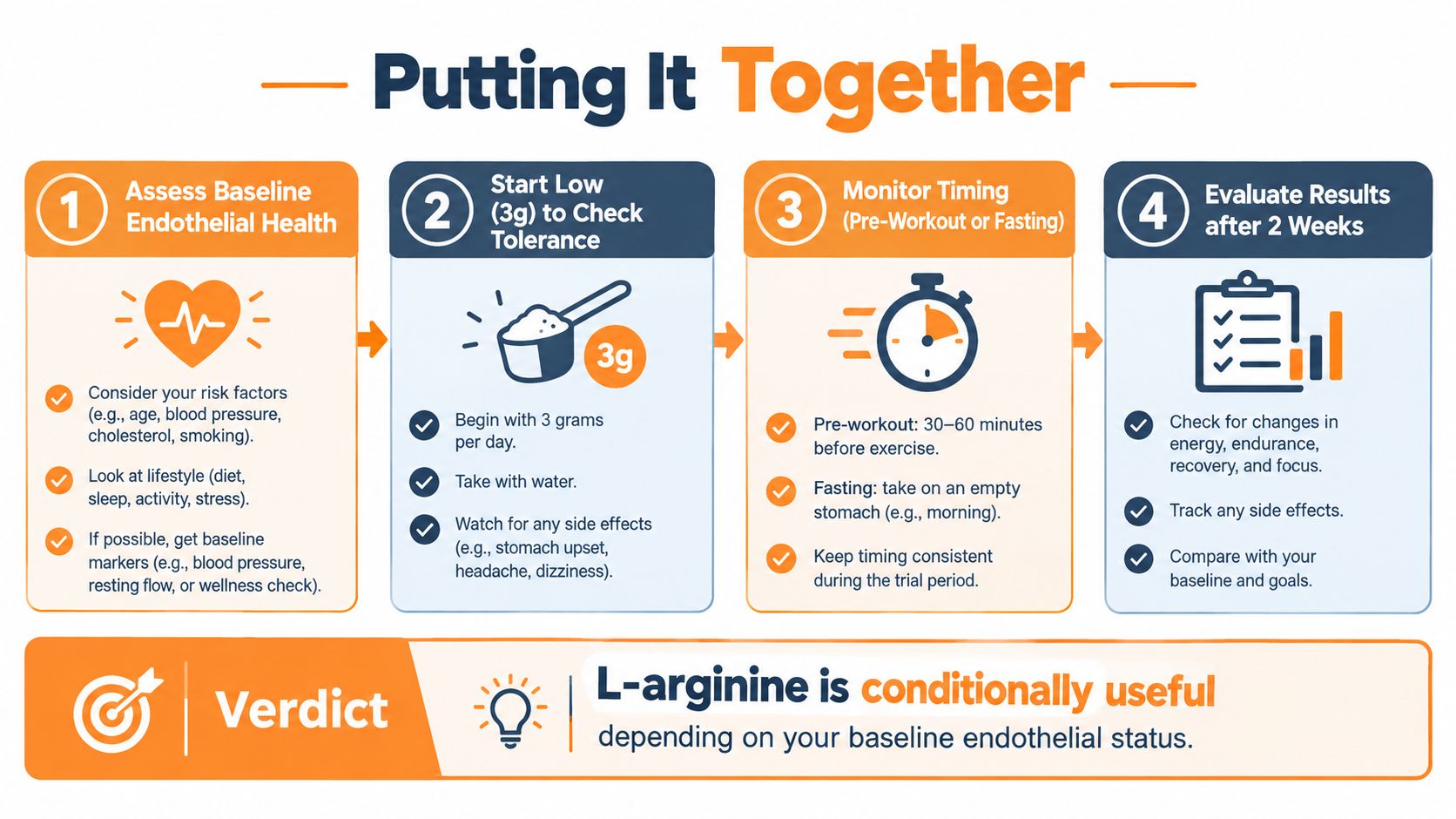
A practical approach is to begin conservatively, divide the daily amount if needed, and assess tolerance before increasing intake. The recommended L-arginine dosage discussion should be read alongside medication status and health history, not as a substitute for individualized medical advice.
Pairing L-arginine with L-citrulline, pycnogenol, or exercise is sometimes proposed to improve conversion or vascular signaling. Combination trials have shown mixed additive effects, so stacking several nitric oxide products can make it harder to identify which ingredient helps, which causes side effects, or whether any change is meaningful.
Safety, Interactions, and Common Misconceptions
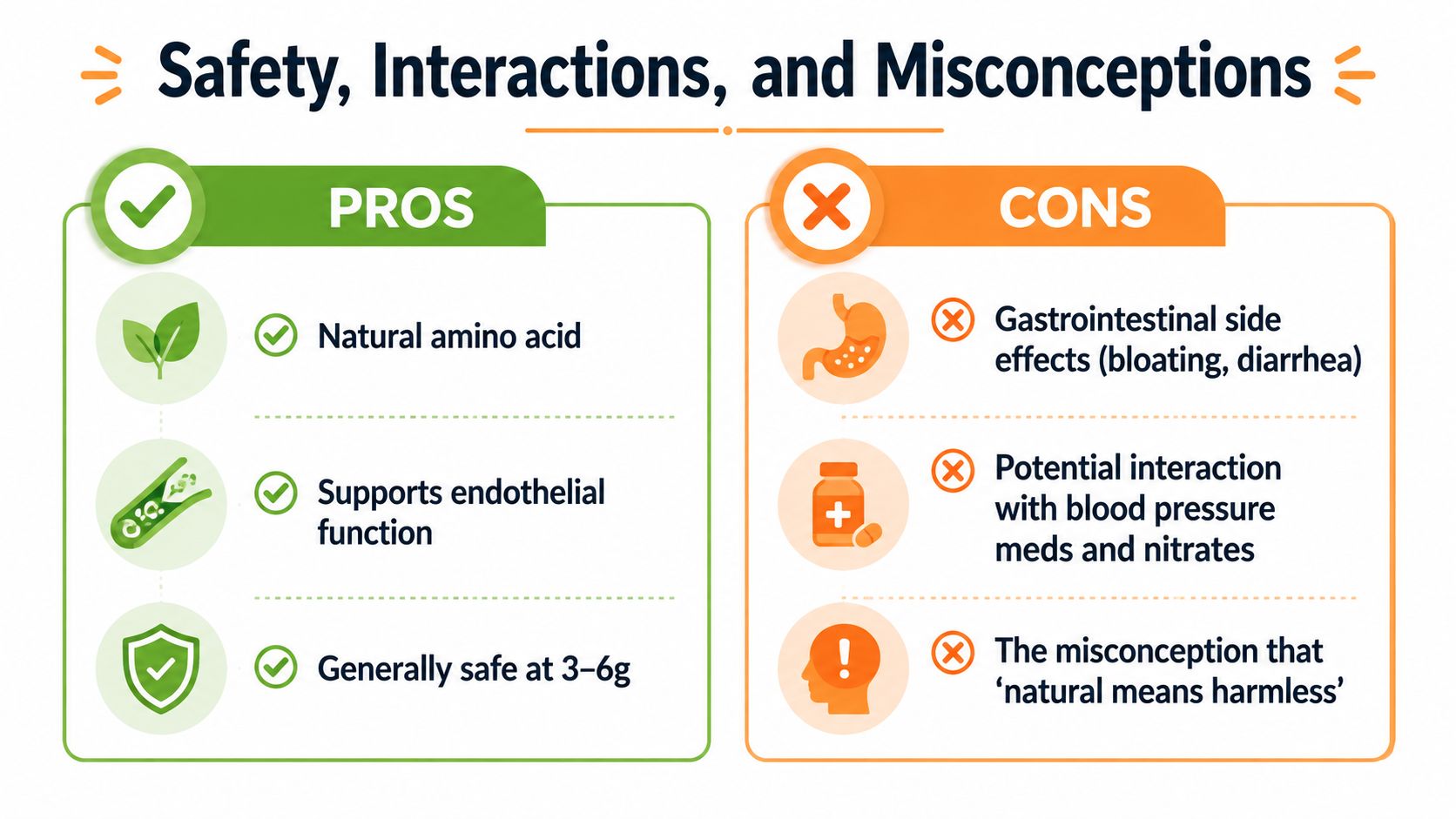
“Natural” doesn't mean risk-free. L-arginine is an amino acid used by normal physiology, but concentrated supplementation can change vascular tone and gastrointestinal function, especially when combined with other agents that affect blood pressure.
Common tolerability complaints include bloating, diarrhea, nausea, stomach pain, headache, heartburn, and palpitations. Independent reviews also warn that doses above 9 g per day may increase the likelihood of gastrointestinal distress, as described in this review of L-arginine safety and interactions.
The risk profile deserves particular attention after myocardial infarction. A 2011 meta-analysis by Schulman and colleagues reported higher mortality in post-myocardial infarction patients receiving oral arginine. That finding doesn't mean every healthy adult faces the same risk, but it does mean people with significant cardiovascular histories shouldn't treat L-arginine as a casual self-experiment.
Medication combinations need caution
L-arginine may add to the blood-pressure-lowering effects of sildenafil, tadalafil, nitrates, and antihypertensive medicines. People using blood thinners or managing cardiovascular disease should also ask a clinician or pharmacist before supplementing. A sudden pressure drop can present as dizziness, weakness, faintness, or a racing heartbeat.
More isn't automatically better. Higher substrate availability can encounter saturation, arginase competition, or less favorable oxidative conditions rather than producing proportionally more nitric oxide. The body regulates the pathway, and excess input doesn't guarantee stronger output.
L-arginine also isn't identical to AAKG, or arginine alpha-ketoglutarate. These products contain different chemical forms and shouldn't be assumed to have interchangeable evidence. L-citrulline follows a different route through arginine metabolism and may produce more sustained arginine availability in some contexts, but that comparison requires product-specific evidence rather than label-based assumptions.
Putting It Together and What to Do With This Information
L-arginine makes the most sense as one input into a broader nitric oxide strategy. It may be more noticeable for older adults or people with raised blood pressure and early endothelial dysfunction, while young, healthy athletes with already adequate arginine and nitric oxide production may see little change.
A practical decision process starts with the baseline. Persistent erectile difficulties, unusual exercise intolerance, or blood-pressure concerns deserve medical evaluation rather than supplement escalation. Symptoms can have cardiovascular, hormonal, medication-related, psychological, or lifestyle contributors, and L-arginine addresses only one biochemical route.
A grounded checklist
- Assess the context first. Existing cardiovascular disease, post-myocardial infarction status, blood-pressure medication, nitrates, PDE5 inhibitors, and blood thinners all change the safety conversation.
- Start with food and foundations. Nuts and poultry provide dietary arginine, while regular exercise, adequate sleep, and reduced smoking exposure support vascular health through broader mechanisms.
- Use a studied oral range cautiously. If a qualified professional considers supplementation reasonable, oral protocols commonly fall within 3 to 6 g daily. Starting lower can help reveal tolerance.
- Separate variables. Adding L-arginine, L-citrulline, dietary nitrates, and several pre-workout ingredients at once makes the response difficult to interpret.
- Track meaningful outcomes. Blood pressure, exercise tolerance, and side effects are more useful than assuming a subjective “pump” proves higher nitric oxide production.
For men comparing broader wellness formulas, SEMEX is a daily supplement whose listed formula includes L-arginine alongside zinc, sunflower lecithin, bromelain, maca root, Panax ginseng, ashwagandha, tongkat ali, saw palmetto, and horny goat weed. That product description doesn't establish that the formula changes nitric oxide, blood flow, or any medical outcome, so ingredient research should remain separate from product-level conclusions.
The honest verdict is conditional. Vascular and exercise benefits are real in specific research settings, modest or inconsistent in others, and often absent when upstream endothelial biology is already functioning well. L-arginine can support a broader plan that includes exercise, dietary nitrates, cardiovascular risk management, and careful medication review, but it shouldn't replace those foundations or be presented as a guaranteed male-performance solution.
SEMEX offers a daily men's wellness supplement that includes L-arginine among its listed ingredients. Men evaluating nitric oxide support can visit SEMEX to review the product information and consider whether it fits their broader supplement routine.
These statements have not been evaluated by the Food and Drug Administration. This product is not intended to diagnose, treat, cure, or prevent any disease.