

Is Anal Fisting Safe: A Clear Harm-Reduction Guide
You might be in the middle of a conversation, or already looking at gloves and lube and wondering if you're being careful enough. The honest answer is that anal fisting is not risk-free, and “safe” here never means zero harm, it means reducing risk layer by layer, with consent, lubrication, clean hands, patience, and a realistic plan for what to do if something hurts or bleeds. If you're just starting to think through the basics of body confidence and intimacy, a gentle primer like this first-time sex guide can help frame the mindset of slowing down and checking in before anything physical happens.
Table of Contents
- A Realistic Picture of Risk Before You Begin
- Why the Rectum Reacts Differently Than You Expect
- Consent, Communication, and Clean Hands
- Lubricant Choices and Why Douching Can Backfire
- Technique That Actually Reduces Injury
- HIV, Other STIs, and Bacterial Transfer
- Normal Soreness or an Emergency? A Triage Guide
- Aftercare, Follow-Up Testing, and Bringing It All Together
A Realistic Picture of Risk Before You Begin
A couple can do everything “right” and still feel unsure halfway through. That's because fisting asks the body to accept a level of stretching that many have never learned to talk about clearly, and the risk isn't just discomfort, it's injury if the tissue is pushed past what it can handle.
Safer in this context means layered protection, not a promise. It means the person giving and the person receiving both understand that ongoing consent, slow progression, abundant compatible lubricant, and clean technique matter as much as enthusiasm.
Practical rule: if the plan depends on ignoring pain, it's not a safe plan.
That mindset helps in solo play too. A hand, glove, and lubricant can still create abrasion or bleeding if the pace is too fast or the nails are rough, and the same basic principles apply whether you're with a partner or using toys. The goal is not to prove endurance, it's to keep the tissue intact enough that the experience stays within a harm-reduction frame.
When people ask, “Is anal fisting safe?”, what they usually want is a yes-or-no answer. The more accurate answer is that it can be approached more safely when the body is respected, but the practice still carries a real chance of irritation, tearing, and infection exposure if the lining is damaged.
Why the Rectum Reacts Differently Than You Expect
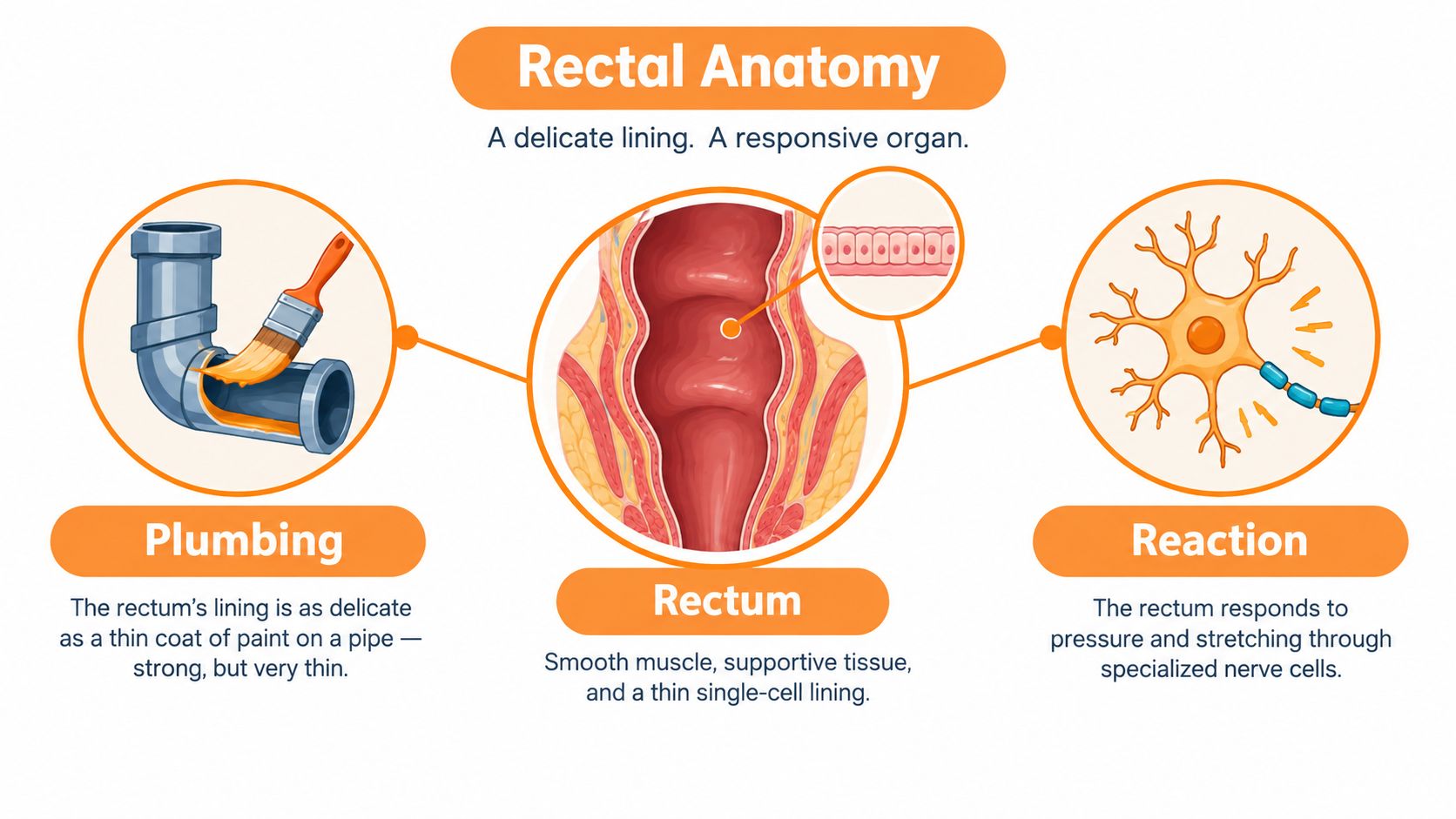
Think of the rectum less like a stretchy glove and more like a thin-painted pipe. The lining is delicate, the surface doesn't produce its own lubrication, and pressure has to be invited rather than forced. That's why people can feel “full” without feeling harmed, but they can also feel a warning pinch that means the tissue is not ready.
What actually changes inside
The rectum and anal canal aren't built to glide the way the vagina is. They don't self-lubricate, so friction rises fast if there isn't enough lube, and friction is where scratches, abrasions, and fissures start. A sharp fingernail, a ring, or a hurried push can turn a manageable stretch into bleeding or a deeper tear.
The body's response matters too. The internal sphincter is a muscle, not a door you can force open, and muscles tend to resist when they feel rushed. That resistance is useful information, because it tells you to pause, breathe, add lube, change angle, or stop.
A serious injury is still uncommon, but it's the event people need to know how to recognize. When tissue opens up, it can let infections in more easily, and that's why blood and mucosal injury matter so much in sexual health conversations.
The body's warning system
Sharp pain is not a challenge to push through, it's a stop signal.
That's the core misunderstanding many people bring into anal play. They assume discomfort is the same as progress, when in fact increasing pain often means the lining is getting damaged. Gentle progression isn't a mood, it's the mechanic that keeps the anatomy from being overpowered.
Consent, Communication, and Clean Hands
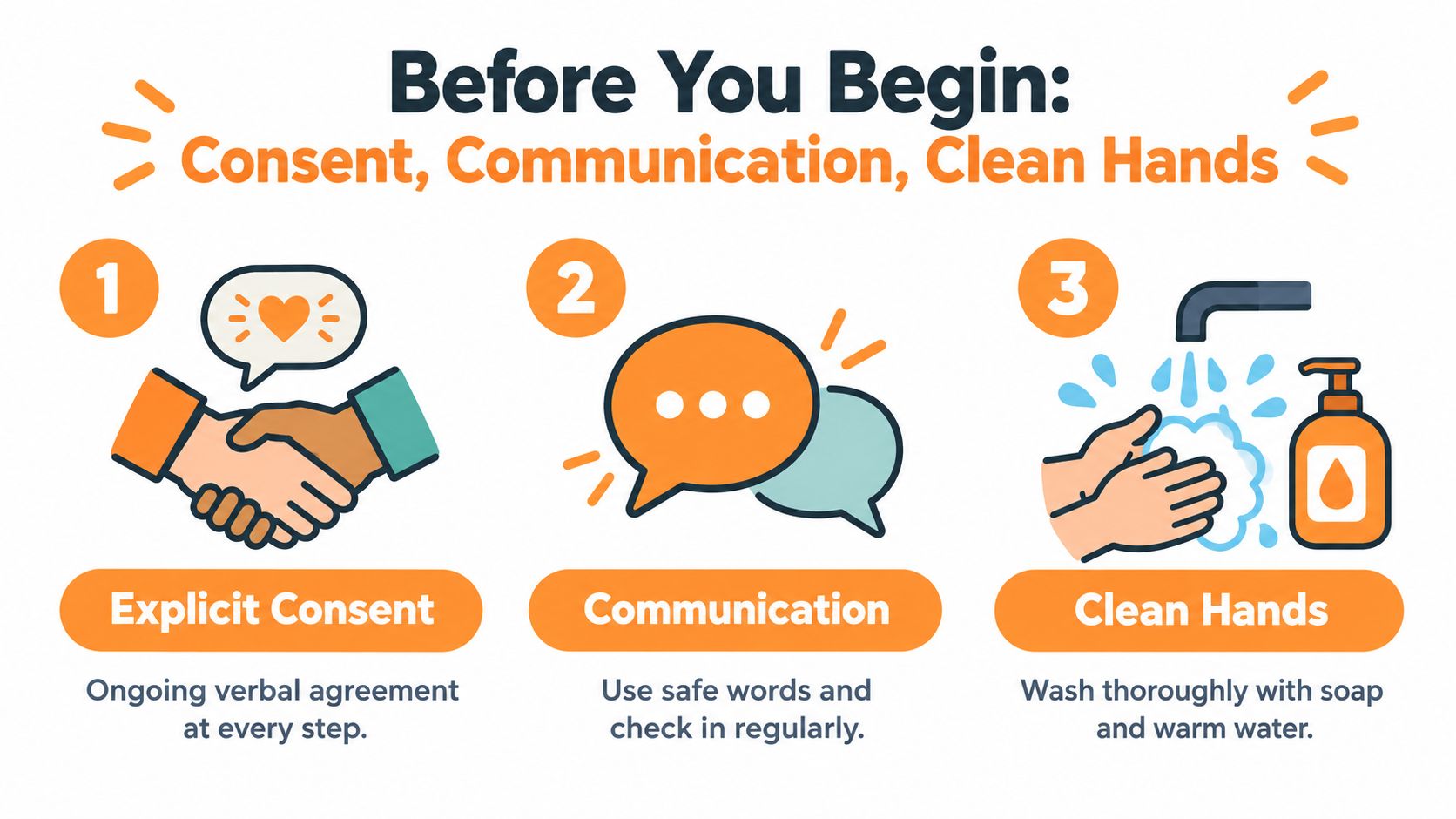
The safest sessions start before anyone touches skin. Consent needs to be explicit and ongoing, because a yes at the beginning doesn't cover every new level of intensity, position, or depth later on. A simple traffic-light system works well in practice, with a clear word for stop, a signal for slow down, and a shared understanding that either person can pause the scene without debate.
The prep routine that protects both people
Hands and forearms should be washed thoroughly with soap and warm water, nails should be trimmed smooth, and any hangnails or chips should be dealt with before the scene starts. Rings and bracelets should come off too, because a tiny edge can become a scratch in a second. Disposable nitrile or latex gloves make sense for hand penetration because they smooth the surface and reduce blood and fluid contact when properly lubricated.
If you're thinking about crossing from one body site to another, fresh barriers matter. A glove used for anal contact shouldn't be used again for vaginal contact, and hands should be washed between partners if barriers are changed. The same logic applies when someone has cuts, sores, hemorrhoidal bleeding, active inflammation, or has recently had rectal surgery, because those are not “push through it” situations.
If you want a plain hygiene reminder that fits into the broader bedroom routine, this showering guide can sit alongside the same pre-scene habits of washing, checking skin, and staying attentive.
One small rule that prevents a lot of trouble
If a hand, glove, or finger has a cut, a rough nail edge, or visible soil on it, fix it or replace it before continuing.
That single habit protects both partners. It lowers the chance of scratches, reduces bacterial transfer, and makes the whole encounter less dependent on luck.
Lubricant Choices and Why Douching Can Backfire
The biggest controllable variable in anal fisting is still lubrication. Water-based and silicone-based lubricants are the practical choices with latex gloves, while oil-based products can weaken latex and raise breakage risk. That includes household products people sometimes reach for without thinking, like petroleum jelly, massage oils, body lotions, and cooking oils.
| Lubricant type | Safe with latex gloves | Glide duration | Best use case |
|---|---|---|---|
| Water-based | Yes | Shorter, may need reapplication | Easy cleanup, frequent top-ups |
| Silicone-based | Yes | Longer-lasting | Longer sessions, less frequent reapplication |
| Oil-based | No with latex | Can feel slick, but compromises latex | Avoid with latex gloves or latex barriers |
Gloves can fail in subtle ways, so don't wait for a dramatic tear. A change in texture, a draggy feel, or any visible damage means it's time to stop and switch.
Why cleaning harder isn't always safer
Aggressive douching can make things worse. Standard water or saline cleansing can strip the anal canal's surface layer, disrupt the local microbiome, and create tiny wounds that raise injury and infection risk. Another common mistake is using enough water to chase a feeling of "clean" without realizing the tissue may be getting drier and more fragile in the process.
That doesn't mean nobody should ever cleanse. It means cleansing should stay gentle, limited, and focused on comfort rather than force. If someone chooses to douche, they should avoid overdoing it, avoid harsh products, and avoid continuing if cleansing causes irritation, pain, or bleeding.
The useful rule is simple. Clean enough to reduce anxiety, not so aggressively that the lining gets stripped and the session starts with irritated tissue.
Technique That Actually Reduces Injury

Technique matters because the body gives clearer feedback when it is not being rushed. Relaxed positioning, steady breathing, and a slower build from one lubricated finger upward all help tissue adjust without force. For a sense of how finger-level play builds up, see this guide to finger play. The goal is not to push through a moment, it is to notice whether the body is opening willingly.
What careful progression looks like
Start with the smallest comfortable step and wait for relaxation cues before adding anything else. If the muscles tighten, the breath catches, or the receiving person sounds strained, pause rather than intensify. Pushing harder usually adds strain instead of teaching the tissue to accept the movement.
A good session often looks boring from the outside. The giver pauses, adds more lube, changes angle, then waits again. That pace is a feature, not a flaw.
What to avoid
Numbing creams are a bad idea for this kind of play because they hide the warning signs that tell you to slow down or stop. If pain disappears but the tissue is still being damaged, the body loses its built-in alarm system.
If you use SEMEX as part of your broader wellness routine, remember that no supplement replaces physical safety here, body awareness, communication, and stopping at pain are what reduce injury.
HIV, Other STIs, and Bacterial Transfer
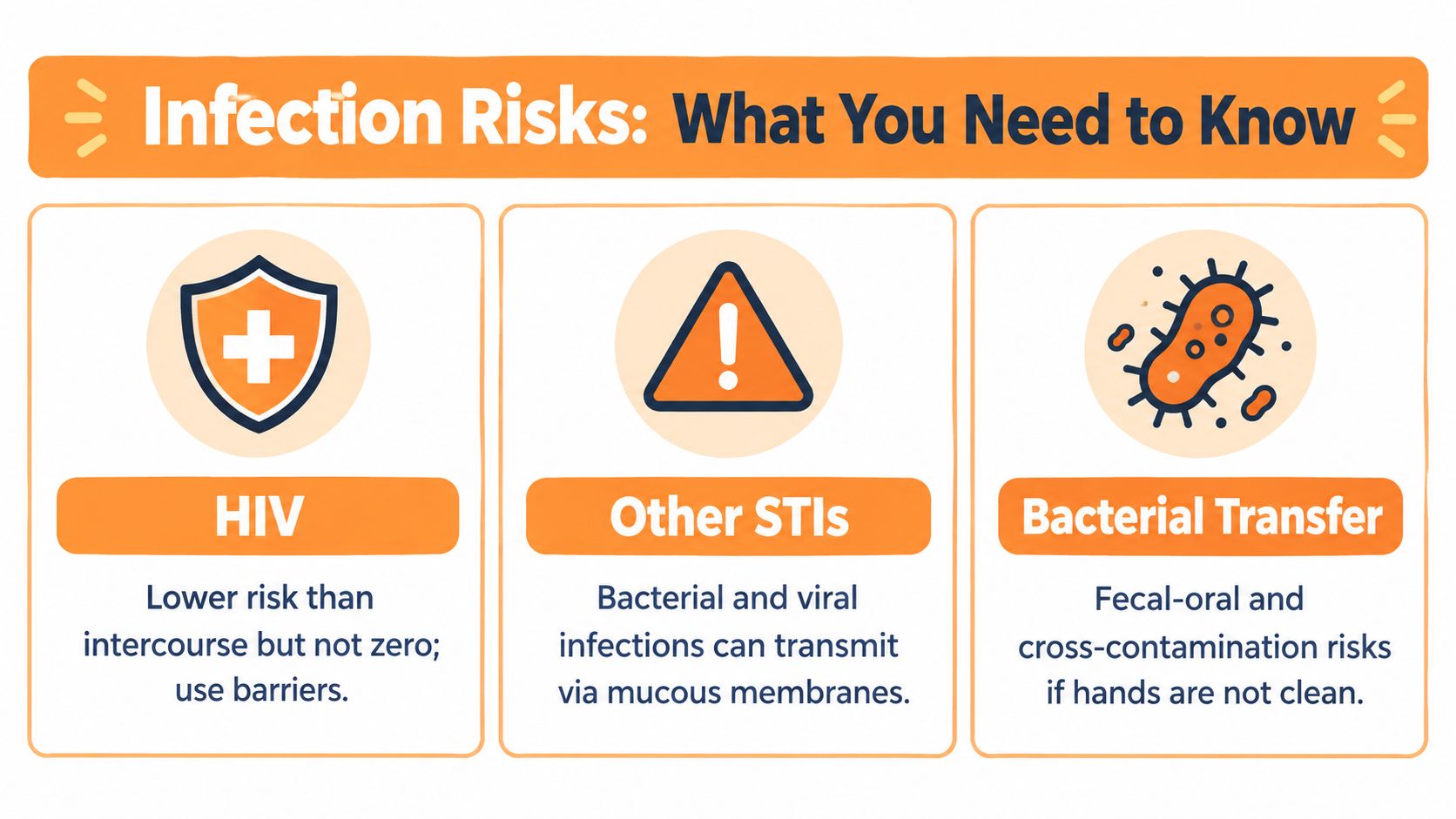
Anal fisting is not the same exposure as anal intercourse, but the overlap in tissue injury means infection risk still deserves attention. CDC data on condomless receptive anal intercourse puts the per-act HIV transmission probability at about 138 per 10,000 exposures, or 1.38%, when HIV is present and no condom, PrEP, or effective treatment is protecting against transmission. That figure does not mean fisting has the same risk, because fisting was not the exposure studied, but it does show why bleeding and tissue damage matter so much. CDC HIV risk data
What barriers can and can't do
Gloves and finger cots reduce direct contact with blood and pathogens. They do not prevent every injury. They also need to be changed between partners and between anal and vaginal contact, so bacteria are not carried from one site to another. A safer routine works best when barriers, lubricant, and cleanup all work together.
CDC prevention guidance also places anal-sex safety inside a broader STI picture, including screening for rectal chlamydia and gonorrhea for people at risk, condom use, lubricant, and conversations about HIV pre-exposure prophylaxis with a clinician when appropriate. In analyses of men who have sex with men in mixed-status couples, consistent condom use has been estimated to reduce HIV acquisition risk by about 70% to 91%. CDC prevention guidance
Why bacteria still matter
Bacterial transfer is the other layer people miss. The rectum is not designed to stay as sealed off as skin, so small tears and irritated tissue can give fecal bacteria an easier path in. Hands that move between body sites can spread germs too, especially if they are not cleaned or covered with a fresh barrier.
Aggressive douching can add to that problem by washing away protective bacteria and irritating tissue that was already stressed. If you want a related look at fluid exposure during anal sex, see this explainer on ejaculation in the anus. For the underlying transmission data behind these barrier habits, this CDC-aligned page on HIV transmission is worth reading in full.
Normal Soreness or an Emergency? A Triage Guide
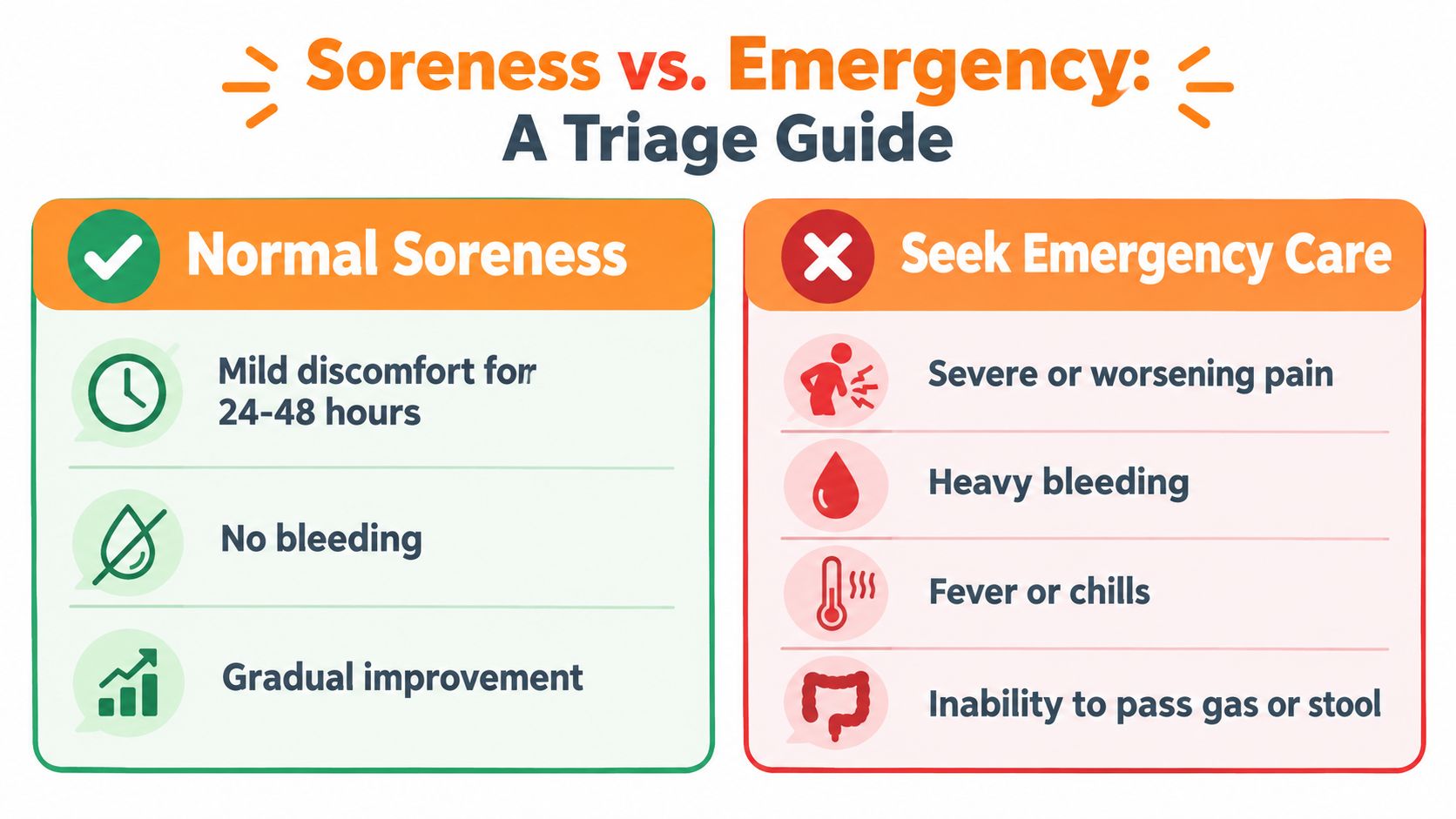
Mild soreness after anal fisting can happen, and tenderness that fades without getting worse is usually the pattern people mean when they say something feels “a little sore.” But pain that sharpens, spreads, or keeps building is different. Cleveland Clinic guidance treats persistent pain beyond roughly 30 minutes, heavy bleeding, bleeding that continues an hour or more, fever, abdominal pain or swelling, dizziness, numbness, or sudden loss of bowel control as signs that need urgent medical evaluation. Cleveland Clinic triage guidance
A simple decision rule
If the pain is mild and steadily improving, monitor it. If the pain is sharp, shooting, or getting worse, stop and get medical help. If the bleeding is heavy, if you feel faint, or if you can't move normally, treat it as an emergency.
Heavy bleeding with faintness is not a “wait and see” moment.
That's the clearest line in the sand. A person can talk themselves into normalizing soreness, but faintness plus bleeding can point to a much more serious injury than a simple abrasion.
What not to do
Don't try to mask symptoms with more douching, creams, or self-treatment that hides what the body is telling you. Don't continue sexual activity because the scene has already started. Don't assume a bad sensation will “work itself out” if it's getting more intense.
The useful skill here is triage, not bravery. Knowing when to stop protects long-term rectal function and makes it more likely that a small problem stays small.
Aftercare, Follow-Up Testing, and Bringing It All Together
Aftercare should stay calm and practical. Clean gently, then watch for delayed bleeding, increasing pain, fever, unusual discharge, or bowel changes. If any of those show up later, treat them as a reason to get checked rather than as ordinary recovery.
Screening belongs in the same prevention mindset. People who include anal play in their sex lives can ask a clinician about rectal chlamydia and gonorrhea screening, HIV testing, and hepatitis vaccination based on their sexual practices and local guidance. The goal is not to turn every session into a medical event. It is to keep sexual health planning aligned with how the body was used.
A simple checklist keeps the full picture in view: consent, trimmed nails, gloves, water- or silicone-based lubricant, gradual progression, stop at pain, and know the red flags. If you are also thinking about broader semen-volume and taste support, SEMEX covers that separately, but it does not replace the safety habits in this checklist.
Sometimes the safest next step is rest. Sometimes it is testing. Either way, the triage mindset stays the same, notice what is normal, and treat anything sharp, worsening, or out of pattern with care.