

Ingredients in Semenax: A Practical Reference Guide
The most popular advice about ingredients in Semenax is to count how many appear on the label. That shortcut misses the questions that matter more: How much of each ingredient is present, which form is used, and does human research support the claimed outcome? A long formula can describe many possibilities without demonstrating what the finished product does.
A careful reader separates visible ejaculate volume from sperm health, sexual wellness, and fertility. Those outcomes overlap in conversation, but they aren't interchangeable in research. The label is best treated as a map of ingredient roles, doses, and quality controls, not as a results sheet.
Table of Contents
- How to Read an Ingredients List Like a Supplement Researcher
- The Two Functional Categories Inside the Semenax Formula
- Volume and Taste Focused Ingredients and Their Research
- Men's Wellness Blend Botanicals and Their Research
- How the Ingredient Pathways Connect Without Overpromising
- Why Listed Does Not Always Mean Effective at the Dose
- Safety, Interactions, and Third Party Testing to Look For
- Semen Volume Versus Sperm Health Versus Fertility
- Quick Reference Table and Label Reading Checklist
- Frequently Asked Questions About the Ingredients
How to Read an Ingredients List Like a Supplement Researcher
An ingredient panel doesn't guarantee an outcome. It identifies what a product contains, or what the manufacturer declares, and gives readers a starting point for evaluating dose, form, and evidence.
The first step is finding the serving size. Three capsules taken together create a different daily exposure from one capsule, even when the ingredient list looks identical. Ingredients are generally listed from highest to lowest amount by weight, so an ingredient near the top usually contributes more to the formula than one near the bottom. That order doesn't prove effectiveness, but it helps show where the formula places its material emphasis.
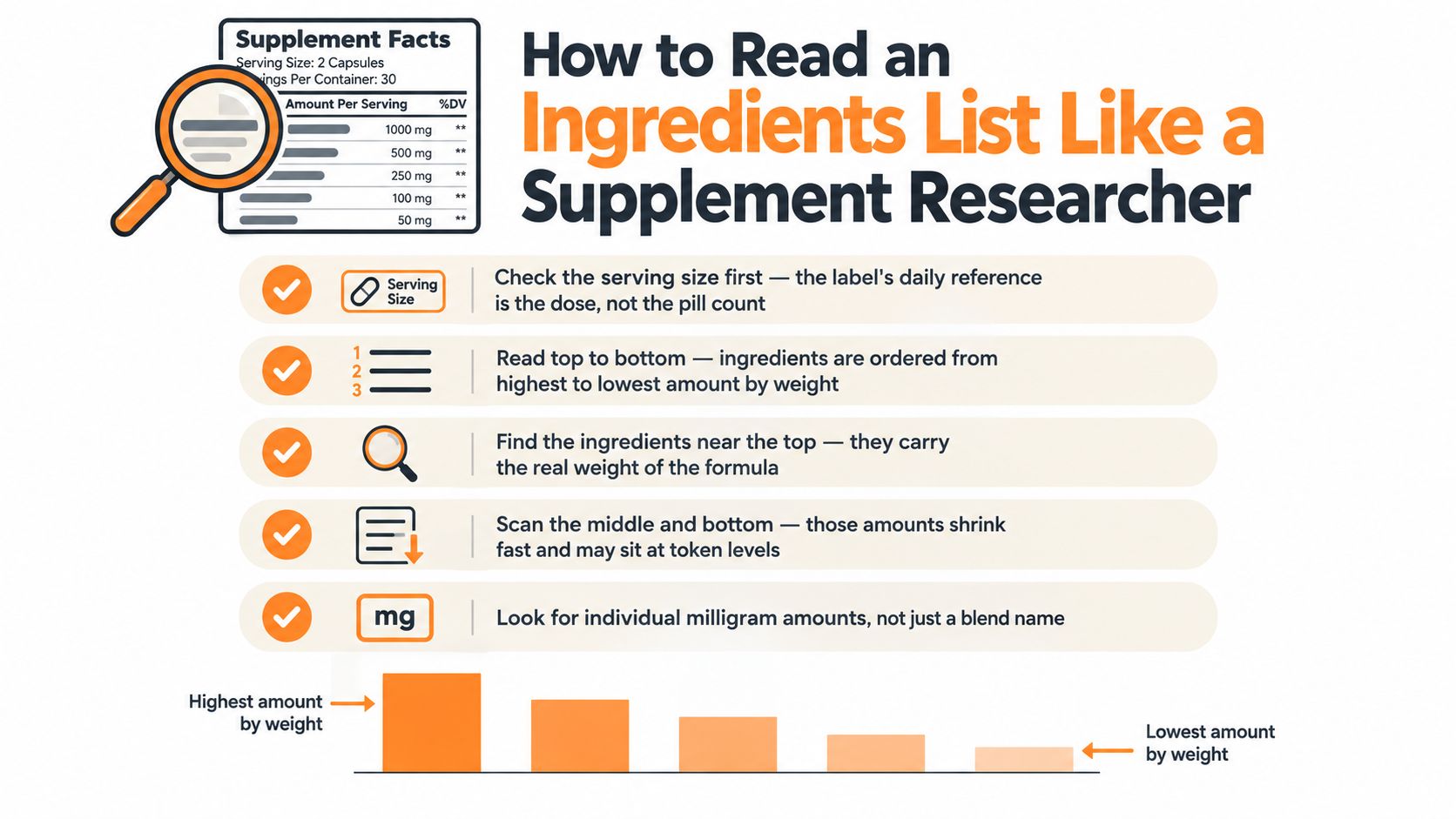
A reader can use the following sequence:
- Start with the Supplement Facts box. It should show serving size, servings, ingredient names, and amounts.
- Separate whole herbs from extracts. A standardized extract is processed to provide a defined marker or activity, while a whole herb can vary with harvest and preparation.
- Distinguish a blend from a single-ingredient dose. A formula may group several botanicals under one total weight, which prevents a direct comparison between each ingredient and research protocols.
- Look closely at proprietary blends. A proprietary blend can disclose the combined weight while leaving the amount of each component unstated.
- Read beyond the active ingredients. The Other Ingredients list may identify capsules, fillers, flow agents, or flavoring materials. Allergen statements, manufacturing location, and testing callouts can add useful context.
A label-reading guide such as this practical supplement-label reference can help readers compare those fields consistently. The most useful first filter is simple: an ingredient without an individual milligram amount remains an unknown, even when the ingredient name sounds familiar.
The Two Functional Categories Inside the Semenax Formula
Ingredient names become easier to interpret when they're grouped by intended role rather than memorized as a long list. One category centers on ejaculate volume and seminal fluid composition. It can include amino acids, pollen extracts, minerals, lecithin, enzymes, and vitamins used in male-reproductive nutrition discussions.
The other category sits under a broader men's wellness heading. Its botanicals are commonly associated with stamina, stress support, circulation, energy, libido, or prostate comfort. Those descriptions concern ingredient-level structure and function. They don't establish that a finished combination produces a particular semen, sperm, or sexual outcome.
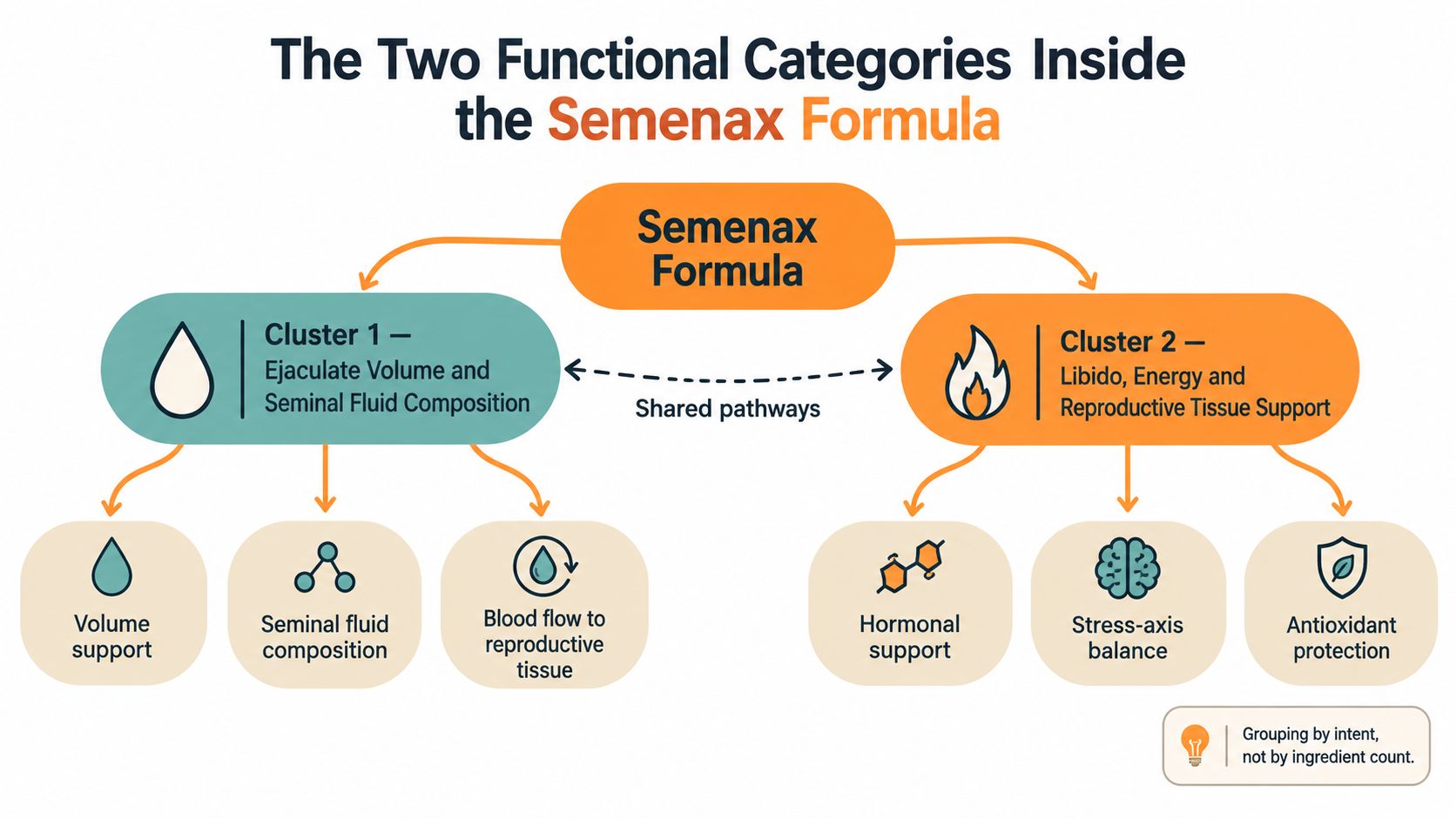
Cluster one and its reading questions
The volume-oriented cluster raises three separate questions:
- Does an ingredient have a plausible role in fluid production or reproductive physiology?
- Has human research measured semen volume, sperm parameters, or a different outcome?
- Does the label disclose enough information to compare the product with that research?
Those questions prevent a common mistake. A study involving sperm motility doesn't automatically support a claim about visible ejaculate volume, and an ingredient associated with blood flow doesn't automatically support a claim about fertility.
Cluster two and its boundaries
The wellness blend may include botanicals associated with energy, stress-axis balance, hormonal signaling, or antioxidant activity. Brands often organize formulas this way because each ingredient can be described according to its strongest studied role, while the overall label remains aligned with a men's-wellness category.
The two clusters can overlap through nitric-oxide pathways and antioxidant protection, but shared biology isn't proof of synergy. The finished blend requires its own evidence, including transparent doses and a suitable human study.
Volume and Taste Focused Ingredients and Their Research
A volume- or taste-oriented label deserves ingredient-by-ingredient reading. The key distinction is between a studied physiological role and a demonstrated effect from the finished formula. Available evidence supports careful discussion of zinc and L-arginine, while evidence for several other listed ingredients is more limited or focused on outcomes other than taste or volume.
Amino acids and minerals
L-arginine is an amino-acid precursor involved in nitric-oxide production, a pathway connected with vascular signaling and blood flow. An early clinical study evaluated oral L-arginine hydrochloride in 40 men with reduced sperm motility and a normal sperm concentration above 20 million sperm per milliliter. Participants received 80 milliliters of a 10% solution daily for six months, and the investigators reported improved motility without observed side effects in that study, as described in the original L-arginine clinical report. The study's small size, older design, and unusual liquid dose mean it can't be transferred directly to a modern capsule formula.
L-lysine is another amino acid often paired with arginine in reproductive-nutrition formulas. Its presence may reflect interest in amino-acid intake and tissue support, but a label should state the amount and chemical form. Without a product-specific human trial, the responsible description stays at the ingredient level.
L-carnitine is commonly discussed for its role in mitochondrial energy metabolism and sperm-motility research. The relevant label questions are the form, amount, and whether the formula supplies a studied quantity. A name on a blend panel doesn't establish that the product changes motility or volume.
Zinc has the strongest reproductive-nutrition record among these ingredients. It is concentrated in seminal fluid and participates in sperm development, motility, structural maintenance, spermatogenesis, DNA synthesis, and reproductive-system function. A meta-analysis covering 20 studies, 2,600 infertile men, and 867 control participants found lower seminal-plasma zinc concentrations among infertile participants, while supplementation studies were associated with selected semen-parameter changes, as reported in the zinc systematic review. Those findings support a role in normal reproductive physiology, not a treatment claim.
Zinc evidence is mixed. An NIH-supported randomized trial involving 2,370 men found no meaningful improvement in live births, sperm movement, shape, or total count from folic acid plus zinc compared with placebo, according to the NIH trial summary. The label should disclose elemental zinc, chemical form, and the daily total from all supplements.
Botanicals, pollen, and taste claims
Pumpkin seed may appear in formulas positioned around prostate or men's wellness support. Its inclusion doesn't demonstrate a change in semen volume or testosterone. A label should identify the seed material or extract, the amount, and any standardization detail.
Maca root is associated with subjective drive and general reproductive wellness in ingredient discussions. Pilot work has examined outcomes such as sexual interest or semen-related measures, but the available evidence doesn't establish a specific result for a proprietary multi-ingredient formula. The label should identify whether it uses whole root or an extract and disclose the quantity.
Swedish flower pollen extract is used in some prostate and ejaculate-volume discussions. Readers should look for the source material, extraction method, and amount. Human evidence on a finished blend remains a separate question.
Vitamin E and selenium are nutrients commonly discussed in antioxidant contexts. Their amounts matter because a reader may also receive them from a multivitamin or another product. Any mucuna or catuaba extract should be named precisely, with the plant part, extract ratio or marker, and amount disclosed.
Bromelain requires particular caution in taste-related discussions. It is a variable mixture of pineapple-derived proteolytic enzymes, and milligrams alone don't fully describe potency. The NCCIH bromelain overview notes that oral use is generally well tolerated, while stomach upset, diarrhea, allergic reactions, and medicine interactions remain relevant considerations. Human evidence doesn't establish that bromelain changes semen taste or volume, so a bromelain label guide should be used to assess source, activity units, and testing rather than to assume a sensory effect.
| Ingredient | Studied Role | Evidence Strength | Label Detail to Check |
|---|---|---|---|
| L-arginine | Nitric-oxide and blood-flow pathways | Limited, ingredient-specific | Chemical form and amount |
| L-lysine | Amino-acid and reproductive-tissue support | Unclear for finished-product outcomes | Individual amount |
| L-carnitine | Mitochondrial energy and motility research | Ingredient-level | Form and dose |
| Zinc | Normal reproductive physiology and selected semen parameters | Mixed human evidence | Elemental amount and total daily intake |
| Pumpkin seed | Men's wellness and prostate positioning | Limited for semen outcomes | Seed or extract identity |
| Maca root | General reproductive wellness and subjective drive | Limited and outcome-specific | Whole root or extract, amount |
| Swedish flower pollen | Prostate and ejaculate-volume research | Limited | Source and standardization |
| Bromelain | Enzyme activity and wellness positioning | Insufficient for taste claims | Activity units, source, and allergen context |
Men's Wellness Blend Botanicals and Their Research
A men's wellness blend can contain botanicals with distinct traditional and physiological roles, but the shared category label shouldn't be mistaken for shared evidence. Many botanical trials are small or short-term, and some may be supported by ingredient suppliers. Readers should therefore look for the population studied, the outcome measured, the duration, and the extract standardization.
Maca and tribulus terrestris
Maca root is often included for energy, subjective drive, and reproductive wellness. A standardized extract may identify macamides or another marker, while a whole-root powder provides a different kind of label information. Human research doesn't establish that maca in a combined formula increases semen volume, fertility, or sexual performance.
Tribulus terrestris is commonly positioned around vitality and male wellness. Its relevant marker may involve saponins, but the marker alone doesn't prove that the extract has a particular effect. The label should identify the plant part, extract ratio, saponin specification, and amount.
The distinction matters because two products can use the same botanical name while supplying different materials. A reader can't meaningfully compare research with a product when the extract type and dose are missing.
Ashwagandha and fenugreek
Ashwagandha is often discussed in relation to stress-axis support, energy, and reproductive wellness. Extract labels may identify withanolides, which helps readers understand the material's standardization. That marker doesn't show that a formula changes fertility or sperm health, and people taking medicines should consider potential interactions with a qualified professional.
Fenugreek appears in men's wellness formulas associated with vitality, metabolic support, or libido. Research outcomes vary by extract and population, so a label should show the seed material, extraction method, standardization marker, and amount. Evidence about a particular fenugreek ingredient can't automatically be applied to the finished blend.
Muira puama and Avena sativa
Muira puama is traditionally associated with sexual wellness and subjective interest. Human evidence for semen-volume outcomes is not established by the available information, so the defensible description remains ingredient-level support rather than a product result. The label should identify the plant source and extract concentration.
Avena sativa extracts may be used in formulas positioned around energy, calm, or general men's wellness. The product label should disclose the plant part, extract type, and amount, particularly if the formula groups several botanicals under one proprietary total.
Practical rule: A standardized marker improves identification, but it doesn't replace a human trial of the finished product.
The broader lesson applies to every botanical in this category. Ingredient presence provides a starting point for research, while dose, extract identity, population, duration, and outcome determine how much confidence a reader should place in a claim.
| Botanical | Studied Role | Evidence Strength | Standardization Marker |
|---|---|---|---|
| Maca root | Energy, subjective drive, reproductive wellness | Limited and outcome-specific | Macamides or stated extract marker |
| Tribulus terrestris | Vitality and men's wellness | Limited | Saponins |
| Ashwagandha | Stress-axis and energy support | Ingredient-level, extract-dependent | Withanolides |
| Fenugreek | Vitality and libido positioning | Limited and extract-dependent | Stated saponin or other marker |
| Muira puama | Traditional sexual-wellness positioning | Insufficient for semen outcomes | Plant part and extract ratio |
| Avena sativa | Energy and general wellness | Limited for reproductive outcomes | Plant part and extract identity |
How the Ingredient Pathways Connect Without Overpromising
Three biological themes appear repeatedly in male-reproductive supplement discussions: nitric-oxide-mediated blood flow, antioxidant protection, and hormonal or stress-axis support. These pathways can interact in human physiology, but that interaction doesn't establish that a particular blend creates a measurable clinical result.
L-arginine research often focuses on an isolated amino acid and vascular signaling. Antioxidant research tends to examine individual nutrients or compounds rather than a finished formula. Adaptogen research, including work involving ashwagandha, generally relates to specific extracts and selected outcomes.
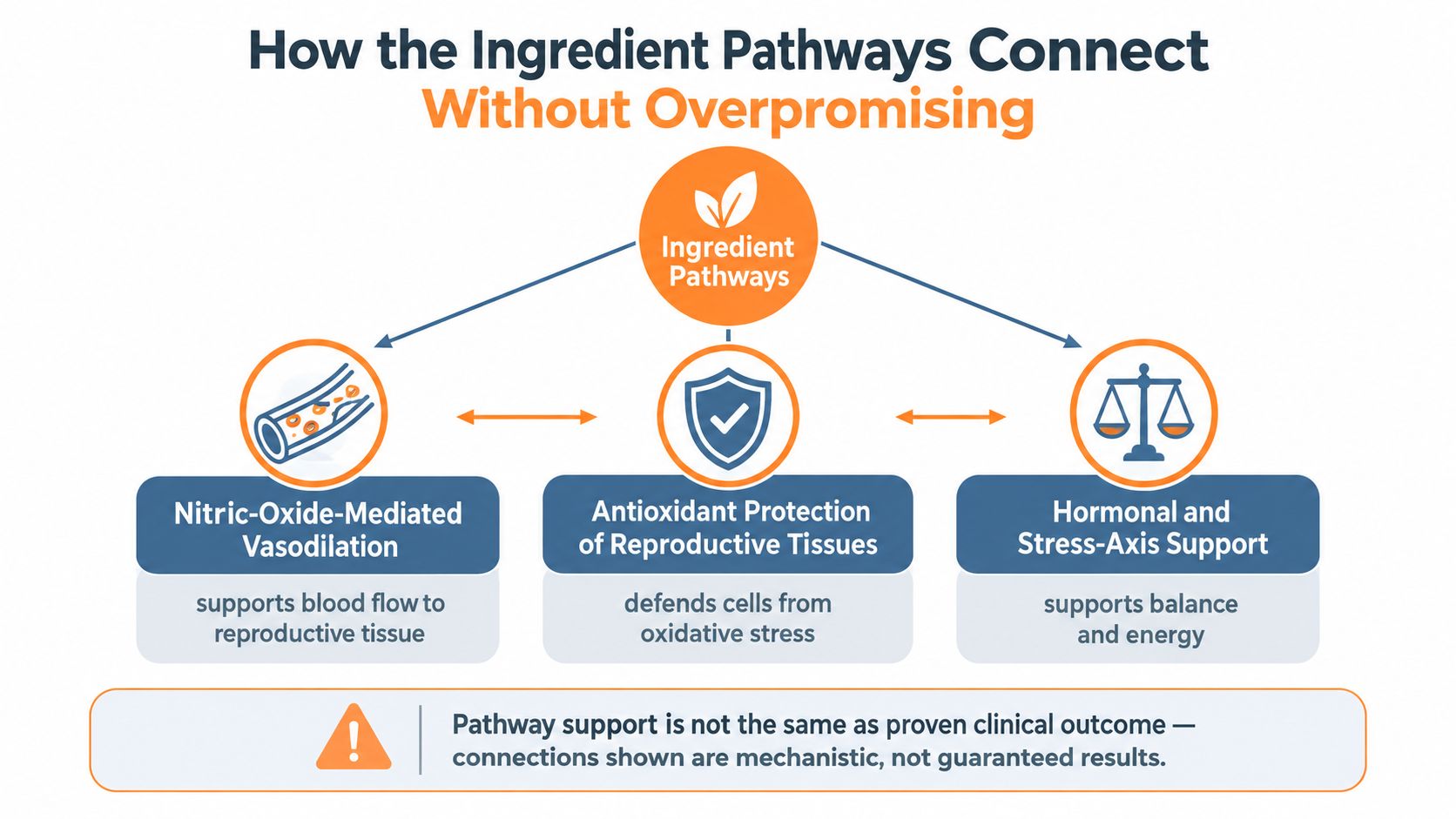
A useful interpretation looks like this:
- Blood-flow support describes a pathway connected with vascular signaling, not proof of greater semen volume.
- Antioxidant protection describes cellular defense, not proof of improved sperm DNA integrity or fertility.
- Hormonal and stress-axis support describes a physiological area of interest, not proof that a product changes hormone levels.
The overlap explains why formulas combine amino acids, minerals, and botanicals. It doesn't prove synergy. Unless researchers test the exact finished combination at its labeled dose, the most accurate language remains supports, helps maintain, and plays a role in.
Why Listed Does Not Always Mean Effective at the Dose
An ingredient can appear on a label and still be impossible to evaluate. Proprietary blends often show one combined weight for several ingredients, so a reader can't determine whether any individual component resembles the quantity used in research.
The dose problem has two sides. An under-dosed ingredient may contribute little beyond the expectation created by its name, while a high dose may create tolerability or interaction questions. Neither conclusion can be reached from a list of names alone.
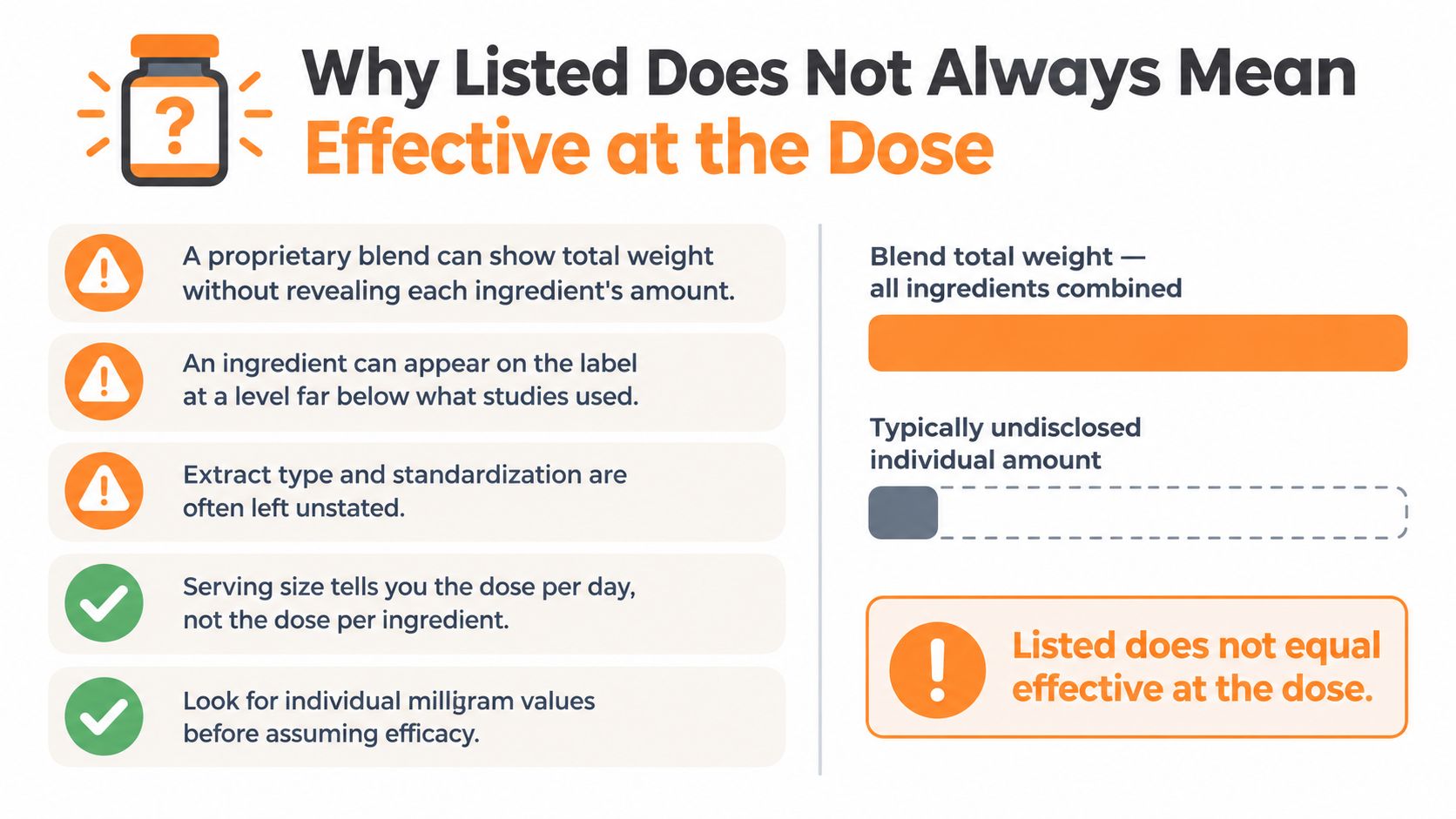
A careful label reader looks for:
- Individual amounts, rather than only a total blend weight.
- Serving instructions, which establish the daily exposure.
- Extract identity, including plant part and extraction ratio.
- Standardization markers, where relevant.
- Asterisked blend terms, which may signal that individual quantities aren't disclosed.
Research doses can differ substantially from ordinary commercial formulations. For zinc, one randomized-trial review described studies using 66 to 500 mg daily for three to six months, and a separate meta-analysis reported selected semen-parameter associations at those research doses, as detailed in the zinc dose review. Those findings shouldn't be transferred to every zinc-containing product.
Label-reading insight: The presence of an ingredient answers “what is included?” It doesn't answer “is the amount meaningful?”
Safety, Interactions, and Third Party Testing to Look For
A responsible review begins with safety rather than expected benefits. The full panel should be checked for allergens, overlapping nutrients, botanicals, and ingredients that may interact with prescription medicines or existing health conditions.
Readers can use a short quality checklist:
- Allergens: Pineapple-derived bromelain may matter to people sensitive to pineapple.
- Medication review: A pharmacist or qualified healthcare provider can assess potential interactions, especially with anticoagulants and medicines affecting blood pressure, liver enzymes, or hormones.
- Testing evidence: An independent certificate of analysis should address heavy metals, microbial contamination, adulterants, and label accuracy.
- Manufacturing controls: cGMP compliance and a clearly identified facility provide useful context.
- Traceability: Expiration dating and batch or lot numbers help connect a product to quality records.
The NCCIH discussion of bromelain identifies stomach upset, diarrhea, allergic reactions, and possible medicine interactions as relevant considerations. That source also supports a cautious approach to broad benefit claims because human evidence remains limited and inconsistent.
A third-party testing guide can help readers understand what a certificate should contain. Anyone taking prescription medication, managing a medical condition, or trying to conceive should discuss supplement use with a qualified healthcare provider before starting.
Semen Volume Versus Sperm Health Versus Fertility
Semen volume refers to the fluid released during ejaculation, with contributions from the seminal vesicles and prostate. It is the visible outcome most volume-focused products discuss.
Sperm health covers different measures, including sperm count, concentration, motility, morphology, and DNA integrity. A larger fluid volume doesn't necessarily mean more sperm, better movement, healthier shape, or improved DNA quality.
Fertility concerns the ability to conceive and depends on sperm health, timing, reproductive factors, and circumstances beyond supplement use. A 2025 systematic review found that supplements sometimes affected an individual sperm parameter but found no evidence of improved pregnancy or live-birth rates, with insufficient evidence to support any specific supplement for male infertility, as reported in the systematic review of dietary supplements. Readers should treat these as separate endpoints when interpreting any ingredient claim.
Quick Reference Table and Label Reading Checklist
| Ingredient | Studied Role | Evidence Note | Label Check |
|---|---|---|---|
| Zinc | Reproductive physiology | Mixed human evidence | Elemental amount |
| L-arginine | Nitric-oxide pathway | Small, ingredient-specific studies | Form and dose |
| Bromelain | Enzyme activity | No established semen-taste outcome | Activity units |
| Maca | Wellness and subjective drive | Limited, outcome-specific | Extract marker |
| Ashwagandha | Stress-axis support | Extract-dependent | Withanolides |
| Botanical blends | General men's wellness | Hard to assess without doses | Per-ingredient amounts |
A one-minute label check covers dose transparency, third-party testing, cGMP information, allergen statements, expiration dating, and batch or lot numbers. Missing information doesn't prove that a product is ineffective, but it limits what can be concluded.
Frequently Asked Questions About the Ingredients
How many botanicals appear on the label?
The number depends on the specific Semenax label and serving version. Names such as maca, tribulus terrestris, ashwagandha, fenugreek, muira puama, and Avena sativa require individual amounts and extract details before meaningful comparison.
Why are L-arginine and L-lysine included?
They're amino acids associated with physiological and reproductive-tissue support. L-arginine has research relating to nitric-oxide and blood-flow pathways, while product-level outcomes require separate evidence.
Are the listed dosages disclosed?
Some labels provide individual amounts, while proprietary blends may provide only a combined weight. An undisclosed amount should be treated as unknown.
How does the formula compare with a men's multivitamin?
A men's multivitamin generally emphasizes broad nutrient coverage. A reproductive-wellness formula may combine nutrients, amino acids, enzymes, and botanicals, so overlapping zinc, selenium, or vitamin intake should be checked.
These statements have not been evaluated by the Food and Drug Administration. This product is not intended to diagnose, treat, cure, or prevent any disease.
SEMEX offers a daily, vegan, non-GMO supplement with volume- and taste-focused ingredients alongside a men's wellness blend, supported by third-party testing information. Readers can review the formula and label details at SEMEX before deciding whether it fits their ingredient, dose, and quality preferences.