

How to Produce More Semen: Science-Backed Steps
Most men's baseline semen volume centers around 3 to 4 milliliters, while very frequent ejaculation can temporarily cut that volume by roughly 40%. Daily ejaculation in one controlled study reduced volume from 3.8 mL at baseline to 2.2 mL by day 3, so timing often matters more than a “magic” ingredient.
The practical answer to how to produce more semen is to start with the variables that change volume most predictably: allow a suitable abstinence window, collect samples consistently, stop smoking, limit alcohol, and address excess body weight gradually. Supplements may support normal reproductive function, especially when a nutritional gap exists, but they usually produce modest changes rather than dramatic increases.
Table of Contents
- Understanding Realistic Semen Volume Benchmarks
- Optimizing Abstinence and Collection Timing
- Choosing Evidence-Based Nutrients and Ingredients
- Applying Lifestyle Changes That Move the Needle
- Building a 30-Day Plan for Consistent Improvement
- Putting It All Together Safely and Sustainably
Understanding Realistic Semen Volume Benchmarks
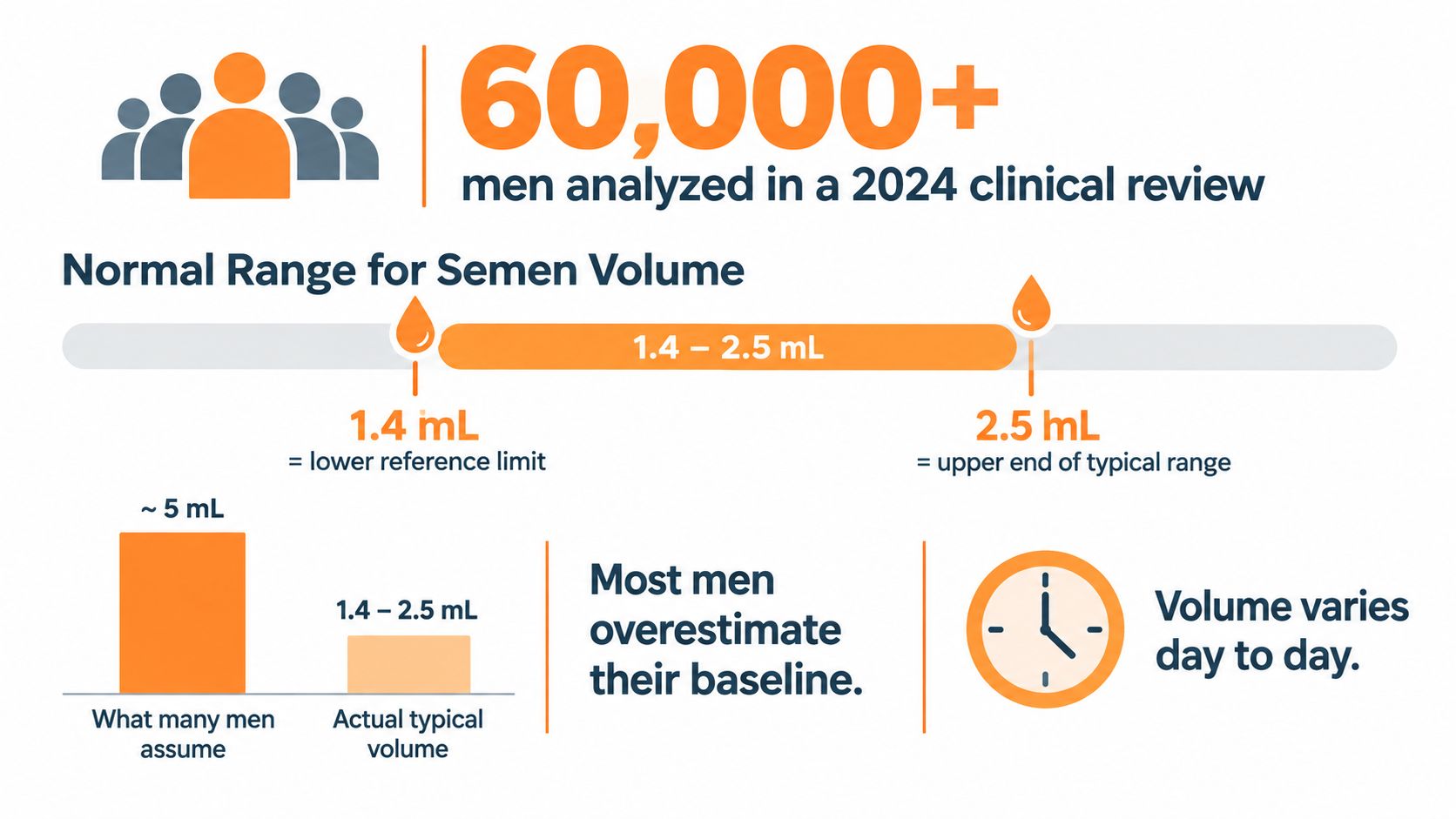
Clinical measurements place typical semen volume in the milliliter range. A large 2024 analysis of more than 60,000 men reported a mean volume of 3.4 mL, a median of 3.1 mL, and an interquartile range of 2.2 to 4.3 mL. The same dataset recorded a maximum of 14.5 mL and created reference distributions by age and abstinence time. These figures provide context for what a sample can look like, while also showing why a single target cannot represent every man. (Modern semen-volume benchmark)
What normal means in practice
A reference threshold describes the lower end of a population. It does not set a personal quota. WHO-based reference work published in 2021 placed the lower fifth percentile at 1.4 mL, compared with 1.5 mL in 2010. The change shows that reference values can shift with the population studied and the measuring standards used.
One collection also cannot capture a complete baseline. Abstinence duration, collection technique, age, and ordinary biological variation can all change the measured amount. Comparing one sample with an exaggerated visual expectation may therefore create concern even when the result falls within a common range.
For a plain-language explanation of typical measurements, this guide to average semen volume offers useful context. The useful goal is establishing a repeatable baseline under similar conditions, then watching for a sustained change. This approach treats volume like a measurement taken with a consistent ruler, rather than a result judged from one unusually high or low reading.
Why individual baselines differ
Age is one factor. Reference data showed a decline from a median of 2.80 mL in younger men to 1.95 mL in the oldest group, although individual results varied widely. (Age and semen-volume findings)
Genetics also helps explain the range. A 2026 genome-wide association study found that common genetic variants explained about 18% of the variance in semen volume and identified a novel linked locus. (Genetic influence on semen volume) Identical routines can therefore produce different outcomes. Baseline biology sets part of the starting range, while collection timing, lifestyle habits, and individual nutrient status influence the portion a person may be able to change.
Optimizing Abstinence and Collection Timing
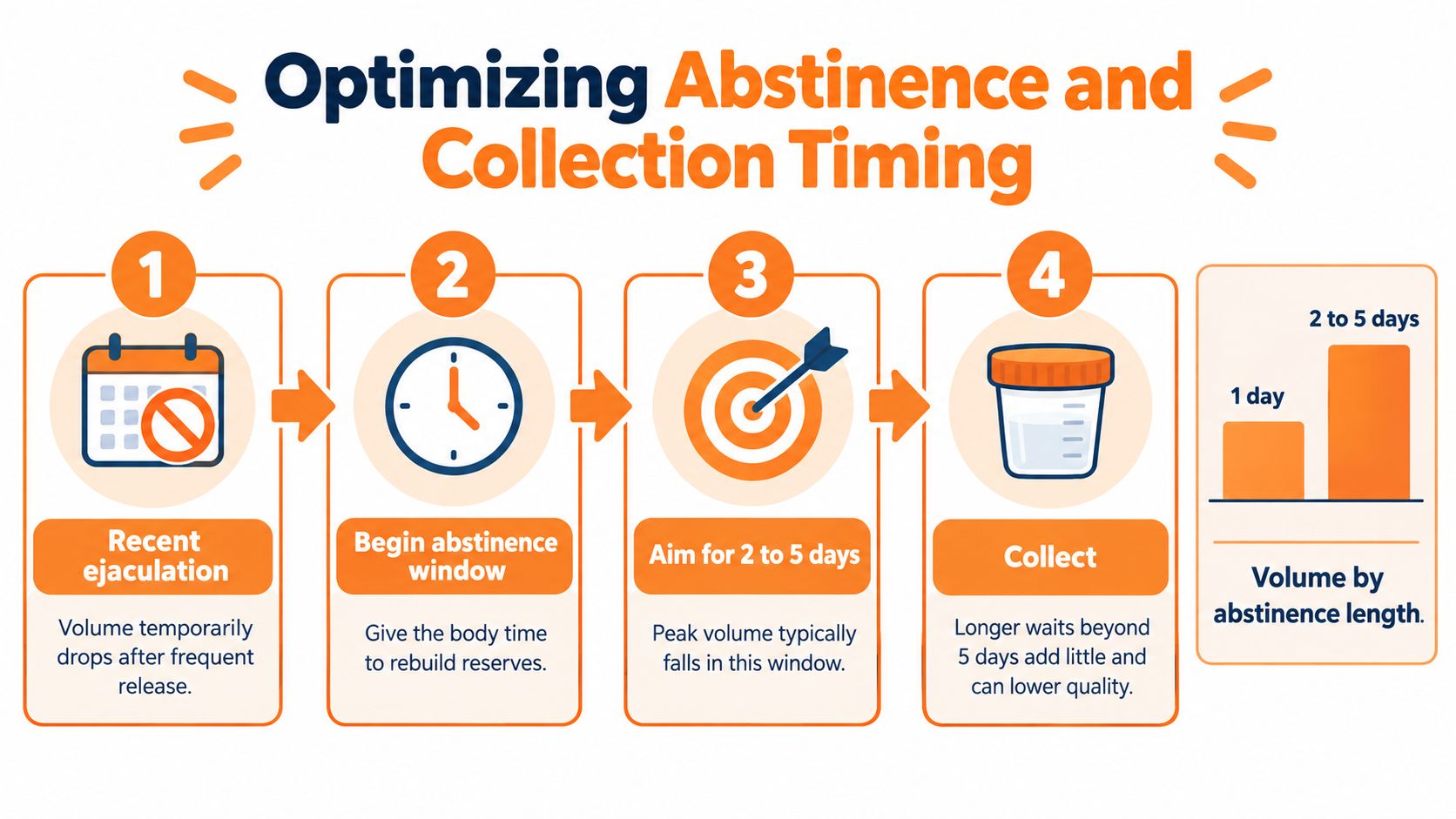
Semen-producing glands need roughly 48 to 72 hours to replenish their secretions, so frequent ejaculation can directly limit the fluid available for the next sample. Abstinence is therefore a timing variable, not a magic formula. The right interval depends on whether the goal is a larger single sample, consistent measurement, or fertility evaluation.
A controlled study tracked daily ejaculation for two weeks. Average volume dropped from 3.8 ± 1.7 mL at baseline to 2.2 ± 1.0 mL on day 3, 2.2 ± 1.2 mL on day 7, and 2.3 ± 0.9 mL on day 14. The change was statistically significant at p < 0.001, with the baseline-to-day-3 difference representing about a 39% reduction. (Daily-ejaculation study)
A practical timing protocol
The World Health Organization recommends 2 to 3 days of abstinence before semen collection. A clinical review found that volume increased by 11.9% per day during the first 4 days after ejaculation. (Collection timing review) These findings support a short, repeatable window rather than an indefinitely long wait.
Use this process:
- Record the last ejaculation. Treat it as day zero.
- Aim for 2 to 3 full days of abstinence. This allows secretions to build while keeping the interval consistent.
- Collect under similar conditions. Use the same method and avoid comparing a complete sample with one that was partly missed.
- Repeat before drawing conclusions. A single measurement can vary, while repeated samples reveal a more useful personal pattern.
Longer abstinence can increase the amount in one container, but volume is only one part of semen quality. Extended waits may be associated with poorer motility and DNA quality. Anyone collecting for fertility should follow the interval provided by a clinician or laboratory.
Practical rule: Choose the shortest abstinence window that produces a consistent sample for the intended purpose. A larger number does not automatically mean better semen quality.
For a planned sexual experience, schedule the preceding ejaculation far enough ahead to reach the 2-to-3-day window. For repeated fertility collections, matching the interval each time is more informative than trying to maximize one isolated result. This makes timing a controlled variable, while lifestyle habits and individual nutrient status remain separate factors that may influence the result.
Choosing Evidence-Based Nutrients and Ingredients
Supplements are often marketed as though semen volume were a simple input-output equation. The available commentary is more restrained. Evidence for reliable volume enhancement is weak, and any benefit is likely to be modest and most relevant to men with nutrient deficiencies. One cited urologist described the potential increase as only “a few milliliters at best.” (Expert commentary on volume supplements)
That doesn't make nutrients irrelevant. It means they should be evaluated by their biological role, dietary adequacy, safety, and the quality of evidence rather than by a promise of dramatic output.
Nutrient Evidence Comparison
| Nutrient | Primary Role | Evidence Level |
|---|---|---|
| Zinc | Supports normal male reproductive function and contributes to normal reproductive biology | Most relevant when dietary intake is inadequate, but volume-specific evidence remains limited |
| L-Arginine | Precursor involved in nitric oxide production and blood-flow pathways | Mechanistically plausible, with volume claims requiring cautious interpretation |
| Sunflower lecithin | Provides phospholipids that participate in cell structure and fluid composition | Limited direct evidence for reliably increasing ejaculate volume |
| Bromelain | Enzyme commonly discussed for its possible effect on semen taste | Not a proven volume ingredient, and taste effects shouldn't be presented as volume evidence |
Men considering zinc can review the ingredient-specific discussion in zinc and ejaculation. Food-first nutrition remains sensible because a varied diet supplies multiple nutrients rather than concentrating attention on one capsule.
Separating support from hype
A supplement can support normal function without producing a visible transformation. A man with a genuine deficiency may have more room to benefit than someone whose diet already supplies adequate nutrients. The same product can therefore feel useful to one person and unremarkable to another.
SEMEX is one dietary supplement option formulated with Zinc, L-Arginine, Sunflower Lecithin, and Bromelain, alongside a broader men's wellness blend. Those ingredients should be judged according to their individual roles and evidence, not treated as a substitute for collection timing, lifestyle changes, or clinical evaluation. The product is intended to support structure and function, not to diagnose, treat, cure, or prevent a condition.
Applying Lifestyle Changes That Move the Needle
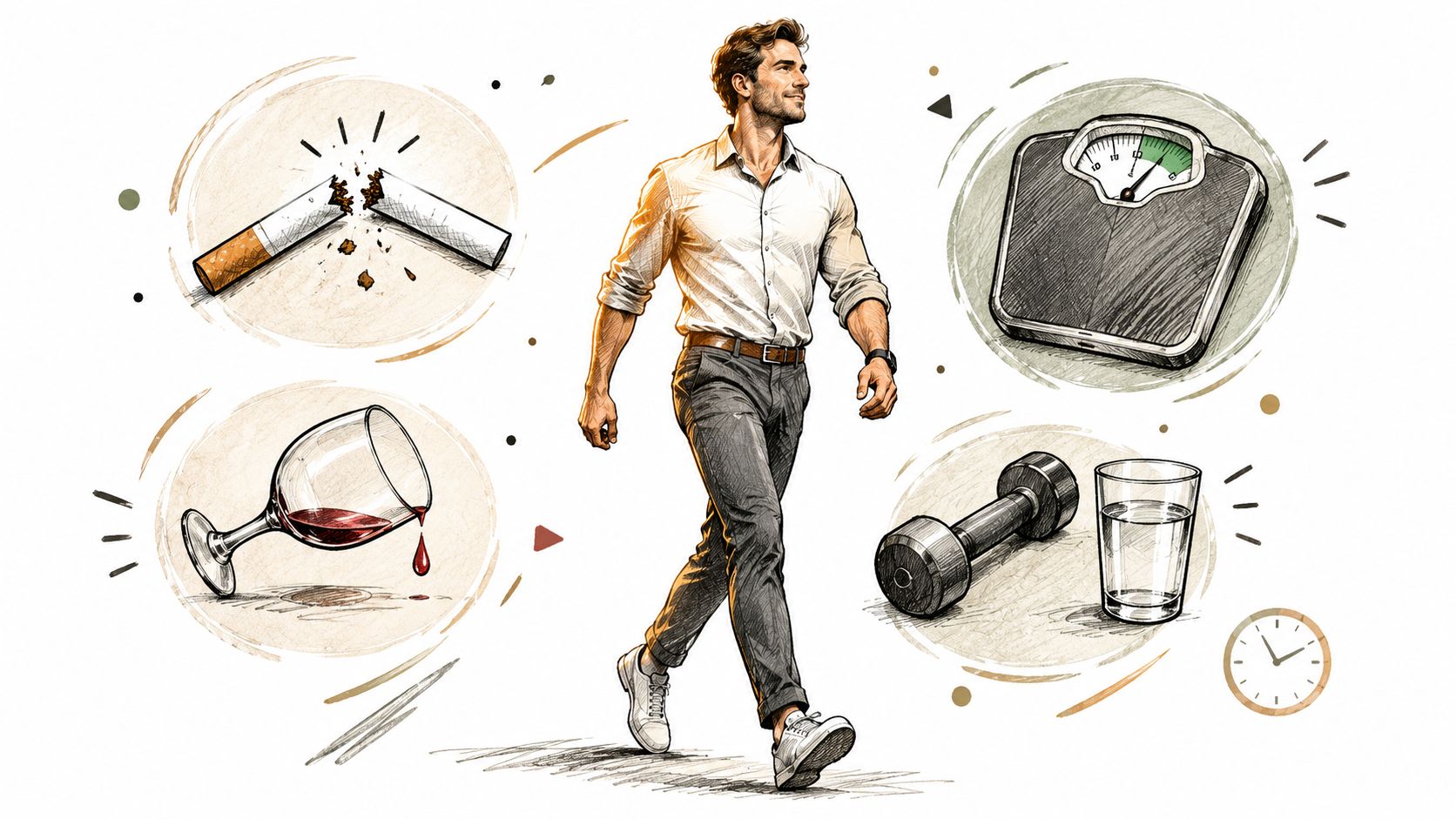
A 2026 review of a meta-analysis covering 57 studies and 29,914 participants identified smoking as associated with a 0.25 mL decrease in semen volume. A separate review found the same mean reduction associated with alcohol consumption. (Lifestyle and semen parameters review) These findings place daily habits beside abstinence timing and nutrient status as practical sources of biological variation, rather than treating volume as the result of one ingredient.
The differences are modest, but a few milliliters leave limited room for change. Smoking and regular alcohol use may also occur alongside poorer sleep, less activity, or eating patterns that make reproductive health harder to support.
The three-part foundation
Stop smoking. Removing tobacco exposure addresses a reversible factor associated with lower semen volume. A gradual quit plan, nicotine-support strategy, or clinician-guided program can make the change easier to maintain.
Limit alcohol. Lowering intake addresses another behavior associated with reduced volume. Men who drink regularly should choose a sustainable pattern instead of alternating between restriction and heavy use. This guide to alcohol's effects on sperm offers a focused review of that connection.
Reduce excess body weight gradually. Reviews have linked higher BMI with lower ejaculate volume. One 14-week residential weight-loss program found increases in total sperm count, semen volume, and testosterone. (Weight and reproductive-health evidence)
Crash dieting can create a separate problem. Rapid caloric restriction after bariatric-style weight loss has been associated with impaired sperm production, while gradual weight loss improved semen parameters. A balanced diet and regular exercise provide a steadier route than aggressive restriction.
A 2023 study of men undergoing fertility assessment found that a salty dietary pattern was associated with a lower median semen volume of 3.6 mL than other dietary patterns. (Dietary-pattern research) That result does not show that one meal determines a sample. It supports assessing the overall eating pattern rather than searching for one “semen-boosting” food.
Building a 30-Day Plan for Consistent Improvement
A month-long plan should make measurement easier, not turn sexual health into a daily scorecard. The first objective is to remove avoidable variation, then introduce habits that can continue beyond the initial experiment.
Days 1 through 7
Record the date of each ejaculation, approximate abstinence duration, smoking or alcohol exposure, and whether collection was complete. Set a target of 2 to 3 days of abstinence before a planned comparison sample, using the same collection conditions each time. No single observation should be treated as a diagnosis.
At the same time, remove the most obvious obstacles. Begin a smoking-cessation plan, reduce alcohol, replace heavily salty convenience foods with a broader diet, and add manageable movement to the daily routine.
Days 8 through 21
Keep the timing log and focus on consistency. Meals should include varied whole foods and adequate sources of key nutrients, rather than relying on a concentrated supplement stack. Men considering zinc, L-arginine, lecithin, or other ingredients should check labels carefully and discuss appropriate use with a healthcare professional, particularly when taking medicines or managing a medical condition.
Stress management belongs in the plan because stress can make every other habit harder to maintain. A fixed evening routine, regular exercise, and a short relaxation practice can support adherence without promising a direct volume effect.
Days 22 through 30
Compare observations made under similar abstinence conditions. Look for trends in volume, ease of collection, and consistency rather than expecting every sample to rise. If a supplement is used, keep the rest of the routine stable enough to identify what may have changed.
The plan is a behavior test, not a guarantee. Persistent low volume, a sudden change, pain, blood in semen, dry orgasm, or difficulty conceiving warrants professional assessment rather than more experimentation with supplements.
Putting It All Together Safely and Sustainably
Semen volume is shaped by several moving parts, not one magic ingredient. Abstinence timing can alter an individual sample, while nutrition, activity, smoking, alcohol use, weight, and nutrient status influence the conditions behind repeated results. Treat the process like tuning an instrument: adjust one or two factors, keep collection conditions similar, and judge the pattern rather than a single reading.
Nutrition and lifestyle changes also affect how supplements should be interpreted. A supplement may support normal function when a nutrient is lacking, yet it cannot compensate for persistent health problems or inconsistent collection. If you use one, keep the rest of your routine reasonably stable so you can distinguish a possible effect from ordinary biological variation. Product claims must remain modest. FDA guidance on supplement claims explains that structure/function statements must be truthful and not misleading, and cannot claim to diagnose, mitigate, treat, cure, or prevent a specific disease.
A clinician should assess persistently low volume, little or no fluid during ejaculation, pain, blood in semen, dry orgasm, or difficulty conceiving. Semen analysis measures volume alongside sperm concentration, movement, and shape. Medical history can also identify medication effects, hormone concerns, anatomical issues, or collection problems. A larger sample by itself does not establish better fertility.
A responsible supplement plan supports normal function. It does not replace diagnosis, semen analysis, or individualized medical advice.
The sustainable approach is measured: standardize collection conditions, maintain habits that support general health, use nutrients selectively, and compare repeated observations. SEMEX and similar products are dietary supplements for structure and function, not treatments for infertility or other conditions.
These statements have not been evaluated by the Food and Drug Administration. This product is not intended to diagnose, treat, cure, or prevent any disease.
SEMEX combines volume- and taste-focused ingredients with a broader men's wellness blend. Visit SEMEX to review the formula and decide whether it fits a measured routine supporting semen volume and overall vitality.