

How to Have More Cum: A Practical Guide for Men
A man finishes, looks down, and notices that the visual result seems lighter than expected. The question arrives quickly: is there a practical way to have more cum, or is volume mostly fixed by biology? That moment is common, especially when pornography has created unrealistic expectations about what a normal ejaculation should look like.
A better target is optimization, not transformation. More can mean greater visible volume, stronger expulsion, a fuller sensation, or simply more confidence during sex. Semen isn't the same as sperm, and no routine can override every biological limit. Timing, hydration, nutrition, pelvic control, and supplement habits can support the outcome, but each lever has trade-offs.
Table of Contents
- What More Actually Feels Like
- The Baseline Numbers Most Guys Never See
- Hydration Timing and the Abstinence Lever
- What the Ingredient Research Actually Shows
- Pelvic Floor Basics You Can Start Tonight
- A Realistic 30-Day Routine That Stacks the Levers
- Taste Recovery Time and Final Questions
What More Actually Feels Like
A fuller ejaculation doesn't always look dramatically different. One man may notice more fluid, another may notice stronger contractions, and a third may mainly experience a longer build-up after taking time between ejaculations. These are related sensations, but they aren't identical measurements.
Semen is the fluid released during ejaculation. Sperm is only one component within it. Much of semen comes from fluids produced by the seminal vesicles and prostate, while sperm cells originate in the testes. That distinction matters because a change in sperm concentration doesn't automatically create a visibly larger ejaculation, and a larger fluid volume doesn't necessarily indicate better fertility.
The realistic target
The body has a practical ceiling. Seminal fluid production depends on gland function, hormonal signaling, hydration status, age, ejaculation frequency, and individual anatomy. Someone starting with a smaller baseline may notice a meaningful difference from better timing and more consistent habits, while someone already near his natural range may see only a modest change.
Pornography also distorts the reference point. Camera angles, editing, multiple performers, and deliberate abstinence can make an unusual result appear ordinary. Comparing a real bedroom moment with a staged scene creates frustration without offering useful information.
A more useful checklist asks:
- Volume: Does the ejaculation look fuller than the usual baseline?
- Force: Do the contractions feel stronger and more coordinated?
- Sensation: Does the build-up and release feel more satisfying?
- Consistency: Does the result hold across different days, rather than appearing once by chance?
Practical rule: Judge a routine against the same personal baseline, not against an exaggerated visual standard.
The most reliable approach combines controllable habits with ingredient-level skepticism. Hydration and abstinence timing can affect fluid accumulation. Nutrition supports the raw materials involved in normal reproductive function. Pelvic floor training can improve awareness and expulsion control. Supplements may help in specific contexts, particularly when nutritional status is poor, but they aren't magic volume switches.
That distinction keeps the subject practical. The goal isn't to promise an extreme transformation. It's to identify what can support a man's normal output without turning every capsule, food, or bedroom trick into a universal claim.
The Baseline Numbers Most Guys Never See
Clinical references commonly place normal semen volume at about 1.5 to 5.0 mL per ejaculation, with some laboratories using a broader range of 1.5 to 7.6 mL. A large analysis of 12,235 men reported an overall mean of 3.17 ± 1.64 mL, while men without reported ejaculatory issues averaged 3.18 ± 1.64 mL. The same analysis reported lower averages among men with delayed ejaculation and other or multiple dysfunction categories. These figures are summarized in the MedlinePlus semen analysis reference.
Those numbers give context, not a scorecard. A single collection can vary with abstinence, recent ejaculation, collection accuracy, stress, and hydration. A man can also fall outside a broad reference range without that result automatically explaining fertility or sexual satisfaction.
What contributes to semen
The fluid comes from several sources, and each has a different role.
| Source | Approx. Share | Role |
|---|---|---|
| Seminal vesicles | Varies by individual | Contribute nutrient-rich seminal fluid that supports sperm transport |
| Prostate | Varies by individual | Adds fluid and compounds that help form the ejaculate |
| Testes and epididymis | Varies by individual | Supply sperm cells and related reproductive material |
| Bulbourethral glands | Varies by individual | Produce lubricating pre-ejaculate that helps prepare the urethra |
A fuller explanation of how these components relate to normal output appears in this guide to average semen volume.
The quiet biological caps are therefore glandular output, sperm contribution, prostate fluid, and the timing of ejaculation. Age and hormonal status can reshape the baseline. Zinc status also matters because zinc participates in normal male reproductive function, and controlled research has linked low intake with reduced seminal volume.
The levers that can move
Abstinence is usually the most immediate variable. More time between ejaculations allows fluid and sperm to accumulate, although longer isn't automatically better for every semen-quality measure. Hydration supports the body's fluid balance, but drinking aggressively at the last minute won't rebuild fluid that hasn't been produced.
Frequency also matters. Ejaculating several times close together can make the next release appear smaller because the glands have had less time to replenish. A man's baseline can change gradually with age, health, sleep, medication, and nutritional status, so a routine should be evaluated over repeated occasions rather than one isolated result.
Hydration Timing and the Abstinence Lever
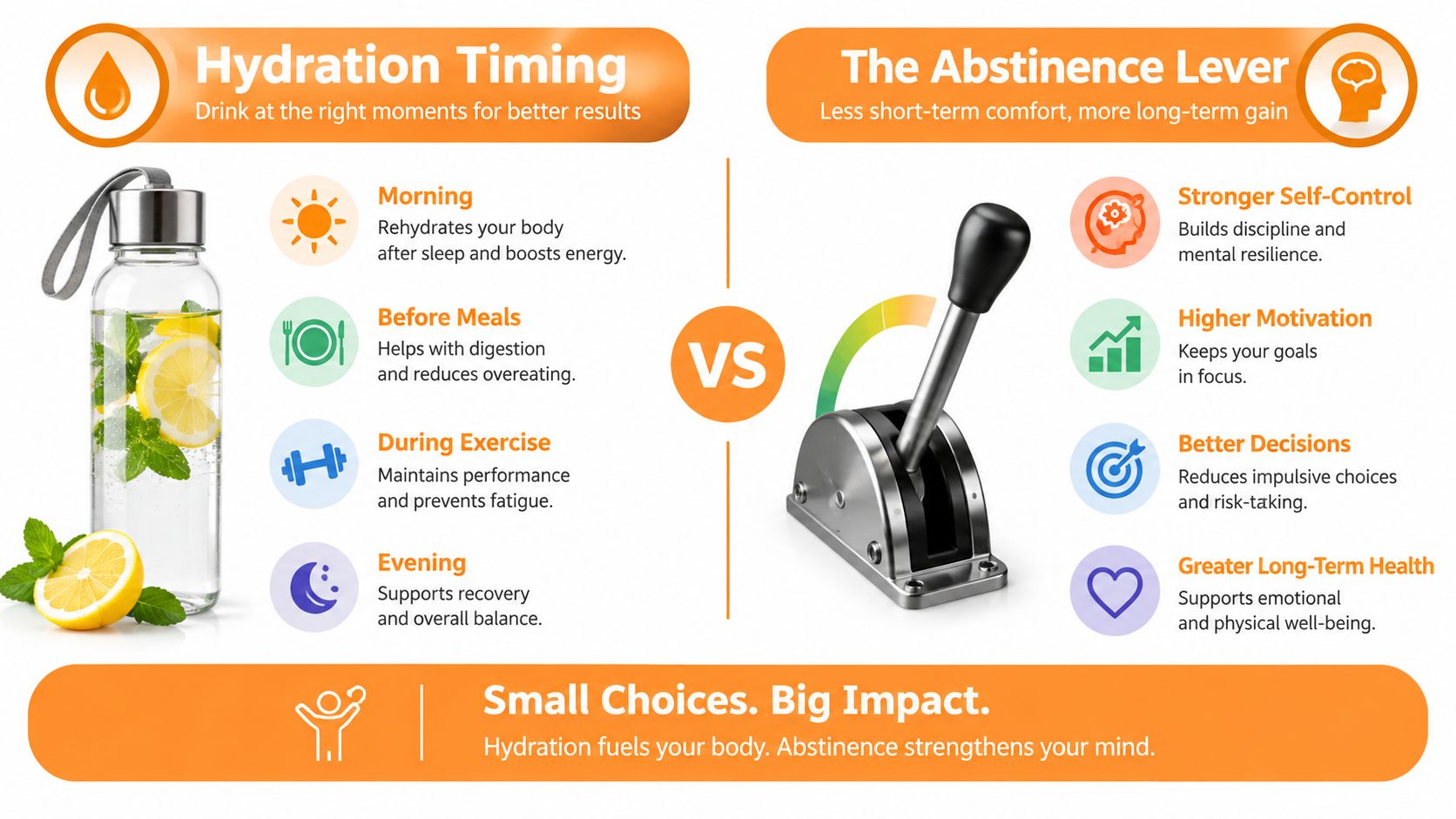
Steady hydration is useful, but it shouldn't be treated as a quick volume hack. When the body is short on fluid, urine becomes more concentrated and overall fluid availability changes. That doesn't mean a large drink immediately before sex will produce a dramatic increase. The practical aim is consistent hydration throughout the day, with extra attention after exercise, heat exposure, or alcohol.
Electrolytes can matter when sweating or fluid loss is substantial, but they aren't a substitute for ordinary meals and regular water intake. A practical overview of what electrolytes do helps separate everyday hydration from aggressive, unnecessary supplementation.
Timing beats guesswork
Abstinence has clearer evidence for changing visible volume than most quick tricks. A literature review reported semen volume rising from about 2.3 mL after one day of abstinence to 3.7 mL after seven days, while sperm counts nearly doubled across that interval. The same evidence comes with an important qualification, longer abstinence can involve trade-offs in sperm quality rather than improving every measure at once. The findings are discussed in this review of abstinence duration and semen parameters.
A practical experiment is to compare results after different spacing patterns while keeping other variables fairly stable. Some men prefer a shorter window because desire and orgasm quality feel better. Others notice more visible fluid after several days. The useful window is personal, and the visual result shouldn't be separated from how sex feels.
Lifestyle habits that support the baseline
Alcohol can interfere with sexual performance and may make hydration less reliable. Smoking is associated with poorer reproductive markers, while repeated intense heat exposure can work against normal sperm production. Sleep supports hormonal regulation and recovery, although none of these habits should be marketed as an instant semen-volume switch.
| Habit | What it may influence | Practical priority |
|---|---|---|
| Consistent hydration | General fluid balance | High |
| Planned abstinence | Fluid accumulation and timing | High |
| Alcohol moderation | Hydration and sexual performance | Moderate |
| Smoking reduction or cessation | Reproductive health markers | High |
| Heat management | Testicular environment | Moderate |
| Reliable sleep | Recovery and hormonal support | High |
A simple routine usually outperforms a dramatic one. Regular water intake, sensible abstinence spacing, sleep, and less alcohol create a stronger foundation than trying to compensate with one large drink before intercourse.
What the Ingredient Research Actually Shows
Ingredient research becomes useful when each compound is judged on its own evidence. A formula can contain zinc, L-arginine, lecithin, and bromelain, but that combination doesn't turn every claim into a proven outcome. The relevant questions are whether a nutrient changes semen parameters, who benefits, what dose researchers used, and whether the result applies to healthy men with adequate intake.
Zinc has the clearest volume signal
Zinc has one of the stronger research trails in male reproductive nutrition. In a classic depletion study, reducing intake from 10.4 mg per day to 1.4 mg per day was accompanied by a drop in seminal volume from 3.30 mL to 2.24 mL and a decrease in serum testosterone from 26.9 to 21.9 nmol/L. A 2016 meta-analysis also associated zinc supplementation with increased semen volume, motility, and normal morphology among infertile men. The research is detailed in this human zinc depletion study.
That evidence supports repletion when intake is low. It doesn't prove that every well-nourished man will see a visible increase. A separate randomized trial found no significant semen-volume change after zinc plus folic acid, reinforcing the point that baseline status and population matter. The trial is available in this randomized study of zinc and folic acid.
L-arginine is not a guaranteed oral volume tool
L-arginine is a physiological precursor to nitric oxide and has been studied for blood flow. Intravenous or intra-arterial research can show vascular effects under specific conditions, but that doesn't translate cleanly to an oral supplement taken before sex. In healthy subjects, an oral 6 g dose didn't increase nitric oxide production compared with placebo, and a review found no significant benefit over placebo for blood flow or endothelial markers in people with cardiovascular or metabolic disorders. The healthy-subject findings appear in this oral L-arginine study.
Lecithin and bromelain are often discussed in consumer wellness content, but the supplied human evidence doesn't establish a reliable semen-volume effect for either ingredient. Food sources can be reasonable additions, while targeted supplements require attention to medication interactions, allergies, total intake, and product quality.
| Ingredient | Research focus | Typical studied dose | Evidence strength for volume |
|---|---|---|---|
| Zinc | Repletion, semen parameters, motility, morphology | Studied across low-intake and supplemental settings | Moderate, context-dependent |
| L-arginine | Nitric oxide and blood-flow pathways | Oral and infusion studies use different protocols | Limited for oral volume claims |
| Lecithin | Seminal-fluid and dietary discussions | No dependable volume dose established here | Insufficient |
| Bromelain | Digestive enzyme and anecdotal taste discussions | No dependable volume dose established here | Insufficient |
No single pill replicates hydration, timing, sleep, nutrition, and pelvic control. Supplementation should be considered a layer, not the foundation.
Pelvic Floor Basics You Can Start Tonight
The pelvic floor contributes to the force and coordination of ejaculation. The bulbospongiosus and ischiocavernosus muscles help control erection support and the expulsion phase, but stronger doesn't always mean tighter. A pelvic floor that stays clenched can create discomfort, reduce relaxation during arousal, and make contractions feel less coordinated.
Find the right muscles
The easiest cue is the feeling used to stop gas or briefly interrupt urine flow. That cue can help locate the area, but urine shouldn't be stopped repeatedly as a training method. Over time, that habit can interfere with normal bladder coordination.
Begin with gentle contractions while lying down or sitting upright. The abdomen, glutes, and inner thighs should remain relaxed. Each contraction should be followed by a complete release, because relaxation is part of control rather than a sign of weakness.
A simple training pattern
A beginner can use three types of work:
- Awareness contractions: Gently tighten and release while breathing normally, focusing on the correct muscles rather than maximum force.
- Sustained holds: Hold a moderate contraction briefly, then release for at least as much attention and control as the contraction itself.
- Quick pulses: Use short squeezes to practice coordinated contractions without turning the session into an endurance test.
At climax, the useful cue is controlled responsiveness. Instead of clenching every muscle, the man can notice the pelvic floor's natural contractions and add a gentle, rhythmic engagement. That approach supports coordination without forcing the body into a rigid pattern.
Desk posture also matters. A slumped pelvis and constant abdominal bracing can make it harder to sense the pelvic floor. Standing breaks, relaxed breathing, and neutral sitting posture give the muscles a better starting position.
A practical guide to Kegel exercises for men can help refine the technique. Pain, pelvic pressure, urinary changes, or persistent difficulty relaxing are reasons to stop self-training and consult a qualified clinician.
A Realistic 30-Day Routine That Stacks the Levers
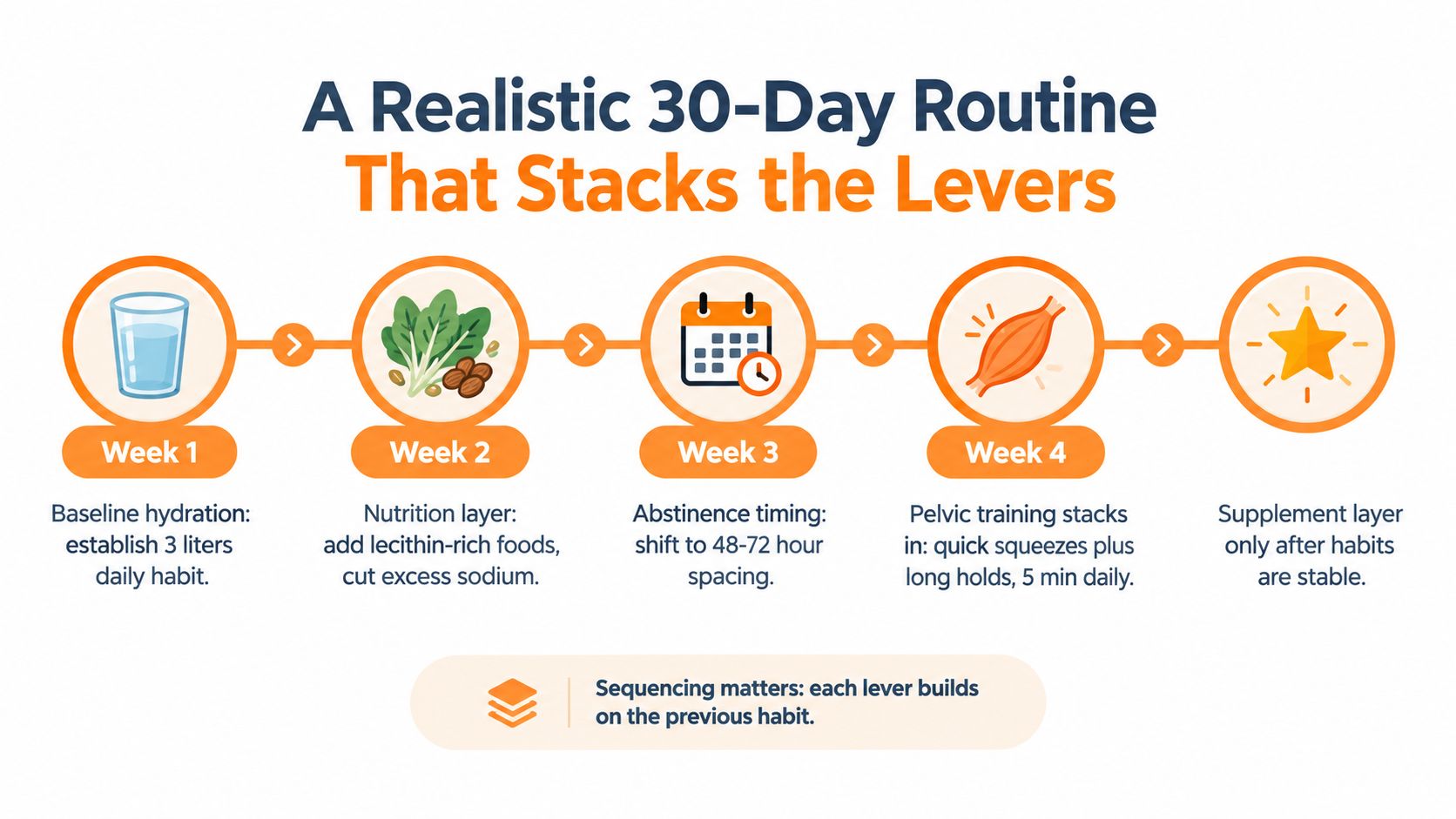
A staged routine works because it shows which change is responsible for which result. Adding hydration, new foods, supplements, abstinence, and pelvic exercises simultaneously makes the outcome difficult to interpret. A slower build creates a cleaner personal experiment.
Start with the foundation
During the first phase, establish consistent hydration, steadier sleep, and awareness of the pelvic floor. No heavy contraction work is needed at the beginning. The priority is learning to tighten and fully release without recruiting the abdomen or glutes.
The next phase adds food-first nutrition. Zinc-rich foods and arginine-containing foods can fit into ordinary meals, alongside a varied diet that supplies protein, minerals, and energy. Dietary patterns support general reproductive wellness, but a healthy diet by itself shouldn't be promised as a reliable way to create a visibly larger ejaculation. A systematic review found no significant change in semen volume from healthy overall dietary patterns, with a pooled mean difference of 0.04 mL, and the findings are reported in this review of diet and semen quality.
Add training and timing
Once the basic habits feel automatic, pelvic training can become more structured. Alternating sustained holds, quick contractions, and deliberate releases creates a balanced practice. Abstinence can then be tested across different windows, with notes on volume, orgasm quality, erection quality, and mood.
Supplement habits belong near the end of the build. SEMEX is a daily men's supplement formulated with zinc, L-arginine, sunflower lecithin, bromelain, and additional wellness ingredients, so a man comparing options can evaluate it by its ingredient profile, serving instructions, testing information, and personal compatibility rather than by a universal promise.
The routine should track more than the amount of fluid. A simple log can record:
- Timing: Days since the previous ejaculation.
- Hydration: Whether fluid intake was steady or disrupted.
- Recovery: Sleep quality, stress, and recent exercise.
- Experience: Force, sensation, and partner feedback.
- Consistency: Whether the change appears repeatedly.
Stacking works best when each layer earns its place through consistent observation.
Visible changes can be subtle. A routine that improves confidence, control, and sexual satisfaction may be worthwhile even if the measuring container shows only a small difference. The natural ceiling still applies, and the goal is a sustainable baseline rather than endless escalation.
Taste Recovery Time and Final Questions
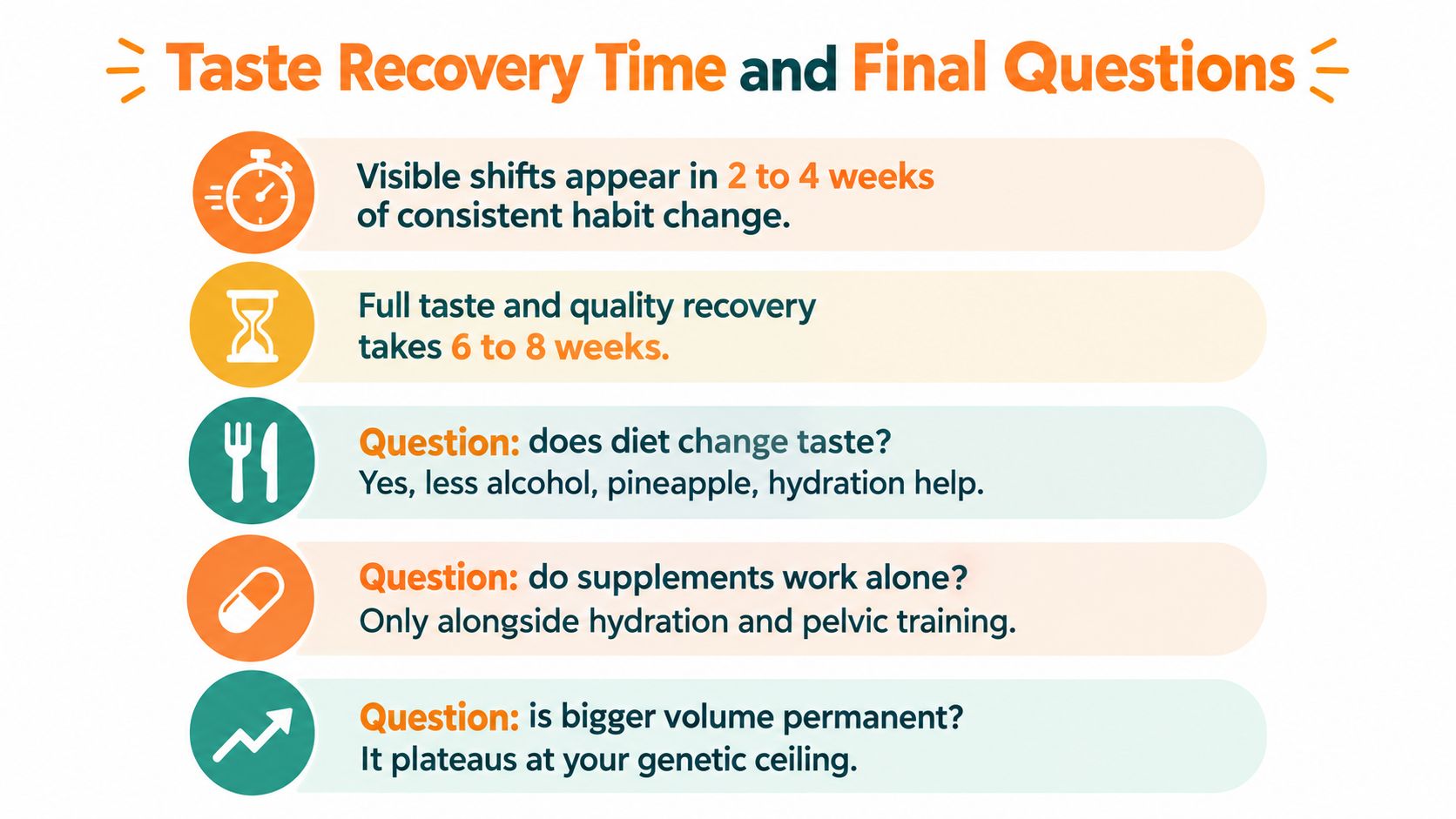
Lifestyle changes rarely register at the same speed. Hydration and abstinence can influence the next ejaculation, while nutrition, sleep, and pelvic coordination require more consistent practice. Semen parameters also change on biological timelines that aren't identical to the time it takes to notice a visual or sensory difference.
Taste is influenced by the composition of seminal fluid and by broader lifestyle patterns. Hydration, alcohol intake, smoking, and the overall diet can affect how a partner perceives flavor. Citrus, pineapple, celery, and other produce are often discussed in this context, but no food should be treated as a guaranteed taste modifier. Red meat and strongly flavored foods may also be noticed by some couples, while individual perception varies.
A partner may notice a difference in volume, force, or taste, but perception is subjective. Communication works better than performance pressure. Asking what feels different, what is enjoyable, and what isn't removes the need to judge the result by appearance alone.
Common claims under a closer look
| Claim | More accurate interpretation |
|---|---|
| Semen-volume pills work for everyone | Ingredient evidence is mixed, and zinc appears most relevant when intake or reproductive status is impaired |
| Testosterone boosters automatically increase semen | Hormonal products can have complex effects and shouldn't be used casually |
| Frequent ejaculation permanently lowers output | Close-together ejaculations can reduce the next visible amount, but frequency is only one variable |
| More abstinence is always better | Longer spacing can increase fluid accumulation while creating trade-offs for other semen measures |
| A stronger pelvic floor means constant squeezing | Control requires both contraction and complete release |
Persistent low volume, pain, blood in semen, erectile changes, fertility concerns, or a major change in ejaculation deserves professional evaluation. A urologist can assess medical history, medications, hormonal factors, and semen parameters instead of relying on visual judgment.
Supplements aren't evaluated to diagnose or treat a condition, and they can interact with medications or be inappropriate for certain health histories. Anyone considering zinc, L-arginine, or a multi-ingredient formula should review the label with a healthcare professional, especially when taking blood-pressure medicines, anticoagulants, or other prescription products.
These statements have not been evaluated by the Food and Drug Administration. This product is not intended to diagnose, treat, cure, or prevent any disease.
For men who want a structured supplement layer alongside hydration, nutrition, abstinence timing, and pelvic-floor work, SEMEX offers a daily formula focused on semen volume and taste support. Review the ingredients and testing details, then use it consistently as part of a measured routine rather than expecting one product to replace the fundamentals.