

How to Give Brain the Right Way: A Complete Guide
Maybe a partner has asked how to give brain, and the search has produced a pile of confident-sounding tricks that ignore the person doing the giving. The nerves are normal. So are questions about hygiene, jaw comfort, taste, pacing, barriers, and what to do when a partner's reactions aren't obvious.
A good experience isn't a performance test. It's a shared skill built through consent, preparation, attention, and feedback. Oral sex is common in the United States, with the CDC reporting that 82.7% of men and 82.2% of women ages 15–49 had ever had oral sex with an opposite-sex partner during 2017–2019 (CDC National Survey of Family Growth key statistics). That prevalence doesn't make anyone obligated to participate, but it does show why practical, shame-free guidance matters.
Table of Contents
- What Giving Brain Is and Why the Setup Matters
- Consent, Communication, and Safer-Sex Foundations
- Hygiene, Comfort, and Setting the Scene
- Technique That Puts Comfort First
- Reading Your Partner, Pacing, and Aftercare
- Taste, Intensity, and What Actually Makes a Difference
- Key Takeaways and Final Reminders
What Giving Brain Is and Why the Setup Matters
“Giving brain” is slang for performing oral sex on a partner with a penis. The phrase is casual, but the experience deserves more care than the usual one-sided script, where one person is expected to deliver pleasure while hiding discomfort, uncertainty, or fatigue.
The strongest approach starts before physical contact. Both people should want the activity, understand what is and isn't on the table, and have enough privacy and calm to stay present. A partner who feels rushed, judged, or unsure won't suddenly become more confident because someone remembered a particular technique.
The shared skill behind the slang
The giver's comfort matters as much as the receiver's pleasure. Neck position, jaw tension, breathing, saliva, gag reflex, sensory preferences, and the ability to pause all shape the experience. Treating those factors as inconvenient makes intimacy worse. Treating them as useful information makes adjustment straightforward.
A connected approach has three pillars:
- Clear consent: Desire must be freely given and can change at any moment.
- Practical preparation: Freshening up, choosing a comfortable position, keeping water nearby, and agreeing on safer-sex boundaries remove avoidable stress.
- Responsive technique: Pace, pressure, angle, and pauses should respond to the partner's words and body language rather than follow a memorized routine.
The giver also gets to say what feels comfortable. “That position is hard on the neck,” “A slower pace works better,” or “A pause would help” are complete and reasonable statements. No one owes a specific act, finish, depth, or duration.
Practical rule: The best technique is the one both partners can sustain comfortably and adjust without embarrassment.
This guide follows the same order that usually works in real life: establish permission, prepare the bodies and setting, use comfort-first technique, read feedback, and finish with care. Anyone looking for how to give brain should leave with a usable path, not a list of tricks detached from the partner's experience.
Consent, Communication, and Safer-Sex Foundations
Consent comes before positioning, clothing, or contact. A clear yes should be enthusiastic enough to feel voluntary, specific enough to be understood, and ongoing enough to remain open to revision. Silence, freezing, intoxication, pressure, or reluctance isn't a green light.
A verbal check-in doesn't need to sound formal. “Would you like oral sex tonight?” “Is this pressure okay?” and “Should the pace stay here?” give both people easy opportunities to answer. Non-verbal cues can add information, but they shouldn't replace a direct question when the signal is mixed.
Boundaries make the moment easier
Before starting, partners can agree on practical limits:
- Scope: Decide whether oral sex is the only activity or part of a broader encounter.
- Signals: Choose a word, hand tap, or shoulder tap that means stop immediately.
- Comfort: State limits around pace, pressure, position, teeth, ejaculation, and swallowing.
- Privacy: Confirm that both people feel safe, unobserved, and able to leave or pause.
A pause deserves acceptance without bargaining. “No problem, thanks for telling me” protects trust. Asking for a reason in the moment, sulking, or trying to restart immediately turns a boundary into a negotiation, which is exactly what consent must avoid.
Safer-sex planning belongs in the same conversation. Oral contact can transmit sexually transmitted infections, so partners should discuss known STI status, recent testing, symptoms, and whether barriers will be used. Condoms and dental dams can reduce exposure, and routine screening remains useful even in relationships that feel committed, because testing decisions depend on sexual history and agreements rather than romance alone.
For a low-pressure opening, one partner might say, “Before anything starts, what feels okay, what doesn't, and do either of us want a barrier?” Another can add, “A pause is always fine, and either person can change their mind.” Those lines aren't clinical. They're considerate.
The CDC's survey history also shows that oral sex has been tracked alongside other major sexual behaviors for years. National data for adults ages 18–44 recorded oral-sex experience close to vaginal-intercourse experience, while earlier survey waves documented substantial prevalence among younger adults in the United States (CDC National Health Statistics Report). That makes honest education more useful, not less important.
Anyone considering ejaculation during oral sex should also discuss that choice directly, including whether swallowing is comfortable and what safer-sex precautions apply. A practical resource on whether swallowing sperm is healthy can support that conversation, but it doesn't replace personalized medical advice.
Hygiene, Comfort, and Setting the Scene
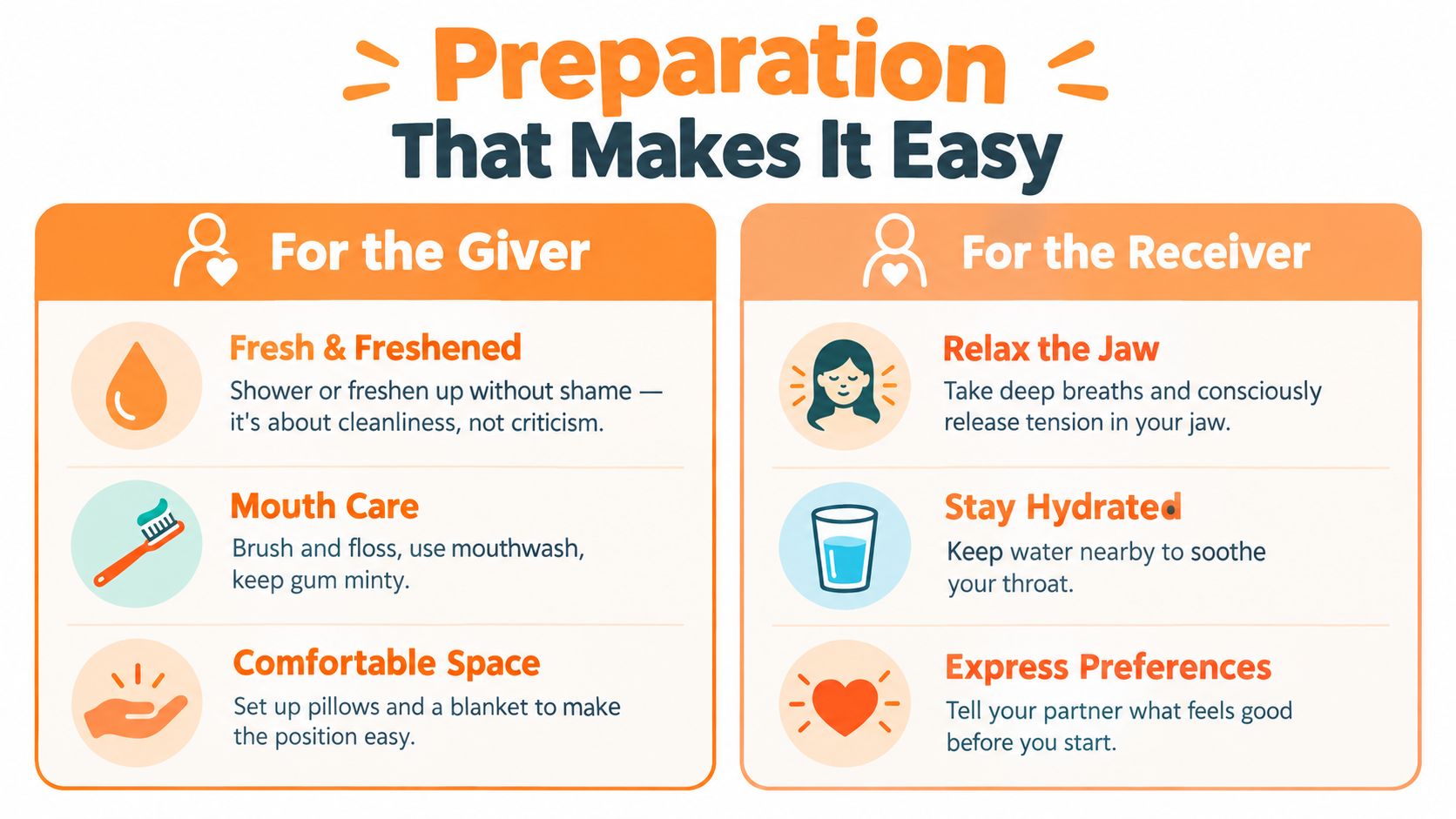
Freshness reduces distraction, but hygiene shouldn't become a source of shame. A shower, a quick wash, clean underwear, and trimmed nails can help both people feel at ease. The aim is comfort and cleanliness, not enforcing one body type, grooming style, or aesthetic standard.
The receiver can wash thoroughly and mention any areas that need gentler handling. The giver can brush and floss earlier rather than immediately before contact, since aggressive brushing can irritate the gums. A mild rinse, lip balm, and water nearby may be more useful than piling on strong fragrances or harsh products.
Comfort is practical, not decorative
Positioning determines whether the experience can continue comfortably. Pillows can support the giver's knees, hips, neck, or upper back. The receiver can choose a posture that avoids sudden movement and makes communication easy. Breathable clothing, a manageable room temperature, softer lighting, and a towel within reach all reduce small interruptions that pull attention away.
A shared pause signal helps when speech becomes awkward or impossible. A tap on the shoulder, a raised hand, or a simple word can work. The signal should mean exactly what the partners agreed it means, and the response should be immediate.
Useful preparation can include:
- Water: Keep a glass close for either partner.
- Towel: Use it for cleanup without making the end feel abrupt.
- Rinse option: Have a sink, cup, or discreet place to spit if desired.
- Support: Adjust pillows before the giver's jaw or neck starts hurting.
- Sound and light: Choose music, silence, brightness, and privacy together.
There is no prize for making the setup look spontaneous. A few minutes spent adjusting the room can protect the giver's body and help the receiver relax. Guidance on showering before sex can also help partners handle freshness without turning basic hygiene into criticism.
The mental shift matters. When the giver isn't worried about a sore neck, unpleasant smells, harsh lighting, or where to put a towel, attention becomes available for connection. Comfort doesn't compete with pleasure. It makes sustained pleasure more likely.
Technique That Puts Comfort First
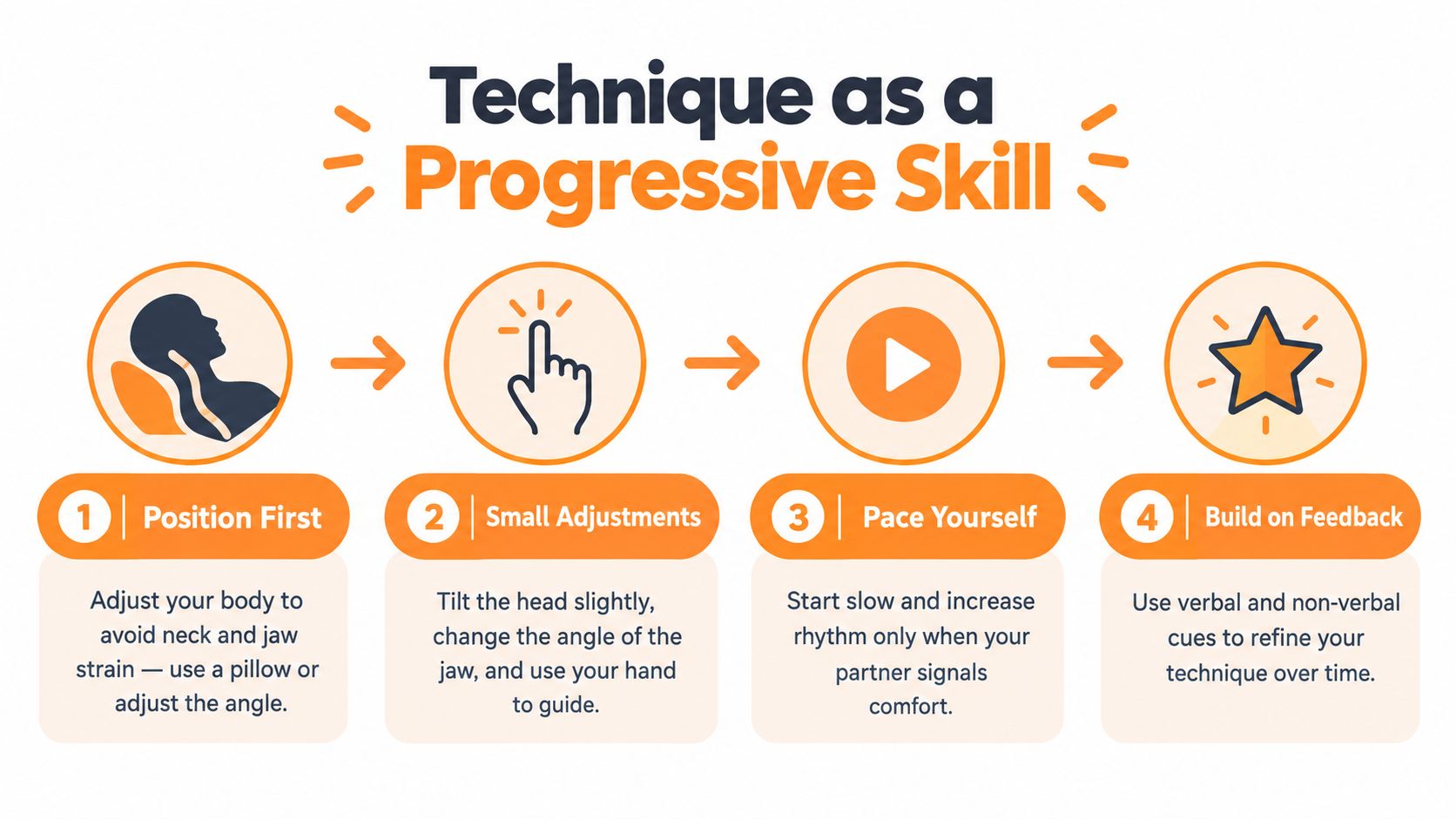
Technique works better as a progressive skill than as a fixed routine. The giver should begin in a position that protects the jaw and neck, then make small adjustments before strain builds. A pillow, a change in angle, or a hand supporting the receiver can keep the body relaxed and preserve control.
Start with pacing
A slow beginning gives both partners time to calibrate. The receiver can communicate what feels good, while the giver can notice whether the jaw, throat, shoulders, and breathing remain comfortable. Intensity should rise only when the receiver signals interest and the giver still feels in control.
Pressure should be matched, not guessed. Some partners like firm contact, while others prefer lighter sensation. A direct question can be more useful than interpreting every movement: “More pressure, less, or keep it here?”
Angle deserves the same flexibility. Remaining locked in one position often creates unnecessary strain. Rotating the body, changing the receiver's posture, or shifting the head slightly can improve comfort without disrupting the connection.
Use the whole body intelligently
Hands aren't passive accessories. They can provide support, guide movement, maintain contact, or give the giver a way to control pace without relying on the mouth alone. Their role should follow the couple's boundaries and preferences, with no assumption that more stimulation is automatically better.
Breathing needs attention too. A steady rhythm helps the giver avoid panic and overstimulation. Pauses are a skill, not a failure. The receiver can enjoy a break, a kiss, a change in pressure, or a different form of contact while the giver resets.
A useful sequence looks like this:
- Set the body: Find a stable position before increasing activity.
- Establish a baseline: Begin gently and observe the partner's response.
- Adjust one variable: Change pace, pressure, or angle, rather than everything at once.
- Confirm the response: Use a question or agreed signal before repeating the change.
- Protect comfort: Pause when the giver feels strain, dryness, breathlessness, or mental overload.
The giver isn't performing a routine. The giver is collecting feedback and responding to it.
Presence beats theatricality. A partner who stays attentive, checks physical comfort, and makes adjustments will usually create a more satisfying experience than someone rushing through advanced-looking moves. Technique serves the shared moment. It doesn't replace it.
Reading Your Partner, Pacing, and Aftercare
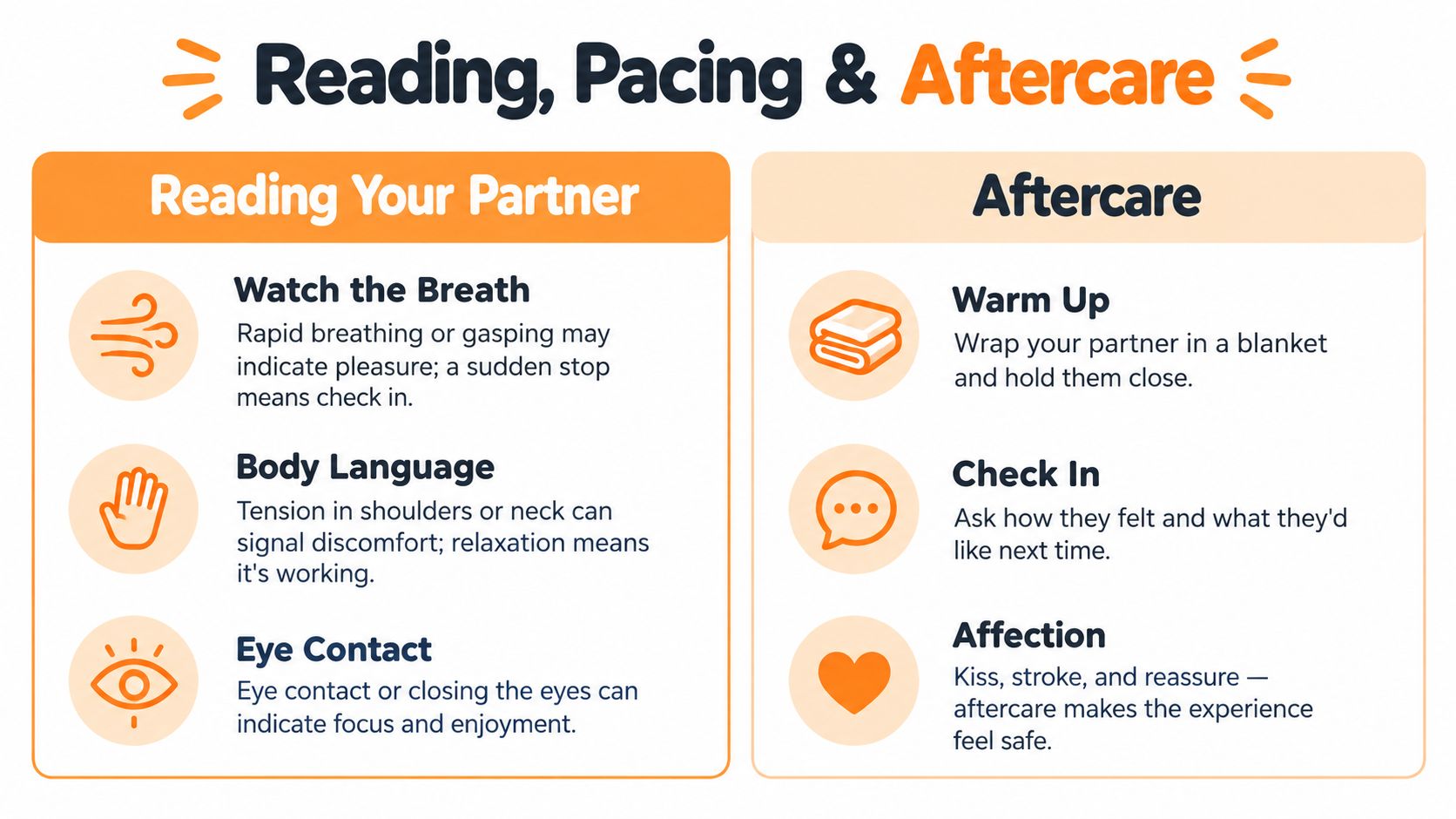
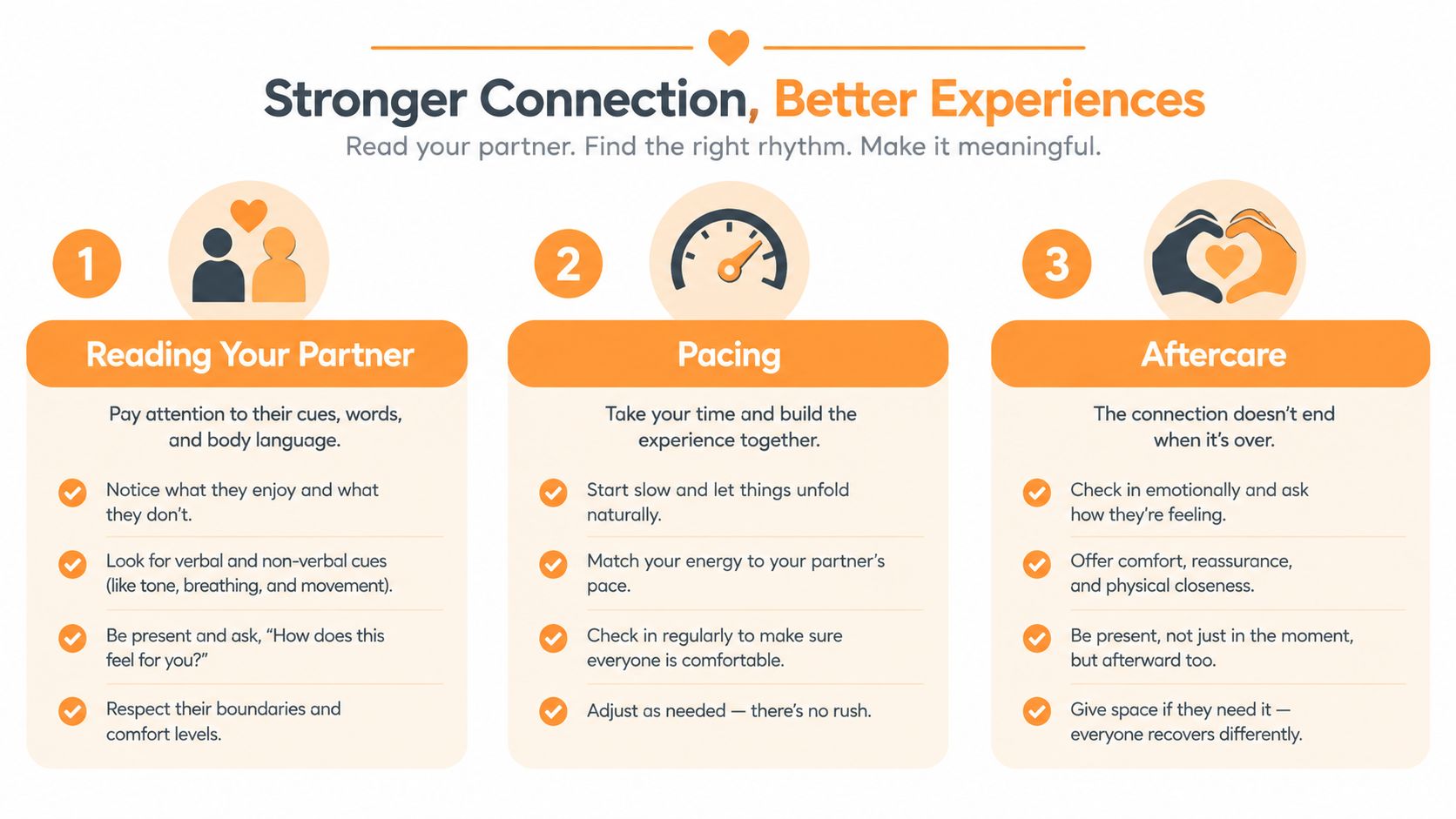
The receiver's body can offer useful information, but body language isn't a substitute for consent. Breathing may become deeper or faster with pleasure, yet a sudden change, withdrawal, freezing, or silence should prompt a check-in rather than an assumption. Relaxed shoulders, active participation, and clear requests can support the interpretation, but only the partner can confirm what a cue means.
Signals that deserve attention
Direct requests are the clearest feedback. “Stay there,” “slower,” “more pressure,” “stop,” and “not so deep” should be treated as actionable information. Hand placement can guide movement, but a hand pushing away, stiffening, or blocking contact means the giver should slow down and ask.
Some signs call for an immediate pause:
- Sudden tension: Stop or reduce intensity if the neck, shoulders, stomach, or legs tighten sharply.
- Pulling away: Pause if the receiver moves back or removes the giver's hand.
- Changed breathing: Ask what is happening if breathing becomes distressed or abruptly stops.
- Unclear response: Replace guessing with a simple question.
- Giver discomfort: The person giving can pause at any point, even if the receiver seems highly aroused.
Pacing should be collaborative. A receiver may lead with words or movement, while the giver controls what remains physically sustainable. Variation can mean changing the rhythm, taking a short break, using the hands, or returning to a familiar level of pressure. Constant escalation isn't required for a good experience.
Aftercare is part of the act
The minutes after intimacy shape how both partners remember it. Offer water, a towel, a blanket, a kiss, or a quiet hold. Then ask a straightforward question such as, “How did that feel?” or “What should stay the same next time?”
Aftercare can also address practical matters. Partners may want to rinse, clean up, discuss barriers, check for irritation, or lie together without talking. The important point is that nobody should feel discarded once ejaculation or the physical activity ends.
A caring ending confirms that the person mattered, not just the sensation.
Consent remains revisable after the activity too. A partner can feel good about one encounter and choose a different boundary next time. Respecting that change protects the relationship and keeps experimentation voluntary rather than expected.
Taste, Intensity, and What Actually Makes a Difference
Searches about how to give brain often lead to claims about changing taste, increasing intensity, or creating a dramatic result through one food. The useful distinction is between longer-term wellness habits that can influence bodily experience and short-term hacks that promise more than they can deliver.
Mainstream coverage commonly describes semen taste with terms such as bitter, salty, sweet, or metallic. Taste can vary with hydration, diet, metabolic health, smoking, alcohol intake, and general health, but no single food reliably controls the result. A review of the popular pineapple claim notes that direct human evidence for pineapple juice or bromelain as dependable taste fixers is lacking (Medical News Today overview of semen taste).
Myth vs. Reality: Factors That Actually Matter
| Common Belief | What Evidence Suggests |
|---|---|
| One serving of a fruit will transform taste immediately. | Short-term food fixes are popular anecdotes, not reliable guarantees. Sustainable hydration and overall diet quality are more sensible priorities. |
| A supplement that increases volume is automatically a fertility solution. | Semen volume and fertility outcomes are different goals. A larger amount doesn't automatically indicate better conception odds. |
| Alcohol and smoking don't affect the experience. | General wellness factors, including alcohol intake and smoking status, can influence bodily comfort and health, so reducing avoidable irritants is more credible than chasing a last-minute trick. |
| More intensity always means a better encounter. | Communication, comfort, and attention determine whether intensity feels good to both partners. |
| A product claim proves a medical outcome. | Structure/function claims aren't the same as disease claims or fertility treatment claims. |
Semen volume also varies naturally within the same man. Classic within-subject data describe a single ejaculate ranging roughly from 0.7 times to 1.8 times a person's usual volume, which is why one observation shouldn't define a pattern (Fertility Smart semen-analysis guidance). That variability reinforces the practical point: partners shouldn't treat a single ejaculation as a scorecard.
For men evaluating a daily supplement, SEMEX is formulated with zinc, L-arginine, sunflower lecithin, bromelain, maca root, Panax ginseng, ashwagandha, tongkat ali, saw palmetto, and horny goat weed to support semen volume, taste, and general vitality. Zinc plays a role in normal sperm function and fertilization, but reviews also report that zinc supplementation doesn't appear to improve pregnancy rates, sperm counts, or sperm function in recent clinical studies (NIH-hosted review of zinc and male fertility). That distinction should remain clear.
The practical recommendation is simple: prioritize water, everyday nutrition, reasonable hygiene, and honest preferences. Taste is secondary to whether the giver feels safe, comfortable, and respected.
Key Takeaways and Final Reminders
The answer to how to give brain the right way starts with the partner's experience, not with a technical stunt. A satisfying encounter usually has a few dependable features:
- Consent comes first: Both partners want the activity, understand the boundaries, and know that either person can pause or stop.
- Communication stays active: Direct requests beat mind-reading. Ask about pace, pressure, position, barriers, and ejaculation preferences.
- Preparation removes friction: Freshen up without shame, trim only according to preference, arrange pillows, keep water and a towel nearby, and choose a private setting.
- Comfort controls technique: Start slowly, protect the jaw and neck, change one variable at a time, and use hands or pauses to manage effort.
- Feedback guides intensity: Breathing, muscle tension, hand placement, and spoken requests provide information, but unclear cues require a check-in.
- Aftercare completes the experience: Offer water, affection, cleanup, and a genuine conversation about what felt good or should change.
- Safer sex remains relevant: Discuss STI status, testing, symptoms, and barrier options, including in relationships where partners otherwise feel secure.
Preferences vary widely. One receiver may want steady pressure, another may prefer frequent changes, and the giver may have clear limits that matter just as much. Curiosity and respectful questions outperform assumptions every time.
A single semen result also shouldn't become a verdict about health or fertility. WHO 2021 reference values use lower reference limits including 1.4 mL for semen volume, 16 million per milliliter for sperm concentration, and 39 million total sperm per ejaculate, but those reference values require context and repeat testing rather than instant conclusions (WHO 2021 semen-analysis reference values).
These statements have not been evaluated by the Food and Drug Administration. This product is not intended to diagnose, treat, cure, or prevent any disease.
SEMEX offers a daily men's supplement formulated to support semen volume and taste, with a blend that includes zinc, L-arginine, sunflower lecithin, and bromelain alongside other wellness ingredients. Men and couples interested in connecting everyday wellness with shared bedroom confidence can review the formula and product details at SEMEX.