

Growers vs Showers: What the Science Actually Says
A 2018 clinical study of 274 men found that 26% were growers and 74% were showers, based on how much penile length changed from the flaccid to erect state (2018 clinical study). That finding gives the familiar locker-room language a more useful clinical frame. “Grower” and “shower” aren't diagnoses, measurements of masculinity, or predictions of sexual performance. They're informal descriptions of how erectile tissue changes shape.
Newer research makes the binary even less complete. A follow-up analysis of 420 men identified three growth profiles, including an intermediate group, and linked the difference between profiles to changes in the tunica albuginea, the fibrous tissue surrounding the erectile bodies (andrology journal study). The important question, then, isn't which category sounds more impressive. It's what the pattern reveals, and what it doesn't reveal, about anatomy, measurement, erectile function, and reproductive health.
Table of Contents
- What Growers and Showers Actually Mean
- The Anatomy Behind Flaccid vs Erect Size
- Factors That Influence Which Category You Fall Into
- Does Being a Grower Affect Sexual Health or Fertility
- How to Measure Accurately and Why It Matters
- Lifestyle Habits and Ingredients That Support Sexual Health
- When Normal Variability Becomes a Reason to See a Doctor
-
Frequently Asked Questions About Growers and Showers
- Is the grower versus shower binary complete?
- Does stretched flaccid length predict erect length?
- Can supplements increase penis size or change a grower into a shower?
- What does the venous leak finding mean?
- Does category affect condom sizing?
- Does grower or shower status indicate fertility?
- What is the most useful takeaway?
What Growers and Showers Actually Mean
A 4 cm or greater increase in penile length from flaccid to erect was the 2018 study's definition of a grower. Using that threshold, 73 men, or 26%, were classified as growers, while 205 men, or 74%, were classified as showers (study definitions and results).
A grower therefore shows a relatively large change between soft and erect states. A shower shows less visible change because its flaccid length is closer to its erect length. The terms describe a pattern of expansion, not the final size itself. They are informal labels, not diagnoses or measures of masculinity.
| Feature | Grower | Shower |
|---|---|---|
| Flaccid appearance | Often appears substantially smaller when soft | Often appears closer to erect size |
| Main distinction | Larger flaccid-to-erect change | Smaller flaccid-to-erect change |
| 2018 study threshold | Increase of 4 cm or more | Increase below the study threshold |
| What the label describes | Tissue expansion pattern | Tissue expansion pattern |
| What it doesn't establish | Overall size, sexual skill, fertility, or diagnosis | Overall size, sexual skill, fertility, or diagnosis |
The cutoff is a study definition, not a universal biological boundary. Researchers may instead calculate relative growth from flaccid, erect, or stretched measurements. Results can shift with the measurement method, temperature, relaxation, and the starting state of the tissue. Comparing like with like matters more than assigning a casual category.
Newer clustering research also challenges the idea that every person fits neatly into two groups. An intermediate growth profile suggests a continuum, much like people can fall between two shoe sizes rather than matching one extreme or the other. The label captures visible change, while tissue mechanics explain why that change differs.
Confusing flaccid size with erect size creates unnecessary conclusions. A penis that looks small when soft may reach an erect length similar to one that appears larger at rest. The reverse can also occur. Flaccid appearance is a snapshot; the category describes the transition.
Neither label predicts erection firmness, comfortable intercourse, sexual skill, fertility, or semen health. For related terminology, see this overview of erection types and related terminology.
Practical rule: Compare measurements taken under similar conditions. A visual impression in a cold room or changing area cannot establish whether someone is a grower or shower.
The Anatomy Behind Flaccid vs Erect Size
An erection begins when nerve signals relax smooth muscle in the penile arteries and erectile tissue. Blood then flows into the paired corpora cavernosa, two cylindrical chambers that expand as they fill. Rising pressure compresses the veins that normally drain the penis, helping preserve rigidity.
The corpora cavernosa are enclosed by the tunica albuginea, a strong fibrous sheath with limited elasticity. As the chambers fill, the surrounding tissue stretches until the tunica approaches its mechanical limit. The visible change in length and girth depends on how blood inflow, tissue compliance, and venous compression interact.
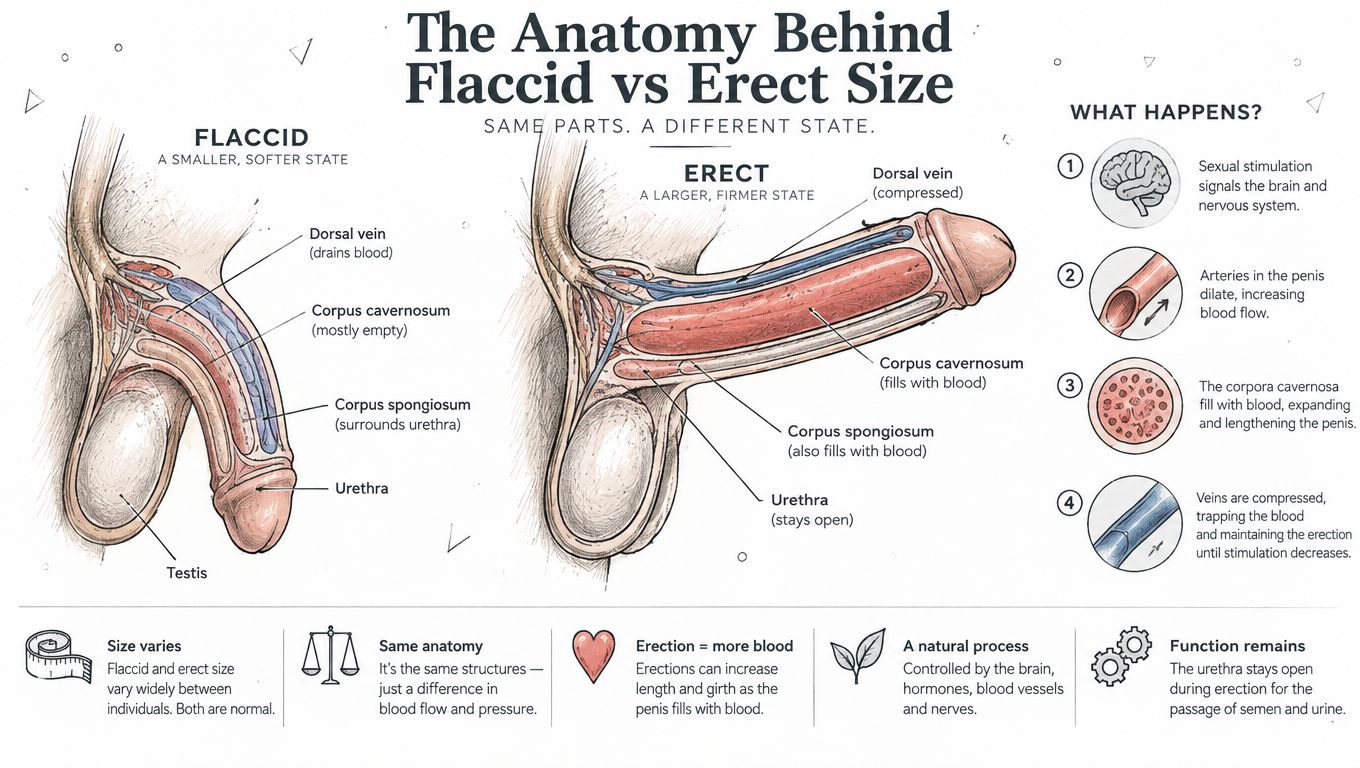
Soft appearance is shaped by more than the erectile chambers. The dartos muscle in the scrotal and penile skin contracts with cold or stress, drawing tissue inward. Buck's fascia and nearby connective tissues also affect support and positioning. These changes can alter flaccid appearance without changing the penis's capacity to become erect.
Tissue mechanics offer a better explanation
The newer three-profile analysis found a greater reduction in tunica albuginea thickness during erection among growers than showers, 27.0% compared with 14.1%, with p < 0.001 (full andrology research). The finding supports a tissue-mechanics explanation: in that sample, growers showed more change in the tunica during engorgement, while showers showed less compression-related change.
This is a group-level pattern, not a visual diagnostic test. Individual connective tissue varies, and the intermediate profile shows why a strict grower-versus-shower split misses part of the biology. The label describes an observable transition; it does not identify one fixed anatomical type.
Smooth muscle relaxation remains necessary for every erection. Nitric oxide and cyclic guanosine monophosphate, or cGMP, help relax erectile smooth muscle and allow blood inflow. Vascular, neurological, medication-related, or psychological factors can interfere with rigidity even in someone whose measurements suggest a grower pattern. This labeled male reproductive system guide provides useful anatomical context, while the label itself says little about function.
Factors That Influence Which Category You Fall Into
Grower or shower status reflects several overlapping influences, not a single biological switch. Baseline connective-tissue structure may affect how the tunica and surrounding tissues respond as pressure rises. Genetics can shape tissue composition, but family history cannot reliably predict an individual category. The newer three-group research also supports a spectrum: some men fall between the two familiar labels.
Temperature can change the starting appearance within minutes. Cold activates the dartos muscle, which contracts and draws the flaccid penis inward. Anxiety may produce a similar temporary effect through sympathetic nervous system activity. A measurement taken while someone is cold or tense describes that moment, much like judging a spring while it is being compressed, rather than revealing its full range.
Pubertal hormones support penile development, especially during puberty. Testosterone and dihydrotestosterone contribute to male sexual development, but no established hormone test assigns an adult to the grower or shower category. Category assignment depends on the relationship between flaccid and erect measurements, not on a hormone level in isolation.
| Factor | Evidence link to category | Evidence quality |
|---|---|---|
| Connective-tissue structure | A plausible contributor to how much the penis expands | Supported by newer tissue-mechanics findings, but not a personal diagnostic test |
| Temperature | Alters flaccid appearance through muscle contraction | Strong physiological explanation for short-term variation |
| Anxiety or stress | May increase flaccid retraction and interfere with arousal | Consistent with normal autonomic physiology |
| Pubertal hormones | Support overall penile development | Not established as a predictor of adult category |
| Age | Growers were younger on average than showers in the 2018 sample | An observed association, not proof that age determines category |
| Masturbation, underwear, or jelqing | No credible basis for permanently changing the category | Unsupported as category-changing methods |
Age requires careful interpretation. The 2018 sample showed an age difference between the groups, but it did not prove that aging converts a grower into a shower. Aging may coincide with changes in vascular function and connective-tissue elasticity, yet available findings do not establish a fixed life-course pathway.
Cardiovascular fitness supports the conditions needed for a firm erection. It does not switch one category into the other. Blood-vessel function, including the processes described in this guide to nitric oxide and blood flow, can influence erection quality without determining the size change between flaccid and erect states. Stretching devices, underwear choices, and ejaculation habits should not replace evidence-based assessment.
Does Being a Grower Affect Sexual Health or Fertility
59% of total ejaculate-volume variance came from differences within the same man over time (review of zinc and male reproductive health). That finding illustrates why one visible trait or one measurement cannot stand in for a complete fertility assessment.
“Grower” and “shower” describe how much the penis expands between flaccid and erect states. They say nothing about communication, arousal, comfort, erection firmness, orgasm, or a partner's satisfaction. A dramatic change in size is a tissue characteristic, not a score for sexual ability.
Erection quality depends on several systems working together: arterial blood flow, nerve signaling, smooth-muscle relaxation, venous compression, medication effects, mental health, and general health. A larger visual change cannot replace evaluation of those systems.
Newer research adds a more precise view than the usual two-label joke. A three-group clustering analysis examined differences in tissue mechanics during erection. Growers showed a greater reduction in tunica thickness, while reduced tunica compression was associated with venous leak in logistic regression, with p = 0.011. Growth profile itself was not significantly associated with erectile dysfunction etiology, with p = 0.084 (clinical study abstract). These findings describe associations within the sample. They do not show that being a grower causes, prevents, or predicts a specific erectile condition.
Fertility uses different measures, including sperm count, motility, morphology, semen volume, and reproductive anatomy. Semen results can vary within the same person, so one sample is only one observation, not a complete fertility profile.
The practical conclusion is limited: grower or shower status may reflect tissue elasticity and expansion, while it cannot predict sexual performance, partner satisfaction, fertility, or overall erectile health.
How to Measure Accurately and Why It Matters
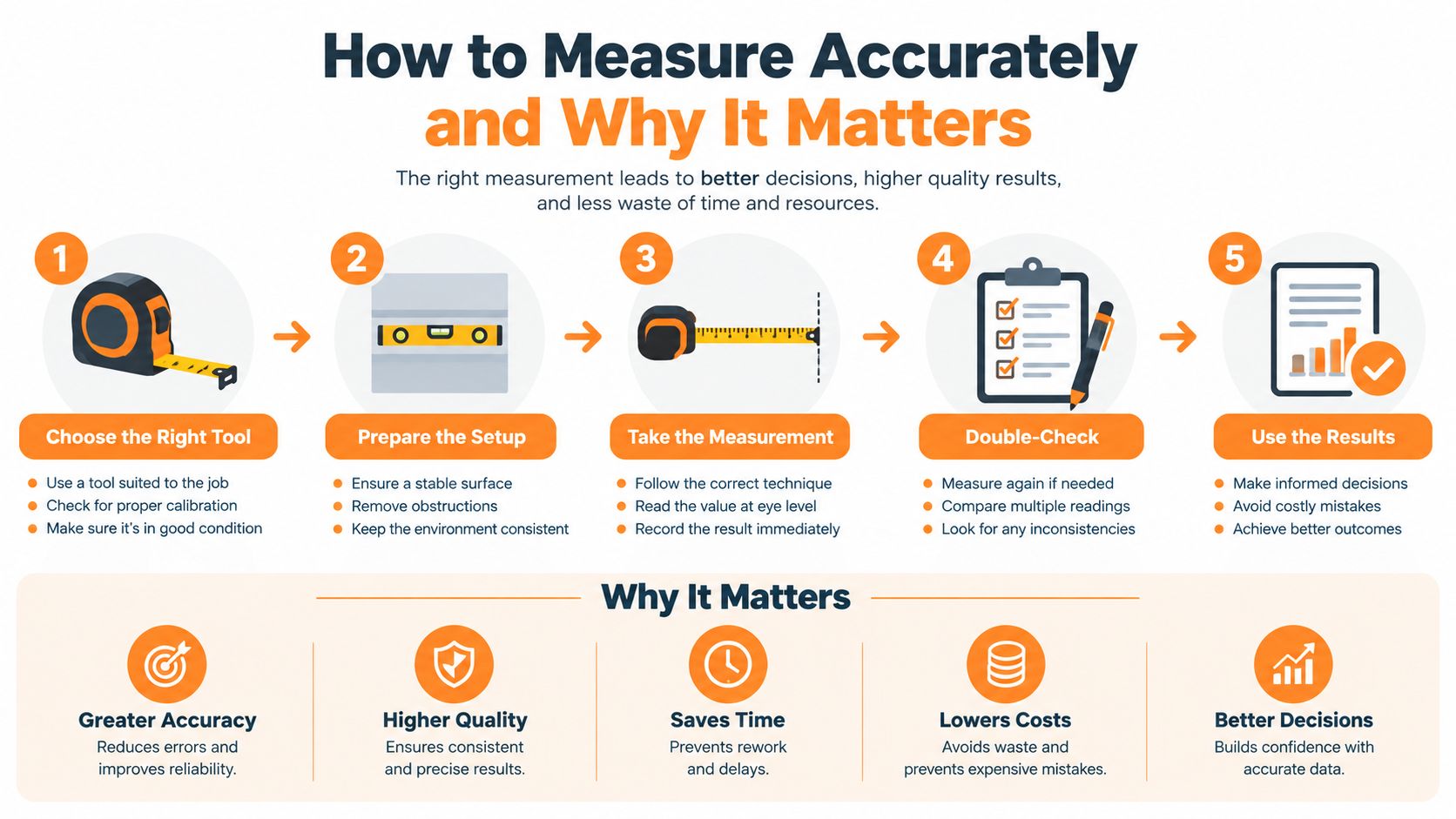
Measurement errors often begin before the ruler touches the skin. Flaccid size changes with temperature, stress, recent exercise, and body position. A cold flaccid measurement is especially poor for classification because contraction can temporarily reduce visible length.
A repeatable protocol gives more useful information:
- Create a warm, relaxed baseline. Measure in a comfortable room after the body has settled. Record the position and conditions so later readings can be compared fairly.
- Measure flaccid length. Place a rigid ruler along the top of the penis from the pubic base to the tip. Consistency matters more than forcing the tissue into a particular shape.
- Measure stretched length gently. With the penis flaccid, apply gentle traction and measure from the pubic base to the tip. Pain or force has no place in the process.
- Measure erect length separately. Measure at full arousal using the same top-line, bone-pressed method. A single incomplete erection shouldn't be compared with a fully erect reading.
- Record more than one session. Repeated measurements under similar conditions are more informative than one unusually warm, cold, anxious, or rushed reading.
A multicenter review found that flaccid measurements were only moderately accurate for predicting erect size and could underestimate erect length by about 20%, depending on technique. Stretched length correlated most closely with erect length, and pooled averages across studies placed flaccid length around 8.7 to 9.2 cm and erect length around 13.1 to 13.9 cm (measurement review). Those averages describe study populations, not a target that every individual must reach.
Girth can be tracked with a flexible tape around the mid-shaft, again under a defined state and consistent conditions. Measurement becomes useful when it answers a clear question, such as documenting a change or discussing a concern with a clinician. It becomes misleading when it fuels repeated comparisons against carefully selected online photographs.
Lifestyle Habits and Ingredients That Support Sexual Health
Erectile function depends on several systems working together: blood vessels deliver blood, nerves carry signals, smooth muscle relaxes, hormones support sexual response, and mental state can influence arousal. Flaccid appearance is only an informal label, so it cannot show whether these systems are functioning well. Regular aerobic activity supports cardiovascular conditioning and nitric oxide pathways. Consistent sleep supports endocrine regulation and physical recovery.
Smoking cessation matters because tobacco exposure harms vascular health. A heart-supportive eating pattern, regular movement, stress management, and dependable sleep provide a stronger foundation than any single capsule. These habits do not change a person from a grower into a shower, or the reverse. They can support the physiological conditions needed for arousal and erection.
Ingredient claims require the same careful separation between biological plausibility and demonstrated outcomes.
| Ingredient | Proposed mechanism | Evidence level | Typical studied dose |
|---|---|---|---|
| L-citrulline | Precursor involved in nitric oxide production | Limited and context-dependent evidence for vascular support | Not established in the cited data |
| L-arginine | Substrate used in nitric oxide pathways | Limited evidence, with results dependent on formulation and population | Not established in the cited data |
| Zinc | Supports normal male reproductive biology and spermatogenesis when adequate | Useful nutrient, not a fertility cure | Not established in the cited data |
| Ashwagandha | Studied for stress and general wellness outcomes | Evidence varies by preparation and outcome | Not established in the cited data |
| Bromelain | Enzyme ingredient discussed in supplement formulations | No established conclusion here for sexual performance or semen taste | Not established in the cited data |
Zinc shows why a nutrient's normal role does not make supplementation a treatment. A NIH-linked review notes that zinc deficiency can impede spermatogenesis and affect testosterone, while the summarized clinical studies did not show improved pregnancy rates, sperm counts, or sperm function from zinc supplementation (zinc and male reproductive health review). Meeting nutritional needs and correcting a documented deficiency are different from taking extra zinc to change fertility outcomes.
Some men compare formulas containing zinc, L-arginine, sunflower lecithin, bromelain, maca, ginseng, or ashwagandha. SEMEX is one dietary supplement formulated around zinc, L-arginine, sunflower lecithin, bromelain, and additional men's wellness ingredients, with product information describing a daily capsule routine and third-party testing. Evaluate that product category by checking transparent labels, disclosed amounts, independent testing, medication compatibility, and restrained structure/function wording.
The FDA requires the standard disclaimer for dietary-supplement structure/function claims. Its consumer guidance also states that supplements cannot claim to diagnose, treat, cure, or prevent a specific disease (FDA consumer guidance). Claims of permanent size change, guaranteed erections, or fertility cures should therefore receive careful scrutiny.
When Normal Variability Becomes a Reason to See a Doctor
Flaccid appearance changes throughout the day. Cold exposure, stress, recent exercise, and physical fatigue can alter retraction and skin tension. Morning erections also vary, so an occasional absence doesn't automatically signal a medical problem.
A grower or shower pattern alone isn't a reason for concern. The threshold changes when the pattern appears alongside a new symptom, persists outside ordinary circumstances, or interferes with sexual activity. A clinician evaluates the change, not the nickname.
Symptoms that deserve medical attention
- Sudden loss of size or function: A noticeable new change that doesn't resolve deserves assessment.
- Painful or curved erections: Pain or a new bend can be associated with penile tissue disorders and warrants a urology discussion.
- An erection lasting more than four hours: This is urgent and requires immediate medical care.
- Persistent difficulty achieving or maintaining an erection: Repeated erectile difficulty can have vascular, neurological, medication-related, hormonal, or psychological contributors.
- Numbness or color changes: New loss of sensation, unusual pallor, bluish color, or other circulation changes shouldn't be self-monitored indefinitely.
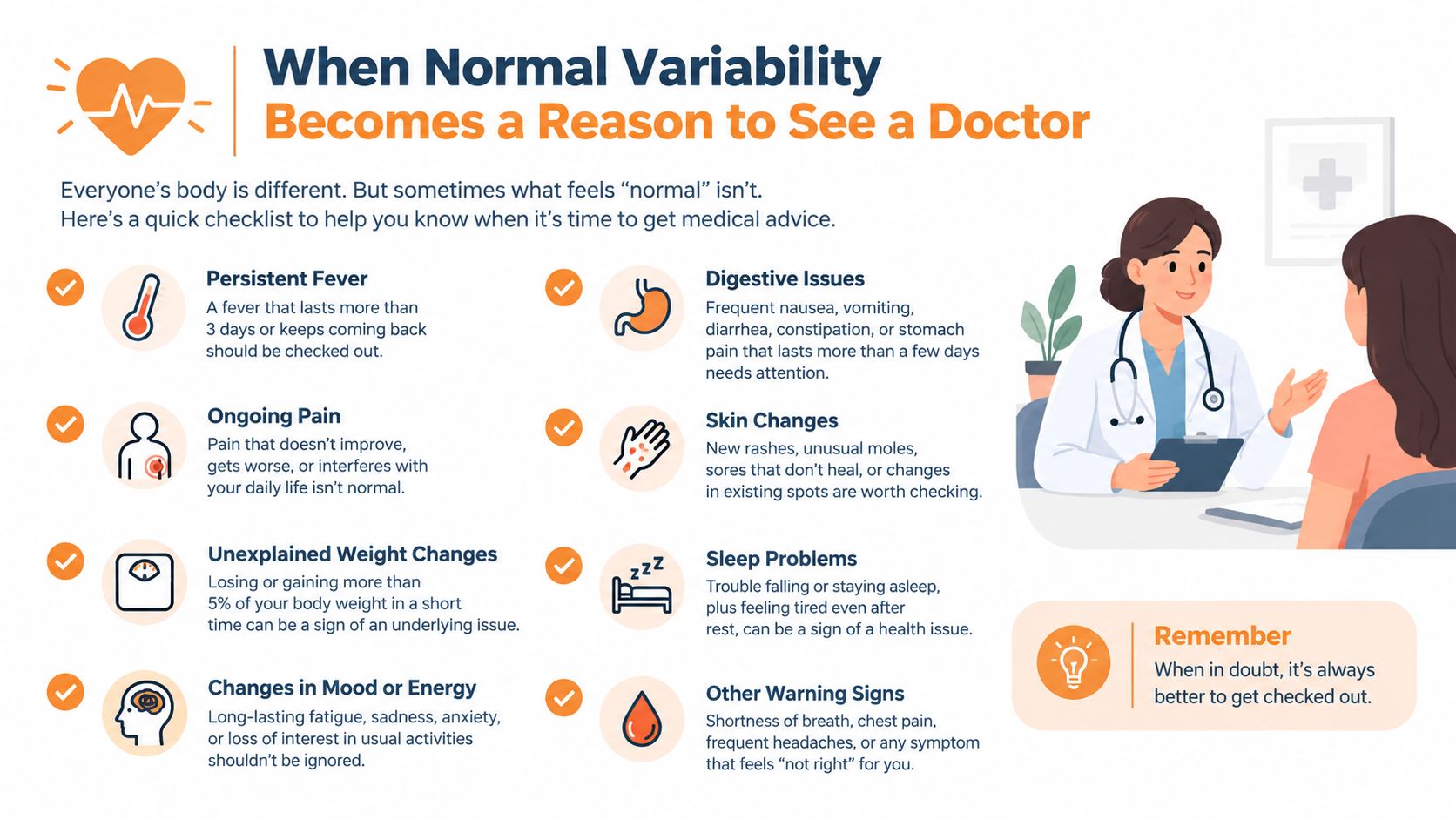
Clinical threshold: Anything new, persistent, painful, or disruptive to sexual function deserves a medical conversation rather than repeated measuring at home.
A urologist can review medication use, vascular risk, sensation, curvature, erection quality, and relevant reproductive concerns. That evaluation is more informative than assigning a category based on a single flaccid observation.
Frequently Asked Questions About Growers and Showers
Is the grower versus shower binary complete?
No. A newer analysis of 420 men used clustering to identify growers, showers, and an intermediate group. Under that study's growth definition, growers represented about 7% of the sample, showers about 33%, and the intermediate group about 32% (three-profile analysis). Those reported categories do not account for every participant in the summary, so they are not a universal census. The useful conclusion is that penile expansion varies along a spectrum rather than dividing every body into two fixed types.
Does stretched flaccid length predict erect length?
Stretched length generally relates more closely to erect length than a casual flaccid observation. Researchers and clinicians can therefore use it as a more repeatable proxy, although it does not reproduce every feature of an erection. Gentle stretching, a bone-pressed starting point, and consistent conditions make comparisons more meaningful.
Can supplements increase penis size or change a grower into a shower?
There is no reliable basis in the cited evidence for using supplements to permanently change a growth category or penis size. An ingredient may have a nutritional or physiological role without treating disease, correcting fertility problems, or transforming anatomy.
Supplements can interact with medicines, especially products that affect blood pressure, circulation, sedation, or hormone-related pathways. A pharmacist or clinician can review the ingredient list before use, particularly if cardiovascular medication or another long-term treatment is involved.
What does the venous leak finding mean?
The newer study found an association between reduced tunica compression and venous leak in logistic regression. That finding does not mean every grower has venous leak, nor does it show that being a grower causes the condition. Growth profile itself was not significantly associated with the cause of erectile dysfunction in that analysis. Persistent erection difficulties need clinical assessment rather than conclusions based on expansion pattern.
Does category affect condom sizing?
Condom fit depends on measured dimensions, not on a grower or shower label. Flaccid size can affect application and handling, while erect length and girth influence comfort during use. Choose a condom that fits the erect dimensions, then check its placement, comfort, and coverage. Category language cannot substitute for those practical checks.
Does grower or shower status indicate fertility?
No. Fertility involves sperm production, motility, morphology, semen volume, reproductive anatomy, and partner-related factors. Penile expansion does not measure sperm quality, and semen results can vary between samples from the same man.
What is the most useful takeaway?
The label describes flaccid-to-erect tissue change. It may encourage questions about anatomy, but it cannot rank bodies or predict sexual health. Consistent measurement, attention to symptoms, and evidence-based medical guidance offer a sounder basis than online comparison.
Readers comparing ingredient transparency and men's wellness options can visit SEMEX to review its formulation and product information alongside broader sexual-health habits. These statements have not been evaluated by the Food and Drug Administration. This product is not intended to diagnose, treat, cure, or prevent any disease.