

Does Sex Cure Hangovers? What the Evidence Says
There is no established clinical evidence that sex cures a hangover. In a controlled crossover study of 172 volunteers, participants reached a mean breath alcohol concentration of 0.115 g%, and 76% reported hangover symptoms the next day after drinking.
A warmer mood or a few quieter minutes can feel like progress when your head is pounding. That short lift is easy to confuse with recovery, like turning down an alarm without fixing what set it off. A hangover develops as blood alcohol levels fall toward zero, and feeling more comfortable does not reverse the underlying effects. Consent and physical stability matter more than any supposed benefit.
Table of Contents
- Does Sex Cure Hangovers According to Research
- What a Hangover Is Doing in the Body
- Why Sex Cannot Speed Alcohol Clearance
- How Orgasm Can Ease Pain Without Fixing a Hangover
- Why Some People Seem Cured Without Any Special Trick
- When Sex After Drinking Is Not Safe
- What Helps a Hangover More Than Sex
Does Sex Cure Hangovers According to Research
A lot of people assume that if something makes you feel a bit better, it must be fixing the cause. That assumption doesn't hold for sex. Experimental hangover research has tested hydration, analgesics, dietary products, supplements, and other proposed interventions. It has not tested intercourse or orgasm as a treatment, so neither one has a demonstrated status as a cure.
Why a simple cure looks unlikely
A set of randomized crossover trials shows why a single trick is a poor bet. The same 172 volunteers drank alcohol on one occasion and a placebo on another. They reached a mean breath alcohol concentration of 0.115 g%, then completed a next-day assessment. Hangover symptoms were reported by 76% after the alcohol condition. Beverage type didn't predict who got sick. Participant characteristics didn't either.
The symptoms were still there after the alcohol had been eliminated. Sweating, distraction, stimulation, or a relaxed mood from sex can't be treated as a reversal of that physiology. Dehydration, broken sleep, an irritated gut, inflammation, and alcohol metabolism are running together. A bedroom activity doesn't switch that cluster off.
Feeling briefly soothed is not the same thing as clearing a hangover.
Sex can also be a hard ask if you're dehydrated, dizzy, nauseated, or still intoxicated. Alcohol can impair judgment and consent at the same time. If you feel better afterward, that change may be natural recovery, rest, a placebo effect, or plain distraction. The conclusion stays narrow. Sex is not a proven hangover cure.
What a Hangover Is Doing in the Body
Picture several household problems hitting on the same morning. The tank is leaking, the filter is slow, the stomach is irritated, and nobody slept well. A hangover works like that. It isn't one broken part you can patch with a single activity.
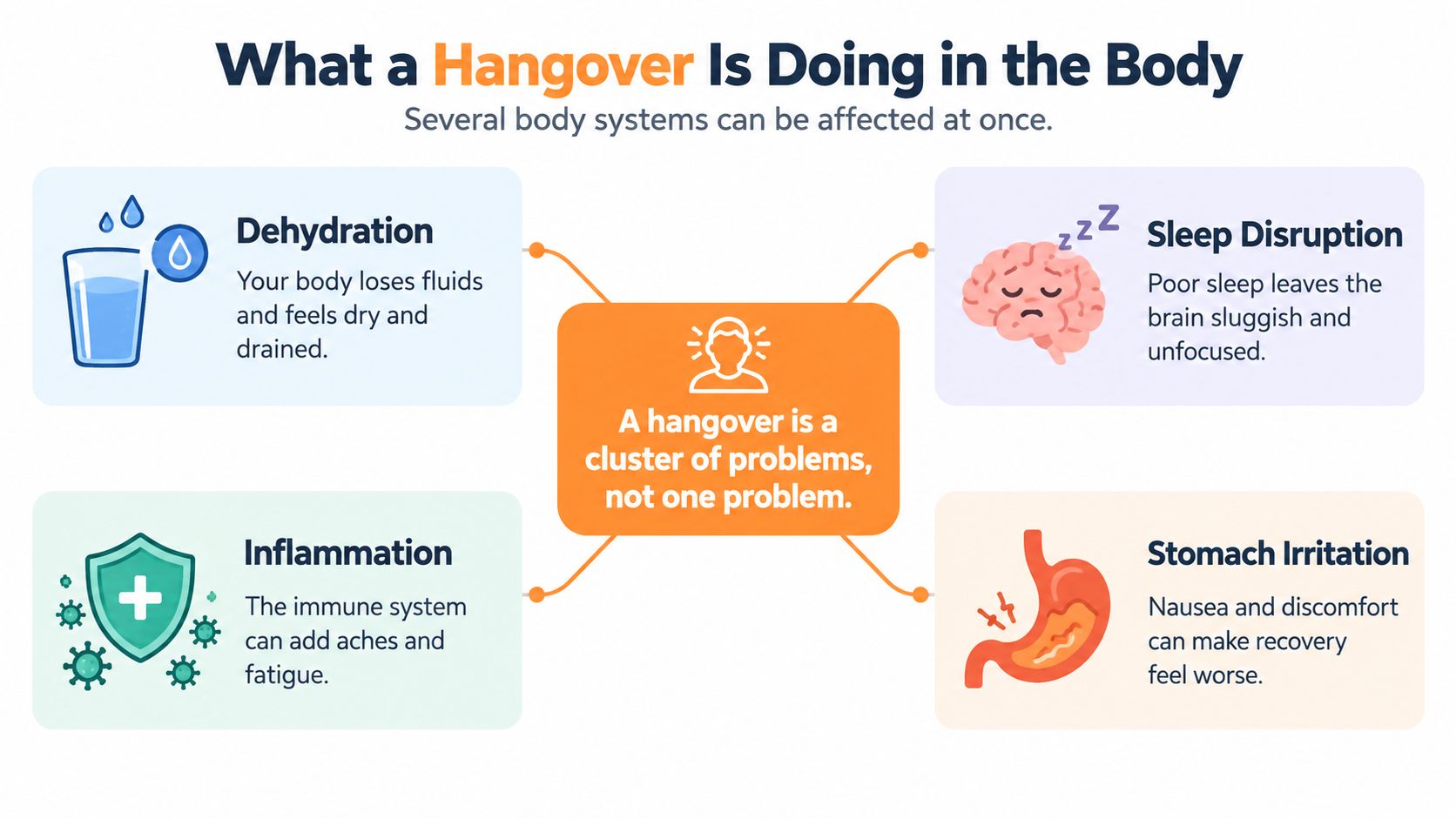
Hangover biology described by the National Institute on Alcohol Abuse and Alcoholism lines up with that picture.
- Fluid loss: Alcohol suppresses vasopressin, so you urinate more and lose fluid. Thirst and a drained feeling follow.
- Slow chemistry: Metabolism turns ethanol first into acetaldehyde, then into acetate. That conversion has its own pace.
- Immune signaling: Inflammatory signals add malaise, headache, nausea, and fatigue on top of the fluid loss.
- Gut and sleep: The stomach lining gets irritated, and sleep quality drops, so the next morning feels worse than a simple dry mouth.
Sexual activity doesn't directly reverse those processes. Orgasm can briefly change pain perception, mood, and autonomic activity through endogenous opioids, oxytocin, and a shift between sympathetic and parasympathetic states. That's a real reason some people notice a short lift. It is not clearance of acetaldehyde, restored fluid balance, or resolved inflammation.
When comfort turns into extra strain
Sex can raise exertion, heart rate, sweating, and fluid demand. If you're already vomiting, dried out, or short on sleep, that extra demand can worsen dizziness or weakness. Long-term questions, such as how alcohol can affect sperm, are a separate topic from whether this morning's symptoms will fade.
Boundary: Sex is only an optional comfort activity when you're alert, hydrated, steady on your feet, and freely consenting.
It isn't a way to sweat out alcohol. It doesn't replace rest, fluids, food, or a medical evaluation when something feels seriously wrong.
Why Sex Cannot Speed Alcohol Clearance
The rate-limiting step is chemistry, not circulation. Alcohol dehydrogenase oxidizes ethanol to acetaldehyde. Aldehyde dehydrogenase converts acetaldehyde to acetate. Sexual activity doesn't materially accelerate either enzymatic path. Think of a two-stage filter in a sink. Splashing water around the basin, or getting your heart rate up, doesn't make the filters work faster. The enzymes still set the pace.
Hangover severity also tracks inflammatory and oxidative mechanisms. A peer-reviewed review of hangover mechanisms summarized studies in which blood interleukin-6 and tumor necrosis factor-alpha were positively related to next-day severity. An orgasm might briefly ease discomfort through distraction, relaxation, or analgesic neurochemistry. The metabolite load and the cytokine burden are still there.
What sex can change and what it cannot clear
| Driver | What sex may change | What matches the driver |
|---|---|---|
| Ethanol moving through two enzyme steps | A short sense of stimulation or distraction | Time for metabolism, and no more alcohol |
| Cytokines linked with worse next-day severity | A brief easing of perceived discomfort | Rest while inflammatory signaling settles |
| Fluid loss after suppressed vasopressin | Often more sweating and a higher fluid demand | Gradual fluids, not extra exertion |
| Fatigue from poor sleep and malaise | A temporary mood shift | Sleep, and food if your stomach allows it |
More useful steps are plain. Stop drinking. Sip fluids gradually. Eat if you can tolerate food. Sleep. Don't drive while you're still impaired or badly hungover, and don't mix recovery with sedating medicines.
When this stops being a home problem
Get urgent care for inability to stay awake, confusion, seizures, slow or irregular breathing, repeated vomiting, or suspected alcohol poisoning. No supplement and no bedroom activity is a treatment for those problems. If you can't stay oriented, the priority is medical help, not a theory about what might make you feel looser.
How Orgasm Can Ease Pain Without Fixing a Hangover
The myth sticks because the feeling is real, even when the cure isn't. A review of sexual expression reports that endorphins may contribute to the pain-reducing effects of sexual activity, and that oxytocin rises during arousal and orgasm. Those are two limited effects. They explain a softer edge on pain and a warmer mood. They don't explain a repaired hangover.
Take a concrete morning. Someone wakes with a dull headache and a flat mood. After orgasm there's warmth, closeness, and a few quieter minutes. It's tempting to decide the hangover ended right there. What changed was perception and mood. Dehydration, acetaldehyde-related effects, sleep disruption, and inflammation were not shown to lift because of those pathways.
Feeling better for a moment isn't the same as being recovered.
Two effects, and the leap people make
Endorphins are a reasonable explanation for a short change in how pain feels. Oxytocin is a reasonable explanation for closeness and a calmer few minutes. Neither finding demonstrates relief of the hangover mechanisms already mapped. No cited study provides a percentage of people whose hangovers were cured by intercourse or orgasm, so that kind of number shouldn't be invented to make the story neater.
Some people also wonder whether ejaculation makes you feel weaker. That's a separate question about energy, not evidence that orgasm clears alcohol's aftereffects. If the headache returns twenty minutes later, the short lift did what those pathways can do. It didn't finish the recovery.
Why Some People Seem Cured Without Any Special Trick
Hangovers are common, but they're uneven, which undercuts any universal remedy. In a controlled analysis of 172 participants, 24.4% reported no hangover after alcohol, 43.6% reported a mild hangover, and 31.9% reported a moderate one. None reported a severe hangover in that study.
A separate observational analysis in the same research found that 20.5% of 955 participants reported no hangover the next day, while 79.5% did. Researchers often describe roughly 20–30% of drinkers as relatively hangover resistant, though resistance becomes less common as alcohol exposure rises. In the controlled study, the share reporting a hangover generally rose as the administered ethanol rose, without a perfectly straight line.
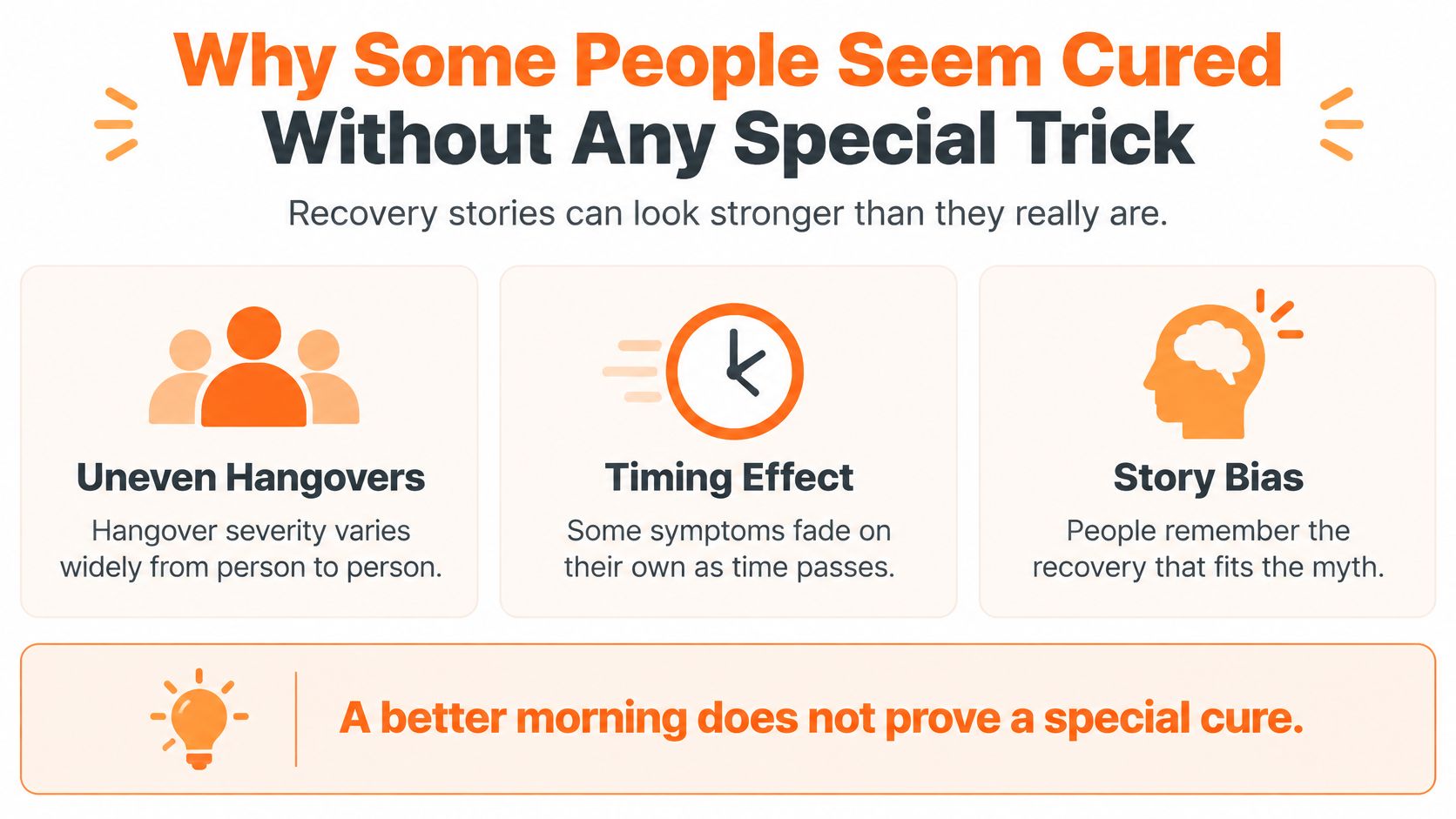
What an anecdote can't sort out
Dose, individual susceptibility, and drinking pattern shape the next day. Sex afterward doesn't. Two friends can drink in the same room and wake up in different conditions. One feels almost fine. The other feels wrecked. If the person who feels fine also had sex, the story writes itself, and it still doesn't prove a cause.
Many people improve as alcohol is metabolized and as sleep, fluids, and food restore ordinary function. An anecdote can't separate sex from the passage of time. Someone sleeps four more hours, drinks water, eats toast, and also has sex. By noon they feel human again. The sex is the memorable part. The clock, the nap, and the water did work the story doesn't credit.
No cited study gives a percentage showing that intercourse or orgasm cures hangovers. Treat those claims as anecdotes, not medical fact. A better morning doesn't prove a special trick. It often proves that time passed and that this person wasn't in the group who feels worst.
When Sex After Drinking Is Not Safe
The consent question matters more than any supposed hangover benefit. A lot of chatter fails to separate a next-day hangover from ongoing intoxication. Alcohol can impair judgment, communication, boundary recognition, and decision-making. If either person is incapacitated, disoriented, unable to respond clearly, or has lost motor control, consent isn't possible.
Someone who feels hungover may still have alcohol in their system. Feeling more alert doesn't prove they're unimpaired. The safest move is to postpone sex when either partner is uncertain, significantly intoxicated, vomiting, confused, difficult to wake, or unable to give clear and ongoing agreement.
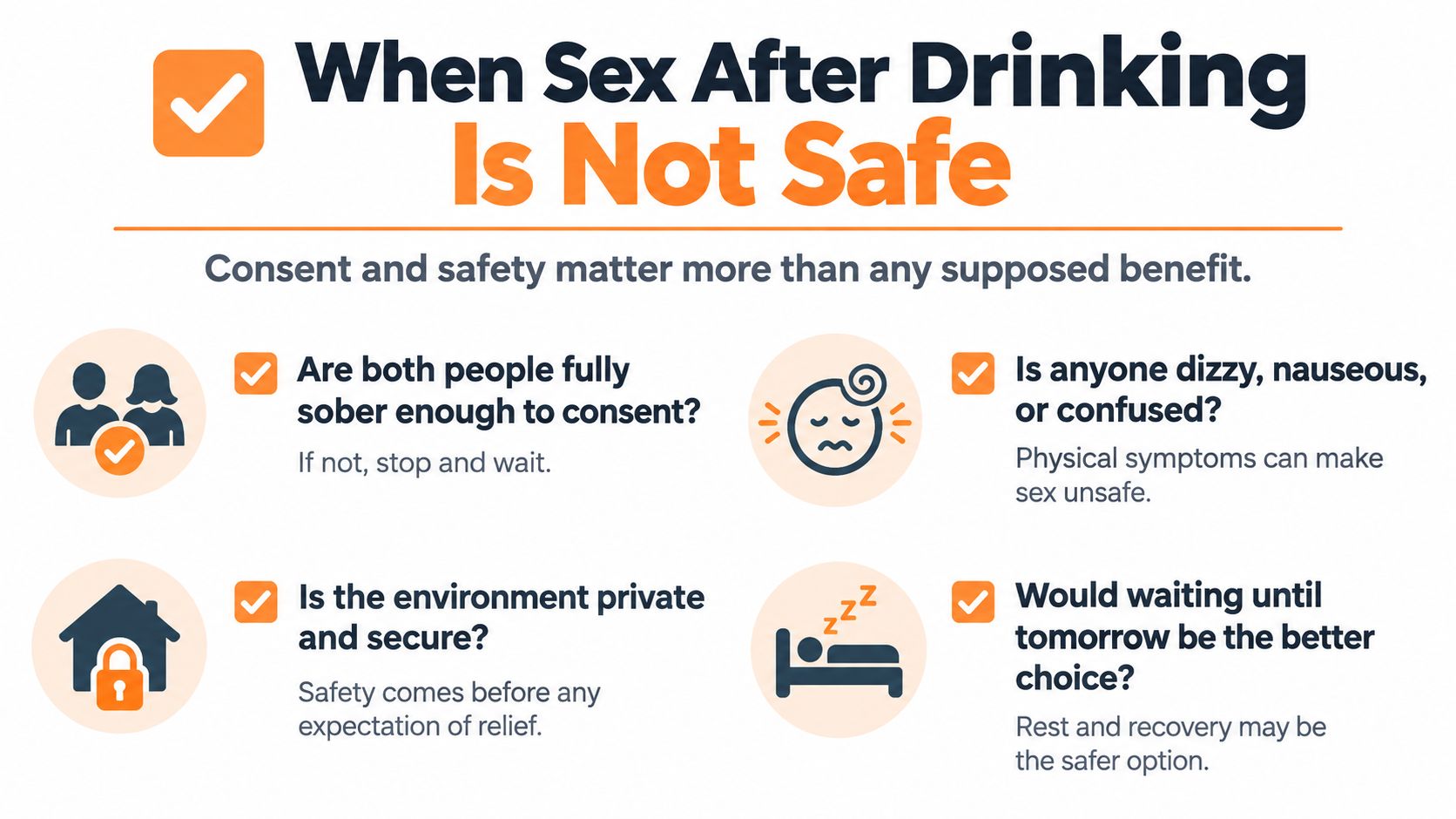
University health guidance on drinking and sex stresses checking verbally before and during sexual activity, and stopping when a partner can't answer directly or make decisions.
Risks that cure articles skip
- Missed protection: Condoms or contraception get skipped more easily when people are unsteady or rushing.
- Infection exposure: Impaired judgment can raise STI risk that neither person intended.
- Falls and fainting: Dizziness plus exertion is a bad mix on a hard floor or in a shower.
- Worse nausea and dehydration: More sweating and movement can intensify symptoms that already need rest.
Safety check: Sobriety, clear communication, ongoing consent, and physical stability decide whether sex is appropriate. A change in symptoms doesn't.
Practical habits around clear communication before sex matter here even for couples who aren't new to each other. Ask a direct question. Wait for a direct answer. If the answer is vague, slurred, or missing, stop. No daily men's wellness supplement belongs in this decision, and none of them addresses alcohol's effects on judgment.
What Helps a Hangover More Than Sex
Sex isn't a proven hangover cure. A systematic review of randomized trials in The BMJ concluded that no conventional or complementary intervention had compelling evidence for preventing or treating alcohol hangover. The strongest prevention strategy in that review was abstinence or moderation. Sexual activity wasn't established as an effective intervention, so claims that intercourse or orgasm reliably removes symptoms stay unsupported.
An ordinary next morning
For a typical next-day hangover, use this order.
- Stop drinking. More alcohol doesn't finish the job your enzymes are already doing.
- Sip fluids gradually. What electrolytes do is worth knowing if you're replacing fluid, but chugging isn't a cure.
- Eat if your stomach allows it. Bland food is enough. Don't force a heavy meal through nausea.
- Sleep. Time and rest are doing the recovery work.
- Postpone sex until both people are steady, clear, and able to agree.
The red flags named earlier still mean urgent care, not another home remedy. Bedroom wellness products, and ingredient research on blood flow or vitality, are separate from hangover care. A daily men's supplement such as SEMEX belongs in that separate category. It must not be read as diagnosing, treating, curing, or preventing alcohol effects or any other condition.
These statements have not been evaluated by the Food and Drug Administration. This product is not intended to diagnose, treat, cure, or prevent any disease.
If you're looking at daily men's wellness rather than a morning-after fix, SEMEX is a supplement formulated to support semen volume and taste, which is a different goal from hangover recovery. It isn't a remedy for drinking, and it doesn't replace fluids, sleep, or a clear-headed decision about sex. Visit SEMEX if you want to read what the formula is for and decide whether that separate interest fits you.